


















Having focused on building a strong foundation since it was established in 2024, the Peterborough Community Health Centre (PCHC) is now looking to increase its impact through new programs, resources, and increased participation in services.
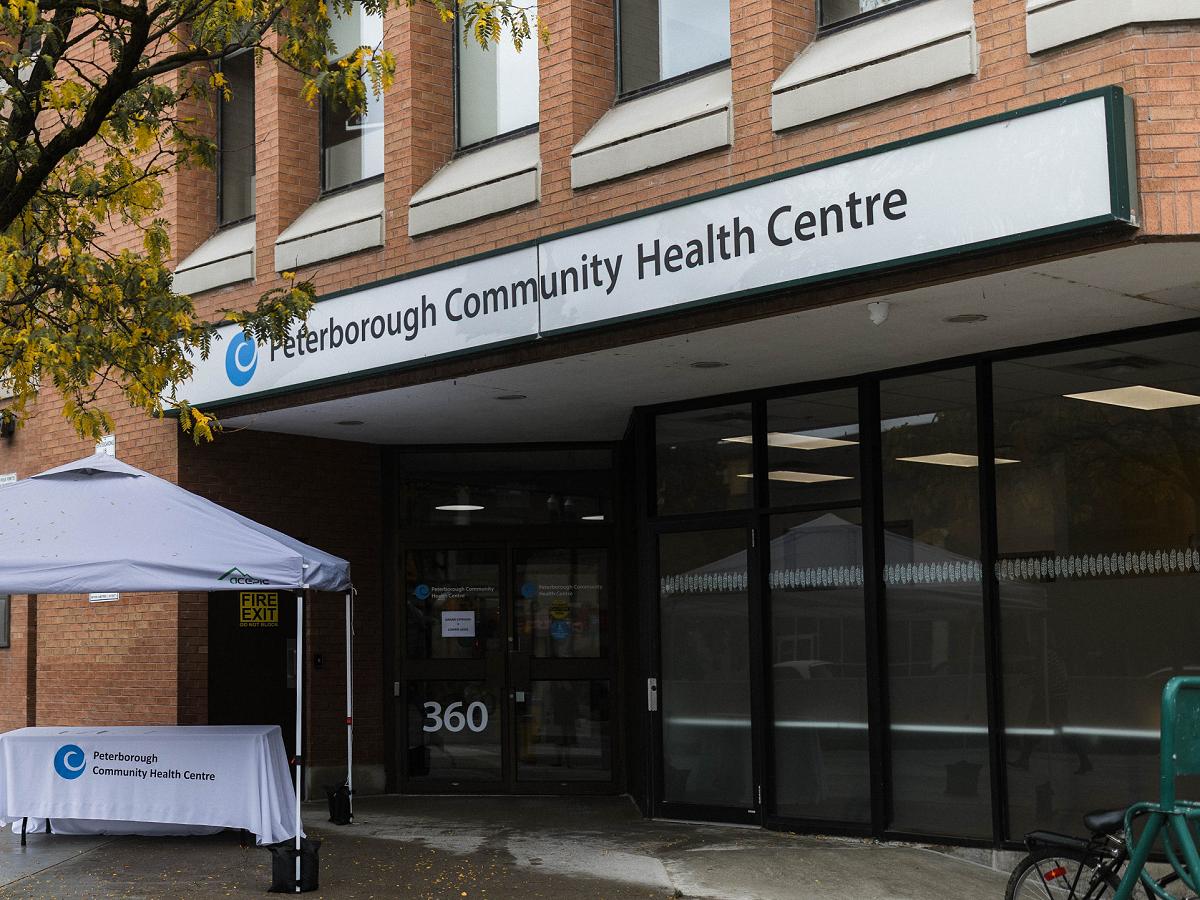
A non-profit community-governed organization located on two floors in Peterborough Square in the downtown core, the PCHC provides a combination of primary healthcare services, community programs, and community development initiatives.
“We’re seeing a lot of strong engagement for the community programs — there’s an appetite for this,” said Ashley Safar, inaugural executive director of the PCHC, in a recent interview with kawarthaNOW.
Providing primary healthcare and more for marginalized communities
Safar said the PCHC plays a critical role in addressing gaps in the healthcare system, especially for those whose needs are not met by a traditional healthcare system or provider.
The PCHC’s priority population is people who self-identify as Indigenous and those who do not have a primary care provider and experience barriers related to social, economic, cultural, or systemic factors.
That includes people from one or more of the following groups: people from racialized groups or communities, people with physical or mental disabilities (including mental health conditions, substance use challenges, or both), people who identify as part of the 2SLGBTQ+ community, people experiencing homelessness, newcomers (including immigrants and refugees), people living in conditions of extreme poverty, and people living in geographically or physically isolated areas who face barriers to accessing care.

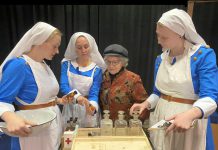
Nogojiwanong Friendship Centre. (Photo: PCHC)
“We’re doing outreach work where we attend spaces like Trinity (Community Centre) and other places in the community with other organizations to be able to decrease barriers and increase access to care,” said Safar.
To date, the PCHC has served over 4,300 individuals totalling over 13,000 visits through a combination of primary care, cultural services, and community programs.
For Safar, a key facet of the PCHC’s work is to build rapport and personal relationships with community members to promote trust and positive engagement.
“One of the needs of community is to meet people where they’re at,” she said.
Holistic wellness model expands beyond primary healthcare
Safar said, in line with the provincial government goal to connect every Ontarian with a primary healthcare provider by 2029, the PCHC has been able to serve currently unattached patients from the Healthcare Connect waitlist.
However, the PCHC also recognizes the importance of providing support and care for individuals who are not able to register for Healthcare Connect or who experience other barriers to mainstream healthcare.
The Peterborough Community Health Centre also differs from traditional healthcare providers by taking a holistic approach to health and wellness, which they define as “supporting the whole person — mental, emotional, physical and spiritual wellbeing.”

To support this approach, the PCHC employs a 30-person team of medical and paramedical professionals, including nurses, physicians, health promoters, social workers, system navigators, and other team members.
In March, the PCHC introduced a wellness team to the organization. This team includes a program manager, social workers, system navigators, a health promoter, and an Indigenous cultural wellness coordinator.
This team, sometimes known as an allied health team, provides interdisciplinary and intersectional wellness support that focuses on social determinants of health such as housing stability, social connection, access to community services, and cultural supports.
“We want to continue to build community programming that support mental health, social connection, community connection, and overall wellbeing,” Safar said of the goal of these interdisciplinary services.
Embedding Indigenous knowledge and culturally safe care
Safar highlighted the inclusion of the Indigenous cultural wellness coordinator on the wellness team and the ongoing dialogue and collaboration between the PCHC and local First Nation communities as central to the organization’s mission to provide culturally safe care for Indigenous patients.
“Indigenous people have often faced discrimination, barriers, and challenges (in the healthcare system) and continue to do so,” said Safar.
During the development of the PCHC, the organization worked with local Indigenization and decolonization consultant Mshkiki Gitigaan Kwe, to ensure that reconciliation values and practices were embedded into the structure and policies of the organization.
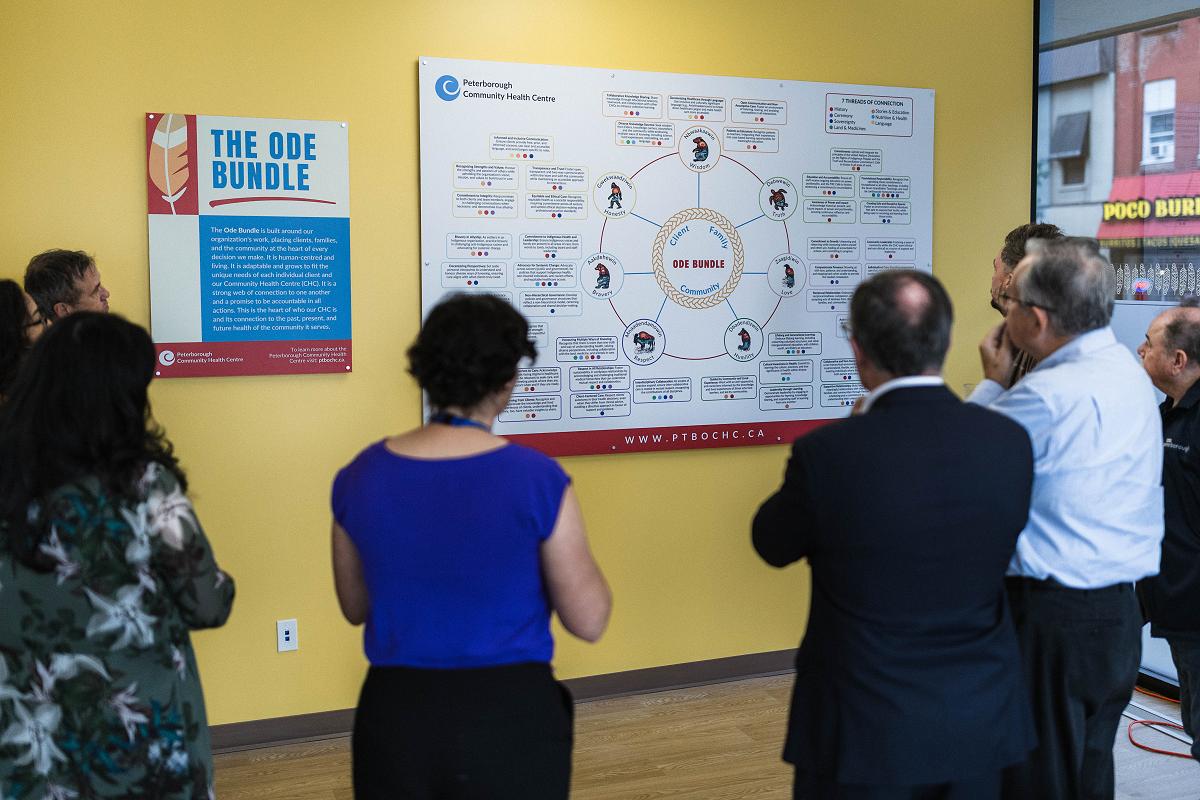
Safar described the PCHC as an organization that “weaves together traditional knowledge with western medicine to fit them together in a way that’s really meaningful and well-intentioned to create a space that is for everybody.”
One way in which the PCHC actions their values is through their engagement with the “Ode Bundle,” which uses the Seven Grandfather Teachings — a foundational set of guiding moral principles and values in Anishinaabe culture — to establish both organizational policies and systems and clinical and patient-facing care.
Safar told kawarthaNOW that the PCHC engages with the Ode Bundle in every meeting, where staff members are encouraged to “talk about one of the teachings and how this has showed up in their work.”
Also speaking to Indigenous-centric programming and services, Safar said the PCHC will be joined by Grey Cloud (James Carpenter) to offer two traditional healing clinics on May 25 and June 29.
‘It belongs to the community’: Community support and engagement important as PCHC looks to the future
Further, Safar said the support of community members, private, charitable, and governmental funders, and corporate and business partners is vital to supporting culturally safe and inclusive programming, noting these types of services typically fall outside funding that the Ontario government provides to PCHC as a primary care provider.
That includes PCHC’s washer and dryer and community kitchen, which have been funded with a $30,000 donation from MCI Constructors, formerly Mortlock Construction.
Safar said this donation will allow the PCHC to “better support clients experiencing housing instability (and) improve access to food and nutrition programming.”
Having on-site laundry services means PCHC can provide clean clothing to clients while the community kitchen will also provide nourishing meals to clients who arrive hungry.
“Those things can make such a big difference in terms of how people access the PCHC and what their experience is,” Safar added.

Looking ahead, the PCHC will continue to collaborate with healthcare providers, social services, businesses, and numerous other local organizations to amplify its impact and create sustainability within services.
One such initiative is the pilot collaboration with the Trent-Fleming School of Nursing, which provides mobile care to those living in the rural localities of Havelock, Ennismore, and Hiawatha First Nation.
As the PCHC expands its capacity to provide primary care and wellbeing services, the centre is looking to the community to provide feedback on areas of need and current barriers to care.
“That comes from meaningful engagement to help inform what types of programs we’re developing within the PCHC,” said Safar.
Safar added the PCHC is committed to listening to its clients and the community at large, and being responsive in its approach to care to ensure flexibility and accessibility.
“Being a community health centre, at the end of the day, it belongs to the community,” Safar said.
For more information on the Peterborough Community Health Centre, visit www.ptbochc.ca.