




















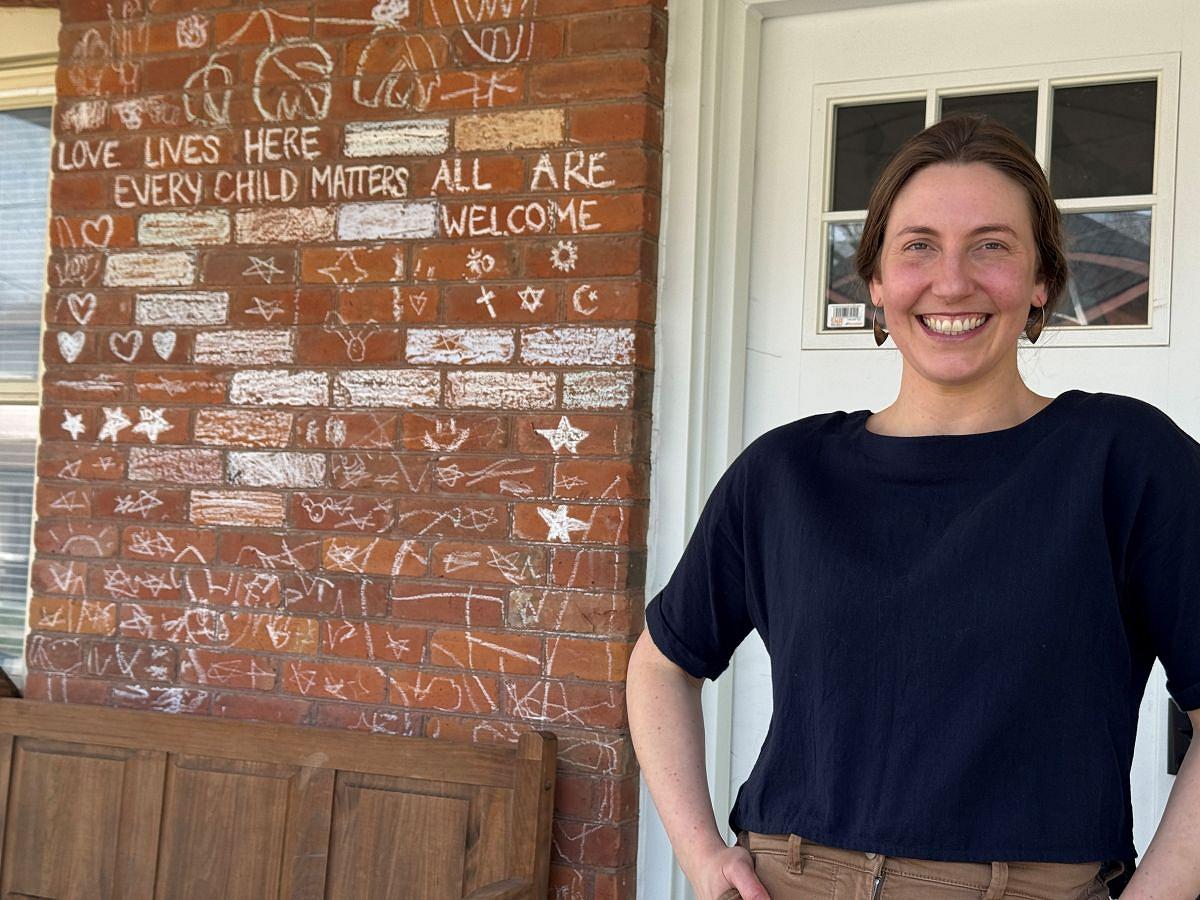
Returning to Trent University as a mature student to pursue her studies appealed to Kristen LaRocque. The fact her research focuses on autism is extra meaningful.
As this Peterborough mother knows all too well, autistic people are often misunderstood and unfairly judged. Kristen has first and second-hand experience on this front — she was diagnosed with autism and ADHD as an adult, and she has a neurodivergent son in middle school.
“Suffice it to say, I was very motivated to research topics that were relevant to me and my family,” Kristen reflects one day, sitting at her kitchen table.
“I kept running up against knowledge gaps among professionals in multiple domains, for example, when trying to access educational and health care services for myself and my son,” Kristen explains. “Even within autism-specific diagnostic services, I found that some clinicians did not have a nuanced understanding of neurodivergence or an appreciation for how it can look really different in different populations.”
As Kristen knows all too well, autism is a complex multi-dimensional spectrum, not a simple linear one and there is a lot of variability in this group.
“Some autistic individuals make eye contact, crack jokes, and demonstrate strong social skills, and these capacities can vary day-to-day, depending on the balance between energy and demands,” she says.
“Other autistic individuals will need support with hygiene-related tasks and may use alternate ways to communicate to interact with others. I think it’s important we move away from the notion that autism can be defined by a narrow set of characteristics or a handful of stereotypical presentations.”
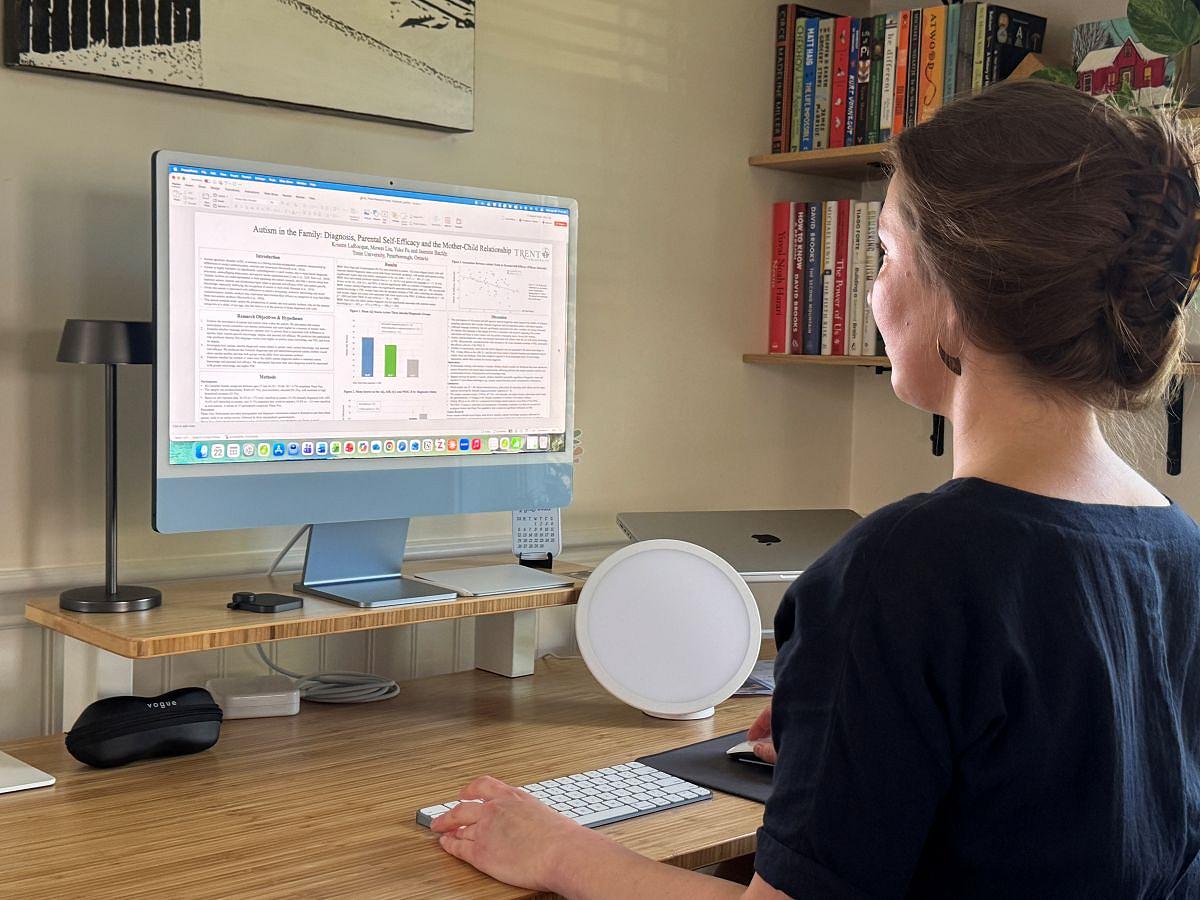
Trent University is familiar to Kristen and proving a good spot for her to explore people’s attitudes about autism. Kristen completed her bachelor’s degree in philosophy and applied ethics at Trent in 2008. After working in the non-profit sector for several years, the COVID pandemic hit — along with a growing recognition of her own neurodivergence and the fact that working in a public-facing role might not be sustainable for her in the long run.
Going back to Trent seemed like a better fit to Kristen. As she completes a second undergraduate degree in psychology, she intends to pursue graduate and doctoral studies that will support a career in community-based research.
As part of her undergraduate thesis, Kristen is working under the supervision of psychology professor Dr. Mowei Liu to gather the perspectives of parents and caregivers whose children are on the autism spectrum.
This project focuses on the experiences of these parents who have recognized autistic traits in their child, and possibly themselves. The goal is to understand how recognizing autism within the family affects a parent’s confidence and satisfaction in the caregiving role, as well as their relationship with their child.
The study also considers how parents gain knowledge about autism prior to, during and after recognition, assessment, or formal diagnosis.
“Too often, families are forced to navigate piecemeal or siloed systems that still do not fully understand autism,” Kristen says. “I want this research to help create better supports, better recognition and better outcomes for autistic children and their families.”
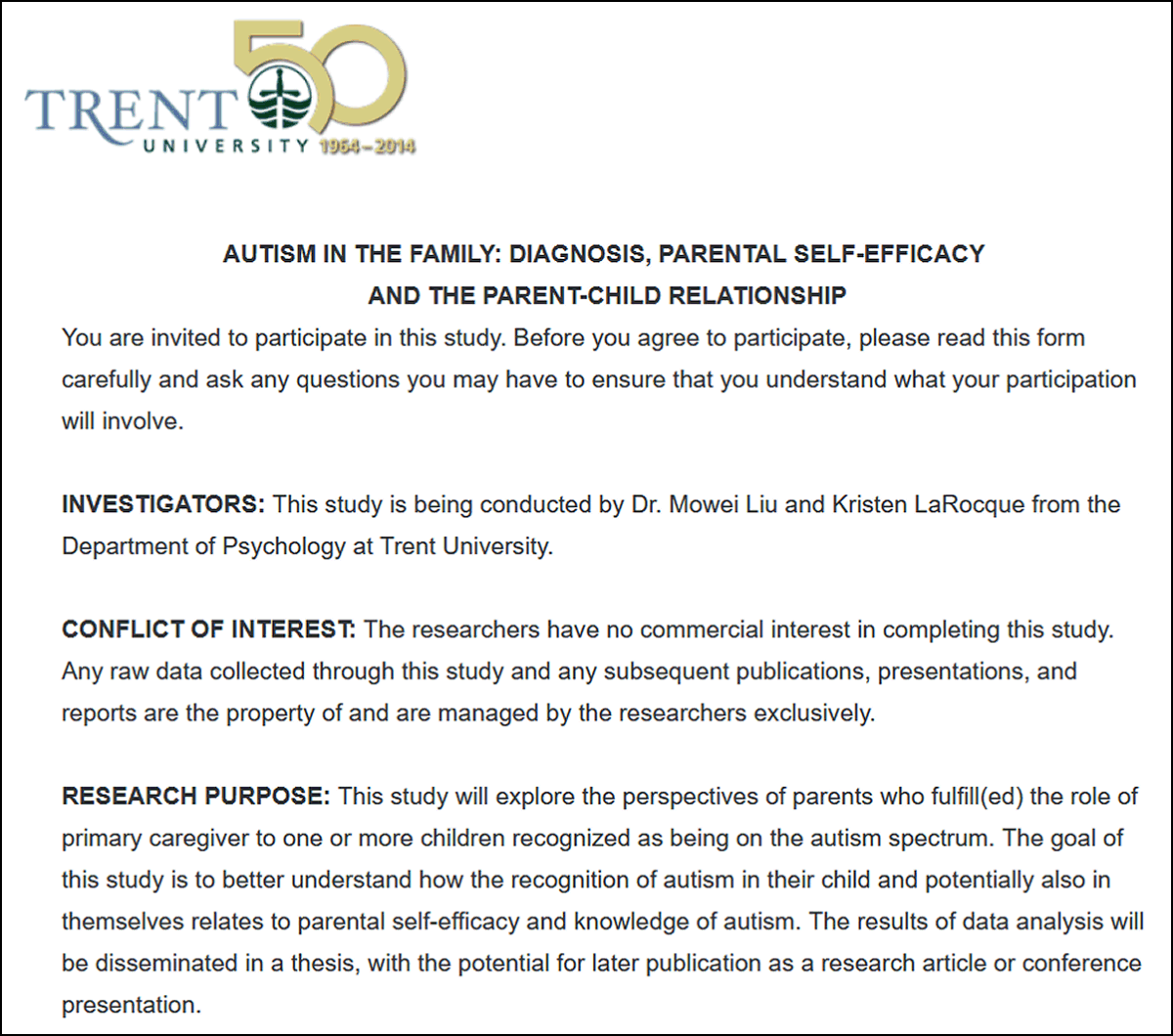
Participants in this Trent-based research are still being sought and have until August 1 to take part.
The study uses a mixed-methods, multi-phased approach. In phase one, caregivers complete an anonymous, online survey which collects demographic information related to both parent and child. This is followed by a series of questionnaires that assess their confidence and satisfaction with the caregiving role, autism-specific knowledge, and individual characteristics.
Phase two is optional and consists of a one-hour interview conducted in-person, by phone, via email, or Zoom. During this phase, parents can offer insights into their lived experiences, specifically when and how autism was first recognized within their family and the influence this had on parenting practices and the parent-child relationship.
To date, dozens of parents have taken part in the study — the goal is to get upwards of 250 participants in phase one, with a smaller sample expected for phase two.
Based on a preliminary analysis, most parents demonstrate a robust understanding of autism, with their knowledge and awareness often occurring long before their child receives a formal diagnosis.
Another emerging theme is more sobering: autistic mothers tend to judge their own parenting abilities more harshly than their non-autistic peers, possibly as a result of internalized ableism, a tendency towards perfectionism, and/or the overwhelming pressure to meet the social expectations associated with caregiving.
As she continues to collect and analyze data, Kristen remains hopeful that this research will lead to more awareness and understanding of autism beyond academia. In her own case, receiving an autism diagnosis was validating and liberating — especially when getting one was very rare for girls born prior to 1995.
As an example, Kristen refers to her hypersensitivity to loud noises. When a fire truck passed by, she would cover her ears and cringe.
“Before, I would feel like such a weirdo for covering my ears,” she says. “But now that I know I’m autistic, I feel empowered to cover my ears and attend to my sensory needs.”
Based on dozens of interviews with study participants, Kristen has observed a noteworthy trend. Many parents have told her that understanding and loving their autistic child is not the problem. Instead, it’s navigating the people and systems around them.
Securing appropriate supports, finding respite, and watching a child struggle in environments that treat difference as deliberate defiance — that is the problem that makes parenting hard. Although many of the stories are harrowing, Kristen is hopeful that first-person insights can help to set the record straight and change that reality.
“Parents should not have to become experts and full-time advocates just to be heard or to access the right support,” Kristen notes. “If this study can help systems listen earlier and respond better, that’s where real change begins.”
If you’d like to participate in the autism in the family study, complete the survey at trentu.qualtrics.com/jfe/form/SV_0qddsxQyddkB9Qy.