After searching for more than four hours, police and emergency services were unable to locate a person in apparent distress near the Trent River east of Hastings on Thursday evening (December 26).
At around 4:35 p.m., Northumberland Ontario Provincial Police (OPP) received a call from a member of the public who reported hearing a man calling out for help near the Trent River in the area of Valley View Lane, around three kilometres east of the village of Hastings in Trent Hills.
Officers with the Northumberland OPP along with emergency medical services and the Trent Hills fire department attended the area, where they patrolled trails and roads on both sides of the river looking for the man.
Advertisement - content continues below
The OPP Emergency Response Team and the fire department both used drones in an effort to locate the man, and OPP Aviation Services also joined the search.
Police and emergency crews were unable to find the man and began clearing from the area shortly after 9 p.m.
Police, who believe that the man in distress was somewhere on the south side of the Trent River in the area of Valley View Lane, are continuing to investigate the incident. Anyone with information is asked to contact the Northumberland OPP at 1-888-310-1122.
Celebrate New Year's Eve with Diamond Dave & The Smoke Eaters at Jethro's Bar + Stage in downtown Peterborough. (Photo: Diamond Dave & The Smoke Eaters)
Every Thursday, kawarthaNOW publishes live music events at pubs and restaurants in Peterborough and the greater Kawarthas region based on information that musicians provide directly or that venues post on their websites or social media channels. Here are the listings for the week of Thursday, December 26 to Wednesday, January 1, 2025.
If you’re a musician or venue owner and want to be included in our weekly listings, email our nightlifeNOW editor at nightlife@kawarthanow.com. For concerts and live music events at other venues, check out our Concerts & Live Music page.
With the exception of karaoke, we only list events with performing musicians. Venues may also host other events during the week (e.g., dancing, DJs, comedy shows).
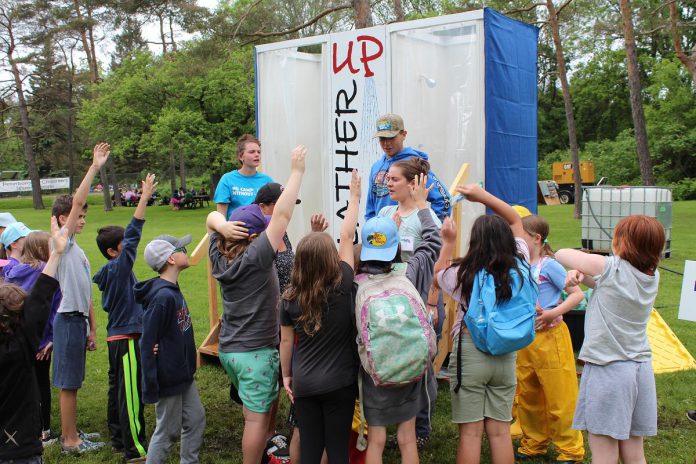
Excited children at the 2024 Peterborough Children's Water Festival volunteer for an opportunity to experience the "Lather Up" activity centre, which teaches students how they and their families can conserve water when showering. The festival is an annual event at the Riverview Park & Zoo that combines education, fun, and hands-on learning to teach children about the importance of water in their lives, empowering them to take action in their homes and communities to conserve and protect water. (Photo: Karen Halley)
Water is life. It nourishes our bodies, sustains ecosystems, and is certainly the foundation of Peterborough’s history, yet many take it for granted.
Locally, GreenUP has been at the forefront of water education for decades, empowering children, educators, and families to act as water champions — in their homes, schools, and communities.
Each week, GreenUP provides a story related to the environment. This week’s story is by Natalie Stephenson, Director of Programs, GreenUP
Investing in water education has never been more critical. In the face of growing environmental challenges, programs like the Peterborough Children’s Water Festival (PCWF) offer a shining example of how experiential learning can inspire the next generation of environmental leaders.
Advertisement - content continues below
The PCWF is an annual event that combines education, fun, and hands-on learning to teach children about the importance of water in their lives.
“It was such a wonderful experience for my students,” said Kristin Manol, an educator with the Peterborough, Victoria, Northumberland and Clarington Catholic School Board. “Each activity was meaningful and engaging enough that it captivated the attention of grade fives.”
This coming year, more than 1,400 students in grades two to five, 75 high school students, and 300 adult educators and chaperones from across our region will gather on the banks of the Odenabe (Otonabee River) in Nogojiwanong (Peterborough) at the Riverview Park & Zoo on May 27 and 28. There they will engage in activity centres that highlight the science, history, and cultural significance of water.
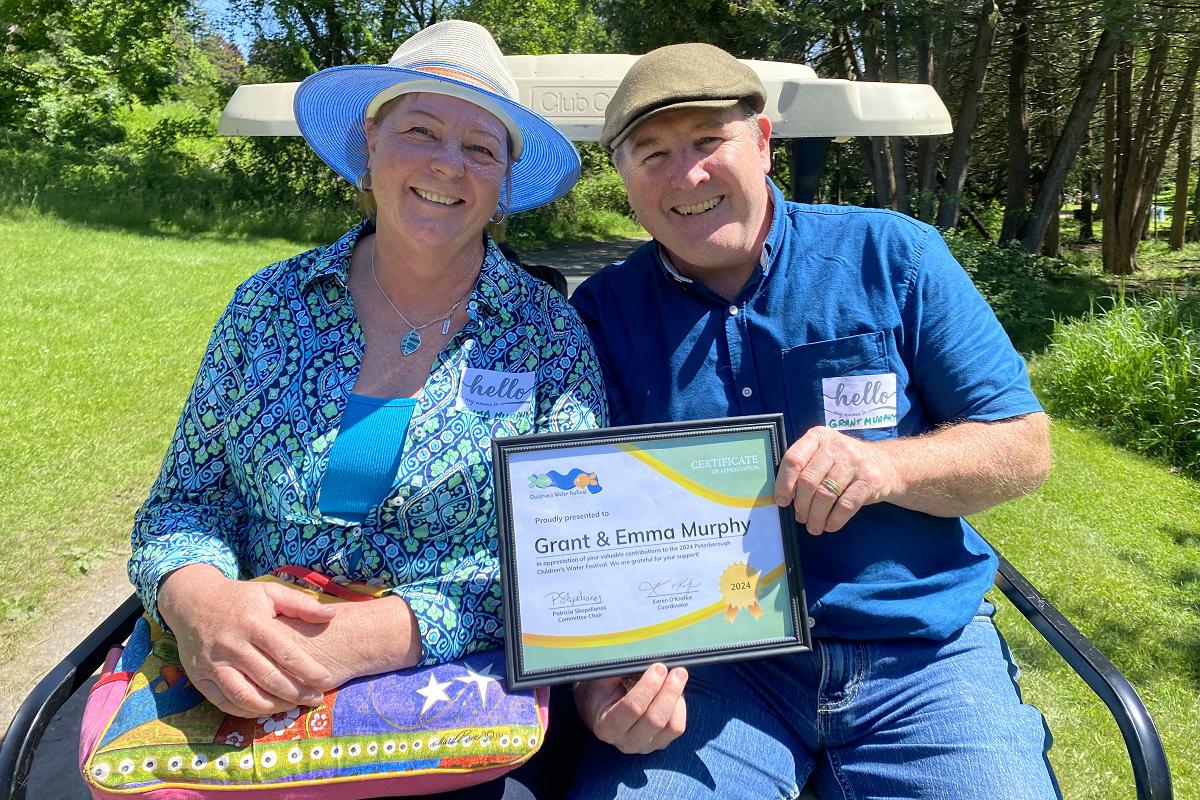
Longtime donors Grant and Emma Murphy pose on a golf cart with a certificate of appreciation during the 2024 Peterborough Children’s Water Festival. Individual and corporate donors, as well as event sponsors, are critical to this beloved community event. (Photo: Natalie Stephenson / GreenUP)
The festival’s interactive approach is what makes it so unique and impactful. Children don’t just learn about water; they experience it. They see, touch, test, and observe water in action, from understanding water conservation and pollutants to learning about ecosystems, watersheds, and the cultural teachings of Indigenous knowledge keepers.
“I have already noticed changes in (the students’) water usage in class,” said Merridyth Marshall, an educator with the Kawartha Pine Ridge District School Board, shortly after attending the PCWF in 2024 with her grade two students. “They are much more mindful about turning off the sink tap right away after washing their hands.”
For the past 22 years, the PCWF has been led by GreenUP, working in partnership with local educators, water quality specialists from Peterborough Utilities Group and the City of Peterborough, Otonabee Conservation, and other community groups to deliver a curriculum-linked program that is innovative and engaging.
Advertisement - content continues below
By fostering this connection to water at a critical age, students develop not only an understanding of the environmental challenges we face, but also the skills and passion to make positive change. These are the young leaders who will advocate for clean rivers, steward our wetlands, and design the green technologies of tomorrow.
However, due to changing factors for longtime funders, the 23-year strong festival now needs the support of the community to continue this important and beloved event. Since the pandemic, funding opportunities have been scarce, making it difficult to deliver the PCWF at its full potential.
As a low-barrier event provided for free to local students, the festival relies heavily on community sponsors, grants, and donations. Without this financial support, it is becoming increasingly difficult to ensure that every child, regardless of economic background, has the opportunity to participate.
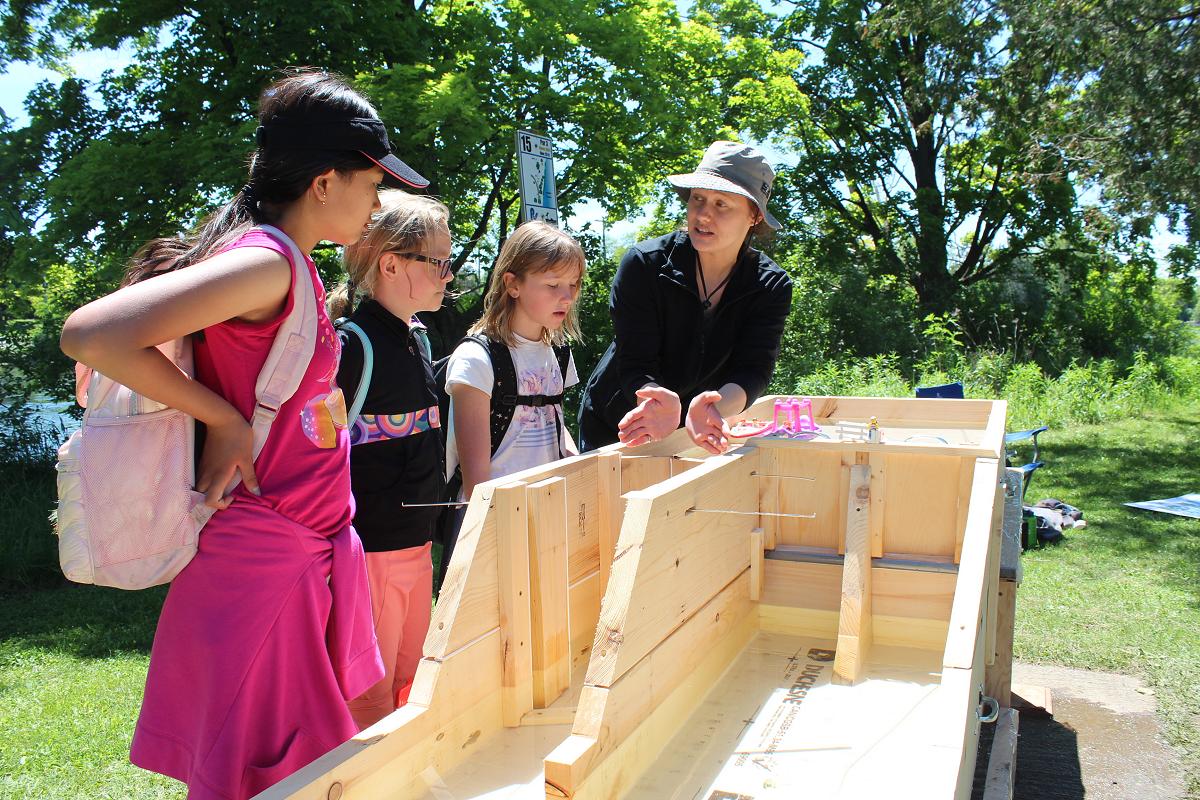
Students at the 2024 Peterborough Children’s Water Festival engage in “Leveraging the Locks”, a new activity centre by educator Mary Elizabeth Conrad (pictured) featuring an interactive model of a canal lock, demonstrating their function and importance to communities along the Trent-Severn Waterway. (Photo: Karen Halley)
Access to water education is an equity issue. Programs like the PCWF ensure that all children have the same chance to build their environmental literacy, no matter their school or socioeconomic background.
For many students, this may be their first time experiencing outdoor experiential education or learning about their local water systems. These experiences are transformative — sparking curiosity, connection, and developing pathways for future careers.
Climate change and other interconnected environmental concerns like flooding and algae blooms are impacting communities everywhere. Water systems are under pressure, and the solutions to these challenges will require future generations to think critically, act collaboratively, and care deeply.
Advertisement - content continues below
Water education is not an “extra” — it is essential. It equips youth with the skills to address these issues head-on, and it empowers them to take action in their homes and communities, from reducing water waste to protecting local water sources.
The PCWF Steering Committee is now calling on local businesses, organizations, and individuals for support. Investing in the festival is an investment in the future. These funds help to ensure that every child can access the education they deserve, while building a culture of water stewardship that benefits everyone.
A donation, sponsorship, or partnership can make a huge difference, ensuring the festival remains accessible to all. Every drop counts — whether a contribution of $500, $1,000, or more. All funds help the PCWF continue this important work and build capacity to sustain the work, inspiring thousands of young people for years to come.
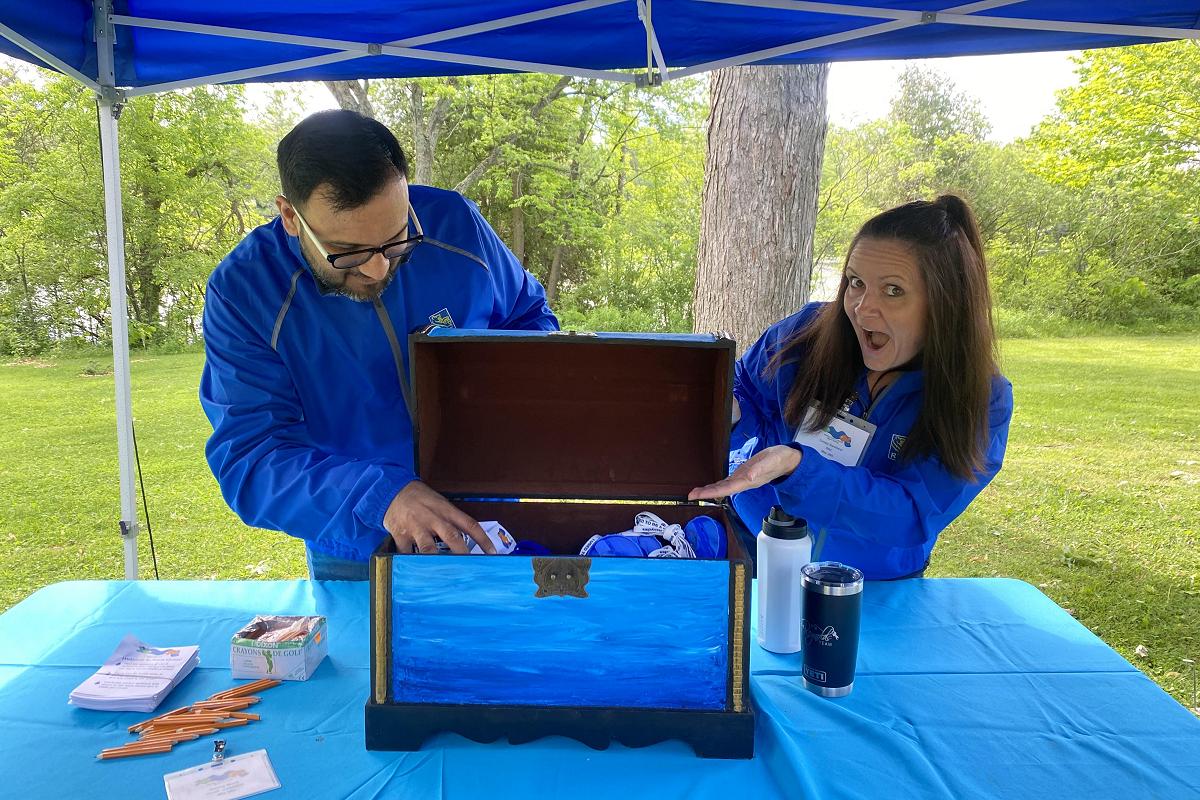
RBC staff members Sahil Jain and Christa Sandiland welcome students to one of the activity centres at the 2024 Peterborough Children’s Water Festival. RBC employees made a donation to support the festival, one of many local business and organizations that contributed to the day. (Photo: Natalie Stephenson / GreenUP)
“I was very impressed to see employees from RBC and Siemens there supporting the day,” noted Sarah Sullivan-Berardi, an educator with the Peterborough, Victoria, Northumberland and Clarington Catholic School Board. “I think that demonstrates caring by those companies and humanizes them.”
At GreenUP, we believe in the power of education to create lasting change. Programs like the PCWF provide a wonderful example — when we invest in youth, we invest in a healthier, more sustainable community for all. Those that meaningfully support the Peterborough Children’s Water Festival help us to keep the future flowing.
For more information or to contribute to the 2025 Peterborough Children’s Water Festival happening May 27 to 28, 2025 at the Riverview Park & Zoo in Peterborough, visit pcwf.net.
Franzie Roessl (left) and staff at One Eighty Sports Pub in Peterborough presented a cheque to Peterborough Regional Health Centre (PRHC) Foundation Community Giving and Engagement Manager Jane Lovett (right) on behalf of the One Eighty Heather Roessl & Friends Memorial Golf Tournament in September 2024. This year's annual event raised its largest amount ever, donating $30,500 to the PRHC Foundation's Campaign for PRHC to reimagine healthcare in the region. The PRHC Foundation encourages community members to consider hosting their own third-party event fundraisers to support the regional hospital. (Photo courtesy of PRHC Foundation)
For the past 25 years, the Roessl family has organized an annual golf tournament to honour Heather Roessl, raising almost $300,000 for the Peterborough Regional Health Centre (PRHC) Foundation — a shining example of how the community can rally around the hospital in the memory of a loved one.
Franz (“Franzie”) Roessl was just three years old when his mother Heather was first diagnosed with melanoma in her leg. In 1988, at what was then the Peterborough Civic Hospital, she underwent surgery to remove the cancer, leaving her with a huge scar.
During eight years in remission, Heather had to regularly drive to the Princess Margaret Cancer Centre in Toronto for follow-up care and check-ups.
“Whenever my mom was sick or wasn’t feeling well, she’d be driving to Toronto and it was just an absolute nightmare,” Franzie recalls.
Three months after his wife Heather passed away from cancer in 2000, Franz Roessl Sr. organized the very first golf tournament in her honour. He continued organizing the golf tournament for the next 10 years, before passing the torch to his sons Franzie and Hans. Now known as the One Eighty Heather Roessl & Friends Memorial Golf Tournament, the annual fundraiser for the Peterborough Regional Health Centre (PRHC) Foundation has raised almost $300,000 for healthcare at the regional hospital. (Photo courtesy of Franzie Roessl)
Share on Bluesky
On Father’s Day in 1996, the family learned Heather’s cancer had returned and she immediately underwent another surgery to have her cancerous lymph nodes removed and began care again. However, by Christmas of 1999, the cancer had metastasized.
Franzie was 15 years old when his mother passed away on March 20, 2000.
“I wouldn’t wish that upon anyone,” Franzie says. “I learned a lot from it. What my dad was taught growing up was that life goes on, so he wanted to celebrate her life rather than sit there and mourn.”
So it was then, three months after his wife’s passing, that Franz Roessl Sr. organized the very first golf tournament in her honour at Pine Crest Golf Club in Peterborough with the help of Heather’s best friend.
“My mom golfed all the time,” Franzie recalls. “She wasn’t afraid to have some fun and it was an excuse to go have a couple of beers with the girls. My mom got my dad his first set of clubs, so they really grew together playing golf.”
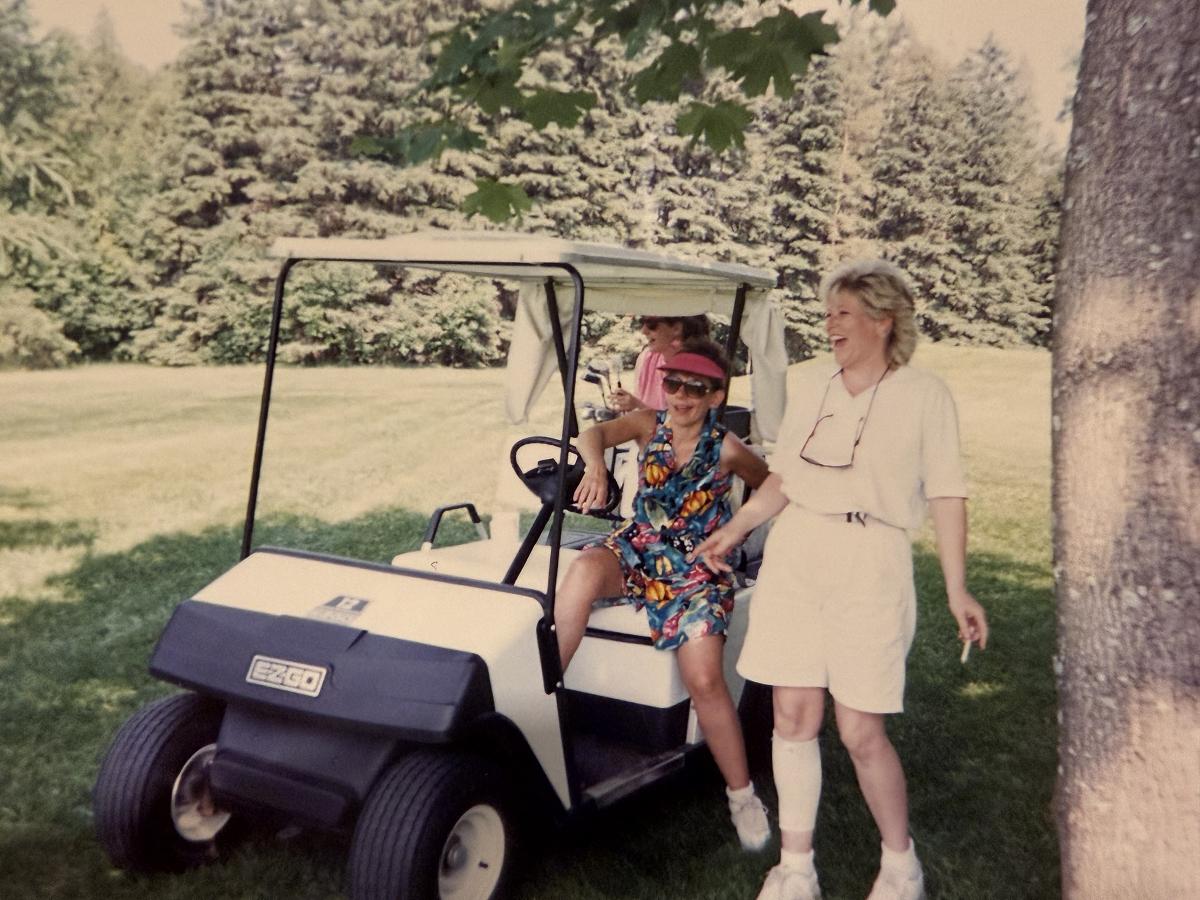
Heather Roessl (right) was an avid golfer who loved to have fun. That’s why, following her passing from cancer in March 2000, her husband Franz and her best friend decided to organize a fundraising golf tournament in her honour. Nearly 25 years later, now run by her son Franzie, the annual event has raised almost $300,000 for the Peterborough Regional Health Centre (PRHC) Foundation (Photo courtesy of Franzie Roessl)
Share on Bluesky
Franzie’s father continued organizing the golf tournament for the next 10 years, before passing the torch to Franzie and his brother Hans. When Franzie opened One Eighty Hunter sports pub in Peterborough, the event officially became the One Eighty Heather & Friends Memorial Golf Tournament and, eventually, the annual tournament was moved to the Quarry Golf Club in Ennismore.
Every year proceeds from the tournament have been donated to the PRHC Foundation to invest in priority cancer care advancements at PRHC. This year, the record-breaking $30,500 that was raised was added to the PRHC Foundation’s $60 million Campaign for PRHC to reimagine healthcare at the regional hospital.
For Franzie, the memory of how his mother had to drive to Toronto during her many years fighting cancer is one of the reasons why it’s so important to support the PRHC Foundation.
“Rather than driving two hours in traffic to Toronto and two hours back when you’re not feeling well, the hospital provides lifesaving treatment at home,” Franzie says. “The most important thing is getting the help we need here in the comfort of Peterborough, so we always want to be keeping the money in town.”
Ten years after Franz Roessl Sr. organized the first golf tournament fundraiser to honour his wife Heather, who passed away from cancer in 2000, their sons Franzie and Hans Roessl took over hosting the annual fundraiser for the Peterborough Regional Health Centre (PRHC) Foundation. The event continues to be loved by generations of the Roessl family, with Hans’ young daughter Elsie now the event’s emcee, always inspiring extra 50/50 ticket sales. (Photo courtesy of Franzie Roessl)
Share on Bluesky
The PRHC Foundation encourages community members inspired by their own PRHC experience, a loved one’s care or who want to memorialize a friend or family member as the Roessl family has done to host a fundraising event that will support the Campaign for PRHC and bring world-class healthcare closer to home.
“Donors that take the time to organize something for a cause that means a lot to them, or honours the memory of someone they love, are going above and beyond to advocate for the hospital,” says PRHC Foundation President and CEO Lesley Heighway. “Third-party events are a great way to see the community rally around the hospital, bringing out new donors to hear the stories that might inspire them to host their own event.”
With organizational support from the PRHC Foundation, community fundraising events can be very personalized. Many are focused on physical activity, like the One Eighty Heather Roessl & Friends Memorial Golf Tournament and the annual HunTer Fondo cycling event organized by the Peterborough Cycling Club.
Other fundraisers are focused on arts and music like the annual Cancer Takedown variety show, while some donors have built and sold bird houses, organized walks or other personal challenges, hosted meals, created online fundraising pages to share their stories, and sponsored fundraisers through their businesses.
Third-party events like the One Eighty Heather Roessl & Friends Memorial Golf Tournament not only raise funds for the Peterborough Regional Health Centre (PRHC) Foundation, but inspire other community members to make donations to the regional hospital and to host their own fundraisers. The PRHC Foundation can work directly with event organizers to offer support on promotion, marketing, tax receipts, and speakers. (Photo courtesy of Franzie Roessl)
Share on Bluesky
“Anyone from ages five to 100 can do an event and, whether it’s a lemonade stand or a concert, every single dollar raised counts,” Heighway notes. “It’s a really wide range, but we want donors to find something that they are personally interested in and see the value in, and then bring like-minded people along for the ride.”
The PRHC Foundation makes it easy for individuals to organize their event by offering a number of supports including providing a customizable online fundraising page, promoting the event, providing donation receipts, and offering grateful patients the chance to tell their story and share the PRHC Foundation’s vision for healthcare at the hospital.
“It makes it hit home for people,” Franzie points out. “It means a lot to me to hear from a speaker before the golfers go out to golf, so they actually understand why this is happening and where the money goes.”
After two and a half decades, the One Eighty Heather Roessl & Friends Memorial Golf Tournament often sells out before Franzie can even advertise the date. He can already see the future of the tournament, having already been passed down a generation from father to sons, as his nephew is just beginning to learn to golf and will likely be on the greens soon. His four-year-old niece is actively involved in the tournament, having become an engaging emcee and 50/50 ticket seller.
Member of the Roessl family (from left to right): Benny Bleecker, Samantha Bleeker, Franzie Roessl with Elsie Roessl, Franz Roessl, Kim Roessl, and Hans Roessl with Heath Roessl. The One Eighty Heather Roessl & Friends Memorial Golf Tournament is not only a way to inspire the community to raise funds for the Peterborough Regional Health Centre Foundation, but it gets the family together every year to honour late family matriach Heather Roessl with an activity she loved. (Photo courtesy of Franzie Roessl)
Share on Bluesky
“There are a number of factors that make this such a wonderful fundraiser, one being that the tournament has moved between generations, and that PRHC is still so important to the family 25 years later,” says Heighway. “Like for so many families in our region, the hospital becomes essential to each generation.”
Franzie notes that the One Eighty Heather Roessl & Friends Memorial Golf Tournament would not be as successful without the help of the golf club, the sponsors who donate prizes, and the golfers who give to the cause.
“It comes down to people giving back to us and we uphold that by keeping it a fun tournament,” he says. “People are always happy to come out for a fun time, knowing their donations are going into the community.”
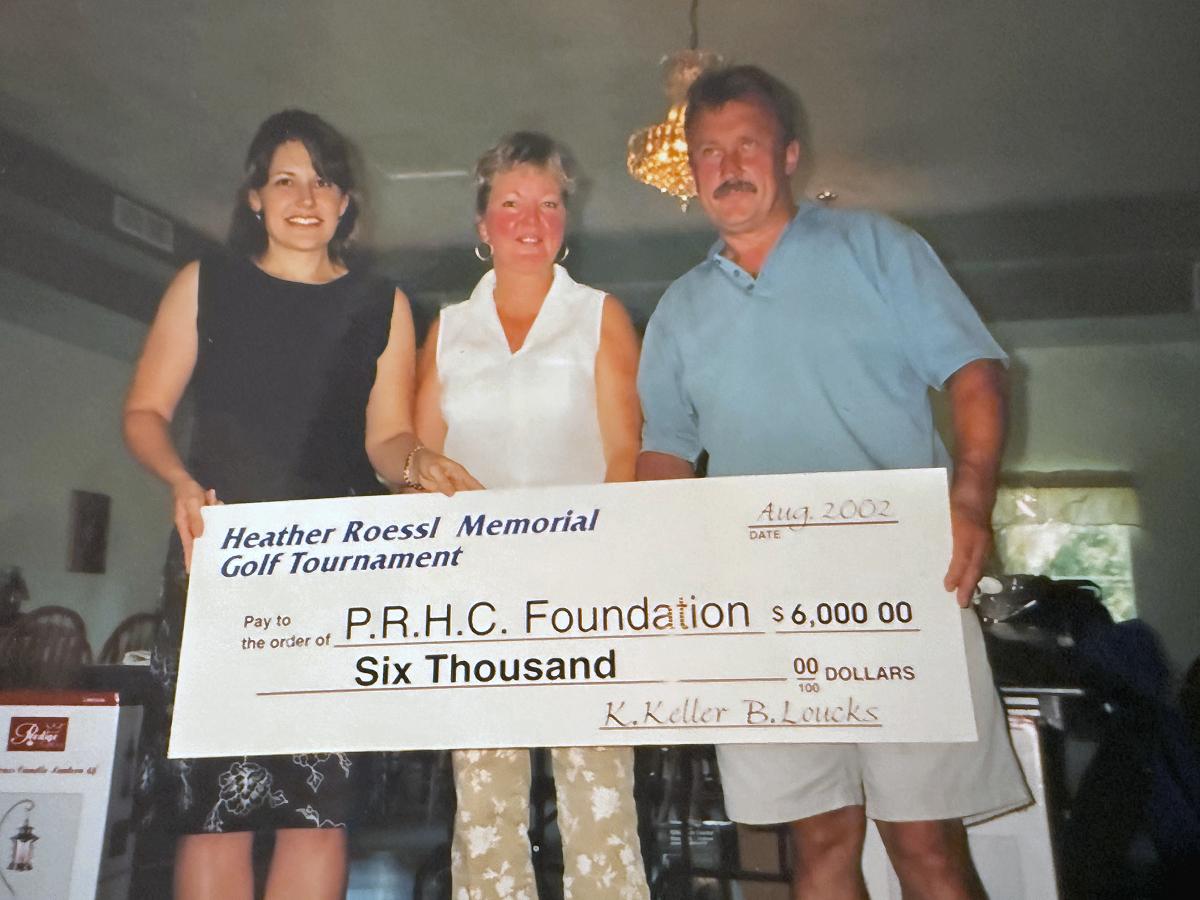
Franz Roessl (right) with a $6,000 cheque to the Peterborough Regional Health Centre (PRHC) Foundation in 2002 after the third annual golf tournament in honour of his late wife Heather Roessl. Over more than two decades, the annual tournament has raised almost $300,000 for the regional hospital. (Photo courtesy of Franzie Roessl)
While Franzie suspects his father wouldn’t have expected the family to still be running the tournament more than two decades later, he knows his mother would have been very pleased.
“This is keeping her legacy going,” he says. “She’d probably be winning this tournament every year if she was playing in it. She’d be the one having the most fun.”
For more information on organizing third-party events to support the Campaign for PRHC or to make a donation, visit prhcfoundation.ca. You can also find out more about events or volunteering as a campaign ambassador by emailing foundationeventsonline@prhc.on.ca or calling 705-876-5000.
This branded editorial was created in partnership with the Peterborough Regional Health Centre Foundation. If your organization or business is interested in a branded editorial, contact us.
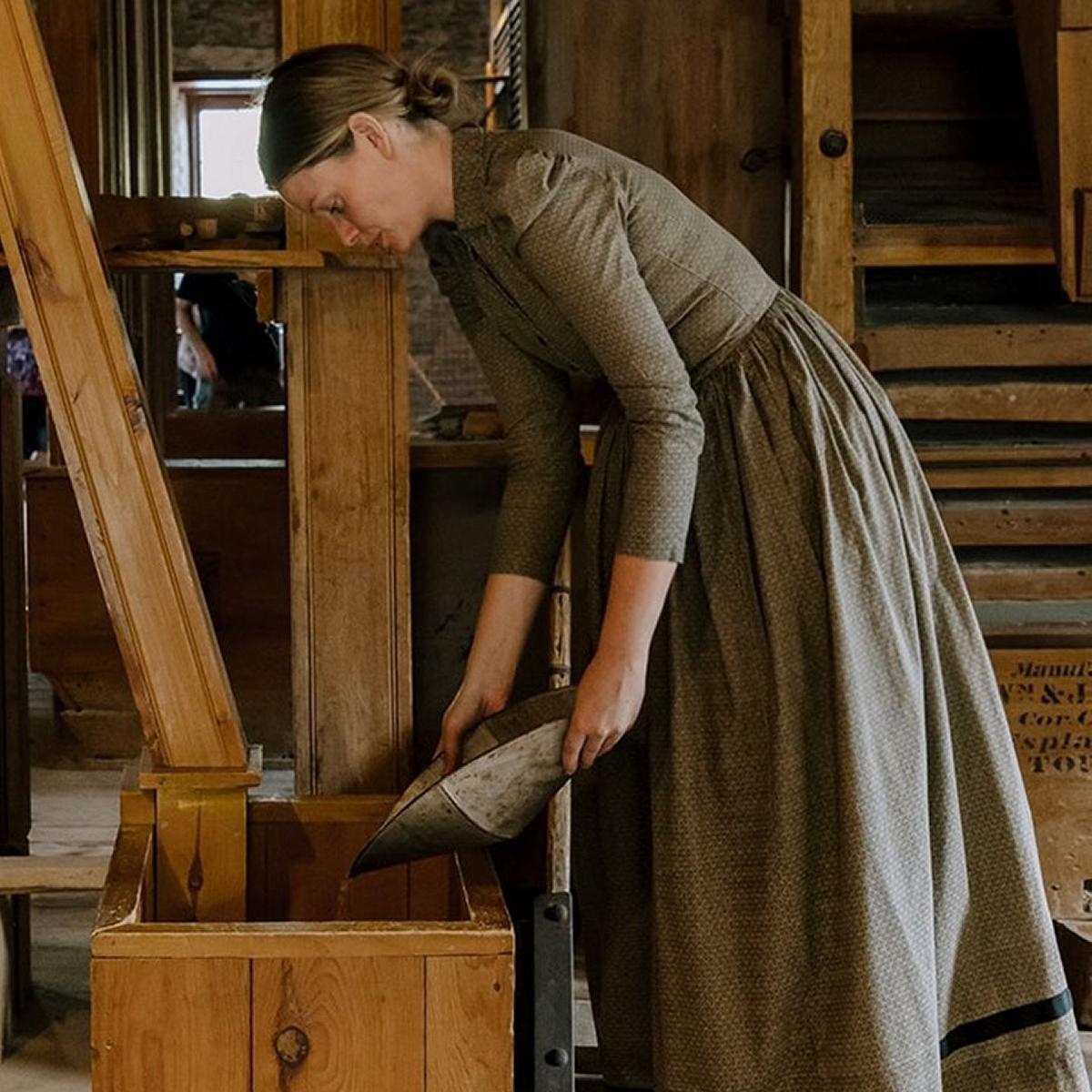
After more than 20 years as a volunteer and employee at Lang Pioneer Village Museum in Keene, museum operations coordinator Hailey Doughty discovered she is a descendent of Daniel Kidd, the blacksmith who worked in and built the blacksmith shop currently at the living history museum. The discovery inspired Doughty to take a blacksmith workshop alongside her father, which has ignited a new passion for the trade among the family's current generation. (Photo courtesy of Hailey Doughty)
As the museum operations coordinator at Lang Pioneer Village Museum, Hailey Doughty inspires visitors to find their connection to the land and the history of the region.
But after more than 20 years of involvement with Keene’s living history museum, only recently has Doughty discovered her own direct family tie to the museum’s blacksmith shop.
“One thing I love about Lang is no matter what walk of life you’re in, there’s something here that will connect you,” Doughty says. “Especially for my job, it’s all about making sure that Lang is here not only as an education source and tourism attraction, but it’s connecting people to their past and to Peterborough County.”
Advertisement - content continues below
Share on Bluesky
Even before she was born, Lang played an important role in Doughty’s life as it was where her parents were married and where her maternal grandmother worked until her retirement.
Doughty, herself, began “living the pioneer life” as a volunteer at just five years old before moving into various positions as a youth volunteer, seasonal worker, part-time worker, and into her current full-time role.
Over more than 20 years, the novelty of working at the living history museum has never faded for Doughty.
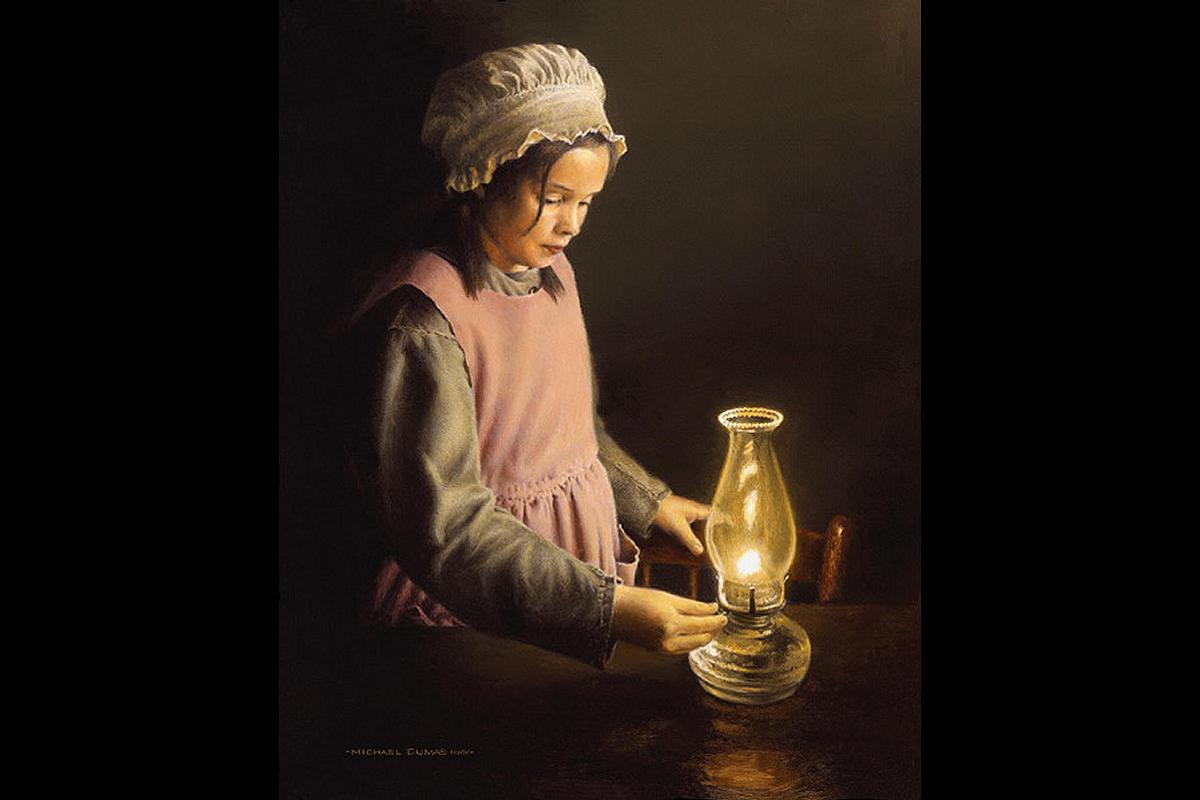
“The Welcome Light”, a painting by internationally renowned Buckhorn-based artist Michael Dumas, features Hailey Doughty when she was a young volunteer at Lang Pioneer Village. Michael and his wife Ellen were visiting Lang during one of the lighted evening events and, after Michael asked Hailey if she knew how to light the lamp, she proceeded to tell them how. Michael told Hailey that, when he was growing up in rural northern Ontario, farmers would light a lamp in their window if they were home and were open to having company visit, and this was called a “welcome light.” (Photo courtesy of Michael Dumas)
“Now we’re always glued to our phones and what’s happening on the news, so it’s definitely a brush of fresh air when I go out and step back in time,” Doughty says. “As a kid, I loved the idea that there was someone who built this house or someone who worked in the shop and I got to talk about it in their perspective.”
“I really liked that idea of keeping their memory alive, even as a kid, and I thought it was so neat to talk about people who I’d never known, but I felt a weird connection to.”
Despite her decades of involvement in the museum and her family’s interest in genealogy, it was only earlier this year when Doughty began researching her paternal ancestry.
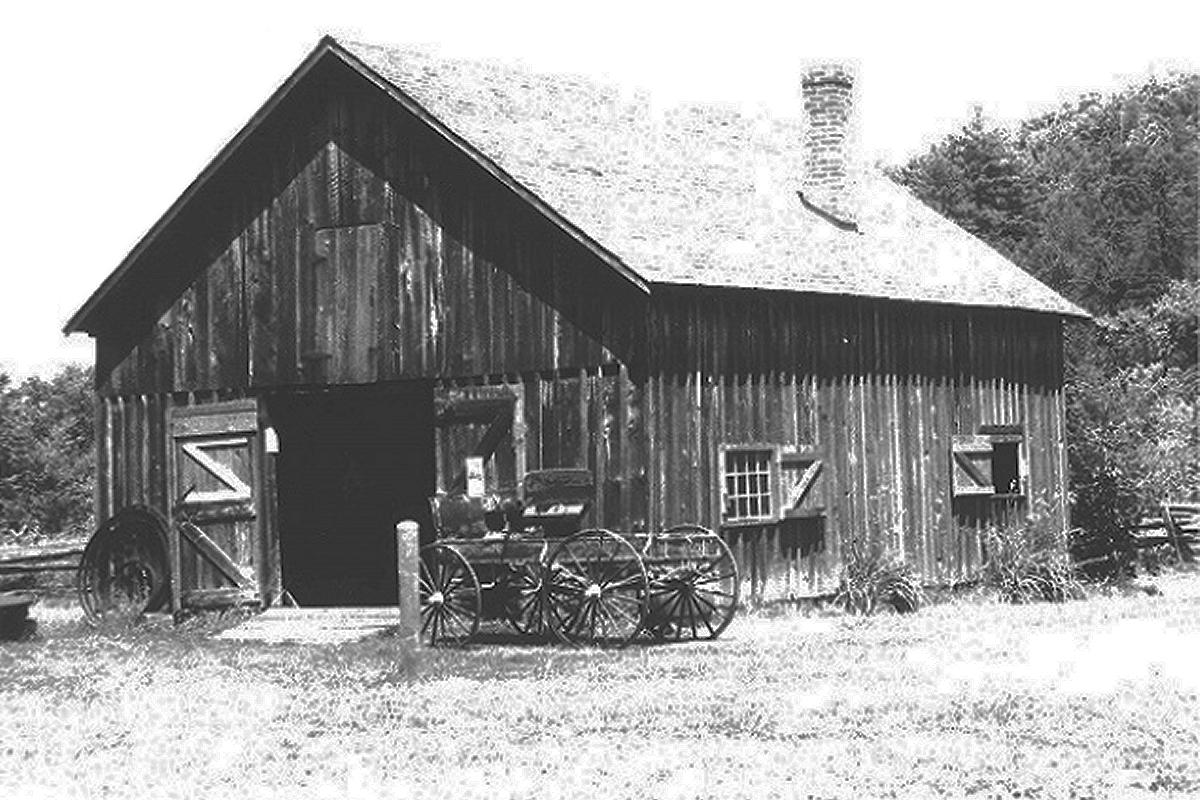
Lang Pioneer Village Museum’s blacksmith shop in 1969, two years after the living history museum opened. The shop was moved from Warsaw where it was originally built in 1859 by blacksmith Daniel Kidd, who is Hailey Doughty’s four-times great uncle. (Photo courtesy of Hailey Doughty)
When she came across the name Rosella Kidd, it rang a bell in her head, but she didn’t immediately recognize the significance. It was only when she was walking past the museum village’s blacksmith shop one day and heard the interpreter refer to Daniel Kidd that she realized she was connected to Lang.
Upon digging deeper, Doughty learned Daniel Kidd, who not only worked in the shop but built it in Warsaw in 1859, is her four-times great uncle. Kidd had begun his apprenticeship at the age of 15 in Keene, but eventually gave the shop to his son who turned it into a mechanic shop.
“It’s funny because I never had given it another look,” says Doughty in reference to the blacksmith shop. “I was always in the buildings with the hearth or the stoves, or I was weaving and printing, but I never really thought about the blacksmith shop until I made that connection.”
Advertisement - content continues below
Share on Bluesky
When she realized the seasonal blacksmith interpreter was moving on from Lang, Doughty considered it a good opportunity to learn more about the trade herself so she could train the new staff who would come in next season.
After telling her father James Doughty that she was taking a three-day intensive course in Warkworth to learn the trade, he decided to join her on the journey to connect to their lineage.
“I thought it would be such a cool thing to have three generations (of the same family) working in the same blacksmith shop,” she says. “It was almost inspirational to think I’m doing this for my four-times great uncle. If he could do it, then it’s in my blood and that gave me the confidence to try and go for it.”
Even before she discovered she is a descendent of the blacksmith who built the shop that now stands in the village at Lang Pioneer Village Museum, Hailey Doughty had a strong connection to the living history museum. Not only did her parents get married on the property and her grandmother work there, but she became a volunteer at just five years old. (Photo courtesy of Hailey Doughty)
She admits that getting the hang of the trade wasn’t always easy and says it “made me feel muscles I had never worked before.”
“It was such a good thing to do with my dad because I had those moments where I’m pounding on this metal, but then I look over and there’s my dad having a grand old time,” she says.
“This is not only so cool for him and I to share as father and daughter, but we’re reconnecting with our heritage together.”
Advertisement - content continues below
Share on Bluesky
According to Doughty, the course also “ignited a passion” in her father.
“He’s always understood Lang is something that was in our family connection but now he’s getting to spark that joy that has always been there for me and my grandma,” she says.
“It’s cool to see your dad be like a little kid. I can’t wait until the spring to get back in the shop and working away. He’s ecstatic, so we’ve got the countdown to when we can be back in the blacksmith shop and do some more creative things.”
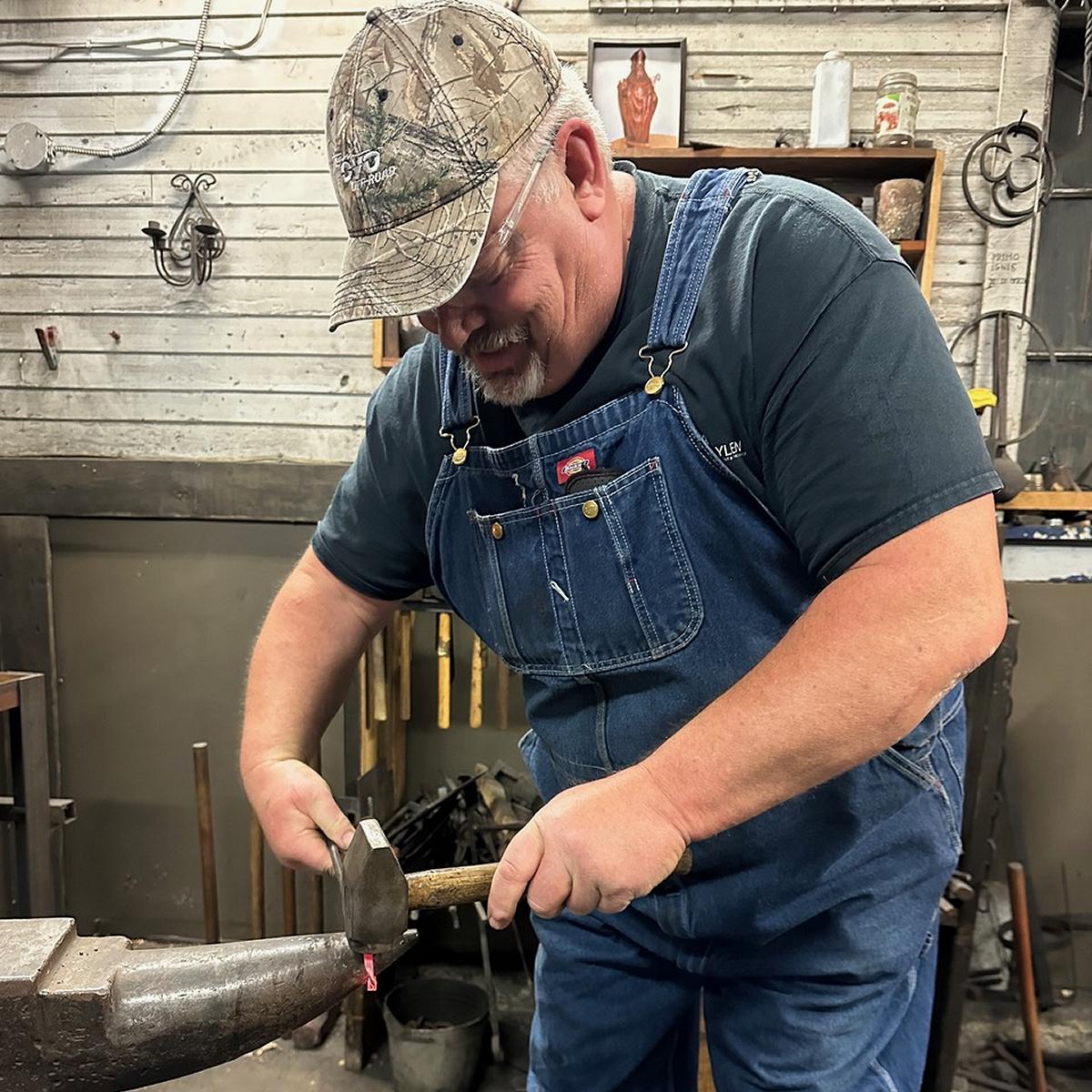
James Doughty decided to take a blacksmith course along with his daughter Hailey, the museum operations coordinator at Lang Pioneer Village Museum, after she discovered her four-times great uncle was a blacksmith who built the shop located at the museum. (Photo courtesy of Hailey Doughty)
Beyond her personal journey in connecting to her ancestry, Doughty explains there’s a lot that can be learned from engaging in a 19th century trade skill.
“We’re so used to a world of instant where you can check your banking right away, and everything is go, go, go,” she says. “So going from that to then going into something that’s from the eighteen and nineteenth century, it takes you a while to learn that you can’t be perfect right off the start.”
Doughty hopes that the discovery of her family connection and the new passion it ignited in her might support museum visitors in finding their own connections to history.
Advertisement - content continues below
Share on Bluesky
“One thing about Lang is that you’re continually learning,” Doughty says. “Knowing that now I have this family connection and I can speak to that, it’s probably going to inspire a seasonal worker, a volunteer, or a visitor to then go and look into their own family history.”
Lang Pioneer Village Museum was established by Peterborough County in 1967 to commemorate the centennial of Canada’s Confederation and to celebrate and preserve the rural history of the area. The 25-acre site features over 30 restored and furnished historic buildings constructed between 1825 and 1910, as well as several replica buildings.
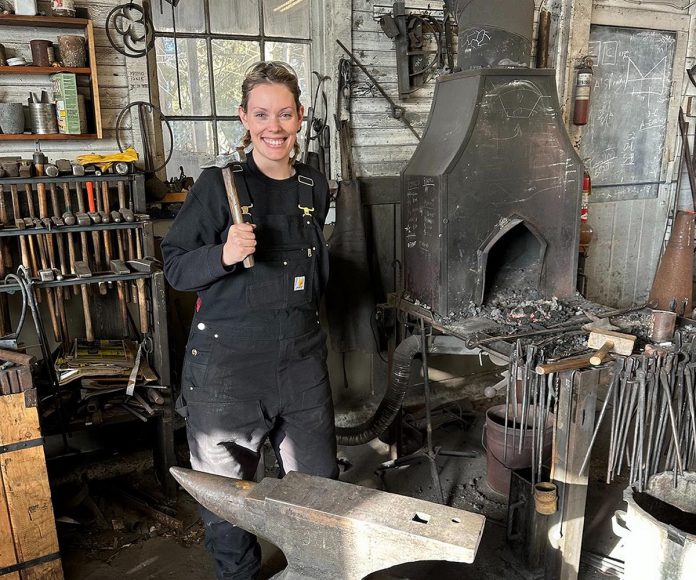
Hailey Doughty is the museum operations coordinator at the Lang Pioneer Village Museum, where she not only educate visitors but helps them find a connection to the land and history of Peterborough County. The discovery that she is a descendent of Daniel Kidd, the blacksmith who worked in and built the blacksmith shop currently at the living history museum, has prompted her to learn the trade of blacksmithing. (Photo courtesy of Hailey Doughty)
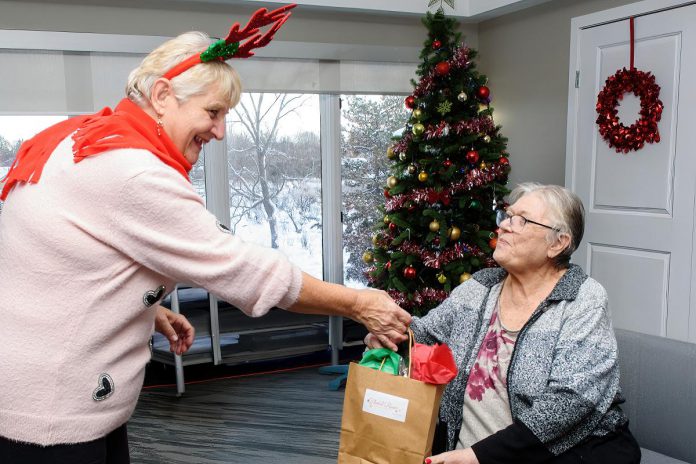
Lindsay Garden Club volunteers recently delivered more than 700 brightly coloured Kalanchoe plants, along with Christmas cards created by area schoolchildren, to residents of Kawartha Lakes long-term care homes. (Photo courtesy of Lindsay Garden Club)
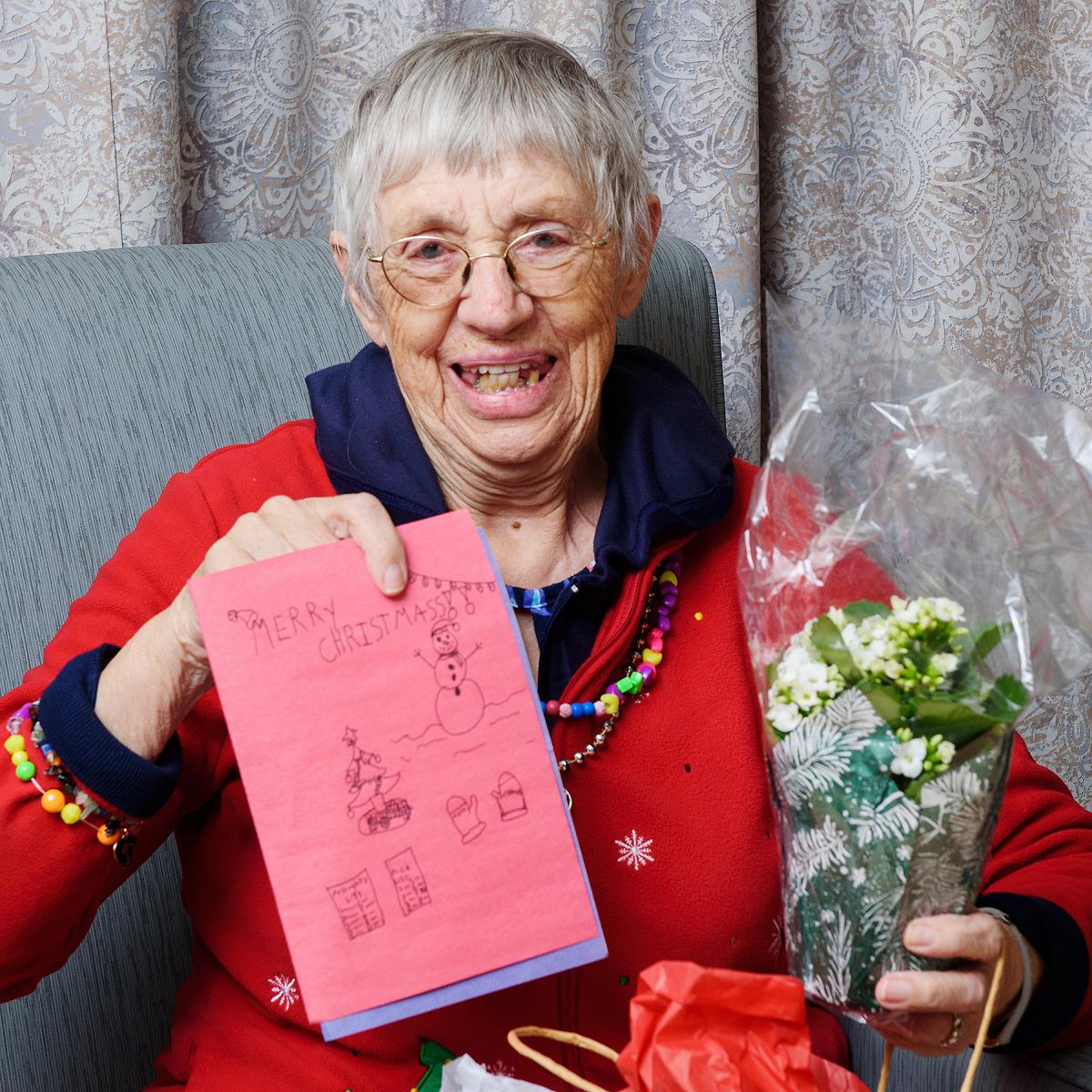
Joelle Persram watched with delight as seniors with advanced dementia got a twinkle in their eyes as they opened brown gift bags containing unique cards, messages, and a flowering plant, curated especially for them.
Persram, an activation aide at Extendicare Kawartha Lakes, said residents of the Kawartha Lakes long-term care home truly appreciated a recent holiday gesture by the Lindsay Garden Club.
The Lindsay Garden Club delivered its second annual “Flower Power” holiday initiative, which is an endeavour that brings hundreds of flowering plants and handmade Christmas cards to seniors living in long-term care homes in the City of Kawartha Lakes.
Advertisement - content continues below
The project celebrates the spirit of giving and aims to bring warmth and joy to residents who may not be able to spend the season with loved ones, said garden club member Jen Lopinski.
Extendicare Kawartha Lakes and Lakeland Village residents received more than 110 gift bags.
“It was fabulous,” Persram told kawarthaNOW. “They loved the plants, but they especially loved all of the homemade cards from the kids. The elderly love physical letters because that was a huge part of their life, (as was) gardening and taking care of plants.”
According to Lindsay Garden Club volunteers, the residents of long-term care homes in Kawartha Lakes who received gift backs especially loved the homemade cards made by area schoolchildren. (Photo courtesy of Lindsay Garden Club)
Persram said last year, when the home received its inaugural delivery, one of the residents nurtured the plant for several months and entered it into the Lindsay fair.
The packaging was “delightful” as well, she noted. The gift bags with tissue allowed residents to open the presents and take out their plants.
“What I loved … especially for the (residents) who have more advanced dementia, was their eyes would just light up because they were so excited to open a gift.”
Advertisement - content continues below
Persram added the residents particularly enjoyed seeing the red, white, and pink blooms on the Kalanchoe plants.
“They love to garden, and they love having plants on their windowsills. I think it just makes them feel like they’re more at home — because it is their home.”
Earlier in December, Lindsay Garden Club volunteers packed and delivered more than 700 brightly coloured Kalanchoe plants, along with the Christmas cards created by area schoolchildren.
The Lindsay Garden Club’s “Flower Power” holiday initiative delivered hundreds of flowering plants and handmade Christmas cards to seniors living in long-term care homes in the City of Kawartha Lakes. The project celebrates the spirit of giving and aims to bring warmth and joy to residents who may not be able to spend the season with loved ones. (Photo courtesy of Lindsay Garden Club)
“We know that the holiday season can be a difficult time for many in long-term care, especially those who may not receive frequent visits,” said Lindsay Garden Club member Kim McGee in a media release.
“The Flower Power Christmas initiative is our way of letting these residents know they are not alone and that they’re remembered and cherished by their community.”
Students at area schools prepared the specially crafted cards to accompany each flowering plant.
Advertisement - content continues below
Participating schools included Alexandra Public School, St. John Paul II Elementary School, St. Mary’s Catholic Elementary, School, Parkview Public School, King Albert Public School, Queen Victoria Public School, St. Dominic School Catholic Elementary School, and Heritage Christian School.
Kawartha Classic Flowers, sponsors, and volunteers helped make the initiative flourish, the garden club noted.
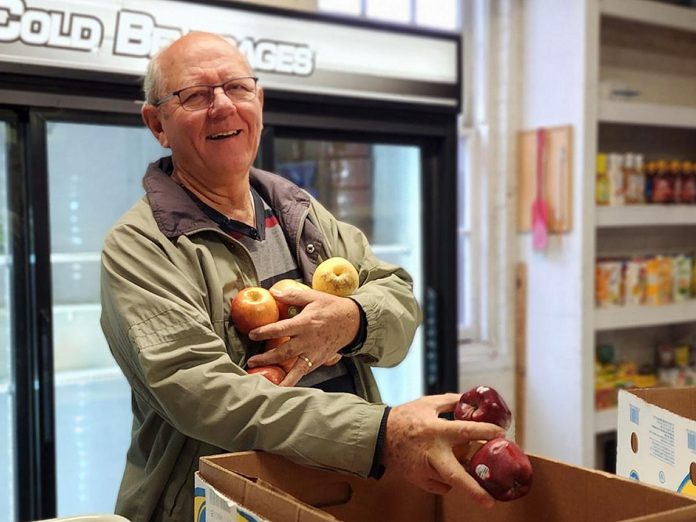
Robin Adair is a passionate volunteer and treasurer for the Good Neighbours Care Centre in Peterborough. Operating out of 164 Sherbrooke Street for 40 years, the registered charitable organization always been volunteer-run, and provides clients with food, clothing, homeware, and personal hygiene products entirely free of cost. (Photo courtesy of Good Neighbours Care Centre)
For 40 years, the Good Neighbours Care Centre in Peterborough has been run by exactly that — good neighbours. From the volunteers who commit countless hours stocking the shelves to the local businesses that donate what they can, the charity is a long-standing community effort and the demand for its services is only increasing.
“Over all these years, it’s been a whole variety of volunteers that just continue to make it what it is,” says Robin Adair, volunteer treasurer of the Good Neighbours Care Centre. “We just spent all those years keeping it going and serving our community and we will do that for as long as we get community support.”
Though Adair has been volunteering for the registered charitable organization since his retirement in 2019, the Good Neighbours Care Centre was established in 1984 and has run out of the same building at 164 Sherbrooke Street ever since.
Advertisement - content continues below
Share on Bluesky
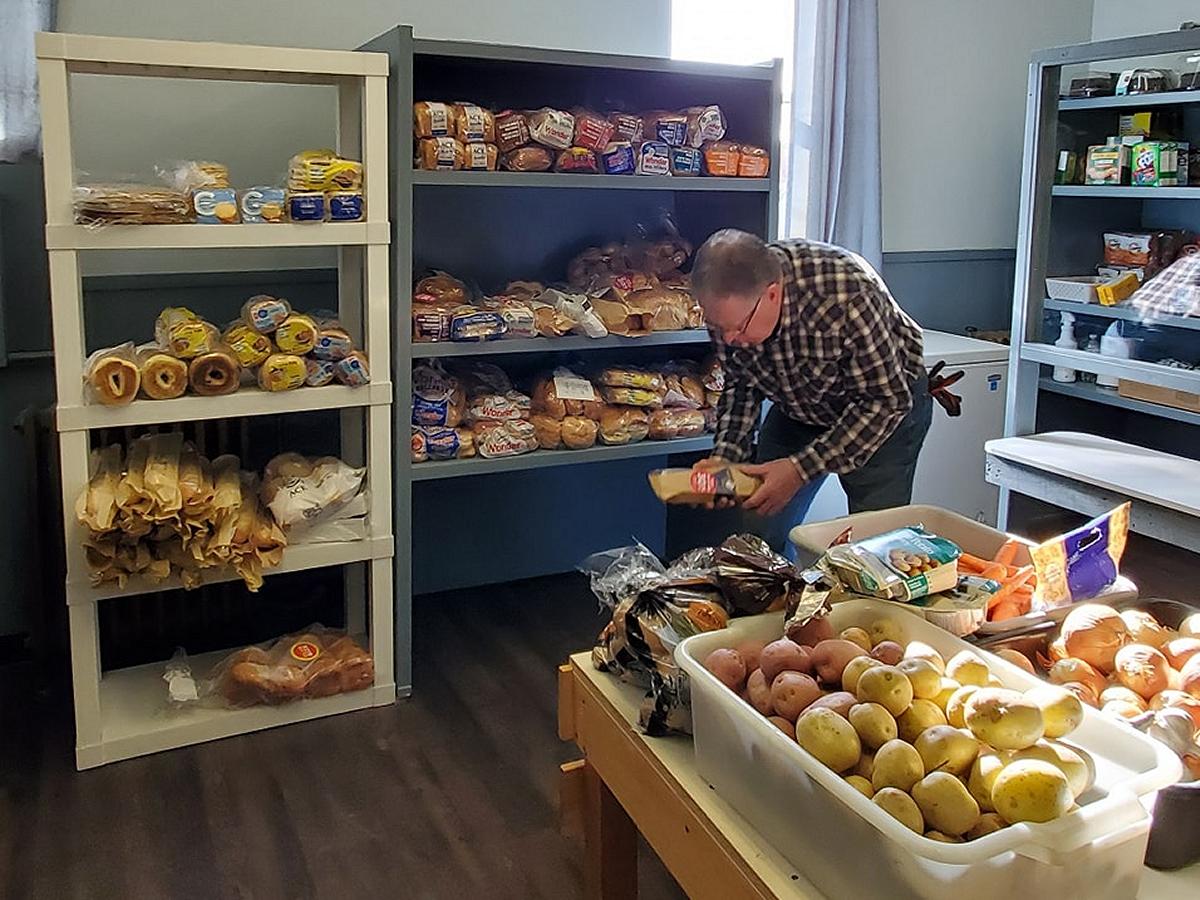
Four times per week, volunteers of the charity go to three grocery stores in Peterborough to pick up food items like breads, premade salads, and produce. As a member agency, Good Neighbours Care Centre also received items from Kawartha Food Share up to three times per week, on top of receiving a major shipment with up to 10 skids full of packaged food once per month.
Then, clients can drop into the Good Neighbours Care Centre on Mondays, Wednesdays, and Fridays from 10 a.m. to 2 p.m. to pick up, at no cost, the fruits, vegetables, and bread, as well as visit the “sweet corner” full of cakes, cookies, crackers, and other pastries. Editor’s note: the centre is closed for the holidays and will reopen on Friday, January 3.
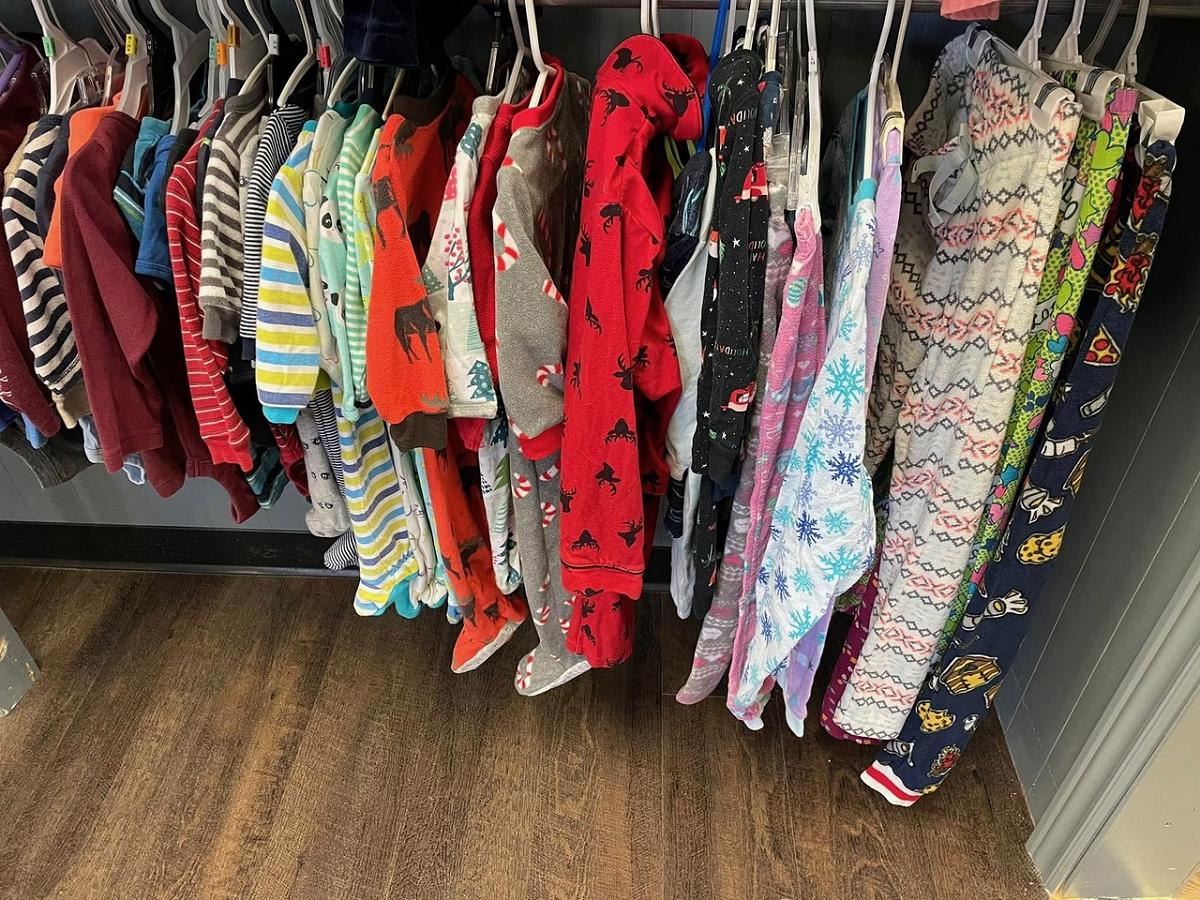
There are additional opportunities for clients to pick up household goods like gently used clothing, shoes, tableware, toasters, and personal hygiene products — all of which have all been donated by businesses and individuals in the community. If the charity has extra cash, they will purchase additional food to even out the offerings, if necessary.
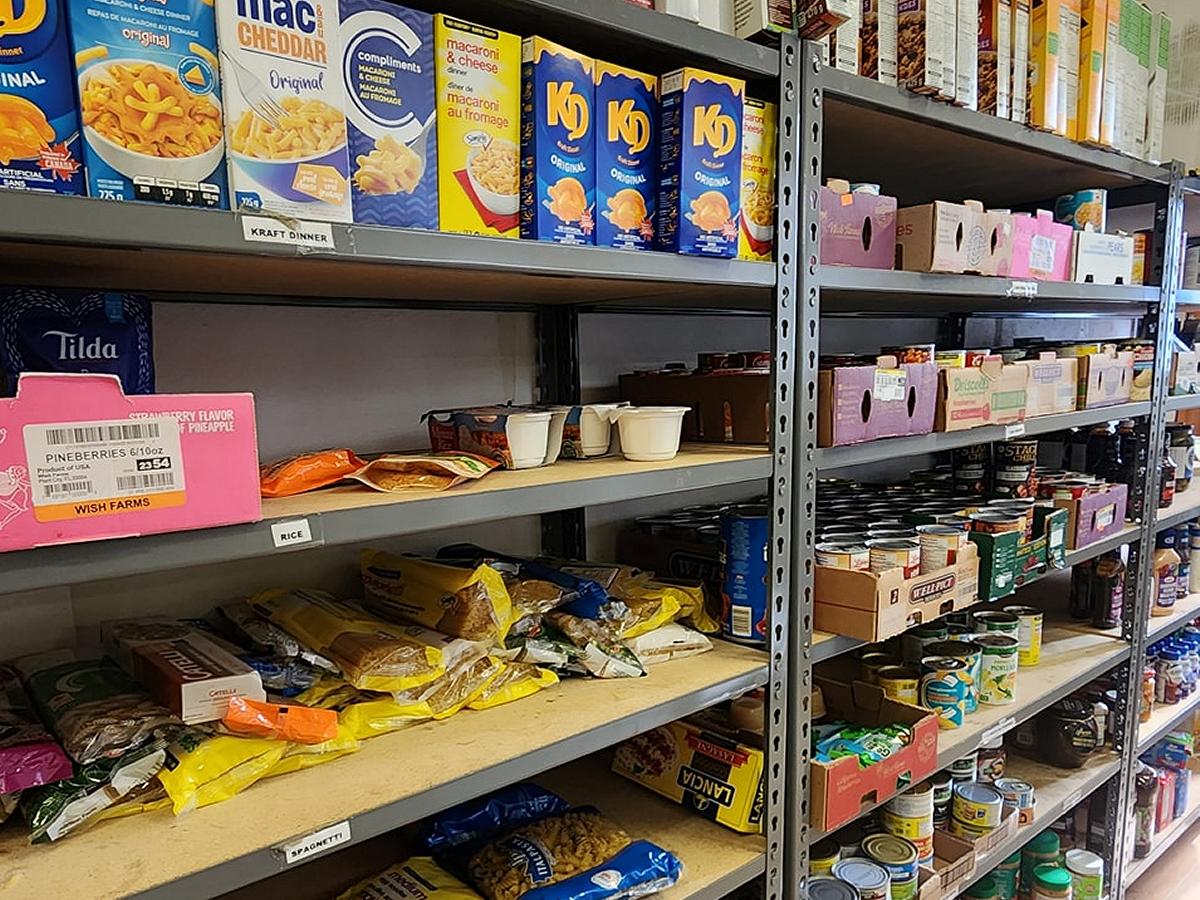
In addition to collecting food from grocery stores and Kawartha Food Share, the Good Neighbours Care Centre accepts community donations of clothing, shoes, appliance, and personal hygiene products. Clients can stop by the centre Mondays, Wednesdays, and Fridays between 10 a.m. and 2 p.m. to browse the shelves of donated items. (Photo courtesy of Good Neighbours Care Centre)
“We run a pretty high-quality operation,” says Adair. “Those who come in to use our services can walk out knowing they have a zipper that works, the clothing is clean, and the food is good.”
Additionally, once per month, clients can get a larger haul of staple goods from the kitchen, including milk, eggs, frozen meals, proteins, coffee, tea, canned goods, pastas, and more. The clients will be able to get enough for the whole family and all it requires is showing a piece of government ID.
“Sometimes we get pork chops or salmon and its $40 worth that can be part of their big shop for the month,” says Adair. “Food banks aren’t there to supply every meal for our clients, but they are here to help them get through the month.”
Advertisement - content continues below
Share on Bluesky
Thanks to the suppliers and donors, beginning two years ago, the Good Neighbours Care Centre was able to undergo transformations to better improve client service. The charity repainted the interior of the 100-year-old building, installed central air conditioning, and received a brand-new laminated floor that was entirely donated.
“Our clients are our focus obviously and we want to do the best that we can for them in providing food, providing facilities, and just getting to know them a little bit and build a bit of a relationship with them,” Adair says.
He adds that the pantries are intentionally designed so clients can walk through and select their own vegetables, produce, and products as if they’re shopping at a grocery story.
Clients of the Good Neighbours Care Centre can access the shelves three times per week on Mondays, Wednesdays, and Fridays from 10 a.m. to 2 p.m. They can also visit the kitchen once per month to collect a larger haul of fresh grocery items for the whole family. (Photo courtesy of Good Neighbours Care Centre)
“We try to present a place of high dignity all the way through the system,” Adair says. “That’s our goal with what we do. Treat them on a human basis, because we see all kinds of different economic status of people and how they have to live life.”
Though the centre never closed during the pandemic, Adair says he has since noticed an increase from roughly 50 to 60 people coming in daily before the pandemic to up to 80 or 85 now coming through daily. Some of the increased demand came earlier this year due to higher food prices.
“We found when inflation started going bad on food, around March this past year, all of a sudden we’re getting people we hadn’t seen before,” he says. “Making $36,000 a year on minimum wage doesn’t go very far anymore, so we’re just there to support and give a hand to those who need it. That’s always our aim.”
Advertisement - content continues below
Share on Bluesky
This year, the charity has served between 11,000 and 12,000 clients.
“We have clients that are there at 7:30 or 7:45 in the morning for a 10 a.m. start, so it would not be unusual for someone to stand in line for an hour or an hour and a half to get in because it’s first come, first served,” Adair says, adding that occasionally they’ve had to turn people away. “That doesn’t happen real often, but it’s heartbreaking to go out and tell somebody that we’re out of food.”
Increased living costs not only exacerbate the demand for Good Neighbours Care Centre, but also create a barrier for individuals in having the disposable income to donate to the charity.
“Even for a middle-class family, their grocery bill went up, and now they’re just trying to stay alive themselves, so they don’t have more to give to anybody else,” he says. “It’s hard on everybody.”
The Good Neighbours Care Centre is run entirely through the dedication of more than 30 volunteers. Volunteer positions can include doing grocery store pick-ups, sorting donations, and running the centre during opening hours. (Photo courtesy of Good Neighbours Care Centre)
Those who are unable to financially support the charity might be interested in a volunteer position. Such work can range from driving the trucks for pickups, sorting donations, and running the shop during opening. Currently, the centre is made up of more than 30 volunteers, many of who are retirees.
“A person should volunteer long before they retire — you don’t have to wait until you’re 65 to volunteer,” Adair says. “Maybe it’s only a couple hours a week somewhere, but the whole concept of volunteering should be just a part of everybody’s life. Whether you’re a hockey coach or whatnot, you’re taking some of your time and giving it to somebody else.”
“There’s fulfillment in helping somebody else,” Adair says. “I’m in a position that I can do that, and I enjoy doing that. Look at all the people we served this year — 11,000 is not a small number and there’s a lot of households involved in this, so we are thankful for it and for all who support us.”
He notes that while Good Neighbours Care Centre is entirely volunteer-run, there are always ongoing costs like operating the trucks and paying rent, and every bit of support can make a difference.
“Often you get somebody who says ‘I only have 50 bucks’, but we’re grateful for whatever you have,” Adair points out. “We appreciate it even if all you have (to give) is some clothes. Somebody else will be using those clothes. As an organization, we’re just grateful for whatever help somebody can give us, and we’ll just keep it going.”
For more information about the Good Neighbours Care Centre or to make a monetary donation, visit www.goodneighboursptbo.com.
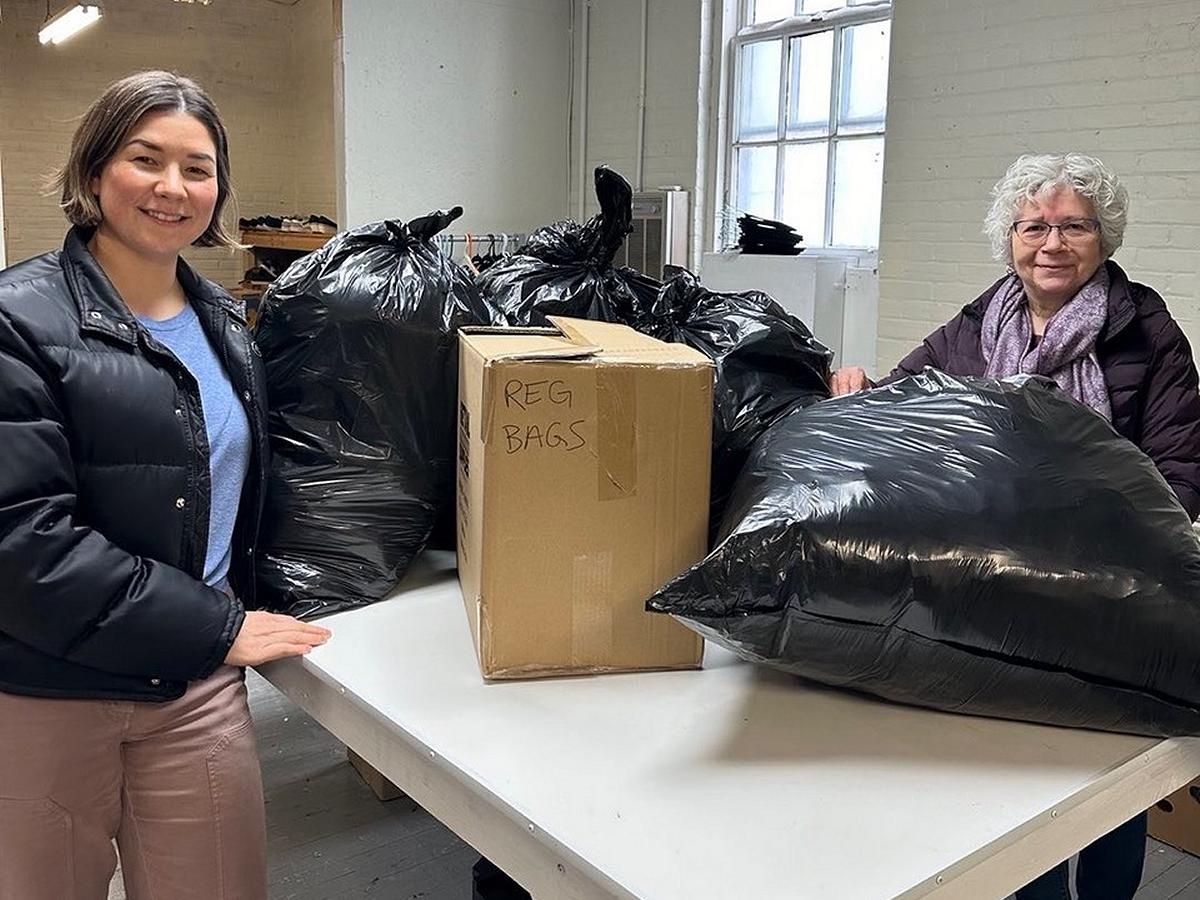
Jacquelyn Craft (left), owner of Peterborough’s The Neighbourhood Vintage, donates bags of clothing to the Good Neighbours Care Centre. Operating since 1984, the charity relies on community donations to meet the demand for services, which has been growing since the pandemic and even more in early 2024 with inflation. (Photo courtesy of Good Neighbours Care Centre)
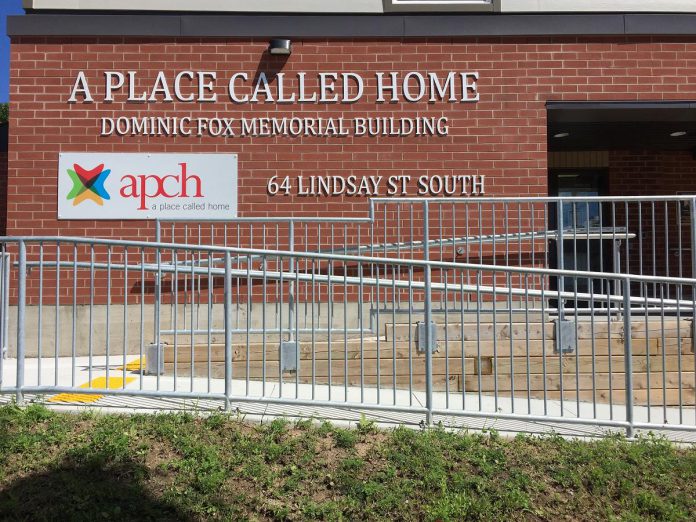
Located at 64 Lindsay Street South in Lindsay, A Place Called Home (APCH) offers emergency shelter for people experiencing homelessness and a daily drop-in service for people at risk of homelessness in Kawartha Lakes and Haliburton County. (Photo: APCH)
After receiving approval to expand its number of homeless shelter beds from 19 to 30, A Place Called Home (APCH) in the Kawartha Lakes had a full house that night.
APCH recently announced that in partnership with the City of Kawartha Lakes, it was able to increase its shelter capacity to address the growing need for housing support in the community.
The expansion is geared at ensuring more people who are experiencing homelessness have access to safe and secure accommodations while they work towards their housing goals, APCH noted in a media release.
Advertisement - content continues below
“While it doesn’t solve the problem of homelessness or offer long-term solutions, it does create some ease on the system and gets folks inside, ensuring that everyone is in a safe space while they work on permanent housing solutions,” APCH’s shelter manager Nicole Bryant told kawarthaNOW.
“We are lucky to have a great partnership with the City of Kawartha Lakes where we can be flexible and work together to create a cohesive safety net for individuals and families who find themselves without a home.”
When the shelter was rebuilt during the pandemic, its square footage was larger. It was built as a “pandemic proof” shelter, meaning that the square footage would allow for all 19 residents to remain in shelter, based on maintaining a six-foot distance from each other and meeting other public health requirements.
Advertisement - content continues below
“We for sure had some space to spare and made the decision to up our capacity,” Bryant noted.
“APCH is always looking for further ways to help meet the needs of the community. The new shelter build came with an increased square footage allowing for a higher occupancy rate, which has never been something that was required until recently.”
According to Bryant, when the number of people needing space began to outweigh the number of beds available, APCH and the City of Kawartha Lakes began looking at ways to increase capacity.
Advertisement - content continues below
“In pre-COVID times it was common to have one or two of our couches being used for overflow purposes, but post-COVID is an entirely different story,” Bryant explained. “We were literally bursting at the seams. The cost of rent and the absence of housing options brought us all to the table to discuss further solutions and possibilities.”
Additionally, APCH is working with the City of Kawartha Lakes to administer the “Out of the Cold” program.
“This life-saving initiative ensures that individuals and families have a safe place to stay when temperatures drop to dangerous levels or during extreme weather conditions,” APCH noted in the release.
Advertisement - content continues below
According to APCH, since December 1 it has successfully moved 15 additional people into the safety of the shelter and made alternate arrangements to provide shelter for another nine people. As a result, there are 34 people who have shelter during cold and extreme weather conditions.
APCH is asking community members who may know someone in need of shelter to have them call 705-328-0905.
For more information about APCH, visit www.apch.ca.
As Christmas Day, Boxing Day, and New Year’s Day are all statutory holidays in Ontario, all government offices and services and liquor and beer stores are closed, except for a selected few beer stores that will be open on Boxing Day. Most retail businesses — including malls, big box stores, and grocery stores — are closed on Christmas Day and New Year’s Day but are open on Boxing Day. Many pharmacies remain open on both Christmas Day and New Year’s Day.
For your convenience, we provide this list of holiday hours for 289 selected businesses, services, and organizations across the Kawarthas. This information comes from their websites and social media accounts, which may or may not be up to date, so please always call them first to confirm their hours (we’ve included phone numbers), especially where you see “call” or “call to confirm” (which means we couldn’t find or confirm holiday hours) or if you are travelling any distance.
If your business or organization is listed and the hours are incorrect, please let us know by using our content feedback form. We do not have the hours for restaurants in this list as there are far too many to include.
Bewdley Community Recycling Centre 7650 County Rd. 9, Hamilton 905-342-2514
8:30am - 5:00pm
CLOSED
CLOSED
8:30am - 5:00pm
CLOSED
Brighton Community Recycling Centre 1112 County Rd. 26, Brighton 613-475-1946
8:30am - 5:00pm
CLOSED
CLOSED
8:30am - 5:00pm
CLOSED
Canada Post Mail Delivery / Offices (Note: post offices operated by the private sector will be open according to the hours of service of the host business
No change
No collection / delivery
No collection / delivery
No change
No collection / delivery
City of Kawartha Lakes City Hall, Municipal Service Centres, and Administration Offices 26 Francis St., Lindsay 705-324-9411
8:30am - 12:00pm
CLOSED
CLOSED (ALSO CLOSED DEC 27 - 30)
CLOSED
CLOSED
City of Kawartha Lakes Parks, Recreation and Culture facilities, arenas, and pools Various locations, City of Kawartha Lakes 705-324-9411
Closes at 12:00pm
CLOSED
CLOSED
Closes at 12:00pm
CLOSED
City of Kawartha Lakes Public Library Branches Various locations, City of Kawartha Lakes 705-324-9411 x1291
10:00am - 2:00pm
CLOSED
CLOSED
10:00am - 2:00pm
CLOSED
City of Kawartha Lakes Waste and Recycling Collection 26 Francis St., Lindsay 1-888-822-2225
No change
Moves to Thu Dec 26, Dec 26 moves to Dec 27
No change
No change
Moves to Thu Jan 2, Jan 3 moves to Jan 4
City of Peterborough Day Cares Peterborough 705-748-8830
8:30am - 12:00pm
CLOSED
CLOSED (ALSO CLOSED DEC 27 - 30)
CLOSED
CLOSED
City of Peterborough Garbage Pickup Peterborough 705-745-1386
No change
Moves to Sat Dec 28
Moves to Mon Dec 30
No change
Moves to Sat Jan 4
City of Peterborough Green Bin Pickup Peterborough 705-745-1386
No change
Moves to Sat Dec 28
Moves to Mon Dec 30
No change
Moves to Sat Jan 4
City of Peterborough Recycling Pickup Peterborough 1-888-597-1541
No change
Moves to Sat Dec 28
Moves to Mon Dec 30
No change
Moves to Sat Jan 4
City of Peterborough Social Services (for emergency shelter services call 705-926-0096) Closed, Peterborough 705-748-8830
8:30am - 12:00pm
CLOSED
CLOSED (ALSO CLOSED DEC 27 - 30)
CLOSED
CLOSED
Cobourg Public Library 200 Ontario St., Cobourg 905-372-9271
The United Way Peterborough & District's 19th edition of its "Housing is Fundamental" report provides an analysis of Peterborough's worsening rental market and "underscores the ongoing challenges posed by housing affordability and accessibility." (Stock photo)
“Relentless demand, inadequate supply, surging rents, and growing concerns around affordability make this the most challenging rental environment in Peterborough’s history.”
That is just one finding of a housing report released in early December by the United Way Peterborough & District that explores the challenges with securing a place to call home in Peterborough and area.
Year-over-year Peterborough’s rental market continues to be tighter and more expensive, notes author Paul Armstrong in the 19th edition of the “Housing is Fundamental” report.
Advertisement - content continues below
The report provides an analysis of Peterborough’s worsening rental market and “underscores the ongoing challenges posed by housing affordability and accessibility,” stated a media release about the document.
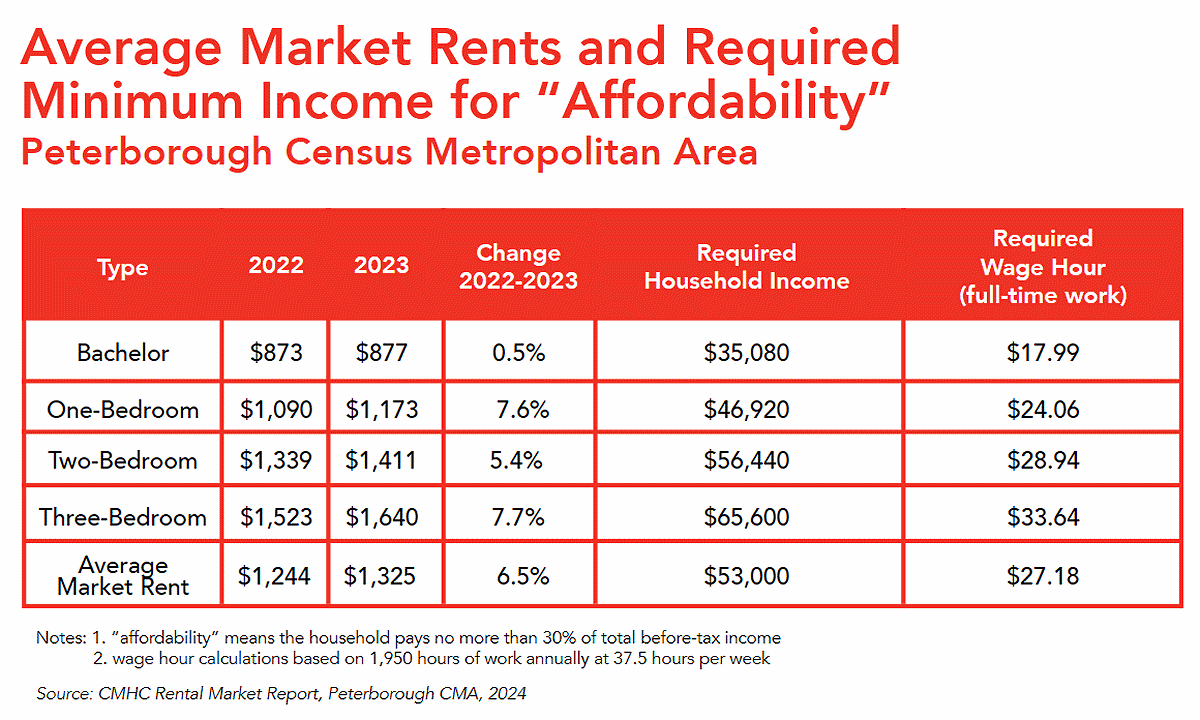
“Affordability” is defined as spending no more than 30 per cent of total before-tax income on housing. But with the average market rent in the Peterborough area now $1,325, that means a household has to make $53,000 for a rental unit to be “affordable.”
The report states this means there’s little, if any, affordable housing for people who have low incomes.
A significant portion of renter households are in “core housing need,” with some spending well in excess of 50 per cent of their household incomes on rent, the report found.
“Meagre” additions to the Peterborough CMA rental stock in 2023 mean hundreds of units are still required, with the demand for rental units far exceeding supply.
Average Market Rents and Required Minimum Income for “Affordability” in the Peterborough Census Metropolitan Area. (Graphic: United Way Peterborough & District)
Meanwhile, Trent University and Fleming College place a substantial demand on the city’s rental market, the report notes. New immigrants and foreign students to the area require housing. Housing suitable to transition people out of homelessness is also needed.
According to the report, the housing and homelessness crisis has been mainly caused by governments withdrawing from providing public housing, leaving it to the for-profit market to provide housing.
“Governments will need to return to direct provision of social housing and render additional support for non-profit housing,” the report states. “We need to build more, much more. We need to make it more affordable. And greater density will likely result. All of this calls upon governments to assert a leading role.”
Advertisement - content continues below
The document also points out that the maximum benefit for people receiving Ontario Works is $733 per month, but the average rent in Peterborough in 2023 for the smallest unit — a bachelor — was $877 per month. A single bedroom unit went for $1,173 while a two-bedroom apartment was $1,411, and a three-bedroom unit cost, on average, $1,640.
On a broader scale, the Canada-wide vacancy rate was 1.5 per cent as of October 2023, which was a new low, with Peterborough’s vacancy rate standing at one per cent. Recent renter households (43.2 per cent) were also more likely to live in unaffordable housing than existing renter households (30.5 per cent), with unaffordable housing meaning more than 30 per cent of pre-tax household income is spent on shelter costs.
“When inadequate supply of rental units produces a one per cent vacancy rate in Peterborough, something has to change,” Amstrong notes. “When housing costs are now the primary driver of inflation and 20 per cent of Canadian rental stock is owned by large capital enterprises, something’s inequitable. When homelessness grows, but social housing builds don’t materialize, something’s unjust. The housing crisis deepens with little indication of relief.”
Advertisement - content continues below
On the other end of the scale, high ownership prices have prevented renter households from making the move to jp,eownership.
And, finally, 2023 saw an unprecedented period of multiple converging crises, which included homelessness, housing precarity, food insecurity, income precarity, mental health challenges, and addictions.
“Flawed government policy has resulted in profound crises in an otherwise prosperous country,” Armstrong states. “Clearly, the government’s chosen, market-driven model for housing provision and personal security has failed.”
kawarthaNOW.com offers two enews options to help readers stay in the know. Our VIP enews is delivered weekly every Wednesday morning and includes exclusive giveaways, and our news digest is delivered daily every morning. You can subscribe to one or both.
Submit your event for FREE!
Use our event submission form to post your event on our website — for free.
To submit editorial content or ideas, please contact us.