











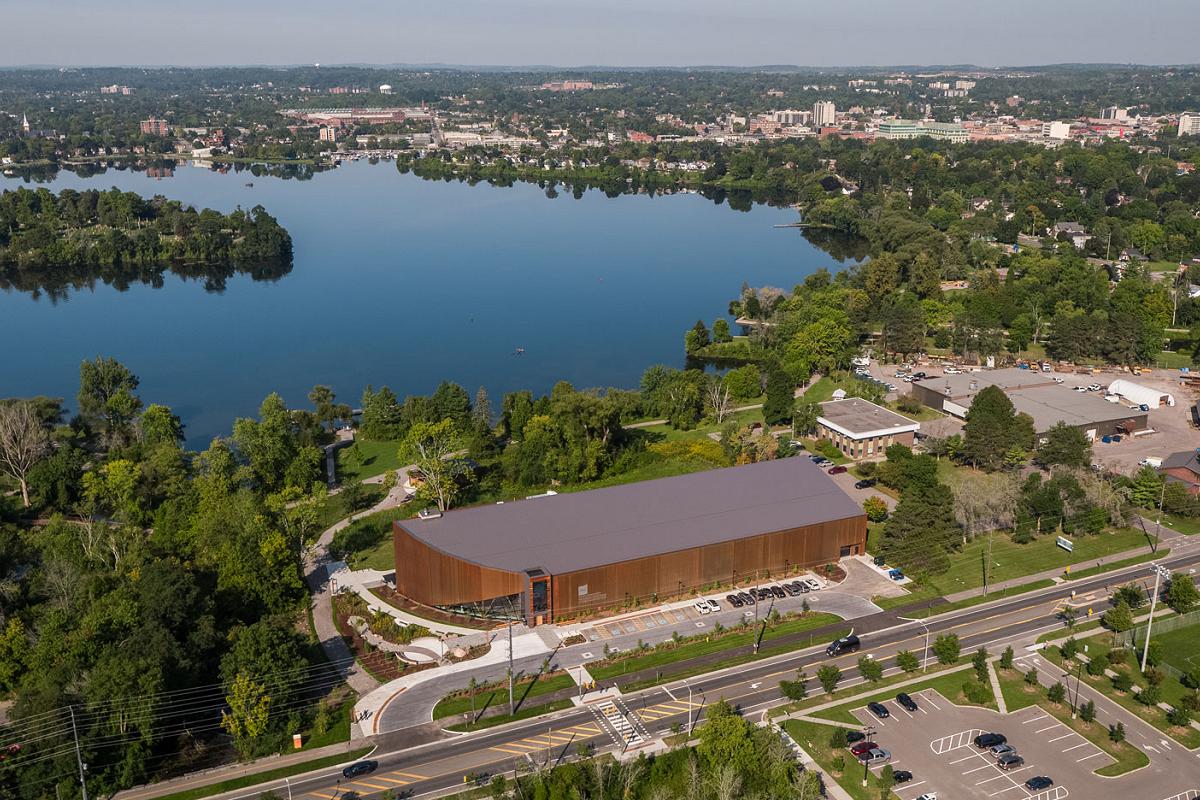









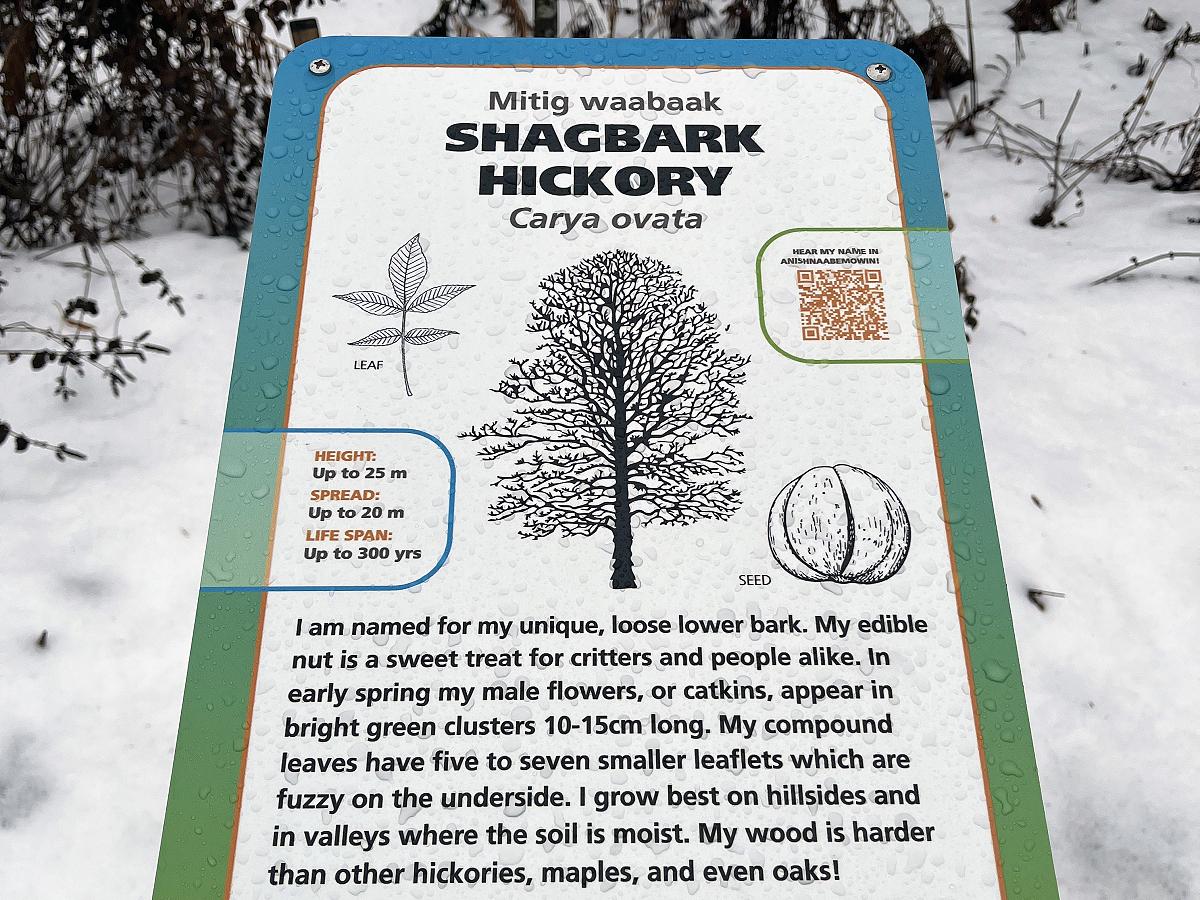
GreenUP grew over 5,000 native plants in 2025 and supported the planting of hundreds of others. In celebration of these restoration efforts, along with newly installed tree identification signage at Ecology Park, GreenUP will highlight a few select native trees in a three-part series over the holidays.
Winter survival in the forest doesn’t begin with the first snowfall.
Long before the cold settles in, many trees are already at work, filling woodland pantries and shaping which species will endure when resources grow scarce.
While evergreens work to sustain life through the depths of winter, hardwood trees play a different but equally important role. Red oak, shagbark hickory, and black walnut act as architects of abundance, producing food that supports wildlife, influences animal behaviour, and quietly drives forest regeneration.
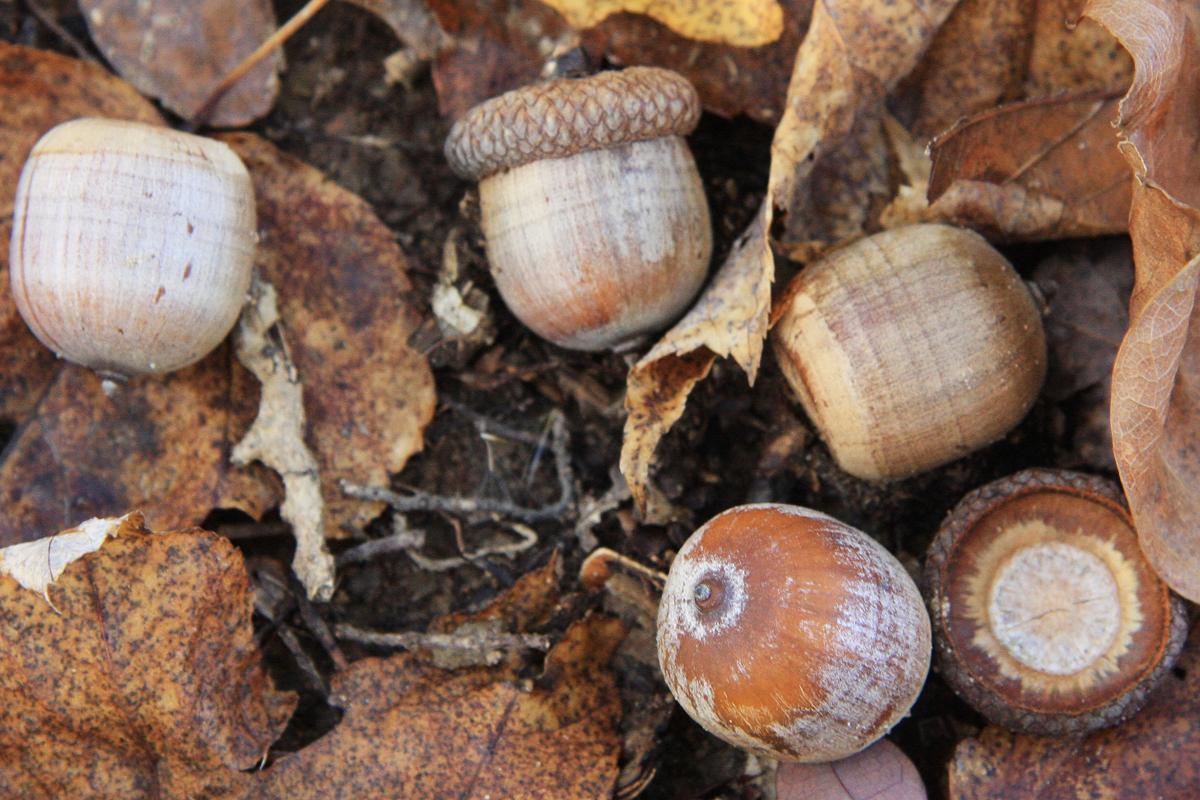
Each fall, the red oak (Quercus rubra) produces acorns rich in energy and high in tannins, a naturally occurring chemical that makes them bitter and slow to spoil. These acorns are carried off and buried beneath leaves or soil for later use by squirrels, blue jays, and other wildlife.
These caches don’t just help animals survive winter; some are left undisturbed long enough to sprout. In this way, red oaks rely on wildlife not just as consumers, but as partners in dispersal. Where an acorn is carried, buried, and abandoned can determine where the next generation of forest takes root.
During years of high acorn production, the resulting wave of seedlings work to reshape forest structure over time. In quieter years, fewer acorns mean more competition both for the animals that depend on them, and for the seedlings that manage to emerge. This is where red oaks shape forest renewal. Their influence reaches beyond feeding wildlife in a single season into future canopies, understories, and communities that will depend on them for decades.
Other hardwood species contribute their own rhythms and rewards, offering food that is different in form, timing, and impact.
One of the most distinctive of these is shagbark hickory (Carya ovata), a tree whose benefits extend well beyond its unmistakable bark.
The shagbark hickory produces one of the most energy-dense foods in the forest. Covered in a thick, hard shell, these nuts require time, strength, and persistence to crack into. For those up to the task, however, the payoff is enormous. Rich in fats and calories, these nuts remain a critical fuel source for animals preparing for winter.
Eastern chipmunks, red squirrels, flying squirrels, and black bears are among the species that favour hickory nuts. While some consume them immediately, others cache them for later use, tucking them into hollow logs, underground burrows, or beneath leaf litter.
Like acorns, not all are recovered. The nuts that remain untouched may germinate, giving shagbark hickory a foothold in new parts of the forest.
Unlike oaks, shagbark hickories tend to produce crops less frequently, yet a strong hickory mast year can significantly boost overwintering survival for nut-dependent species, particularly small mammals. These population increases ripple outward, causing what’s known as a trophic cascade that shapes food webs far beyond the tree itself.
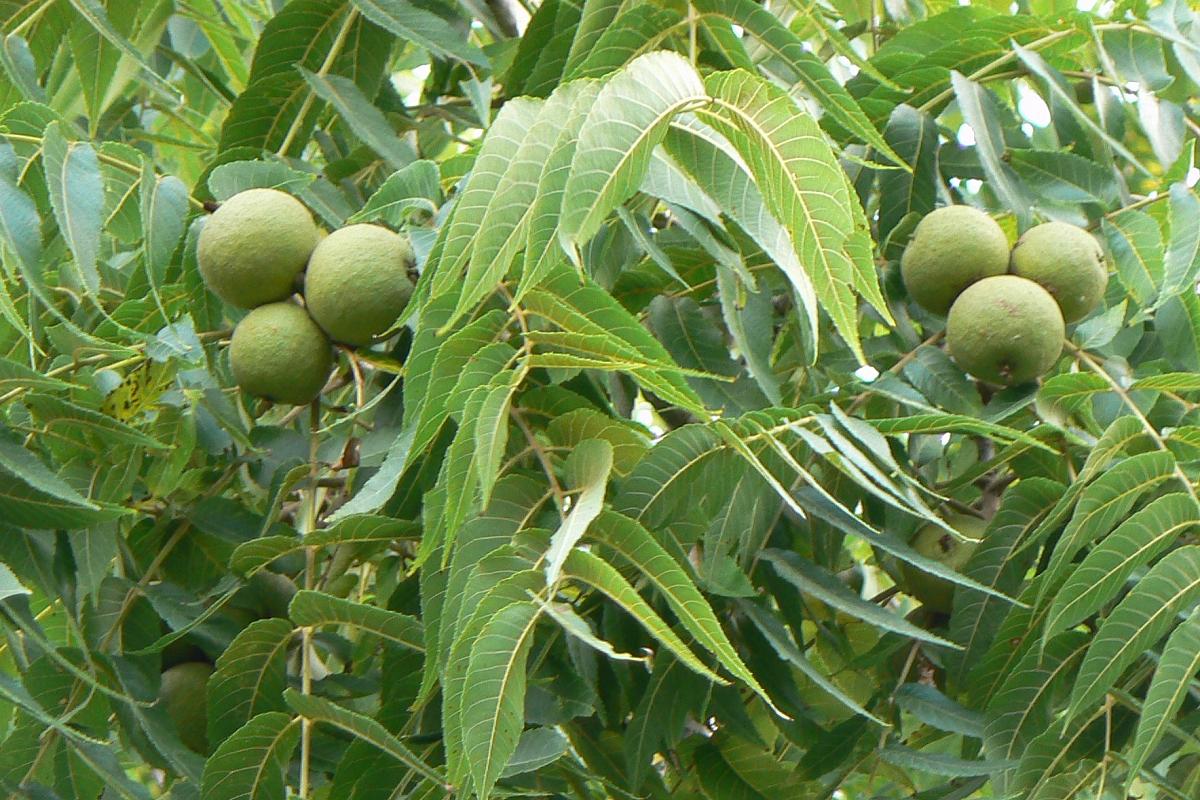
Black walnut (Juglans nigra) adds another layer to the forest’s winter economy. While their round fruits are rich in energy, they come with both physical and chemical barriers that shape who can use them and how they influence the landscape in return.
Black walnuts are encased in thick green husks that must decay or be removed to reveal their hard shell inside. As they can be more difficult to access, black walnuts are often used later in the season than other nuts. For squirrels, chipmunks, and mice, the effort is worthwhile — they provide a concentrated source of fat that supports overwintering survival and spring reproduction. Additionally, the strong scent of the husk and nut makes walnuts easier to locate beneath leaf litter or snow, increasing their importance when visual cues disappear in winter.
By offering a durable, energy-rich food that persists into colder months, the black walnut provides food when options are limited, helping to carry wildlife through the most demanding stretch of the season.
Together, red oaks, shagbark hickories, and black walnuts shape winter survival long before the cold arrives. Through the food they produce and the way it’s accessed, these hardwoods affect which species endure and how forests renew themselves over time.
Winter may test the forest, but its outcomes have been decided seasons earlier.
Visit Ecology Park to see these native tree species and the newly installed tree identification signage, funded in part by Trans Canada Trail, and featuring Anishnaabemowin translation of the tree names courtesy of Curve Lake First Nation and The Creators Garden.
You can support GreenUP’s work to restore native habitat locally by donating today at greenup.on.ca/donate-now/.