

















The Urban Indigenous Working Group in Nogojiwanong/Peterborough is bringing the community together on Tuesday, May 5 to show local Indigenous women and girls that “there is a huge community here to protect them and love them and keep them safe.”
So says Mshkiki Gitigaan Kwe (Katelyn Brennan), an artist, activist, facilitator, and consultant who is a member of the group.
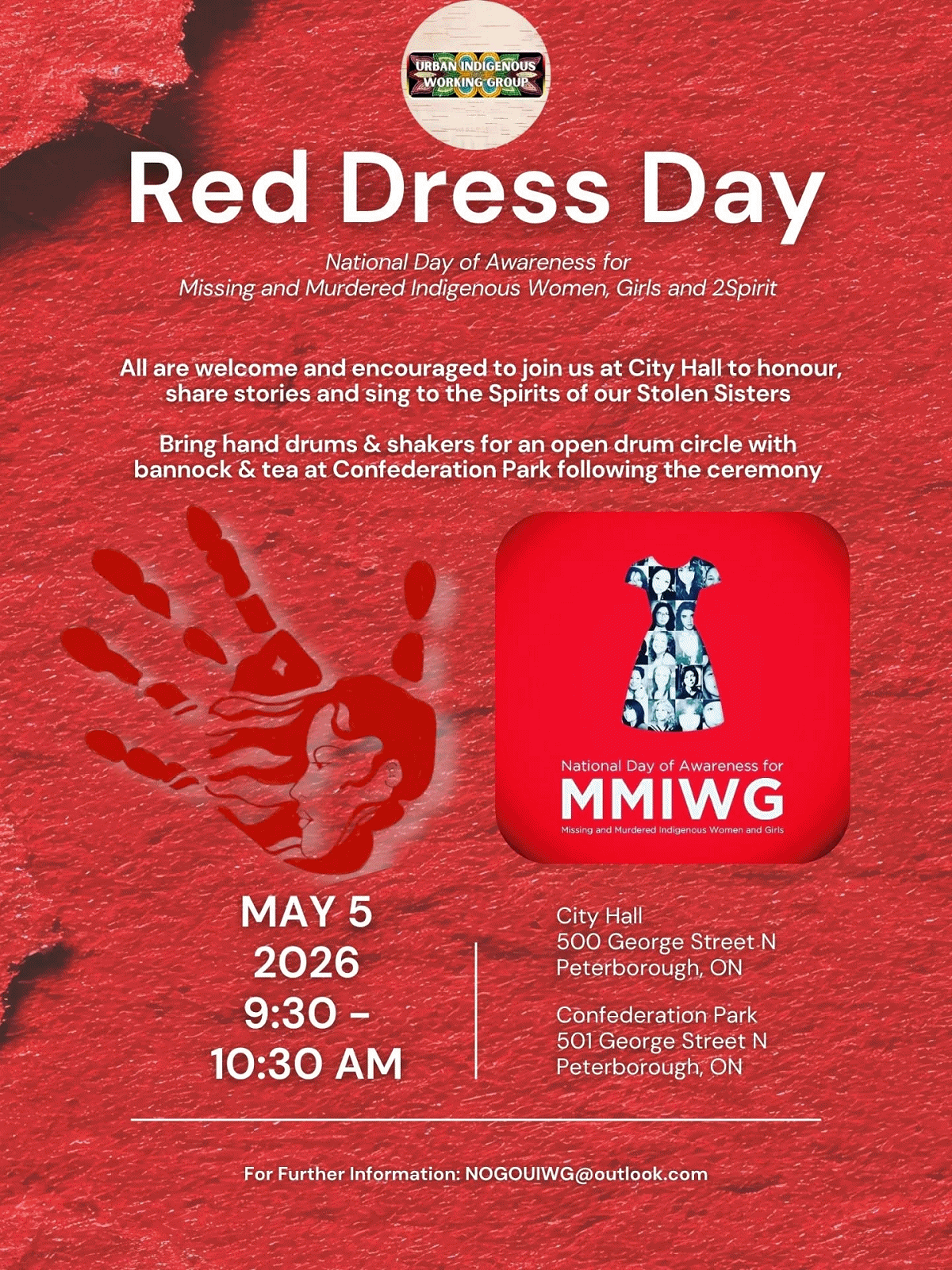
Commonly known as Red Dress Day, May 5 has been recognized as the National Day of Awareness for Missing and Murdered Indigenous Women and Girls and 2SLGBTQI+ People (MMIWG2S+) since 2010.
The meaning of Red Dress Day and its cultural significance
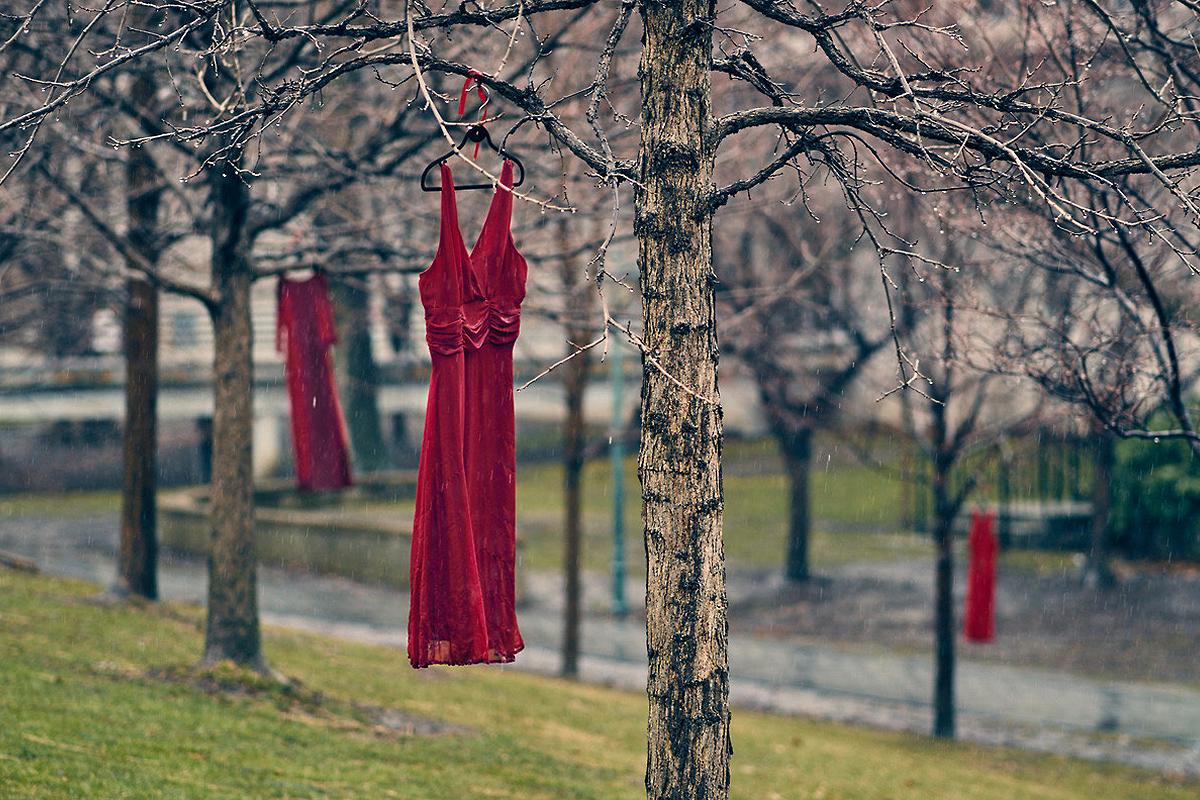
The day of commemoration was inspired and established nationally in partnership with Métis artist Jaime Black as a continuation of her REDress Project, which displayed empty red dresses in recognition of missing or murdered women.
“The colour red is quite significant in our culture because that’s the one colour that spirit can see,” Gitigaan said.
The Urban Indigenous Working Group is a collaborative organization with representatives from the Nogojiwanong Friendship Centre, Peterborough Community Health Centre, Lovesick Lake Native Women’s Association, Lakelands Public Health, City of Peterborough, Niijkiwendidaa Anishnaabekwewag Services Circle, and members of the community.
Gitigaan told kawarthaNOW that one goal of the Urban Indigenous Working Group is to “make sure days of commemoration occur in a meaningful and culturally relevant way.”
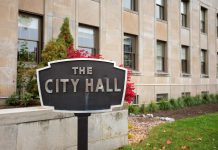
This year’s Red Dress Day commemoration from 9:30 to 10:30 a.m. on May 5 will feature a prayer and drumming ceremony outside Peterborough City Hall at 500 George Street North, followed by the sharing of stories, bannock, and tea in Confederation Square across from city hall.
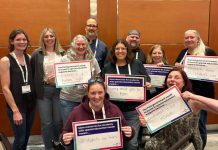
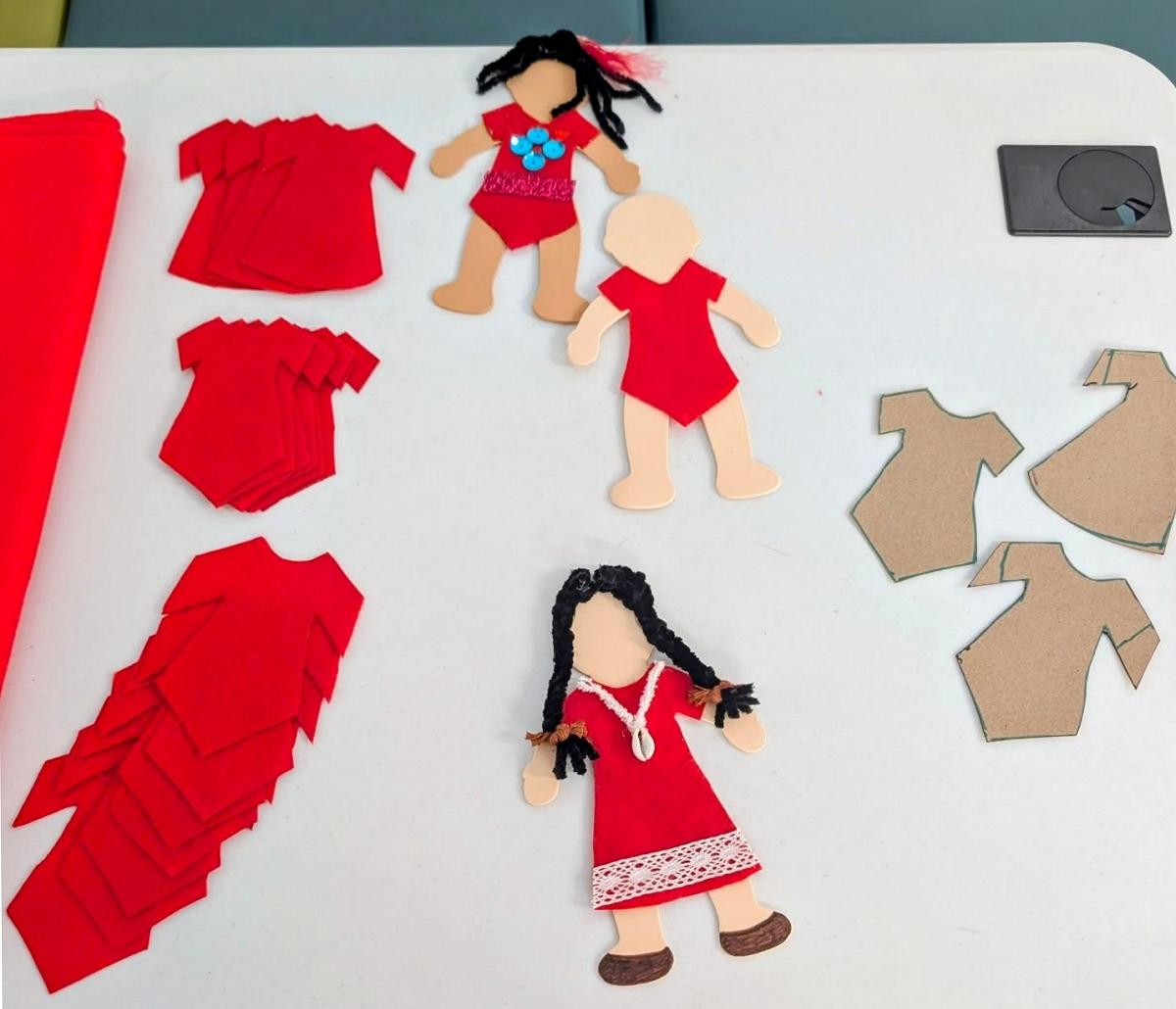
Ahead of the gathering, the Urban Indigenous Working Group and Lovesick Lake Native Women’s Association hosted two workshops where community members participated in crafting felt red dresses and faceless dolls to be displayed at the event.
“We might have some of our stolen sisters wandering and looking for us, so having these dresses on display helps spirit find us,” Gitigaan said.
The working group and its affiliates continue to accept donations of red dresses for display and artistic purposes at the event.
Demands for government accountability and action on MMIWG2S+ crisis
Gitigaan said that since she began hosting events in 2014, she has seen reported numbers of MMIWG2S+ rise from 800 to over 5,000. For her, this demonstrates systemic failures to support and protect Indigenous women and girls.
“The issue is obviously growing and we need to address those policies and procedures in our workplaces that are discriminatory to Indigenous women,” she said.
As a professional Indigenization and decolonization consultant, Gitigaan works closely with non-Indigenous businesses and organizations to dismantle broken systems and build workplaces that accommodate and support Indigenous employees and clients.
She has worked recently as the lead consultant on projects including the Peterborough Community Health Centre and Planet Youth Nogojiwanong in collaboration with Lakelands Public Health.
For her part, there is “a lot that goes ignored” or that people become “used to” in terms of discriminatory and toxic treatment, especially in professional environments.
“Look under a magnifying glass at what is wrong and what can be done to dismantle oppressive and discriminatory systems,” Gitigaan said.
Speaking further to systemic discrimination and the large-scale nature of the MMIWG2S+ crisis, Gitigaan said that all levels of government have a responsibility in the harm caused.
She explained that this, in part, is why the May 5 gathering will take place at Peterborough City Hall and Confederation Square, saying that it is a reminder that Indigenous women are underserved and underprotected by the government.
“It sends a message to our government — it sends a message to the ones that need to hear it,” she said.
Gitigaan also spoke to the importance of all community members, regardless of Indigenous heritage, to demonstrate their desire for the government to take further action on — and take accountability for — the MMIWG2S+ crisis.
“When folks aren’t held accountable it sends a message to our young ladies that they’re not valuable or important,” she said.
Non-Indigenous people encouraged to take part and to educate themselves on the issues
An important aspect of the May 5 gathering for the Urban Indigenous Working Group is the opportunity to engage the whole community, including non-Indigenous residents.
For her part, Gitigaan said the event will be a demonstration of unity and collaboration in the ongoing work to protect Indigenous women and girls.
“This isn’t an event just for Indigenous people,” she pointed out. “We hope and encourage everyone to come and join us, because this isn’t just an Indigenous women’s issue.”
She also noted the importance of non-Indigenous people to be self-motivated in learning, and not to expect Indigenous people to provide all of the education and guidance for action.
“A lot of reconciliation work it put on the shoulders of Indigenous people, and that isn’t really our work to be doing,” Gitigaan said.
Gitigaan said that organizations can ensure that Indigenous people are provided the opportunity to be involved in decision-making processes, and not simply tokenize their voices.
Building relationships with the Indigenous community beyond Red Dress Day
The Urban Indigenous Working Group was established in 2025 and operate at a grassroots level with the support of the organizations represented by their membership.
Gitigaan noted the group does not have a budget and often relies on its members to cover expenses from their own personal funds.
As such, she spoke to the importance of community support and engagement in continuing and amplifying the work being done by the Urban Indigenous Working Group, which encourages organizations and businesses to share their reconciliation efforts with the group and to engage them to provide advice and guidance.
Going forwards, the Urban Indigenous Working Group intends to organize events and initiatives for Indigenous Peoples Day on June 21 and Orange Shirt Day on September 30, which is also the National Day for Truth and Reconciliation. In 2025, the group hosted a sunrise ceremony and a day of educational activities to mark the day.
Gitigaan told kawarthaNOW the group is also beginning work on an initiative in 2027 for the Moose Hide Campaign, which is an Indigenous-led organization working to engage Indigenous men and boys in ending domestic violence.
She said it is important to bring together “the men in our community to end domestic and gender-based violence.”
Looking forward to Red Dress Day and beyond, Gitigaan encouraged non-Indigenous members of the community not to be afraid to reach out and establish relationships with the Indigenous community.
“Building trust is huge and it takes time,” she said. “You don’t want to rush things. Go to these events, go to pow-wows, get to know the community. Make yourself known as a safe person to be with and that you’re open to learning and being educated, but also not burdening Indigenous people with educating you — because those resources are out there.”