



















The Haliburton, Kawartha Lakes, Northumberland (HKLN) Drug Strategy will be hosting two full-day symposiums in May and June to bring together community members and service providers in conversation on substance use and addictions issues in the Kawarthas region.
A collaborative committee consisting of over 35 partner organizations, departments, and individuals, the HKLN Drug Strategy connects those working within the social services and healthcare sectors and others involved with harm reduction.
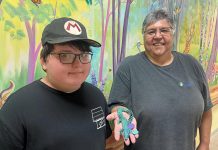
“We need to understand each other’s experiences, so that things can improve for people who use substances,” said Ashley Smoke, program coordinator for the HKLN committee, in a recent interview with kawarthaNOW.
Regional symposiums taking place in Lindsay and Cobourg
On May 7, the strategy committee announced its regional symposium series called “Connected Communities: A Haliburton, Kawartha Lakes, Northumberland Drug Strategy Conversation Series.”
“These symposiums will create space for meaningful dialogue, knowledge sharing, and collaboration across sectors responding to substance use and its impacts,” reads a media release.
The first symposium will take place in Lindsay on Thursday, May 28 from 9 a.m. to 3:30 p.m. at the Victoria Park Armory at 210 Kent Street West and will focus on issues and service providers within the City of Kawartha Lakes and Haliburton County regions.
The second symposium will happen on Wednesday, June 17 from 9 a.m. to 3:30 p.m. at the Best Western Plus Cobourg at 930 Burnham Street for residents and stakeholders in Northumberland County.
Both symposiums will engage the HKLN Drug Strategy’s “four pillar approach” of prevention and education, treatment, community safety, and harm reduction through expert presentations, facilitated breakout discussions, a panel conversation, and a plenary session. Lunch will be provided at each symposium.
Smoke said that the events will be attended by leading partners of the HKLN Drug Strategy committee, including Lakelands Public Health and Canadian Mental Health Association – Haliburton, Kawartha, Pine Ridge (CMHA HKPR) as well as local and regional service providers, municipal and community leaders, frontline workers in the addictions sector, service users, and people with lived experience and others impacted by substance use.
“All different walks of life will come together,” said Smoke.
Symposiums to foster dialogue and collaboration
The primary purpose of the HKLN Drug Strategy committee is to connect stakeholders working in the addictions and substance use sector to enable effective collaboration in meeting the needs of the community.
For Smoke, a significant challenge in their work is that service providers, community organizations, and political leaders are often “siloed” in their activities due to funding and organizational structures.
“The hope is to foster dialogue and collaboration beyond this point,” said Smoke of the role of the symposiums in the HKLN Drug Strategy’s ongoing work.
The organization is encouraging everyone to attend one of the symposiums regardless of their personal or professional experiences, noting that education and destigmatization are key values of the HKLN Drug Strategy.
Those interested in attending either symposium can register at the HKLN Drug Strategy website at www.hklndrugstrategy.com/news-and-events.
HKLN Drug Strategy hopes to continue hosting collaboration events
Since Smoke assumed her role as HKLN Drug Strategy committee coordinator last August, the Northumberland County resident has led efforts to reduce stigma and educate the community on the realities of substance use and abuse.
Smoke told kawarthaNOW that when she first came to the community, she was surprised and concerned by the lack of resources to support safe consumption and disposal and to promote harm reduction.
“When I moved here we just had one sharps bin,” she said.
With over 10 years of experience in the harm reduction and drug policy sectors, Smoke saw a number of gaps in Kawartha Lakes and the surrounding regions leading her to become involved with the HKLN Drug Strategy.
Speaking about what has been achieved by the organizational partnerships established via the HKLN Drug Strategy, Smoke highlighted the ability of the committee to bring community events to localities across their jurisdiction.
“We have International Overdose Awareness Day events in almost every locality,” said Smoke.
The committee and Smoke recognize the challenges in bringing people together across such a large jurisdiction and are committed to hosting local events that are accessible to the community.
Looking ahead, Smoke hopes that Connected Communities can become an ongoing series of events or lead to annual symposiums to continue advancing the strategy and ensure continued collaboration.
A decade after HKLN Drug Strategy was formed, funding remains a challenge
In 2016, the Ontario Trillium Foundation awarded a grant to the HKLN Drug Strategy under the partnership of PARN, the Haliburton, Kawartha, Pine Ridge District Health Unit (now merged with Peterborough Public Health as Lakelands Public Health), Four Counties Addiction Services (Fourcast), and Kawartha Lakes Police Services, all of whom continue to be leading members of the strategy steering committee.
This funding supported the development of a local strategy led by a regional coordinator for Haliburton County, the City of Kawartha Lakes, and Northumberland County between July 2016 and December 2019. Following the end of the Ontario Trillium Foundation granting period, the HKLN Drug Strategy wound down their full-time operations and would remain largely on hiatus until 2023.
Today, there are localized strategies focusing on issues unique to the communities within their jurisdiction brought together by numerous partners to “create one cohesive strategy,” Smoke said.
Smoke indicated that funding sustainability continues to be a challenge for the organization, saying that their ability to host events and operate programming is “constrained by our funding.”
Going forward, the HKLN Drug Strategy looks to decision-makers such as elected officials, governmental and charitable funders, and community leaders to support those delivering services and working directly with people dealing with substance use and addiction issues.
“Use the four pillars to imagine,” said Smoke, referring to prevention and education, treatment, community safety, and harm reduction.