















If Canada’s Minister of Transport wasn’t already aware of the level of opposition against the planned Alto high-speed rail project in the Peterborough area, he is now.
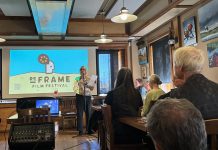
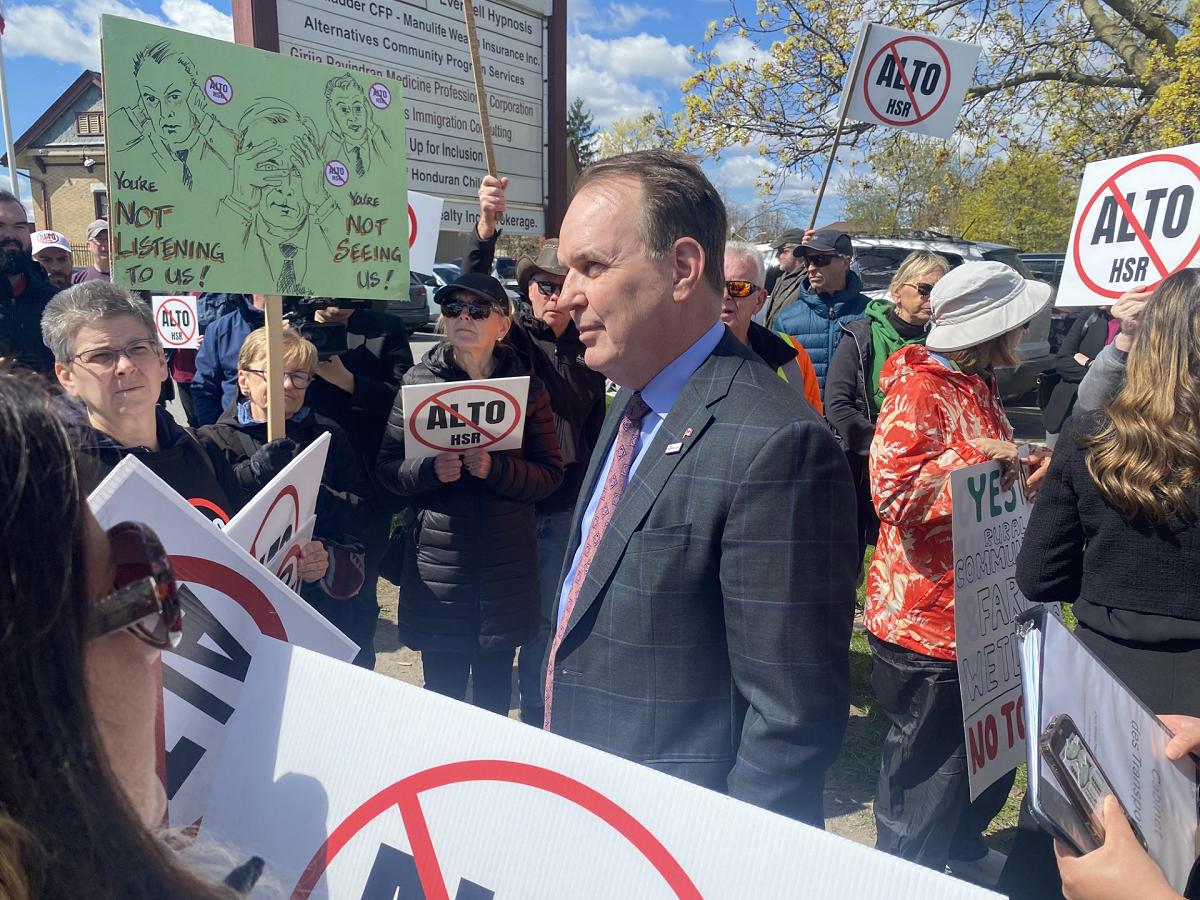
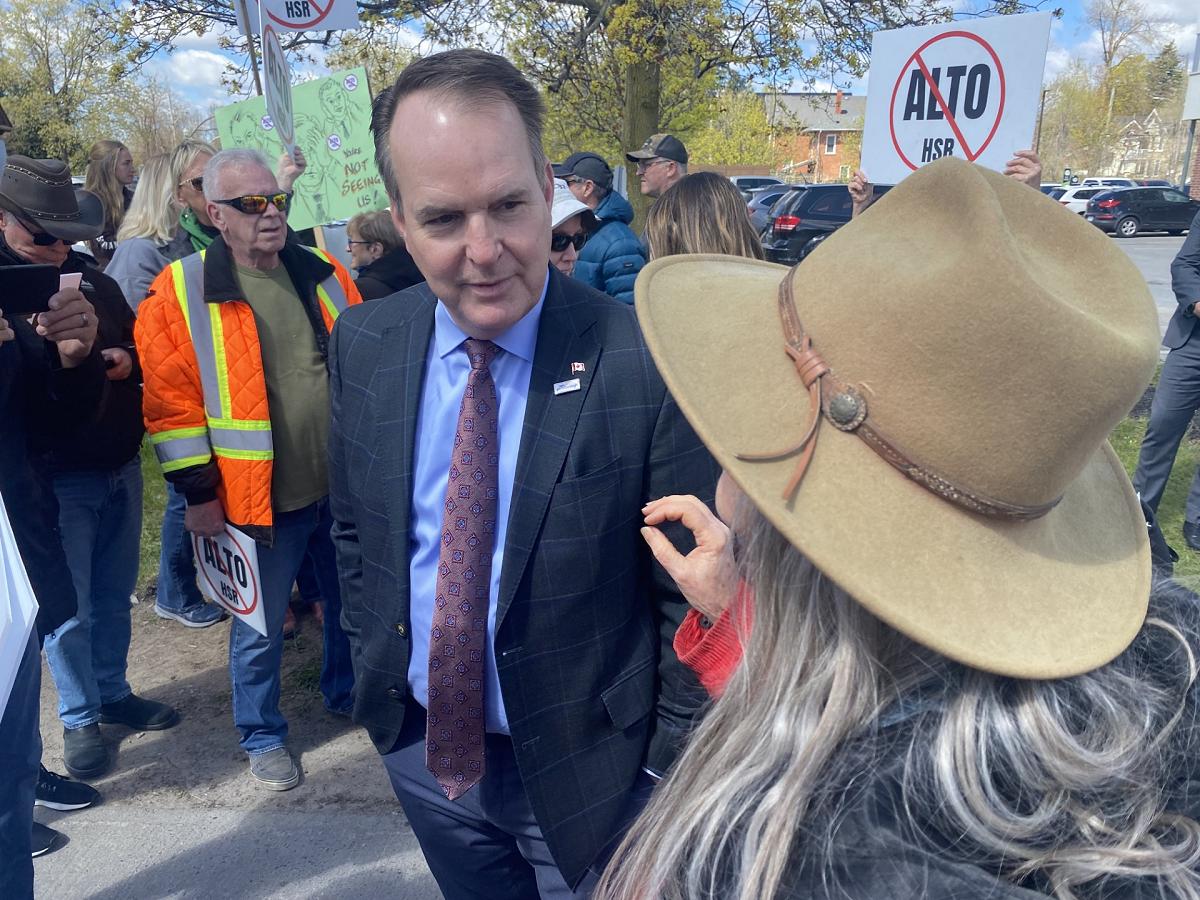
A large and quite vocal crowd of protesters greeted Steven MacKinnon when he arrived late Friday morning (May 8) to speak at an event hosted by the Peterborough and Kawarthas Chamber of Commerce in their office at the former CPR station building on George Street in downtown Peterborough.
To his credit, on his arrival, Minister MacKinnon stopped to chat at length with Alto plan detractors, hearing out their concerns, answering their questions, and providing his take on some aspects of the project.
Transport Minister: Alto will try to minimize impact on agricultural land
“One of the reasons I’m in Peterborough today is to understand the full measure of folks’ views on this project — people from the urban area and outside,” MacKinnon said later.
“Anyone who shows up to meet a federal minister should be able to express themselves directly. You want to be open to hearing their arguments. You want to address the fears that they may have, and take those into account as decisions get made.”
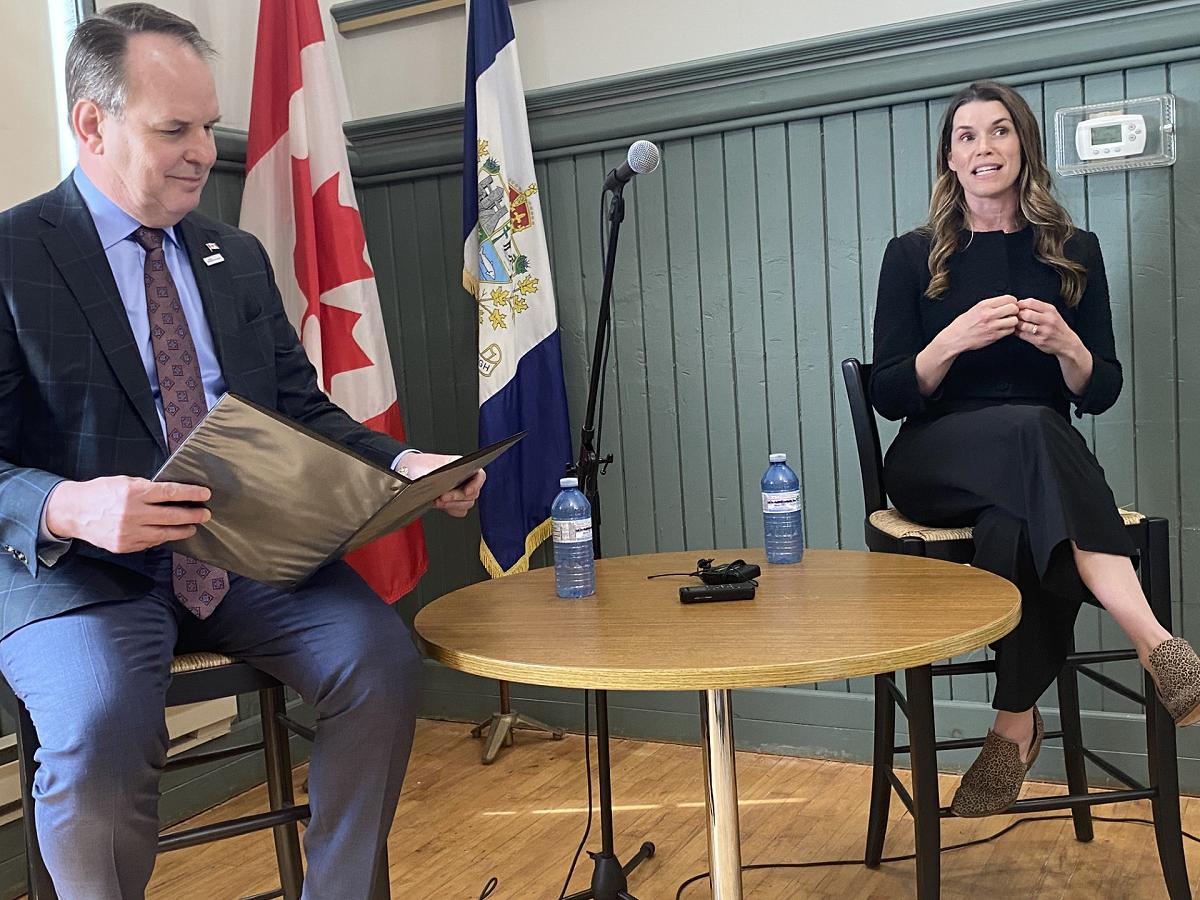
Inside, where he was joined by Peterborough MP Emma Harrison, MacKinnon provided an update on the planned 1,000-kilometre high-speed rail line that, when completed, will connect Toronto and Quebec City with a station stop in or near Peterborough.
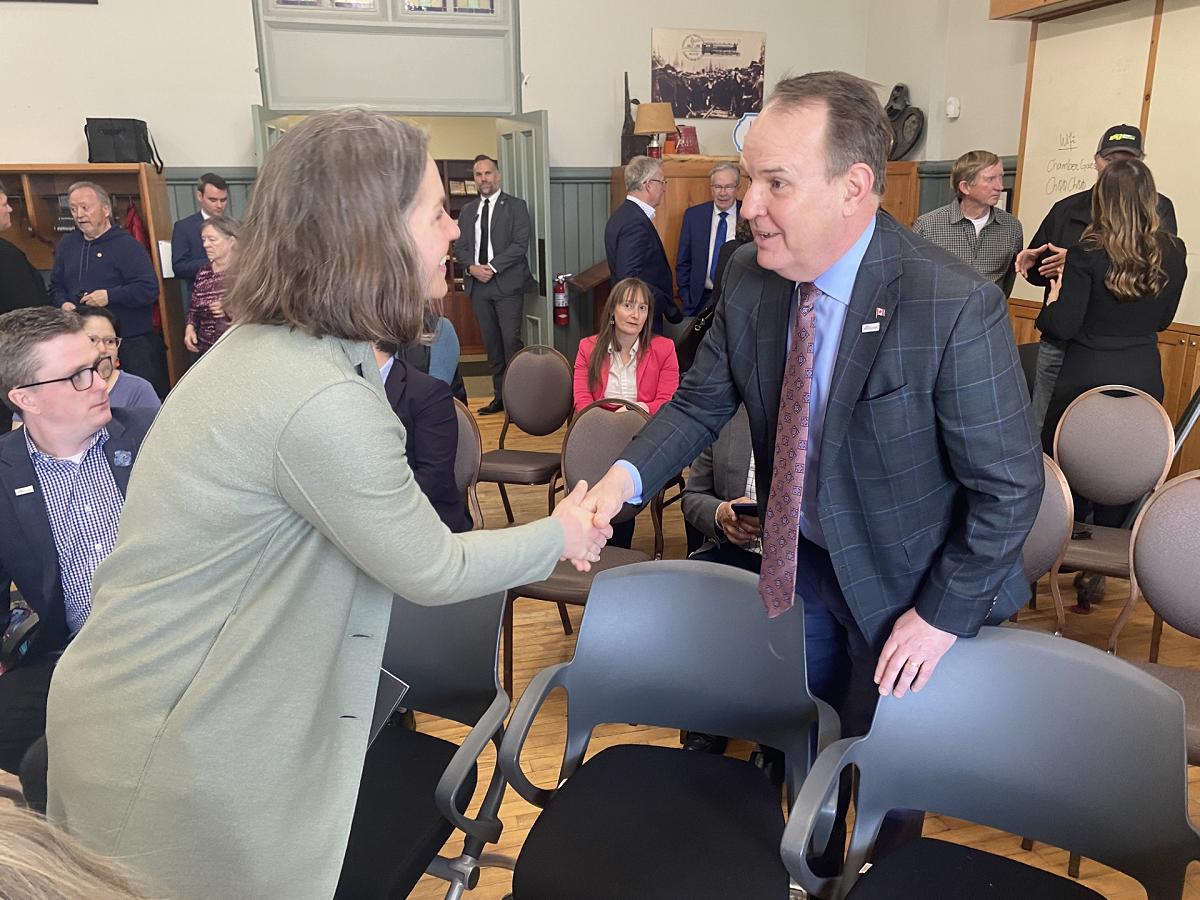
Referencing “an overarching obligation to keep the country united,” MacKinnon said the high-speed rail line will not only connect two distinct Canadian regions, but will stimulate economic development along its corridor, create thousands of jobs via its construction and, in the case of Peterborough, allow young people to live here while working or going to school elsewhere.
Acknowledging the concerns of farmers and rural communities objecting to the project, he said the rail line “will cut through some agricultural land.”
“We’re going to try and minimize that, and when it does cut through agricultural land, we’re going to try and make it so it’s at end of the field, not in the middle of the field. There will be places where we run into some difficulty (traversing agricultural land). That’s inevitable, but we want to do this respectfully. We want to do (the rail line alignment) by listening.”
More public consultation will follow fall decision to narrow 10-kilometre corridor to 60-metre route
MacKinnon said, come this fall, the proposed final alignment will be subject to further public consultations.
“We are, in some ways, into the hardest part of the project because all we have is a conception,” he said. “We have a very wide corridor and, in the case of Peterborough, we actually have a choice of two corridors. We have to make a decision on that and then, within that decision, make a decision on the specific alignment.”
During the public consultation process that took place from January to April, Alto presented a potential 10-kilometre-wide corridor where the 60-metre-wide route for train would be located, with both a northern and southern option for the corridor.
MacKinnon said the consultation process, both past and future, “can raise as many questions as it answers.”
“This is one of the largest infrastructure projects ever contemplated in our country,” he said.
“We want to hear from the local landowner where there might be a rural road that is an ambulance route or an access issue or a wildlife corridor — local knowledge that will help inform the final (alignment) decision.”
“As Minister of Transport, I very much want Alto to do its work and do it professionally and as comprehensively as possible. I, meanwhile, am meeting with as many folks along the (proposed) route as I can. Today is part of that.”
Beyond a new round of public consultation events once the proposed final alignment is determined, MacKinnon said the environmental assessment process will provide yet more opportunity for public scrutiny and input.
‘Have patience with us as we go through this painful planning stage’
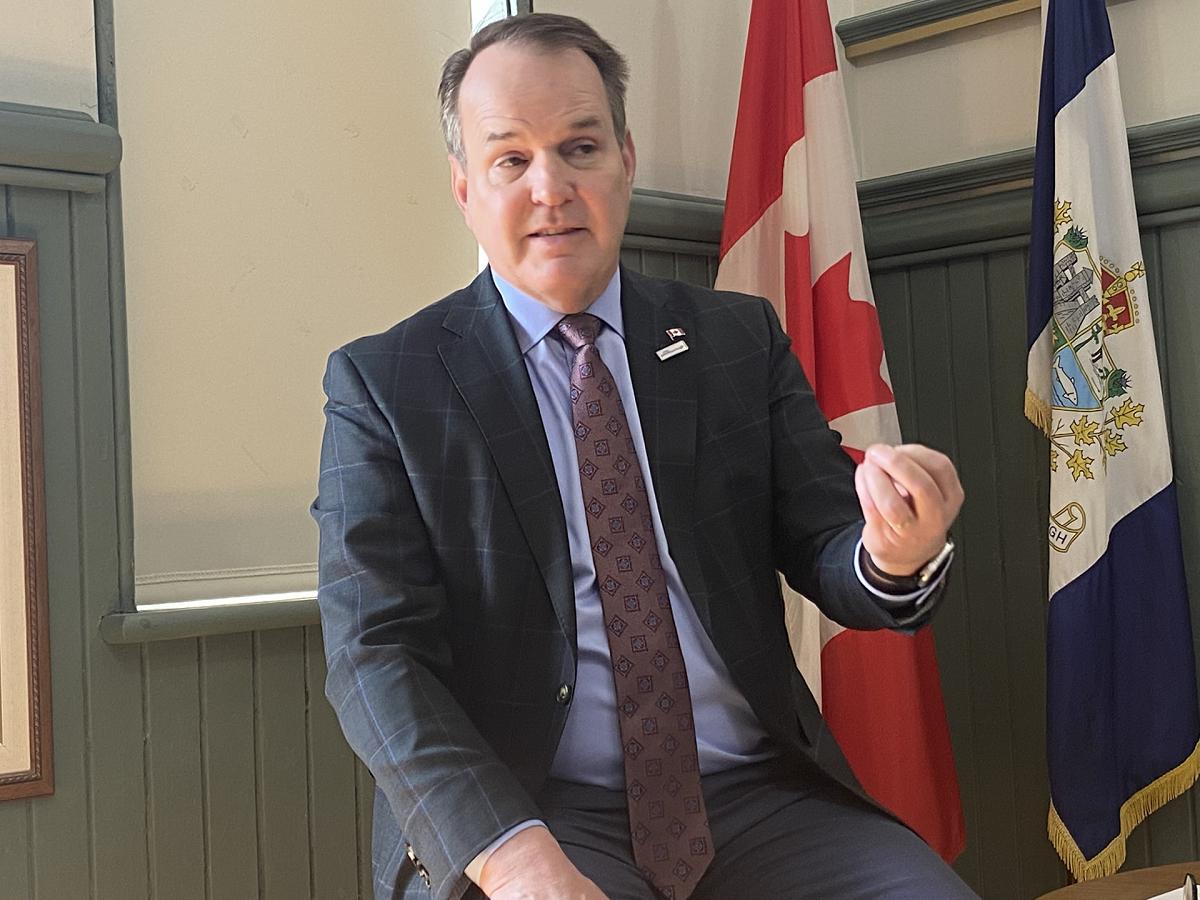
Responding to an audience question, MacKinnon confirmed the route will be 60 metres wide, admitting an earlier published map showing the 10-kilometre-wide corridor that would contain the route has been “a source of concern because you’re catching a lot of property.”
“The corridor is the limits within which the alignment would be placed,” he said, adding “The choice of alignment — the route, if you will — will happen this fall and be a maximum 60-metres-wide (route), other than the stations of course.”
In response to another question, MacKinnon addressed specifically the measures that will be taken to mitigate the impact on a property should the train route traverse it. For example, the route would be located at the outer limit of the property while ensuring access to bordering roads and ensuring accommodation for any wildlife in the area.
Another audience member asked why the high-speed rail project isn’t subject to a referendum to “put (it) to the people.” To that, MacKinnon said “Direct democracy on projects is a pretty tough thing to do.”
“Let me submit to you that this is a vastly popular project numerically,” he added. “What we’re up to now is more democratic: to try and do it the right way, to try and do it by listening to folks like you and the knowledge you bring, and make the accommodations necessary.”
“I understand that it will be a disruption but one that is, quite literally, for the greater good. There will be a greater good. Is it expensive? Yes, but you said the word legacy. It is a legacy; it’s a legacy we can pass on to our kids and our grandkids.”
MacKinnon added the high-speed rail line “arguably should have been done when the Japanese did it in the 1970s, when this technology was first perfected. We’d all be happy and on it now.”
He noted some of the benefits of high-speed rail for both mobility and tourism.
“Your kids will want to use this train. They will want to go to a Blue Jays game. They will want to come to Ottawa and visit a museum. They will want to go to Montreal. They’ll want to have that mobility while living in an incredible community like this one.”
MacKinnon asked that people “judge us on the project as it is.”
“Have patience with us as we go through this painful planning stage. We’ll deal with the concerns as they come. I think we’ll be really proud when this project is built, and that we were able to build it together.”
Transport Minister fails to assuage protester concerns
However well intended, MacKinnon’s assurances did little to soothe the angst of those protesting close by — a large group that was still on hand when the minister departed,
Maria Thorburn among them.
“This should be planned far better,” she told kawarthaNOW. “They’ve had quite a bit of time. (Former Peterborough MP) Dean Del Mastro first suggested this a long time ago. Now the Liberals have adopted it.”
“There are nine professors from Carleton University (in Ottawa) who have opposed this, saying this could cause an ecological disaster when this is purportedly to combat CO2 emissions. To replace one environmental problem with another doesn’t make any sense.”
Another bone of contention, said Thorburn, is “terrible” communication.
“They have hired 36 communications directors and two scientists,” she claims, adding “That shows you their priorities.”
Among those in the minister’s audience was Peterborough mayor Jeff Leal, city councillor Kevin Duguay, City of Peterborough economic development director Daryl Julott, and Rebecca Schillemat, one of five declared candidates to date for Peterborough mayor in this coming fall’s municipal election.
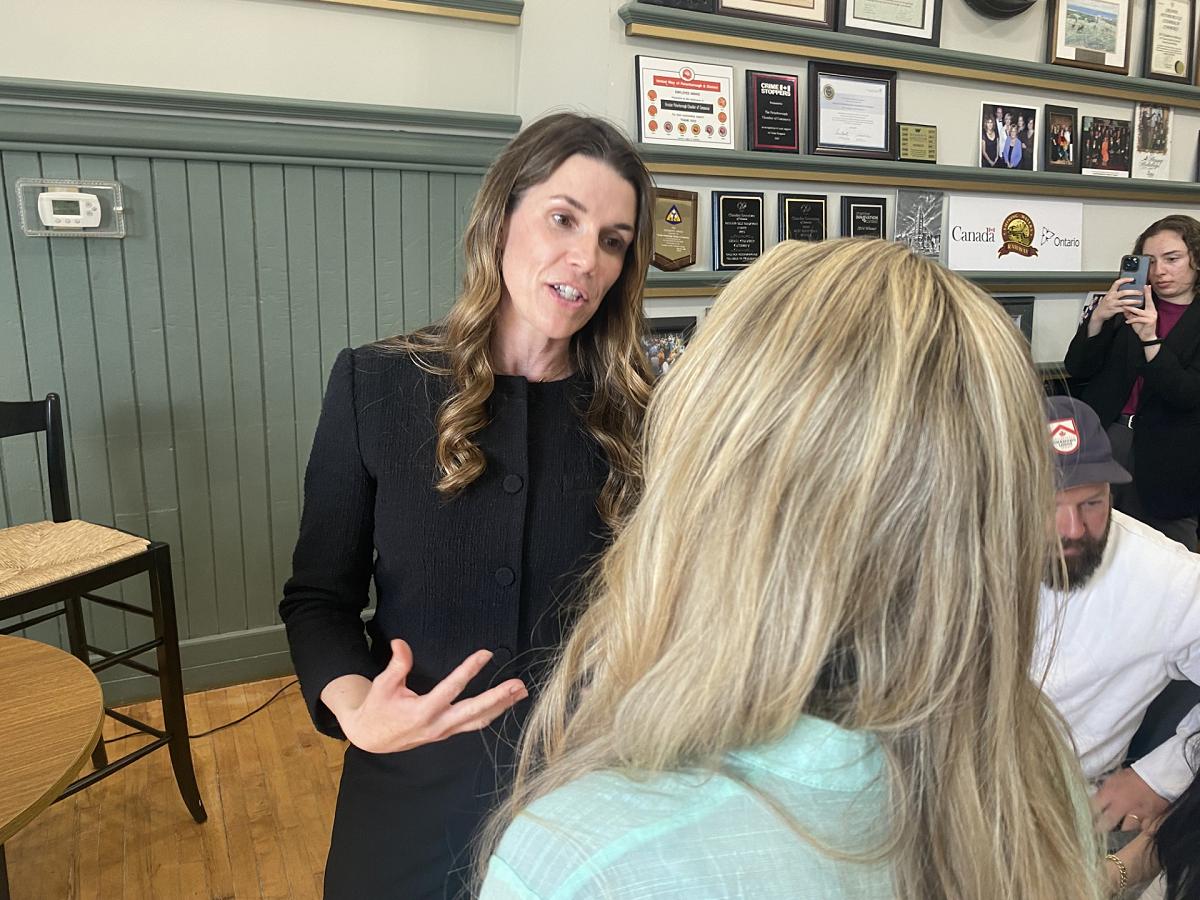
Also on hand was Peterborough MP Emma Harrison, who helped field audience questions. Afterwards, she acknowledged there are presently more questions than answers about the project and that has added to some people’s frustration.
“I completely understand people’s fears and concerns, especially from the agricultural side of things,” she said.
“People are being incredibly patient with waiting for answers. There was, unfortunately, a lot of misinformation spread initially. Our job now, and Alto’s job, is to combat that and make sure people feel their voices are being heard — that they’re being consulted.”
“The people who will by the most impacted will have a one-on-one approach from Alto,” Harrison added.
This story has been updated with a correction: the former rail station in Peterborough was operated by the Canadian Pacific Railway (CPR) and not the Canadian National Railway Company (CN).