












Home Blog Page 535

Give a gift that lasts for generations: help Kawartha Land Trust protect water in the Kawarthas

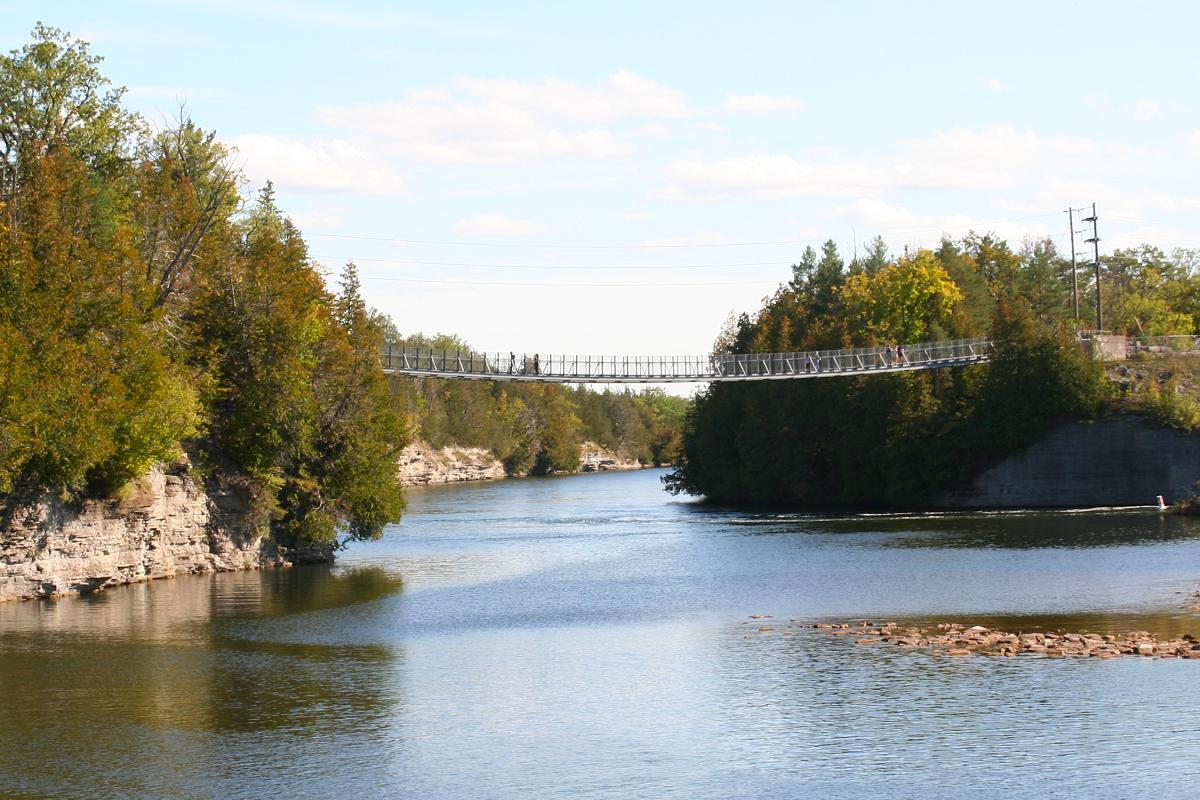
Watersheds and wetlands are vital for drought prevention, flood protection, shoreline erosion control, water quality improvement, and climate resilience. In the Kawarthas region, Kawartha Land Trust is currently protecting 27 kilometres of natural shorelines and more than 1,060 acres of provincially significant wetland. By making a donation, you can help Kawartha Land Trust manage the critical lands they already protect and help secure even more lands in need of protection. (Photo courtesy of Kawartha Land Trust)

“At the risk of sounding arrogant, I’m pretty much the most important thing on the planet. Without me, life could not exist.”

So begins a holiday donation appeal by Kawartha Land Trust, written from the perspective of what the Anishinaabe people — the original inhabitants of the Kawarthas region — call Nibi or Nibiish.

“When you protect vital lands such as watersheds and wetlands, you help protect me (Water) and all living things.”

Wetlands purify water by filtering out pesticides and harmful contaminants from human development. They also help replenish aquifers, essential to the groundwater that 30 per cent of Canadians rely on for their drinking water.  (Photo courtesy of Kawartha Land Trust)
Wetlands purify water by filtering out pesticides and harmful contaminants from human development. They also help replenish aquifers, essential to the groundwater that 30 per cent of Canadians rely on for their drinking water. (Photo courtesy of Kawartha Land Trust)

Kawartha Land Trust is a non-government charitable organization working to protect land in the Kawarthas. It currently protects 22 properties, comprising more than 4,500 acres of important and diverse types of land — including watersheds and wetlands.

In the Kawarthas, the loss of natural drainage systems is vast. In southern Ontario, more than 70 per cent of wetlands have already been destroyed by development.

Paved surfaces like roads, parking lots, and buildings change how water moves about the landscape, leading to increased risk of flooding and higher rates of erosion. Water can pick up pollutants such as pesticides, sediments, and fertilizers from farms and lawns, as well as salt, oil, and gas from parking lots and roads.

Hundreds of wildlife species rely on wetlands, including birds, turtles, snakes, frogs, and fish.  (Photo courtesy of Kawartha Land Trust)
Hundreds of wildlife species rely on wetlands, including birds, turtles, snakes, frogs, and fish. (Photo courtesy of Kawartha Land Trust)

Wetlands help protect us from flooding by storing surface water and decreasing its flow over land. They help control shoreline erosion. They purify water by filtering out pesticides and harmful contaminants from human development, while also reducing the load on water treatment plants. Wetlands help replenish aquifers, essential to the groundwater that 30 per cent of Canadians rely on for their drinking water.

And wetlands do not only benefit people. Hundreds of wildlife species rely on wetlands, including birds, turtles, snakes, frogs, and fish. Perhaps most importantly, wetlands are immensely valuable for climate resilience, by trapping and sequestering carbon.

Kawartha Land Trust is asking for donor support so it can continue its important work of protecting water-related ecosystems in the Kawarthas. The organization is currently protecting 27 kilometres of natural shorelines and more than 1,060 acres of provincially significant wetland.

Watersheds and wetlands are part of natural corridors for the movement of wildlife throughout the Kawarthas.  (Photo courtesy of Kawartha Land Trust)
Watersheds and wetlands are part of natural corridors for the movement of wildlife throughout the Kawarthas. (Photo courtesy of Kawartha Land Trust)

Through its Partners in Conservation project, Kawartha Land Trust is protecting water quality in the Fleetwood Creek Watershed, situated between Pontypool and Omemee along Ski Hill Road through Bethany. Since 2018, the project has worked with 20 private landowners to enable the stewardship of 2,400 acres of land.

In addition, Kawartha Land Trust is already protecting several properties that have important water conservation values. Here are some of them:


van Nostrand property

The van Nostrand property. (Photo courtesy of Kawartha Land Trust)

The van Nostrand property is located 15 kilometres southeast of Peterborough, on the shoreline of Rice Lake at the mouth of the Indian River, one of the three major river systems in the Otonabee Region watershed. The majority of this property is coastal wetland dominated by cattail marsh which hosts a diversity of species.

The property lies within the provincially significant wetland of Indian River Mouth. It also contains a portion of the regionally significant Indian River Marsh Life Science (ANSI). Containing more than 2.6 kilometres of shoreline along Rice Lake and the Indian River, it is an important corridor of connectivity along the shoreline of Rice Lake and the Indian River.


Christie Bentham Wetland

Christie Bentham Wetland. (Photo courtesy of Kawartha Land Trust)

In 2020, Kawartha Land Trust purchased a 137-acre property south of Burleigh Falls, named after long-time Stony Lake community member Christie Bentham. Thanks to community support, this was the first time the organization purchased a property to protect, as all other protected properties have been donated by landowners.

Featuring more than 366 metres of natural and undisturbed waterfront on Clear Lake, a provincially significant wetland on the property contributes to the water quality of surrounding Bays and Clear Lake. It also provides vital habitat for breeding fish, birds, and species at risk.


Keppler Nature Sanctuary

Keppler Nature Sanctuary. (Photo courtesy of Kawartha Land Trust)

Located in the Chandos Lake area north of Apsley, the Keppler Nature Sanctuary contains a large wetland. It also has a mixed canopy forest, permanent streams, and vernal pools. Adjacent to 600 acres of Crown land, this 296-acre property protects a wetland network that is part of the Crowe River Watershed.

Wetlands on the property include graminoid meadow marshes and forested swamps. Around 566 metres of permanent streams flow through the northwestern corner of the property, feeding into the surrounding seasonally flooded meadow marshes. A large recently dewatered beaver pond occupies the northeastern corner of the property. These significant features provide critical habitat for many species at risk.


Big (Boyd/Chiminis) Island

Big (Boyd/Chiminis) Island. (Photo courtesy of Kawartha Land Trust)

Big (Boyd/Chiminis) Island, located in Pigeon Lake west of Buckhorn, is the largest undeveloped island in the Kawarthas.

The property is an area of natural and scientific interest, and home to wetlands, diverse forests, and a wide variety of plant and wildlife species.


Fell Wetland

Fell Wetland. (Photo courtesy of Kawartha Land Trust)

Relatively untouched by human activity and home to a forested wetland and cattail marsh, the 50-acre Fell Wetland property contains a portion of a provincially significant wetland that provides an excellent habitat to a biodiversity of flora and fauna.

Mitchell Creek runs through the property and leads to Cameron Lake, a part of the Trent Severn Waterway. This wetland system contributes significantly to the connectivity throughout the agricultural landscape, and is a major biodiversity hot spot in an otherwise highly disturbed area. The wetland and forests on this property serve as an important corridor for wildlife movement in the area.


Nogies Creek and Balsam Lake

Nogies Creek. (Photo courtesy of Kawartha Land Trust)

Kawartha Conservation donated Kawartha Land Trust’s latest protected properties in 2021. The two wetland properties, one on Nogies Creek and one on Balsam Lake, both contain significant ecological features and provide potential natural corridors to provincially protected areas.

The 100-acre Nogies Creek property includes significant ecological features, including mature forest stands and wetlands, and is a potential corridor between the Kawartha Highlands Provincial Park and the Queen Elizabeth Wildlands Provincial Park.

The 72-acre Balsam Lake property sits within a provincially significant wetland and provides excellent habitat for rare and at-risk species. Featuring 450 metres of natural shoreline along Balsam Lake, the property is a patchwork of shallow slow-moving watercourses and temporary water bodies that weave through three different types of wetland ecosystems, including a cattail marsh.


This holiday season, you can give a gift that lasts for generations. By making a donation, you can help Kawartha Land Trust manage the critical lands they already protect and help secure even more lands in need of protection.

For more information and to make a one-time or monthly donation, visit kawarthalandtrust.org/you-can-help/giving-options/.


This story was created in partnership with Kawartha Land Trust.

Despite omicron’s exponential growth, Ontario’s chief medical officer of health remains optimistic about schools

Ontario Premier Doug Ford receiving his COVID-19 booster dose at an Etobicoke pharmacy on December 21, 2021. (Photo courtesy of Premier's Office)

Hours after Ontario Premier Doug Ford received his COVID-19 booster shot, Ontario’s chief medical officer of health delivered a dose of both bad and good news during his weekly COVID-19 update at Queen’s Park in Toronto on Tuesday afternoon (December 21), projecting the rapid growth of omicron will increase hospitalizations but remaining optimistic that students will be returning to in-person learning in the new year.

“Our provincial weekly case incidence rate is 112 cases per 100,000 people,” Dr. Kieran Moore said. “This represents exponential growth of cases in the province, and we are currently tracking to have more cases per day than we have ever had during the entire pandemic.”

Dr. Moore said Ontario’s per cent positivity has been steadily increasing as well, and is currently 7.3 per cent for the week of December 12th to 18th. Hospitalizations have increased by nine per cent, but ICU admissions have been stable.

Advertisement - content continues below


However, Dr. Moore added he expects to see an increase in hospitalizations and ICU admissions as a result of the spread of the omicron variant, since it is four to eight times more transmissible than the delta variant and is now the dominant strain of the virus in Ontario.

He announced the government would be focusing on protecting the most vulnerable Ontarians by providing case and contact management to the highest-risk settings, including hospitals, long-term care facilities, retirement homes, and other vulnerable congregate settings such as shelters.

“We are prioritizing screening testing, with rapid antigen testing, in these settings to protect the most vulnerable and to maintain critical health care worker capacity to ensure our health care and other critical infrastructure workers can go to work and stay at work safely,” he said.

The government’s intention is to prioritize rapid antigen testing among health care and other essential workers to keep them working, by providing asymptomatic workers with daily testing after a high-risk contact so they can continue working instead of isolating at home.

Dr. Moore pointed out the government administered more than 206,000 doses of vaccine yesterday, and half of Ontarians over 70 have already received their booster doses.

“If we can maintain this momentum of over 200,000 doses a day, that’s a million additional Ontarians a week that would be provided their booster doses,” he said. “I think if you compare us to any other jurisdiction in Canada, we are ahead of all jurisdictions.”

Advertisement - content continues below


Dr. Moore said that, while it’s still too early to make any conclusions, there is increasing evidence that omicron may not be as virulent as initially feared.

“I’m not seeing a significant severity signal today in terms of ICU use or hospitalization in England,” he said. “We’ve looked at the 4,600 Ontarians that have been confirmed to have omicron … only 15 were admitted to hospital, so that’s a .15 per cent admission rate.”

“Now admittedly, that’s in a much younger population that’s gotten omicron. They’ve gotten it through social activities. They’re in the 20 to 30 age range, which has a low risk for adverse events associated with COVID in general.”

However, Ontario is still preparing for the possibility that hospitalizations and ICU admission will increase as a result of omicron’s exponential spread.

“But even if it’s much less virulent, its attack rate could mean that it spreads so rapidly that it will have an effect on our hospital sector,” Dr. Moore said. “We’re preparing for an increase in hospitalization and ICU utilization, just because of the sheer rapid spread of the virus.”

Advertisement - content continues below


As to the question whether students will return to in-person learning after the holiday break, Dr. Moore was optimistic that schools will remain open.

“We’re not seeing any significant impact on children’s health,” he said. “We have no children in our pediatric ICUs in Ontario today. So that is very reassuring that this virus doesn’t have severe outcomes in that population. Together with our children from five to 11 — 38.3 per cent have been immunized with their first doses in that age group to date, which I think is brilliant. We’ll continue with first and second dose strategy with that population to further protect them against all strains of COVID-19, including protection against omicron.”

“Together, with all the measures that we have put in place to protect our schools and keep them safe, that’s a very good combination when you have low severity of the illness in children, good protection with vaccination, very good protocols in place to safeguard our schools with ventilation, masking, and we’re actually looking at additional layers of protection for the workers as well as students. We’ve very committed to keeping our schools open.”

While Dr. Moore said it’s ultimately the government’s decision, he has consulted with experts on whether school openings in should be delayed in January and they have said they don’t see a reason to do it right now.

“Certainly we’ll be prudent and cautious, but (there are) very good signals to date,” he said.

Advertisement - content continues below


In response to a reporter’s question about how long it takes for the booster dose to increase immunity against the virus, Dr. Moore noted that it only takes five to seven days — in comparison to the 14 days after first and second doses.

Dr. Moore acknowledged that Ontarians have pandemic fatigue, but said “omicron is not taking a holiday.”

“In addition to getting vaccinated, please follow the public health measures we know have worked so well to protect us over the last 20 months. They all together provide additional layers of protection against this virus. Remember to keep the size of your gatherings over the holidays small, and attend or organize further gatherings to reduce your total number of contacts.”

Meanwhile, Ontario Premier Doug Ford encouraged all Ontarians to get their booster dose after he received his at an Etobicoke pharmacy on Tuesday morning.

“We have well over 200,000 appointments booked just on the provincial portal, and not mentioning the pharmacy portals and the primary care docs,” he said. “So folks, we’re really gearing up to hit anywhere from 200 to 300,000 every single day, and again I just want to thank everyone who is getting their shots, and everyone who is delivering the shots. It’s the real Ontario spirit, Team Ontario, let’s keep going.”

“Once again, because of the great work these folks do, we will be the world leaders once again, so thank you and God bless everyone, and I want to wish everyone a very Merry Christmas, Happy New Year and Happy Holidays.”

Trent University student Jonah Udovc wins final Holiday Shopping Passport early bird prize

Trent University student Jonah Udovc accepts his $500 Boro gift card prize from Terry Guiel, executive director of the Peterborough Downtown Business Improvement Area (DBIA). While this is the final early bird prize, there's still time to get your holiday shopping passports stamped to win the $1,500 grand prize to be drawn on Wednesday, January 12th. (Photo: Peterborough DBIA)

A Trent University student has won the final $500 early bird draw in the Peterborough Downtown Business Improvement Area’s Holiday Shopping Passport program.

Jonah Udovc’s winning passport was drawn last Wednesday (December 15) at the Peterborough DBIA’s offices.

For ever $10 people spend at any of more than 150 participating downtown business, they receive a stamp in their holiday shopping passport. When a passport is filled with 20 stamps (representing $200 in spending), the completed passport is entered into a draw for three $500 early bird prizes and a $1,500 grand prize.

Advertisement - content continues below


Udovc completed a single passport after purchasing a new house plant from Plant Goals at 387 Water Street, where he got his passport, and a coat from Wild Rock Outfitters at 169 Charlotte Street. In a media release, he says he plans to use his $500 Boro gift card to explore more of the downtown core.

“Supporting local directly impacts the livelihood of our local shop owners which feels far more impactful than shopping at a big box store,” Udovc says. “I love the downtown and couldn’t imagine shopping for the holidays anywhere else.”

Udovc is the final winner of one of three $500 early bird prizes drawn on Wednesdays in December. Derek Banville was the December 1st winner and Gabi Hintelmann was the December 8th winner. The $1,500 grand prize winner will be drawn on Wednesday, January 12th.

You can still get a holiday shopping passport at any of the participating shops, boutiques, salons, restaurants, and cafes in downtown Peterborough. Visit theboro.ca/holiday-shopping-passport/ for a list of all the participating businesses.

To start off your holiday shopping passport with no purchase necessary, you can get complimentary stamps at the Peterborough Public Library (345 Aylmer St. N.), the Peterborough & the Kawarthas Visitors Centre (270 George St. N.), and the Boro Holiday Hub (373 George St. N.).

Health units issue opioid alerts for Kawartha Lakes and Peterborough

Drug overdoses may be caused by a contaminated, poisoned, or potent drug supply. In 2018, Northumberland OPP seized 20,000 counterfeit oxycodone pills that contained fentanyl, a synthetic opioid that is more toxic than most other opioids. (Photo: Northumberland OPP)

Both the Haliburton, Kawartha, Pine Ridge (HKPR) District Health Unit and Peterborough Public Health have issued opioid alerts.

The HKPR District Health Unit issued an overdose alert on Monday (December 20) following five opioid overdoses resulting in hospitalizations in the City of Kawartha Lakes in a 48-hour period.

The health unit is concerned these overdoses may be the result of a contaminated or poisoned drug supply or of inconsistent or increased potency, causing more severe overdose reactions.

Advertisement - content continues below


“We are issuing this alert to make community members aware that more drug overdoses are occurring in the City of Kawartha Lakes and remind everyone to be extra vigilant,” says Catherine MacDonald, a registered nurse and substances and harm reduction coordinator with the HKPR District Health Unit.

Peterborough Public Health issued a drug poisoning alert on Tuesday (December 21), with local paramedics having responded to nine opioid-related calls for service and with 12 opioid-related visits to the emergency department at Peterborough Regional Health Centre over the past week.

“Over the last two days, paramedic calls for service and emergency department visits for suspected drug poisonings have been consistently high,” says medical officer of health Dr. Thomas Piggott. “This has prompted us to proceed with issuing a public warning in hopes of preventing further harms in the community.”

Both health units recommend the following safety tips for anyone who uses drugs (or know someone who does).

Advertisement - content continues below


  • Test a small amount of drug before you use.
  • Never use drugs alone. If you use with a friend, do not use at the exact same time.
  • If you are alone, call the National Overdose Response Service 1-888-688-6677 or ask a friend to check on you.
  • Avoid mixing drugs.
  • Keep a naloxone kit close at hand when you’re using. You can get a naloxone kit at most pharmacies and needle exchange sites.

If someone is showing signs of an overdose or if they cannot be resuscitated after naloxone is administered, call 9-1-1 immediately.

Signs of an overdose include very large or very small pupils, slow or no breathing, cold and clammy skin, blue or purple fingernails or lips, and snoring or gurgling sounds. Often in drug overdoses, it is also difficult to wake the person up.

Under Canada’s Good Samaritan Drug Overdose Act, anyone who seeks medical help for themselves or for someone else who has overdosed will not be charged for possessing or using drugs for personal use.

Employer applications now open for Canada Summer Jobs 2022 funding

Employers in the greater Kawarthas region can now apply for funding under the Canada Summer Jobs 2022 program.

The federal program is intended to help youth and young adults between 15 and 30 years of age to obtain their first summer work experience. For 2022, Canada Summer Jobs is aiming to create up to 100,000 full-time summer job opportunities for young people.

Not-for-profit organizations, public sector employers, and those private sector employers with 50 or fewer full-time employees can apply for funding until noon on January 25, 2022.

Funding confirmations will be sent to employers starting in April 2022. The earliest job start date is April 25, 2022, the latest job start date is July 24, 2022, and the latest job end date is September 3, 2022.

Advertisement - content continues below


Employers interested in applying for Canada Summer Jobs 2022 funding can submit their applications electronically via an online fillable application or the Grants and Contributions Online Service (GCOS).

The online fillable application is the fastest way for employers to complete an application online without having to create an account. Applications received by fax or by email will not be considered.

Service Canada assesses employer applications on a constituency-by-constituency basis, taking into account local priorities that Members of Parliament (MPs) have identified for their constituency. Applications that support local priorities will receive additional points during Service Canada’s assessment.

Here are the local priorities MPs have identified for constituencies in the greater Kawarthas region:

Peterborough-Kawartha

  • Projects supporting local and regional tourism development
  • Projects supporting environmental protection
  • Projects supporting not-for-profit organizations
  • Community events
  • Projects supporting small businesses

Northumberland-Peterborough South

  • Projects supporting community-based organizations
  • Projects supporting small businesses
  • Projects that offer programs and/or support for Indigenous youth
  • Projects that offer programs and/or support for religious institutions
  • Support for projects in the agricultural, forestry, and fishing and hunting sectors
Advertisement - content continues below


Haliburton-Kawartha Lakes-Brock

  • Cultural events
  • Projects supporting local and regional tourism development
  • Projects supporting not-for-profit organizations
  • Projects supporting small businesses
  • Areas that do not have many summer jobs that experience seasonal summer population

Hastings-Lennox and Addington

  • Community events
  • Projects that offer programs and/or support for children and/or youth
  • Sporting events
  • Projects that offer programs and/or support for seniors
  • Support for projects in the agricultural, forestry, and fishing and hunting sectors

Funds are distributed among the successful applicants based on the results of Service Canada’s assessment of applications, and from feedback provided by MPs during their review of the list of projects eligible for funding in each constituency.

The Gallery on the Lake in Buckhorn is permanently closing

Originally founded by the late artist Ed Matthews in 1983, The Gallery on the Lake reopened in 2002 as Canada's largest retail art gallery after Esther Inglis and her husband purchased the defunct gallery. Seeking to retire for several years, they have now sold the property, which the new owners will no longer operate as an art gallery. (Photo: The Gallery on the Lake)

The Gallery on the Lake in Buckhorn is permanently closing.

Owner and president Esther Inglis and her husband have sold their 4.57-acre property on Lower Buckhorn Lake, which includes the 15,000-square-foot gallery building as well as a 5,000-square-foot residential home.

The couple were planning to retire before the pandemic, and originally put the property on the market in the summer of 2018 for $3.5 million. It was most recently listed for $2.6 million.

Advertisement - content continues below


Located at 65 Gallery on the Lake Road, The Gallery on the Lake was originally founded in 1983 by the late artist Edwin Mathews and his wife Barbara. The gallery had two subsequent owners, but closed in 1997.

In 2000, Inglis and her husband bought the defunct property, revitalized it, and reopened The Gallery on the Lake in 2002 as one of Canada’s largest retail art galleries, representing some of Canada’s best artists.

The Gallery on the Lake remains open to the public daily from 10 a.m. to 5 p.m. until Friday (December 24), and by appointment from December 27 to 31. A closing sale is underway, with original artworks discounted from 10 to 50 per cent.

The new owners of the property will not be continuing operation of the gallery, effective January 20, 2022.

Northumberland antiques dealer donates rare stetson hat to Ontario Provincial Police

Inspector Jeff Martin of the Northumberland OPP accepts the donation of a stetson-style OPP hat from Roy Cobbing, owner of Ray Cobbing's Antique and Collectibles in Morganston. The wide-brimmed hats were originally worn when the OPP was formed in 1909 and again from 1997 until 2009. (Photo courtesy of Northumberland OPP)

A Northumberland antiques dealer has donated a rare stetson-style police hat to the museum of the Ontario Provincial Police (OPP).

On November 30, inspector Jeff Martin of the Northumberland OPP met with Roy Cobbing, owner of Ray Cobbing’s Antique and Collectibles in Morganston, about six kilometres south of Warkworth in Trent Hills, to accept the donation of the wide-brimmed hat.

Martin has become aware that a police-issued wide-brimmed hat was being sold online. He reached out to the seller to discuss the uniform piece and the risks associated with citizens having access to authentic police uniforms and equipment.

Advertisement - content continues below


As a result, Cobbing agreed to donate the stetson hat to the OPP, where it will be displayed in the museum at the OPP General Headquarters in Orillia. According to the OPP, this particular version of the stetson hat is rare and few were issued to officers.

Stetsons, also called “pony hats”, were part of the OPP uniform when the force was created in 1909. Officers also wore peak caps and winter fur caps, depending on where they were stationed or their rank. The OPP museum already has one of the only original stetson hats from that era.

By the mid 1920s, the stetson hats were gradually replaced by peaked uniform caps, worn with brass cap badges in the shape of a maple leaf. In 1997, the OPP reintroduced the stetson hat for non-commissioned officers, mainly because of concern officers were being exposed to ultraviolet rays.

In 2009, the OPP reverted to the peak caps, as officers found the wide-brimmed hats made it difficult to get in and out of cruisers and expressed a desire to return to the previous look.

Four injured, one seriously, in multi-vehicle collision on Highway 7 west of Omemee

Four people have been injured, one seriously, in a multi-vehicle collision on Highway 7 west of Omemee on Monday morning (December 20).

The Kawartha Lakes OPP and emergency crews are on the scene of the collision, which happened at around 9 a.m. on Monday and involved three passenger vehicles and a commercial motor vehicle.

Three people have been transported to a local hospital with non-life-threatening injuries, and one person has been transported to a Toronto-area hospital with life-threatening injuries.

Advertisement - content continues below


Highway 7 is closed while police document the scene. Detours are in place on Highway 7 at Mount Horeb Road and Heights Road.

The closure will remain in place for several hours for the police investigation.

Anyone who may have witnessed the collision and has not yet spoken to investigators is asked to call City of Kawartha Lakes OPP at 1-888-310-1122.

Peterborough police seeking public’s help locating missing 31-year-old man

Missing 31-year-old Derek Smith. (Police-supplied photo

Peterborough police are seeking the public’s help in locating a missing 31-year-old man.

Derek Smith was last seen by his family on Friday, December 10th. He has connections to both Durham Region and Toronto.

Smith’s family and police are concerned for his safety.

Advertisement - content continues below


Smith was last seen wearing a black and grey winter jacket, grey sweat pants, black gloves, a black toque, and black snow boots.

He is known to always wear personal protective equipment including latex gloves and face masks.

Anyone with information about Smith’s whereabouts is asked to contact the Peterborough Police Service at 705-876-1122 or Crime Stoppers at 1-800-222-8477 (TIPS).

The clothing that missing Derek Smith was last seen wearing. (Police-supplied photo)

Richard Tukendorf walked out of PRHC the day after doctors saved his kidney

A minimally invasive interventional radiology procedure at Peterborough Regional Health Centre (PRHC) saved 62-year-old farmer Richard Tukendorf's kidney and relieved his pain without major surgery and without stitches. The next day he was able to go home with no restrictions and get back to work on his farm. The PRHC Foundation is asking for donor support so the hospital can upgrade and expand its 13-year-old interventional radiology suites. (Photo courtesy of PRHC Foundation)

When 62-year-old farmer Richard Tukendorf woke up in the middle of the night, doubled over in severe pain, he knew something was wrong. Then, after he went to the bathroom, he became really scared.

“There was blood in my urine — a lot of it,” he recalls. “Something serious was going on. I needed to go to the hospital right away.”

At the emergency department at his local hospital, Richard had a CT scan. His doctors told him they were concerned about something they saw on the scan.

“They thought it could be a tumour,” he says. “They immediately sent me to see a specialist at Peterborough Regional Health Centre.”

The urologist waiting for Richard at PRHC told him he didn’t think it was cancer, but wanted to take a closer look to find out what was going on. A scope revealed a ruptured blood vessel in Richard’s kidney was the source of his pain and bleeding.

While Richard was very relieved it wasn’t cancer, he now had a new fear. Would he need major surgery to fix the problem? Would doctors be able to save his kidney? How would he be able to run his farm if he was recovering from surgery?

Twenty years ago, Richard’s fear would have been realized. Surgeons would have had to remove some, or even all, of Richard’s kidney. He would have been in the hospital for days and laid up for weeks at home, unable to work.

So when Richard found out he was a candidate for an innovative form of treatment called interventional radiology thanks to advances in technology, he was relieved for a second time.

Dr. Fady Abdelsayed demonstrates an interventional radiology procedure at Peterborough Regional Health Centre. The minimally invasive alternative to conventional surgery uses real-time imaging to steer needles, guidewires, and catheters into tiny incisions in the skin or through blood vessels to perform a procedure. Because it's minimally invasive, patients have less pain, shorter hospital stays, and face fewer risks than with traditional surgery. (Photo: Michael Hurcomb)
Dr. Fady Abdelsayed demonstrates an interventional radiology procedure at Peterborough Regional Health Centre. The minimally invasive alternative to conventional surgery uses real-time imaging to steer needles, guidewires, and catheters into tiny incisions in the skin or through blood vessels to perform a procedure. Because it’s minimally invasive, patients have less pain, shorter hospital stays, and face fewer risks than with traditional surgery. (Photo: Michael Hurcomb)

As PRHC expert Dr. Fady Abdelsayed explained to Richard, interventional radiology is a minimally invasive alternative to conventional surgery that uses real-time imaging to steer needles, guidewires, and catheters into tiny incisions in the skin or through blood vessels to perform a procedure.

“Dr. Abdelsayed used a high-tech x-ray to steer a tiny needle through my blood vessels into my kidney,” Richard says. “He then used a bit of glue to seal the ruptured blood vessel shut to stop the bleeding.”

Although Richard had a local anaesthetic where the tiny incision was made, he was awake during the entire procedure, which took about an hour.

“That’s all there was to it — not even one stitch,” he says. “The pain was gone instantly as if someone flipped a switch. It felt like a miracle. I’ve seen medical marvels in movies, but I never imagined I’d experience one.”

And because interventional radiology is a minimally invasive procedure, not even requiring stitches, Richard recovered quickly.

“I walked out of the hospital the next day to go home,” he says. “I was able to go back to my life and my work as a farmer. That was a huge relief. If I had needed major surgery, I would have been laid up for weeks, unable to do what needs doing on my farm.”

According to Dr. Abdelsayed, interventional radiology is the future of healthcare.

“It helps us innovate and push the boundaries of what we can do for patients,” Dr. Abdelsayed explains. “It often lets us quickly give a patient relief from pain or help get them a diagnosis sooner. Because it’s minimally invasive, patients have less pain, shorter hospital stays, and face fewer risks than with traditional surgery.”

“It’s remarkable how many different things we can do,” he notes. “We can diagnose and treat cancer. We can collect fluid and drain blocked kidneys. We can shrink painful tumours, remove blood clots, and treat infections.”

Interventional radiology is minimally invasive, meaning patients have less pain, shorter hospital stays, and face fewer risks than with traditional surgery. As a working farmer, Richard Tukendorf couldn't afford to be laid up for weeks recovering from surgery. The day after his interventional radiology procedure at Peterborough Regional Health Centre to repair his kidney, Richard was able to go home.  (Photo courtesy of PRHC Foundation)
Interventional radiology is minimally invasive, meaning patients have less pain, shorter hospital stays, and face fewer risks than with traditional surgery. As a working farmer, Richard Tukendorf couldn’t afford to be laid up for weeks recovering from surgery. The day after his interventional radiology procedure at Peterborough Regional Health Centre to repair his kidney, Richard was able to go home. (Photo courtesy of PRHC Foundation)

But PRHC’s interventional radiology suites are now 13 years old. They’re too small to fit the latest state-of-the-art equipment — including CT scans, fluoroscopy, and ultrasound — used during interventional radiology procedures. They’re too small to accommodate the number of medical experts needed during the procedures. The suites need to be upgraded and expanded to meet the increasing need for interventional radiology.

“Dr. Abdelsayed and his colleagues perform 6,000 procedures every year, making PRHC one of Ontario’s busiest interventional radiology centres in the province outside of downtown Toronto,” says Lesley Heighway, PRHC Foundation President and CEO.

“Our facilities are in constant use and the need is only growing,” she says. “Because the government doesn’t fund equipment, our hospital is counting on your donations. Your support will help PRHC’s healthcare professionals provide patients like Richard with the very best care — close to home — with less risk, less pain, and a shorter hospital stay.”

“PRHC really needs your help to expand and upgrade their suites to fit the staff and all the advanced equipment they use to treat patients,” Richard adds. “You’ll be helping Dr. Abdelsayed and his team offer this world-class care to more folks like me for years to come.”

With the support of donors, PRHC will build a new step-down unit for rapid and high-demand procedures, add more recovery beds, and create more space for professionals like Dr. Abdelsayed to work.

For more information or to support this needed investment in the future of healthcare at our regional hospital, visit the PRHC Foundation’s website at prhcfoundation.ca or call 705-876-5000.


This story was created in partnership with the Peterborough Regional Health Centre Foundation.

Become a #kawarthaNOW fan

34,561FollowersLike
25,995FollowersFollow
17,451FollowersFollow
4,875FollowersFollow
4,109FollowersFollow
3,212FollowersFollow

Sign up for kawarthNOW's Enews

Sign up for our VIP Enews

kawarthaNOW.com offers two enews options to help readers stay in the know. Our VIP enews is delivered weekly every Wednesday morning and includes exclusive giveaways, and our news digest is delivered daily every morning. You can subscribe to one or both.


Submit your event for FREE!

Use our event submission form to post your event on our website — for free. To submit editorial content or ideas, please contact us.