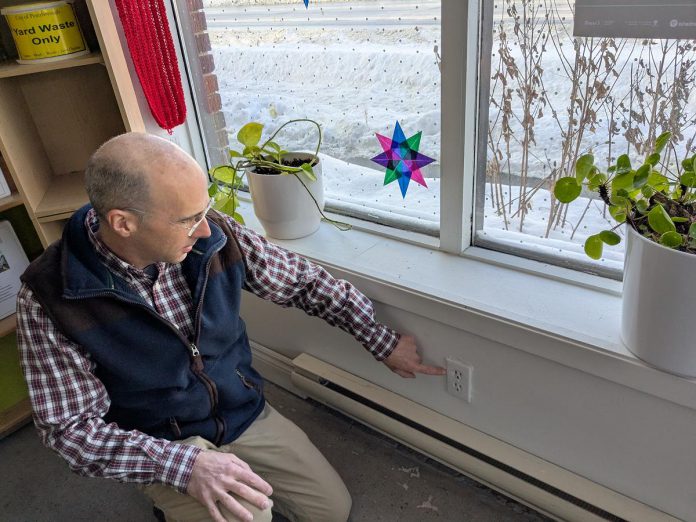
GreenUP energy advisor Bryn Magee points to an electrical outlet on an exterior wall in the GreenUP office. In many older buildings, electrical outlets are sources of air leakage. Foam gaskets and plug protectors can help to staunch the flow of cold air. (Photo: Clara Blakelock / GreenUP)
Each week, GreenUP provides a story related to the environment. This week’s column is by Clara Blakelock, Energy Program Manager, GreenUP.
This is the time of year when heating bills may begin to look a little frightening. Major upgrades such as adding insulation or switching out a heating system can help lower expenses, but they also come with high up-front costs.
A more accessible start may be to work on improving airtightness in the home.
Air leakage and insulation are often confused by homeowners. Insulation, typically measured with an R-value (or RSI in the metric system), slows down heat transfer between the inside of a building and the outside in winter. It can be considered as a home’s “warm winter coat.”
Advertisement - content continues below
Now, consider the difference between wearing a winter coat with the zipper wide-open versus fully closed. This is how a home’s performance can be impacted by its airtightness.
ACH50 stands for Air Changes Per Hour at 50 Pascals, and it is a measure of how leaky the house is. It’s a key indicator of how efficient and comfortable a home will be. A home with a high ACH50 will have high heating bills, dry air in winter, and may suffer from pests — even if it has great insulation.
The good news is that improving a home’s airtightness can often be a do-it-yourself job that has great payback. The support of an energy coach can make the job even easier.
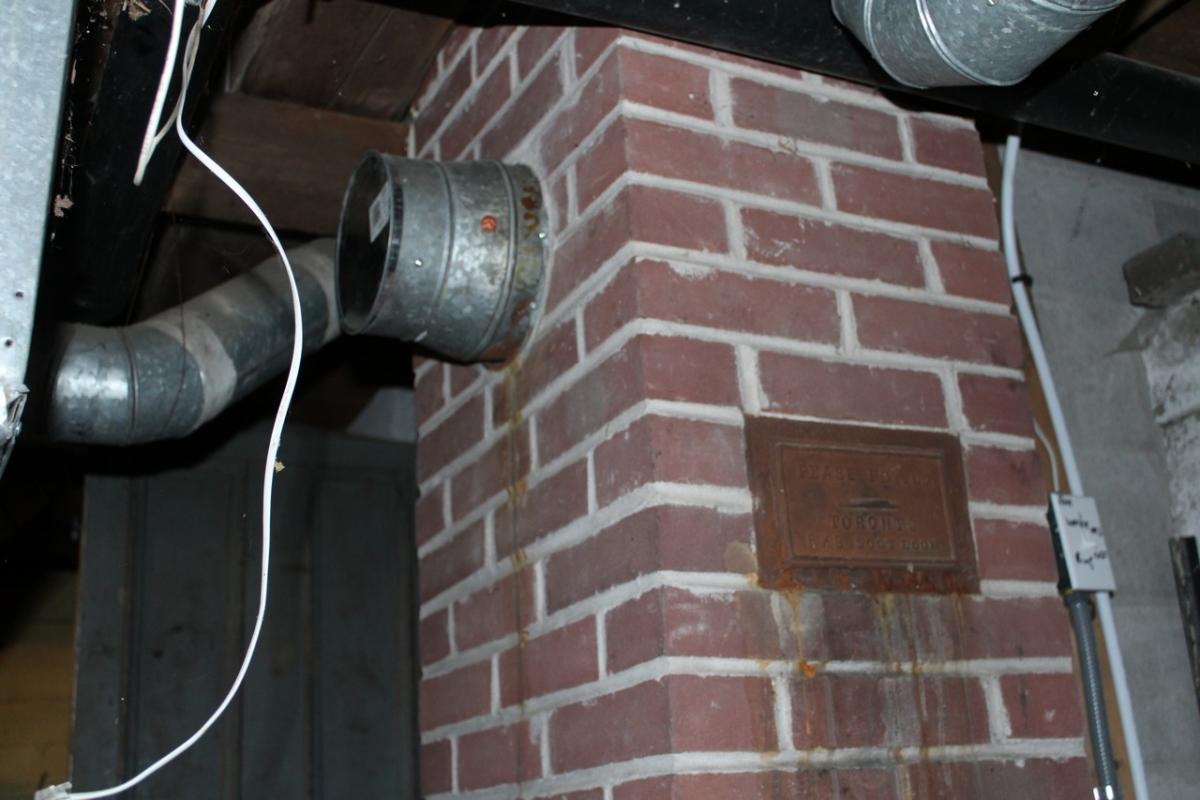
Basements are often treasure troves of hidden air leakage. Capped off venting and unused chimneys can allow cold air to enter the home. In an unfinished basement, addressing air leaks can be as simple as using spray foam, caulking, or concrete to fill in gaps. (Photo: Bryn Magee / GreenUP)
“Usually, a door or window is the first culprit blamed for drafts by homeowners,” says GreenUP energy advisor Bryn Magee. Magee has been through many leaky Peterborough-area homes, and often finds other leaks that homeowners were not aware of, some much more significant than windows and doors.
“The air leakages are in blind spots or areas never considered before,” explains Magee. “For example, ceiling pot lights or missing interior air sealing around rim board penetrations for plumbing may be contributing to a homeowner’s discomfort.”
Once identified, he can then provide advice for sealing the leaks, resulting in significant improvements in home comfort and lower energy bills.
Advertisement - content continues below
Some air leaks can be identified by a homeowner on a careful tour of the house. Wherever daylight is showing through to the interior — under a door or around a dryer vent for example — that is a clear indicator of a leak.
Other common areas of leakage include around attic and side attic hatches, along basement headers (especially around penetrations for venting or wiring), and from electrical outlets on exterior walls.
Each leak will require different techniques for sealing, but usually can be done with materials found at a hardware store, such as weatherstripping or caulking.
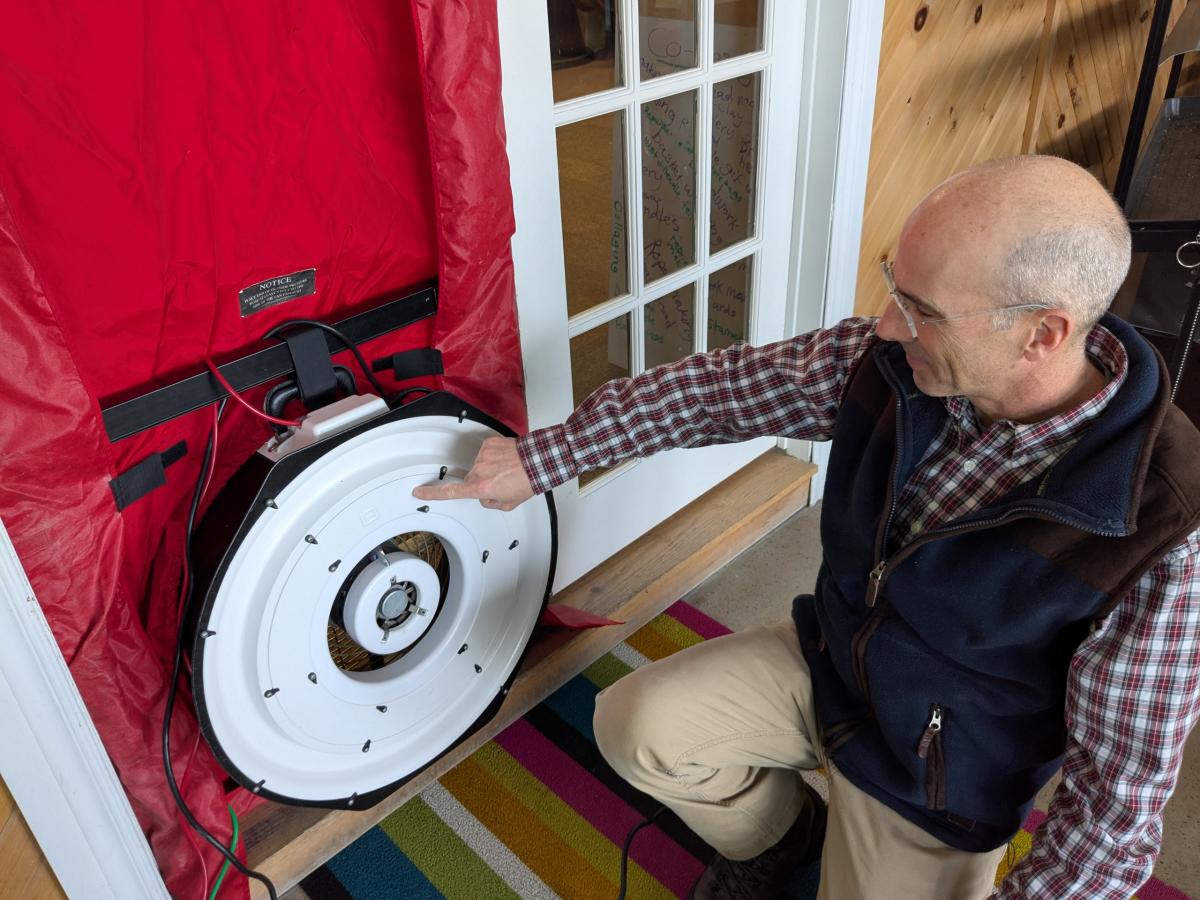
GreenUP energy advisor Bryn Magee demonstrates the setup of a blower door at the GreenUP offices. The fan is normally installed in an exterior door, where it depressurizes the home, accentuating any air leaks present in the home. Depending on how leaky the home is, an energy advisor will set up a fan using different ring sizes during a blower door test. A more airtight home will use smaller rings, while a leakier home requires more fan power and a larger ring size. (Photo: Clara Blakelock / GreenUP)
Blower door testing is the most effective way to measure the airtightness of a home and identify where all the less obvious leaks are occurring.
During a blower door test, an energy advisor installs a large fan in an exterior doorway. The house is then depressurized, so that air is drawn into the house through the home’s leaks, making them easy to identify. When Magee performs a blower door test, he conducts the homeowner on a tour of the home’s air leaks and provides them with advice on how to address them.
Better Homes Peterborough, the City of Peterborough’s financing and rebate program for home energy upgrades, has launched an air sealing challenge. In partnership with GreenUP, a limited number of city homeowners will be offered a free, in-depth air leakage identification evaluation with Magee, including a blower door test and customized advice on how to address air leaks in their homes.
Advertisement - content continues below
Participants in the Better Homes Peterborough air sealing challenge will have until the end of April to gather supplies and address the issues identified during the air leakage evaluation. Magee will then return to do a follow-up test to measure the improvement. Homeowners who achieve the best improvement in airtightness will be awarded prizes.
As part of the challenge, Better Homes Peterborough will also be offering workshops and tips on improving airtightness, so that more homeowners can follow along.
While larger renovation projects may be on hold until the weather warms up, there’s no need to wait on air sealing. Taking action now can lead to immediate results.
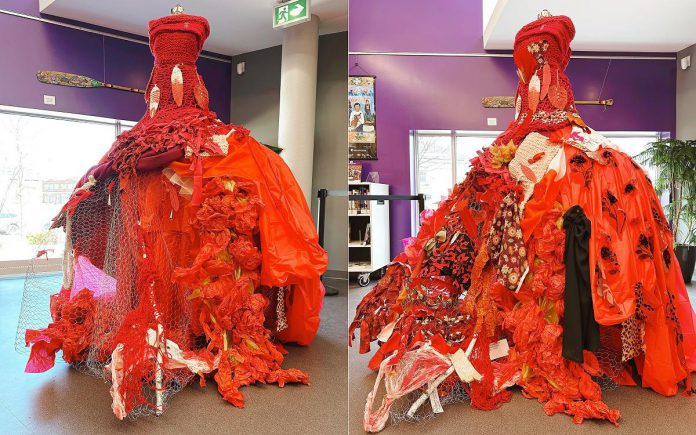
Ash Street, a Michi Saagiig artist of Nogojiwanong/Peterborough and Hiawatha First Nation, created the initial piece for "The Red Dress: A Community Art Installation" in April 2025 at the Peterborough Public Library and invited community members to fill in open spaces on the dress with donated textiles and materials on hand. The exhibit is now installed in the main foyer of Peterborough City Hall. (Photos: Peterborough Public Library)
A community art project that began at the Peterborough Public Library has led to an international opportunity for Ash Street, a Michi Saagiig artist of Nogojiwanong/Peterborough and Hiawatha First Nation.
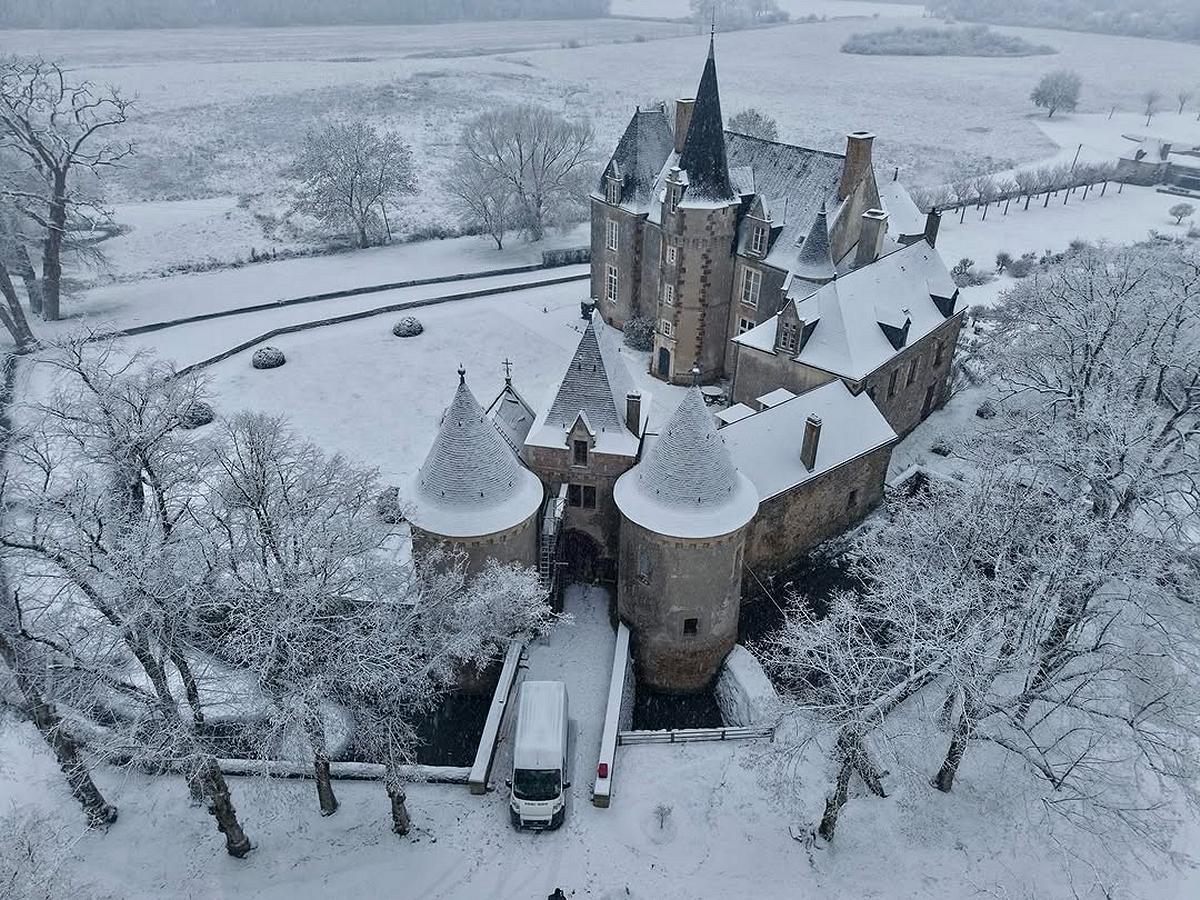
Street has been accepted into the Atelier Artist in Residence program, a two-week international residency running from February 2 to 16 at Chateau de Cerisay just south of Normandy in France, based on her work “The Red Dress: A Community Art Installation.”
Street created the installation in April 2025 in recognition of Red Dress Day, held annually on May 5 as a national day of remembrance and activism honouring the lives of missing and murdered Indigenous women, girls, and two-spirited people (MMIWG2S+). First commemorated in 2010, the day was inspired by Métis artist Jaime Black-Morsette’s REDress Project installation, wherein she hung empty red dresses in representation of MMIWG2S+.
Advertisement - content continues below
Working in partnership with Niijkiwendidaa Anishnaabekwewag Services Circle and the Nogojiwanong Friendship Centre, Street created the initial piece that was installed in the Downie Wenjack Legacy Space at the Peterborough Public Library. Street invited community members to fill in open spaces on the dress with donated textiles and materials on hand.
The exhibit is now installed in the main foyer of Peterborough City Hall at 500 George Street North.
According to a media release from the City of Peterborough, in reviewing Street’s application, the Atelier Artist in Residence program expressed strong interest in both the artistic merit of Street’s work and the broader community conversations it has generated, particularly around what MMIWG2S+ means to both Indigenous and non-Indigenous audiences.
Advertisement - content continues below
“Inviting people to share in the process and engage in conversation has been at the heart of this work,” Street said in the media release. “That collective experience is what carried this project forward and ultimately opened the door to sharing these stories on an international stage.”
Street expressed gratitude to the City of Peterborough and the Peterborough Public Library for providing space and support for the installation and acknowledged the influence of Black-Morsette.
Mayor Jeff Leal said the installation underscores the importance of continued reflection and action.
Advertisement - content continues below
“The Red Dress installation is a powerful reminder of our shared responsibility to honour the lives of (MMIWG2S+) and to continue the work of listening, learning and acting,” the mayor said, adding the city is proud to see the local community-based project reach an international audience.
Melissa Redden, director of the Peterborough Public Library, said the library is “incredibly proud” to have supported Street’s work from its early stages and to see “this important work continue to resonate beyond our community.”
“What began as a local community-based installation at the library has grown into a work that is now being recognized internationally,” Redden said.
Château de Cerisay is a 12th-century castle located just south of Normandy in France. (Photo: Yves Bechet)
Atelier Artist in Residence is a curated arts residency program that is held at different destinations “to create an exceptional experience for artists,” according to the program’s website.
Each two-week session brings together 10 to 12 artists from a range of disciplines — including visual arts, music, writing, textiles, photography, and digital media — and at different stages of their careers, creating a multidisciplinary and multicultural cohort.
Tuition for the Château de Cérisay residency is $2,800 USD and does not cover round-trip transportation. Artists accepted into the program typically seek arts grants or other funding to support their participation.
At the 22nd annual Empty Bowls fundraiser on February 27, 2026 at Showplace Performance Centre in downtown Peterborough, attendees can select a bowl handcrafted by Kawartha Potters Guild and sample food from 10 local restaurants. This year's fundraiser will support One City Peterborough's daily meal program at Trinity Community Centre. (Photo: One City Peterborough)
The annual Empty Bowls fundraiser is returning for its 22nd year in February, and this year all the proceeds will support One City Peterborough’s daily meal program at Trinity Community Centre.
This year’s fundraiser dedicated to addressing hunger in the community takes place from 12:30 to 2 p.m. on Friday, February 27 at Showplace Performance Centre in downtown Peterborough.
“Our kitchen serves over 250 meals each day, and last year alone provided over 93,000 meals to members of our community,” reads a statement from One City Peterborough. “The need continues to grow, and this event plays a meaningful role in helping us meet it.”
Advertisement - content continues below
Empty Bowls, a grassroots movement by artists and crafts people in cities around the world to care for and feed the hungry in their communities, first came to Peterborough in 2003 when Karen Hjort-Jensen, then director of housing of YWCA Peterborough Haliburton, brought forward the concept and began the partnership with the Kawartha Potters Guild.
Over two decades, the event has helped raise more than $210,000 for YWCA Peterborough Haliburton’s Nourish Project, developed out of the Peterborough Community Food Network when its members decided there was a need to address the gaps in food access, production, consumption, and knowledge in the city and county of Peterborough.
However, YWCA Peterborough Haliburton was forced to end the community food initiative on March 31, 2025 due to inadequate funding. As a result, proceeds from last year’s Empty Bowls fundraiser were used to support food insecurity programs at One City Peterborough and Kawartha Food Share — a decision the YWCA made after consulting with the Kawartha Potters Guild, which has donated bowls every year to the fundraiser.
Advertisement - content continues below
This year, One City Peterborough will partner with Kawartha Potters Guild to present the event for the first time, with Cornerstone Family Dentistry returning once again as presenting sponsor.
As with the previous fundraisers, purchasing a ticket means you will be able to select a handmade artisanal bowl of your choice from a wide selection made by members of the Kawartha Potters Guild, while also sampling a wide range of food donated by local restaurants.
This year’s participating restaurants are Hanoi House, St. Veronus, The Vine, La Mesita Restaurante, Hard Winter Bakery, By the Bridge, The Food Shop, Sam’s Place, Love You Mean It, and Ashburnham Ale House.
Advertisement - content continues below
Attendees will also have the opportunity to participate in a silent auction featuring a selection of special bowls.
A VIP early entry ticket is available for $75 for those who want first choice of a bowl and first access to the food selection, with entry one hour before the event opens at 12:30 p.m. for those with general admission tickets, which cost $60.
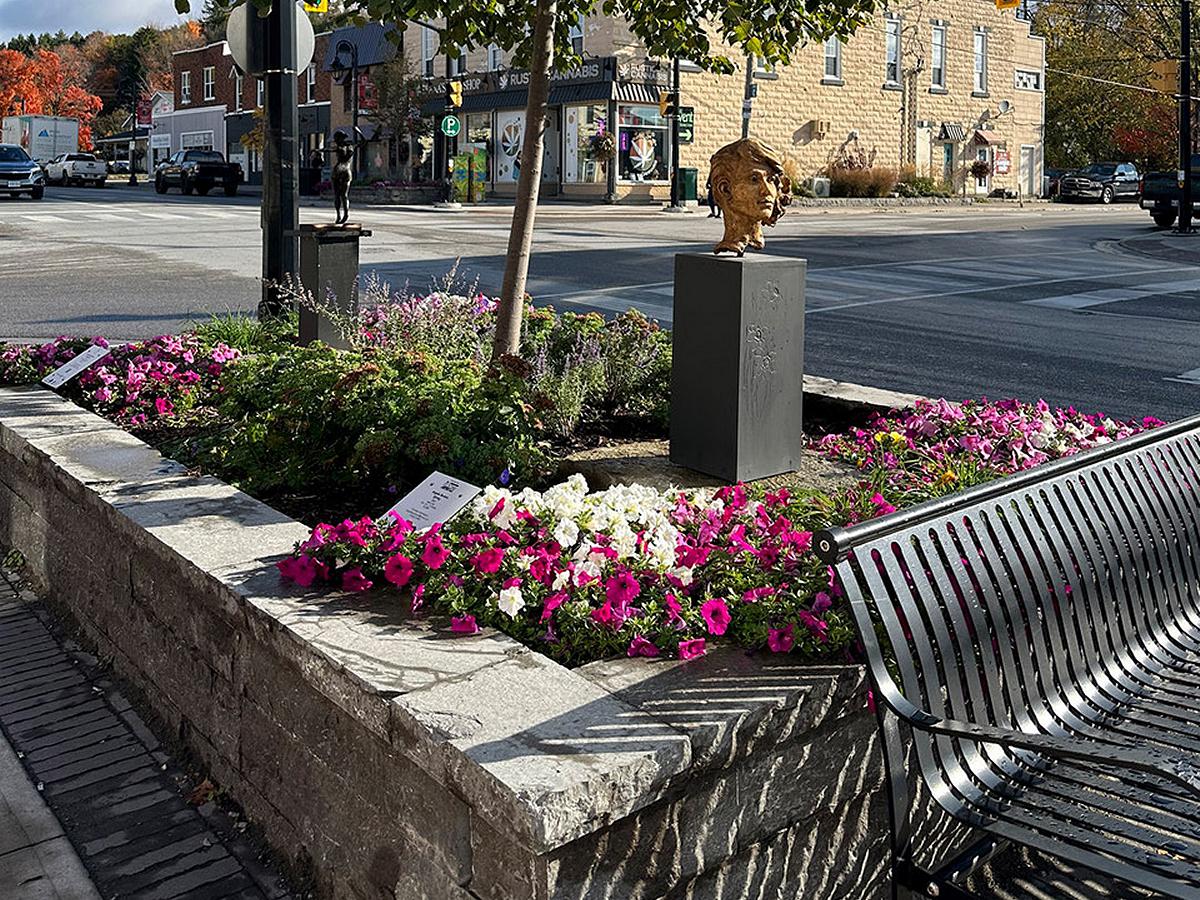
"Spring" (2025, resin cast) by Angela Burdon was one of the sculptures chosen to be displayed in planters in downtown Fenelon Falls as part of the 2025 Downtown Sculpture Exhibition led by the Fenelon Arts Committee and the City of Kawartha Lakes. Submissions for the 2026 seasonal public art exhibition are now open to artists across Canada until March 20, 2026. (Photo: Fenelon Arts Committee / Facebook)
The Fenelon Arts Committee (FAC) is calling on sculptors across Canada to submit their one-of-a-kind artworks for a public art project that will beautify downtown Fenelon Falls.
Held in partnership with the City of Kawartha Lakes, the Downtown Sculpture Exhibition will see six juried works of art mounted on limestone rocks located in garden planters on Colborne Street from May to October 2026. Whether you work with metal, stone, clay, wood, or any other medium, it could help make art more accessible in a rural community.
“Having access to multiple avenues (of artwork) really enriches the whole experience. Obviously, our art gallery in town can’t be open 24 hours per day, but the public art is up on the street all the time,” says Darcie Kennedy, the Chair of FAC. “It really adds something to the main street.”
Advertisement - content continues below
FAC was founded in 2018 as part of the Kawartha Works Community Co-operative (KWCC), a volunteer community group whose goal is to improve social infrastructure in Kawartha Lakes. In 2021, FAC introduced the first public artworks to be installed under the City of Kawartha Lakes’ arts policy, with Portage by James C. Smith and River Grove by Susan Rankin being permanently erected in the Rain Garden.
Since 2024, the committee has held the Downtown Sculpture Exhibition, inviting artists from across Canada to submit their innovative creations.
“It was really just thinking about what does Fenelon have to offer already — it’s already a popular tourist town so we wanted to add elements to the public realm that peak people’s interest and are maybe a little different than other things that would be more obvious, like water recreation,” Kennedy says. “You see a lot of public art in more urban areas, but it (this project) brings that to a rural area as well.”
The six sculptures selected by a jury of artists and business owners from submissions to the 2026 Downtown Sculpture Exhibition will be mounted on limestone rocks located in garden planters along Colborne Street in downtown Fenelon Falls. The planters are maintained by the Fenelon Falls Horticultural Society. (Photo: Fenelon Arts Committee / Facebook)
Submissions to the 2026 Downtown Sculpture Exhibition are now open until 5 p.m. on Friday, March 20. Submitted sculptures must be 35″ to 56″ with a maximum width and depth of 30″ each. The sculpture can only use materials that can withstand the weather and cannot pose a risk to the public with hazardous sharp points or edges.
“It doesn’t have to, but it may consider the context and history of Fenelon Falls and the surrounding area,” says Kennedy. “Things like the Indigenous connections and use of the area, historical development, natural heritage of the region, and the contemporary uses of Fenelon today.”
Six works will be chosen by a jury comprised of local artists and representatives of FAC and the City of Kawartha Lakes.
“There are also some of the people that own and work in the businesses in downtown Fenelon as well, because they are often engaged with the community and visitors,” adds Kennedy. “We really want to make it so there’s a wide variety of people seeing the work, so we have a variety of viewpoints to consider.”
Advertisement - content continues below
The winners will receive a $750 artist fee and accommodation, if required, on Thursday, May 7 when the works are to be installed. They will be erected alongside a post with a QR code that leads to artist statements on the FAC website.
“The (Fenelon Falls) Horticultural Society looks after the planters and they have beautiful flowers and different plants,” says Kennedy. “When the sculptures get added, it just really adds a lot of colour and interest and it’s just really exciting.”
Following the installation, there will be a public launch and walking tour beginning at 11 a.m. on Friday, May 8 at the Colborne Street Gallery. Community members and visitors will get to hear the artists speak about their work before going on a walking tour to look at each sculpture.
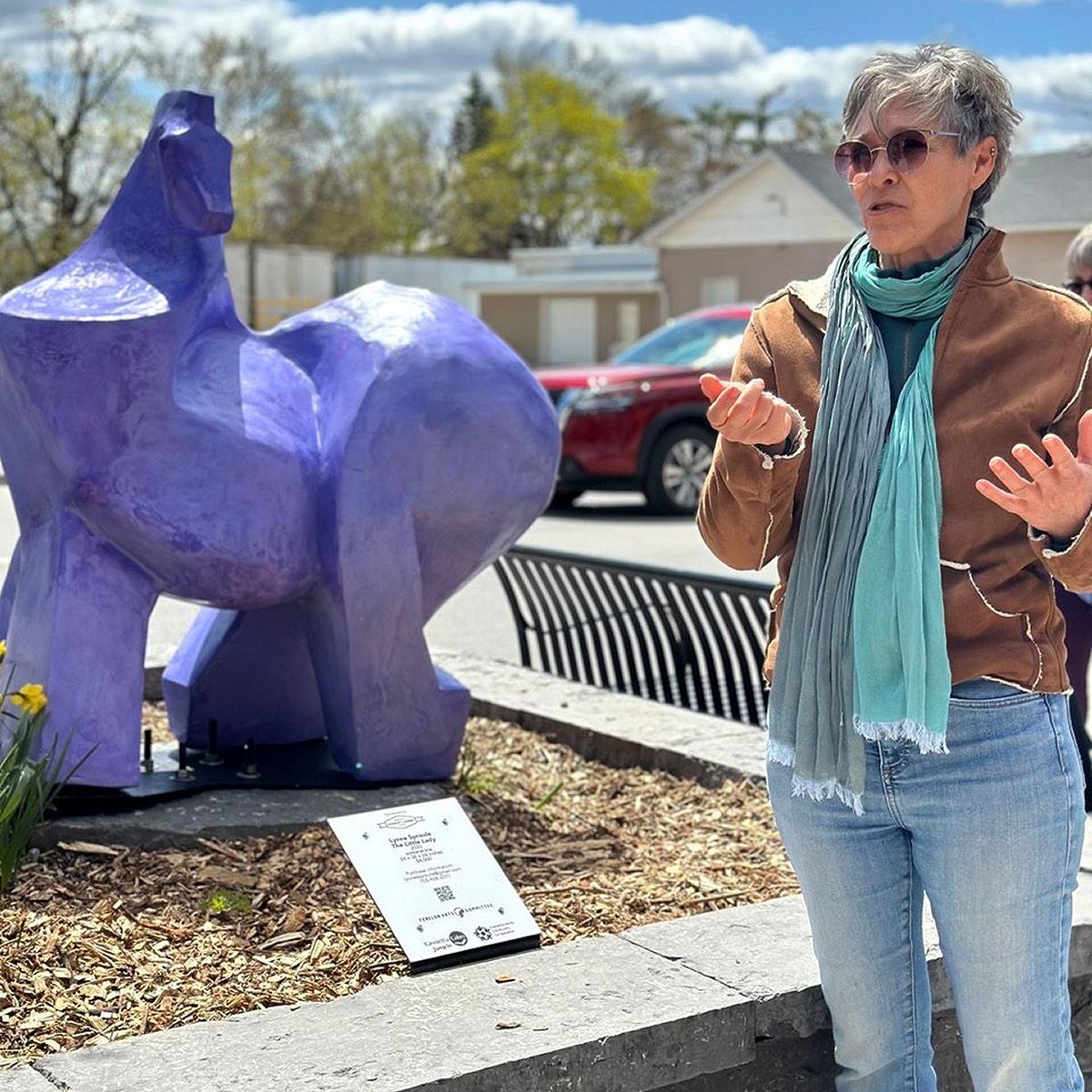
Lynne Sproule speaks about her sculpture “The Little Lady” (2025, winterstone) during the public launch of the 2025 Downtown Sculpture Exhibition led by the Fenelon Arts Committee. After selections are made for the 2026 public art exhibition, there will be a public launch and walking tour held at 11 a.m. on May 8, 2026 at the Colborne Street Gallery. (Photo: Fenelon Arts Committee / Facebook)
“People like to get that inside scoop. It gives that little bit of an extra connection which is great especially because some of the artists are local,” says Kennedy. “It gives perspective that this is right in their backyard. They can bring friends when they come into town, go out to lunch, walk around a couple of blocks to do a little bit of shopping, and see the cool artwork. Everything is really accessible and in the summer it’s just so great.”
Kennedy hopes the project will be attractive to local young artists and give them a chance to see art as a career in their own town — especially since the works are for sale. The sale is made independent of FAC, ensuring the artist keeps all proceeds.
“There’s a lot of creative people in the Kawarthas,” says Kennedy. “It gives them an opportunity to show in their own community which is great. It’s really important to be able to have those opportunities where they live and work and where their friends and family are.”
Advertisement - content continues below
Since launching the seasonal exhibitions in 2024, Kennedy says FAC has received a lot of positive feedback from community members. She notes that local high schools have even taken students on a walking tour to study the artwork and learn more about the artists.
“You don’t have to go down to Toronto to see that really high-calibre work,” she says.
“It really gave kids that are thinking about creative careers a little bit of ‘Wow, maybe that is possible’ or ‘I never really thought about that.’ Maybe they’re interested in welding, but never thought about it being in a sculpture. There’s all these different avenues for people and I thinking it’s important to try and showcase that.”
“Embrace” (2018, clay, patina, acrylic sealer) by Rosalinde Baumgartner was one of the sculptures chosen for the 2025 Downtown Sculpture Exhibition held by the Fenelon Arts Committee and City of Kawartha Lakes. Submissions are now open for the 2026 public art exhibition which will be on display in planters in downtown Fenelon Falls between May and October 2026. (Photo: Fenelon Arts Committee / Facebook)
Local businesses can support the project by signing up as a sponsor for the artwork. Those funds will be going towards the signage fees, the artists fees, and the accommodation costs for those coming from out of town for the installation. To be a sponsor, email fenelonarts@gmail.com.
“It is really nice to know that local businesses in the area believe in the project,” says Kennedy.
For more information or to submit to the Downtown Sculpture Exhibition, visit www.fenelonarts.com.
The original version of this story has been updated to reflect that the artist fee has increased from $500 to $750.
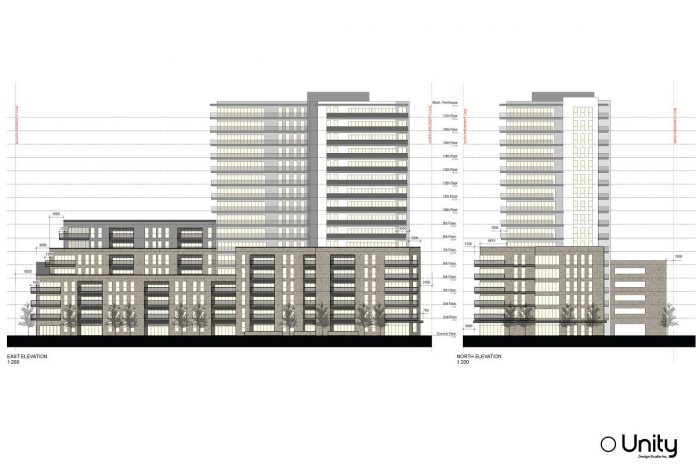
Ashburnham Realty's concept plan for a proposed 17-storey mixed-use high-rise on Crescent Street behind the Art Gallery of Peterborough and near the shore of Little Lake. The development would include 210 market-rent units and ground floor commercial space. (Graphic: Unity Design Studio Inc.)
Peterborough city council has endorsed zoning by-law and official plan amendments to allow Ashburnham Realty to develop a 17-storey mixed-use high-rise on Crescent Street behind the Art Gallery of Peterborough and near the shore of Little Lake.
During council’s general committee meeting on Monday night (January 26), which also served as a public meeting under the Planning Act, councillors considered a staff report from Blair Nelson, the city’s commissioner of infrastructure, planning, and growth management, about the application for the 17-storey building with up to 225 dwelling units and ground floor commercial space.
The staff report recommended changes to the latest submitted concept plan that includes an increased building setback of three metres to the parking structure to accommodate landscaping, a reduced tower floor plate area of 1,000 square metres, and flexibility for a maximum building height of 20 storeys to facilitate the reduced tower floor plate area.
Advertisement - content continues below
Nine existing properties located along Crescent Street, Lake Street, and George Street would be included in Ashburnham Realty’s proposed development: 195, 199, 203, 215, and 223 Crescent Street, 131 and 137 Lake Street, and 362 George Street South.
Most of the properties are single detached dwellings, with two properties at the intersection of Lake and Crescent Streets containing apartments. They include 111 metres of frontage on Crescent Street, 55 metres of frontage on Lake Street, and 8.5 metres of frontage on George Street South, with a total lot area of around 6,600 square metres (1.6 acres).
A public house on the proposed development was hosted by EcoVue Consulting Services Inc. last September 23 at the Art Gallery of Peterborough. That version of the development included a portion of the second and third floor that could potentially be used as a new location for gallery, although city council subsequently decided not to pursue that option. Around 100 people attended the open house.
Advertisement - content continues below
At Monday night’s public meeting, city planner Ian Walker provided council with a presentation on the proposed development, including details of the application, the results of the open house, and staff recommendations for the development, including the potential for the building to be as high as 20 storeys to accommodate changes recommended by staff.
Mayor Jeff Leal asked Walker if he was aware that Ashburnham Realty owner Paul Bennett had sent correspondence to members of council “that he’d like to stick with the 17 floors for this project,” and Walker responded that he was.
Walker’s presentation was followed by three public delegations, including two residents from the neighbourhood who spoke against the development, as well as Kent Randall of EcoVue Consulting Services on behalf of Ashburnham Realty.
Randall told council that Ashburnham Realty does not want to increase the height of the building beyond 17 storeys. Instead, the number of units will be reduced from 225 to 210 to accommodate increased step-backs at the fourth and sixth storeys, along with a reduction in the tower floor plate for floors nine to 17, and a modified ground floor commercial area.
He noted that the proposed development would be market rental units, not condominiums as in an earlier iteration of the proposed development, but would not include any affordable housing.
Advertisement - content continues below
Although it is not part of the application, Randall said that Ashburnham Realty’s design could incorporate a “possible linear park” in front of the development, which would require the permanent closure of Crescent Street to traffic north of Romaine Street. He added that city staff are working on “potential redesigns for that strip” and a linear park with the closure of Crescent Street “would be perfect as far as we’re concerned.”
He said that while Ashburnham Realty can work with some of the staff-recommended changes, including increased step-backs at the fourth-floor podium and increased minimum commercial space on the ground floor along Crescent Street, the applicant is requesting to keep the maximum building height at 17 storeys, to increase the maximum tower floor plate area from the staff recommendation of 1,000 square metres to 1,115 square metres, and to reduce the west side lot setback to 1.5 metres from the staff-recommended three metres.
“Since we provided that to the public, the 17 storeys, (and) we’ve gone through all these different design iterations to come to that point, we’d like to press forward with that,” Randall said.
A number of councillors asked questions of Randall, including councillor Matt Crowley, who asked what the “shovels in the ground” date would be if the application is approved. Randall said the applicant “is hoping fall of this year.”
Advertisement - content continues below
After Randall’s delegation, council had a brief debate on the application.
Mayor Jeff Leal said he wanted “to commend Mr. Bennett” for staying to the commitment of 17 storeys, referring to the proposed East City development beside Mark Street United Church when the building increased from 10 to 17 storeys.
The mayor added that the application meets a number of city policies and objectives, that the rental apartments would draw younger people to the community, and that the development would increase the assessed value of the property and therefore increase the city’s tax revenue.
In response to comments from one of the neighbourhood residents who presented to council, that a waterfront high-rise would have a negative impact on tourism, councillor Gary Baldwin asked city staff to provide an opinion. Both Blair Nelson, the city’s commissioner of infrastructure, planning and growth management, and Darryl Julott, the city’s economic development director, said they did not foresee a direct impact on tourism.
After some additional discussion, council voted on an amended motion that included Ashburnham Realty’s requests for changes to the staff recommendations.
The motion carried 9-0, which was a unanimous vote as councillors Alex Bierk and Kevin Duguay did not participate in the discussion or vote. Earlier in the meeting, Bierk said he had a financial relationship with Ashburnham Realty and Duguay said he was the original planning consultant for the project prior to his election to council.
Items endorsed by general committee will proceed to the regular city council meeting on Monday (February 2) to be considered for approval.
The Women's Business Network of Peterborough presented a cheque for $4,410 to the YWCA Peterborough Haliburton on January 22, 2026 in support of the non-profit organization's programs and safe spaces for women and children escaping the effects of gender-based violence. (Photo courtesy of YWCA Peterborough Haliburton)
The Women’s Business Network of Peterborough (WBN) has donated $4,410 to YWCA Peterborough Haliburton in support of the non-profit organization’s programs and safe spaces for women and children escaping the effects of gender-based violence.
The funds were raised in December at WBN’s annual holiday gala, which included a turkey dinner, a circus arts performance, a raffle with items donated by local businesses, and a “Magical Mini Festival of Trees” raffle.
For more than 31 years, WBN has supported YWCA Peterborough Haliburton, including through its annual holiday gala.
Advertisement - content continues below
“We are so grateful for the amazing ongoing support from the entire membership included in the WBN,” said Tina Thornton, YWCA Peterborough Haliburton’s philanthropy director, in a media release. “We look forward to this signature community event each year as an opportunity to connect with the incredibly generous members of our business community. This annual support allows YWCA Peterborough Haliburton to provide life-saving supports for 100 per cent of the women who include YWCA on their journey to recovery.”
The proceeds donated by WBN will support YWCA Peterborough Haliburton’s “HER Journey of Care,” a care model that offers clients an organic and individualized journey towards healing from the effects of gender-based violence, through services such as the emergency shelter at Crossroads in Peterborough, the START program, Transitional Housing and Outreach programming, Family Court support, supportive counselling, and more. For more information, visit ywcapeterborough.org.
WBN is a networking organization for women in the Peterborough area who want to enhance and expand their business contacts and grow their businesses, including through monthly member meetings from September to June. For more information, visit wbnptbo.ca.
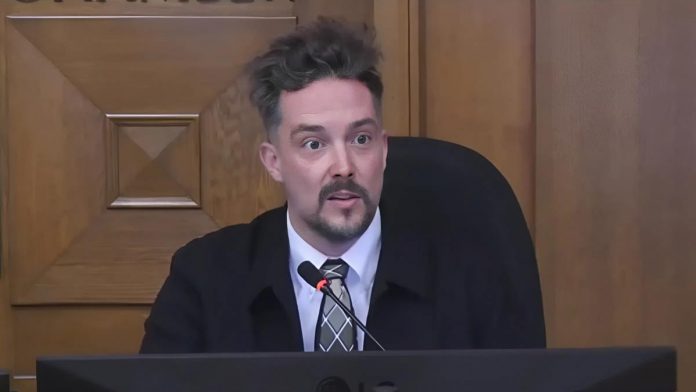
Councillor Alex Bierk speaks against the proposed ban on councillors taking their phones into council chambers during a discussion of the proposed new procedure by-law at council's general committee meeting on January 26, 2026. (kawarthaNOW screenshot of City of Peterborough video)
Peterborough city council has voted to endorse a new procedure by-law that, in part, bans councillors from taking their phones into council chambers.
A requirement of the Municipal Act, a procedure by-law governs the rules for calling, holding, and regulating municipal council and committee meetings. In Peterborough, it’s been the practice of council to consider amendments to the procedure by-law at least once during a council’s four-year term.
Meeting as general committee on Monday night (January 26), councillors considered a report from the city’s legislative services commissioner David Potts and city clerk John Kennedy that detailed proposed changes to the procedure by-law and included a draft version of the amended by-law.
The amendments were developed by a working group that included Mayor Jeff Leal, councillor Andrew Beamer as chair of general committee, and councillor Lesley Parnell as chair of planning committee, along with city staff including city CAO Jasbir Raina, Potts, Kennedy, and deputy city clerk Natalie Garnett.
Advertisement - content continues below
According to the report from Potts and Kennedy, the working group met “on several occasions to discuss procedural considerations,” consulted the Ombudsman’s Office, and reviewed the practices of other municipalities including Caledon, Cambridge, Chatham-Kent, Guelph, Pickering, Richmond Hill, St. Catharines, Whitby, and Windsor.
The report states the amendments to the existing by-law strengthen the authority of a meeting chair in “maintaining order, decorum, and the effective conduct of meetings,” including new restrictions on councillors raising points of order.
Under the current procedure by-law, councillors can raise a point of order at any time for reasons including a breach of rules, improper language, out-of-scope discussion, and irregular proceedings. If the chair rules against a point of order, a councillor can challenge the chair’s decision and council will vote on the challenge.
Under the proposed procedure by-law, no councillor (other than the chair) can interrupt another councillor who is speaking, including by raising a point of order. Instead, a councillor must signal they wish to raise a point of order, and the chair will then decide whether or not to let the point of order proceed after the original speaker has finished speaking. The chair’s decision is final and cannot be challenged.
In addition, the proposed procedure by-law softens the wording on whether the chair is required to refer to Robert’s Rules of Order for guidance on any procedural issues that are not covered by the by-law. The current by-law says the chair “shall” refer to Robert’s Rules of Order, whereas the new by-law says the chair “may.”
The proposed amendments also place new restrictions for how long councillors can speak on a motion. The current by-law allows councillors to speak twice on the same motion for a maximum of five minutes each during general committee meetings and council meetings. The proposed by-law changes that to three minutes for council meetings.
“These revisions are intended to promote focused discussion, ensure equitable participation, and support the timely advancement of meeting business,” the report from Potts and Kennedy states.
As for public delegations, a maximum of 10 delegations will be allowed per council agenda under the proposed by-law. Under the current by-law, a maximum of 10 delegations are allowed per topic or report on the agenda. Neither by-law restricts the number of delegations during a public meeting under provincial legislation.
Under the proposed by-law, each councillor can only ask one question when a delegate finishes speaking, and the delegate’s answer to the councillor cannot exceed 90 seconds. Neither restriction exists under the existing procedure by-law.
“This approach maintains opportunities for meaningful public input while balancing the need for orderly and effective meeting proceedings,” the report states.
Another change in the proposed procedure by-law is that a motion to reconsider a council decision (requiring a two-thirds vote to be approved) cannot be introduced at the same meeting where the decision was made. Under the current by-law, a motion to reconsider can be made during the same meeting.
Other changes in the proposed by-law include a new land acknowledgement, additional criteria for introducing items under “Other Business,” and a new rule that councillors cannot change their vote after it has been cast — even if the councillor voted in error.
Advertisement - content continues below
Share on Bluesky
However, the most contentious proposed change to the current procedure by-law states that councillors must “not be in possession of any electronic device that could facilitate a communication” other than if they are participating in a meeting virtually. Although the by-law does not define an “electronic device,” the report from Potts and Kennedy describes “personal or (city) issued devices.”
“Members must communicate only through, and at the discretion of, the chair,” the report states. “These restrictions reflect the principle that the public must be able to observe all decision-making activity during open meetings.”
At Monday night’s general committee meeting, several councillors expressed concerns about the proposed procedure by-law.
Councillor Alex Bierk, who requested that each change in the proposed by-law be separated out for a separate vote, said the proposed by-law contains “fundamental changes to how we function as elected officials.”
“I’m pleading with you to defer the vote on this procedural by-law as written and leave the work to the next term of council,” he said. “These are not just simply housekeeping edits. This by-law introduces a ban on personal electronic devices, drastically reduces how often and how long councillors can speak, and expands the authority of the chair.”
He called the ban on cellphones “vindictive and imperialistic.”
“It creates a problem where no problem has been demonstrated. We have had no findings from the Ombudsman, no pattern of public complaints, and no evidence that council is conducting business electronically at the horseshoe (the table in council chambers). For me, as someone who has received threats in this room and as a parent of young children who are at home right now, having my phone on my person is a basic matter of safety and family responsibility.”
Calling the proposed ban “an overreach” and “not a proportionate response to any proven issue,” Bierk said that other municipalities regulate electronic devices as a way of “stopping side conversations or improper debate, not banning councillors from possessing their phones all together.”
“What is being proposed here is far more extreme than what is typically happening anywhere else and again is being done without any evidence of any real problem to solve,” he added.
With a municipal election set for October, Bierk also suggested that it was inappropriate for council to make the changes so close to the end of their term.
“We should not be adopting one of the most restrictive procedural rules in the province in the final months of this term and imposing it on the next council without their consent,” he said.
Advertisement - content continues below
Share on Bluesky
In her comments, councillor Joy Lachica said she wanted to hear the motivation “to isolate councillors” by banning phones while city staff and the public in chambers would be able to retain their phones, especially in situations where councillors may need to be contacted by their family in case of an emergency.
Calling the proposed ban “draconian,” Lachica said it would contravene the Ontario Human Rights Code in terms of family status and asked for the rationale for the ban.
In response to Lachica’s comment, the city’s director of legal services Alan Barber said possessing a phone is not a “protected ground” under the Ontario Human Rights Code, and pointed out there will be a “workaround” to contact councillors in case of an emergency.
Councillor Keith Riel put forward a motion to defer approval of the proposed by-law and to have staff return with a report describing the reason for each change, adding that no councillors were consulted other those who were part of the working group.
Commenting on Riel’s motion, councillor Bierk noted that city staff did not provide councillor Lachica with a rationale for the phone ban and said “We’re creating a solution to a problem that doesn’t exist,” adding that he had never received any comments from anyone about the inappropriate use of phones during council meetings.
“We are not children — I’m 44 years old,” he said, pointing out that councillors already have access to their emails, text messages, and Microsoft Teams to consult with city staff on the computers that are available to each councillor in chambers.
He suggested it would be more reasonable to instruct councillors not to conduct council business on personal electronic devices, rather than banning them outright.
“Good luck policing that,” Bierk said. “You are going to have to strip-search me, and I welcome it.”
Councillor Matt Crowley said he recognized the issues behind the proposed phone ban but supported the deferral, noting that he preferred to read documents on his iPad rather than on paper. Councillors Kevin Duguay and Lesley Parnell said they would not support the deferral.
Bierk asked city clerk John Kennedy what the working group found with respect to how other municipalities deal with councillor phones. Kennedy said that, in St. Catharines, devices must be placed on silent mode during closed session meetings. He did not provide any information about municipalities that ban the use of phones.
Council then voted on Riel’s motion to defer the proposed procedure by-law, which lost 5-6. Councillors Lachica, Bierk, Crowley, Riel, and Gary Baldwin voted in favour, with Mayor Leal and councillors Don Vassiliadis, Dave Haacke, Beamer, Parnell, and Duguay voting against.
Share on Bluesky
With debate resuming on the main motion, Mayor Leal referred to his time as a Cabinet minister in the provincial government and noted that all personal and work devices are banned during Cabinet meetings.
Councillor Duguay said he had received questions from members of the public as to why councillors are on their phones during council meetings, saying “This has been brought up more than once.” He added the issue has been raised at Association of Municipalities of Ontario (AMO) meetings “more and more often.”
“We may be one of the first communities to introduce (a motion banning phones in chambers), but we will not be the only community to introduce the motion,” Duguay said.
Councillor Haacke put forward a motion to change the number of questions that councillors can ask a delegate from one to two, which was carried by a unanimous vote of 11-0 and added to the main motion.
Councillor Crowley asked Barber whether there is a reason the use of personal electronic devices should not be allowed during council meetings. Barber replied that there a number of reasons, including that city staff do have access to personal devices to respond to Freedom of Information (FOI) requests from the public, but said the most important issue was one of public perception.
“The electors should have the confidence to know that is it those elected officials making the decision in real time, and that the decision that the elected official is making is not being influenced by somebody from the outside,” Barber said. “Whether that happens or not, I do not know, but the perception is as important as the reality for people who vote.”
Advertisement - content continues below
Share on Bluesky
Mayor Leal proposed a motion to amend the section on calling the vote (a.k.a. putting the question) to allow councillors to speak once on a motion after a vote has been called. As council had already voted in December against a motion from councillor Bierk that included that change, a two-thirds vote would be required to reconsider the decision. The mayor’s motion to reconsider the decision lost 5-6, with councillors Vassiliadis, Beamer, Parnell, Duguay, and Baldwin voting against it.
Councillor Bierk then put forward a motion to propose changing the wording of the by-law with respect to banning phones from “not be in possession of any electronic device” to “not to use any electronic device” during council meetings.
Councillor Parnell spoke against the motion, stating that not being in possession of electronic devices “protects us,” claiming that important information has been leaked in closed session “whether willingly or accidentally,” although she did not provide details.
Share on Bluesky
“There can be no risk of anybody questioning any of us if we don’t have our devices,” she said, noting that the public observing council won’t know why councillors are using their phones if they are allowed in chambers.
Bierk’s motion lost 4-7, with councillors Lachica, Bierk, Crowley, and Riel voting in favour.
Addressing an earlier concern raised by councillor Lachica, Mayor Leal put forward a motion to add a new land acknowledgement into the proposed procedure by-law. The mayor noted that a video under development will be included with the new land acknowledgement, and agreed with Lachica’s request that the land acknowledgement be included at every council meeting. Leal’s motion was carried unanimously with an 11-0 vote.
Council then voted on the individual items in the proposed by-law. The item on banning electronic devices was carried 7-4, with councillors Lachica, Bierk, Crowley, and Riel voting against. Other items were carried by different votes. The most common vote was 8-3, with councillors Lachica, Bierk, and Riel voting against.
Items endorsed by general committee will proceed to the regular city council meeting on Monday (February 2) to be considered for approval.
The original version of this story has been updated to include information about a proposed restriction on the number of delegations per meeting.
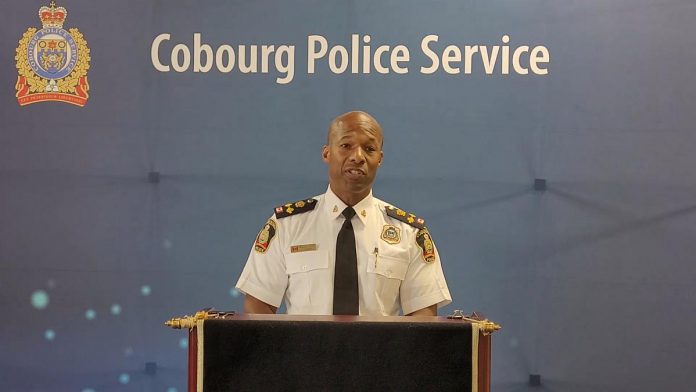
Cobourg deputy police chief Jeff Haskins pictured during a media conference in 2022. (kawarthaNOW screenshot of Cobourg Police Services video)
Just over a month after Cobourg police chief Paul VandeGraaf announced his retirement this June, deputy chief Jeff Haskins has announced he will also be retiring this year.
According to a media release issued on Monday (January 26), Cobourg Police Service Board chair Adam Bureau has accepted the deputy chief’s intention to retire in August.
Like VandeGraaf, Haskins has had a 35-year career in policing, including the past four years in Cobourg. He was sworn in as deputy chief of the Cobourg Police Service in November 2021 after serving with the Durham Regional Police Service.
Advertisement - content continues below
“On behalf of the Cobourg Police Service Board, I want to thank Deputy Chief Haskins for his dedicated service and leadership,” Bureau said in the release. “We are grateful for his many contributions to the Cobourg Police Service, its members, and the broader community. After a distinguished 35-year career in policing, we wish him every success and happiness in his well-deserved retirement.”
During his time with Cobourg police, Haskins led several initiatives including the body-worn camera program, the Downtown Action Plan, and the high visibility cruiser pilot.
Along with a strong focus on member wellness and operational effectiveness, he was also a champion for modernization efforts including facility improvements and technology-driven enhancements.
Advertisement - content continues below
“It has been a privilege to serve this organization and community during what has been one of the most professionally rewarding chapters of my career,” Haskins said. “I am deeply grateful to the Cobourg Police Service Board for their trust and confidence, and to Chief Paul VandeGraaf for his leadership, guidance, and support.”
“Most importantly, I thank the sworn officers and civilian professionals of the Cobourg Police Service whose professionalism, resilience, and unwavering commitment to public safety continue to inspire me. As I approach this transition, I remain fully committed to supporting continuity and stability within the service through the remainder of my tenure.”
The Cobourg Police Service Board has already initiated a nationwide search for the next Cobourg police chief, and will now be searching for a new deputy chief as well.
Through its new "Rethink Therapy" awareness campaign, Five Counties Children's Centre is encouraging families to see that therapy happens everywhere, not just at Five Counties Children’s Centre with a clinician or staff member. Small everyday actions help children build connection, confidence, and their abilities for life. (Photo courtesy of Five Counties Children’s Centre)
Some families who come to Five Counties Children’s Centre may think their child’s therapy only happens in a treatment room or with one of our clinicians. The fact is, this kind of thinking sells families short and leads to missed opportunities.
Every month, Five Counties Children’s Centre provides a story about the work of the charitable organization. This month’s story is by Ashley Parsons, Occupational Therapist, Five Counties Children’s Centre.
Parents and caregivers know their child and their daily lives best. They are their child’s greatest strength, resource, advocate. and ally.
This is very true for children and youth with physical, developmental, or communication needs who come to Five Counties for treatment.
Parents, guardians, grandparents (and even older siblings) are key members of the treatment team. Each plays an invaluable role in a child’s success.
Advertisement - content continues below
This simple but powerful message — therapy happens everywhere — is at the root of the new Rethink Therapy campaign that Five Counties is promoting to its families.
Rethink Therapy seeks to inform families that therapy isn’t limited to within the walls of Five Counties or at scheduled appointments. Therapy can happen any time of day, as part of everyday tasks, family routines, and playful activities.
Using the Rethink Therapy approach, Five Counties staff support and coach families to better understand how everyday activities can become, or are already, like therapy for their child.
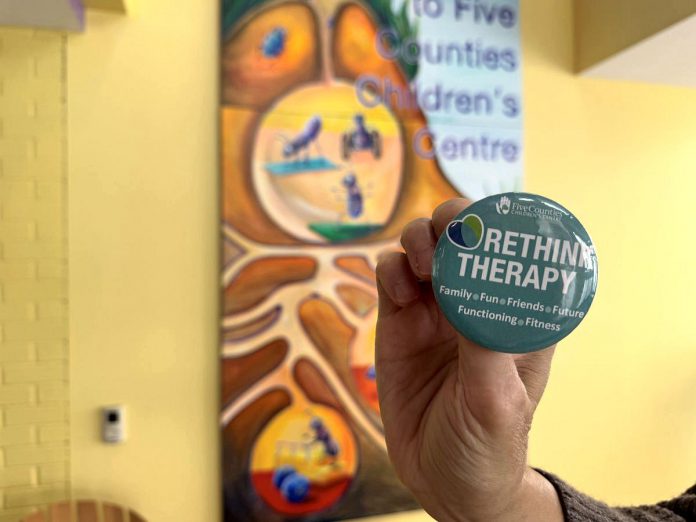
One of the promotional items that Five Counties Children’s Centre is using to reinforce the message to its parents/caregivers that therapy happens everywhere, including in everyday activities they do with their child. (Photo courtesy of Five Counties Children’s Centre)
Small actions with a child every day build connection, confidence and their abilities for life. And these interactions between a parent/caregiver and child can happen at home … at play … all day … every way.
Take mealtime. Pouring, scooping, taste testing or smelling, setting the dinner table, or requesting more of your favourite food — all can be considered ‘therapy.’ This everyday activity can provide parents and caregivers simple ways to support a child’s motor, communication, and sensory goals. Even getting a child to help write and follow a grocery list, or find items at the store, become an opportunity for skill-building.
Who knew toothbrushing could be like therapy? Each stroke helps build coordination, routine, and independence. It’s not just hygiene; it’s motor planning in action!
Advertisement - content continues below
The Rethink Therapy campaign is the vehicle that drives home this point. The promotion is fuelled by caregiver coaching tips that Five Counties has long shared with families. And at the core of Rethink Therapy are the “F-Words” for child development (Family, Friends, Fun, Fitness, Functioning, and Future).
The F-Words, rooted in research and championed by CanChild at McMaster University, use a strength-based approach that celebrates what a child can do. The F-Words keep families and clinicians focused on what matters most: each child’s everyday life, abilities, goals, and joy.
Each F-Word touches upon a different part of a child’s world. Whether it’s building fitness through play, boosting functioning during routines, or nurturing friendships in the community, these elements together help a child to build abilities for life.
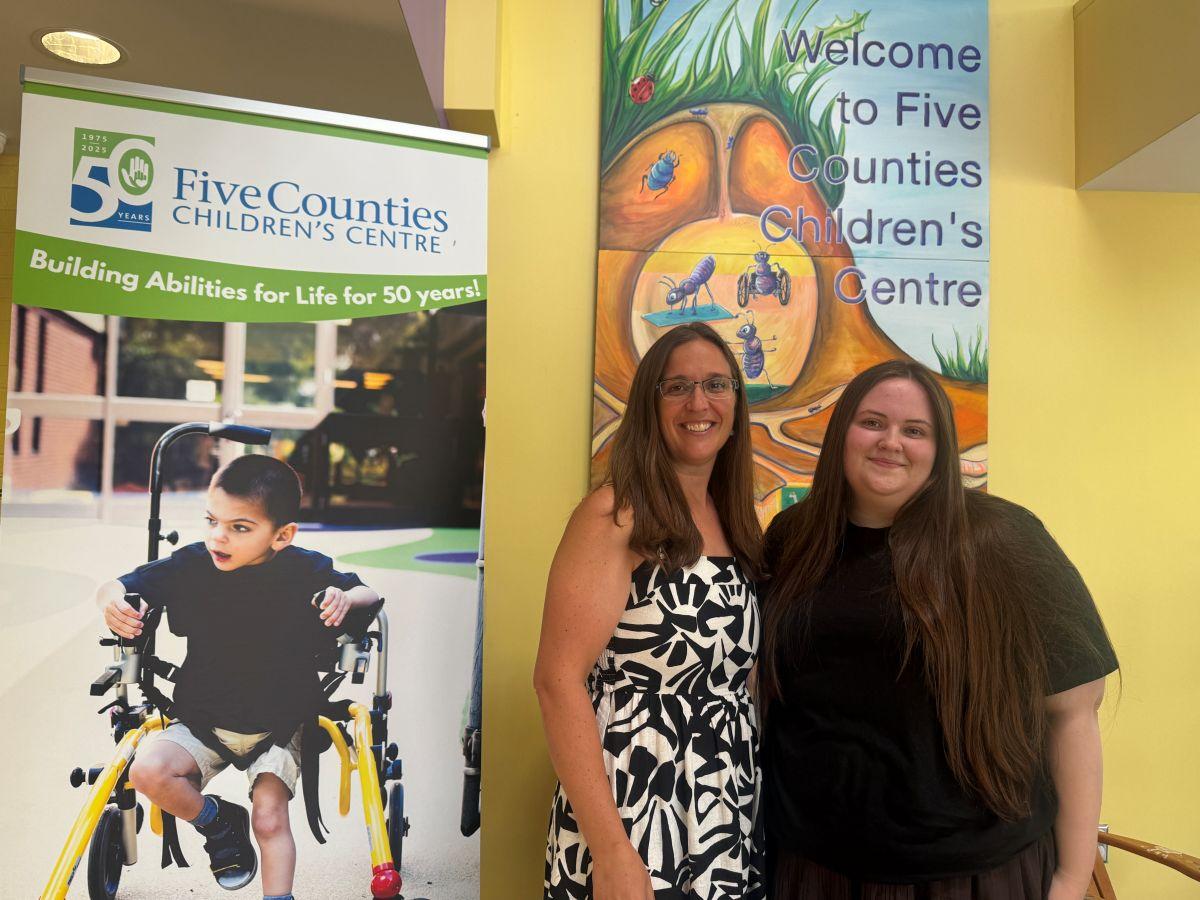
Five Counties Children’s Centre occupational therapist Ashley Parsons with former Fleming College student and graphic designer Taylor Polley, the creative genius behind the “Rethink Therapy” awareness campaign who developed the tagline and other elements that Five Counties is using to encourage its families to think of treatment as happening in all places and spaces, not just within the walls of the centre. (Photo courtesy of Five Counties Children’s Centre)
Rethink Therapy is about partnerships, as is the actual campaign.
The concept behind Rethink Therapy — including its tagline, colours, look, vibrant visuals, and posters — was developed in partnership with Fleming College’s Graphic Design-Visual Communication program. As part of their course work, students take on a real-life learning opportunity by creating a comprehensive communications campaign for a community agency.
In 2025, Five Counties was selected as the ‘client’ agency and Fleming College students rose to the centre’s challenge to create a campaign that encouraged families to realize they could support their child’s therapy in all places and spaces.
Advertisement - content continues below
Many amazing ideas and concepts were presented by the talented students but, in the end, the creative genius of Fleming student (and graphic designer) Taylor Polley shone through. Her concept for Rethink Therapy was chosen as the winning campaign, and Five Counties is pleased to put it into action.
We hope families will rethink therapy, seeing themselves as essential partners in their child’s treatment journey — because they are the key.
As we tell parents and caregivers, you’ve got this … and Five Counties can help!
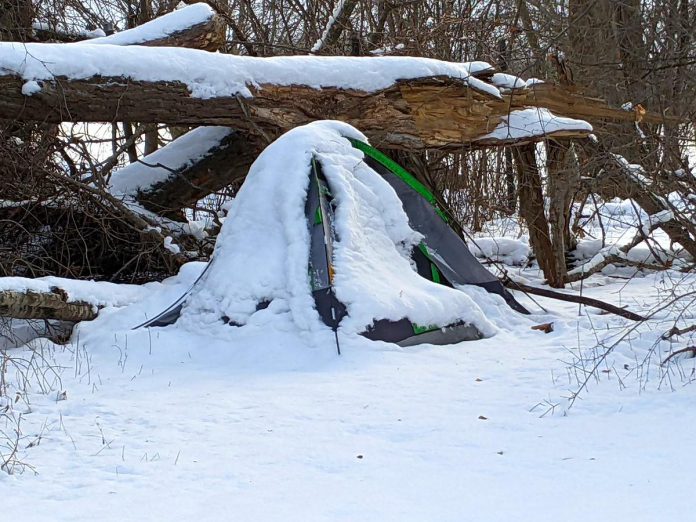
A snow-covered tent in a park in Peterborough, Ontario on December 19, 2022. (Photo: Bruce Head / kawarthaNOW)
With Environment Canada forecasting continued double-digit freezing temperatures throughout the week, the City of Peterborough has announced its temporary overnight emergency shelter will remain open until Saturday morning (January 31).
Update (Friday, January 30) – The City of Peterborough has announced the temporary emergency overnight shelter at 161 Carnegie Ave. will remain open overnight on Friday due to continuing cold temperatures.
Located in a former fire services building at 161 Carnegie Avenue and open from 8 p.m. to 8 a.m., the overflow shelter and warming space opened last Saturday, with 10 people using the space on Saturday night and 11 people on Sunday night.
Since then, around 25 people have stayed at the shelter each night.
Advertisement - content continues below
The temporary emergency shelter adds 40 new overnight emergency shelter beds to the city’s 127-bed emergency shelter system.
The regular shelter network includes Brock Mission Men’s Shelter at 217 Murray Street (705-748-4766 ext. 1), Cameron House (for women) at 738 Chemong Road (705-748-4766 ext. 2), YES Shelter for Youth and Families (for youth aged 16 to 24 and families) at 196 Brock Street (705-748-3851), and Trinity Community Centre at 360 Reid Street, which offers an overnight drop-in program from 8 p.m. to 8 a.m. and a daytime drop-in program from 9 a.m. to 7 p.m.
People who are seeking emergency shelter should first try one of the above regular shelters. If a space is not available, they will be referred to the temporary shelter on Carnegie Avenue. Transportation will be provided from the regular emergency shelters to the temporary shelter if needed.
Emergency shelters and agencies that provide services for people who experience homelessness have been informed of the availability of the temporary shelter service to help let people know that there is additional indoor space available as the cold weather continues.
The original version of this story has been updated with an additional announcement from the City of Peterborough and additional details about the number of people who have used the temporary shelter each night.
kawarthaNOW.com offers two enews options to help readers stay in the know. Our VIP enews is delivered weekly every Wednesday morning and includes exclusive giveaways, and our news digest is delivered daily every morning. You can subscribe to one or both.
Submit your event for FREE!
Use our event submission form to post your event on our website — for free.
To submit editorial content or ideas, please contact us.