















Home Blog Page 20

Peterborough ward candidates outline their priorities for transportation and active transportation

A Peterborough Transit bus in front of a transit stop. (Photo: City of Peterborough)

As the fall municipal election in Peterborough approaches, residents are asking candidates hard questions about their most pressing issues — including transportation.

The City of Peterborough began implementation of it 15-year Transportation Master Plan in 2022 including goals for road infrastructure, transit, and active transportation.

Online, Peterborough residents have been expressing discontent with the city’s public transit system, citing concerns such as poor vehicle cleanliness and maintenance, repeated cancellations and lateness, and the route system being inadequate. “The buses became so unreliable that I just stopped using them all together,” reads a post on the r/Peterborough Reddit page.

Municipal elections across Ontario will take place on Monday, October 26. As residents of a single-tier municipality, Peterborough voters will elect a mayor, two city councillors in each of the city’s five wards, and school board trustees.

Although incumbent mayor Jeff Leal has yet to declare whether he intends to run for re-election, six candidates have filed their nomination papers so far seeking the mayor’s chair: Michael Eamon, Brian Lumsden, Jacob Méthot, Neil Morton, incumbent councillor Keith Riel, and Rebecca Schillemat.

Meanwhile, seven incumbent councillors have already begun their campaign for re-election. With 18 first-time or repeat candidates fighting to take their roles, each seat will be hotly contested. The nomination period is still open until August 21, so it’s possible even more candidates may decide to throw their hats in the ring.

As part of a multi-story series on the Peterborough municipal election, kawarthaNOW has already asked registered candidates in each of the city’s five wards to introduce their campaigns by answering three questions — why they are running, what the biggest challenge is in their ward, and what makes them a unique candidate for councillor — and has published their responses verbatim: Ward 1 (Otonabee), Ward 2 (Monaghan), Ward 3 (Town), Ward 4 (Ashburnham), and Ward 5 (Northcrest).

kawarthaNOW has now contacted all registered ward candidates to ask for their position on key election issues, including to “explain your priorities for transportation and active transportation.”

kawarthaNOW asked each of the ward candidates to respond in email, and is publishing their answers verbatim with no editing. Responses were not received by publication date from Jessica Correa (Ward 1 – Otonabee), Andrew MacGregor (Ward 4 – Ashburnham), or Charmaine Magumbe and Debbie Halstead (Ward 5 – Northcrest). Jessica Correa has since withdrawn from the race.Charmaine Magumbe, Andrew MacGregor, and Lucas Graham provided responses after publication.

kawarthaNOW has reached out to Aris Metaxakis, a Ward 2 – Monaghan candidate who registered after kawarthaNOW sent its questions to candidates, and will include his answers if he responds.

Advertisement - content continues below


Ward 1 – Otonabee

Kevin Duguay

The City’s Official Plan, Transportation Master Plan and the Bikeways and trails Master Plan all serve to address transportation including active transportation.

Ensuring complete streets which allows for all forms of transportation in keeping with the established policy framework of the noted documents is critical. I support a balanced approach towards transportation including: Effective use of Public Transit; Upgrading of existing sidewalks-trails; Continuing with the City’s Road State of Good Repair Program (Road re-resurfacing); Planned Capital Projects (including Charlotte Street, Sherbrooke Street, Lansdowne Street at Clonsilla and Lansdowne Street at Park Street).

As a Rotarian, I have been directly involved in the advancement of the Rotary Greenway Trail and its companion series of other trail facilities throughout our City.

Lucas Graham

My priority is a transportation system that gives people real choices in how they get around. Driving will remain important, but walking, cycling, and transit should be practical options rather than something people use only when they have no alternative.

That starts with maintaining roads and bridges before they become much more expensive to repair, while also building continuous sidewalks, safer crossings, accessible streets, connected cycling routes, and transit that is frequent and reliable enough for people to plan their lives around.

The biggest problem is often the gaps. A bike lane that disappears at a dangerous intersection, a sidewalk that ends halfway down the street, or a bus connection that turns a short trip into an hour can make an otherwise useful network effectively unusable.

Transportation is something everyone depends on, but not everyone has the same options. Some people can’t afford a car, some can’t drive because of age or disability, and others simply shouldn’t need one for every trip. Our transportation system should give all of them a realistic way to get to work, school, groceries, appointments, and the rest of their community.

Lesley Parnell

Over the years we have adapted our approach to fix more roads faster with different program levels. Improving this infrastructure includes the active transportation components: transit, multi-use trails, sidewalks, bike lanes. Note — the standard for new construction is moving to dedicated spaces for all to separate vehicles, cyclists and pedestrians. This is not an inexpensive mandated change on the capital or operating sides however, when cyclists and pedestrians feel safe, they will use the options more often. FREE youth transit will remove barriers for our youth and teach them to be lifelong transit users — worldwide. I am thrilled we achieved free youth transit this term.

Chris Potter

Transportation has to be practical.

People need roads that are safe and maintained, transit that works, sidewalks that are usable, and bike routes that actually connect to places people need to go.

I support active transportation, but it has to be built as part of a real network. A bike lane here and a trail connection there doesn’t do much if people still can’t safely get across the city.

I also think we need to be honest about transit. If we want people to use it, it has to be reliable, accessible, and useful for real life. That means getting people to work, school, appointments, groceries, and services without turning a simple trip into a full afternoon.

For Otonabee Ward 1, road safety, pedestrian safety, transit reliability, and better connections are big pieces of this, especially around schools, parks, busy intersections, residential streets, and areas where speeding or poor visibility is already a concern.

Advertisement - content continues below


Ward 2 – Monaghan

Matt Crowley

Transportation planning is about making sure people can get where they need to go safely, efficiently, and in the way that works best for them.

For many people in Peterborough, that means driving, so maintaining our roads and bridges has to remain a priority. We’ve had to make significant investments in infrastructure over the past four years because delaying repairs only makes them more expensive in the future.

I think at the same time, we need to continue investing in things like sidewalks, trails, cycling infrastructure, and especially in our public transit. A strong transit system is good for our community because it provides an affordable transportation option for residents, helps connect people to jobs, education, or doctor’s appointments, and it also reduces congestion by giving people more choices in how they travel.

That being said, building and maintaining a strong transit system isn’t something our city should have to do alone. I’ll continue advocating for stable, long-term funding from the provincial and federal governments so we can improve service without placing the entire cost on local property taxpayers.

Quality transportation planning really isn’t about favouring one way of getting around over another. It’s about recognizing that different people have different needs at different stages of their lives. Whether our residents drive, take transit, walk, or cycle, they deserve safe, reliable infrastructure that helps them get where they need to go.

Ashley Flynn

Transportation isn’t about choosing cars over bikes or transit-it’s about creating a system that works for everyone.

My priorities are maintaining our roads, and speed limits, improving traffic flow, investing in safe sidewalks and cycling infrastructure, where it makes sense, and ensuring public transit continues to improve as our city grows.

I’m also a strong supporter of regional transportation opportunities like the proposed ALTO rail project. Better connections between Peterborough and larger economic centres should help to attract investment, create jobs, and make our city more accessible.

Rose Kitney

Again the transportation strategies in the City of Peterborough Official Plan Implementation Strategy need to be reviewed and revised to ensure this is an area that does not lag behind. Public transportation is vital for many people in the city to get to their place of employment, medical appointments, social activities, etc. Transportation in Peterborough is not a level playing field compared to other municipalities. The Official Plan includes active transportation improvements and as councillor for Monaghan Ward I would work to ensure transportation is continually addressed.

Jen Lacey

Transportation is all encompassing. It’s about connecting people to work, school, medical appointments, recreation, and each other safely, efficiently in a means that is affordable. Peterborough needs a transportation network that works for drivers, pedestrians, cyclists, transit users, seniors, and people with disabilities.

Public transit is extremely important. Reliable, accessible, timely and affordable transit helps people get to work, school, medical appointments, and local businesses. For many people in our community, public transit is a necessity, and we need to treat it as such. Many seniors rely on public transit and live on a fixed income.

My priority is to improve the transportation system we already have so that people can go to their job and get their groceries while planning responsibly for future growth. That means investing in road maintenance, addressing congestion where possible, and ensuring infrastructure projects are coordinated to reduce unnecessary disruptions and make the best use of taxpayer dollars.

I support expanding active transportation where it makes sense. However, these investments should be based on community needs, clear planning, and meaningful public consultation to ensure they are practical and well used.

AJ Shearer

Council’s job is to make investments that improve the overall transportation network while recognizing that every decision involves trade-offs.

One of my priorities is protecting the infrastructure that is already built. By investing in rehabilitating our roads, sidewalks and bridges, we save taxpayer dollars over time as deferring maintenance almost always costs more.

Other than that, I support transportation investments that improve safety, connectivity and long-term value for the community. Each project should be evaluated on its own merits, balancing cost, community benefit and long-term sustainability.

Advertisement - content continues below


Ward 3 – Town

Alex Bierk

I have been, and will remain, fully supportive of public transit and active transportation. As our city grows, people need safe, accessible, and affordable ways to move around Peterborough, whether they walk, cycle, take transit, or drive.

Jenni Cathcart

My priorities around transportation are straightforward: make it safer, more convenient and more transparent.

I want to take a hard look at whether our bus routes are working for the people who rely on them. That means talking to riders, reviewing the data, and making changes where they’re needed. I’d also like to see proper shelters built at the stops where routes connect — right now, transferring between buses in the rain or cold is an experience nobody should have to put up with.

As I mentioned in an earlier response, Alto high-speed would be a gamechanger for our city. Not only would high-speed rail increase our access to more job opportunities, but it would likely lead to new job creation and additional revenue streams.

Safety is a real concern, too. There are intersections in this city that have been dangerous for years — both for drivers and cyclists — that need to be addressed. And there are areas where a driver turning left creates a big back-up during school drop-off or pick-up times.

Finally, I hear from residents that they feel left in the dark when street construction happens in their neighbourhood. I want to change that. Better communication about what projects are upcoming, when projects are starting, how long they’ll last, and what to expect isn’t complicated — it’s just good governance.

Jessica Kuhlmorgen-Hille

I would love to work on a bylaw to allow for low-speed vehicle (LSV) use — including registration and proof of insurance with the city. I would like to propose shared bicycle lanes with LSVs on the roads, as well as divided trails, that allow a lane only for bicycles & LSVs, and a lane only for pedestrian traffic. Transportation affordability, and accessibility, are hot topics, and we, as a city, need to be open to growing with the needs of our citizens. It’s a great Green option addition as well. I want to ensure our bus system is as straight forward, easy to use and access, as possible. Countless complaints are still flooding social media about issues with the current system, so it would behoove us to really resolve these things once and for all. Our citizens deserve that much.

Joy Lachica

Active transportation and transportation mode-share are crucial elements in our city-building and urban design. Our commitment to our Official Plan, Transportation Master Plan and Cycling Master Plan in alignment with Climate Action Plan 2.0 speak in concert to these principles in having the most significant impact in lowering our greenhouse gas emissions to off-set the haste of climate change. As we urgently electrify fleets and/or use alternatives to fossil fuels, as we increase walkability, bikeability and tame our arterials we’re moving in better directions for all. Increased investment in transit and a city-driven public campaign to increase transit ridership is an easy and obvious next step to accelerate this emergent priority.

Nigel Lister

Transportation is vital to a good City. With a possible new Events Centre coming to the downtown and a possible high frequency rail line by ALTO, we will need to make sure that getting people from that station to the core, and quickly, is a top priority. I also have some really fun ideas for transportation and active transportation around the core and in the village of East City as well. Happy to chat about that over the coming months. Let’s just say a public downtown trolley is not out of the question in my mind!

Advertisement - content continues below


Ward 4 – Ashburnham

Gary Baldwin

Public transportation is an essential service. Many people depend of public transportation to get to and from work, school, appointments, and events. Over my 12 years on Council, I have consistently voted to support investments in public transportation and active transportation (bike lanes, walking trails). My priorities with respect to public transportation would be to provide safe, reliable, accessible, and timely service to patrons who use the service.

Ashley Bonner

My priorities for transportation and active transportation are to ensure residents have safe, reliable, and practical ways to get around, whether they drive, take the bus, walk, cycle, or use mobility supports.

We need to invest in transit in line with the City’s Transportation Master Plan, especially as Peterborough grows and our population ages. For many people, public transportation is a lifeline. It connects residents to work, school, medical appointments, groceries, services, and community spaces. If transit is unreliable or inaccessible, it creates real barriers in people’s everyday lives.

We need to be proactive about the way growth is changing transportation needs. The new Community Planning Permit System allows developers to provide cash-in-lieu for parking spaces in new developments. That means tenants will have fewer parking options, which will put more pressure on transit, sidewalks, cycling routes, and other alternatives to driving. If we know that shift is happening, then we need to invest now in the systems people will depend on.

That includes improving transit frequency and reliability, making routes more accessible, creating safer sidewalks and crossings, and building better connections for people who walk, cycle, or roll. This isn’t about being anti-car. Many people will still need to drive. It’s about making sure residents have real choices and that people who do not drive, cannot afford to drive, or choose not to drive are not left behind.

As a councillor, I would bring a neighbourhood lens to these decisions and listen closely to residents about where the gaps are, where safety concerns exist, and what would make the biggest difference in their daily lives. A strong transportation system helps create a more connected, affordable, and resilient community.

Andrew MacGregor

Public transportation is a public service, and we should have a bus system that is more accessible, and less expensive. The more we reduce the service and hike the fares, the less people can use it, destining the service for failure.

As a cyclist myself, I would like to see more active transportation network routes, protected bike lanes, safer streets by design.

We should also be planning neighbourhoods around the 15 Minute Village model: that most of what we need should be a short walk away, reducing the need for vehicular travel, and our reliance on fossil fuels.

Jason Stabler

Whether you are driving, walking, cycling, or taking the bus, getting around Peterborough should be safe and accessible. I will work to ensure that every neighbourhood in this ward has the infrastructure to make that a reality, through thoughtful traffic calming, expanded and better connected sidewalks and cycling routes, and transit service that is frequent, reliable and convenient.


Ward 5 – Northcrest

Andrew Beamer

Speeding and cut-through traffic on our Northend residential streets continue to be a top concern for many residents. And with the significant residential growth in the Northend over the coming decade, speeding and cut-through traffic on our residential streets will only get worse.

During my time on Council, I have been a strong advocate for increasing capacity on arterial roads to take the pressure off our existing neighbourhood streets. The Chemong Road Widening Project is scheduled to begin in 2027, and the new Council must make this infrastructure project a top priority. This project is critical for Northcrest Ward growth, and it’ll help to ensure we keep traffic off neighbourhood streets in the area.

In addition, in 2020 City Council developed a Traffic Calming Policy that has now been implemented in several neighbourhoods throughout the City. In 2023 City Council launched the Drive Slow Ptbo campaign to bring awareness to road safety and established Community Safety Zones in School Areas. Although all positive steps forward, more work needs to be done to address the issue of cut-through traffic and speeding.

Phillip Jolicoeur

My transportation priorities begin with road safety in our neighbourhoods. Speeding remains a serious concern in Ward 5, particularly in family neighbourhoods where children are walking, cycling, and playing near busy streets. I support using traffic data and resident feedback to identify problem areas, followed by measures such as traffic calming, safer crossings near schools and parks, appropriate speed limits, and stronger enforcement in higher risk locations.

Active transportation must also give residents safe and accessible ways to move around the city. That means closing gaps in sidewalks, improving pedestrian crossings, connecting trails and cycling routes, maintaining them properly throughout the winter, and considering accessibility whenever roads are rebuilt.

Public transit is an essential public service, and I believe it should remain publicly operated. As Northcrest continues to grow, residents need reliable connections between established neighbourhoods, newer subdivisions, employment, schools, medical appointments, shopping, and the rest of Peterborough.

I would support funding transit in line with Peterborough’s Transportation Master Plan, along with clear public reporting on cancelled trips, on time performance, transfer reliability, and ridership by route and time of day. Peterborough already offers Sunday service and seasonal late-night service on selected routes. I would support using ridership patterns and local employment data to determine where those hours should be expanded, particularly for shift workers and residents in growing areas of Northcrest.

Paul Lawton

My transportation priorities are practical: safer streets, better-maintained roads and sidewalks, reliable snow clearing, sensible traffic flow, and targeted improvements where there are real safety concerns.

Active transportation can be part of a healthy city, but it should be approached practically rather than ideologically. Sidewalks, trails, crossings, and bike infrastructure should be safe, maintained, and designed in a way that makes sense for the area.

Many residents still rely on cars for work, family life, appointments, groceries, and church. The city should not punish drivers, but it should also make sure pedestrians, cyclists, seniors, and children can move through neighbourhoods safely.

Charmaine Magumbe

My priorities for transportation are a city where cars, motorcyclists, public transit, walkers, runners, people with mobility issues, ie in wheelchairs or walkers/cane and cyclists can move from one place to another in a safe manner. This includes a Peterborough transit system as per in agreement with the City’s Master Transportation plan that prioritizes transit improvements:: Prioritize transit infrastructure and service enhancements to encourage public transport use and to improve public transit.

Also, agree with the Peterborough Biking Advisory Committee (P-BAC); one of their goal is to promote cycling as a means of improving individual and community health and well-being, access to transportation choice, and social and economic equity.

It would be great for Peterborough to have inclusive transportation where it designs its public transit, walking paths, and data systems with gender, age, and diversity in mind. To create this safe network of transportation for all, we need traffic calming and school safety zones.

Gavin Muir

Corridors like Chemong, Parkhill, and Water/George need to function as through-routes and as safe neighbourhood streets at the same time, and that requires deliberate, forward-thinking traffic planning rather than an afterthought. Congestion is already a problem, and we need to act quickly to catch up. Active transportation infrastructure — sidewalks, bike lanes, safe crossings — need to be built alongside intensification and new development with the future in mind, not added years later. Public transit is just as critical: it only works as real infrastructure if it’s convenient and reliable enough to compete with owning a car, not simply available as a backup option. That means pursuing every funding avenue available to us — provincial and federal included — to get there. I will be a strong voice on council to ensure that our city is advocating for every dollar we need.

Jim Wasson

Transportation for the city generally focuses on improving mobility while accommodating future growth. The key transportation and active transportation priorities for Peterborough would be to maintain and improve roads, reduce traffic congestion, and improve public transportation with a focus on service reliability and that would improve connections between neighbourhoods.

Active transportation includes walking, cycling, and other forms of human powered travel. That would include expanding cycling infrastructure, safer sidewalks, improving trail connections with better connections through neighbourhoods. Design transportation systems that work for everyone.


kawarthaNOW has reproduced written responses from candidates verbatim. Any errors, factual or otherwise, or any use of AI-generated content originate with the candidate.

This story was updated on September 1 to include a response from Town Ward candidate Nigel Lister, who filed his nomination papers after the story was originally published.

This story was updated on September 10 to include a response from Northcrest candidate Charmaine Magumbe.

This story was updated on September 18 to include a response from Ashburnham Ward candidate Andrew MacGregor.

This story was updated on September 24 to include a response from Otonabee Ward candidate Lucas Graham.

Public asked to help locate missing pilot who may be in Kawartha Lakes area

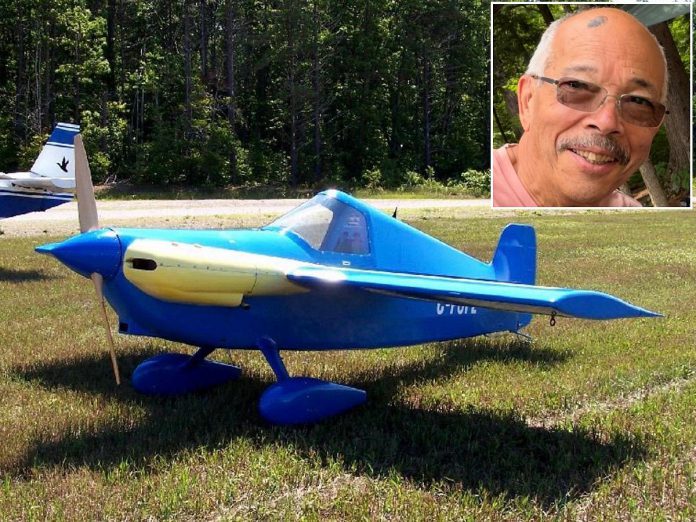
Pilot David Douglas, 73, has missing since departing Oshawa Executive Airport at 8:32 a.m. on August 14, 2026, flying a light blue and yellow amateur-built aircraft. Anyone who has seen this aircraft is being asked to call 911. (Supplied photos)

The public is being asked to help locate a 73-year-old pilot who has been missing since leaving Oshawa Executive Airport on Friday (August 14) for a flight north of Oshawa.

David Douglas departed the Oshawa airport at 8:32 a.m. in a light blue and yellow amateur-built aircraft and was expected to return to the airport, but did not return as expected and has not been located since.

According to a media advisory issued on behalf of Douglas’s family on Saturday, he is believed to be somewhere in the vicinity of Scugog, the Kawartha Lakes, Balsam Lake, Sturgeon Lake, or Cameron Lake.

Advertisement - content continues below


Anyone in that corridor who saw or heard a low-flying light aircraft on Friday morning is being asked to call 911 immediately.

Douglas was the only person aboard the single-engine fixed-wing experimental aircraft, which has a light blue fuselage with yellow accent striping along its side and “FOFZ” on the tail.

The family is particularly asking boaters, anglers, and cottagers on Lake Scugog, Balsam Lake, Sturgeon Lake, and Cameron Lake to come forward with any information.

Advertisement - content continues below


Marina operators, Trent-Severn Waterway lock station staff, pilots and personnel at airports in Oshawa, Lindsay, Peterborough, and Kawartha Lakes, and property owners with trail cameras, dashcams, or security cameras along the flight corridor are also being asked to check for anything that could assist the search.

Anyone who heard an aircraft flying unusually low Friday morning, or heard an aircraft engine change pitch or stop, should call 911.

Anyone with relevant camera footage from Friday is being asked to preserve the footage and contact police.

Advertisement - content continues below


If the aircraft is found, members of the public are being warned not to approach it because doing so could pose a safety risk and disturb evidence needed by searchers.

The Royal Canadian Air Force’s Joint Rescue Coordination Centre in Trenton is the search authority for missing civilian aircraft in Canada.

Ground jurisdictions along the probable flight corridor include Durham Regional Police Service in Oshawa and Scugog and the Ontario Provincial Police in the City of Kawartha Lakes.

Advertisement - content continues below


In coordination with Durham Regional Police Service, the Joint Rescue Coordination Centre is coordinating a grid search of the area east of Orillia in the vicinity of Balsam Lake between Lake Simcoe and Bobcaygeon.

The public may see fixed wing and rotary wing aircraft flying at low altitude in this area as crews methodically search for the overdue aircraft.

Members of the public with possible sightings are being directed to call 911. Douglas’s family has also established a contact line at 416-520-3454.


The original version of this story has been updated with information from the Royal Canadian Air Force released at 2 p.m. on Sunday (August 16).

Black spots and falling leaves don’t mean your maple tree is dying

Leaves of a Norway maple infected with Rhytisma acerinum, one of three related fungus species that cause tar spot disease. While the disease is unsightly, it is cosmetic and does not usually affect the long-term health of a tree. (Photo: Bruce Head / kawarthaNOW)

Judging from recent posts on social media, many residents in the Kawarthas region have been noticing that some maple trees — especially Norway maples — are already dropping their leaves, which are covered with black spots like somebody dripped tar on them.

No, your maple tree is not dying. It’s a disease called tar spot that’s caused by a fungus.

Although tar spot looks terrible, it’s a cosmetic disease and does not usually affect the long-term health of a tree.

Advertisement - content continues below


The fungus that causes tar spot survives the winter on fallen leaves. In spring, activated by warmth and moisture, the fungus releases tiny spores that are carried by the wind to healthy new leaves. The spores have a sticky coating that helps them attach to the leaves, where they grow and enter through tiny openings in the leaves, resulting in yellow spots.

During the summer, the centres of these spots turn brown or black, making them look like drops of tar surrounded by yellow borders. Because the leaves are no longer as efficient at photosynthesis, the tree will stop directing water to them and they may turn brown and drop to the ground.

The fungus overwinters again in the fallen leaves and releases its spores in the spring. As moisture facilitates the release of spores, tar spot tends to be worse when there is lots of spring rain.

A Norway maple leaf infected with Rhytisma acerinum, one of three related fungus species that cause tar spot disease. To help prevent the spread of the fungus in the spring, rake and bag the diseased leaves for disposal instead of composting or mulching them. (Photo: Bruce Head / kawarthaNOW)

Scientists estimate that fungi have existed for at least 1.2 billion years, colonizing the land over 500 million years ago, and could have been the dominant form of life around 250 million years ago. There are three related species of the fungus that causes tar spot, and each infects different species of trees.

Rhytisma americanum infects native maples including sugar and red maple. Rhytisma punctatum infects at least seven native maple species as well as sycamore maple. Rhytisma acerinum infects the non-native Norway maple and sycamore maple, as well as the native silver maple.

Both Norway and sycamore maples were imported to North America from Europe, and Rhytisma acerinum was imported along with them. Norway maples are common throughout Ontario, partly because they were extensively planted to replace shade trees lost to Dutch elm disease in the mid-1900s.

Rhytisma acerinum was first described scientifically in 1778 by South African-German mycologist Christiaan Hendrik Persoon, who named it Xyloma acerinum, with the Swedish mycologist Elias Magnus Fries giving the fungus its current name in 1823.

Advertisement - content continues below


Once healthy leaves have been infected with the tar spot fungus, there’s nothing you can do. However, you can help prevent the fungus from spreading the following spring by raking up diseased leaves and bagging them for curbside green waste collection, if you have it, or taking them to a municipal landfill site.

You’ll want to encourage your neighbours with infected maple trees to do the same. This only works if everyone does it, as the fungal spores can be carried for long distances by the wind.

Composting or mulching the diseased leaves will not prevent the fungus from reproducing. Home composts won’t normally reach the very high temperatures needed to kill the fungal spores, and mulching the leaves won’t destroy all the tar spots, meaning they’ll release their spores in the spring.

Advertisement - content continues below


After publishing this story, kawarthaNOW was contacted by Ethan Benson, owner of Elevated Arboriculture in Peterborough.

“In the arborist industry, we have been receiving a lot of calls about maple browning and defoliation this year,” Benson writes in an email.

“Based on our local assessments and investigations over the past month, tar spot has not fully explained the level of early leaf drop we’re seeing this year. We’ve investigated several of these cases in Peterborough, the Kawarthas, and even Cobourg, and while tar spot is occasionally present and may certainly be contributing in some cases, we’re also seeing that environmental stress is contributing to this year’s abnormal level of leaf drop, especially on urban trees dealing with other compounding site and growth stressors.”

Advertisement - content continues below


Benson notes that his business has been following the issue locally and nationally over the past several weeks, including a recent story from CTV News about maple trees in Halifax shedding their leaves in mid-August.

“Heat stress and in some cases low soil moisture do appear to be contributing factors this year, especially after the extreme heat we experienced in late spring and early summer,” he says.

Benson adds various factors may affect the health of an individual tree, and an assessment by a certified arborist will provide the most accurate information for homeowners.


The original version of this story has been updated with information from Ethan Benson of Elevated Arboriculture in Peterborough.

North Kawartha mayor ‘disappointed’ after MTO review of Highway 28 finds no major improvements are warranted

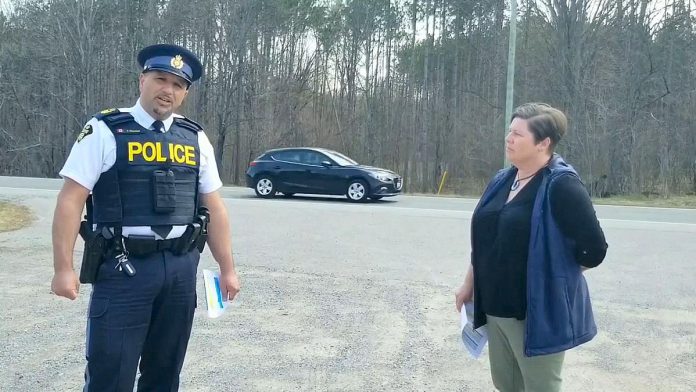
North Kawartha Mayor Carolyn Amyotte speaks with Peterborough County OPP staff sergeant Chris Galeazza in May 2021 about the three stretches of Highway 28 in North Kawartha that have the most collisions, the reasons why, and the intention to have the three stretches designated as community safety zones where speeding fines are doubled. (kawarthaNOW screenshot of Facebook video)

North Kawartha mayor Carolyn Amyotte is expressing concern after a review by the Ministry of Transportation of Ontario (MTO) found there is no reason for significant infrastructure changes to Highway 28.

MTO completed an operational performance review (OPR) of the provincial highway to identify existing or emerging safety and operational concerns and to provide recommendations for potential countermeasures along three segments of the provincial highway between Lakefield and Bancroft.

“Overall, the review found that Highway 28 is operating acceptably from both a traffic flow and intersection performance standpoint,” a summary report from MTO states. “Although the corridor experiences moderate volumes, seasonal surges, and a high proportion of wildlife-related collisions, the study concludes that no major capital improvements are warranted at this time.”

Advertisement - content continues below


Highway 28 mayors pushed province for safety review

The OPR comes two years after Amyotte put a call out to other mayors of communities along Highway 28 to form a coalition to advocate for greater safety following several serious motor vehicle collisions on the highway.

Ensuring safety on the roadway has been her focus since 2019, when a friend and neighbour was killed in an accident on the highway. By 2022, North Kawartha had installed two designated “community safety zones.”

“All communities along Highway 28 share the same concerns and have the same vetted interests in making this highway as safe as possible,” Amyotte says. “There’s a disconnect between the good design of the road and its meeting all the standards and technical aspects-but at the end of the day, there are accidents and there are issues that are happening and they’re happening in the same spots over and over again. There’s a pattern here and we need to address it.”

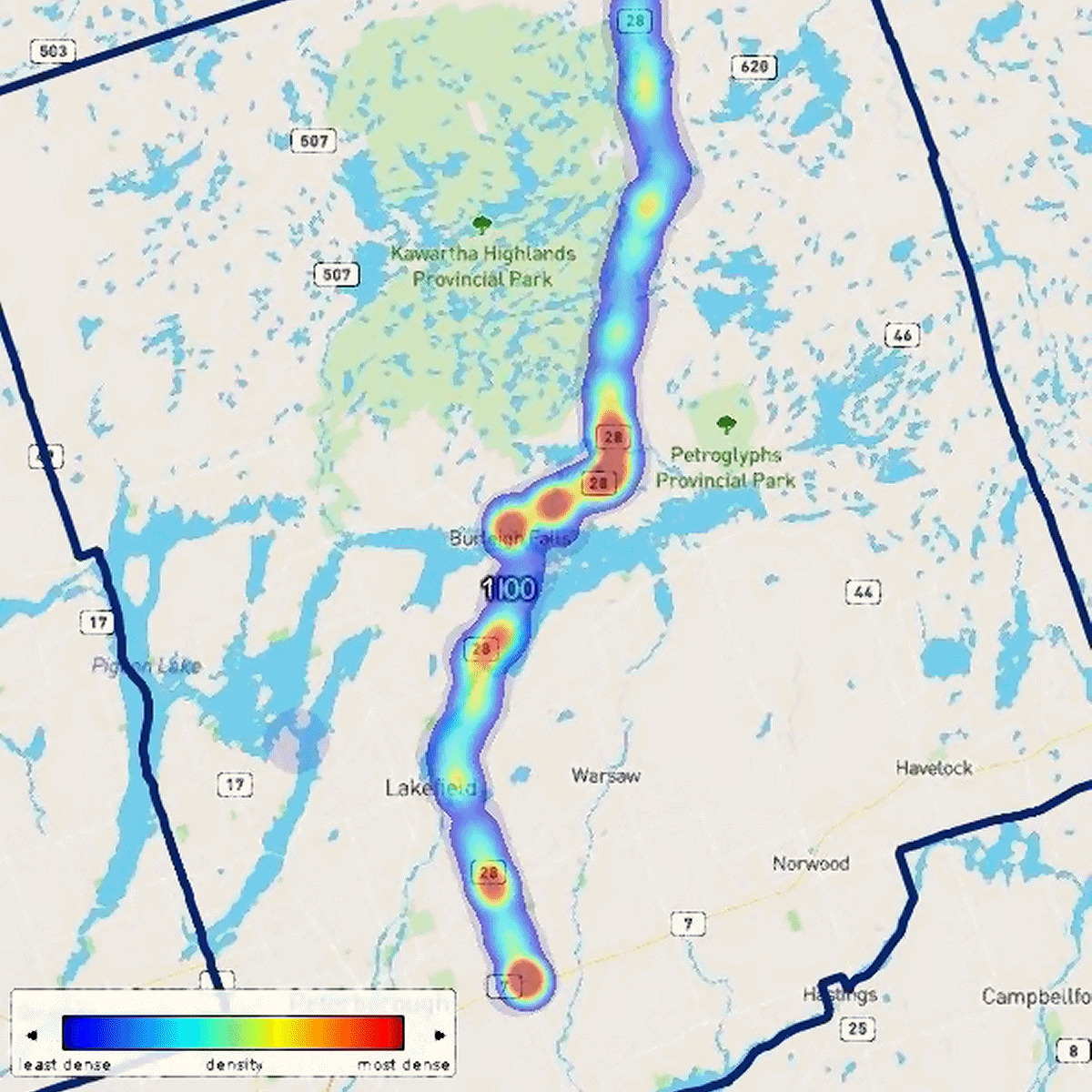
A heat map of motor vehicle collisions on Highway 28 in Peterborough County from January 1, 2020 to September 30, 2024 that was part of the Highway 28 Mayors Coalition delegation to MTO at the at the Rural Ontario Municipal Association (ROMA) on January 21, 2025.

The mayors in the coalition endorsed a letter sent to the minister requesting a delegation with MTO at the Rural Ontario Municipal Association (ROMA) conference in January 2025 urging for a safety review, improved communication between the MTO and Highway 28 municipalities, and collaboration to target public awareness.

The delegation was well-received, and MTO agreed the comprehensive safety review would be done last summer. The review was completed in September and, since then, the mayors’ coalition has been waiting for the results. On June 25, the coalition had a virtual meeting with MTO staff who presented the review’s findings and, at Amyotte’s request, providing a written summary of the review a few weeks later.

“To say that I and the other mayors were disappointed is an understatement,” Amyotte told kawarthaNOW in a recent email.

Advertisement - content continues below


Review examined three sections of Highway 28

Almost 163 kilometres long, Highway 28 runs from Highway 7 east of Peterborough north through Bancroft to Highway 41 in Denbigh, passing through four counties and 11 municipalities. North of Monck Road, just south of Bancroft, the highway is not provincailly owned.

The OPR evaluated three segments of the highway between Lakefield and Bancroft: just north of Thelgar Road in Douro-Dummer Township to 800 metres north of Clear Lake Road in Selwyn Township; 400 metres south of Haultain Road to the Eels Creek crossing in North Kawartha Township; and 200 metres east of Lower Faraday Road to 200 metres west of Valleyview Drive south of Bancroft in Hastings County.

The review examined existing traffic operations, safety performance, roadway geometry, roadside elements, and illumination warrants, and was supported by turning-movement counts, speed studies, collision records, field observations, and stakeholder feedback.

It found that, while vehicle speeds are often near or above the posted limits and speed “occasionally” contributes to crashes, nearly half of all recorded collisions were wildlife related.

“A LOSS (Level-of-Service-Safety) review found several segments (of Highway 28) performing worse than expected for similar highway facilities,” the summary report states. “However, none met the threshold for severe underperformance, and these findings primarily reinforce the need for localized monitoring rather than major redesigns.”

Advertisement - content continues below


North Kawartha mayor says review falls short

Amyotte says MTO’s review is not what the mayors’ coalition was expecting.

“The OPR reads primarily as a current conditions assessment and it concludes that Highway 28 is operating acceptably, but it doesn’t give us a broader safety analysis — that’s what we requested,” Amyotte says.

“It lacks corridor-wide trend line analysis for the traffic volumes, peak weekend volumes, the collision frequency and severity, altering movements of the location-specific safety performance — those kinds of things.”

In a response sent back to MTO, Amyotte points out the review does not include the thresholds that would lead the Ontario government to consider improvements like left-turn lanes, acceleration lanes, right-turn tapers, enhanced signage, or other safety countermeasures. She adds the report “doesn’t fully address” the collision hot spots that multiple communities and emergency services have identified.

“I’m also not sure if they’re taking into consideration the operational impacts on rural municipalities and things like our volunteer emergency services, the extended road closures, limited detour options — all of that needs to be addressed,” Amyotte tells kawarthaNOW.

Amyotte adds that Highway 28 operates differently than when it was first constructed, due to infrastructure advancements like the 407 now connecting to the 115, while communities like North Kawartha, Bancroft, and Faraday have all increased their populations over the past several years.

“Just looking at our own data, we’re seeing the patterns in terms of responding to the same locations, over and over again, year after year,” she says, referring to collisions.

“Fatal or not, every single accident is a life-changing event, not just for the victims. It’s for the responders that are there, the OPP, the paramedics, the firefighters, time and again. It is huge and it has an impact on the psyche of all the people that are travelling on that road.”

Advertisement - content continues below


Amyotte seeking stronger provincial action

Despite the overall assessment, the OPR outlined some recommended actions that focus on cost-effective maintenance, continued monitoring, targeted data collection, and other maintenance and minor improvements to be addressed in 2026.

These include reviewing wildlife warning signs, adding additional signage, refreshing pavement symbols, implementing rumble strips on shoulders, and more.

“The analysis revealed specific localized issues related to wildlife collisions, driveway activity (particularly near Kawartha Dairy), geometric constraints at select intersections, minor visibility and signage deficiencies, and isolated issues with guiderails and pavement markings,” the summary report states.

Amyotte says the suggested improvements are “not enough” and, in her response to MTO, is requesting a written addendum or supplemental response that outlines several concerns.

Those include a location-specific assessment of identified hot zones, the specific warrant thresholds that would prompt infrastructure change, a clear monitoring plan, a commitment to regular communication with Highway 28 municipalities, a collaborative education and enforcement strategy, and more.

She is calling on member municipalities to review the OPR summary report and endorse North Kawartha’s response letter, or follow it up with specific monitoring information that can be provided to MTO.

“When I hear from members of the public, as well as the other mayors in the other communities, we’re all on the same page,” Amyotte says.

“We all know how important it is. It’s just a matter of how do we get there? How can we build that relationship and share that knowledge and information and just work to make it safe for everybody as much as we can? We want to be proactive rather than reactive.”

The Beach Report for August 14 to 20, 2026

Every Friday during swimming season, we post The Beach Report™ — our weekly report of the results of water quality testing at beaches in the greater Kawarthas region — and update it throughout the week as conditions change.

As of Thursday, August 20, the following beaches are at moderate risk for swimming, meaning swimming is not advised due to elevated bacteria levels:

  • Douro Park North – Douro-Dummer
  • Lakefield Beach – Selwyn
  • Rogers Cove – Peterborough
  • Beach Park – Bobcaygeon
  • Rotary Beach Head Lake – Dysart et al
Advertisement - content continues below


Below are the complete results of water quality testing at beaches in the City and County of Peterborough, the City of Kawartha Lakes, Haliburton County, Northumberland County, and Hastings and Prince Edward Counties.

Important note

The following test results may not reflect current water quality conditions. Water samples can take one to three days to process and heavy rainfall, high winds or wave activity, large numbers of waterfowl near a beach, or large numbers of swimmers can rapidly change water quality.

You should always check current conditions before deciding to use a beach. You should also monitor other factors that might suggest a beach is unsafe to use, such as floating debris, oil, discoloured water, bad odours, and excessive weed growth.

While we strive to update this story with the current conditions, you should confirm the most recent test results by visiting the regional health unit websites at Lakelands Public Health and Southeast Public Health.

In the following results, low risk means the water is safe for swimming, moderate risk means swimming is not advised due to elevated bacteria levels, and high risk means a beach is closed due to high bacteria levels or hazardous water conditions.

Advertisement - content continues below


City and County of Peterborough

  • Douro Park North – Douro-Dummer – Moderate Risk
  • Lakefield Beach – Selwyn – Moderate Risk
  • Rogers Cove – Peterborough – Moderate Risk
  • Beavermead Beach – Peterborough – Low Risk
  • Belmont Lake – Havelock-Belmont-Methuen – Low Risk
  • Chandos Beach – North Kawartha – Low Risk
  • Crowe's Line Beach – Trent Lakes – Low Risk
  • Ennismore Waterfront Beach – Selwyn – Low Risk
  • Henry's Gumming – Curve Lake First Nation – Low Risk
  • Hiawatha Beach – Hiawatha First Nation – Low Risk
  • John Street Beach – Trent Lakes (Buckhorn) – Low Risk
  • Jones Beach – Selwyn (Bridgenorth) – Low Risk
  • Kasshabog Lake – Havelock-Belmont-Methuen – Low Risk
  • Lime Kiln Park – Curve Lake First Nation – Low Risk
  • Quarry Bay Beach – North Kawartha – Low Risk
  • Sandy Beach – Trent Lakes – Low Risk
  • Selwyn Beach Conservation Area – Selwyn (Owned by Otonabee Conservation) – Low Risk
  • Squirrel Creek Conservation Area – South Monaghan (Owned by Otonabee Conservation) – Low Risk
  • Warsaw Caves Conservation Area – Douro-Dummer (Owned by Otonabee Conservation) – Low Risk
  • White's Beach – Trent Lakes – Low Risk
Advertisement - content continues below


City of Kawartha Lakes

  • Beach Park – Bobcaygeon – Moderate Risk
  • Birch Point – Fenelon Falls – Low Risk
  • Blanchards Road Beach – Bexley – Low Risk
  • Bond Street – Fenelon Falls – Low Risk
  • Burnt River Beach – Somerville – Low Risk
  • Centennial Park West – Eldon – Low Risk
  • Centennial Verulam Parkette – Low Risk
  • Four Mile Lake Public Beach – Somerville – Low Risk
  • Head Lake Beach – Laxton – Low Risk
  • Lions Park – Coboconk – Low Risk
  • Norland Bathing Area – Laxton – Low Risk
  • Omemee Beach – Low Risk
  • Riverview Beach Park – Bobcaygeon – Low Risk
  • Sturgeon Point Beach – Fenelon Falls – Low Risk
  • Valentia Sandbar Beach – Low Risk
  • Verulam Recreational Park – Low Risk
Advertisement - content continues below


Northumberland County

  • Caldwell Street Beach – Port Hope – Low Risk
  • Crowe Bridge Park – Trent Hills – Low Risk
  • East Beach – Port Hope – Low Risk
  • Hastings Waterfront North – Trent Hills – Low Risk
  • Hastings Waterfront South – Trent Hills – Low Risk
  • Little Lake – Cramahe – Low Risk
  • Sandy Bay Public Beach – Alnwick-Haldimand – Low Risk
  • Victoria Beach- Cobourg – Low Risk
  • West Beach – Port Hope – Low Risk
  • Wicklow Beach – Alnwick-Haldimand – Low Risk


Haliburton County

  • Rotary Beach Head Lake – Dysart et al – Moderate Risk
  • Bissett Beach – Minden Hills – Low Risk
  • Dorset Parkette – Algonquin Highlands – Low Risk
  • Eagle Lake Beach – Dysart et al – Low Risk
  • Elvin Johnson Park – Algonquin Highlands – Low Risk
  • Forsters Beach – Minden Hills – Low Risk
  • Gooderham Lake Beach – Highlands East – Low Risk
  • Glamour Lake Beach – Highlands East – Low Risk
  • Haliburton Lake Beach – Dysart et al – Low Risk
  • Horseshoe Beach – Minden Hills – Low Risk
  • Paudash Lake Beach – Highlands East – Low Risk
  • Pine Lake Beach – Dysart et al – Low Risk
  • Rotary Park Lagoon – Minden Hills – Low Risk
  • Rotary Park Main – Minden Hills – Low Risk
  • Rotary Head Lake Beach Lagoon – Dysart et al – Low Risk
  • Sandy Cove Beach – Dysart et al – Low Risk
  • Sandy Point Beach – Dysart et al – Low Risk
  • Slipper Beach – Dysart et al – Low Risk
  • Twelve Mile Lake Beach – Minden Hills – Low Risk
  • Wilbermere Lake Beach – Highlands East – Low Risk


Hastings and Prince Edward Counties

Beaches sampled monthly

  • Moira Lake Park – Moira Lake – Low Risk
  • Centennial Park, Deseronto – Bay of Quinte – Low Risk
  • Frankford Park – Trent River – Low Risk
  • Kingsford Conservation Area – Salmon River – Low Risk
  • Tweed Park – Stoco Lake – Low Risk
  • Wellington Beach – Wellington Bay – Low Risk

Beaches sampled once at the start of bathing season

  • Centennial Park, Northport – Bay of Quinte – Low Risk
  • Legion Park, Marmora – Crowe River – Low Risk
  • Roblin Lake Park – Roblin Lake – Low Risk
  • Booster Park Beach – Crowe Lake – Low Risk
  • Diamond Lake Beach – Diamond Lake – Low Risk
  • Echo Beach – Papineau Lake – Low Risk
  • Foster’s Lake Beach – Foster’s Lake – Low Risk
  • Hinterland Beach – Kaminiskeg Lake – Low Risk
  • L’Amable Lake Dam – L’Amable Lake – Low Risk
  • Riverside Park, Bancroft – York River – Low Risk
  • Steenburg Lake – Low Risk
  • Wollaston Lake Beach – Wollaston Lake – Low Risk

27-year-old Jason Seguya brings a new generation of leadership to United Way Peterborough and District

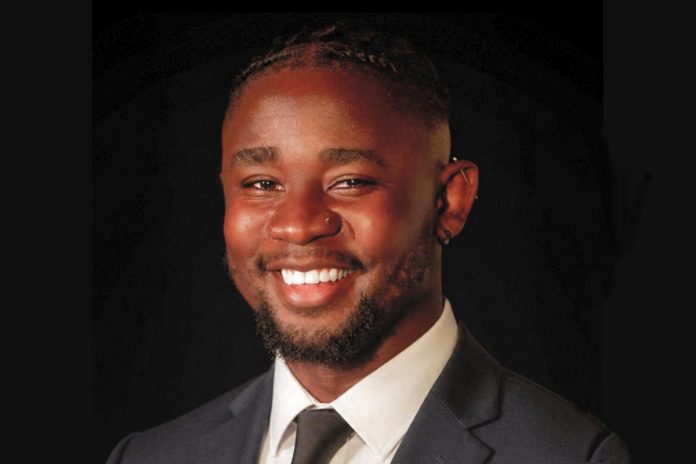
Jason Seguya began his role as the new chief executive officer of United Way Peterborough and District on July 6, 2026, taking over leadership of the non-profit organization after previous CEO Jim Russell retired after almost 15 years. (Photo courtesy of United Way Peterborough and District)

The face of United Way Peterborough and District has changed for the first time in nearly 15 years, with recently appointed CEO Jason Seguya coming to the non-profit organization in time for its 85th anniversary.

Last December, after long-time CEO Jim Russell announced he would be retiring the following summer, the United Way began the search for new leadership before announcing the appointment of Seguya in June as the organization’s 10th CEO.

Seguya, 27, a native of Uganda, comes to Peterborough via Ottawa, having previously served as executive director of The Fulcrum Publishing Society and of Ontario Student Voices. He has a bachelor of science in social sciences from the University of Ottawa.

Advertisement - content continues below


Building capacity through collaboration

One month after Seguya began his role, kawarthaNOW sat down for an in-depth interview with the new CEO to learn more about what he has learned so far and what his goals are for his tenure.

“One thing that has to be core with this work is it has to be led by community for community,” Seguya said, before describing his past experience.

“I’ve really built a career on non-profit governance and leadership from as soon as I was at university, serving as the first executive on the student union team for the University of Ottawa Students’ Union, continuing with Ontario Student Voices and a number of different organizations, like The Fulcrum (Publishing Society).”

Most recently, Seguya served as director of human resources for the Canadian Queer Chamber of Commerce, which supports queer entrepreneurs across the country including through funding provided by the Federal Entrepreneurship Program Fund.

“What is unique about that perspective is I come into this role not only with the experience relevant to run a non-profit and a charity like the United Way Peterborough and District, but to really serve and contribute to conversations in conjunction with other non-profits and charities on the focus of the relevant internal infrastructure and long-term support that each of our organizations need to not only survive, but thrive.”

Since starting his role on July 6, Seguya has been meeting with community partners — including organizations supported by the United Way’s agency capacity fund, a new three-year fund supporting registered human and social service charities across the city and county of Peterborough that are enhancing capacity to deliver inclusive programs and services — to learn about their missions, programs, and needs.

“It shows with each and every one of those interactions a true element of care towards the programming that they’re developing and delivering towards our community, matched with ideas that are beyond just a simple checkbox, but really speak towards not just the symptoms, but the long-term impacts that are relevant to the city of Peterborough,” Seguya said.

According to Seguya, one of the most common challenges facing charities in the Peterborough region is a lack of internal capacity both to implement programs and to manage business operations. However, fundraising to cover operational and administrative costs can be met with stigma from donors and funders who may prefer to directly fund programs or materials.

“The programming that we develop and deliver is so important on all fronts, but if we are to equally invest into capacity building within our organization, the return on investment that the community will feel is stronger, more long-lasting impact on the work that we’re doing,” he explained.

In addition to providing sustainable and flexible funding to local non-profits, Seguya sees the role of United Way as acting as a convener and facilitator between community organizations, client populations, and Peterborough at large.

“United Way of Peterborough and District, and the whole United Way movement, really does serve as a convener in so many different formats, whether it’s by community, as we come together and address some of the largest pressure points, or by nature of the organizations that we partner with.”

Being such a small sector, there are sometimes barriers that organizations experience when there are overlapping functions of work across the region, said Seguya. This manifests through splitting the community donor base, competing services, and replication of administrative and operational tasks.

“Our effort, when we do our internal reviews of capacity and shared efforts within the sector, is to ensure that if there’s overlap, it’s complementing each other, rather than repeating or recreating work that’s already been conducted,” he said.

“Role ambiguity is known as one of the largest areas that create conflict. If our main effort can serve as conveners on each of these different functions and formats, we will see a strong sector where we’re all contributing in a way that’s meaningful.”

Bringing together his priorities of capacity building and community convening, Seguya will lean on his human resource background to facilitate collaboration within United Way and beyond to the local non-profit community.

“With my own background, what I’m hopeful to bring amongst the shared efforts of each of the staff and teammates throughout the organization is a room for convening on those topics focused on capacity.”

“If we’re to ensure long-term capacity for the organizations involved, you will see that in the ways that we develop our programming. You’ll see that in the way that we develop our interactions with community, and you’ll see that in the way that we develop our research and long-term planning.”

Advertisement - content continues below


Embedding equity throughout the United Way’s work

Seguya, who grew up in the York Region and pursued his post-secondary education at the University of Ottawa, has been involved in many community and student organizations, which he said has influenced his professional work.

“Beyond my work working with non-profits and charities, I’ve also been a community organizer, really working on the ground addressing some of the largest issues that came towards my eye as well as community while living in both Ottawa as well as previously in the York Region area.”

In particular he notes his understanding of convening multiple organizations working in overlapping or similar service areas as stemming from his work with grassroots groups.

“There’re elements within community organizing or efforts of grassroots (organizations) that should motivate and actually lead and guide the ways that we can serve as a community when it comes to addressing some of the larger issues.”

At United Way’s annual general meeting last Thursday (August 6), community impact officer Elisha Rubacha shared information about the ongoing work to integrate the values of reconciliation, equity, accessibility, diversity, and inclusion (READI) throughout the organization’s work, both internally and externally.

For his part, Seguya said that oftentimes historically marginalized individuals are disproportionately represented in data on homelessness, poverty, and food insecurity.

“One of the things that I hold core to my beliefs is when you support those who are most vulnerable in any capacity, all benefit, and it will be shown in the way that this process is shifted and moved,” he said.

Over the past year, United Way has assessed their internal systems against United Way Centraide Canada’s DEI Toolkit, developed an action plan based on strengths and spaces for improvement, and implemented READI values across the organization.

“One of the dangers about engaging with this work without that clarity or guidance is efforts that should be positive could actually be more detrimental towards the communities we’re aiming to serve and support if they’re not informed accordingly,” said Seguya of the importance of looking critically at internal processes.

READI values have also been applied to the redevelopment of the community impact model, the agency capacity fund recipients, and Reaching Home fund distribution.

“It’s also looking external towards our efforts to make sure it’s included in every element that we do, rather than held in silo by itself,” Seguya added. “That’s one of the most beautiful elements that I’ve seen as it really shows that it’s becoming embedded in the way that we operate in the organizations on all fronts rather than an effort that’s just intending to be presented for the sake of demographics or show.”

Alongside READI values, Seguya said that he intends to continue to receive community input across the scope of United Way’s programs and campaign initiatives to ensure that the most pressing issues are addressed.

“It’s that effort that we’re going to continue to see through data collection, research, and more, to be able to guide us in efforts ensuring that voices that aren’t naturally or often initially included in conversations are intentionally included in those discussions as we continue.”

“One thing for me that it would signal as well is more efforts on fair, clean research and data collection that would be able to support us in those efforts. That way, our answers and our supports on these specific issues can be guided by the experiences of folks within community rather than assumption.”

Seguya noted the importance of reports such as the Point-in-Time Count and Community Homelessness Report in both guiding United Way’s own work and establishing quality public data to be used by other organizations.

One example he shared was that, when research identified a disproportionate number of Indigenous people experiencing homelessness, the United Way dedicated funds towards organizations working with Indigenous clients.

“One beautiful thing I appreciate about the United Way Peterborough and District is at the same time that it’s community-oriented, it’s also pragmatic with its efforts,” Seguya said.

Advertisement - content continues below


Leading through a time of transition

Having spent the last month transitioning into his new role, Seguya said he has been supported in all areas by the United Way’s staff team who have ensured the engine of the organization never falters during times of change.

“In the course of these past few weeks leading up towards a month, I’ve seen leadership demonstrated from every member of the team in such an impactful and meaningful way that it made me more excited for the future to come,” he said.

To help facilitate the transition to a new CEO, Seguya said, previous CEO Jim Russell remained on staff until July 17 and has continued to be an active resource to Seguya and the team since his retirement. Having led the United Way for nearly 15 years, Russell has considerable organizational experience and knowledge.

“Jim is a key partner, just as everyone else is in the community, in guiding this effort forward. I’m not alone with this work.”

The United Way Peterborough and District's incoming CEO Jason Seguya shakes hands with retiring CEO Jim Russell during an announcement at the United Way's office on June 18, 2026. The 27-year-old began in his new role on July 6, with Russell staying until July 17 to help with the transition. (Photo: Paul Rellinger / kawarthaNOW)
The United Way Peterborough and District’s incoming CEO Jason Seguya shakes hands with retiring CEO Jim Russell during an announcement at the United Way’s office on June 18, 2026. The 27-year-old began in his new role on July 6, with Russell staying on until July 17 to help with the transition. (Photo: Paul Rellinger / kawarthaNOW)

Going forward, Seguya said he will foster a working environment that promotes transparency, collaboration, and safety.

“One thing that I’ve made a point of instilling within the team, both in the way I present myself as well as the feedback I receive, is ensuring that psychological safety is core within the function of the organization.”

“There’re actual actions and behaviors that can be represented that ensure psychological safety is put in, and that’s been intentionally incorporated in the ways that we interact with each other and the way that I lead on a daily basis.”

Seguya also noted the wider United Way community as having been primary supporters in his transition.

“Although our solutions and results within community may differ, some of the experience and the relevant knowledge is all shared,” said Seguya.

Alongside Seguya’s excitement about his role and the opportunity he sees for United Way, he recognizes that he has big shoes to fill and high expectations to meet.

“It comes with a lot of anxiety and quite a bit of pressure that’s sometimes attached to it, but in the best of ways,” said Seguya.

Despite being just 27 years old, Seguya says he hopes the community will see him for his experience and his potential, not just his age.

“When it comes to my work as someone whose core value is merit, I hope that that’s what’s captured with all that’s done, where folks will see me for what I’m able to develop and deliver.”

Furthermore, he hopes to inspire other young professionals to take risks in their work and have faith in their abilities and value.

“I’m hopeful that my own introduction and experience towards this position will equally include and encourage other individuals within my generation to raise their hand, to be a little bit audacious with their efforts, to try something new, even if it means potentially failing, and go for that opportunity,” said Seguya.

“But most importantly, (to) know that their voice matters and deserves to be part of the conversations that are impacting our communities, as we are the leaders of tomorrow.”

Advertisement - content continues below


Making space for a new generation of leaders

Seguya, whose family emigrated from Uganda to Canada when he was two, said he knows he is not the typical charity executive, but that his background and intersectional identities allow him to bring unique and progressive ideas to his work.

“I will always stand on my background in terms of experience, the ideas I bring to the table, the jokes I’ll throw midway through, but I’m happy that me being in roles like this serves as motivators to others,” said Seguya.

Furthermore, he wants to demonstrate that leadership and the non-profit sector are not only welcoming to people of all backgrounds but also are actively making space.

“It goes without saying that when folks see individuals like myself, who are the non-traditional chief executive officer or non-traditional leader, they know to themselves that they can at least try and raise their hand and do so.”

“In terms of my reference of my race, I would want that to be captured amongst the Black community and also be incorporated in the work. In terms of me being quirky and flamboyant, I would want other queer kids to know you can be a leader and be embraced and accepted in the spaces that you want to engage with. And even if you aren’t, that you’re good enough that it doesn’t matter.”

When asked about his goals for the next 12 months, Seguya said that he wants to focus on supporting capacity building for partner agencies and creating guidelines and checkpoints to ensure long-term sustainability.

“I care for the sector as a whole, and I want to ensure that as an organization, we’re able to develop and deliver capacity towards the organizations and groups we partner with beyond just a dollar amount that’s provided towards them, but the core things that ensure that they’re able to run and not only survive, but thrive in the long term.”

Internally, Seguya said he will take a long-term planning approach to strategic and financial goals. For him, this better allows an organization like the United Way to address internal infrastructure needs.

“One thing that’s core towards me is being objective as possible when it comes to long-term planning over the course of an organization. That way we can actually give ourselves a moment to smell the roses and celebrate when there’s progress.”

Seguya’s most public responsibility this year will be to lead, alongside recently announced campaign cabinet chair Tiffany Arcari, the 2026-27 United Way Campaign to a potentially record-breaking total.

Planning is already underway for the campaign, which will be officially launched in September when the United Way will announce its fundraising goal.

“There’s no effort, no donation, no element that’s considered small,” Seguya said. “All of it’s important. We’re in this together as a community.”

Kawartha Lakes police officer cleared of criminal charges after April high-speed pursuit in Lindsay

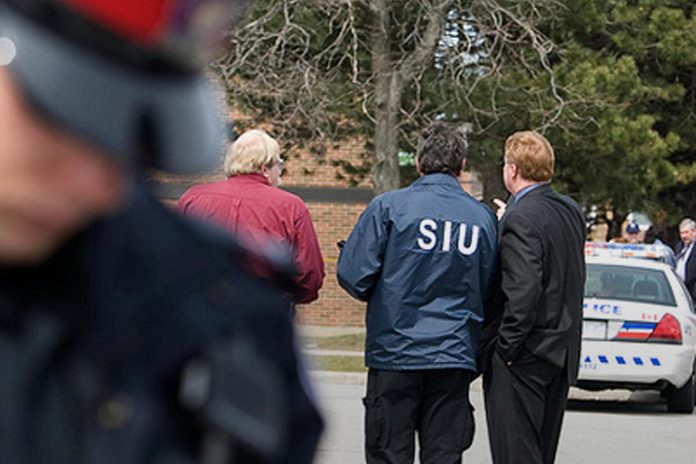
Ontario's Special Investigations Unit (SIU) is an independent government agency that investigates the conduct of police that may have resulted in death, serious injury, sexual assault, or the discharge of a firearm at a person. All investigations are conducted by SIU investigators who are civilians. (Photo: SIU)

Ontario’s police watchdog has cleared an officer with the Kawartha Lakes Police Service of criminal wrongdoing in connection with a high-speed pursuit through Lindsay in April that ended in a violent collision and left two people seriously injured.

However, Special Investigations Unit (SIU) director Joseph Martino has identified possible violations of the police code of conduct arising from the officer’s failure to stop at a red light during the pursuit.

In his report released on Thursday (August 13), Martino said he will refer the matter to the Kawartha Lakes police chief for review and to the Law Enforcement Complaints Agency.

The two sections of the code cited by Martino deal with failing to perform police duties appropriately without a lawful excuse and failing to comply with procedures established by a police chief. The referrals do not constitute findings of misconduct.

Advertisement - content continues below


The high-speed pursuit began shortly after 3:20 a.m. on Sunday, April 19, after Kawartha Lakes police officers were dispatched in response to a 911 call from a woman who could be heard arguing with the driver of a vehicle and pleading to be let out.

A responding officer found a black BMW on William Street North near Regent Street. When the driver became aware of the police cruiser, he accelerated north on William Street before turning west onto Regent Street.

As the BMW approached Victoria Avenue North, the woman who had made the 911 call exited the moving vehicle from the rear seat, rolling across the road. The officer later told other officers he believed she had been thrown from the moving vehicle.

After slowing to check that the woman was okay, the officer pursued the BMW south on Victoria Avenue with the cruiser’s emergency lights activated. Video recordings reviewed by investigators did not capture the sound of a siren.

Advertisement - content continues below


Satellite positioning data from the cruiser showed the officer failed to stop at a stop sign while turning from Regent Street onto Victoria Avenue North. The cruiser accelerated to a maximum speed of 144 kilometres per hour near Peel Street.

The officer drove through a green light at Colborne Street West and then through a red light at Kent Street West at more than 130 kilometres per hour. He also travelled through the intersection at Russell Street West at about 100 kilometres per hour without slowing or stopping after the BMW had struck a utility pole and knocked out power to the traffic signals.

The cruiser travelled more than one kilometre from Regent Street to Glenelg Street West in about one minute.

Just south of Glenelg Street West, the BMW driver lost control of the vehicle and struck a parked Nissan Versa head-on, propelling it more than 30 metres along Victoria Avenue South. The BMW also struck the utility pole and several other parked vehicles before coming to rest on top of a Ford Escape in a residential driveway. The officer’s cruiser was not involved in the collision.

Advertisement - content continues below


The 20-year-old BMW driver and his 32-year-old front-seat passenger, who both remained conscious and talking after the collision, were extricated from the vehicle and taken to Ross Memorial Hospital, where the driver was confirmed to have internal injuries. The passenger was later taken to St. Michael’s Hospital in Toronto due to the nature of her injuries.

The police watchdog’s collision analysis concluded the BMW was likely travelling at more than twice the speed limit when its driver lost control. According to the report, road and weather conditions did not contribute to the collision. A toxicology report found the driver of the BMW had a blood alcohol content over twice the legal limit, as well as evidence of cocaine and cannabis use.

In his report, Martino considered whether the officer’s driving amounted to dangerous operation causing bodily harm, an offence that requires conduct representing a marked departure from the care a reasonable person would have exercised in the circumstances.

While acknowledging the officer’s high speed and disregard for multiple traffic controls, Martino concluded the conduct did not reach the threshold for criminal charges.

“This conduct was no doubt dangerous but fell short of constituting a marked departure from a reasonable standard of care in the circumstances,” Martino wrote, noting that the risks associated with the speed at which the officer was driving and his failure to comply with traffic controls were reduced by the use of the cruiser’s emergency lights and the absence of significant traffic at that time of the morning.

Martino also found no evidence the officer had lost control of his cruiser or directly endangered other motorists. He also determined the officer had reasonable grounds to pursue the BMW because he believed a passenger had been thrown from the vehicle and that a possible forcible confinement had taken place.

“On this record, weighing the competing considerations in the balance, I am unable to reasonably conclude that the (officer) transgressed the limits of care prescribed by the criminal law in his pursuit of the BMW,” Martino wrote.

Advertisement - content continues below


The officer declined to be interviewed or provide his notes to investigators during the SIU investigation, as was his legal right.

The investigation included interviews with the BMW driver and passenger, three civilian witnesses and two police witnesses, as well as a review of police communications, body-worn camera footage, surveillance video, cruiser positioning data, medical records, and collision evidence.

The Special Investigations Unit launched its investigation on April 19 after being contacted by the Kawartha Lakes Police Service. The civilian agency investigates incidents involving police that may have resulted in death, serious injury, sexual assault, or the discharge of a firearm at a person.

nightlifeNOW – August 13 to 19

The Peterborough Folk Festival takes place this weekend, with The Pig's Ear Tavern in downtown Peterborough hosting a free-admission concert on Friday night with Yukon-based hillbilly music band The Lucky Ones (pictured, featuring Peterborough's own Ryan West on mandolin and vocals) with opener JJ Swinn, and an official festival after party on Saturday night with Jeanne Truax and The Jet Airliners and the festival's 2026 Emerging Artist Tristan Konkle. (Photo: Max Power)

Every Thursday, kawarthaNOW publishes live music events at pubs and restaurants in Peterborough and the greater Kawarthas region based on information that musicians provide directly or that venues post on their websites or social media channels. Here are the listings for the week of Thursday, August 13 to Wednesday, August 19.

If you’re a musician or venue owner and want to be included in our weekly listings, email our nightlifeNOW editor at nightlife@kawarthanow.com. For concerts and live music events at other venues, check out our Concerts & Live Music page.

With the exception of karaoke, we only list events with performing musicians. Venues may also host other events during the week (e.g., dancing, DJs, comedy shows).

Advertisement - content continues below


100 Acre Brewing Co.

390 Ashburnham Dr., Peterborough
705-243-2444

Thursday, August 13

5-8pm - Brad Renaud (no cover)

Arthur's Pub

930 Burnham St., Cobourg
(905) 372-2105

Thursday, August 13

8-10:30pm - Open mic w/ Bruce Longman

Friday, August 14

8-11pm - Live music TBA

Saturday, August 15

8-11pm - Live music TBA

Monday, August 17

7:30-9:30pm - Local talent night ft musician TBA

Bancroft Brewing Co.

59 Hastings St. N., Bancroft
613-334-8154

Saturday, August 15

7pm - Bradley McAree

Belly's Lakeside Bar + Restaurant

17 Fire Route 82B, Buckhorn
705- 931-4455

Thursday, August 13

6-8pm - Bob Butcher

Friday, August 14

6-8pm - Jesse Byers

Saturday, August 15

6-8pm - Davey Boy

Black Horse Pub

452 George St. N., Peterborough
(705) 742-0633

Thursday, August 13

7-10pm - Jazz & Blues Night ft. Carling Stephen & Rob Phillips

Friday, August 14

8-11pm - Four Lanes Wide

Saturday, August 15

5-8pm - Dennis O'Toole & Old Soul; 9pm-12am - High Waters Band

Sunday, August 16

4-7pm - Chris Devlin

Monday, August 17

7-10pm - Crash & Burn w/ Rick & Gailie

Tuesday, August 18

6-10pm - Open mic w/ Joslynn Burford

Wednesday, August 19

7-10pm - Local Artist Spotlight ft Mike Audet

Coming Soon

Friday, August 21
8-11pm - The Electrick Herd

Saturday, August 22
5-8pm - Emily Burgess; 9pm-12am - RucKus

Sunday, August 23
4-7pm - Alex McMann

Wednesday, August 26
7-10pm - Local Artist Spotlight ft Yzedro Hurlington, William MacCurdy, and Isaac

The Blue Room Coboconk

6666 Highway 35, Coboconk
613-553-4699

Coming Soon

Friday, August 28
7-11pm - Cellist Megan Ballantyne ($30 at the door)

Saturday, August 29
7-11pm - Homestead Elite ($30 at the door)

Bonnie View Inn Dockside Patio

2713 Kashagawigamog Lake Rd., Haliburton
800-461-0347

Wednesday, August 19

5-8pm - Rockin' Bobs

Advertisement - content continues below


Boshkung Social - Boshkung Brewing Co.

20 Water St., Minden
705-809-0512

Thursday, August 13

6-8pm - Erin Blackstock

Friday, August 14

6-9pm - Cam Galloway

Saturday, August 15

1:30-4:30pm - Van Hillert

Sunday, August 16

1-4pm - Cam Galloway

Boston Pizza Lindsay

435 Kent St. W., Lindsay
705-328-0008

Friday, August 14

8-11pm - Pinky and Gerald

Boston Pizza Peterborough North

1164 Chemong Rd., Peterborough
705-742-6464

Friday, August 14

7-9pm - Darren Bailey

Burleigh Falls Inn

4791 Highway 28, Burleigh Falls
(705) 654-3441

Friday, August 14

5:30-8pm - Jake Dudas (no cover)

Saturday, August 15

8-10pm - John Prine Tribute Show ft Kevin Hornsby ($25 show only, $75 dinner and show, in advance at https://burleighfallsinn.com/john-prine-tribute-show)

Chemong Lodge

764 Hunter St., Bridgenorth
(705) 292-8435

Thursday, August 13

6-9pm - Geordy Craig

The Cow & Sow Eatery

38 Colborne St., Fenelon Falls
(705) 887-5111

Friday, August 14

6-9:30pm - Karaoke fundraiser for Humane Society Of Kawartha Lake hosted by Pat and Steve (entry by donation)

Crook & Coffer

231 Hunter St. W., Peterborough
705-876-0505

Thursday, August 13

7-9:30pm - Greg Thomas

Friday, August 14

8-11pm - Jimmy Breslin

Saturday, August 15

2:30-4pm - Kate Kelly; 8-11pm - Brennen Sloan

Dominion Hotel

113 Main St., Minden
(705) 286-6954

Thursday, August 13

7:30pm - Agneya (by donation, $20 suggested)

Saturday, August 15

5-8pm - Happy Hour ft Gord Kidd

Sunday, August 16

4-7pm - Jazz Happy Hour ft musician TBA

Tuesday, August 18

5-8pm - Tiki Tuesday ft West o' the Loch

Coming Soon

Saturday, August 22
7:30pm - Will Gillespie ($25 in advance at https://dominionhotel.gpr.globalpaymentsinc.ca)

Advertisement - content continues below


Dusk to Dawn Brewing Co.

38 King St. E., Millbrook
705-932-2337

Thursday, August 13

7-10pm - Open mic w/ host Darel Wernik

Friday, August 14

7-10pm - Chris Gautier

Saturday, August 15

7-10pm - Darel Wernik

Sunday, August 16

2-5pm - Cory Wannamaker

Farmhill Weddings and Events

2709 Dillon Rd., Peterborough
705-930-4877

Wednesday, August 19

6:30-8:30pm - Ty Wilson (no cover)

Fenelon Falls Brewing Co.

4 May St., Fenelon Falls
(705) 215-9898

Friday, August 14

6-9pm - Cassie Noble

Saturday, August 15

6-9pm - Camilo Restrepo

Ganaraska Hotel

30 Ontario St., Port Hope
(905) 885-9254

Saturday, August 15

2-6pm - Nutmeg & The Firm

The Granite

45 Bridge St. W., Bancroft
613-332-1500

Friday, August 14

5-8pm - Janet Whiteway

Wednesday, August 19

5-8pm - Andrew Irving

Haliburton Highlands Brewing

15543 Highway 35, Carnarvon
705-754-2739

Friday, August 14

7-9pm - Loney, Love & Love (no cover)

Saturday, August 15

2-4pm - Chris Smith (no cover)

Sunday, August 16

2-4pm - Victor Mogado no cover)

Honky Tonk Angel

6725 Highway 7, Peterborough
(705) 749-6838

Thursday, August 13

7-11pm - Open mic hosted by Ian Clement

The John at Sadleir House

751 George St. N., Peterborough
705-742-3686

Saturday, August 15

8pm - Elektrodriver, After the Horizon, Pulsar, Merceria ($11)

Coming Soon

Friday, August 21
8pm - Korrin Byrth, Crazy Bomber ($10 or PWYC)

Advertisement - content continues below


Kawartha Country Wines

2452 County Road 36,, Buckhorn
705-657-9916

Sunday, August 16

1-4pm - The Salt Cellars

Kelly's Homelike Inn

205 3rd Street, Cobourg
905-372-3234

Friday, August 14

7:30pm - Karaoke w/ Cait Sheppard

Saturday, August 15

4-8pm - Marty and the Mojos

McThirsty's Pint

166 Charlotte St., Peterborough
(705) 743-2220

Friday, August 14

9pm-1am - Dan Ferrell

Saturday, August 15

9pm-1am - Chris Collins

Tuesday, August 18

8pm-12am - Joanna & Danny Bronson

Wednesday, August 19

8pm-12am - Kevin Foster

The Mill Restaurant and Pub

990 Ontario St., Cobourg
(905) 377-8177

Thursday, August 13

6-8pm - Garage Dog

Muddy's Pit BBQ

3247 County Rd. 2, Keene
(705) 295-1255

Sunday, August 16

3-6pm - Michelle Möran w/ Scorched Earth String Band & special guest Isaiah Smith

Olympia Restaurant

106 Kent St. W., Lindsay
705-328-1444

Friday, August 14

5-8:30pm - Mike Graham (no cover)

Pig's Ear Tavern

144 Brock St., Peterborough
(705) 745-7255

Thursday, August 13

8pm - The Kents w/ Backseat Dragon and Basement Revolver (PWYC)

Friday, August 14

9pm - Peterborough Folk Festival presents The Lucky Ones w/ JJ Swinn (no cover but donations to band encouraged)

VIDEO: "The Old 98" - The Lucky Ones

Saturday, August 15

9pm - Official Peterborough Folk Festival After Party ft Jeanne Truax and The Jet Airliners w/ Tristan Konkle ($5)

Tuesday, August 18

9pm - Open stage

Wednesday, August 19

6-9pm - Backroom Old Time Jam; 9pm - Karaoinke

Puck' N Pint Sports Pub

871 Chemong Rd., Peterborough
(705) 741-1078

Friday, August 14

7pm - Andy & The Boys

Saturday, August 15

8pm - Shuga

Rolling Grape Vineyard

260 County Rd 2, Bailieboro
705-991-5876

Thursday, August 13

5:30-8:30pm - Kevin Foster

Sunday, August 16

2-5pm - Homestead Elite

Royal Crown Pub & Grill

4 King St. E., Colborne
905-355-1900

Saturday, August 15

8-11pm - The Hippie Chicks (no cover)

Silver Bean Cafe

130 King St. (Millennium Park), Peterborough
705-749-0535

Thursday, August 13

4:30-6:30pm - Fire Relief Fundraiser for Namaygoosisagagun First Nation ft Tami J. Wilde, Sara van den Bert, Eliza McFarlane, K-Stew

The Social Pub

295 George St. N., Peterborough
705-874-6724

Saturday, August 15

1-4pm - PMBA Deluxe Live presents Dave Mowat and the Curbside Shuffle (no cover, donations appreciated)

The Thirsty Goose

63 Walton St., Port Hope
905-800-0338

Friday, August 14

8pm-12am - Chris Collins

Saturday, August 15

8pm-12am - Bruce Longman

Wild Blue Yonder Pub at Elmhirst's Resort

1045 Settlers Line, Keene
(705) 295-4591

Tuesday, August 18

6-9pm - Tuned Up Tuesdays ft Melissa Payne ($49.95 for BBQ & show)

Coming Soon

Tuesday, August 25
6-9pm - Final Tuned Up Tuesday ft Carling Stephen ($49.95 for BBQ & show)

The Yacht Club at Gordon Yacht Harbour Marina

81 Front St. E., Bobcaygeon
705-738-2381

Sunday, August 16

1-4pm - Dash Murray; 6-9pm - Jesse Byers

One band, two tributes: Crystal Faith honours Styx and Bon Jovi at Peterborough Musicfest on Saturday night

Fronted by Canadian powerhouse vocalist Al Langlade, Styx and Bon Jovi tribute band Crystal Faith will perform a free-admission concert at Peterborough Musicfest in Del Crary Park on August 15, 2026. (Photo supplied by Peterborough Musicfest)

Tribute acts performing the hit songs of an iconic artist or band isn’t new in the Peterborough Musicfest realm, but relatively rare have been those occasions when the classic music of two bands is paid its due by one headliner over the courses of the same evening.

Notwithstanding the fact that the annual summer music festival remains a free admission event, a double tribute guarantees more bang for your buck.

On Saturday (August 15) at Del Crary Park, the penultimate concert of Musicfest’s 39th season will see tribute band Crystal Faith perform the timeless music of Styx and Bon Jovi. The show starts at 8 p.m., supported as always by a number of sponsors, kawarthaNOW among them.

Advertisement - content continues below


Fronted by Canadian powerhouse vocalist Al Langlade — he performed at Musicfest in 2022 as part of Hotel California’s tribute to The Eagles — Crystal Faith is comprised of world-class musicians with Trilogy Classics Live who also perform spot-on tributes to the music of Journey and Foreigner.

In opting to cover the music of Styx and Bon Jovi, the band has hit on two acts whose music is recognizable to even the most casual of rock fans.

Formed in Chicago in 1972, Styx’s original lineup of Dennis DeYoung, James “JY” Young, John “JC” Curulewski, Chuck Panozzo, and John Panozzo released their self-titled debut album that same year, and subsequently released an album every year right through the 1970s.

VIDEO: Crystal Faith: The Best of Styx & Bon Jovi

The result of that body of work are some of the most powerful and memorable rock songs of the decade — “Lady” in 1973, “Lorelei” in 1975 (with new guitarist Tommy Shaw, who replaced Curulewski), “Come Sail Away” and “Fooling Yourself” in 1977, “Blue Collar Man” and “Renegade” in 1978, and “Babe” in 1979.

If Styx had called it a day with the arrival of the 1980s, it could have laid claim to a very successful career. Thankfully for music fans worldwide, the band had more to give. Give it did in the form of two more albums — 1981’s Paradise Theatre and its hit singles “The Best of Times” and “Too Much Time on My Hands,” and 1983’s Kilroy Was Here, which spawned “Mr. Roboto” and “Don’t Let It End.”

To date, Styx has released 18 studio albums, the latest being 2025’s Circling from Above. Besides creating new music, the band still tours extensively and habitually performs sold-out concerts. In the mix since 1999 has been Scarborough native and 2026 Peterborough Musicfest season-opener Gowan, who came on board as the band’s keyboardist and has since sung lead vocals on a number of Styx’s signature songs.

With eight songs of its songs having cracked the Top 10 of the US Billboard Hot 100 as well as 16 Top 40 singles, and with a Grammy Award nomination to boot, it’s pretty clear why Styx has been singled out for a tribute, not just by Crystal Faith but by many other bands.

Advertisement - content continues below


Bon Jovi, meanwhile, came to the fore 11 years after Styx debuted, but has enjoyed no less of a stellar run.

Formed in Sayreville, New Jersey by Jon Bon Jovi, Richie Sambora, David Bryan, Alex John Such, and Tico Torres, Bon Jovi’s 1984 self-titled debut album gave the band its first Top 40 hit in the form of “Runaway.”

While the band’s follow-up album, 1985’s 7800 Degrees Fahrenheit, met with modest success, the following year’s Slippery When Wet launched Bon Jovi into the musical stratosphere via the hit singles “You Give Love a Bad Name,” “Livin’ on a Prayer,” and “Wanted Dead or Alive.” Certified platinum a remarkable 18 times, it remains one of the top 100 best-selling of all time, both south of the border and worldwide.

The 1990s brought continued success for Bon Jovi, with the band’s fifth album Keep the Faith peaking at number five on US Billboard 200. The last studio album to feature all five original members of the band, it gave forth the hit singles “Keep the Faith,” “Bed of Roses,” and “In These Arms.”

VIDEO: “Fooling Yourself” by Styx featuring members of Crystal Faith

In 2024, the album Forever marked number 16 for Bon Jovi and, not unlike Styx, the band continues to perform worldwide, with this year’s Bon Jovi Forever Tour continuing an unbroken line of sold-out concerts. To date, Bon Jovi has performed more that 3,000 concerts in 50 countries before some 34 million people.

On top of all this, you name an award and Bon Jovi has won or been nominated for it. That impressive list includes nine Grammy Award nods, the lone win coming in 2007 for, ironically, Best Country Collaboration with Vocals for “Who Says You Can’t Go Home” with Jennifer Nettles. And back in 2018, Bon Jovi was inducted into the Rock and Roll Hall of Fame — an honour which, somehow, has so far eluded Styx despite being eligible since 1998.

Prior to Crystal Faith taking the stage, the Cogeco-sponsored Future Sound Series will feature the captivating harmonies of Peterborough’s own The Colton Sisters from 6:30 to 7:30 p.m., near the food trucks at the George Street entrance to Del Crary Park.

Advertisement - content continues below


Peterborough Musicfest is presenting 16 free-admission concerts during its 39th season, staged in Del Crary Park on Wednesday and Saturday nights until August 19.

Overseen by executive director Tracey Randall and staff, a board of directors, and numerous volunteers, Peterborough Musicfest’s stated mission remains “to provide diverse, affordable live music to enrich cultural and economic prosperity in our community.”

For more information on this concert or the 2026 season, visit www.ptbomusicfest.ca or call the Peterborough Musicfest office at 705-755-1111.


kawarthaNOW is proud to be a headline sponsor of Peterborough Musicfest’s 2026 season.

Kawartha Lakes man faces multiple charges after early morning head-on collision on Highway 7 between Lindsay and Omemee

A 56-year-old City of Kawartha Lakes man is facing multiple charges following a serious head-on collision on Highway 7 between Lindsay and Omemee early Thursday morning (August 13).

According to Kawartha Lakes Ontario Provincial Police (OPP), officers responded to the collision at around 1:20 a.m. and found a white Dodge Ram pickup truck and a Toyota RAV4 with significant damage.

The driver of the RAV4 was taken to hospital with injuries that police said were not believed to be life-threatening. The driver of the pickup truck was not at the scene when officers arrived.

Advertisement - content continues below


During their investigation, police received information that the pickup truck driver had fled on foot and was behaving erratically, allegedly approaching occupied vehicles and nearby homes.

Police began searching the area and soon located a suspect, who allegedly ran away from officers. Police said the man continued to disregard their commands and resisted arrest before multiple officers took him into custody.

Officers also seized a bladed weapon and other evidence believed to be connected to the incident.

Advertisement - content continues below


The accused man has been charged with impaired operation by alcohol and drugs, dangerous operation of a motor vehicle, failing to stop after an accident, resisting a peace officer, assault, three counts of uttering threats to cause death or bodily harm, theft of a motor vehicle, and possession of a weapon for a dangerous purpose.

He was taken into custody pending a bail hearing. None of the charges has been proven in court.

Police thanked members of the public who provided information about the accused man’s alleged actions following the collision.

Advertisement - content continues below


Highway 7 was closed while police investigated and documented the scene.

The police investigation into the incident is continuing. Anyone who witnessed the collision or the events that followed and who has not yet spoken with investigators can call the City of Kawartha Lakes OPP at 1-888-310-1122.

Anonymous tips can be submitted to Kawartha-Haliburton Crime Stoppers at 1-800-222-8477 or through www.khcrimestoppers.com.

Become a #kawarthaNOW fan

36,162FollowersLike
25,988FollowersFollow
17,356FollowersFollow
4,914FollowersFollow
4,307FollowersFollow
3,278FollowersFollow

Sign up for kawarthNOW's Enews

Sign up for our VIP Enews

kawarthaNOW.com offers two enews options to help readers stay in the know. Our VIP enews is delivered weekly every Wednesday morning and includes exclusive giveaways, and our news digest is delivered daily every morning. You can subscribe to one or both.


Submit your event for FREE!

Use our event submission form to post your event on our website — for free. To submit editorial content or ideas, please contact us.