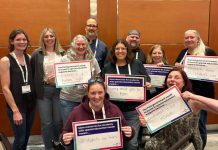
Twenty-two members Peterborough's Survivors Abreast dragon boat team and their coach will be participating in the International Breast Cancer Paddlers' Commission (IBCPC) Participatory Dragon Boat Festival, which takes place on Lac du Bourget in the French Alps, with the parade of nations and opening ceremonies taking place on August 27, 2026 followed by two days of racing. The races will be livestreamed. (kawarthaNOW screenshot of IBCPC video)
Twenty-two members of Peterborough’s Survivors Abreast dragon boat team and their coach are heading to France to participate in an international festival celebrating sport, friendship, and life after breast cancer.
According to a media release, Survivors Abreast will represent Peterborough and the surrounding area at the International Breast Cancer Paddlers’ Commission Participatory Dragon Boat Festival, which runs from August 24 to 30 in Aix-les-Bains in the French Alps.
Held every three to four years, the international festival is expected to bring together 4,500 breast cancer survivors on 170 teams, making it the largest event of its kind ever held. The commission has more than 300 member teams across 37 countries.
Advertisement - content continues below
The parade of nations and opening ceremonies will take place on Thursday, August 27, followed by two days of racing on Lac du Bourget, France’s largest natural glacial lake.
Survivors Abreast will compete as team number 46 in three 500-metre races and three 200-metre races.
The festival will also include the Sandy Smith Global Finale race, a special flower ceremony honouring those who have died from breast cancer, and closing ceremonies on August 29.
Twenty-two members of Peterborough’s Survivors Abreast dragon boat team and their coach will travel to the French Alps to participate in the International Breast Cancer Paddlers’ Commission Participatory Dragon Boat Festival in Aix-les-Bains, with the parade of nations and opening ceremonies taking place on August 27, 2026 followed by two days of racing on Lac du Bourget. The races will be livestreamed. (Photo courtesy of Survivors Abreast)
With help from their coach, the Peterborough paddlers have been training to improve their technique and endurance while learning to paddle as one.
“Strength is not in one paddle alone, but in every heartbeat moving forward,” the coach tells the team.
The Peterborough team includes breast cancer survivors in various stages of treatment, recovery, and survivorship. Along with veteran paddlers who have participated in previous international festivals, several newer members will be attending the global event for the first time.
Advertisement - content continues below
Breast cancer survivor dragon boat paddling began at the University of British Columbia in Vancouver in 1996, when sports medicine professor and exercise physiologist Dr. Don McKenzie challenged the prevailing medical advice that women treated for breast cancer should avoid strenuous upper-body exercise because of the risk of developing lymphedema.
McKenzie trained 24 breast cancer survivors for three months before introducing them to dragon boat paddling. At the end of their first season on the water, none of the participants had developed lymphedema and they reported being fitter, healthier, and happier.
The participants also found companionship and mutual support through the sport, helping inspire an international movement that uses dragon boat paddling to promote active living and raise awareness that people can live full lives after a breast cancer diagnosis.
Advertisement - content continues below
As for Survivors Abreast, the team is best known for hosting Peterborough’s Dragon Boat Festival. The annual event celebrated its 25th anniversary in June and has raised more than $5 million for equipment used to screen, diagnose, and treat breast and other cancers at Peterborough Regional Health Centre.
Survivors Abreast hosted the international dragon boat festival in Peterborough in 2010, and the team later attended the festivals in Sarasota (Florida) in 2014, Florence (Italy) in 2018, and Waikato (New Zealand) in 2023.
In the media release, the team thanked community members who have supported its fundraising efforts through fashion shows, golf tournaments, yard sales, and wine cork collections.
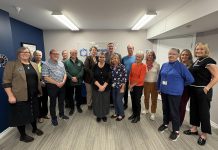
Gauvreau Accounting Tax Law Advisory founder and CEO Robert Gauvreau (front) celebrating the success of the fifth annual "Gear Up for Good" campaign, which resulted in 310 fully stocked backpacks for children in Peterborough and Winnipeg. Thanks to donations from local businesses and organizations, the campaign will also provide families with pizza vouchers, gift cards, and free haircuts. (Photo: Gauvreau Accounting Tax Law Advisory)
A back-to-school campaign organized by a Peterborough-based professional services firm will be delivering 310 fully stocked backpacks to children and youth in Peterborough and Winnipeg.
On Tuesday (August 18), Gauvreau Accounting Tax Law Advisory announced the fifth annual Gear Up for Good campaign had exceeded its goal of collecting 300 backpacks, thanks to the efforts of local businesses, donors, volunteers, community organizations, and members of the Gauvreau team.
Of the 310 backpacks collected, 100 are being distributed through Big Brothers Big Sisters of Peterborough, 100 through the Kawartha-Haliburton Children’s Foundation, and 10 through Peterborough Youth Services. Another 100 backpacks are being distributed through United Way Winnipeg.
Advertisement - content continues below
The campaign expanded beyond Ontario for the first time this year, reflecting Gauvreau’s growing presence in Manitoba. Along with its headquarters in downtown Peterborough and offices in Toronto and Ottawa, the firm has offices in Winnipeg and Steinbach.
“This campaign is a perfect example of what happens when a community decides to show up,” said Gauvreau founder and CEO Robert Gauvreau in a media release.
“We set a goal of 300 backpacks, and our community didn’t just meet it — they pushed us past it. We’re incredibly proud of what everyone accomplished together.”
Advertisement - content continues below
In addition to backpacks and school supplies, the campaign’s partners are providing families with other back-to-school supports.
Domino’s Pizza donated 300 pizza vouchers, including 200 for families in Peterborough and 100 for families in Winnipeg. The Peterborough Downtown Business Improvement Area and Community Futures Peterborough donated 200 $20 Boro gift cards, which can be deemed at participating downtown businesses, while Asta Hair Styling School is providing two full days of free back-to-school haircuts for participating children.
In addition, Crayola Canada donated an assortment of markers and pencil crayons, Ricart Branded Apparel & Promo donated 22 backpacks as well as toques and hats, Kawartha Property and Legal Services and Peterborough and the Kawarthas Chamber of Commerce each donated four fully stocked backpacks, Peterborough Friends donated bulk school supplies and bags, and McDougall Insurance donated $320 along with school supplies, lunch bags, and water bottles.
Advertisement - content continues below
Peterborough Petes defenceman Thanasi Marentette and the Marentette Mission donated $500 to the Gear Up for Good campaign.
“This year was about more than filling backpacks,” said Gauvreau community manager Tiffany Arcari.
“We wanted to take some of the pressure off families heading into September and give kids a few extras to help them feel confident and excited about the school year. The response from our partners and the community was incredible.”
Advertisement - content continues below
Gear Up for Good began five years ago and has now provided more than 900 fully stocked backpacks to children and youth.
During last year’s campaign, Gauvreau exceeded its goal of 200 backpacks by collecting and distributing 207 to Peterborough-area children through Big Brothers Big Sisters of Peterborough and the Kawartha-Haliburton Children’s Foundation.
Gauvreau credited the growth of the campaign to businesses, employees, clients, volunteers, and community members who donated supplies or money, purchased items from campaign wish lists, volunteered their time, or helped promote the initiative.
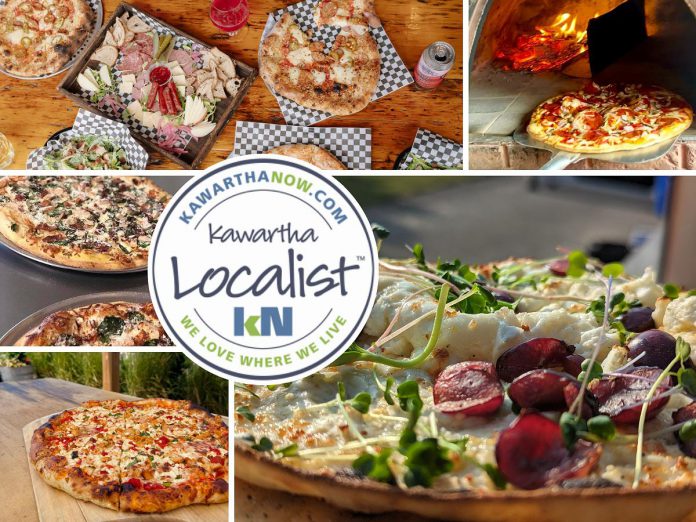
This edition of kawarthaNOW's "Kawartha Localist" editorial series features favourite pizza joints in the Kawarthas as selected by our readers, including in Lindsay, Peterborough, Haliburton, Bailieboro, Buckhorn, Coe Hill, Millbrook, Port Hope, and Minden. (kawarthaNOW collage)
Kawartha Localist is an editorial series from kawarthaNOW sharing trusted local recommendations, hidden gems, and favourite discoveries from people who know and love this region. It’s what we love about where we live. Kawartha Localist is sponsored by Kawartha Financial Services.
When you’re planning a family gathering, headed out for a picnic, having an intimate date night, or just looking for a quick bite on the road, you can’t go wrong with a good ol’ fashioned pizza.
Often made with days-long fermented dough, signature sauces, ooey gooey cheese, and locally sourced vegetables, pizza is a favourite meal for residents and visitors exploring the Kawarthas. Across the region, you’ll find pizzas with ingredients imported from Italy, pizzas that are vegan or celiac-safe, pizzas made from recipes passed down through the generations, and pizzas with innovative toppings.
Here are just a few beloved places to dine on pizza, as voted on by kawarthaNOW readers.
A message from our sponsor - content continues below
This specialty pizza at Formerly Tony’s in Lindsay is a big deal … and a big dill
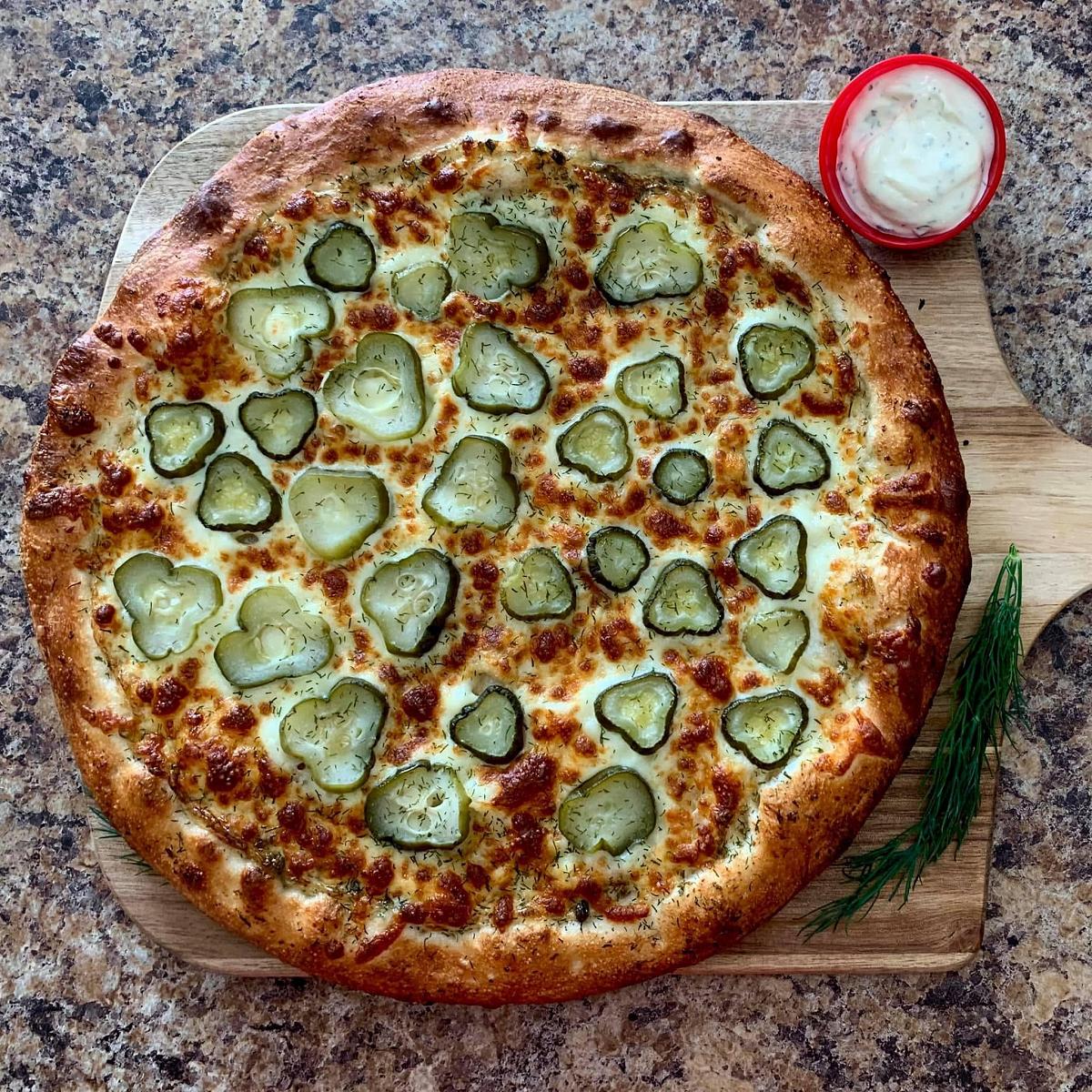
What began as a limited-time pizza at Formerly Tony’s in Lindsay has turned into a signature menu item. A customer favourite, the dill pickle pizza is crafted with a ranch dressing made in-house by Lindsay business Fresh FueLL. (Photo courtesy of Formerly Tony’s)
Greg Andrews is currently the fourth owner at the helm of Formerly Tony’s, and yet the Lindsay pizza joint hasn’t strayed far from the legacy it has built for itself since 1996.
Previously known as Tony’s Best Pizza and Wings prior to its 2023 relocation, Formerly Tony’s pays homage to its roots and remains true to some of the original recipes. All the dough at this pizza joint is made in-house and topped with fresh local ingredients.
A bestseller is a specialty dill pickle pizza done with a ranch dressing from Lindsay’s Fresh FueLL. What was originally supposed to be a limited time offer has turned into a dill-icious staple that people come back to time and time again.
Like its namesake, Formerly Tony’s is not only about the pizza, as they also serve up award-winning chicken wings and recently began serving specialty Nitro coffees.
Formerly Tony’s is located at 169 Queen Street in Lindsay. To learn more and browse a menu, visit lindsaypizza.com.
Get a taste of Night Kitchen Pizzeria’s signature stinging nettle pesto in downtown Peterborough
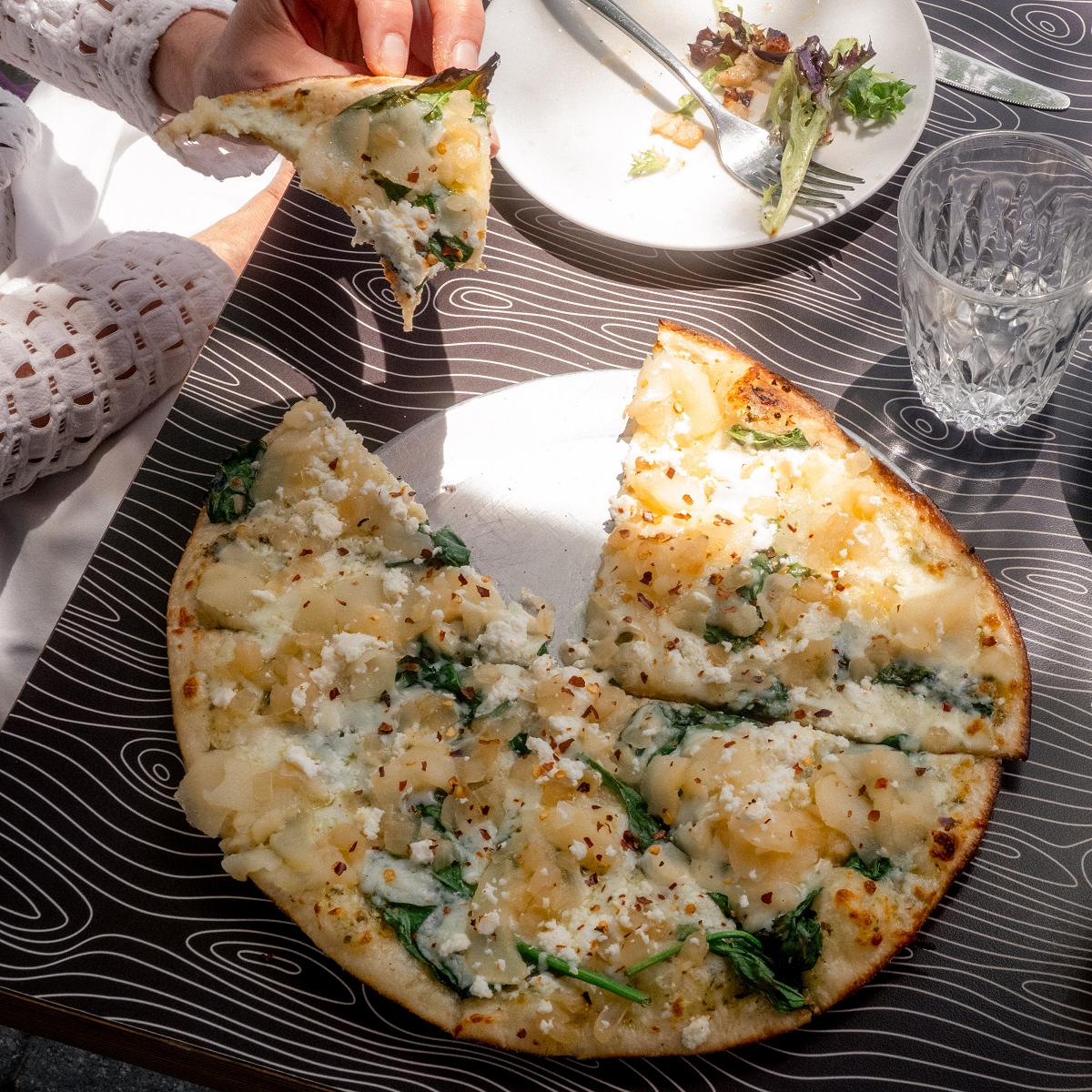
Since 1999, Night Kitchen Pizzeria has been slinging homemade pizza in downtown Peterborough. With the slogan “pizza that never played by the rules,” the restaurant is known for curating pizzas with innovative toppings like strawberries, blueberries, and unique cheeses. Pictured is the customer favourite Bugle, made with the signature pesto, spinach, caramelized onions, pear, goat feta, and chili flakes. (Photo courtesy of Night Kitchen Pizzeria)
Another pizza recipe that has stood the test of time can be found at Night Kitchen Pizzeria, which has been slinging pies in downtown Peterborough for nearly 28 years.
When it first opened in 1999, longtime pizza lover Tim Weatherup was on a mission to bring high-quality pizza to Peterborough. Years later, taking a mobile wood oven to farmers’ markets and events helped elevate the business by streamlining connections with local farmers. Those connections led to Night Kitchen Pizzeria implementing unique flavours, like making a pesto from stinging nettle in place of basil — a signature creation Night Kitchen continues to do today.
At Night Kitchen Pizzeria, the slogan is “pizza that never plays by the rules” and that, Weatherup says, is the secret sauce that has made these pies so beloved over decades. Everything is made from scratch and warmed on a stone oven, with some innovative toppings being added to pizzas over the years — from strawberries to blueberries, dates, and unique cheeses. One of the most popular is the bugle, made with the signature pesto, spinach, caramelized onions, pear, goat feta, and chili flakes.
In addition to the main staples, which include vegan and gluten-free options, you’ll find weekly specials that could be entirely new pies or the return of signature favourites.
Night Kitchen Pizzeria is open at 168 Hunter Street West in Peterborough. Find out more by visiting www.nightkitchen.ca.
Savour upscale pizza with Italian ingredients at Juna in Haliburton
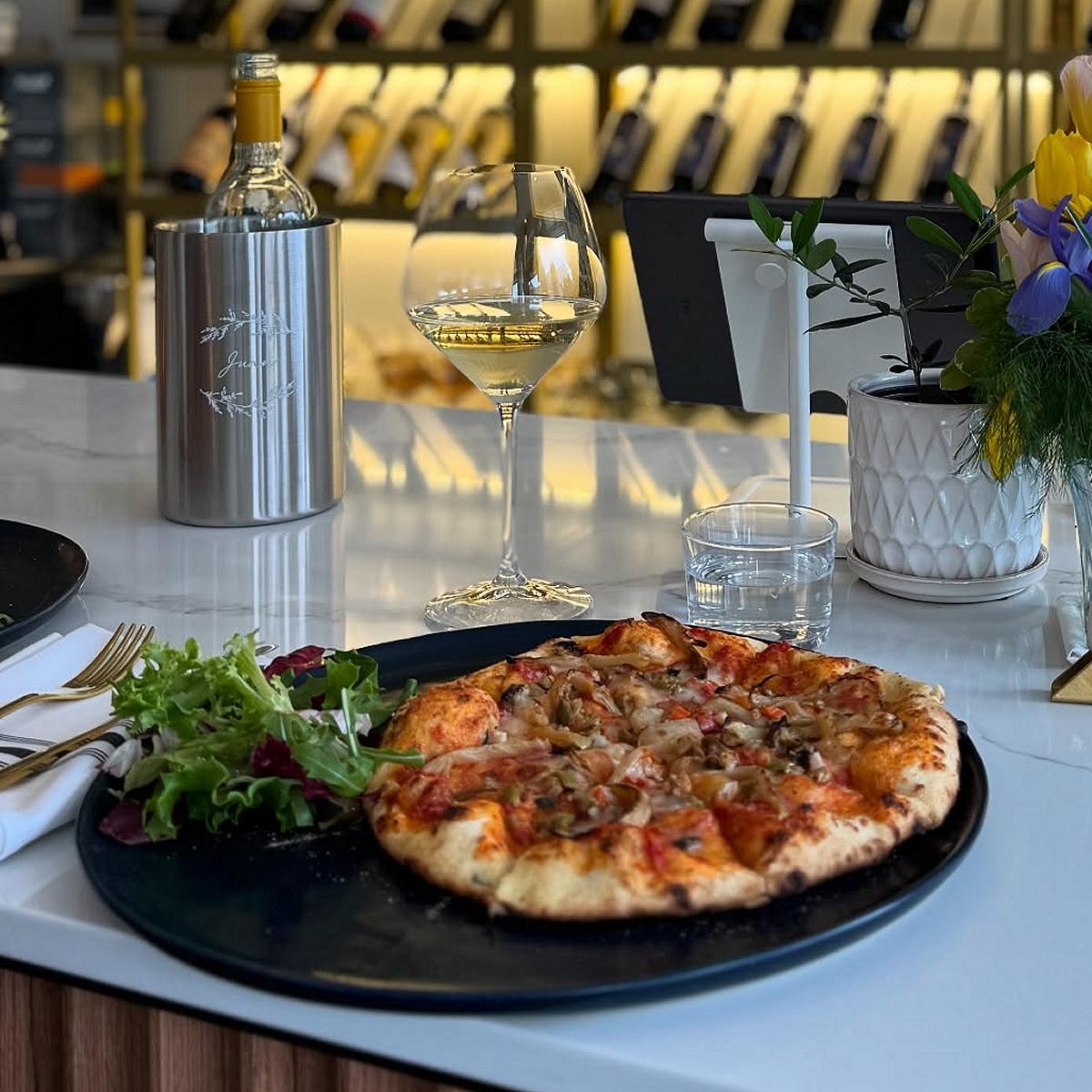
One of the newest eateries in the region quickly becoming known for serving high-quality pizza is Juna, an elevated restaurant in Haliburton. Juna makes dough from scratch using double zero flour from Italy which is then fermented for a minimum of 24 hours before being topped with house-made sauce and cheese and cured meats that have also been sourced from Italy. (Photo courtesy of Juna)
Juna only opened its doors in 2025 but it has already become a local favourite in Haliburton for high-quality pizza.
Coming from Terri Mathews and Executive Chef Christoph Carl, the owners of Rhubarb Restaurant in Carnvarvon, Juna offers an upscale intimate dining experience and secret garden patio perfect for intimate dates and special occasions.
All the pizzas served at Juna are made in house from scratch. We’re talking dough made with double zero flour imported directly from Italy and having undergone a minimum 24-hour fermentation process. Cheese and meats are similarly imported from Italy and paired with sauces, also made from scratch using local ingredients.
Every day on the menu, you’ll find a new special pizza of the day that’s crafted depending on what’s in season, while classics like mushroom, margherita, and Italian meat pizzas are always available and drawing local customers time and time again. Juna also has vegan and dairy-free pizza options and, with Chef Christoph eating gluten-free, you can be confident in Juna’s dedication to serving a suitable alternative.
Juna is located at 210 Highland Street in Haliburton. Learn more at www.junahaliburton.com.
Find wood-fired pizza with a view at Rolling Grape Vineyard in Bailieboro
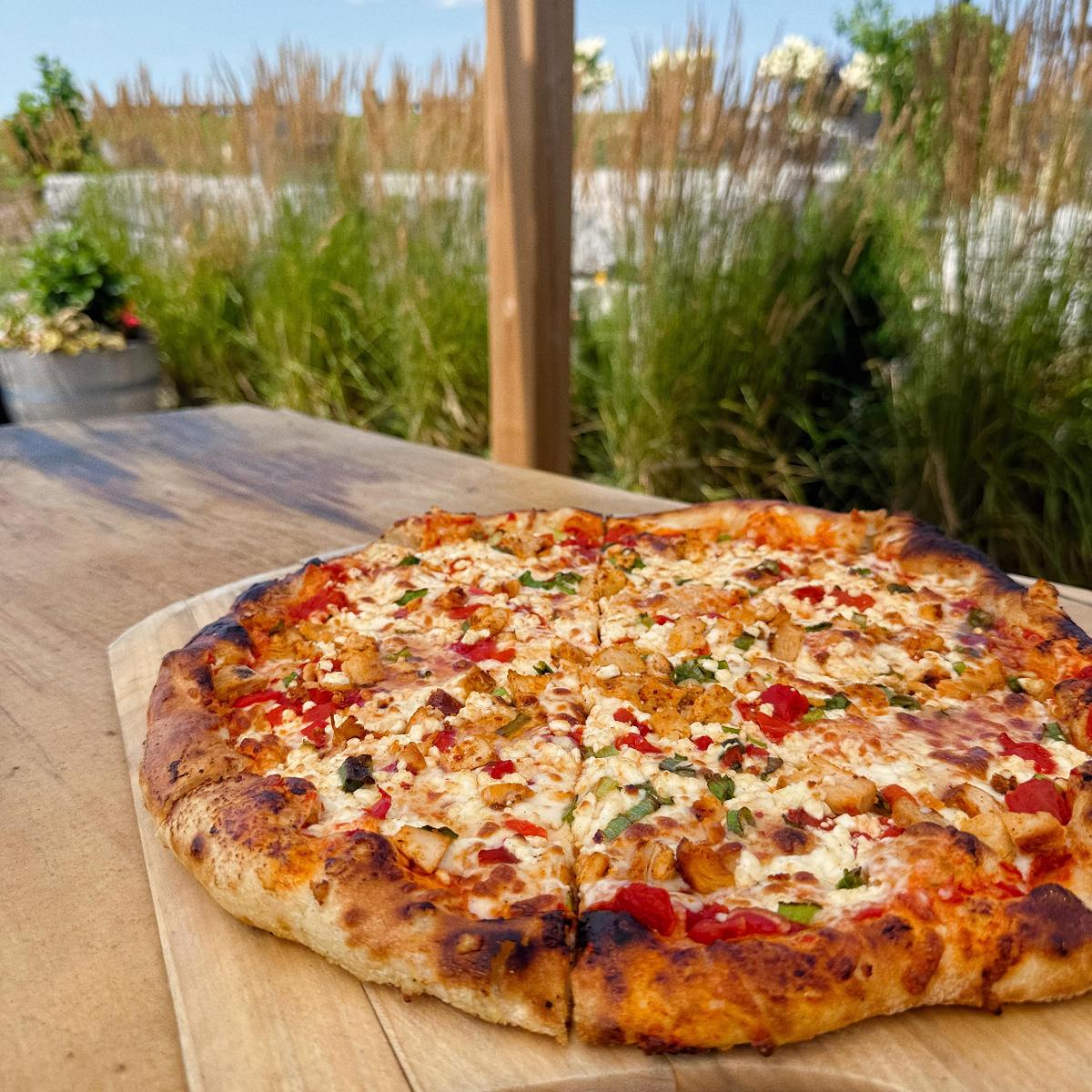
At Rolling Grape Vineyard in Bailieboro, you can enjoy views of the 150-acre family farm while sipping on local wine, listening to live music, and enjoying wood-fired pizza. Rolling Grape is constantly releasing new pizzas seasonally and ensures they cater to diners by serving gluten-free crusts and dairy-free cheese. (Photo courtesy of Rolling Grape Vineyard)
Rolling Grape Vineyard has been inviting residents and visitors to enjoy wine country in The Kawarthas since 2018, but did you know this spot is loved for more than its wine?
It’s become a go-to for indulging in wood-fired pizza while enjoying live music and views of the 150-acre Bailieboro family farm.
At Rolling Grape, the majority of the pizza-making process is done in-house, from stretching the dough to marinating meats, with vegetables sourced as close to home as possible. Standout customer favourites include the sweet and spicy chicken topped with grilled chicken breast, peppers, goat cheese, and a house-made hot honey. Newer pies include the Thai One On and a Capo loaded with shaved Yukon Gold potato and caramelized onion.
Rolling Grape is constantly reinventing their pizzas and ensures they cater to diners by serving gluten-free crusts and dairy-free cheese.
Rolling Grape is located at 260 County Road 2 in Bailieboro. To find out more, visit rollinggrape.com.
Have a mighty bite of the Mighty Caesar at Pizza Alloro in Buckhorn
With a reputation that precedes itself, the Mighty Caesar specialty pizza at Pizza Alloro in Buckhorn is topped in a creamy Caesar dressing, mozzarella, chicken, spinach, bacon, and parmesan cheese. Owner Endrit Karaj will be opening Buckhorn Burger Company behind Pizza Alloro in early 2027. (Photo courtesy of Pizza Alloro)
If you’ve spent any time in Buckhorn, you may have heard about the famous Mighty Caesar pizza being served at Pizza Alloro.
Topped with creamy dressing, mozzarella, chicken, spinach, bacon, and parmesan cheese, this pizza has become a tradition for many people spending time in or driving through Peterborough County.
Since Endrit Karaj opened it in 2008, Pizza Alloro has built a reputation for crafting pies loaded with toppings. Outside of the beloved Mighty Caesar, other favourites include the Alla Diavola with Italian sausage and hot peppers, and the Balkan special that takes inspiration from Karaj’s Albanian mother.
Pizza Alloro also serves a dairy-free cheese as well as a gluten-free crust and a cauliflower crust pizza.
There is much for foodies of the Kawarthas to look forward to in Buckhorn, as Karaj is currently in the process of building Pizza Alloro’s sister eatery, the Buckhorn Burger Company. Serving up burgers, chicken burgers, wraps, fries, and more, the grab-n-go burger joint will be opening in early 2027 right behind the pizza restaurant.
Pizza Alloro is located at 5 Main Street in Buckhorn. You can view the menu and order online at pizzaalloro.com.
Indulge in sourdough pizza at The Barn Chefs in Coe Hill
The pizza recipe at The Barn Chefs in Coe Hill has been passed down through generations of chefs. Today, the natural dough takes up to a week to ferment, then is topped with handmade sauce and cheese made in house. The Barn Chefs takes limited pizza orders on Saturdays between the May long weekend and Thanksgiving. (Photo courtesy of The Barn Chefs)
The Barn Chefs is an in-demand hotspot in Coe Hill run by two food lovers who have travelled, eaten, and cooked across the world — from Kenya to Italy to Hong Kong and beyond.
Chef Luca Molteni was born in the food culture of Italy, while Sarah Woods was a pastry chef. Together they founded The Barn Chefs, where you’ll find handcrafted Italian cured and cooked meats, fresh pasta, cheeses, organic breads, and ready-to-go meals.
The pizza recipe here has been passed down for generations through Molteni’s family of chefs. The handmade, natural dough takes up to a week to ferment, then gets topped with handmade sauce, cheese made by The Barn Chefs, and other fresh ingredients. Popular pies are those topped with braised onions and pancetta, and the weekly specials.
Pizza is available on Saturdays only from the May long weekend to Thanksgiving. There are limited quantities available, so advance booking is recommended.
The Barn Chefs is located at 5543 Highway 620 in Coe Hill, south of Bancroft. To learn more, visit thebarnchefs.kitchen.
From “porch pizzas” to selling out at Pies by Zach in Millbrook
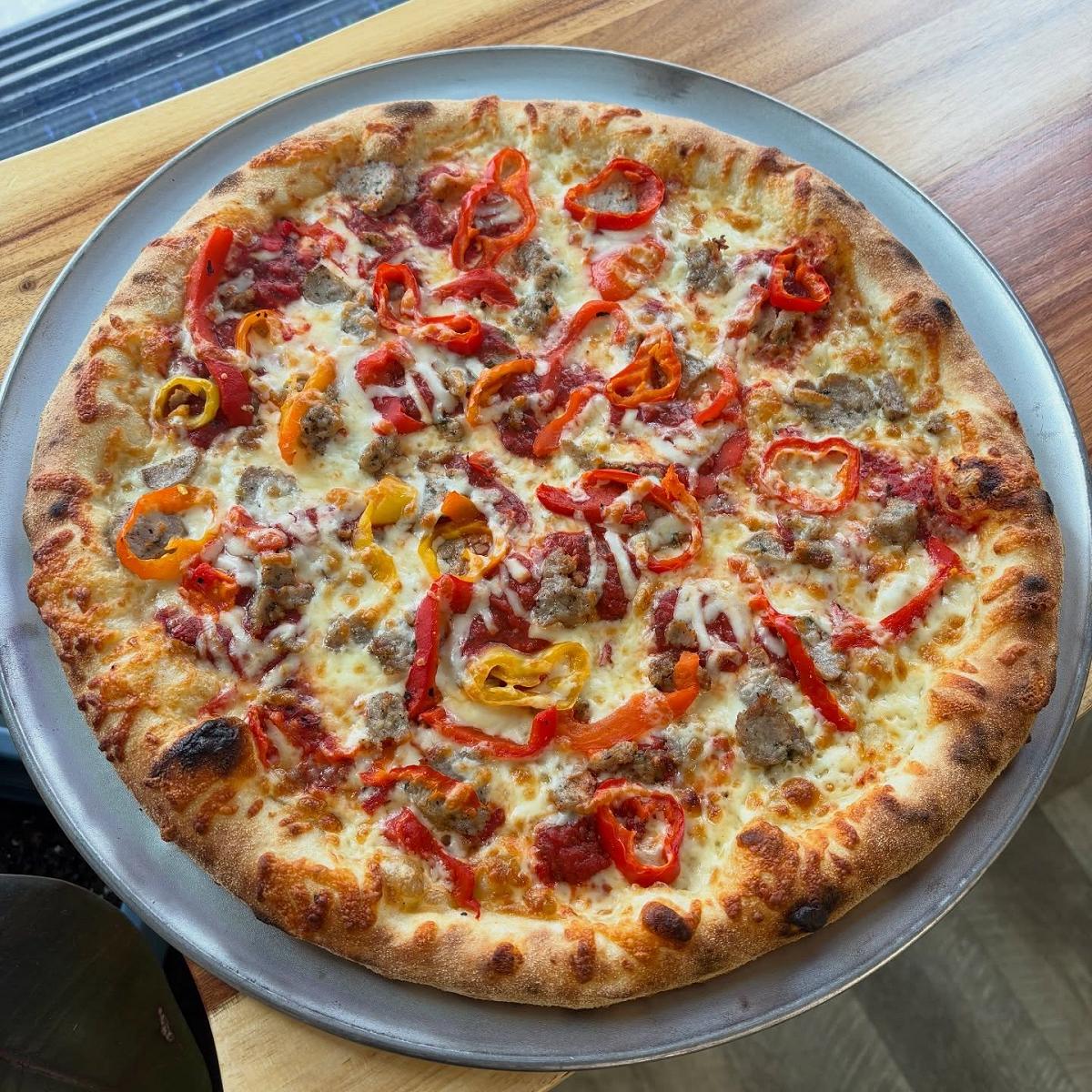
Zach Washburn turned his pizza making hobby into a business by selling weekly “porch pizzas” from his home before eventually building a pizza cart and later opening Pies by Zach in downtown Millbrook. The pizzeria adds a new pizza to the menu every other week, liked this pizza with a garlic base, mozzarella, garlic and chive sausage, fire-roasted red peppers, banana peppers, and a sprinkle of the in-house asiago and provolone blend. (Photo courtesy of Pies by Zach)
What began as a hobby has morphed into one of the region’s favourite pizza joints.
Before settling in downtown Millbrook just last year, Zach Washburn began making pizzas for the love of it. It was only after friends and family showed interest in his pies that he begin to sell them. He had people picking up “porch pies” from his home every week before he eventually began doing pop-ups and serving pies out of a trailer at Lost Cannabis Company in Cavan.
Now, at his downtown pizzeria, Washburn often sells out when serving up more than 100 pizzas every day. All the dough is made by hand, fermented for 48 to 72 hours, and topped with sauces made from scratch and toppings sourced from Canada where possible.
The most popular item on the menu is the peach pizza made with local hot honey, mozzarella cheese, pesto, sliced peaches, and goat cheese. A classic favourite is the spicy pepperoni, while the new garlic fingers are quickly stealing the spotlight, and new customer favourites emerge every two weeks when all new pies drop.
Pies by Zach is located at 16 King Street East in Millbrook. To see what’s on the menu, visit www.piesbyzach.com.
Taste the legacy of Jim’s Pizza and Pasta in Port Hope
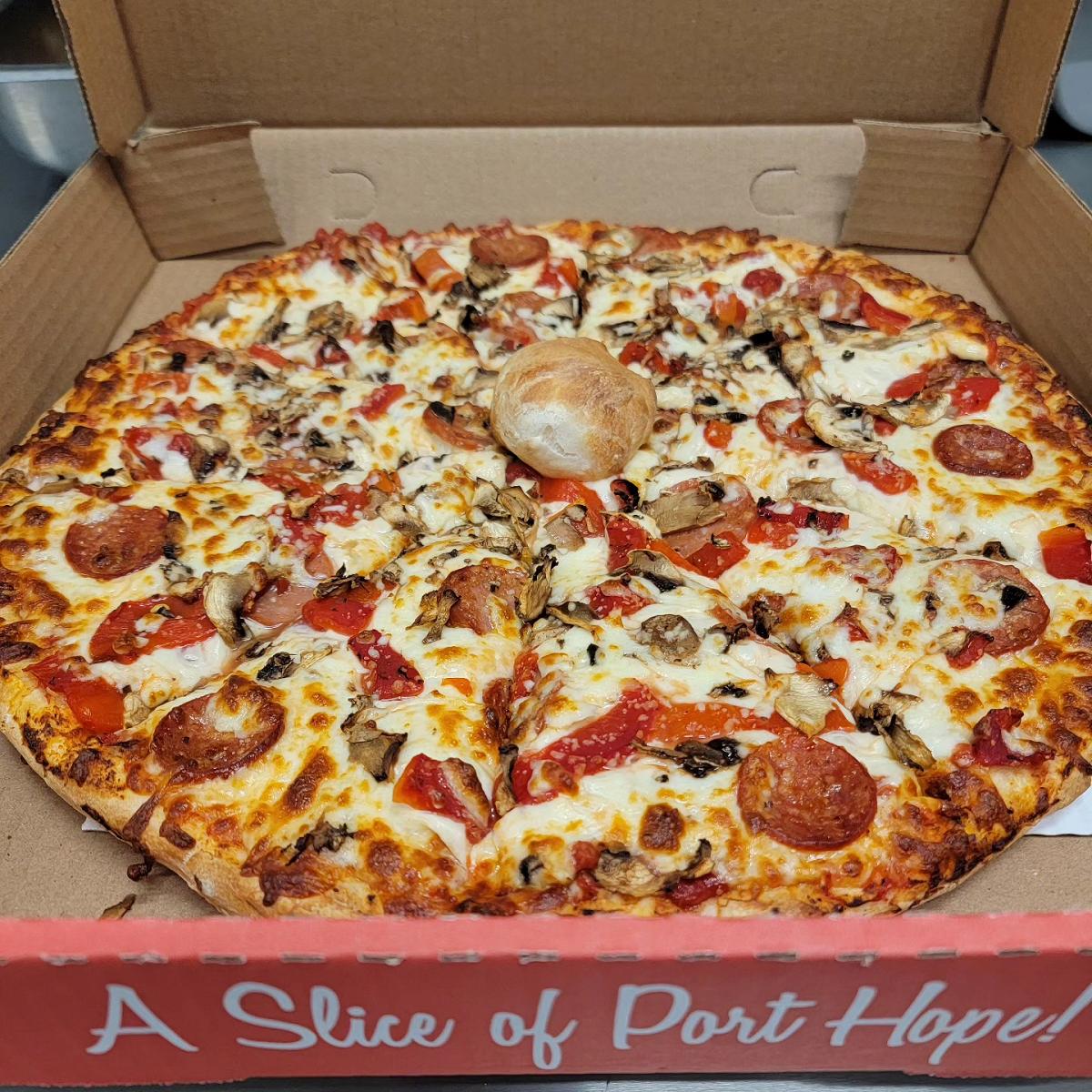
“A Slice of Port Hope,” Jim’s Pizza and Pasta is carrying on a legacy of more than 50 years. Today, it remains a family business owned by Trevor Causton who has worked there since his first day of high school in 1989. The family-friendly restaurant serves homemade pizza made with a family sauce recipe and can be customized with gluten-free or cauliflower crust and dairy-free cheese. (Photo courtesy of Jim’s Pizza and Pasta)
Trevor Causton first started working at Jim’s Pizza and Pasta in Port Hope on his first day of high school back in 1989. Since then, he has carried on the legacy of the beloved eatery, first founded in 1970, and has been the owner since 2006.
With its central location in downtown Port Hope and comfortable, casual seating, you can tell Jim’s Pizza and Pasta is made for families. As for the pizzas, everything is made fresh in house including the original sauce that comes from a family recipe.
Customers return time and time again to sink their teeth into the deluxe Jim’s Combination and gourmet Tuscan Chicken, topped with sun-dried tomatoes, feta, spinach, red onion, and balsamic drizzle.
At Jim’s, you can make the pizzas entirely your own with thin crusts, cauliflower crusts, gluten-free crusts, dairy-free cheese, and vegetarian pepperonis all available.
Jim’s Pizza and Pasta is located at 22 Walton Street in Port Hope. For more information and to order online, visit jimsporthope.ca.
Enjoy new pizzas every few weeks from Lowlands Fire Foods at 100 Acre Brewing Company in Peterborough
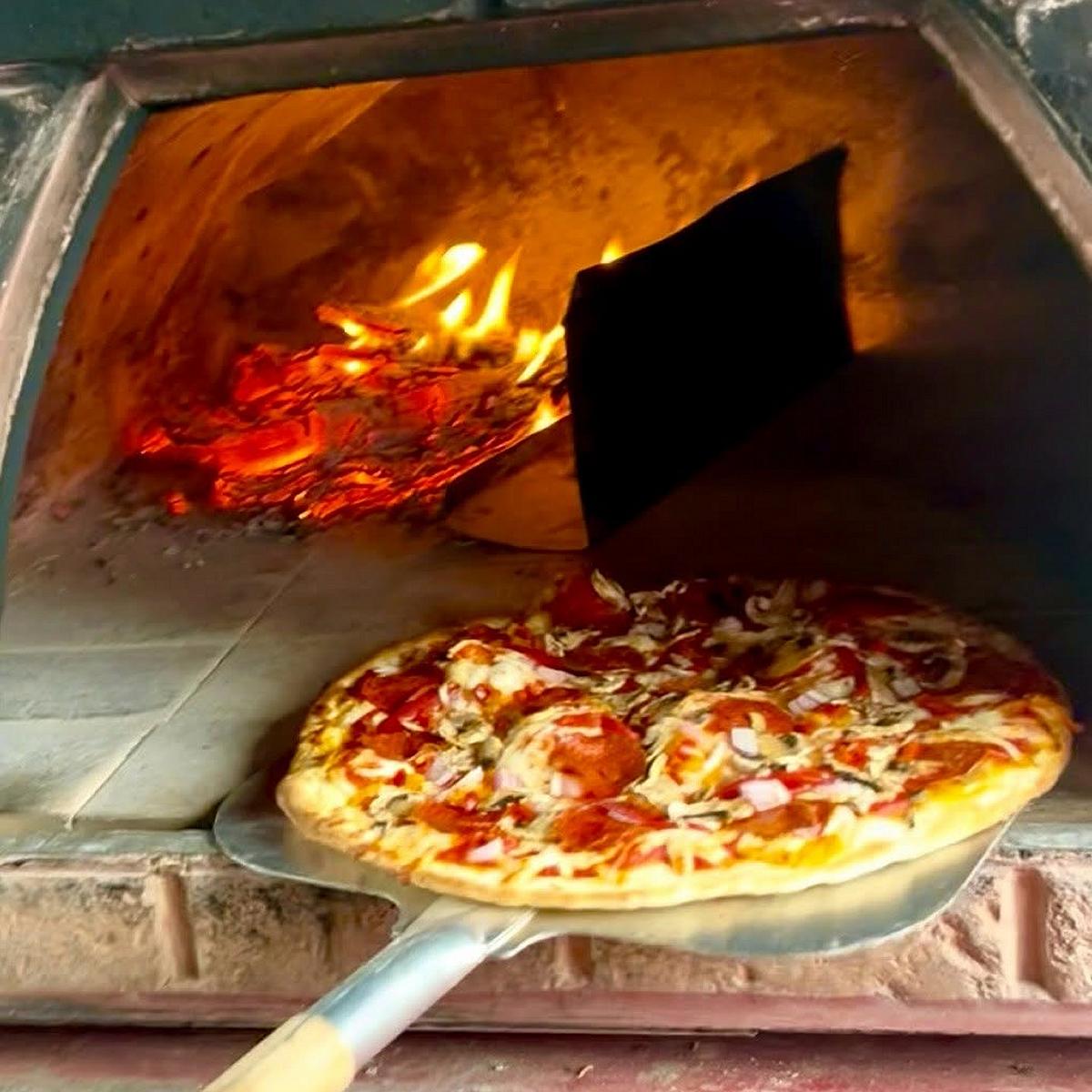
At 100 Acre Brewing Company in Peterborough, you can dine on organic sourdough wood-fired pizzas from Lowlands Fire Foods. These pizzas are made from dough with Red Fife and 100 per cent Empire Co-op mozzarella, a high-quality cheese from Campbellford. Executive chef Jamie Kohls brings fine dining experience to the brewery and launches new and noteworthy seasonal pizzas every two to three weeks. (Photo courtesy of Lowlands Fire Foods)
Not long after opening, 100 Acre Brewing Co. in Peterborough formed a tasty partnership with Lowlands Fire Foods and is now a popular destination for wood-fired pizza.
Though Lowlands Fire Foods was founded by Max Barill out of a pizza wagon, executive chef Jamie Kohls takes the lead at 100 Acre Brewing Co., bringing years of fine dining experience in Toronto to the more casual and relaxed environment of the local brewery.
The organic sourdough wood-fired pizzas are made with the “not-so-secret” dough ingredient of Red Fife, which was first grown in Peterborough, and 100 per cent Empire Co-op mozzarella, a high-quality cheese from Campbellford.
One of the most popular pies you’ll find on the menu is the sesame chicken pizza, made with chicken and mushrooms from Kendal Hills Farm in Orono, as well as locally grown sunflower sprouts. Kohls uses seasonal ingredients from local farms to make noteworthy and new seasonal pizzas, with new one dropping every two to three weeks.
Lowlands Fire Foods can be found at 100 Acre Brewing Co. at 390 Ashburnham Drive in Peterborough. To learn more, visit 100acrebrewingco.com/pages/food-vendors.
Visit Kawartha Country Wines in Buckhorn for wood-fired pizza with gluten-free and dairy-free options available
At Kawartha Country Wines, Canadian dough, sauces, and vegetables are sourced to create quality wood-fired pizza that can be curated to the customer’s liking. Kawartha Country Wines promises celiac-safe pizza options with gluten-free crust where there is no risk of cross-contamination. (Photo courtesy of Kawartha Country Wines)
Kawartha Country Wines in Buckhorn is all about making your pizza entirely yours. After all, what could be a better way to end a wine tasting or tour than sitting out by the orchard and sipping on a glass and snacking on pizza?
At this stunning winery, you can order 12-inch, eight-slice wood-fired pizzas and choose any three toppings from a selection of more than 10, with additional toppings for an added fee. Doughs, sauces, and vegetables are sourced from Canada, with dairy-free options also available.
Kawartha Country Wines promises their gluten-free pizzas are entirely celiac safe, as they take extra precautions to ensure there is no cross contamination across ingredients or cooking equipment.
Pizza is available Fridays to Sundays during the summer and Saturdays and Sundays in June, September, and October until the Thanksgiving weekend.
Feast on Neapolitan-style pizza at Burnt Crust Pizzaria in Minden
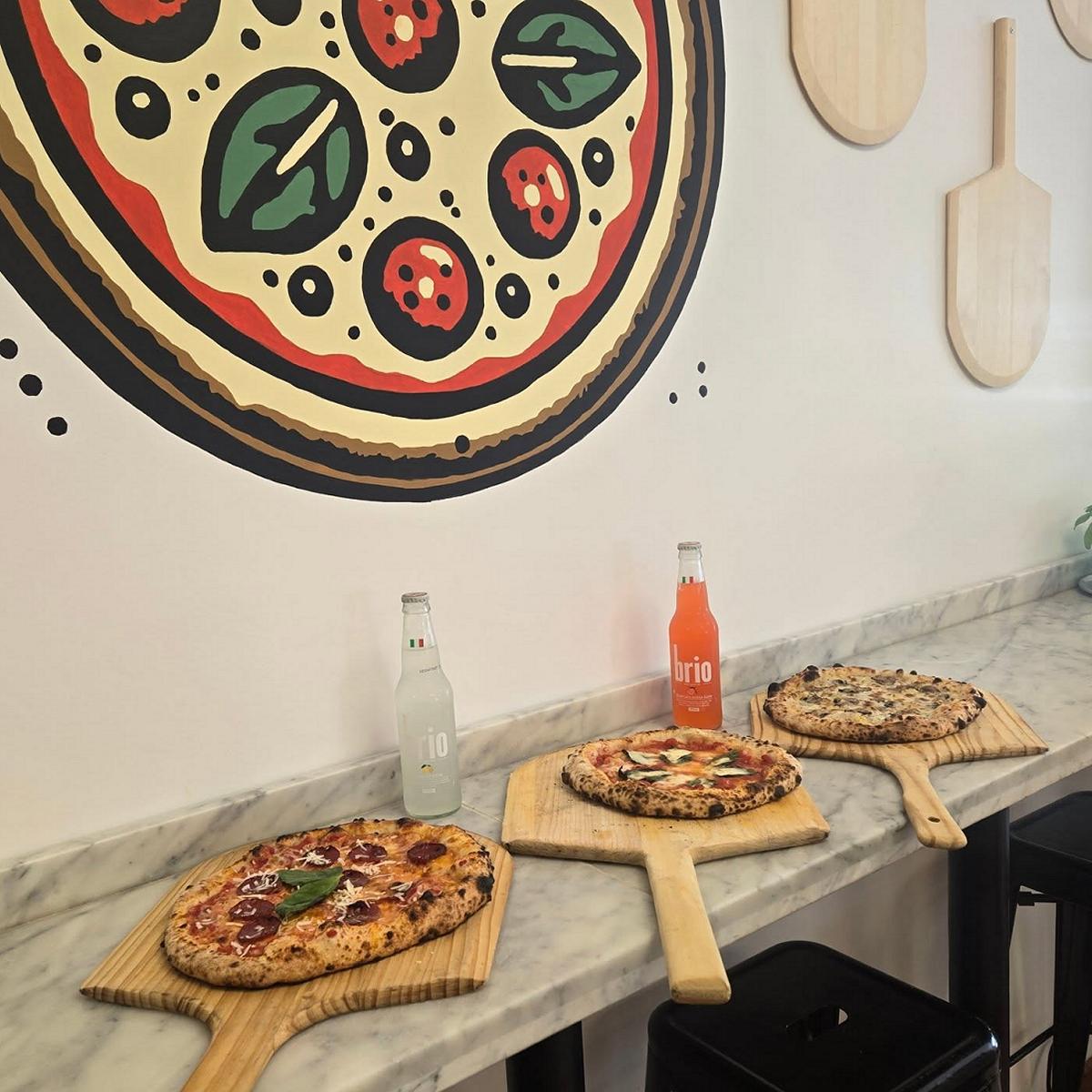
Opened in 2025, Burnt Crust Pizzaria is a family-run pizza joint in Minden. The Neapolitan-style pies are made from dough that’s naturally fermented for three days and cooked in a rotating stone oven. (Photo courtesy of Burnt Crust Pizzaria)
If the opening of Juna in Haliburton and Burnt Crust Pizzaria in Minden over the past year tells us anything, it’s that Haliburton County is amping up its pizza offerings.
A family-run pizzeria, Burnt Crust serves authentic Neapolitan-style pizza with a thin crust made from dough that’s naturally fermented for three days and cooked in a rotating stone oven. The sauce is made with tomatoes sourced from Italy, just like many of the toppings.
Customers have found an early favourite with the hot honey pepperoni pizza, though there are often new weekend specials that steal the spotlight.
Owners Katrina McCallum and her husband Avi Berger acknowledge that the proper spelling of “pizzaria” is “pizzeria” — they didn’t notice the word had been misspelled on their sign and decided to just go with it.
Burnt Crust Pizzaria is located at 1-12667 Highway 35 in Minden, in the former Algonquin Outfitters building. To learn more, visit www.burntcrust.ca.
Kawartha Localist is an editorial series from kawarthaNOW celebrating the places, experiences, businesses, and communities that make our region extraordinary. Written by people who live here, work here, and have spent nearly 30 years exploring the Kawarthas and surrounding region, each edition shares trusted local recommendations, hidden gems, and favourite discoveries from across Peterborough County, the City of Peterborough, Kawartha Lakes, Northumberland County, Haliburton County, and Hastings Highlands.
Whether you’re looking for your next hiking trail, favourite patio, scenic drive, farmers’ market, or weekend adventure, Kawartha Localist is what we love about where we live.
A 50-year-old Peterborough man with a history of hate-motivated behaviour is facing several charges in connection with online threats directed at local residents.
Peterborough police say two of the charges against Kevin Goudreau are the first laid by the service under new federal hate crime laws.
Meanwhile, police have received reports about anti-immigration posters appearing around Peterborough but say the posters do not currently meet the threshold for a hate crime. The Peterborough Downtown Business Improvement Area (DBIA) has also notified its members that the posters appearing downtown were not authorized and will be removed.
Advertisement - content continues below
As for the charges against Goudreau, police were made aware in early August of a series of online threats made towards several Peterborough residents.
Following an investigation, officers with the police service’s major crime unit obtained a warrant to search a Peterborough residence. Officers executed the warrant on Thursday (August 13) and arrested Goudreau.
He has been charged with two counts of uttering threats to cause death or bodily harm motivated by hatred, two counts of uttering threats to cause death or bodily harm, and five counts of failing to comply with a probation order.
According to police, Goudreau is currently bound by three probation orders requiring him to keep the peace and be of good behaviour. The orders also prohibit him from posting information about two of the alleged victims. Police determined that two of the online posts were motivated by hatred.
Goudreau was scheduled to make another court appearance on Tuesday (August 18). None of the charges has been proven in court.
Advertisement - content continues below
Goudreau, who has identified himself as a white nationalist and has posted images of himself displaying Nazi symbols, has a history of hate-motivated behaviour in Peterborough.
In 2022, Peterborough police charged Goudreau with uttering threats, criminal harassment, and failing to comply with a probation order after an incident involving a lesbian couple who lived in the same apartment building. Police classified that incident as a hate-bias crime because of the nature of the comments allegedly made.
In 2017, Goudreau organized an anti-immigration rally in Peterborough. The City of Peterborough initially issued him a permit to hold the rally but later withdrew it after he failed to provide the required documentation.
The planned rally prompted hundreds of residents to participate in Solidarity Weekend, a series of events celebrating diversity and inclusion and opposing racism and white supremacy. A handful of people attended the anti-immigration rally, although Goudreau did not appear.
Advertisement - content continues below
In a separate statement, Peterborough police said they have recently received reports of posters from the Dominion Society of Canada appearing near Douro Street and the Rotary Trail.
Police said the posters outline the group’s position on immigration, including what it calls “remigration.” While police have recorded reports about the posters and understand they are controversial, they say the presence of the posters does not rise to the level of being a hate crime. Police have not indicated there is any connection between Goudreau and the posters.
Police chief Stuart Betts said the service remains interested in receiving reports about hate- or bias-motivated incidents, even when they do not meet the threshold for criminal charges.
“There is no room for hate in our community at any time,” Betts said. “The number one goal of the Peterborough Police Service is public safety, and the service is committed to this goal.”
“In this instance, what we are seeing does not rise to the level of criminality. There are currently laws within the criminal code that can assist and lead to charges. As the community has seen, most recently last week when a Peterborough resident (Goudreau) was arrested and charged for online comments, when grounds for charges exist, the Peterborough Police Service will apply them.”
Advertisement - content continues below
The Peterborough Downtown Business Improvement Area has also emailed its members after posters associated with the Dominion Society appeared in and around the downtown.
“The Peterborough DBIA does not support anti-immigration groups or messaging that promotes exclusion or intolerance,” executive director Nour Mazloum wrote in the email shared with kawarthaNOW. “Our downtown is a place for everyone, and we are committed to fostering a welcoming and inclusive community where people of all backgrounds, including newcomers and immigrants, feel welcome, safe, and supported.”
According to Mazloum, the posters were not authorized by either the DBIA or the city and, as is the case with all unauthorized posters in public spaces, they will take the necessary steps to remove them.
The DBIA is advising members who encounter people seeking to post or distribute materials near their businesses to use their discretion, prioritize their safety, and contact the DBIA for help finding appropriate resources.
“We also want to emphasize that this is not about limiting legitimate discussion or differing viewpoints,” Mazloum wrote. “Our concern is with unauthorized posting and with messaging that conflicts with the inclusive and welcoming downtown community we are committed to building.”
Two people are dead following a head-on crash on Highway 62 south of Bancroft on Sunday afternoon (August 16).
At around 5:15 p.m. on Sunday, Bancroft Ontario Provincial Police (OPP) responded to a serious two-vehicle collision on the highway.
The driver of one of the vehicles, a 41-year-old resident of Mount Bridges, was pronounced dead at the scene.
Advertisement - content continues below
The driver of the other vehicle, a 46-year-old resident of Wollaston Lake, was transported to a local hospital where they were later pronounced dead.
Highway 62 was closed between Lower Turriff Road and Highway 620 in Limerick while police conducted an investigation and documented the scene.
The investigation remains ongoing. Anyone who witnessed the collision or has dashcam footage, photographs, or video from the area and who has not yet spoken with police is asked to call the Bancroft OPP Detachment at 1-888-310-1122.
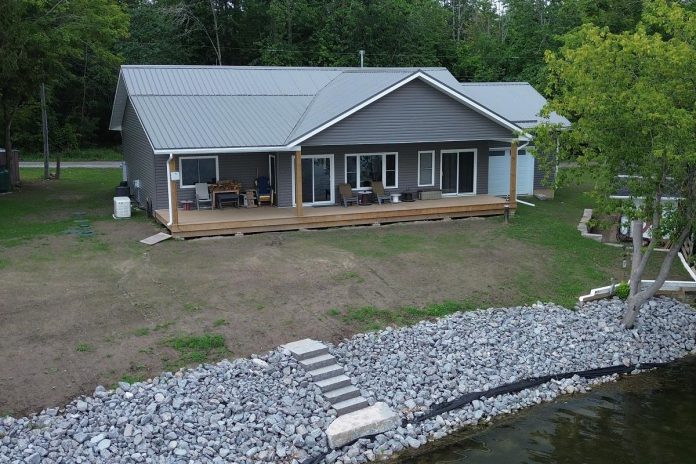
A recently completed home build through Merrett Home Hardware Building Centre's Beaver Homes & Cottages program, which makes it easy to select a design and customize it to your needs and budget. A local consultant will work with you to finalize a design, and also help you navigate through all the required permits and approvals and find a local builder or contractor. (Photo courtesy of Merrett Home Hardware Building Centre)
Building your dream home, cottage, garage, or secondary suite might just be one of the biggest projects you ever undertake. Fortunately, you don’t have to do it alone.
With the Beaver Homes & Cottages program from Merrett Home Hardware Building Centre in Peterborough, building has never been easier. When you purchase a material package suitable for your budget, you’ll have a local expert by your side every step of the way, helping you navigate all the required permits and approvals and find a local builder or contractor.
“Beaver Homes is designed to have a consultant follow you all the way through from start to finish,” says Beaver Homes & Cottages consultant Nathan (Nate) Baldwin. “If you have questions, we’re here to answer them for you. We’re here to work through it with you.”
Merrett Home Hardware Building Centre supports homeowners anywhere within Peterborough and the Kawarthas and surrounding areas.
Nate Baldwin and Ian Nichols are local consultants with Merrett Home Hardware Building Centre’s Beaver Homes & Cottages program who have expertise in construction estimating, design, and more. (Photos courtesy of Merrett Home Hardware Building Centre)
Nate is coming up on 12 years with Merrett Home Hardware Building Centre, and he has taken construction estimating courses, businesses management courses, and architectural technician courses so clients trust his expertise and insight.
He has also received his BCIN (Building Code Identification Number) qualification making him a qualified BCIN designer. The BCIN is a license that certifies a designer in building code requirements, allowing them to sign off on their own building plans.
Ian Nichols is another local consultant who clients will work with through the Beaver Homes & Cottages program. Ian, who has worked with the company for seven years, previously owned his own construction and landscaping business for 25 years, and he has also taken design and estimating courses.
Share on Bluesky
“It’s really a one-stop shop so if you’re tweaking designs, you’re not dealing with someone else at the store — it’s us doing it all,” Nate says. “We’re the ones modifying the floor plans and modifying the look of the house. You’re not having that broken telephone of talking with multiple people. It’s just one place you’ll go to for everything.”
The process begins with a discussion around what you envision for the design of your build. Beaver Homes & Cottages offers 125 pre-designed homes, with traditional to contemporary designs available in a range of square footage. If there isn’t one that matches your preference or needs, you can work with your consultant to ensure your design is exactly right for you and your lifestyle.
“If you want to take two or three different designs and maybe add different pieces of each, we can make that happen,” Nate points out. “If nothing on the website meets your needs, then we can do something that’s totally custom. Maybe that could be based on where you’re living now, or just from thinking about what you like.”
A recently completed cottage build through Merrett Home Hardware Building Centre’s Beaver Homes & Cottages program. When you buy a Beaver Homes & Cottages material package, Merrett Home Hardware Building Centre guarantees your finished standard or customized design will meet the requirements of national and provincial building codes, that the price will not increase throughout the project, and that the materials supplied by Merrett Home Hardware Building Centre will confirm to or exceed national and provincial building codes. (Photo courtesy of Merrett Home Hardware Building Centre)
Building components and other materials supplied by Home Hardware conform to or exceed the National Building Code of Canada as well as all provincial codes. Because Merrett Home Hardware purchases exclusively premium-grade lumber, they can ensure their clients receive the best grade of building materials available each step of the way. The materials within the package can also be customized to the client’s preferred products and finishes to ensure it looks exactly as they dreamed.
What’s more, clients are assured the cost of the material package outlined will not change throughout the project, unless the buyer makes adjustments to better meet their own preference and lifestyle.
“That gives ease of mind to our customers to know that’s pretty well the price unless you change it,” Nate says. “We’re not throwing out unexpected fees that will surprise them later.”
Since getting permits can often be one of the most challenging parts of a build, Beaver Homes & Cottages navigates the process alongside their clients, ensuring nothing in overlooked.
Whether it’s municipal permits, rezoning, archaeological assessments, environmental impact studies, or anything else, your consultant can equip you with the knowledge and support you need.
Share on Bluesky
“We’re there facilitating to get everything in line, and making sure all of it gets done and in a reasonable timeline,” Nate explains. “Building permits can be very hard if you don’t know what’s going on, but we will be right there with you.”
With the design completed and paperwork in place, Beaver Homes & Cottages will work with you to find a builder and will continue to offer support throughout the build, until you’re walking through your new home or cottage for the first time.
“We’ve really honed this program and made it a much better experience for the people that deal with us,” Nate says. “We make sure they’re getting help every step of the way.”
Share on Bluesky
That includes recent clients Tracy and Bill.
“We would like to express our sincere gratitude to Nathan and Ian for their professionalism and incredible knowledge in getting our forever home built,” the couple writes in a testimonial. “It is greater than we could have ever imagined, and they made it effortless for us.”
This branded editorial was created in partnership with Merrett Home Hardware Building Centre. If your business or organization is interested in a branded editorial, contact us.
Although his aircraft has been located by search-and-rescue teams on Wolf Lake in Queen Elizabeth II Wildlands Provincial Park, 73-year-old pilot David Douglas remains missing. (Supplied photo)
The aircraft flown by missing pilot David Douglas has been found in the City of Kawartha Lakes, but the 73-year-old man remains missing.
The Joint Rescue Coordination Centre in Trenton announced on Monday (August 17) that the overdue aircraft had been located on Wolf Lake in Queen Elizabeth II Wildlands Provincial Park.
“The search for the overdue aircraft has concluded,” the centre stated in a post on X. “The case is now with the Ontario Provincial Police as a missing person’s case.”
“Although not the outcome we wanted, we hope the efforts of all (search-and-rescue units) will aid the continued search,” the centre added.
The search for the overdue aircraft has concluded. It was found on Wolf Lake, in Queens Elizabeth II Provincial Park. The case is now with @OPP as a missing person’s case. Although not the outcome we wanted, we hope the efforts of all #SAR units will aid the continued search. pic.twitter.com/LPYjvdOwSV
No further information has been released about the condition of the aircraft, how it was located, or the ongoing search for Douglas.
Located northwest of Coboconk and Kinmount, Queen Elizabeth II Wildlands Provincial Park is a 33,505-hectare park with no maintained public facilities or services.
As kawarthaNOW previously reported, Douglas departed Oshawa Executive Airport at 8:32 a.m. on Friday (August 14) in a light blue and yellow amateur-built aircraft. He was expected to return to the airport but did not arrive as planned.
Advertisement - content continues below
Douglas was the only person aboard the single-engine fixed-wing experimental aircraft, which has a light blue fuselage with yellow accent striping along its side and “FOFZ” on the tail.
A media advisory issued on behalf of Douglas’s family on Saturday said he was believed to be somewhere in the vicinity of Scugog or the Kawartha Lakes, including Balsam Lake, Sturgeon Lake, or Cameron Lake.
The Royal Canadian Air Force’s Joint Rescue Coordination Centre in Trenton subsequently coordinated an aerial grid search east of Orillia in the vicinity of Balsam Lake, between Lake Simcoe and Bobcaygeon. Fixed-wing aircraft and helicopters participated in the search.
Located at 201 St. George Street in Lindsay, Mariposa Dairy has crown from a 100-acre goat farm into one of Canada's largest goat cheese producers and processors, and also produces sheep milk cheese products. (Photo: Mariposa Dairy / Facebook)
Two Lindsay manufacturers are receiving more than $7 million from the Canadian government just two days before the Trump administration is scheduled to impose another round of tariffs on Canadian goods.
Federal artificial intelligence and digital innovation minister Evan Solomon, who is also the minister responsible for the Federal Economic Development Agency for Southern Ontario (FedDev Ontario), was in Lindsay on Monday (August 17) to announce the funding for Mariposa Dairy and Armada Toolworks through the federal government’s Regional Tariff Response Initiative.
The announcement comes as additional 50 per cent tariffs on selected Canadian products are set to take effect at 12:01 a.m. on Wednesday. On July 20, U.S. President Donald Trump signed three proclamations imposing the tariffs in response to what his administration describes as Canada’s discriminatory treatment of American motor vehicle, alcohol, and dairy exports.
According to a White House fact sheet, the tariffs will apply to selected goods regardless of whether they comply with the Canada-United States-Mexico Agreement. They will also be added to other applicable duties, although energy, potash, products already subject to certain sectoral tariffs, and some other goods are exempt.
Advertisement - content continues below
The two Lindsay companies receiving federal funding operate in industries at the centre of the ongoing trade dispute. Mariposa Dairy produces goat and sheep milk cheese, while Armada Toolworks manufactures custom plastic parts and assemblies for the automotive sector.
Mariposa Dairy is receiving a repayable contribution of more than $6.5 million toward a $19.5-million expansion of its Lindsay operation. The project will expand the company’s facility and introduce advanced automated technology for processing, packaging, and shipping.
“FedDev Ontario’s funding has been instrumental in accelerating our automation journey, enabling us to invest in world-class manufacturing and shipping automation technologies that enhance efficiency, strengthen competitiveness, and support long-term growth,” said Mariposa Dairy co-owners Bruce and Sharon Vandenberg in a media release.
Incorporated in 2005, Mariposa Dairy grew from a small family-run farm business into one of Canada’s largest producers and processors of goat cheese. The company now operates two facilities with more than 80,000 square feet of combined space.
Advertisement - content continues below
Armada Toolworks is receiving more than $650,000 toward a project valued at over $1.3 million.
The company will use the funding to modernize its operations by introducing new technology and manufacturing processes, increasing efficiency, and diversifying into the medical device industry.
“Armada is very excited about our business pivot into the medical device industry,” said company president Chris van den Berg.
“The federal government’s Regional Tariff Response Initiative investment will greatly assist the ability to invest in the capital equipment needed for this new venture. In the long term, this will allow Armada to continue to thrive and to retain and grow our Lindsay workforce.”
Founded in 2000, Armada Toolworks specializes in designing and manufacturing custom plastic components and assemblies for automotive customers.
Advertisement - content continues below
“Local manufacturers are the backbone of Canada’s economy,” Solomon said. “Today’s investments in two Lindsay manufacturers, Mariposa Dairy Ltd. and Armada Toolworks Ltd., will support the adoption of advanced technologies, enhance productivity, help these businesses seize new opportunities, and remain competitive as we build Canada strong.”
Part of the Canadian government’s broader tariff response plan to protect Canadian businesses and workers, the Regional Tariff Response Initiative supports businesses affected directly or indirectly by tariffs and global trade disruptions.
Its goals include helping companies increase productivity, diversify into new markets, strengthen supply chains, and reduce their exposure to trade risks.
Advertisement - content continues below
FedDev Ontario is continuing to accept applications from eligible southern Ontario businesses. Companies can normally request between $125,000 and $10 million in repayable funding or between $125,000 and $1 million in non-repayable funding.
Launch Kawartha, the local Community Futures Development Corporation funded by FedDev Ontario, has previously helped both Mariposa Dairy and Armada Toolworks access capital and business advice at earlier stages of their development.
Over the past four decades, the non-profit organization has provided more than $50 million in loans, contributed to the creation or maintenance of more than 9,400 jobs, and responded to over 17,000 requests for business support and capital advice across Kawartha Lakes.
Globus Theatre founders and real-life couple James Barrett and Sarah Quick rehearsing their lines as Theo and Gwen in Kristen Da Silva's poignant romantic comedy "Beyond the Sea," which runs for 10 performances at the professional theatre company in Bobcaygeon from August 19 to 29, 2026. (Photo courtesy of Globus Theatre)
Globus Theatre founders Sarah Quick and James Barrett will make a rare appearance together on stage when they star in the poignant romantic comedy Beyond the Sea, which runs for 10 performances from August 19 to 29.
For more than 20 years, the real-life couple has overseen, managed, directed, and performed in countless productions at the professional theatre company in Bobcaygeon. While Globus audiences often see Quick and Barrett perform individually, opportunities to see them share the stage are less common.
“Last season, we heard from quite a few audience members who were disappointed that James and I weren’t appearing onstage together,” says Quick in a media release. “We definitely took note. When we started planning this season, we made sure to give audiences what they were asking for. And Beyond the Sea felt like the perfect play for us to do together.”
Advertisement - content continues below
Written by acclaimed Ontario playwright Kristen Da Silva, Beyond the Sea follows two strangers whose chance encounter on a pier in a small town on a summer day gradually develops into something neither expected.
Theo is a recently divorced man struggling with his self-image, while Gwen is a quick-witted and good-humoured loner working at the ticket booth for a local boat tour company that promises passengers a glimpse of the Woman in White, an apparition from folklore said to appear near coastlines while mourning a lover lost at sea.
Featuring only two actors and a single setting, Beyond the Sea is a poignant and witty exploration of loneliness, human connection, new beginnings, and the courage required to hope again.
“Beyond the Sea” playwright Kristen Da Silva. (Photo: Patrick Hodgson)
The play was commissioned by Lighthouse Festival Theatre in Port Dover during the pandemic in August 2021. Da Silva was asked to develop a two-person play that a couple living in the same pandemic “bubble” could perform together on an outdoor stage.
“It was kind of like getting a writing challenge,” Da Silva recalled during a 2023 interview with Hudson Village Theatre artistic director Dean Patrick Fleming. “Here’s your limitations and here’s a prompt, and what are you going to do with it?”
Da Silva said the play was also shaped by what she and others were experiencing during the pandemic, including isolation and the emotional challenges it created.
Advertisement - content continues below
As she developed the play, Da Silva drew upon the legend of the Woman in White, a story that appears in different forms across numerous cultures.
“While I was writing this, I was reflecting so much on our need for connection and the loneliness of isolation, so the play evolved from those themes,” Da Silva explains. “It’s a special one for me, and I’m so happy to see it staged at Globus.”
Beyond the Sea is the latest of several plays by Da Silva that Globus Theatre has brought to the stage. Previous productions include the romantic comedy Sugar Road in 2018, the curling comedy Hurry Hard in 2023, and the poignant comedy Where You Are in 2024.
Advertisement - content continues below
As for Quick, her recent Globus credits include writing and directing the murder mystery dinner Murder at the Match, directing Sore Losers and Fly Me to the Moon, and starring in the Shirley Valentine, which she also performed in at Theatre Collingwood in April.
Barrett, meanwhile, has recently appeared in Sore Losers, Murder at the Match, and Come Down from Up River. His directing credits include Shirley Valentine and last season’s production of The Comeback.
Beyond the Sea runs at Globus Theatre at 2300 Pigeon Lake Road in Bobcaygeon at 8 p.m. Wednesdays to Saturdays from August 19 to 29, with 2 p.m. matinee performances on Saturday, August 22 and Thursday, August 27. An optional dinner is available at 6 p.m. before evening performances.
Tickets cost $50 for the show only or $100 for dinner and the show, plus HST and a $2 ticketing fee. Tickets can be purchased at www.globustheatre.com or by calling the Globus Theatre box office at 705-738-2037.
The Dreamboats (Chris Hummel, Johnny Fiacconi, Justin Zoltek, and Adam Brik) close out the 39th season of Peterborough Musicfest with a free-admission concert in Del Crary Park on August 19, 2026. (Photo: Andrew Cabral)
Back on May 13, when Peterborough Musicfest revealed most of the stage lineup for its 39th annual free summer music festival, the season-ending finale felt so very distant.
Peterborough Musicfest presents The Dreamboats
When:Wednesday, August 19, 2026 at 8 p.m. Where: Del Crary Park (100 George St. N., Peterborough) How much: Free admission
The evening will also feature Jeanne Truax at 6:30 p.m. as part of the Cogeco Future Sound Series. Bring your own lawn chairs or blankets (lawn chairs are available to rent). VIP seating available for sponsors. No smoking, alcohol, or pets permitted. There’s no public parking at Del Crary Park, but there’s neighbourhood street parking nearby and ample parking in downtown Peterborough.
There was good reason for that. After Gowan sang his final encore song at the season-opening concert on June 27, there were still 15 concerts to come over what then seemed an endless summer ahead. Now, just like that, here we are as Del Crary Park readies to welcome yet another tribute act — this one honouring a music era that hasn’t received nearly the attention it deserves.
On Wednesday (August 19), Peterborough Musicfest closes out the season by welcoming the 1950s/1960s be-bop and sha-boom infused sound of The Dreamboats. Admission to the 8 p.m. concert is free, due mostly to the support of numerous sponsors including kawarthaNOW.
Advertisement - content continues below
With slick harmonies, energetic dance moves, and heartthrob charisma, The Dreamboats — Chris Hummel (aka Ritchie Hummins), Johnny Fiacconi (aka Johnny G. Wiz), Justin Zoltek. and Adam Brik — exude rock ‘n’ roll nostalgia accentuated by their dapper matching suits. As for their musicianship, well, it’s off the charts as much as the hit music they play it was on it.
According to AXS.com, “If you take the charisma of The Beatles, combine it with the fresh beats of the fictional band The Wonders from the 1996 Tom Hanks hit film ‘That Thing You Do,’ throw in some attitude from Dion and the Belmonts, and pour in a whole lotta pop hooks from Weezer, you’d have the blistering vintage yet contemporary sound of Canadian rockers, The Dreamboats.”
Musically, the greats of yesteryear are well-represented: Elvis Presley, Chuck Berry, The Beatles, Buddy Holly … the list goes on and on. The end result will undoubtedly see a good number depart the show in search of the malt shop they’ll never find.
VIDEO: The Dreamboats Sizzle Reel
Founded in 2009 in Mississauga by Hummel and Fiacconi who shared a love of 1950s and 1960s music, and particularly that of The Beatles, The Dreamboats have since toured internationally. A highlight came in 2015 when the band headlined at the Cavern Club in Liverpool where the Fab Four got their start.
Recording-wise, The Dreamboats have released compilations of 1950s/1960s hits as well as some of their own material with the same throwback feel. That discography includes 2023’s Invasion, which includes Herman Hermits’ “I’m Henry VIII, I Am” and The Kinks’ “You Really Got Me,” and 2024’s Millions, featuring the music of Carl Perkins, Johnny Cash, Jerry Lee Lewis, and Elvis Presley.
In an interview from this past June, Hummel spoke about the early experiences and influences that ultimately led to his co-formation of The Dreamboats.
Advertisement - content continues below
“I was about to perform ‘When I Come Around’ by Green Day (at a Grade 12 talent show) … I was singing lead vocals from the drums,” Hummel recalled.
“I walked up to the front of the stage to grab the microphone to bring back to the drum set before I started. When I approached the microphone, something happened that I will always remember to this day. The screams and applause from the crowd and my peers was so loud that it actually hurt my ears to the point of having to cover them.”
“I will never forget that feeling. I’m a firm believer that there are moments in your life that change your course moving forward. This one was mine.”
VIDEO: “Come On, Let’s Go” by Ritchie Valens – The Dreamboats
Growing up, Hummel added, 1950s to 1970s music was a staple.
“One of my fondest memories was when we were ice fishing near Sutton, Ontario,” he said. “My dad had a strong signal coming from 1050 CHUM in the middle of the frozen lake. On that day, they had a special show on called Beatles A-to-Z. They played the whole Beatles catalogue in alphabetical order. I remember loving every single song.”
“So many moments, including this one, are reasons why I have such a deep love for the golden era of rock ‘n’ roll.”
Advertisement - content continues below
As for his motivation to continue doing what he does, Hummel no doubt speaks for his bandmates as well.
“My favourite era of 1950s and 1960s rock ‘n’ roll reflects a time of innocence, fun, rebellion, culture, and love. No matter what’s happening in my life or in the world around me, when I listen to my favourite rock ‘n’ roll songs, I get taken to a place that is uplifting and positive.”
Still, there are challenges that keep each member of The Dreamboats fully invested.
“The hardest part is making it look easy,” Hummel said.
VIDEO: “Shake, Rattle and Roll” by Charles Calhoun – The Dreamboats
“Over the past 16 years of being in this band, I have sacrificed and endured so much to be in the position I am in,” Hummel added “Finances, physical health, mental health, important times, relationships … the list goes on.”
“If I was to go back 16 years and talk to my young self when first starting this band, I would say ‘Be very grateful for every moment you get to step on a stage. You could be doing less-fulfilling things with your time. The fact that you get to make this a career is an absolute blessing. Enjoy the ride.'”
Prior to The Dreamboats taking the stage, the Cogeco-sponsored Future Sound Series will feature Peterborough rockabilly/roots singer-songwriter Jeanne Truax from 6:30 to 7:30 p.m., near the food trucks at the George Street entrance to Del Crary Park.
Advertisement - content continues below
Peterborough Musicfest is presenting 16 free-admission concerts during its 39th season, staged in Del Crary Park on Wednesday and Saturday nights until August 19.
Overseen by executive director Tracey Randall and staff, a board of directors, and numerous volunteers, Peterborough Musicfest’s stated mission remains “to provide diverse, affordable live music to enrich cultural and economic prosperity in our community.”
For more information on this concert or the 2026 season, visit www.ptbomusicfest.ca or call the Peterborough Musicfest office at 705-755-1111.
kawarthaNOW is proud to be a headline sponsor of Peterborough Musicfest’s 2026 season.
kawarthaNOW.com offers two enews options to help readers stay in the know. Our VIP enews is delivered weekly every Wednesday morning and includes exclusive giveaways, and our news digest is delivered daily every morning. You can subscribe to one or both.
Submit your event for FREE!
Use our event submission form to post your event on our website — for free.
To submit editorial content or ideas, please contact us.