



















Home Blog Page 629

Ontario reports 994 new COVID-19 cases, including 15 in Peterborough

Here’s an update on COVID-19 cases in Ontario as well as in the greater Kawarthas region.

Today, Ontario is reporting 994 new cases, with the seven-day average of daily cases decreasing by 20 to 1,064.

There are 92 new cases of the B.1.1.7 UK variant, for a total of 644, and 4 new cases of the B.1.351 South Africa variant, for a total of 31.

In the greater Kawarthas region, there are 20 new cases to report and an additional 11 cases resolved, with the number of active cases across the region increasing by 9 to 118. The first COVID-related death in Haliburton County has been reported.

Advertisement - content continues below


Most of today’s new cases are in Toronto (298) and Peel (171).

There are double-digit increases in York (64), Ottawa (49), Hamilton (40), Simcoe Muskoka (39), Lambton (39), Niagara (37), Halton (33), Thunder Bay (24), Durham (23), Waterloo (23), Sudbury (18), Wellington-Dufferin-Guelph (18), Windsor-Essex (16), Middlesex-London (12), and Leeds, Grenville & Lanark (10), with smaller increases in Eastern Ontario (9), Peterborough (9), Brant (9), Haldimand-Norfolk (8), Kingston, Frontenac and Lennox & Addington (7), Huron Perth (7), and Southwestern (6).

The remaining 10 health units are reporting 5 or fewer new cases, with 3 health units reporting no new cases at all.

Of today’s new cases, 55% are among people 39 and younger, with the highest number of cases (382) among people ages 20-39 followed by 277 cases among people ages 40-59.

With 1,072 more cases resolved since yesterday, the percentage of resolved cases remains unchanged at 94.3%. The average positivity rate across Ontario has decreased by 0.3% from yesterday to 2.1%, meaning that 21 out of every 1,000 tests performed were positive for COVID-19 on March 3.

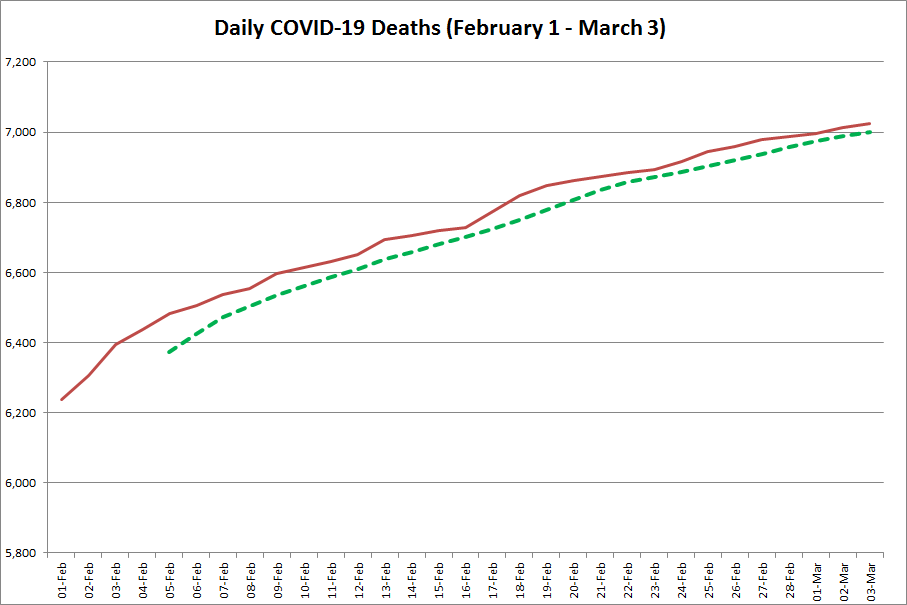
Ontario is reporting 10 new COVID-19 deaths today, including 2 new deaths in a long-term care homes. Ontario has averaged 15 new daily deaths over the past week, a decrease of 2 from yesterday).

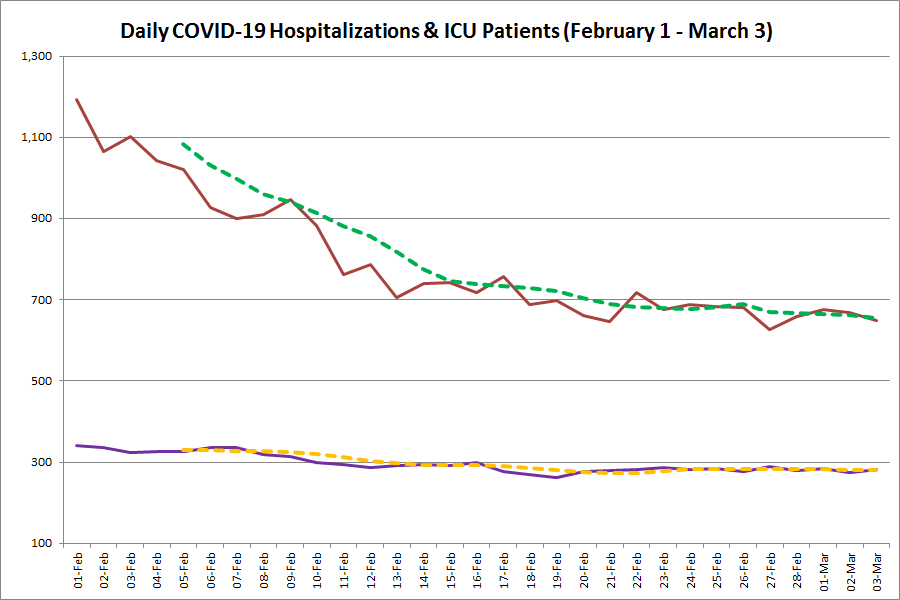
Hospitalizations have decreased by 19 from yesterday to 649, with the number of patients with COVID-19 in ICUs increasing by 7 from yesterday to 281, and the number of patients with COVID-19 on ventilators decreasing by 5 from yesterday to 183.

A total of 65,643 tests were completed yesterday, with the backlog of tests under investigation decreasing by 416 to 42,723.

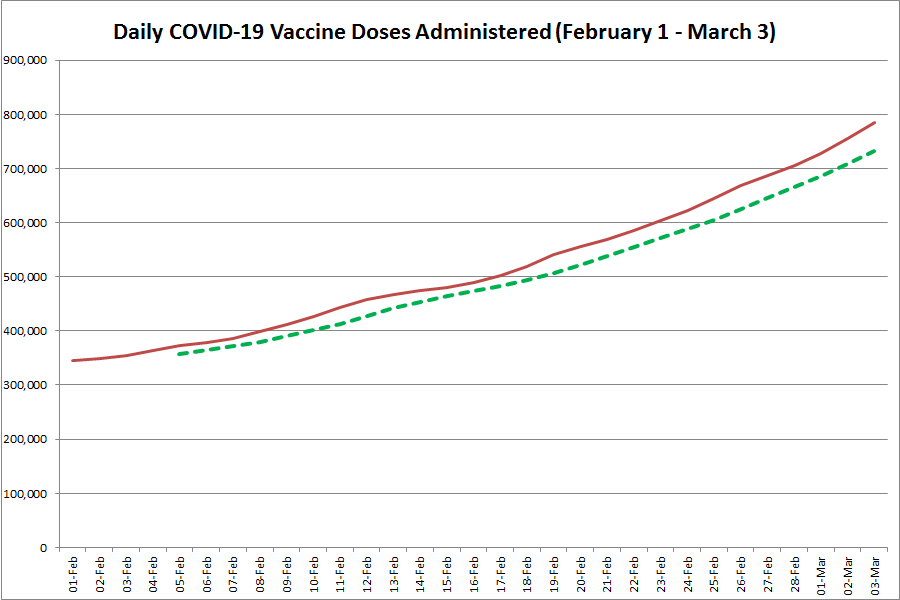
A total of 784,828 doses of vaccine have now been administered, an increase of 30,409 from yesterday, with 268,118 people fully vaccinated with both doses of vaccine, an increase of 1,408 from yesterday, representing 1.82% of Ontario’s population.

There are 101 new cases in Ontario schools, a decrease of 59 from yesterday, including 77 student cases, 21 staff cases, and 3 cases among unidentified people. There are 22 new cases in licensed child care settings in Ontario, a decrease of 3 from yesterday, with 11 cases among children and 11 cases among staff.

Advertisement - content continues below


In the greater Kawarthas region, there are 20 new cases to report, including 15 in Peterborough, 4 in Kawartha Lakes, and 1 in Hastings Prince Edward. There are no new cases in Northumberland or Haliburton.

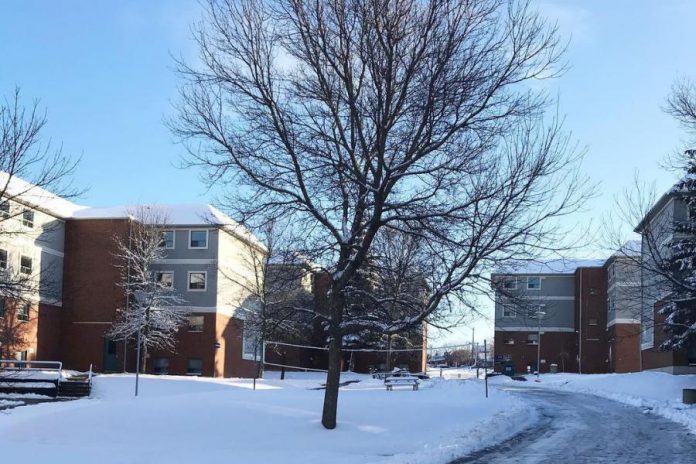
There are now 43 presumed cases of variants of concern in Peterborough. An outbreak was declared at Trent University’s Champlain College in Peterborough on March 4.

There has been a COVID-related death in Haliburton, the first in that county. This death appears to have been a case that was earlier reported as resolved.

An additional 11 cases have been resolved, including 5 in Northumberland, 2 in Peterborough, 2 in Kawartha Lakes, and 2 in Hastings Prince Edward.

There are currently 118 active cases in the greater Kawarthas region, an increase of 9 from yesterday, including 76 in Peterborough, 21 in Hastings Prince Edward (16 in Belleville, 3 in Tyendinaga & Deseronto, 1 in Prince Edward County, and 1 in Tyendinaga Mohawk Territory), 11 in Kawartha Lakes, and 10 in Northumberland. There are no active cases in Haliburton.

Since the pandemic began in the greater Kawarthas region, there have been 691 confirmed positive cases in the Peterborough area (606 resolved with 9 deaths), 542 in the City of Kawartha Lakes (489 resolved with 55 deaths), 444 in Northumberland County (423 resolved with 11 deaths), 51 in Haliburton County (50 resolved with 1 death), and 425 in Hastings and Prince Edward counties (398 resolved with 6 deaths). The most recent death was reported in Haliburton on March 4.

The provincial data in this report is pulled from Ontario’s integrated Public Health Information System (iPHIS) at 12 p.m. the previous day. Data from local health units is more current and is usually reflected in the provincial data the following day. There may be discrepancies between the Ontario data reported today (which is from yesterday) and the local health unit data reported today (which is from today).

Advertisement - content continues below


Peterborough Public Health

Peterborough Public Health’s service area is the City and County of Peterborough and the Hiawatha and Curve Lake First Nations.

The health unit provides daily reports, including on weekends, excluding statutory holidays.

Confirmed positive: 691 (increase of 15)
Confirmed variants of concern cases: 1 (no change)
Presumed variants of concern cases: 43 (increase of 16)
Active cases: 76 (increase of 13)
Close contacts: 252 (increase of 11)
Deaths: 9 (no change)
Resolved: 606 (increase of 2)
Hospitalizations (total to date): 25 (increase of 1)*
Total tests completed: Over 43,850 (increase of 100)
Outbreaks: Empress Gardens retirement home, Severn Court Student Residence, Trent Champlain College (increase of 1)**
Vaccine doses administered: 5,927 (increase of 4,791)

*As of March 4, Peterborough Regional Health Centre is reporting fewer than 5 patients hospitalized with COVID-19 (no change) and 17 patients transferred from other areas as a result of a provincial directive (no change).

**An outbreak was declared at Trent University’s Champlain College in Peterborough on March 4.


Haliburton, Kawartha, Pine Ridge District Health Unit

The Haliburton, Kawartha, Pine Ridge District Health Unit’s service area is the City of Kawartha Lakes, Northumberland County, and Haliburton County.

The health unit provides reports from Monday to Saturday, excluding Sundays and statutory holidays.

Confirmed positive: 1,037, including 542 in Kawartha Lakes, 444 in Northumberland, and 51 in Haliburton (increase of 4 in Kawartha Lakes)*
Cases with N501Y mutation: 14, including 2 in Kawartha Lakes and 12 in Northumberland (no change)**
Active cases: 21, including 11 in Kawartha Lakes and 10 in Northumberland (net decrease of 3)
Probable cases: 0 (no change)
High-risk contacts: 91, including 37 in Kawartha Lakes, 50 in Northumberland, and 2 in Haliburton (net increase of 9)***
Hospitalizations (total to date): 44, including 27 in Kawartha Lakes, 15 in Northumberland, and 2 in Haliburton (no change)****
Deaths (including among probable cases): 67, including 55 in Kawartha Lakes, 11 in Northumberland, and 1 in Haliburton (increase of 1 in Haliburton)*****
Resolved: 962, including 489 in Kawartha Lakes, 423 in Northumberland, 50 in Haliburton (increase of 6, including 2 in Kawartha Lakes and 5 in Northumberland)*****
Tests completed: 146,264 (increase of 789)
Outbreaks: Regency long-term care home in Port Hope (no change)

*The health unit states that total counts and counts for individual counties may fluctuate from previously reported counts as cases are transferred to or from the health unit based on case investigation details and routine data cleaning.

**The N501Y mutation has been identified in variants of concern including the B.1.1.7 UK variant, the B.1.351 South Africa variant, and the P.1 Brazilian variant.

***This total includes an additional 2 high-risk contacts directly followed up through the Public Health Ontario contact tracing process that are missing the contacts’ county.

****As of March 4, Ross Memorial Hospital in Lindsay reports no patients hospitalized with COVID-19 (no change).

*****This death appears to have been a case that was earlier reported as resolved, as the number of resolved cases in Haliburton has decreased by 1.


Hastings Prince Edward Public Health

Hastings Prince Edward Public Health’s service area is Hastings County (including Bancroft) and Prince Edward County.

The health unit provides daily reports, including on weekends, excluding statutory holidays.

Confirmed positive: 425 (increase of 1)
Active cases: 21 (decrease of 1)
Deaths: 6 (no change)
Currently hospitalized: 0 (no change)
Currently hospitalized and in ICU: 0 (no change)
Currently hospitalized and in ICU on ventilator (total to date): 0 (no change)
Resolved: 398 (increase of 2)
Tests completed: 66,296 (increase of 4)
Vaccines administered: 4,123 (increase of 396)
Outbreaks: Unidentified workplace in Central Hastings, unidentified workplace in Belleville (no change)

Advertisement - content continues below


Province of Ontario

Confirmed positive: 304,757 (increase of 994)
Total COVID-19 variant cases: 644 of B.1.1.7 UK variant (increase of 92); 31 of B.1.351 South Africa variant (increase of 4); 3 of P.1 Brazilian variant (no change)
7-day average of daily new cases: 1,064 (decrease of 20)
Resolved: 287,424 (increase of 1,072, 94.3% of all cases)
Positivity rate: 2.1% (decrease of 0.3%)
Hospitalizations: 649 (decrease of 19)
Hospitalizations in ICU: 281 (increase of 7)
Hospitalizations in ICU on ventilator: 183 (decrease of 5)
Deaths: 7,024 (increase of 10)
7-day average of daily new deaths: 15 (decrease of 2)
Deaths of residents in long-term care homes: 3,871 (increase of 2)
Total tests completed: 11,229,191 (increase of 65,643)
Tests under investigation: 42,723 (decrease of 416)
Vaccination doses administered: 784,828 (increase of 30,409)
People fully vaccinated (two doses): 268,118 (increase of 1,408), 1.82% of Ontario’s population (est. 70-90% required for herd immunity)
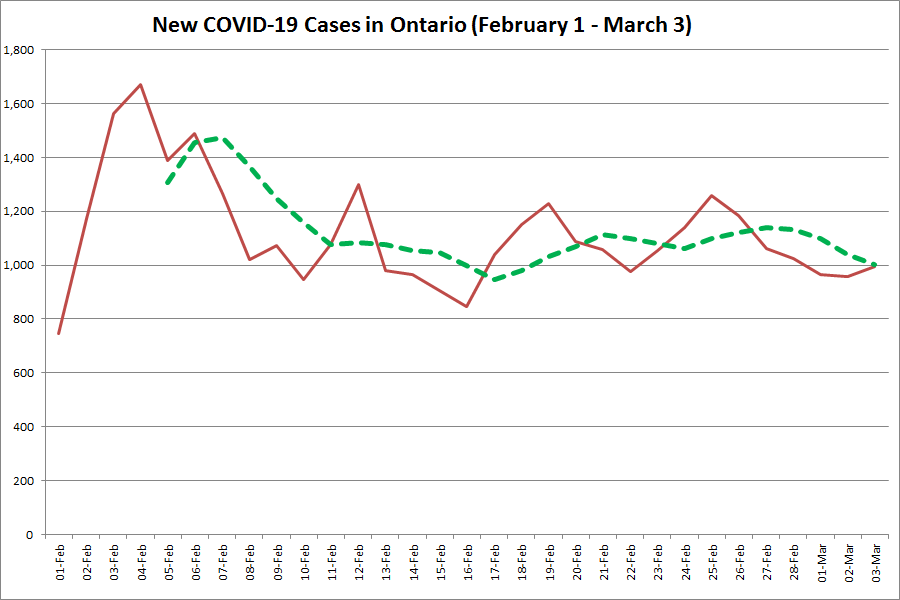
COVID-19 cases in Ontario from February 1 - March 3, 2021. The red line is the number of new cases reported daily, and the dotted green line is a five-day moving average of new cases. (Graphic: kawarthaNOW.com)
COVID-19 cases in Ontario from February 1 – March 3, 2021. The red line is the number of new cases reported daily, and the dotted green line is a five-day moving average of new cases. (Graphic: kawarthaNOW.com)
COVID-19 tests completed in Ontario from February 1 - March 3, 2021. The red line is the number of tests completed daily, and the dotted green line is a five-day moving average of tests completed. (Graphic: kawarthaNOW.com)
COVID-19 tests completed in Ontario from February 1 – March 3, 2021. The red line is the number of tests completed daily, and the dotted green line is a five-day moving average of tests completed. (Graphic: kawarthaNOW.com)
COVID-19 hospitalizations and ICU admissions in Ontario from February 1 - March 3, 2021. The red line is the daily number of COVID-19 hospitalizations, the dotted green line is a five-day moving average of hospitalizations, the purple line is the daily number of patients with COVID-19 in ICUs, and the dotted orange line is a five-day moving average of is a five-day moving average of patients with COVID-19 in ICUs. (Graphic: kawarthaNOW.com)
COVID-19 hospitalizations and ICU admissions in Ontario from February 1 – March 3, 2021. The red line is the daily number of COVID-19 hospitalizations, the dotted green line is a five-day moving average of hospitalizations, the purple line is the daily number of patients with COVID-19 in ICUs, and the dotted orange line is a five-day moving average of is a five-day moving average of patients with COVID-19 in ICUs. (Graphic: kawarthaNOW.com)
COVID-19 deaths in Ontario from February 1 - March 3, 2021. The red line is the cumulative number of daily deaths, and the dotted green line is a five-day moving average of daily deaths. (Graphic: kawarthaNOW.com)
COVID-19 deaths in Ontario from February 1 – March 3, 2021. The red line is the cumulative number of daily deaths, and the dotted green line is a five-day moving average of daily deaths. (Graphic: kawarthaNOW.com)
COVID-19 vaccine doses administered in Ontario from February 1 - March 3, 2021. The red line is the cumulative number of daily doses administered, and the dotted green line is a five-day moving average of daily doses. (Graphic: kawarthaNOW.com)
COVID-19 vaccine doses administered in Ontario from February 1 – March 3, 2021. The red line is the cumulative number of daily doses administered, and the dotted green line is a five-day moving average of daily doses. (Graphic: kawarthaNOW.com)


For more information about COVID-19 in Ontario, visit covid-19.ontario.ca.

Peterborough may move into more restrictive ‘Red-Control’ level due to dramatic rise in COVID-19 cases

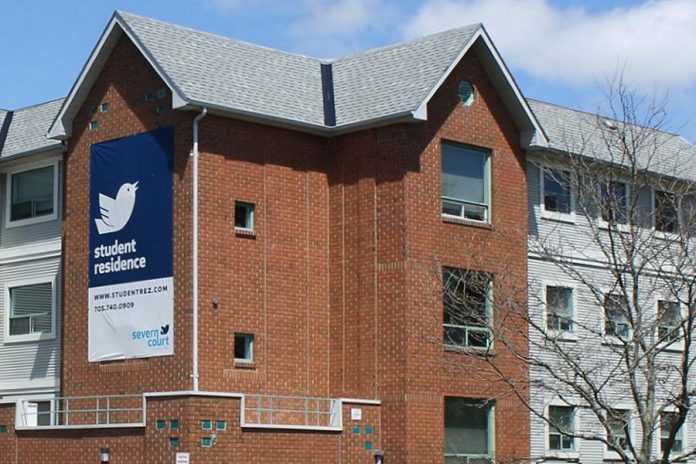
A COVID-19 outbreak originating from social gatherings at the privately owned Severn Court Student Residence has resulted in a dramatic increase of cases in the Peterborough region, including 30 presumed cases of more transmissble COVID-19 variants of concern. (Photo: Severn Court Management Company)

A dramatic rise in COVID-19 cases in Peterborough will likely result in the Ontario government soon moving the region into the very restrictive ‘Red-Control’ level of its COVID-19 response framework.

During a Peterborough Public Health media briefing held Thursday (March 4), medical officer of health Dr. Rosana Salvaterra reported there are 63 active positive cases of COVID-19 in the region.

However, of greater concern is the weekly rate of local positive cases per 100,000 people, which has grown to 40 this week from 16 last week.

Advertisement - content continues below


“Forty cases per 100,000 is the threshold for moving into the Red-Control level,” said Dr. Salvaterra, noting local data is presently being shared with the office of Ontario’s chief medical officer of health.

“We are expecting a decision that might see Peterborough moved into a more restrictive level to align better with the amount of COVID-19 transmission that appears to be occurring here now,” Dr. Salvaterra said.

“These decisions are usually made on Friday for the following Monday, but the chief medical officer of health does have his emergency break authority so he could implement something sooner and something even more severe.”

On February 26th, Ontario did just that for Thunder Bay District Health Unit and Simcoe-Muskoka District Health Unit, moving the two regions into the most restrictive ‘Grey-Lockdown’ level to curb community transmission of the virus. At the same time, the province also moved Niagara Region Public Health into the ‘Red-Control’ level.

If Peterborough moves into the ‘Red-Control’ level, existing restrictions would be tightened ever further, including fewer people allowed to gather (5 indoors, 25 outdoors), a maximum of four people seated together in restaurants, reduced capacity in retail stores, the closure of movie theatres, and more. For a complete list of restrictions, visit ontario.ca/page/covid-19-response-framework-keeping-ontario-safe-and-open#red.

Advertisement - content continues below


The culprit behind the dramatic rise in positive COVID-19 cases in the Peterborough region remains the outbreak stemming from one or more parties held February 20th at the Severn Court Student Residence on Wilfred Drive, in the southeast of the city near Fleming College.

To date, 44 positive cases have been detected, 30 of which have screened positive as a presumed COVID-19 variant of concern that is more transmissible. In addition, there are 40 high-risk cases living at the six-building complex, and there are more than 60 high-risk contacts identified outside of Severn Court.

A Section 22 class order previously issued by Dr. Salvaterra has closed the privately owned student residence to visitors, and requires by law that all 200 students living at the complex self-isolate. Meanwhile all in-person instruction of some 700 students at Fleming’s Sutherland Campus has been suspended until at least March 14th.

According to Dr. Salvaterra, one student who defied her Section 22 order has been warned.

As for any charges related to the party or parties held February 20th, a city police investigation has been ongoing with more news on that front imminent. However, inspector John Lyons says the large number of people involved has presented a challenge in terms of who, if anyone, will be charged.

“We’re trying to isolate and identify any and all of those involved,” he said. “That does take some time. Also we have people in quarantine, so that makes it very difficult to make contact with individuals involved. There also has been some movement of people.”

“There’s a lot of misinformation that has been provided to try and distract any potential investigation,” Lyons added. “We can’t charge people just because it’s time-sensitive — we have to be thorough.”

When charged, an individual receives a ticket for $750. Because seven days have passed since the February 20th incident being investigated, anyone ticketed will have to appear in court as opposed to just paying the fine and walking away.

Advertisement - content continues below


Meanwhile, Fleming College president Maureen Adamson noted the college is launching its own investigation.

“Under our student rights’ responsibility policy, we would set up a tribunal where we would have representation from our student association, faculty, and an administrator,” she explained. “Once we determine who the individuals (involved) are, we’ll look at each individual’s circumstances and determine what might be an appropriate action.”

“It could be anything along the continuum — a written reprimand, suspension, (the signing of) a behavioural contract, all the way through to the ultimate which would be expelling the student,” Adamson added.

If cities like Peterborough were designed with women in mind, they would work better for everyone

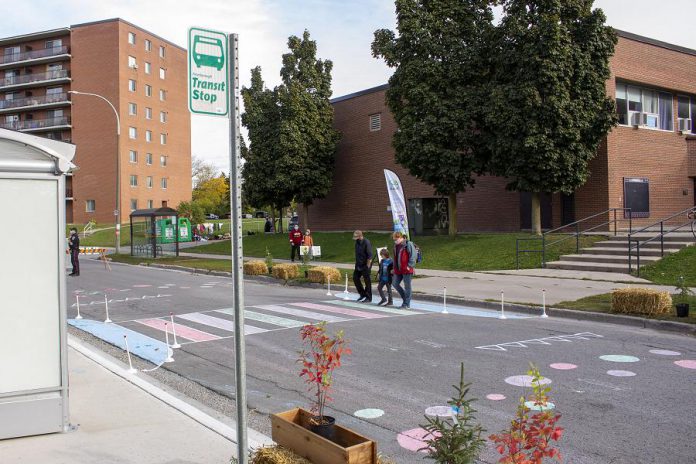
If cities were designed with the needs of women in mind, they would work better for everyone. For instance, women spend more time on public transit than men and spend more time on quick household-related errands and unpaid caregiving than men. During a GreenUP NeighbourPLAN infrastructure pop-up in Peterborough's Talwood neighbourhood, this temporary crosswalk was installed to demonstrate how a coloured crossing can improve pedestrian safety for women, men, and children. (Photo: Leif Einarson)

International Women’s Day is Monday, March 8th. The theme this year is “Choose to Challenge”. Join me as I choose to challenge gender bias in how cities have conventionally been designed.

Many cities have been designed by urban planners who identify as men for residents who identify as men.

This privileges the structures and patterns of a patriarchal world, like the weekday routine of travelling between home and work for a 9-to-5 job. This patriarchal way of designing cities values business places and the economic status associated with the cars and roads that get people to and from those places of business.

Advertisement - content continues below


By comparison, little value is placed on the domestic spaces and unpaid labour of childcare and housekeeping that necessarily support that patriarchal world of business.

“The design of public spaces is not neutral,” says Jay Pitter, award-winning placemaker and author in an interview with She Does The City. “Feminist scholars have found that the home, a domestic space associated with nurturing and child-rearing, was conceived as a women’s space. And the city, associated with economic opportunity, mobility, and exploration, was conceived as a space for men.”

“Challenges women face — such as navigating public transit with strollers, accessing family-friendly public restrooms, and overall safety in the public realm — are all linked to fundamental, gender-based urban design biases,” Pitter adds.

As part of GreenUP's NeighbourPLAN Vision for the Jackson Park-Brookdale neighbourhood in Peterborough, this visionary rendering of Wolsely and Donegal shows a stop sign, clearly marked crosswalk, cycling lanes, and gardens in the boulevard. These enhancements to the intersection would make the crossing experience safer for the young families who walk to Highland Heights Public School. (Illustration: Basterfield & Associates for GreenUP)
As part of GreenUP’s NeighbourPLAN Vision for the Jackson Park-Brookdale neighbourhood in Peterborough, this visionary rendering of Wolsely and Donegal shows a stop sign, clearly marked crosswalk, cycling lanes, and gardens in the boulevard. These enhancements to the intersection would make the crossing experience safer for the young families who walk to Highland Heights Public School. (Illustration: Basterfield & Associates for GreenUP)

Urban planning has traditionally privileged a set eight-hour workday for men over the less regular, often part-time, and unpaid labour that has been associated with women.

For example, in Canada, women are twice as likely as men to work part-time. Women make up a higher percentage of those who commute to work on public transit than men. Statistics from the 2016 Census show 58.5 per cent of transit users in Toronto were women and 41.5 per cent were men. Women spend an average of 5.4 hours per day on unpaid work activities related to housekeeping and caregiving, whereas men spend an average of 2.9 hours per day.

To keep the household running smoothly, it is still women who do more short-trip, dart-and-dash activities to various destinations. Active transportation like biking or walking is often a more cost-effective and time-efficient method for these shorter trips than a privately owned car or public transit. Urban spaces need to be planned with different priorities to accommodate these trips.

Advertisement - content continues below


The safety of women and children — as well as other segments of the population — would be improved significantly if streets were designed with wide sidewalks and boulevards, protected bicycle lanes, places to sit, and intersections with short crossing distances. Slower vehicular traffic also improves safety for women and the children who often accompany them on these trips.

Access to public washrooms would also make an enormous difference in women’s ability to enjoyably participate in their cities. Women have to use washrooms more often than men, and women are more likely to be out with children who need these facilities on a frequent and often urgent basis.

When we choose to challenge gender bias, everyone benefits. For example, in the 1990s, Toronto changed bus and streetcar services to address women’s safety needs. Women were allowed to request a stop between regular stops. This service now extends to all passengers.

VIDEO: “How to Build a City for Women”

Better cycling infrastructure encourages more people to feel safe when cycling and can also increase retail spending in downtown cores. Increases in active transportation can improve air quality and personal health. Better active transportation infrastructure also makes business and services more accessible for folks who cannot afford, or choose not to own, a car.

Everyone — not just women — benefits from compact, mixed-use, walkable neighbourhoods. The Canadian population is aging and women, on average, live longer than men. Compact, walkable communities can create a better quality of life for elderly women living alone and for everyone else too.

More walkable communities provide better quality of life to Canada’s aging population, and these communities are also more attractive places to live in general. A 2014 study revealed that 81 per cent of homebuyers would choose to live in less car-dependent neighbourhoods over having big lawns and extra bedrooms, if cost were not a factor.

Advertisement - content continues below


All levels of government need to coordinate to create affordable housing plans and compact, mixed-use, walkable neighbourhoods. If you want to learn more from exemplars around the world, look to the design of the Aspern community in Vienna: one half of the development area is devoted to public space, building height allows for enhanced safety and better “eyes on the street,” and the streets are named after women.

You can also look for more inclusive urban design solutions closer to home.

Over the past year we all experienced how the COVID-19 emergency made it essential to our health, safety, and local economy to adopt many urban design measures that are prioritized in approaches that consider the experiences of women: dedicated cycling lanes, larger pedestrian spaces with more outdoor seating/patios, and reduced vehicle speed limits.

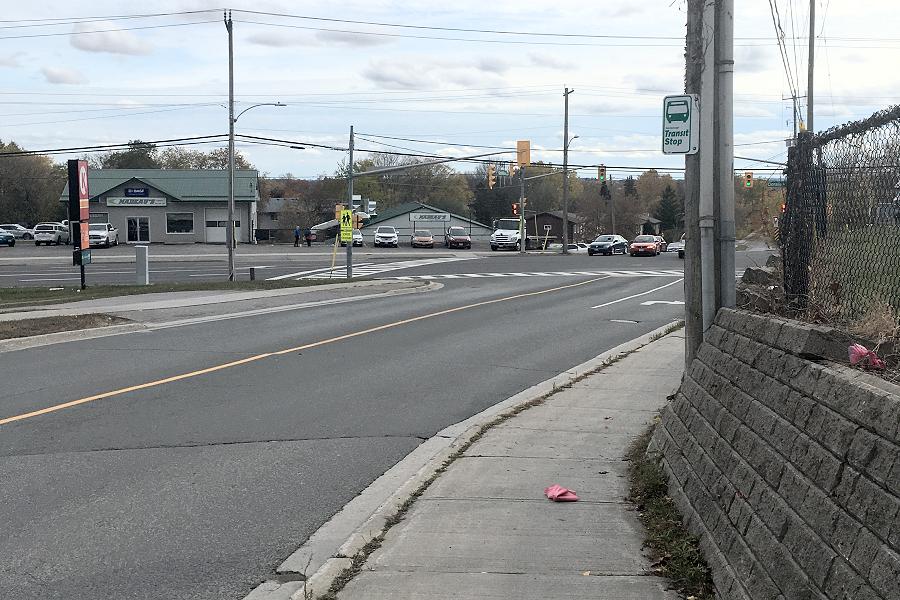
Because there is no safe crossing anywhere on Goodfellow between Clonsilla and Sherbrooke in Peterborough, families walking to St. Alphonsus Catholic Elementary School and Keith Wightman Public School have to walk along this narrow sidewalk, where people may also be standing at the transit stop. (Photo: GreenUP)

Over the past four years, as part of GreenUP’s NeighbourPLAN program, I have had the privilege of meeting with over 1,000 people of all genders and walks of life: drivers, cyclists, walkers and rollers, students, and retired folks, those with comfortable incomes and those surviving on low and fixed incomes.

All these people experience our city in their own unique ways, and yet they share common dreams for their neighbourhoods. They want safe and accessible streets, as well as more beauty and greenery. They have some great ideas on how to adapt current public space to achieve these goals.

Through collaboration with built environment professionals, these ideas have been distilled into actionable vision documents that you can view at greenup.on.ca/neighbourplan/.

VIDEO: “Designing cities for women” – Lucy Turnbull

Great things can happen when we choose to challenge urban designs that prioritize men over women, cars over people, 9-to-5 jobs over part-time and irregular shift work. The people who call our cities home are more diverse than these either-this-or-that divisions.

Championing these changes and this diversity should not be a fight. When we design cities to work for the most vulnerable people, we get cities that work better for everyone. Choose to challenge how your city works for you.

Vaccinations complete for long-term care residents in Kawartha Lakes, Northumberland, and Haliburton

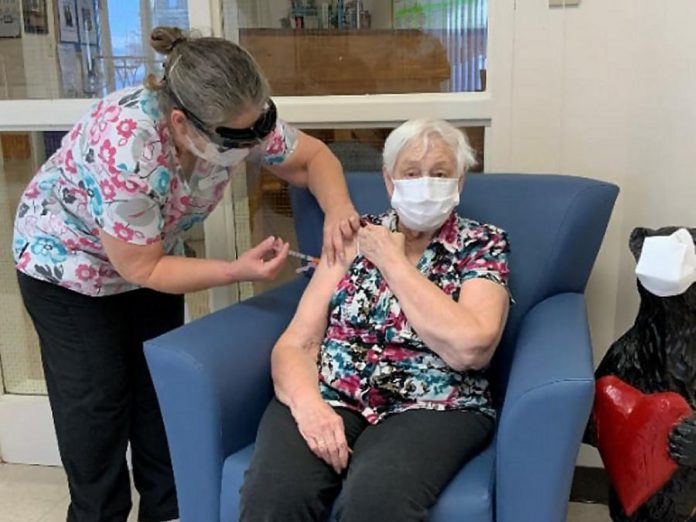
Lorraine Button, a resident of Pinecrest Nursing Home in Bobcaygeon, received her first dose of the Moderna COVID-19 vaccine on January 27, 2021. As of March 3, around 1,700 residents of long-term care homes in Kawartha Lakes, Northumberland, and Haliburton are fully vaccinated against COVID-19. (Photo: Haliburton, Kawartha, Pine Ridge District Health Unit / Facebook)

Vaccine rollout is progressing in the Haliburton, Kawartha, Pine Ridge District Health Unit region.

In a virtual media briefing on Wednesday (March 3), acting medical officer of health Dr. Ian Gemmill announced the health unit has completed vaccinating residents of long-term care homes in the region, which includes the City of Kawartha Lakes and Northumberland, and Haliburton counties.

About 1,700 residents have now received both doses of the Moderna COVID-19 vaccine, Dr. Gemmill said.

Advertisement - content continues below


“We have now immunized most of the residents of long-term care, twice, which means they are done,” Dr. Gemmill announced. “We’ve started on the staff and essential caregivers of long-term care homes with the assistance of our hospitals. Also, some of the highest-risk health care workers have received their first dose of the vaccine.”

“We are also working with Alderville (First Nation) to make sure that community is getting their first doses of the Pfizer vaccine,” he added.

According to Dr. Gemmill, as of Tuesday, there have been roughly 5,400 shots of COVID-19 vaccines distributed in the area. Around 2,000 long-term care staff and priority health care workers have received their first dose of the Pfizer-BioNTech vaccine. The other 3,400 shots were first and second doses of the Moderna vaccine given to long-term care residents.

Dr. Ian Gemmill, acting medical officer of health for Haliburton, Kawartha, Pine Ridge District Health Unit, provided a virtual media briefing on the status of the pandemic in Kawartha Lakes, Northumberland, and Haliburton on March 3, 2021. (Screenshot)

The health unit has about 6,000 more doses of the Pfizer vaccine and is set to have those distributed by the end of next week, Dr. Gemmill said. These doses are allocated for long-term care staff and high-priority health care workers.

For those 80 years of age and older waiting for to be inoculated, Dr. Gemmill asked for patience.

“I can’t tell you exactly when older people living in the community or home care will be getting their vaccine, but stay tuned,” Dr. Gemmill said. “It could be happening very soon because things are changing all the time.”

In terms of cases in the area, Dr. Gemmill noted a significant fall in cases reported in the area over the last 14 days. Only 52 cases have been reported in the last 14 days — a significant drop compared to the previous week’s 114 cases.

Dr. Gemmill cited vaccine distribution among long-term care residents and the resulting drop in outbreaks as a primary reason for the decrease in cases.

The outbreak at Caressant Care McLaughlin Road in Lindsay — the largest and most fatal COVID-19 outbreak in the health unit’s region since the one at Pinecrest Nursing Home in Bobcaygeon at the beginning of the pandemic — was declared resolved on Monday.

The outbreak was first declared on January 9th, with a total of 62 residents and 49 staff testing positive for COVID-19 during the outbreak. Of the residents who were infected, 18 lost their lives as a result of the disease.

There is currently only one active outbreak in the region, at Regency Long-Term Care Home in Port Hope.

Advertisement - content continues below


Dr. Gemmill also speculated last month’s stay-at-home order and the approaching end of winter might also have affected the number of cases. Nevertheless, he reminded those living in the area not to relax due to the declining numbers.

“Things are better, and I’m pleased about that, but 98 per cent of our population still is not protected,” Dr. Gemmill pointed out. “We still have a lot of susceptible people out there, and therefore I’m asking people not to relent on the messages: stay at home, don’t travel, and if you have to go out, wear a mask and physical distance. These are the things that are going to keep things down until the vaccines are distributed.”

Dr. Gemmill added that the spread of variant of concern cases (VOCs) is also a reason to remain vigilant until more people are protected by the vaccine. There have been 14 VOC cases reported to date in the area, including two in Kawartha Lakes and 12 in Northumberland County.

“That is of course of concern, but very sadly, this is just a reflection of what is going to be happening right across Ontario,” Dr. Gemmill remarked. “Let’s continue our patient approach to this because once we get these variants more common, they’re much more transmissible, and that can send the rates up. What we’re trying to do is keep the rates down until people get protection with a safe and effective vaccine.”

As for the AstraZeneca-Oxford vaccine, which Health Canada licensed last Friday (February 26), Dr. Gemmill said there is no indication that this vaccine will be coming to local health units any time soon.

Although Health Canada approved the vaccine for use in all age groups, on Monday the National Advisory Committee on Immunizations recommended against the use of this vaccine for people over the age of 65.

“There is not anything wrong with the vaccine,” noted Dr. Gemmill. “It is not dangerous. It has been licensed for people over the age of 65. Health Canada has said it has good efficacy and good safety records, but the suggestion is that since there are two other vaccines, they should be used first until we get more data.”

Advertisement - content continues below


In the meantime, Dr. Gemmill said the health unit is gearing up to distribute the vaccine doses they expect to receive within the next few weeks.

Although plans are not official, Dr. Gemmill said he expects the health unit to set up at least two vaccine distribution clinics in each of the region’s three counties. These clinics will occur within well-situated community centres or arenas, but the precise buildings have not been decided yet.

“There will be at least a couple of our clinics distributing vaccine in each county along with the vaccine that pharmacies, family doctors, and hospitals get,” Dr. Gemmill explained. “I’m really looking forward to the day when we have lots of options for people to get the vaccine.”

As of Wednesday, there were 24 active cases of COVID-19 in the health unit’s region, including 9 in Kawartha Lakes and 15 in Northumberland.

Ontario reports 958 new COVID-19 cases, including 10 in greater Kawarthas region

Here’s an update on COVID-19 cases in Ontario as well as in the greater Kawarthas region.

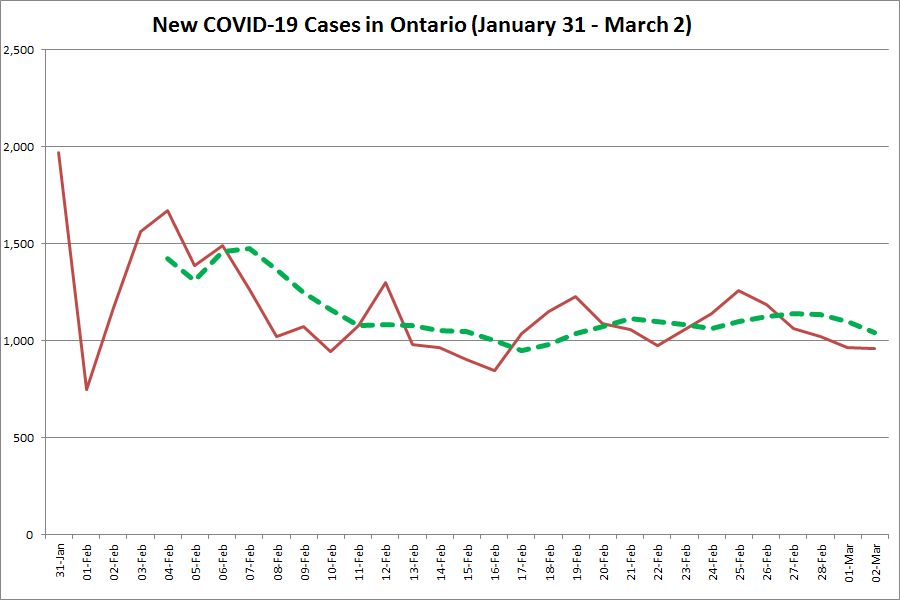
Today, Ontario is reporting 958 new cases, with the seven-day average of daily cases decreasing by 14 to 1,084. There are 10 new cases of the B.1.1.7 UK variant, for a total of 552, and no new cases of other variants of concern.

In the greater Kawarthas region, there are 10 new cases to report and an additional 11 cases resolved, with the number of active cases across the region decreasing by 1 to 109.

Advertisement - content continues below


Most of today’s new cases are in Toronto (249) and Peel (164).

There are double-digit increases in York (92), Ottawa (57), Hamilton (47), Waterloo (46), Durham (41), Thunder Bay (30), Middlesex-London (28), Niagara (23), Sudbury (22), Windsor-Essex (21), Halton (20), Peterborough (18), Simcoe Muskoka (18), Brant (17), Eastern Ontario (13), and Wellington-Dufferin-Guelph (12), with a smaller increase in Leeds, Grenville & Lanark (8).

The remaining 15 health units are reporting 5 or fewer new cases, with 3 health units reporting no new cases at all.

Of today’s new cases, 57% are among people 39 and younger, with the highest number of cases (370) among people ages 20-39 followed by 256 cases among people ages 40-59.

With 1,090 more cases resolved since yesterday, the percentage of resolved cases has increased by 0.1% to 94.3%. The average positivity rate across Ontario has decreased by 0.5% from yesterday to 2.4%, meaning that 24 out of every 1,000 tests performed were positive for COVID-19 on March 2.

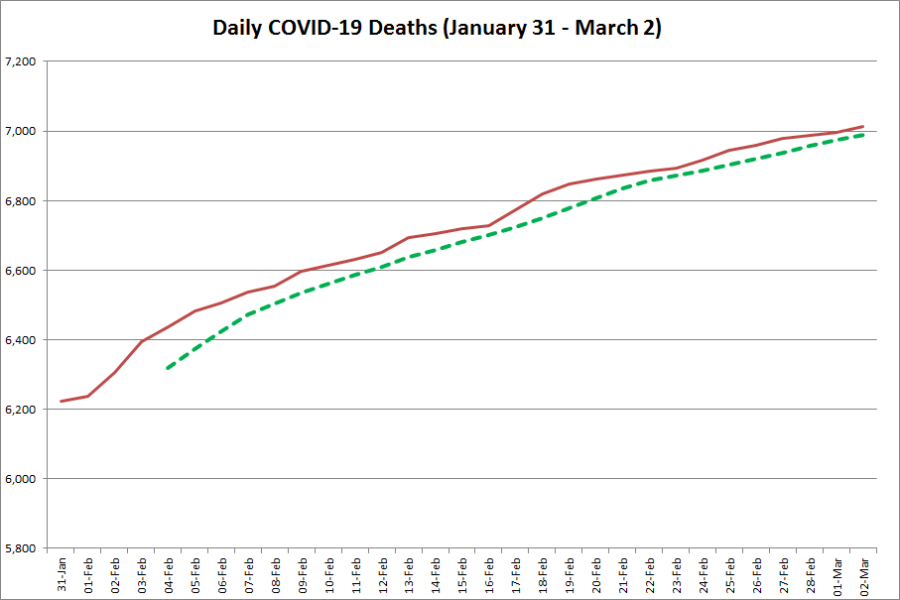
Ontario is reporting 17 new COVID-19 deaths today, including 2 new deaths in a long-term care homes. Ontario has averaged 17 new daily deaths over the past week (an increase of 1 from yesterday).

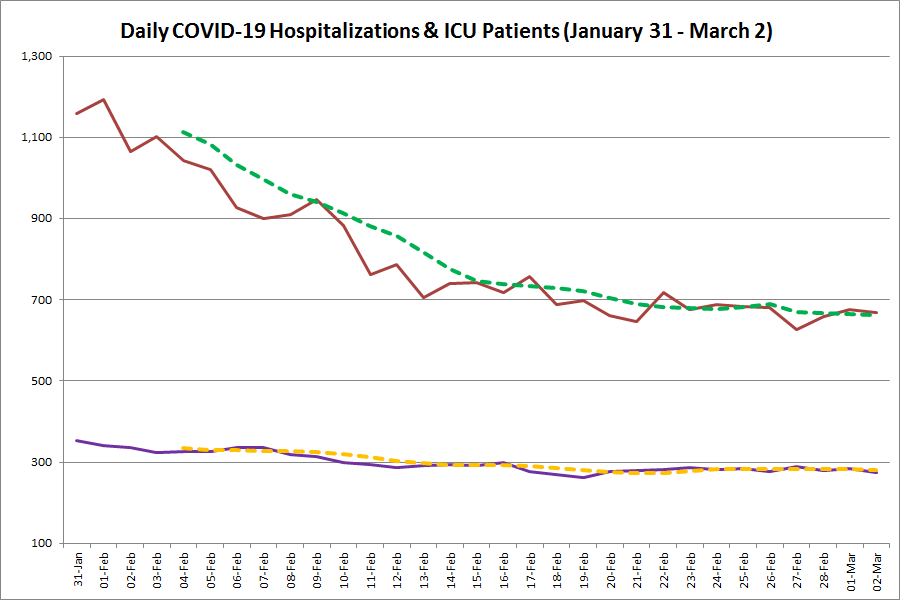
Hospitalizations have decreased by 9 from yesterday to 668, with the number of patients with COVID-19 in ICUs decreasing by 10 from yesterday to 274, and the number of patients with COVID-19 on ventilators decreasing by 1 from yesterday to 188.

A total of 52,613 tests were completed yesterday, with the backlog of tests under investigation increasing by 12,065 to 43,139.

A total of 754,419 doses of vaccine have now been administered, an increase of 27,398 from yesterday, with 266,710 people fully vaccinated with both doses of vaccine, an increase of 1,814 from yesterday, representing 1.81% of Ontario’s population.

There are 160 new cases in Ontario schools, a decrease of 102 from yesterday, including 138 student cases, 21 staff cases, and 1 case among an unidentified person. There are 25 new cases in licensed child care settings in Ontario, a decrease of 16 from yesterday, with 16 cases among children and 9 cases among staff.

Advertisement - content continues below


In the greater Kawarthas region, there are 10 new cases to report, including 4 in Peterborough, 4 in Hastings Prince Edward, 1 in Kawartha Lakes, and 1 in Northumberland. There are no new cases in Haliburton.

In Peterborough, the total case count has increased by 6 since yesterday, but the health unit is reporting only 4 new cases in the last 24 hours. There are now 27 presumed cases of COVID-19 variants of concern in Peterborough.

An additional 11 cases have been resolved, including 5 in Peterborough, 2 in Northumberland, 2 in Kawartha Lakes, and 2 in Hastings Prince Edward.

There are currently 109 active cases in the greater Kawarthas region, a decrease of 1 from yesterday, including 63 in Peterborough, 22 in Hastings Prince Edward (1 in Quinte West, 16 in Belleville, 3 in Tyendinaga & Deseronto, 1 in Prince Edward County, and 1 in Tyendinaga Mohawk Territory), 15 in Northumberland, and 9 in Kawartha Lakes. There are no active cases in Haliburton.

Since the pandemic began in the greater Kawarthas region, there have been 676 confirmed positive cases in the Peterborough area (604 resolved with 9 deaths), 538 in the City of Kawartha Lakes (487 resolved with 55 deaths), 444 in Northumberland County (418 resolved with 11 deaths), 51 in Haliburton County (51 resolved with no deaths), and 424 in Hastings and Prince Edward counties (396 resolved with 6 deaths). The most recent 2 deaths were reported in Kawartha Lakes on February 23.

The provincial data in this report is pulled from Ontario’s integrated Public Health Information System (iPHIS) at 12 p.m. the previous day. Data from local health units is more current and is usually reflected in the provincial data the following day. There may be discrepancies between the Ontario data reported today (which is from yesterday) and the local health unit data reported today (which is from today).

Advertisement - content continues below


Peterborough Public Health

Peterborough Public Health’s service area is the City and County of Peterborough and the Hiawatha and Curve Lake First Nations.

The health unit provides daily reports, including on weekends, excluding statutory holidays.

Confirmed positive: 676 (increase of 6)*
Confirmed variants of concern cases: 1 (no change)
Presumed variants of concern cases: 27 (increase of 9)
Active cases: 63 (increase of 1)
Close contacts: 241 (increase of 24)
Deaths: 9 (no change)
Resolved: 604 (increase of 5)
Hospitalizations (total to date): 24 (no change)**
Total tests completed: Over 43,750 (increase of 50)
Outbreaks: Empress Gardens retirement home, Severn Court Student Residence (no change)
Vaccine doses administered: 1,136 (no change)

*While the total case count has increased by 6 since yesterday, the health unit is reporting 4 new cases in the last 24 hours.

**As of March 2, Peterborough Regional Health Centre is reporting fewer than 5 patients hospitalized with COVID-19 (no change) and 17 patients transferred from other areas as a result of a provincial directive (no change).


Haliburton, Kawartha, Pine Ridge District Health Unit

The Haliburton, Kawartha, Pine Ridge District Health Unit’s service area is the City of Kawartha Lakes, Northumberland County, and Haliburton County.

The health unit provides reports from Monday to Saturday, excluding Sundays and statutory holidays.

Confirmed positive: 1,033, including 538 in Kawartha Lakes, 444 in Northumberland, and 51 in Haliburton (increase of 2, including 1 in Kawartha Lakes and 1 in Northumberland)*
Cases with N501Y mutation: 14, including 2 in Kawartha Lakes and 12 in Northumberland (no change)**
Active cases: 24, including 9 in Kawartha Lakes and 15 in Northumberland (decrease of 3, including 1 in Kawartha Lakes and 2 in Northumberland)
Probable cases: 0 (no change)
High-risk contacts: 82, including 28 in Kawartha Lakes, 51 in Northumberland, and 1 in Haliburton (net decrease of 18)***
Hospitalizations (total to date): 44, including 27 in Kawartha Lakes, 15 in Northumberland, and 2 in Haliburton (no change)****
Deaths (including among probable cases): 66, including 55 in Kawartha Lakes and 11 in Northumberland (no change)
Resolved: 956, including 487 in Kawartha Lakes, 418 in Northumberland, 51 in Haliburton (increase of 4, including 2 in Kawartha Lakes and 2 in Northumberland)
Tests completed: 145,475 (increase of 1,110)
Outbreaks: Regency long-term care home in Port Hope (no change)

*The health unit states that total counts and counts for individual counties may fluctuate from previously reported counts as cases are transferred to or from the health unit based on case investigation details and routine data cleaning.

**The N501Y mutation has been identified in variants of concern including the B.1.1.7 UK variant, the B.1.351 South Africa variant, and the P.1 Brazilian variant.

***This total includes an additional 2 high-risk contacts directly followed up through the Public Health Ontario contact tracing process that are missing the contacts’ county.

****As of March 3, Ross Memorial Hospital in Lindsay reports no patients hospitalized with COVID-19 (no change).


Hastings Prince Edward Public Health

Hastings Prince Edward Public Health’s service area is Hastings County (including Bancroft) and Prince Edward County.

The health unit provides daily reports, including on weekends, excluding statutory holidays.

Confirmed positive: 424 (increase of 4)
Active cases: 22 (increase of 1)
Deaths: 6 (no change)
Currently hospitalized: 0 (no change)
Currently hospitalized and in ICU: 0 (no change)
Currently hospitalized and in ICU on ventilator (total to date): 0 (no change)
Resolved: 396 (increase of 2)
Tests completed: 66,292 (increase of 8)
Vaccines administered: 3,727 (increase of 1,541)
Outbreaks: Unidentified workplace in Central Hastings, unidentified workplace in Belleville (no change)

Advertisement - content continues below


Province of Ontario

Confirmed positive: 303,763 (increase of 958)
Total COVID-19 variant cases: 552 of B.1.1.7 UK variant (increase of 10); 27 of B.1.351 South Africa variant (no change); 3 of P.1 Brazilian variant (no change)
7-day average of daily new cases: 1,084 (decrease of 14)
Resolved: 286,352 (increase of 1,090, 94.3% of all cases)
Positivity rate: 2.4% (decrease of 0.5%)
Hospitalizations: 668 (decrease of 9)
Hospitalizations in ICU: 274 (decrease of 10)
Hospitalizations in ICU on ventilator: 188 (decrease of 1)
Deaths: 7,014 (increase of 17)
7-day average of daily new deaths: 17 (increase of 1)
Deaths of residents in long-term care homes: 3,869 (increase of 2)
Total tests completed: 11,163,548 (increase of 52,613)
Tests under investigation: 43,139 (increase of 12,065)
Vaccination doses administered: 754,419 (increase of 27,398)
People fully vaccinated (two doses): 266,710 (increase of 1,814), 1.81% of Ontario’s population (est. 70-90% required for herd immunity)
COVID-19 cases in Ontario from January 31 - March 2, 2021. The red line is the number of new cases reported daily, and the dotted green line is a five-day moving average of new cases. (Graphic: kawarthaNOW.com)
COVID-19 cases in Ontario from January 31 – March 2, 2021. The red line is the number of new cases reported daily, and the dotted green line is a five-day moving average of new cases. (Graphic: kawarthaNOW.com)
COVID-19 tests completed in Ontario from January 31 - March 2, 2021. The red line is the number of tests completed daily, and the dotted green line is a five-day moving average of tests completed. (Graphic: kawarthaNOW.com)
COVID-19 tests completed in Ontario from January 31 – March 2, 2021. The red line is the number of tests completed daily, and the dotted green line is a five-day moving average of tests completed. (Graphic: kawarthaNOW.com)
COVID-19 hospitalizations and ICU admissions in Ontario from January 31 - March 2, 2021. The red line is the daily number of COVID-19 hospitalizations, the dotted green line is a five-day moving average of hospitalizations, the purple line is the daily number of patients with COVID-19 in ICUs, and the dotted orange line is a five-day moving average of is a five-day moving average of patients with COVID-19 in ICUs. (Graphic: kawarthaNOW.com)
COVID-19 hospitalizations and ICU admissions in Ontario from January 31 – March 2, 2021. The red line is the daily number of COVID-19 hospitalizations, the dotted green line is a five-day moving average of hospitalizations, the purple line is the daily number of patients with COVID-19 in ICUs, and the dotted orange line is a five-day moving average of is a five-day moving average of patients with COVID-19 in ICUs. (Graphic: kawarthaNOW.com)
COVID-19 deaths in Ontario from January 31 - March 2, 2021. The red line is the cumulative number of daily deaths, and the dotted green line is a five-day moving average of daily deaths. (Graphic: kawarthaNOW.com)
COVID-19 deaths in Ontario from January 31 – March 2, 2021. The red line is the cumulative number of daily deaths, and the dotted green line is a five-day moving average of daily deaths. (Graphic: kawarthaNOW.com)
COVID-19 vaccine doses administered in Ontario from January 31 - March 2, 2021. The red line is the cumulative number of daily doses administered, and the dotted green line is a five-day moving average of daily doses. (Graphic: kawarthaNOW.com)
COVID-19 vaccine doses administered in Ontario from January 31 – March 2, 2021. The red line is the cumulative number of daily doses administered, and the dotted green line is a five-day moving average of daily doses. (Graphic: kawarthaNOW.com)


For more information about COVID-19 in Ontario, visit covid-19.ontario.ca.

ARREST MADE – Kawartha Lakes police seek suspect in knifepoint robbery of Lindsay business

The suspect in a March 3, 2021 robbery of a Lindsay Street South business captured on surveillance footage. (Police-supplied photo)

Kawartha Lakes police are seeking a suspect in a robbery in Lindsay in the early morning of Wednesday (March 3).

At 1:19 a.m. on Wednesday, police responded to a Lindsay Street South business reporting a robbery.

A lone suspect had entered the store and proceeded behind the counter and, while holding a knife, demanded money. The suspect then removed a quantity of cash from the cash register and left the store.

Advertisement - content continues below


The suspect is described as a white male, approximately 5’7″, wearing black running shoes, grey track pants, a black hooded jacket, black sweater, black mask, and a black baseball cap with a team Canada hockey logo on the front. He was carrying a black backpack.

Anyone with information about this incident is asked to call the Kawartha Lakes Police Service at 705-324-5252. If you want to remain anonymous, contact Crime Stoppers at 1-800-222-TIPS (8477) or online at www.khcrimestoppers.com.

The suspect in a March 3, 2021 robbery of a Lindsay Street South business captured on surveillance footage. (Police-supplied photo)

Women Breaking Barriers to accelerate 10 more female-led companies in Peterborough and the Kawarthas

The 10 participants of the second cohort of the Women Breaking Barriers business accelerator program for female-led companies in STEM and social innovation participating in a Zoom meeting with staff from the Innovation Cluster Peterborough and The Kawarthas, which administers the pilot program with funding from RBC and the Ontario Trillium Foundation. (Photo courtesy of Innovation Cluster)

Ten more female entrepreneurs are going to benefit from the Innovation Cluster’s Women Breaking Barriers program.

On Tuesday (March 2), the Innovation Cluster announced the 10 participants in the second cohort of the six-month business acceleration program, which is designed specifically to support women in science, technology, engineering, mathematics (STEM) and social innovation.

Statistics show that only four per cent of venture capital funding goes toward women-led companies. The situation is even worse for female founders of colour, who get less than one per cent of venture capital each year.

Advertisement - content continues below


Through the Women Breaking Barriers program, the Innovation Cluster is working to improve these numbers through training sessions, weekly mentorship with advisors, peer-to-peer learning, community networking, and more.

The 10 female entrepreneurs in the second cohort of the program are:

  • Catherine Howe, founder of Tamarack, an initiative that merges the farm-to-table movement with youth-based social agriculture and wellness mentorship.
  • Donna Enright, founder of ShopCloseBuy, an innovative community e-commerce and marketing platform.
  • Donna Masters, founder of Monketivity, a platform to provide transparent and factual information on health and wellness topics.
  • Joanne Ilaqua, founder of Mamasoup, a mobile app that provides a support ecosystem for mothers.
  • Kristen Corrigan, founder of Peer Support Online, an online platform for peer support moderated groups or one-to-one chat sessions.
  • Lee Hamr, who is creating a distribution system for cider apples and juice in Ontario while creating training opportunities for youth.
  • Maxyme Cloutier, founding member of Ghoster33 R&D Inc., which aims to create biodegradable smoking equipment.
  • Natalie Ambler, director at OptiSolve Ltd., which provides engineering technology to advance cleaning and disinfecting productivity for improved environmental health and safety.
  • Natalie Duncan, founder of Bug Mars, which aims to create self-sustained, modular, automated, and attractive cricket farms for a range of applications across home and commercial uses.
  • Nicole St.Denis, who is creating an interactive directory service website and mobile app platform where small and medium-sized businesses are banding together to end community hunger.

Women Breaking Barriers is a one-year pilot program supported by RBC and the Ontario Trillium Foundation. The first six-month cohort of the program ran from September 2020 to February 2021. The first 10 participants were able to pitch their businesses to the Peterborough Region Angel Network, with multiple companies moving forward with discussions of investment.

One of the participants in the first cohort was Robin Linton, co-founder of Undu Wearables, which produces a modern wearable solution that leverages heat to combat pain caused by menstrual cramps.

“We launched our business during the fourth month,” Linton says. “The access to knowledge leaders, mentors with diverse experiences, templates, and resources all helped to successfully launch our business.”

Advertisement - content continues below


“To ask for help and to receive it, to talk about femtech and menstrual pain and not be met with uncomfortable faces, to be vulnerable and collaborative — these are just some of the invaluable benefits to working with women-identified folks in the inaugural cohort of this incredible accelerator program,” Linton adds.

Based on the program’s success to date, the Innovation Cluster hopes to be able to extend Women Breaking Barriers beyond the one-year pilot.

“This targeted programming is proving to be far more important for the female-led companies than we had even initially expected,” says Rosalea Terry, program lead and marketing manager and senior innovation specialist with the Innovation Cluster.

“This accelerator program is changing the lives of female founders and the trajectory of their companies,” she adds. “It does so by giving them easy access to financing, the proper resources to become successful, and a group of like-minded founders to weather the storm of entrepreneurship with.”

Fleming College president vows ‘harshest possible sanctions’ for students involved in COVID-19 outbreak

All in-person classes and activities at the Sutherland Campus of Fleming College have been cancelled until March 15, 2021, affecting around 700 students, as the result of a COVID-19 outbreak originating at Severn Court Student Residence. The privately owned student housing complex is across the road from the Sutherland Campus and many of the 200 students living there attend Fleming College. (Photo: Fleming College / YouTube)

Fleming College intends to impose the “harshest possible sanctions” — up to and including suspension or expulsion — on the students who were involved in the social gatherings at Severn Court Student Residence on February 20 that has resulted in the largest-ever COVID-19 outbreak in the Peterborough area.

The college’s president Maureen Adamson made the statement in a letter sent to all college staff and students on Wednesday (March 3).

“To the students who were part of the unauthorized gatherings, we are extremely disappointed in your actions,” Adamson writes. “Your behaviours are inconsistent with our values and with our expectations of all our students, regardless of the fact that these actions took place in an off-campus setting.”

Advertisement - content continues below


As of Tuesday (March 2), 34 people — including 29 Fleming College students and five Trent University students — have tested positive for COVID-19 as a result of social gatherings at Severn Court Student Residence, which is privately owned and operated and not affiliated with Fleming College. Around 200 students live at the six-building housing complex.

The outbreak has resulted in Fleming College cancelling all in-person classes and activities at the Sutherland Campus until Monday, March 15th, affecting around 700 students.

“For those students who are proven to have been involved in the gatherings of February 20 that led to the outbreak, we intend to impose the harshest possible sanctions allowed under our Student Rights and Responsibilities Policy in proportion to the role played by each participant,” Adamson writes. “This could include penalties up to and including suspension or expulsion.”

Adamson writes the college continues to cooperated with Peterborough Public Health’s investigation into the outbreak, “and will offer our full cooperation with Peterborough Police Service should that become necessary.”

According to Peterborough Public Health, the students who attended the social gatherings are enrolled in trades programs and health care worker programs, primarily personal support worker programs, leading to a further rebuke from Adamson.

Advertisement - content continues below


“For those students training for careers in healthcare professions, there are even higher expectations and professional standards that are expected to be upheld,” Adamson writes. “It is obvious that a group of students chose to behave in an irresponsible manner that has put many members of our community at risk.”

“The vast majority of our students have adhered to safe practice guidelines for almost one full year,” Adamson adds. “We have not had a case of COVID-19 transmission occur at any of our campuses. This makes the behaviour of this small group of students even more disheartening and the apparent lack of the attention to safety protocols at a large complex populated by students so upsetting.”

For students not involved in the gatherings who have been affected by the outbreak, Adamson states, “We pledge our full support to ensure the successful completion of your studies”, adding “We will offer additional academic and personal counselling services and we will ensure that all learning outcomes for your program are achieved without extending the semester.”

“We recognize that the general public and our valued partners are also very disappointed,” Adamson concludes. “As we take action to investigate and hold those responsible accountable for their actions, we must also come together to support each other.”

Ontario reports 966 new COVID-19 cases, including 18 in greater Kawarthas region

As of March 2, 2021, there have been 34 positive cases among Fleming College and Trent University students in a COVID-19 outbreak that originated from social gatherings at Severn Court Student Residence in Peterborough. (Photo: Severn Court Management Company)

Here’s an update on COVID-19 cases in Ontario as well as in the greater Kawarthas region.

Today, Ontario is reporting 966 new cases, with the seven-day average of daily cases decreasing by 1 to 1,098. There are 7 new cases of the B.1.1.7 UK variant, for a total of 542, and no new cases of other variants of concern.

In the greater Kawarthas region, there are 18 new cases to report and an additional 12 cases resolved, with the number of active cases across the region increasing by 8 to 110. Most of the new cases and increase in active cases are in Peterborough, due to an outbreak at Severn Court Student Residence that has infected 34 students as of March 1.

Advertisement - content continues below


Most of today’s new cases are in Toronto (253) and Peel (223).

There are double-digit increases in York (99), Ottawa (64), Waterloo (46), Thunder Bay (39), Simcoe Muskoka (36), Durham (34), Halton (32), Windsor-Essex (23), Hamilton (23), Sudbury (19), Brant (13), Wellington-Dufferin-Guelph (13), and Lambton (11), with smaller increases in Eastern Ontario (7) and Middlesex-London (6).

The remaining 17 health units are reporting 5 or fewer new cases, with 8 health units reporting no new cases at all.

Of today’s new cases, 59% are among people 39 and younger, with the highest number of cases (389) among people ages 20-39 followed by 249 cases among people ages 40-59.

With 979 more cases resolved since yesterday, the percentage of resolved cases remains unchanged at 94.2%. The average positivity rate across Ontario has decreased by 0.2% from yesterday to 2.9%, meaning that 29 out of every 1,000 tests performed were positive for COVID-19 on March 1.

Ontario is reporting 11 new COVID-19 deaths today, including 2 new deaths in a long-term care homes. Ontario has averaged 16 new daily deaths over the past week (no change from yesterday).

Hospitalizations have increased by 17 from yesterday to 677, with the number of patients with COVID-19 in ICUs increasing by 4 from yesterday to 284, and the number of patients with COVID-19 on ventilators increasing by 14 from yesterday to 189.

A total of 30,767 tests were completed yesterday, with the backlog of tests under investigation increasing by 17,658 to 31,074.

A total of 727,021 doses of vaccine have now been administered, an increase of 22,326 from yesterday, with 264,896 people fully vaccinated with both doses of vaccine, an increase of 1,682 from yesterday, representing 1.80% of Ontario’s population.

An estimated 70-90% of the population must be immunized to achieve herd immunity; at the current vaccination rate (0.1% per day), it will take more than 22 months for Ontario to vaccinate 70% of the population.

There are 262 new cases in Ontario schools, an increase of 146 from yesterday, including 231 student cases, 30 staff cases and 1 case among an unidentified person. There are 41 new cases in licensed child care settings in Ontario, an increase of 28 from yesterday, with 33 cases among children and 8 cases among staff. Note: cases reported on Tuesdays include the total number of cases reported from Friday afternoon to Monday afternoon.

Advertisement - content continues below


In the greater Kawarthas region, there are 18 new cases to report, including 14 in Peterborough, 3 in Hastings Prince Edward, and 1 in Kawartha Lakes. There are no new cases in Northumberland or Haliburton.

Most of the new cases in Peterborough are related to a COVID-19 outbreak that originated from social gatherings at Severn Court Student Residence in Peterborough. As of March 2, there have been 34 positive cases among Fleming College and Trent University students.

An additional 12 cases have been resolved, including 4 in Northumberland, 4 in Peterborough, 2 in Kawartha Lakes, and 2 in Hastings Prince Edward.

There are currently 110 active cases in the greater Kawarthas region, an increase of 8 from yesterday, including 62 in Peterborough, 21 in Hastings Prince Edward (1 in Quinte West, 14 in Belleville, 4 in Tyendinaga & Deseronto, 2 in Tyendinaga Mohawk Territory), 17 in Northumberland, and 10 in Kawartha Lakes. There are no active cases in Haliburton.

Since the pandemic began in the greater Kawarthas region, there have been 670 confirmed positive cases in the Peterborough area (599 resolved with 9 deaths), 537 in the City of Kawartha Lakes (485 resolved with 55 deaths), 444 in Northumberland County (416 resolved with 11 deaths), 51 in Haliburton County (51 resolved with no deaths), and 421 in Hastings and Prince Edward counties (394 resolved with 6 deaths). The most recent 2 deaths were reported in Kawartha Lakes on February 23.

The provincial data in this report is pulled from Ontario’s integrated Public Health Information System (iPHIS) at 12 p.m. the previous day. Data from local health units is more current and is usually reflected in the provincial data the following day. There may be discrepancies between the Ontario data reported today (which is from yesterday) and the local health unit data reported today (which is from today).

Advertisement - content continues below


Peterborough Public Health

Peterborough Public Health’s service area is the City and County of Peterborough and the Hiawatha and Curve Lake First Nations.

The health unit provides daily reports, including on weekends, excluding statutory holidays.

Confirmed positive: 670 (increase of 14)*
Confirmed variants of concern cases: 1 (no change)
Presumed variants of concern cases: 18 (increase of 18)
Active cases: 62 (increase of 12)
Close contacts: 217 (increase of 3)
Deaths: 9 (no change)
Resolved: 599 (increase of 4)
Hospitalizations (total to date): 24 (no change)**
Total tests completed: Over 43,700 (increase of 50)
Outbreaks: Empress Gardens retirement home, Severn Court Student Residence (no change)
Vaccine doses administered: 1,136 (no change)

*Most of today’s new cases are related to an outbreak at Severn Court Student Residence.

**As of March 1, Peterborough Regional Health Centre is reporting fewer than 5 patients hospitalized with COVID-19 (no change) and 17 patients transferred from other areas as a result of a provincial directive (no change).


Haliburton, Kawartha, Pine Ridge District Health Unit

The Haliburton, Kawartha, Pine Ridge District Health Unit’s service area is the City of Kawartha Lakes, Northumberland County, and Haliburton County.

The health unit provides reports from Monday to Saturday, excluding Sundays and statutory holidays.

Confirmed positive: 1,032, including 537 in Kawartha Lakes, 444 in Northumberland, and 51 in Haliburton (increase of 1 in Kawartha Lakes)*
Cases with N501Y mutation: 14, including 2 in Kawartha Lakes and 12 in Northumberland (increase of 2 in Northumberland)**
Active cases: 27, including 10 in Kawartha Lakes and 17 in Northumberland (decrease of 5, including 1 in Kawartha Lakes and 4 in Northumberland)
Probable cases: 0 (decrease of 1 in Northumberland)
High-risk contacts: 100, including 43 in Kawartha Lakes, 53 in Northumberland, and 1 in Haliburton (net decrease of 3)***
Hospitalizations (total to date): 44, including 27 in Kawartha Lakes, 15 in Northumberland, and 2 in Haliburton (no change)****
Deaths (including among probable cases): 66, including 55 in Kawartha Lakes and 11 in Northumberland (no change)
Resolved: 952, including 485 in Kawartha Lakes, 416 in Northumberland, 51 in Haliburton (increase of 6, including 2 in Kawartha Lakes and 4 in Northumberland)
Tests completed: 144,365 (increase of 1,297)
Outbreaks: Regency long-term care home in Port Hope (no change)

*The health unit states that total counts and counts for individual counties may fluctuate from previously reported counts as cases are transferred to or from the health unit based on case investigation details and routine data cleaning.

**The N501Y mutation has been identified in variants of concern including the B.1.1.7 UK variant, the B.1.351 South Africa variant, and the P.1 Brazilian variant.

***This total includes an additional 3 high-risk contacts directly followed up through the Public Health Ontario contact tracing process that are missing the contacts’ county.

****As of March 2, Ross Memorial Hospital in Lindsay reports no patients hospitalized with COVID-19 (decrease of 1).


Hastings Prince Edward Public Health

Hastings Prince Edward Public Health’s service area is Hastings County (including Bancroft) and Prince Edward County.

The health unit provides daily reports, including on weekends, excluding statutory holidays.

Confirmed positive: 421 (increase of 3)
Active cases: 21 (increase of 1)
Deaths: 6 (no change)
Currently hospitalized: 0 (no change)
Currently hospitalized and in ICU: 0 (no change)
Currently hospitalized and in ICU on ventilator (total to date): 0 (no change)
Resolved: 394 (increase of 2)
Tests completed: 66,284 (increase of 44)
Vaccines administered: 2,186 (no change)
Outbreaks: Unidentified workplace in Central Hastings, unidentified workplace in Belleville (no change)

Advertisement - content continues below


Province of Ontario

Confirmed positive: 302,805 (increase of 966)
Total COVID-19 variant cases: 542 of B.1.1.7 UK variant (increase of 7); 27 of B.1.351 South Africa variant (no change); 3 of P.1 Brazilian variant (no change)
7-day average of daily new cases: 1,098 (decrease of 1)
Resolved: 285,262 (increase of 979, 94.2% of all cases)
Positivity rate: 2.9% (decrease of 0.2%)
Hospitalizations: 677 (increase of 17)
Hospitalizations in ICU: 284 (increase of 4)
Hospitalizations in ICU on ventilator: 189 (increase of 14)
Deaths: 6,997 (increase of 11)
7-day average of daily new deaths: 16 (no change)
Deaths of residents in long-term care homes: 3,867 (increase of 2)
Total tests completed: 11,110,935 (increase of 30,767)
Tests under investigation: 31,074 (increase of 17,658)
Vaccination doses administered: 727,021 (increase of 22,326)
People fully vaccinated (two doses): 264,896 (increase of 1,682), 1.80% of Ontario’s population (est. 70-90% required for herd immunity)
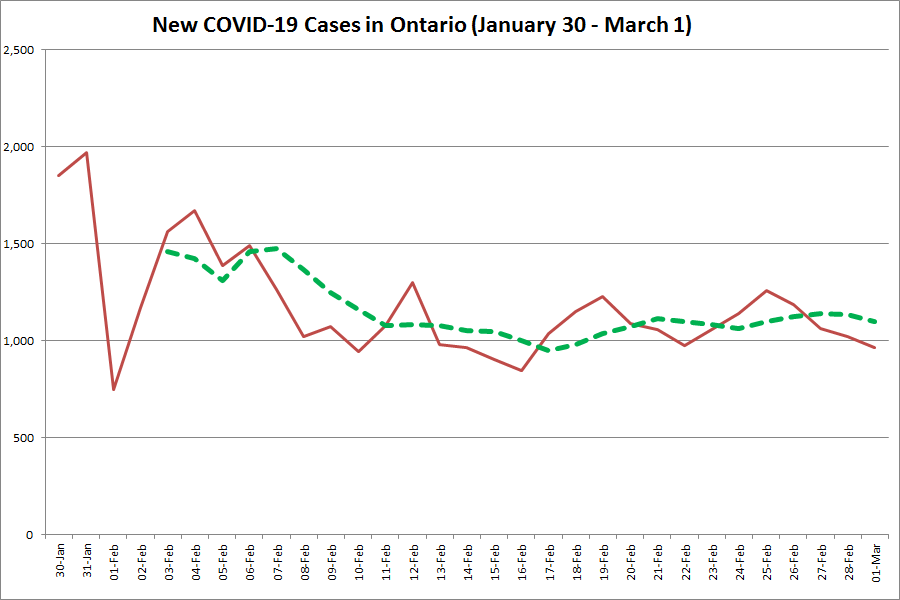
COVID-19 cases in Ontario from January 30 - March 1, 2021. The red line is the number of new cases reported daily, and the dotted green line is a five-day moving average of new cases. (Graphic: kawarthaNOW.com)
COVID-19 cases in Ontario from January 30 – March 1, 2021. The red line is the number of new cases reported daily, and the dotted green line is a five-day moving average of new cases. (Graphic: kawarthaNOW.com)
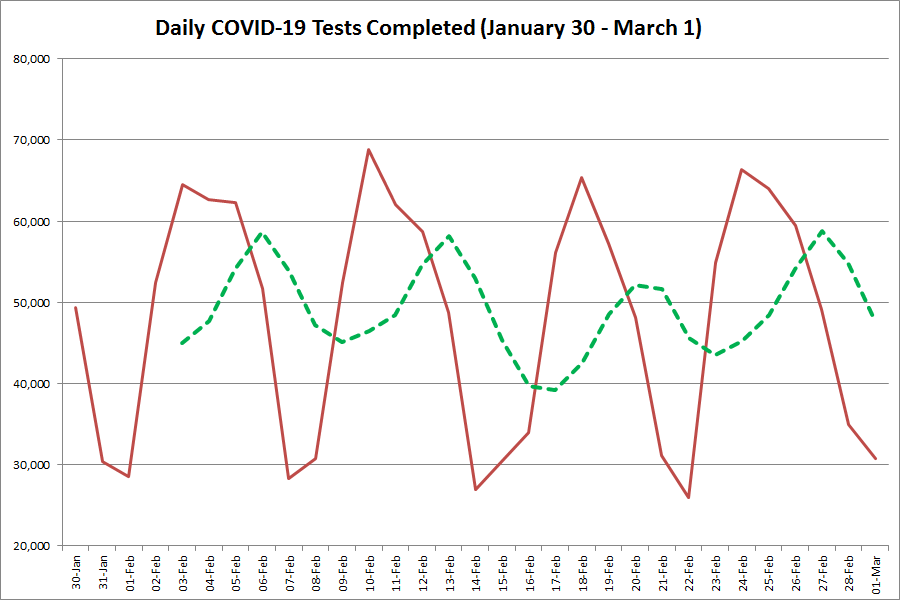
COVID-19 tests completed in Ontario from January 30 - March 1, 2021. The red line is the number of tests completed daily, and the dotted green line is a five-day moving average of tests completed. (Graphic: kawarthaNOW.com)
COVID-19 tests completed in Ontario from January 30 – March 1, 2021. The red line is the number of tests completed daily, and the dotted green line is a five-day moving average of tests completed. (Graphic: kawarthaNOW.com)
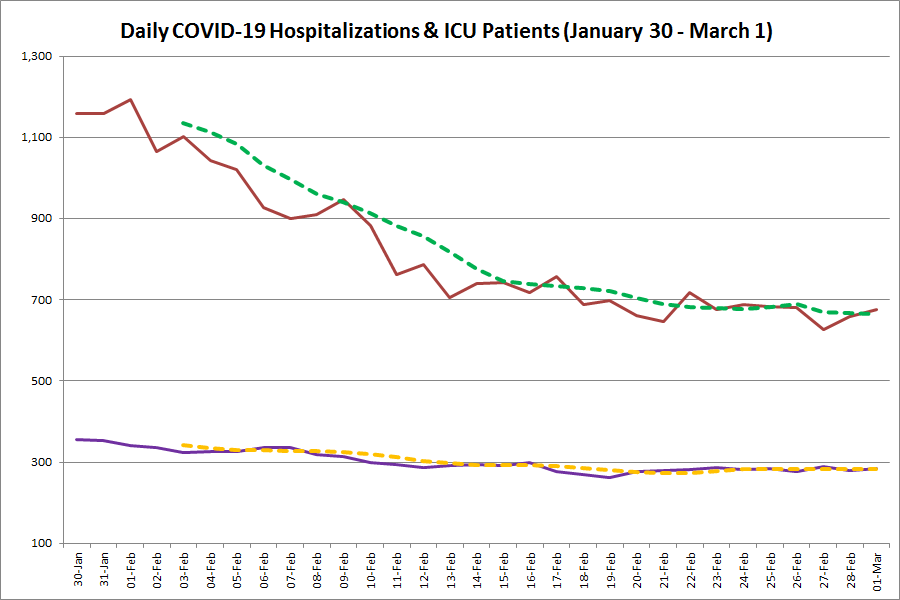
COVID-19 hospitalizations and ICU admissions in Ontario from January 30 - March 1, 2021. The red line is the daily number of COVID-19 hospitalizations, the dotted green line is a five-day moving average of hospitalizations, the purple line is the daily number of patients with COVID-19 in ICUs, and the dotted orange line is a five-day moving average of is a five-day moving average of patients with COVID-19 in ICUs. (Graphic: kawarthaNOW.com)
COVID-19 hospitalizations and ICU admissions in Ontario from January 30 – March 1, 2021. The red line is the daily number of COVID-19 hospitalizations, the dotted green line is a five-day moving average of hospitalizations, the purple line is the daily number of patients with COVID-19 in ICUs, and the dotted orange line is a five-day moving average of is a five-day moving average of patients with COVID-19 in ICUs. (Graphic: kawarthaNOW.com)
COVID-19 deaths in Ontario from January 30 - March 1, 2021. The red line is the cumulative number of daily deaths, and the dotted green line is a five-day moving average of daily deaths. (Graphic: kawarthaNOW.com)
COVID-19 deaths in Ontario from January 30 – March 1, 2021. The red line is the cumulative number of daily deaths, and the dotted green line is a five-day moving average of daily deaths. (Graphic: kawarthaNOW.com)
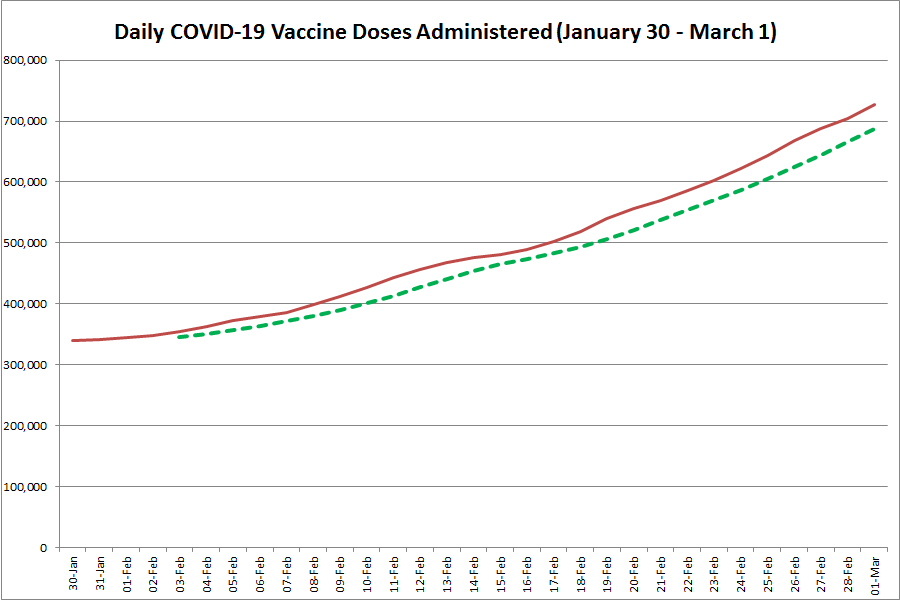
COVID-19 vaccine doses administered in Ontario from January 30 - March 1, 2021. The red line is the cumulative number of daily doses administered, and the dotted green line is a five-day moving average of daily doses. (Graphic: kawarthaNOW.com)
COVID-19 vaccine doses administered in Ontario from January 30 – March 1, 2021. The red line is the cumulative number of daily doses administered, and the dotted green line is a five-day moving average of daily doses. (Graphic: kawarthaNOW.com)


For more information about COVID-19 in Ontario, visit covid-19.ontario.ca.

Cases jump to 34 in COVID-19 outbreak at Severn Court Student Residence in Peterborough

Severn Court Student Residence at 555 Wilfred Drive in Peterborough provides off-campus student housing primarily to Fleming College students, as well as students of Seneca College Aviation and Trent University. (Photo: Severn Court Management Company)

A major COVID-19 outbreak at the Severn Court Student Residence in Peterborough has now resulted in 34 positive cases detected as of 10 a.m. Tuesday (March 2) — an increase of 11 in the last two days.

Twenty-nine of the 34 people who have tested positive are Fleming College students, while the remaining five are Trent University students who attended a gathering. Those five students are now self-isolating at Trent’s Otonabee College.

Of particular concern is three of the cases screening positive for a much more transmissible COVID-19 variant of concern, although the specific variant or variants involved are yet to be determined.

Advertisement - content continues below


During a Peterborough Public Health media briefing held Tuesday, medical officer of health Dr. Rosana Salvaterra said the Severn Court outbreak — the largest COVID-19 outbreak in the Peterborough region to date — has also led to the monitoring of some 200 identified close contacts of the positive cases.

The outbreak is connected to at least one large gatherings held at the privately owned student housing complex on Saturday, February 20th.

“We’re getting reports that there were actually several parties in several of the buildings,” said Dr. Salvaterra, adding “We understand they were students who are in trades programs and students in health care worker programs, which is very disappointing.”

Severn Court Student Residence is located in a neighbourhood directly across from Fleming College in Peterborough. Approximately 200 students live in six separate buildings at the privately owned housing complex. (Photo: Google Maps)

A Section 22 class order issued by Dr. Salvaterra has closed the six-building Wilfred Drive student residence to visitors and requires by law that all those living at the 200-student complex self-isolate. Meanwhile all in-person instruction of some 700 students at Fleming’s Sutherland Campus has been suspended.

“This order defines two groups and requires them to follow specific instructions,” explained Dr. Salvaterra.

“Group A consists of the known positive cases and high risk contacts. They are required to stay in their rooms. No exceptions. Arrangements have been made to provide them with food and other necessities. Our public health nurses call them every day to check in on them and monitor symptoms.”

“Group B is all the other residents who live there (Severn Court Student Residence). The order requires them to self-isolate and only leave their rooms to get food or medication. This group will be tested by paramedics once the surveillance testing has been set up on site.”

Advertisement - content continues below


Speaking to whether or not charges will be laid against the organizer or organizers of the February social gathering, Dr. Salvaterra said she hasn’t “ruled that out”.

“It will depend on the information we receive from cases and contacts,” she added. “We’re getting more information as the days progress and at some point we may have enough in order to ask the police to intervene.”

Key to any charges being laid, Dr. Salvaterra said, is “enough consistent information” coming forward.

“With this many people, we are getting lots of conflicting information,” Dr. Salvaterra explained.

“Although I am disappointed and can sometimes feel angry, especially when I read some of the social media posts, these students are not typical of the students at Fleming and Trent,” she pointed out. “This is really the actions of a few. If we can identify the people who are responsible for hosting the party, we do have the tools to take action and we will not hesitate.”

“In order to change behaviour, you need more than education,” she added. “There’s a role for enforcement. Given that we’re a year into this pandemic, the time is for enforcement.”

Board of health chair and Selwyn mayor Andy Mitchell was particularly scathing of those who organized or attended the Severn Court gathering.

“I imagine their decision to ignore the rules around masking, the disregard for the need to physically distance, and to pay not attention to the importance of limiting indoor social gatherings didn’t seem like a dangerous thing to do,” Mitchell said. “They were wrong; they were very wrong.”

“What are the consequences? Thirty-four new cases in our community and more sure to come. The spreading of variants of concern into the broader community. The Sutherland Campus at Fleming closed. Placing at risk people they care about. Taking public health resources away from vaccine rollout. If this outbreak requires an escalation in our threat level, it will mean more restrictions for all of us. Our actions have consequences.”

Advertisement - content continues below


One of those consequences, acknowledged Dr. Salvaterra, could be the Ontario government placing the entire region into a more restrictive level of its COVID-19 response framework. That’s not to mention the potential of many more positive cases connected to the outbreak that have not yet been detected.

“That is still a possibility and only time will tell,” she said of the possibility of more cases. “Is this the tip of the iceberg? That’s my worry. We will only know as more people are tested and more results are obtained.”

As for the COVID-19 response framework, which currently sees the region at the “Yellow-Protect” level, a downgrade to the more prohibitive “Orange-Restrict” level requires, as one of the measuring sticks, a weekly positive incidence rate between 25 and 39 new cases. A weekly incidence rate in excess of 40 or more would be a precursor to placement at the “Red-Control” level.

Dr. Salvaterra added a big concern is how many of the positive cases and close contacts circulated in the Peterborough community between February 20th and February 25th, when the first positive cases associated with the gathering was confirmed.

“We could have had a lot of spread occurring before people were aware,” she warned.

Meanwhile, in a written statement, Peterborough-Kawartha MP Maryam Monsef decried the “careless choices” made by those who organized and attended the Severn Court gathering.

Switching topics, Dr. Salvaterra spoke to Peterborough Public Health’s communication with health care practitioners on the vaccination of patients 80 years old and older who are living in the community, as opposed to a congregate senior setting or long-term care home. She said an advisory was issued to doctors on Tuesday morning.

“Those who are considered special populations — if they have allergies to medicine or immune system compromised — can be reaching out to their health care providers now and asking to have a consultation about the vaccine and whether it’s right for them,” explained Peterborough Public Health communications manager Brittany Cadence.

“The other thing the can do is find out who can help them with booking a vaccine appointment, if they don’t have an email address or using a computer poses any challenge. There will be a phone system that people can book appointments through. If they need help now is the time identify who can help them.”

“We understand from the Ministry of Health that the online COVax booking system will be ready on March 15th, which we hope to open up to those who are over 80 (years old),” Cadence added.

Become a #kawarthaNOW fan

34,262FollowersLike
25,931FollowersFollow
17,466FollowersFollow
4,858FollowersFollow
4,052FollowersFollow
3,210FollowersFollow

Sign up for kawarthNOW's Enews

Sign up for our VIP Enews

kawarthaNOW.com offers two enews options to help readers stay in the know. Our VIP enews is delivered weekly every Wednesday morning and includes exclusive giveaways, and our news digest is delivered daily every morning. You can subscribe to one or both.


Submit your event for FREE!

Use our event submission form to post your event on our website — for free. To submit editorial content or ideas, please contact us.