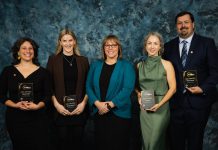
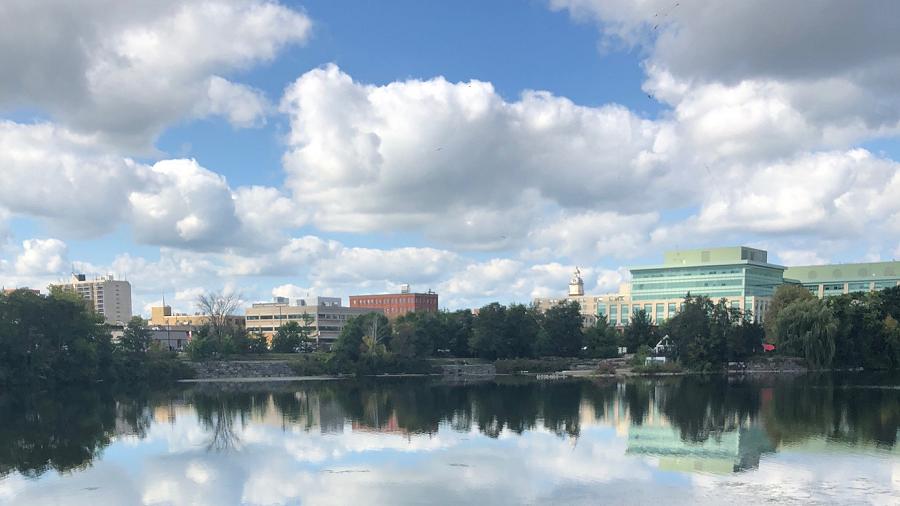
The Municipality of Port Hope recognized local residents who have contributed to the betterment of the community on May 13, 2021 with a virtual ceremony for the 2020 Civic Awards, pre-recorded at the Capitol Theatre and emceed by York Bell-Smith. (Screenshot)
The Municipality of Port Hope celebrated citiens who have contributed to the betterment of the community during a pre-recorded online ceremony for the 2020 Civic Awards on Thursday night (May 13).
“There hasn’t been a more important time in recent history to celebrate and honour the good work being done by our citizens,” said Port Hope Mayor Bob Sanderson. “If this past year has taught us anything, it’s that we rely on our community to get us through some of the tough moments.”
Awards for the 33rd annual ceremony were presented in seven categories, including the Outstanding Citizen and Outstanding Youth awards, which were presented virtually to Barry Adamson and Jordan Mapley.
Advertisement - content continues below
Adamson was recognized for his work in growing the Port Hope Agricultural Heritage Club, rejuvenating the Float your Fanny Down the Ganny event, and his volunteer contributions to many other events and activities in the community.
Mapley was recognized for her more than 600 hours of community service and contributions to extracurricular activities at her high school, all while maintaining an outstanding academic record.
Other recipients of the Port Hope Civic Awards include:
Agriculture
Cindy Osland
Arts & Culture
Arline Smith
Miles Bowman
The Farley Mowat Boat Roofed House Working Committee (Anna Lyn Baxter, Bree Nixon, Charles Wickett, Claire Mowat, David Pamenter, Jan Hill, Gord Thompson, John Mowat, John Shaw-Rimmington, Mary Shaw-Rimmington, Paul Godin, and Stephen Smith)
Community Service
Kaitlyn Thompson
Michael Yip
Loretta Hu
Nolan Finn
Active Fit and Fun Exercise Program Volunteers (Phyllis Pecile, Louise Sirtonski, Colleen Budd, Betty Finnie-Hunt, Vicki Bobiash, Patricia Bylok, Victoria Meneilley)
Tammie Staples
Jennifer Mercer
Port Hope and District Chamber of Commerce Volunteers (James White, Betsey Price)
Northumberland Fare Share Port Hope
Port Hope Rotary
I Love Port Hope Admin (Don McNeil, Katie Traugott, Jeff Lees)
Capitol Theatre Volunteers (5 years of service: Eleanor Stanley, Betty McIntosh, Ricarda Renner, Vincie Spicoluk, Rita Zeran, Doris Buttar, Glenn Case, Joanne Aitchison, Elizabeth Stewart;
10 years of service: Ray Avery, Sadie Avery, Margaret Benns, Beverley Chrisomalis, Margaret Darrah; 15 years of service: Cathy Case; 20 years of service: Lorna Abrams; 25 years of service: Barbara and Peter Holton)
Advertisement - content continues below
Inspiration
Brandon Bliss
Trish Dryden
Paul Griffin
Colleen Bulger
Margaret McAulay
Cathy Nevin
Philanthropy
Papa’s Pizzaland Port Hope
Adam Pearson
“This year’s Civic Awards reminds us that, even when there is turmoil, humans are still contributing to our community in ways that wow us everyday,” Mayor Sanderson said. “Congratulations to all of the nominees and award winners.”
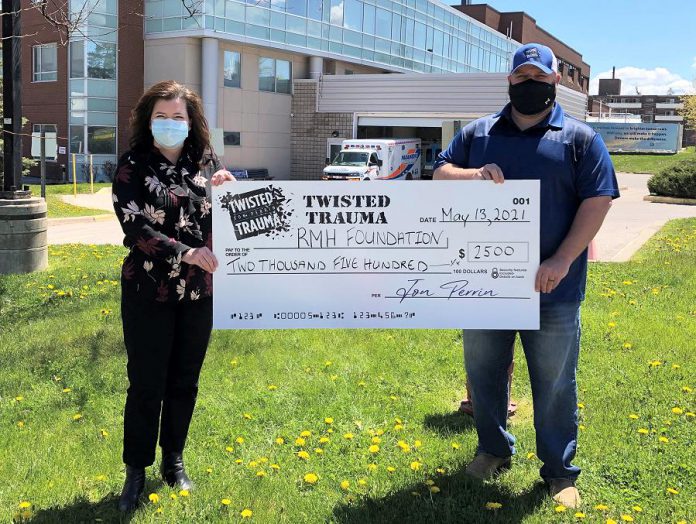
Jon Perrin presents a cheque for $2,500 to the Ross Memorial Hospital Foundation in Lindsay. Perrin, an OPP officer who suffers from PTSD, has become an advocate for mental health awareness. (Photo courtesy of Ross Memorial Hospital Foundation)
Local OPP officer Jon Perrin has donated $2,500 to the Ross Memorial Hospital Foundation in Lindsay.
Perrin has become an advocate for mental health awareness since being diagnosed with post-traumantic stress disorder (PTSD).
“This gift does more than support mental health care at the Ross,” says Erin Coons, CEO of the Ross Memorial Hospital Foundation. “Through his efforts, Jon is enhancing care throughout the community, encouraging those in need to reach out, and focusing on his own mental health. We’re honoured to receive this donation and help Jon help so many others.”
Advertisement - content continues below
Perrin, who was sexually assaulted at a young age and exposed to initiations and hazing while playing junior hockey, began working for the OPP in 2012. After responding to several traumatic events in his role as a police officer, he was diagnosed with PTSD in 2019.
In April, Perrin donated a $2,500 gift from real estate developer Flato Developments to the Canadian Mental Health Association, Haliburton, Kawartha, Pine Ridge Branch.
Perrin intends to support local mental health care with donations to community organizations including the Ross Memorial Hospital Mental Health program.
Here’s an update on COVID-19 cases in Ontario as well as in the greater Kawarthas region.
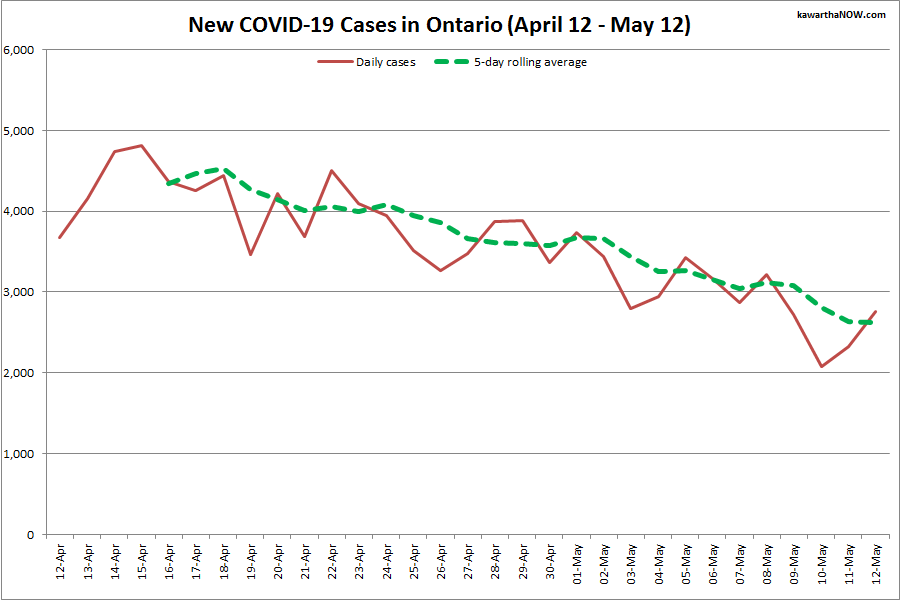
With Ontario announcing the stay-at-home order will remain in effect until at least June 2, the province is reporting 2,759 new cases. Of Ontario’s 34 health units, 7 are reporting triple-digit increases and 16 are reporting double-digit increases. The seven-day average of daily cases has decreased to 2,731 and the proportion of active cases continues to decline.
Hospitalizations have decreased, with no change in the number of ICU patients and a small rise in the number of patients on ventilators. Ontario is reporting 31 deaths today, including 1 new death in a long-term care home.
In the greater Kawarthas region, there are 35 new cases to report (including 19 in Peterborough, 8 in Northumberland, 4 in Haliburton, 3 in Kawartha Lakes, and 1 in Hastings Prince Edward) and an additional 29 cases resolved, with the number of active cases across the region increasing by 6 to 264. See below for detailed information from each health unit in the region.
Advertisement - content continues below
Most of the new cases reported today are in Toronto (774), Peel (602), York (258), Durham (147), Hamilton (113), Ottawa (110), and Halton (104).
There are double-digit increases reported today in Niagara (81), Middlesex-London (78), Waterloo (72), Simcoe Muskoka (65), Windsor-Essex (54), Wellington-Dufferin-Guelph (44), Brant (30), Lambton (28), Porcupine (24), Huron Perth (19), Eastern Ontario (18), Southwestern (16), Haldimand-Norfolk (15), Sudbury (12), Haliburton, Kawartha, Pine Ridge (11), and Peterborough (10), with smaller increases in Kingston, Frontenac and Lennox & Addington (9), Renfrew (8), Northwestern (6), Algoma (6), North Bay Parry Sound (6), Hastings Prince Edward (6), Chatham-Kent (6), and Grey Bruce (6).
The remaining 3 health units are reporting 5 or fewer new cases, with 1 health unit (Timiskaming) reporting no new cases at all.
Of today’s new cases, 60% are among people 39 and younger, with the highest number of cases (1,125) among people ages 20-39 followed by 781 cases among people ages 40-59 and 538 cases among people 19 and under.
With 3,455 more cases resolved since yesterday, the percentage of resolved cases has increased by 0.2% to at 92.5% — the 24th straight day the percentage of resolved cases has increased. The average positivity rate across Ontario has decreased by 0.7% to 5.7%, meaning that 57 out of every 1,000 tests performed were positive for COVID-19 on May 12.
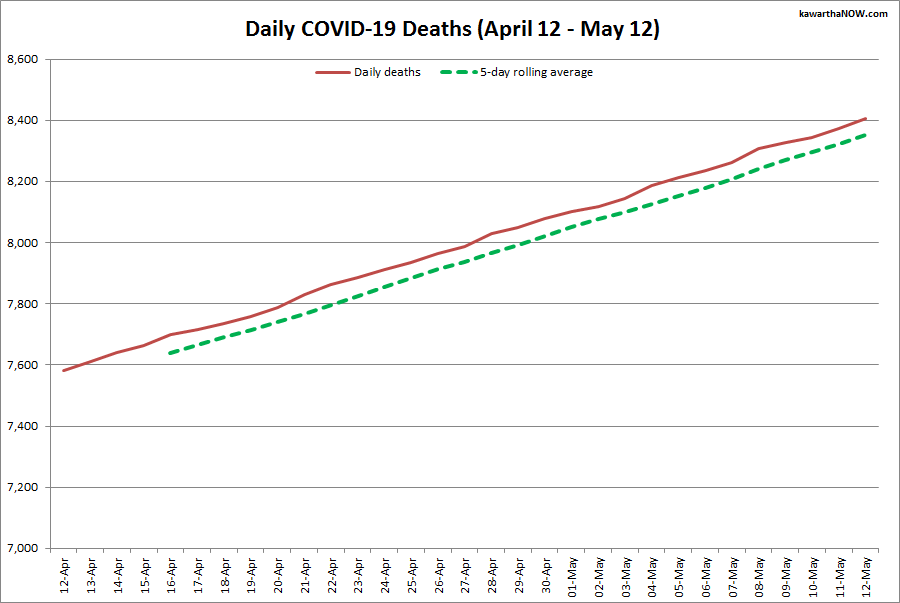
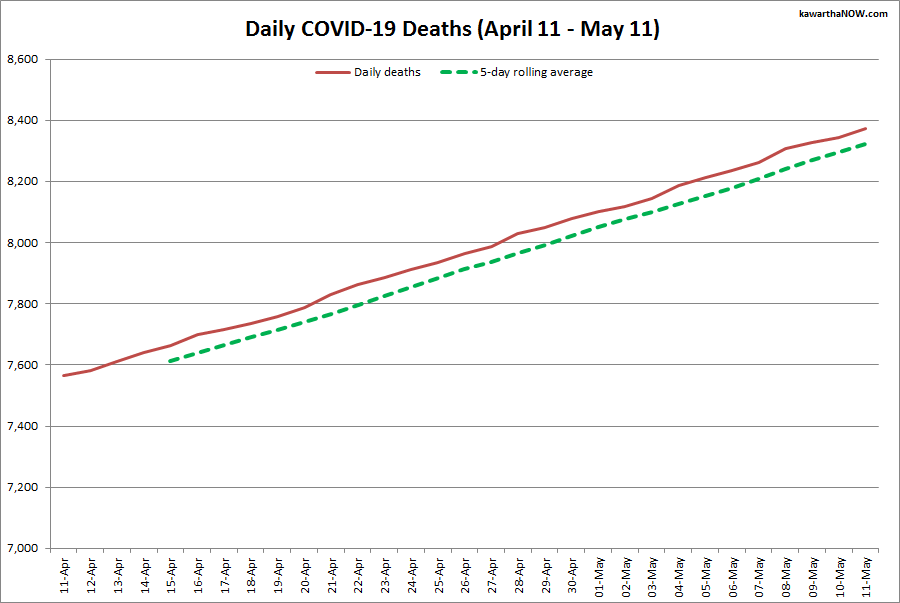
Ontario is reporting 31 new COVID-19 deaths today, including 1 new death in a long-term care home. Ontario has averaged 27 new daily deaths over the past week (no change from yesterday).
Hospitalizations have decreased by 41 to 1,632, with the number of patients with COVID-19 in ICUs remaining the same at 776 and the number of patients with COVID-19 on ventilators increasing by 9 to 568.
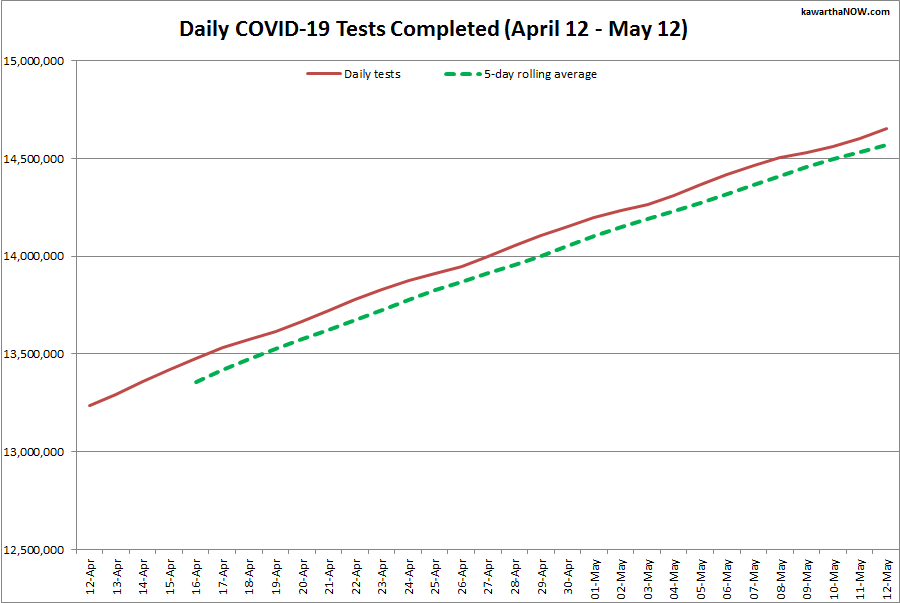
A total of 47,638 tests were completed yesterday, with the backlog of tests under investigation decreasing by 3,809 to 24,365.
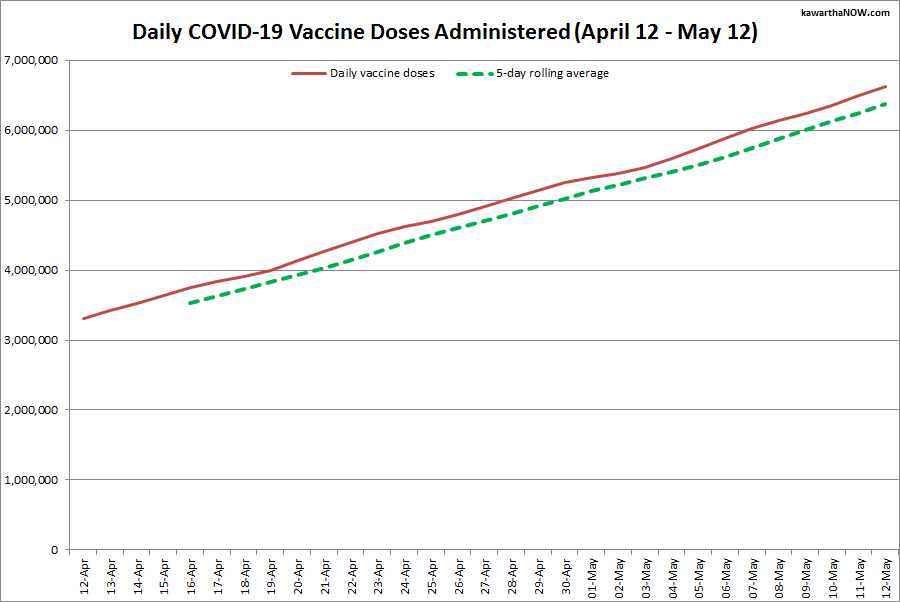
A total of 6,629,363 doses of vaccine have now been administered, an increase of 137,697 from yesterday, and 407,600 people have been fully vaccinated with both doses of vaccine, an increase of 5,342 from yesterday.
The number of fully vaccinated people represents 2.77% of Ontario’s population, an increase of 0.04% from yesterday, with fully and partially vaccinated people representing 45% of the total population, an increase of 0.96% from yesterday. An estimated 70-90% of the population must be immunized to achieve herd immunity.
Advertisement - content continues below
In the greater Kawarthas region, there are 35 new cases to report, including 19 in Peterborough, 8 in Northumberland, 4 in Haliburton, 3 in Kawartha Lakes, and 1 in Hastings Prince Edward.
There are 32 new regional cases of variants of concern, including 21 in Peterborough, 8 in Hastings Prince Edward, 2 in Northumberland, and 1 in Kawartha Lakes.
An additional 29 cases have been resolved, including 9 in Peterborough, 6 in Hastings Prince Edward, 8 in Kawartha Lakes, and 6 in Northumberland.
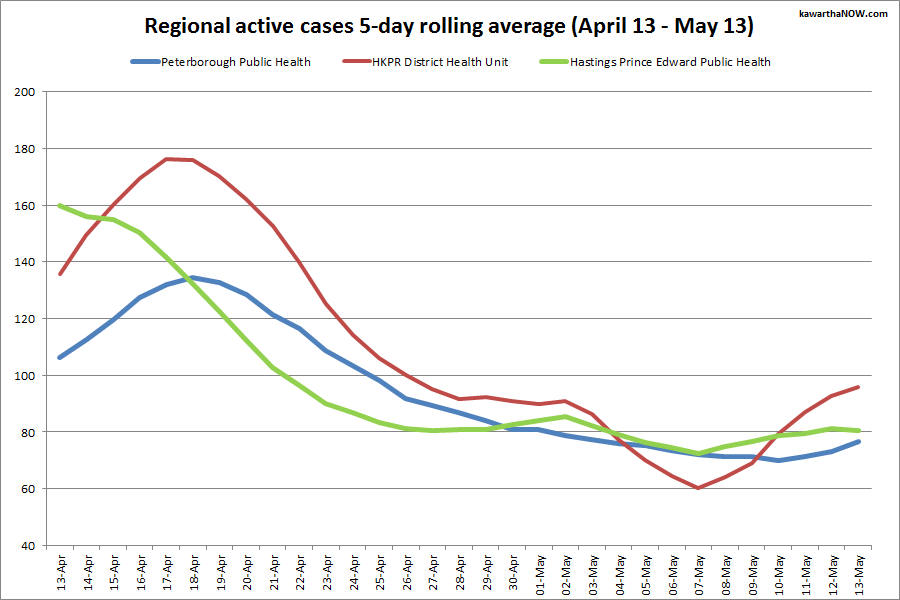
5-day rolling average of active COVID-19 cases in the greater Kawarthas region by health unit from April 13 – May 13, 2021. (Graphic: kawarthaNOW.com)
There are currently 264 active cases in the greater Kawarthas region, an increase of 6 from yesterday, including 89 in Peterborough, 78 in Hastings Prince Edward (14 in Quinte West, 39 in Belleville, 2 in Tyendinaga & Deseronto, 5 in Prince Edward County, 10 in Central Hastings, and 8 in North Hastings), 56 in Kawartha Lakes, 33 in Northumberland, and 8 in Haliburton.
Since the pandemic began in the greater Kawarthas region, there have been 1,345 confirmed positive cases in the Peterborough area (1,239 resolved with 17 deaths), 804 in the City of Kawartha Lakes (705 resolved with 56 deaths), 863 in Northumberland County (814 resolved with 16 deaths), 114 in Haliburton County (105 resolved with 1 death), and 1,037 in Hastings and Prince Edward counties (949 resolved with 10 deaths). The most recent death was reported in Northumberland on May 12.
The provincial data in this report is pulled from Ontario’s integrated Public Health Information System (iPHIS) at 4 p.m. the previous day, as well as from systems in Toronto, Ottawa, and Middlesex-London at 2 p.m. the previous day. Data from local health units is more current and is usually reflected in the provincial data the following day. There may be discrepancies between the Ontario data reported today (which is from yesterday) and the local health unit data reported today (which is from today).
Peterborough Public Health’s service area is the City and County of Peterborough and the Hiawatha and Curve Lake First Nations.
The health unit provides daily reports, including on weekends, excluding statutory holidays.
Confirmed positive: 1,345 (increase of 19) Total variants of concern cases: 536 (increase of 21) Active cases: 89 (increase of 10) Close contacts: 285 (increase of 32) Deaths: 17 (no change) Resolved: 1,239 (increase of 9) Hospitalizations (total to date): 60 (no change)* ICU admissions (total to date): 13 (no change) Total tests completed: Over 51,100 (increase of 100) Outbreaks: Unidentified congregate living facility #3 in Peterborough, Sunshine Daycare in Peterborough, Unidentified home child care centre #1 in Peterborough County, Helping Hands Day Care in Peterborough County (no change) Vaccine doses administered: 60,427 (increase of 4,018 as of May 7) Number of people fully vaccinated: 4,421 (increase of 210 as of May 7)
*As of May 13, Peterborough Regional Health Centre is reporting 12 patients currently hospitalized with COVID-19 (decrease of 1) and a total of 73 patients transferred from other areas as a result of a provincial directive (no change).
Haliburton, Kawartha, Pine Ridge District Health Unit
The Haliburton, Kawartha, Pine Ridge District Health Unit’s service area is the City of Kawartha Lakes, Northumberland County, and Haliburton County.
The health unit provides reports from Monday to Saturday, excluding Sundays and statutory holidays.
Confirmed positive: 1,781, including 804 in Kawartha Lakes, 863 in Northumberland, and 114 in Haliburton (increase of 15, including 3 in Kawartha Lakes, 8 in Northumberland, and 4 in Haliburton)* Total variants of concern cases: 486, including 196 in Kawartha Lakes, 265 in Northumberland, and 25 in Haliburton (increase of 3, including 1 in Kawartha Lakes and 2 in Northumberland) Active cases: 97, including 56 in Kawartha Lakes, 33 in Northumberland, and 8 in Haliburton (net increase of 1) Probable cases: 6, including 5 in Kawartha Lakes and 1 in Northumberland (increase of 1 in Northumberland) Hospitalizations (total to date): 65, including 33 in Kawartha Lakes, 29 in Northumberland, and 3 in Haliburton (no change)** Deaths (including among probable cases): 73, including 56 in Kawartha Lakes, 16 in Northumberland, and 1 in Haliburton (no change) Resolved: 1,624, including 705 in Kawartha Lakes, 814 in Northumberland, and 105 in Haliburton (increase of 14, including 8 in Kawartha Lakes and 6 in Northumberland) Tests completed: 186,871 (increase of 517) Vaccine doses administered: 79,432 (increase of 7,067 as of May 10) Number of people fully vaccinated: 4,462 (increase of 191 as of May 10) Outbreaks: Staples and Swain Law Office in Lindsay, OPP Offender Transport Lindsay, Dairy Queen in Lindsay (no change)
*The health unit states that total counts and counts for individual counties may fluctuate from previously reported counts as cases are transferred to or from the health unit based on case investigation details and routine data cleaning.
**As of May 13, Ross Memorial Hospital in Lindsay reports 8 patients hospitalized with COVID-19 (no change).
Hastings Prince Edward Public Health
Hastings Prince Edward Public Health’s service area is Hastings County (including Bancroft) and Prince Edward County.
The health unit provides daily reports, including on weekends, excluding statutory holidays.
Confirmed positive: 1,037 (increase of 1) Confirmed variants of concern cases: 405 (increase of 8) Active cases: 78 (decrease of 5) Deaths: 10 (no change) Currently hospitalized: 17 (no change) Currently hospitalized and in ICU: 7 (no change) Currently hospitalized and in ICU on ventilator: 5 (no change) Resolved: 949 (increase of 6) Tests completed: 136,183 (increase of 5) Vaccine doses administered: 69,983 (increase of 1,292) Number of people fully vaccinated: 4,937 (increase of 192) Outbreaks: Quinte 5 at QHC Belleville General Hospital, ICU of QHC Belleville General Hospital, Unidentified child care facility in Belleville, Unidentified workplace in Belleville, Unidentified workplace in Central Hastings, Community outbreak in Hastings Highlands in North Hastings (no change)
Advertisement - content continues below
Province of Ontario
Confirmed positive: 502,171 (increase of 2,759) COVID-19 variants of concern (VOC) cases: 101,232 of B.1.1.7 UK variant (increase of 2,287); 574 of B.1.351 South Africa variant (increase of 6); 1,727 of P.1 Brazilian variant (increase of 44) VOC R(t): 0.87 (decrease of 0.05 as May 8)* 7-day average of daily new cases: 2,731 (decrease of 95) Positivity rate: 5.7% (decrease of 0.7%) Resolved: 464,531 (increase of 3,455), 92.5% of all cases (increase of 0.2%) Hospitalizations: 1,632 (decrease of 41) Hospitalizations in ICU: 776 (no change) Hospitalizations in ICU on ventilator: 568 (increase of 9) Deaths: 8,405 (increase of 31) 7-day average of daily new deaths: 27 (no change) Deaths of residents in long-term care homes: 3,937 (increase of 1) Total tests completed: 14,651,044 (increase of 47,638) Tests under investigation: 24,365 (decrease of 3,809) Vaccination doses administered: 6,629,363 (increase of 137,697), 45.00% of Ontario’s population (increase of 0.93%)** People fully vaccinated (two doses): 407,600 (increase of 5,342), 2.77% of Ontario’s population (increase of 0.04%)**
*R(t) is a virus’s effective reproduction number, which is the average number of new infections caused by a single infected individual at a specific time (t) in a partially immunized population. To successfully eliminate a disease from a population, R(t) needs to be less than 1.
**An estimated 70-90% of the population must be immunized to achieve herd immunity.
COVID-19 cases in Ontario from April 12 – May 12, 2021. The red line is the number of new cases reported daily, and the dotted green line is a five-day rolling average of new cases. (Graphic: kawarthaNOW.com)COVID-19 tests completed in Ontario from April 12 – May 12, 2021. The red line is the daily number of tests completed, and the dotted green line is a five-day rolling average of tests completed. (Graphic: kawarthaNOW.com)COVID-19 hospitalizations and ICU admissions in Ontario from April 12 – May 12, 2021. The red line is the daily number of COVID-19 hospitalizations, the dotted green line is a five-day rolling average of hospitalizations, the purple line is the daily number of patients with COVID-19 in ICUs, and the dotted orange line is a five-day rolling average of patients with COVID-19 in ICUs. (Graphic: kawarthaNOW.com)COVID-19 deaths in Ontario from April 12 – May 12, 2021. The red line is the cumulative number of daily deaths, and the dotted green line is a five-day rolling average of daily deaths. (Graphic: kawarthaNOW.com)COVID-19 vaccine doses administered in Ontario from April 12 – May 12, 2021. The red line is the cumulative number of daily doses administered, and the dotted green line is a five-day rolling average of daily doses. (Graphic: kawarthaNOW.com)
kawarthaNOW writer Paula Kehoe rides the zipline at Treetop Trekking in the Ganaraska Forest near Port Hope in 2017. Outdoor adventure companies are among the tourism and travel businesses eligible for the Ontario Tourism and Travel Small Business Support Grant of up to $20,000, as long as they have fewer than 100 employees and can show at least a 20% decline in revenue between 2019 and 2020. (Video screenshot)
Applications are now open for the provincial government’s $100-million Ontario Tourism and Travel Small Business Support Grant.
The grant program, which was first announced on March 29, provides a one-time payment of $10,000 to $20,000 to support eligible small tourism and travel businesses affected by the COVID-19 pandemic.
Eligible businesses include travel agents, hotels, motels, resorts, bed and breakfasts, hunting and fishing camps, indoor tourist attractions such as escape mazes, outdoor adventure companies, recreational rental services such as houseboat rentals, mobile food services like chip trucks, and more.
Advertisement - content continues below
To qualify, businesses must have fewer than 100 employees and demonstrate they have experienced a minimum 20 per cent revenue decline between 2019 and 2020. Businesses that began operating in 2021 are not eligible.
Businesses that have already received the Ontario Small Business Support Grant are not eligible for the new grant.
Also ineligible for the grant are campgrounds, caterers, convention centres, event planning services, museums, zoos, historic sites, farmers’ markets, tour and guide services, and more.
Small business owners can use the Ontario Tourism and Travel Small Business Support Grant in whatever way makes the most sense for their business.
On May 13, 2021, in his first media briefing in weeks at Queen's Park, Ontario Premier Doug Ford announced the province's stay-at-home order would be extended until at least June 2. (CPAC screenshot)
Ontario’s stay-at-home order will remain in place until at least Wednesday, June 2nd, Premier Doug Ford announced at a media briefing on Thursday (May 13).
“We need to do everything in our power to protect this summer for all Ontarians — my goal is to have the most normal July and August possible,” Ford said. “Obviously, that won’t mean large sporting events or concerts but, if we manage the next few weeks properly, I believe that we can have things in a very good place this summer.”
“To do so, we need to keep driving cases down and easing the pressure on our hospitals. We need to maintain the stay-at-home order and all public health measures until at least June the 2nd.”
Advertisement - content continues below
The stay-at-home order was originally set to expire next Thursday (May 20).
Ford said that, with “over 130,000 people” getting a dose of vaccine daily, he expects that Ontario will be able to reopen outdoor recreation on June 2nd. He added that, by then, the province would also provide more details on reopening Ontario “in the days and weeks to follow.”
Ford also announced that, beginning the week of May 31, the province will begin administering the first dose of the Pfizer vaccine to youth between the ages of 12 and 17, along with any family members who have not yet received the vaccine. Special dedicated youth and family clinics will also be set up throughout the weeks of June 14 and 21.
The province will work with public health units and school boards to offer both doses of Pfizer vaccine to youth aged 12 to 17 by the end of August, part of what Ford called a “two-dose summer.”
In the interim, all publicly funded and private elementary and secondary schools in the province will continue with virtual learning.
Advertisement - content continues below
During the media briefing, Ford continually returned to his requests to the federal government to enhance border measures, including reducing incoming international flights, implementing mandatory pre-departure PCR testing for all domestic air travellers entering Ontario, and addressing “the loophole” at Canada’s international land border by implementing a mandatory three-day hotel quarantine in federally designated hotels at the highest traffic crossings.
“In the past two weeks alone, 40 domestic and 24 international flights landed at Toronto Pearson International Airport with confirmed cases of COVID-19,” Ford wrote in a May 12th letter to Prime Minister Justin Trudeau. “Unfortunately, because there is currently no testing requirement for domestic travellers, passengers who may have been exposed on the domestic flights are immediately able to move around within Canada.”
“During the same two-week period, 172,000 individuals, excluding essential truck drivers, have crossed Canada’s international border. Many of these travellers entered at the land border to bypass mandatory hotel quarantine.”
“Further, we have seen alarming reports that one in three individuals travelling internationally by air have also been able to bypass this requirement. According to recent data from the Public Health Agency of Canada, approximately 88,000 air travellers have been granted exemptions and no reasons were offered for why they were able to avoid the quarantine hotel rules.”
A 63-year-old woman is dead after a possible drowning in Loon Lake, about 12 kilometres southeast of the town of Haliburton in Haliburton County.
According to a media release from Haliburton Highlands OPP, police responded to a report of a “person in the water who appeared to be in distress” at 3 p.m. on Wednesday (May 12).
After arriving at the scene with Dysart et al Fire Department and Haliburton County EMS, police found a 63-year-old woman “with no vital signs.”
Advertisement - content continues below
The woman was transported to hospital where attempts to resuscitate her failed.
Police have provided no details on the cause of death and say they are still investigating the incident.
They will not be releasing any further information, including the woman’s name, at this time.
When you wash clothing made of synthetic materials like polyester or nylon, they shed tiny fibres that flow down the drain. These microfibres are so small they don't get filtered at sewage treatment plants and they enter our waterways, where they can distrupt the food chain. Microfibers account for 85 per cent of human-made debris found on shorelines worldwide. (Stock photo)
Throughout the month of May, students from across the region are zooming with the Peterborough Children’s Water Festival to learn about the importance of water and what they can do to conserve, protect, and improve their relationship with water.
Each week, GreenUP provides a story related to the environment. This week’s story is by Jessica Todd, Resource Centre Associate and Wonders of Water Support Staff at GreenUP.
Adults can also learn how to have a more sustainable relationship with water, starting with how we care for our clothes.
Did you know that every time you do a load of laundry, hundreds of thousands of tiny plastic particles — known as microfibres — wash off our synthetic clothing and are released into our waterways?
Advertisement - content continues below
Most of us own some clothing or textiles made from synthetic materials, such as polyester, acrylic, and nylon. These fast-fashion materials are common because of their availability and affordability.
When we wash synthetic fabrics in the washing machine, hundreds of thousands of microfibres shed off the fabrics and flow down the drain. These microfibres make their way to local wastewater treatment plants, where most of them are too small to be filtered so they end up in our local rivers, lakes, and oceans.
Synthetic microfibres are particularly dangerous because they have the ability to disrupt the food chain. Microfibres are readily consumed by fish and other wildlife due to their small size. Since one animal eats another, the microfibres are able to travel up the food chain.
VIDEO: The Story of Microfibres
In recent research, plastic microfibres have been discovered in pretty much everything from plankton to humans. They have been found in the water we drink, the food we consume, and the soils we grow our food in. Microfibre pollution poses a major threat to our waterways, ecosystems, and human health.
To address this issue, we need systemic solutions from government in the form of policies and regulations. There are also behavioural solutions that we as individuals can offer to help reduce our microfibre footprint.
Here are five ways you can reduce microfibre waste:
Advertisement - content continues below
1. Wash synthetic garments less frequently
The more often we wash our clothes, the more fibres shed off and enter our waterways.
Wear that synthetic sweater a couple more times before you wash it. Also, the less we wash our clothes, the longer they will last.
If you want to freshen up your clothes before they need a wash, try hanging them outside for some fresh air!
2. Take care of your synthetics
If you are suddenly thinking of throwing your synthetic garments in the garbage to prevent microfibre shedding, please think again. A lot of resources and energy were used to create those garments, and the smartest thing you can do is make sensible use of them for as long as they last.
When washing synthetic garments, be mindful of wash cycles and temperature. Switching to a gentle cycle and a cooler temperature can reduce microfibre shredding.
Using gentler eco-friendly detergents, such as the Canadian-made Tru Earth laundry strips, can help reduce the shedding of microfibres. They are also better for the environment because they don’t use the plastic packaging typically associated with other laundry soaps. (Photo: Jessica Todd)
Synthetic garments tend to wear out faster when we wash them using more intense cycles and higher temperatures. The more worn-out our materials become, the more microfibres they shed. Choosing a shorter wash cycle or hand-washing when you can are also great options to help reduce microfibre shedding.
Be mindful of the detergents you use. Try using more gentle, eco-friendly detergents, such as Tru Earth and Down East. Tru Earth offers eco-friendly zero-waste laundry detergent strips and Down East is a liquid laundry detergent that is non-toxic and gentle on all fabrics. Both of these products are Canadian-made and can be purchased through the GreenUP Store at shop.greenup.on.ca.
Advertisement - content continues below
3. Use a fibre-collection device
One of the most effective ways to minimize your microfibre waste is to use fibre-collecting device when washing your clothes.
Washing bags like the Guppyfriend can reduce microfibre pollution from your washing machine.
At the end of a wash cycle, you just scoop out the collected microfibres from the bag and put them in your garbage.
Using a solution like the Guppyfriend Washing Bag both protects clothes and reduces microfibre pollution. You can purchase the Guppyfriend bag at the GreenUP Store. (Photo: Jessica Todd)
4. Be mindful when shopping for clothing
Choosing to purchase only 100 per cent natural fibre clothing is an effective way to avoid microfibre waste.
Whether clothing is made from wool, alpaca, cashmere, cotton, linen or silk, these natural fibres are biodegradable and can be broken down naturally — unlike plastic microfibres.
Clothing made from these materials is often more comfortable too!
Advertisement - content continues below
5. Educate yourself and take action
Maybe this is the first you’ve heard of microfibre pollution. That’s okay! Many people aren’t aware of this issue, and that’s why it’s important to continue to spread the word and build awareness.
Take time to do your research and educate yourself as a consumer. Look for how transparent brands are about their responsibility to reduce microfibre pollution.
Many companies market their efforts to create synthetic clothing out of recycled plastics. The bonus to this is that it can reduce our dependence on the raw petroleum resources used to make new plastics, shifting us away from a wasteful linear economy and more towards a circular economy.
In Peterborough, treated water is returned to the Otonabee River. Most microfibres are too small for water treatment technology to prevent this pollution from entering our watersheds and ecosystems. (Photo: Jessica Todd)
Be aware, however, that even garments made from recycled plastics will still produce microfibre pollution. The number of microfibres that are shed from different qualities of plastic is a relatively new area of study.
Obviously, avoiding synthetics entirely is the most robust way to reduce your personal footprint when it comes to microfibre pollution. That said, in time some studies may shed light on how some synthetic materials and design approaches may reduce microfibre pollution.
Next time you are buying a garment or doing a load of laundry, take a moment to consider the importance of water and what you can do to conserve, protect, and improve your relationship with water.
Here’s an update on COVID-19 cases in Ontario as well as in the greater Kawarthas region.
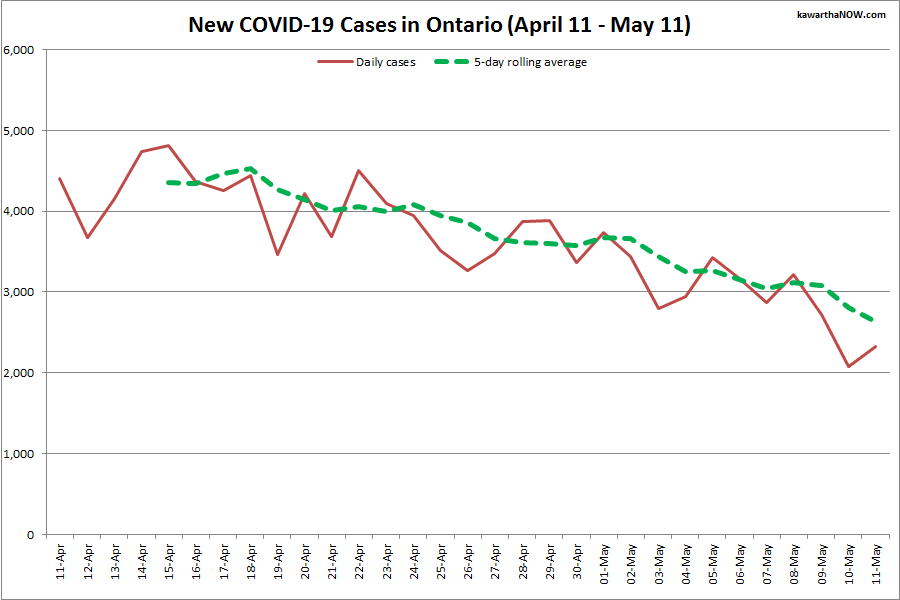
Today, Ontario is reporting 2,320 new cases, with 6 health units reporting triple-digit increases. The seven-day average of daily cases has decreased to 2,826 and the proportion of active cases continues to decline.
Hospitalizations have decreased significantly, with a large decrease in the number of ICU patients and a smaller decrease in the number of patients on ventilators. Ontario is reporting 39 deaths today, including 2 new deaths in long-term care homes.
Ontario has now administered almost 6.5 million vaccine doses, with more than 50 per cent of the population aged 18 and over having received at least one dose. Over 400,000 Ontarians are now fully immunized against COVID-19, with a record increase of 5,471 people receiving their second dose yesterday.
In the greater Kawarthas region, there has been a COVID-related death in Northumberland for the second day in a row, the county’s 16th death. There are 24 new cases to report across the region (including 11 in Peterborough, 8 in Hastings Prince Edward, 3 in Kawartha Lakes, and 2 in Northumberland) and an additional 19 cases resolved, with the number of active cases across the region increasing by 4 to 258. See below for detailed information from each health unit in the region.
Advertisement - content continues below
Most of the new cases reported today are in Toronto (712), Peel (452), York (157), Durham (139), Hamilton (113), and Ottawa (105).
There are double-digit increases reported today in Niagara (87), Waterloo (81), Halton (78), Middlesex-London (77), Simcoe Muskoka (55), Wellington-Dufferin-Guelph (40), Windsor-Essex (35), Brant (26), Haldimand-Norfolk (25), Southwestern (18), Huron Perth (15), Hastings Prince Edward (11), Peterborough (11), and Porcupine (10), with smaller increases in Northwestern (9), Kingston, Frontenac and Lennox & Addington (9), Grey Bruce (9), Thunder Bay (8), Eastern Ontario (8), Algoma (7), Sudbury (6), and Haliburton, Kawartha, Pine Ridge (6).
The remaining 6 health units are reporting 5 or fewer new cases, with 1 health unit (Timiskaming) reporting no new cases at all.
Of today’s new cases, 59% are among people 39 and younger, with the highest number of cases (983) among people ages 20-39 followed by 659 cases among people ages 40-59 and 390 cases among people 19 and under.
With 3,477 more cases resolved since yesterday, the percentage of resolved cases has increased by 0.2% to at 92.3% — the 23rd straight day the percentage of resolved cases has increased. The average positivity rate across Ontario has decreased by 2.1% to 6.4%, meaning that 64 out of every 1,000 tests performed were positive for COVID-19 on May 11.
Ontario is reporting 39 new COVID-19 deaths today, including 2 new deaths in long-term care homes. Ontario has averaged 27 new daily deaths over the past week, a decrease of 1 from yesterday.
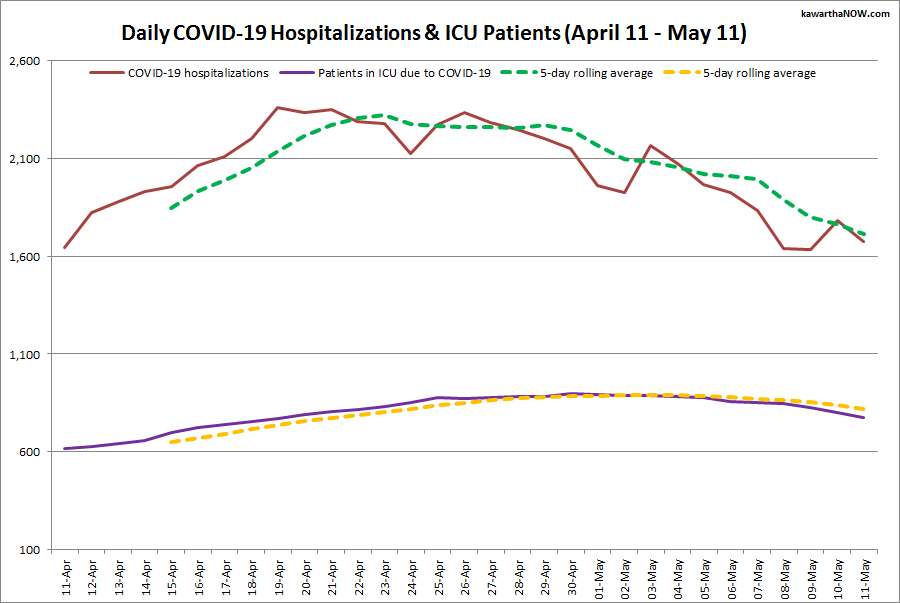
Hospitalizations have fallen by 109 to 1,673, with the number of patients with COVID-19 in ICUs decreasing by 26 to 776 and the number of patients with COVID-19 on ventilators decreasing by 9 to 559.
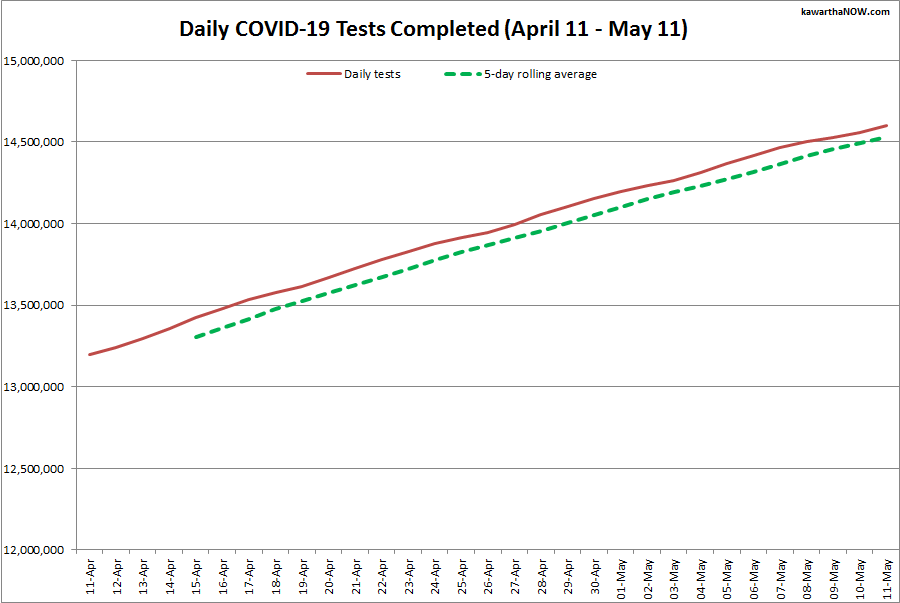
A total of 45,681 tests were completed yesterday, with the backlog of tests under investigation increasing by 3,259 to 28,174.
A total of 6,491,666 doses of vaccine have now been administered, an increase of 140,785 from yesterday, and 402,258 people have been fully vaccinated with both doses of vaccine, a record increase of 5,471 from yesterday.
The number of fully vaccinated people represents 2.73% of Ontario’s population, an increase of 0.04% from yesterday, with fully and partially vaccinated people representing 44.06% of the population, an increase of 0.96% from yesterday. An estimated 70-90% of the population must be immunized to achieve herd immunity.
Advertisement - content continues below
In the greater Kawarthas region, there are 24 new cases to report, including 11 in Peterborough, 8 in Hastings Prince Edward, 3 in Kawartha Lakes, and 2 in Northumberland. There are no new cases in Haliburton.
A community outbreak in Hastings Highlands in North Hastings, involving 7 cases, was declared on May 11.
For the second day in a row, there has been a new COVID-19 related death in Northumberland, the county’s 16th death. There is 1 new hospitalization in Northumberland, 1 new hospitalization in Peterborough, and 2 new ICU admissions in Peterborough.
There are 11 new regional cases of variants of concern, including 6 in Kawartha Lakes, 3 in Hastings Prince Edward, and 2 in Northumberland.
An additional 19 cases have been resolved, including 7 in Peterborough, 5 in Hastings Prince Edward, 4 in Northumberland, and 3 in Kawartha Lakes. An outbreak at an unidentified congregate living facility in Belleville was declared resolved on May 11. An outbreak at an unidentified workplace in Belleville was declared resolved on May 12. An outbreak at an unidentified workplace in Peterborough was declared resolved on May 12.
There are currently 258 active cases in the greater Kawarthas region, an increase of 4 from yesterday, including 83 in Hastings Prince Edward (15 in Quinte West, 40 in Belleville, 2 in Tyendinaga & Deseronto, 7 in Prince Edward County, 11 in Central Hastings, and 8 in North Hastings), 79 in Peterborough, 61 in Kawartha Lakes, 31 in Northumberland, and 4 in Haliburton.
Since the pandemic began in the greater Kawarthas region, there have been 1,326 confirmed positive cases in the Peterborough area (1,230 resolved with 17 deaths), 801 in the City of Kawartha Lakes (697 resolved with 56 deaths), 855 in Northumberland County (808 resolved with 16 deaths), 110 in Haliburton County (105 resolved with 1 death), and 1,036 in Hastings and Prince Edward counties (943 resolved with 10 deaths). The most recent death was reported in Northumberland on May 12.
The provincial data in this report is pulled from Ontario’s integrated Public Health Information System (iPHIS) at 4 p.m. the previous day, as well as from systems in Toronto, Ottawa, and Middlesex-London at 2 p.m. the previous day. Data from local health units is more current and is usually reflected in the provincial data the following day. There may be discrepancies between the Ontario data reported today (which is from yesterday) and the local health unit data reported today (which is from today).
Peterborough Public Health’s service area is the City and County of Peterborough and the Hiawatha and Curve Lake First Nations.
The health unit provides daily reports, including on weekends, excluding statutory holidays.
Confirmed positive: 1,326 (increase of 11) Total variants of concern cases: 515 (no change) Active cases: 79 (increase of 4) Close contacts: 253 (increase of 17) Deaths: 17 (no change) Resolved: 1,230 (increase of 7) Hospitalizations (total to date): 60 (increase of 1)* ICU admissions (total to date): 13 (increase of 2) Total tests completed: Over 51,000 (increase of 100) Outbreaks: Unidentified congregate living facility #3 in Peterborough, Sunshine Daycare in Peterborough, Unidentified home child care centre #1 in Peterborough County, Helping Hands Day Care in Peterborough County (decrease of 1)** Vaccine doses administered: 60,427 (increase of 4,018 as of May 7) Number of people fully vaccinated: 4,421 (increase of 210 as of May 7)
*As of May 11, Peterborough Regional Health Centre is reporting 13 patients currently hospitalized with COVID-19 (decrease of 2) and a total of 73 patients transferred from other areas as a result of a provincial directive (increase of 3).
**An outbreak at an unidentified workplace (#5) in Peterborough was declared resolved on May 12.
Haliburton, Kawartha, Pine Ridge District Health Unit
The Haliburton, Kawartha, Pine Ridge District Health Unit’s service area is the City of Kawartha Lakes, Northumberland County, and Haliburton County.
The health unit provides reports from Monday to Saturday, excluding Sundays and statutory holidays.
Confirmed positive: 1,766, including 801 in Kawartha Lakes, 855 in Northumberland, and 110 in Haliburton (increase of 5, including 3 in Kawartha Lakes and 2 in Northumberland)* Total variants of concern cases: 483, including 195 in Kawartha Lakes, 263 in Northumberland, and 25 in Haliburton (increase of 8, including 6 in Kawartha Lakes and 2 in Northumberland) Active cases: 96, including 61 in Kawartha Lakes, 31 in Northumberland, and 4 in Haliburton (net decrease of 3) Probable cases: 5 in Kawartha Lakes (no change) Hospitalizations (total to date): 65, including 33 in Kawartha Lakes, 29 in Northumberland, and 3 in Haliburton (increase of 1 in Northumberland)** Deaths (including among probable cases): 73, including 56 in Kawartha Lakes, 16 in Northumberland, and 1 in Haliburton (increase of 1 in Northumberland) Resolved: 1,610, including 697 in Kawartha Lakes, 808 in Northumberland, and 105 in Haliburton (increase of 7, including 3 in Kawartha Lakes and 4 in Northumberland) Tests completed: 186,360 (increase of 388) Vaccine doses administered: 79,432 (increase of 7,067 as of May 10) Number of people fully vaccinated: 4,462 (increase of 191 as of May 10) Outbreaks: Staples and Swain Law Office in Lindsay, OPP Offender Transport Lindsay, Dairy Queen in Lindsay (no change)
*The health unit states that total counts and counts for individual counties may fluctuate from previously reported counts as cases are transferred to or from the health unit based on case investigation details and routine data cleaning.
**As of May 12, Ross Memorial Hospital in Lindsay reports 8 patients hospitalized with COVID-19 (increase of 1).
Hastings Prince Edward Public Health
Hastings Prince Edward Public Health’s service area is Hastings County (including Bancroft) and Prince Edward County.
The health unit provides daily reports, including on weekends, excluding statutory holidays.
Confirmed positive: 1,036 (increase of 8) Confirmed variants of concern cases: 397 (increase of 3) Active cases: 83 (increase of 3) Deaths: 10 (no change) Currently hospitalized: 17 (decrease of 1) Currently hospitalized and in ICU: 7 (decrease of 2) Currently hospitalized and in ICU on ventilator: 5 (decrease of 1) Resolved: 943 (increase of 5) Tests completed: 136,178 (increase of 7) Vaccine doses administered: 68,691 (increase of 1,083) Number of people fully vaccinated: 4,745 (increase of 70) Outbreaks: Quinte 5 at QHC Belleville General Hospital, ICU of QHC Belleville General Hospital, Unidentified child care facility in Belleville, Unidentified workplace in Belleville, Unidentified workplace in Central Hastings, Community outbreak in Hastings Highlands in North Hastings (net decrease of 1)*
*An outbreak at an unidentified congregate living facility in Belleville was declared resolved on May 11. An outbreak at an unidentified workplace in Belleville was declared resolved on May 12. A community outbreak in Hastings Highlands in North Hastings, involving 7 cases, was declared on May 11.
Advertisement - content continues below
Province of Ontario
Confirmed positive: 499,412 (increase of 2,320) COVID-19 variants of concern (VOC) cases: 98,945 of B.1.1.7 UK variant (increase of 3,399); 568 of B.1.351 South Africa variant (increase of 38); 1,683 of P.1 Brazilian variant (increase of 91) VOC R(t): 0.92 (increase of 0.03 as April 30)* 7-day average of daily new cases: 2,826 (decrease of 88) Positivity rate: 6.4% (decrease of 2.1%) Resolved: 461,076 (increase of 3,477), 92.3% of all cases (increase of 0.2%) Hospitalizations: 1,673 (decrease of 109) Hospitalizations in ICU: 776 (decrease of 26) Hospitalizations in ICU on ventilator: 559 (decrease of 9) Deaths: 8,374 (increase of 32) 7-day average of daily new deaths: 27 (decrease of 1) Deaths of residents in long-term care homes: 3,936 (increase of 2) Total tests completed: 14,603,406 (increase of 45,681) Tests under investigation: 28,174 (increase of 3,259) Vaccination doses administered: 6,491,666 (increase of 140,785), 44.06% of Ontario’s population (increase of 0.96%)** People fully vaccinated (two doses): 402,258 (increase of 5,471), 2.73% of Ontario’s population (increase of 0.04%)**
*R(t) is a virus’s effective reproduction number, which is the average number of new infections caused by a single infected individual at a specific time (t) in a partially immunized population. To successfully eliminate a disease from a population, R(t) needs to be less than 1.
**An estimated 70-90% of the population must be immunized to achieve herd immunity.
COVID-19 cases in Ontario from April 11 – May 11, 2021. The red line is the number of new cases reported daily, and the dotted green line is a five-day rolling average of new cases. (Graphic: kawarthaNOW.com)COVID-19 tests completed in Ontario from April 11 – May 11, 2021. The red line is the daily number of tests completed, and the dotted green line is a five-day rolling average of tests completed. (Graphic: kawarthaNOW.com)COVID-19 hospitalizations and ICU admissions in Ontario from April 11 – May 11, 2021. The red line is the daily number of COVID-19 hospitalizations, the dotted green line is a five-day rolling average of hospitalizations, the purple line is the daily number of patients with COVID-19 in ICUs, and the dotted orange line is a five-day rolling average of patients with COVID-19 in ICUs. (Graphic: kawarthaNOW.com)COVID-19 deaths in Ontario from April 11 – May 11, 2021. The red line is the cumulative number of daily deaths, and the dotted green line is a five-day rolling average of daily deaths. (Graphic: kawarthaNOW.com)COVID-19 vaccine doses administered in Ontario from April 11 – May 11, 2021. The red line is the cumulative number of daily doses administered, and the dotted green line is a five-day rolling average of daily doses. (Graphic: kawarthaNOW.com)
Ontario plans to begin administering first doses of COVID-19 vaccine this June to children and youth 12 to 17 years of age, according to an update from Ontario health officials on Wednesday morning (May 12).
Health minister Christine Elliott confirmed the province’s plans at a media briefing at Queen’s Park on Wednesday afternoon.
“We are actively working on the vaccine rollout plan for 12 to 16 [sic] year olds with the Ministry of Education and working with our public health units as well,” Elliott said. “This is extremely important — we want to make sure our young people can receive the doses as soon as possible.”
Advertisement - content continues below
Elliott said more information will be provided after details are worked out.
According to provincial health officials, planning will consider Indigenous schools, private schools, and students with special needs, and the vaccine could be administered at existing clinics or through “dedicated delivery channels, if needed”.
In response to a reporter’s question, Elliott said the vaccine will not be compulsory for children.
On May 5, Health Canada authorized the use of the Pfizer-BioNTech vaccine in children 12 to 15 years old — the first COVID-19 vaccine in Canada approved for use in children.
Over 50 per cent of Ontarians aged 18 and over — over six million adults — have so far received at least one dose of COVID-19 vaccine, with more than one million doses administered in Ontario since the start of May.
The province projects to have administered first doses to 65 per cent of Ontarians aged 18 and over by the end of May.
A passerby watches Public Energy's 2020-2021 Artist in Residence Irèni Stamou as the choregographer and dance artist completes movement research in a rehearsal space at Artspace Peterborough. Public Energy is seeking applications from artists for its 2021-2022 Local Artist in Residence Program. (Photo courtesy of Public Energy)
Public Energy Performing Arts in Peterborough has extended the call for applications for its 2021-2022 Local Artist in Residence Program until 5 p.m. on Monday (May 17).
If you’re an artist working in dance, theatre, or performance living in Peterborough-Nogojiwanong, neighbouring counties, or Treaty 20 Territory of the Williams Treaties, the program is an amazing opportunity for creative support.
The history of artist-in-residence programs is a long one. Indeed, proto-residency programs can be traced back to the times of sovereigns, lords, and patrons of the arts encouraging artistic practice to enhance the status of their courts and kingdoms.
Advertisement - content continues below
As we know them today, artist-in-residence programs date back to the early 20th century, when wealthy benefactors regarded the offering of guest studio space to artists as a new kind of romantic patronage.
There is no one-size-fits-all model for the ways in which contemporary artist-in-residence programs are offered and used — numerous programs exist all over the world. Though varied and multi-faceted, generally speaking, residencies are incubators for artistic productivity and inspiration.
“The chief purpose of our residencies is to help an artist create a new work or a new show,” explains Bill Kimball, executive director of Public Energy Performing Arts. “At the core of it, we want to further and support the creation of the next show that the artist is working on by helping them with their creative process.”
Performance artist Melissa Addison-Webster, one of Public Energy’s 2019-2020 Local Artists in Residence. (Photo courtesy of Public Energy)
Public Energy’s artist residency program is also an opportunity for funding and developmental support, with $2,000 in seed funding to help the 2021-2022 Local Artist in Residence create their work.
“We have a financial contribution, a fee that’s attached to it, which they can use in any way they like,” Kimball says. “The artist might need to bring somebody in to make some costumes or act as a collaborator, or they can use the stipend for themselves as a way of getting by so they can simply focus on their artistic practise without worrying about a day job.”
In addition to financial support, Public Energy’s Local Artist in Residence Program provides professional development support including administrative, marketing, and production, as well as grant writing or editing support.
“Staff are available to help the artists in the areas of grant writing, marketing, and publicity,” Kimball says.
Advertisement - content continues below
“Sometimes as artists we don’t necessarily have an opportunity to work on ourselves or it’s not our forte,” adds Melissa Addison-Webster, one of Public Energy’s 2019-2020 Local Artists in Residence.
“My residency was truly foundational for my work as a choreographer. I was very thankful that I had the opportunity. The wisdom, knowledge, and guidance of folks from Public Energy helped to build my own vision as a choreographer, and also as an artist in general.”
According to Addison-Webster, Public Energy’s organizational and grant-writing support were especially helpful.
“Those are the nuts and bolts that artists sometimes need assistance with, and Public Energy was really, really helpful with that,” she says.
As part of her Public Energy residence in 2019-2020, performance artist Melissa Addison-Webster partnered with the Brain Injury Association Peterborough Region to facilitate movement workshops to explore themes of transformation and belonging. (Photo courtesy of Public Energy)
Beyond providing financial and professional development support for artists, Public Energy’s Local Artist Resident Program also benefits the greater community.
“With Public Energy’s support, it means there are more artists from this area creating work and putting out there for people to see,” Kimball points out. “It means there are more artists interacting with our local community.”
“In addition to presenting their work, quite often these artists do workshops and classes, which have a great benefit to the entire community. Having local artists working benefits everybody in the community.”
Part of the support Public Energy provides for their artists in residence includes creating public awareness around the artists’ work — and public feedback, where desired. Artists in residence are required to present a minimum of two public engagement activities, either in person or online.
Advertisement - content continues below
Public presentations can take many forms, including work-in-progress shows, open rehearsals, open forums such as question-and-answer sessions, or offering workshops or classes for professional artists and community members.
“I am completing my artist residency this summer with a site-specific dance project at Millennium Park, where I will receive feedback on my work-in-progress ‘Bone Stories: short solo dance scenes,’ which I am choreographing for myself and dancer Dreda Blow,” says 2020-2021 Artist in Residence Irèni Stamou.
“I am so grateful and appreciative of my artist residency,” adds the choreographer. “Public Energy has been so supportive and attentive to how I have been developing my artistic practice and direction, from grant writing to offering me a rehearsal space at the Artspace’s gallery when not in use. I am collaborating with other inspiring artists, venturing into new perspectives and experimenting with film work and writing projects.”
While the 2021-2022 residency does not come with studio space, Public Energy will arrange and pay for necessary space and technical support for public activities offered during the residency.
Public Energy’s 2020-2021 Artist in Residence Irèni Stamou. The choreographer and dance artist will be completing her residency in summer 2021 with a site-specific dance project at Millennium Park, (Photo: Anita Erschen-Pappas / Anita Photo Studio)
Applications for Public Energy’s Local Artist in Residence Program are open to artists with a wide range of experience and performing arts practises, from emerging to established artists. However, the residency is particularly beneficial for artists with an established practise of creation.
The residency work period can occur any time between September 2021 and May 2022. Depending on the artists’ work plan and timeline, the residency period can be as long or as short as the artist needs.
Applications will be assessed by an independent committee of peers, based on criteria including the impact on the artist’s work and professional development, how the artist’s work and development will benefit from the three aims of the program (financial support, professional development mentorship, and public awareness), feasibility of the process and ability of the artist to carry out the project, and artistic merit of the project.
Advertisement - content continues below
Public Energy’s 2020-2021 Artist in Residence Nicole Malbeuf, a performer, mover, maker, and instructor based in Peterborough. When she is not developing her artistic work, she works at growing her business Trellis Arts & Entertainment, instructs adult and teen circus classes at the Peterborough Academy of Circus, and works with A2D2 Aerial Cirque Dance Company. (Photo: KayLens Photography)
Committed to equity practices, Public Energy encourages applications from Indigenous artists, artists of colour, artists with disabilities, and queer, transgender, and two-spirit artists. If you are an artist living with a disability and require accommodation or assistance with your application, Public Energy will provide assistance and support.
Proposals will be accepted by email or web application form no later than 5 p.m. on Monday, May 17th. To access the online submission form, and to learn more about submission eligibility and requirements, visit Public Energy’s website publicenergy.ca/artist-in-residence-program-submissions/.
Artists who have participated in Public Energy’s Local Artist in Residence Program include Brian Solomon (2017-2018), Roshanak Jaberi and Brandy Leary (2018-2019), Melissa Addison-Webster and Anne White (2019-2020), and Nicole Malbeuf, Irèni Stamou, and Common Threads Collective (2020-2021).
kawarthaNOW is proud to be a long-time media sponsor of Public Energy.
kawarthaNOW.com offers two enews options to help readers stay in the know. Our VIP enews is delivered weekly every Wednesday morning and includes exclusive giveaways, and our news digest is delivered daily every morning. You can subscribe to one or both.
Submit your event for FREE!
Use our event submission form to post your event on our website — for free.
To submit editorial content or ideas, please contact us.