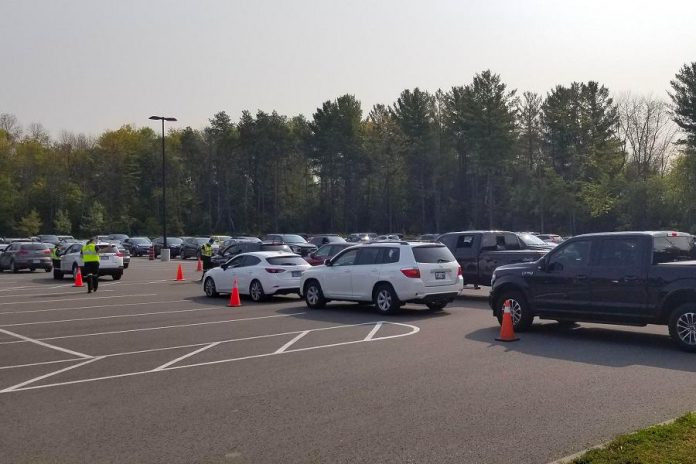
Cars lined up at the drive-through COVID-19 testing centre at Eastgate Memorial Park in Peterborough on September 22, 2020, when 460 people were tested. (Photo: Peterborough Regional Health Centre / Twitter)
Peterborough’s drive-through COVID-19 testing centre, located at Eastgate Memorial Park on Ashburnham Drive in East City, will close for one day on Monday (October 5) and reopen the following day
While the Ontario government announced last week that all the province’s COVID-19 assessment centres would provide testing by appointment only as of Tuesday (October 5), the centre at Eastgate Memorial Park will continue to provide drive-through service until it can implement appointment-based service on Friday (October 9).
Details and instructions for booking an appointment will be provided once they are available.
Advertisement - content continues below
The assessment centre at Peterborough Regional Health Centre (PRHC) will continue to operate as usual, with no changes to service sa appointments are already required.
The PRHC assessment centre is open seven days a week, and can be reached by phone at 705-876-5086 from 8 a.m. to 4 p.m. to book an appointment.
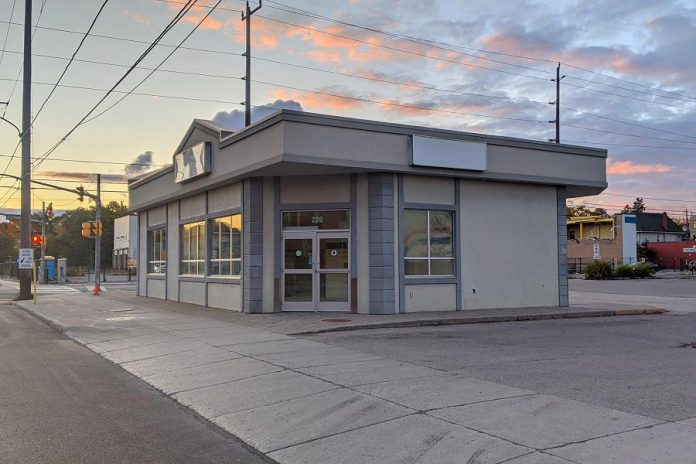
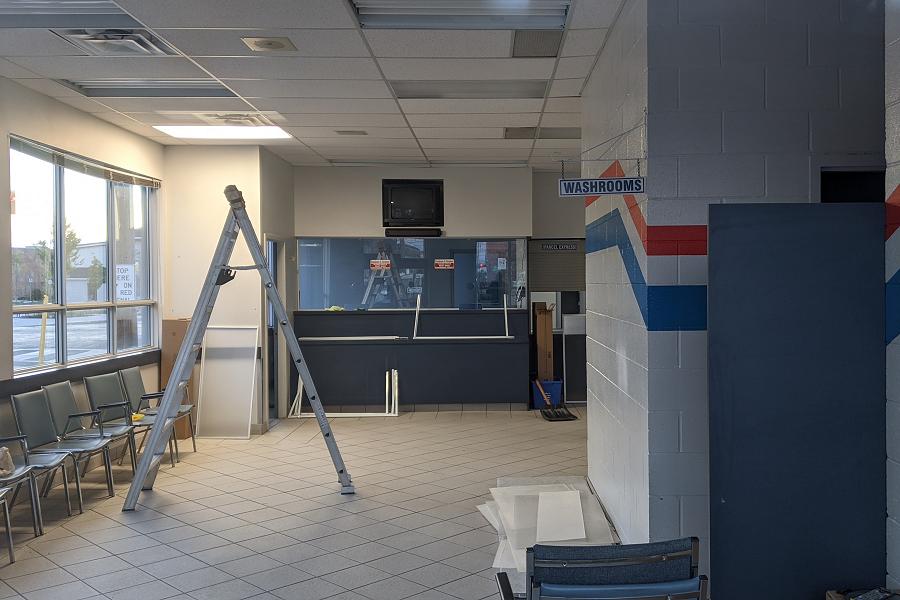
Peterborough's new Opioid Response Hub will be located in the former Greyhound bus terminal at 220 Simcoe Street (at Aylmer Street North) in downtown Peterborough, providing a new home for Harm Reduction Program services offered by PARN and the soon-to-be-launched Mobile Strategic Overdose Response Team. (Photo: Bruce Head / kawarthaNOW.com)
A major step in a collaborative bid to bring a Consumption Treatment Services (CTS) site to Peterborough has been realized with the establishment of a new ‘Opioid Response Hub’.
The announcement was made on Friday (October 2) in a virtual media conference hosted by Peterborough Drug Strategy and attended by Peterborough medical officer of health Dr. Rosana Salvaterra, PARN executive director Charles Shamess, Four Counties Addiction Services Team (FourCAST) executive director Donna Rogers, Peterborough Drug Strategy chair Peter Williams, Peterborough Police Services deputy chief Tim Farquharson, and others.
The former Greyhound bus terminal at 220 Simcoe Street (at Aylmer Street North) is the hub’s location, providing a new home for Harm Reduction Program services offered by PARN and the soon-to-be-launched Mobile Strategic Overdose Response Team (MSORT). In conjunction with the move, Harm Reduction Program services will be provided under the name Harm Reduction Works.
Advertisement - content continues below
With the hub’s permanent space secured, the partner agencies that have been working to bring a CTS site to Peterborough will submit an application to the Ontario government. Those agencies — PARN, FourCAST, the Four Counties Addiction Services Team and Peterborough Public Health among them — are nearing the completion of that application and hope to submit it within the coming weeks.
A CTS will provide onsite services as well as defined pathways to addiction treatment services, primary care, mental health, housing and other social supports. A CTS will provide people who use injection drugs a safe, hygienic space to use those drugs under the supervision of health professionals in order to prevent opioid poisoning deaths. In addition, it house on-site services as well as pathways to addiction treatment services, primary care, mental health services, housing and other social supports.
During a year that has seen the number of opioid overdose-related deaths in Peterborough already surpass the total for all of 2019, Friday’s announcement of the hub is seen as a crucial development in what has been a lengthy effort to see a CTS established in the city.
PARN’s Harm Reduction Services will be move out of its current space at 541 Water Street to its new permanent home at 220 Simcoe Street (pictured) on October 13, 2020. With the Opioid Response Hub permanent space secured, the partner agencies that have been working to bring a Consumption Treatment Services (CTS) site to Peterborough will submit an application to the Ontario government. If and when approval comes, renovations to the hub site will have to be completed, with CTS occupying the majority of the space. (Photo: Bruce Head / kawarthaNOW.com)
PARN’s Harm Reduction Program will move out of its current space at 541 Water Street and make the transition to the hub starting next week. Its services include providing sterile drug-use equipment to prevent the transmission of blood-borne viruses as distributing Naloxone to those at risk of an overdose. MSORT, meanwhile, will use the hub as a home base in its effort to connect those who have overdosed but choose not to go to the hospital with services that can help them.
“We’ve distributed more Naloxone during the pandemic than during previous periods but the poisoned drug supply has killed 34 of our friends and neighbours,” said an emotional Charles Shamess, executive director of PARN.
“We’re very grateful to be working with a property owner (Kevin MacDonald) who understands the importance of harm reduction and who knows a consumption and treatment service will save lives. To date, the federal government has approved 40 supervised consumption sites that have been visited more than two million times, reversed nearly 16,000 overdoses without a single death and made more than 74,000 referrals to health and social services.”
Advertisement - content continues below
PARN, added Shamess, will “be the lead” on the application for grant money for a CTS but stressed a collaboration involving a number of partners will be key to any success. If and when approval comes, he says renovations to the hub site will have to be done with CTS occupying the majority of the space.
Donna Rogers, the executive director of FourCAST, said “Working together, out of the same space, is our ideal outcome.”
“People who want to make changes to their opioid use need services and there are never enough locally or provincially to meet the demand. We believe we can multiply treatment options by working together. We desperately want to be participating in solutions that reduce and ultimately eliminate opioid-related deaths. This hub model is right for this community right now.”
Peterborough Drug Strategy chair Peter Williams also addressed the media on the hub’s formation, providing a history of the collaborative effort that has led to this development.
“In December it will be three years that we’ve been having those conversations (about the need for a CTS in Peterborough),” noted Williams.
“We’ve faced numerous challenges, including finding the appropriate space and a willing landlord. This location will allow us to bring a CTS site to Peterborough…to submit an application that checks all the boxes of the federal and provincial guidelines.”
Williams said a survey conducted by the Peterborough Drug Strategy in November 2019 indicated that 74 per cent of more than 1,600 participants agreed a CTS site will benefit the community. Participants ranked the reduction of injuries and deaths from drug overdose and poisonings, prevention of blood-borne infections, and fewer publicly discarded needles and drug litter as key benefits of providing a CTS.
Williams added a separate survey of injection drug users showed 91 per cent would access a CTS site in downtown Peterborough if it was provided.
Advertisement - content continues below
As for the long road taken to get to this point — and a sizable step closer to a CTS site — Williams said “We signed up for frustrating,” adding “Collaboration, if done right, is supposed to be hard and time consuming and challenging and frustrating.”
“That’s how you know you’re on the right track. We are all very relieved to be at this stage but this is not a finish line. It’s a new start line. We can’t afford to let frustration overtake us. We’ve still got a lot of work to do and we’re up for it.”
Peterborough Police Services deputy chief Tim Farquharson, a vocal and very passionate advocate for a CTS site, expressed his clear relief over the hub’s formation and its importance in terms of the CTS application process.
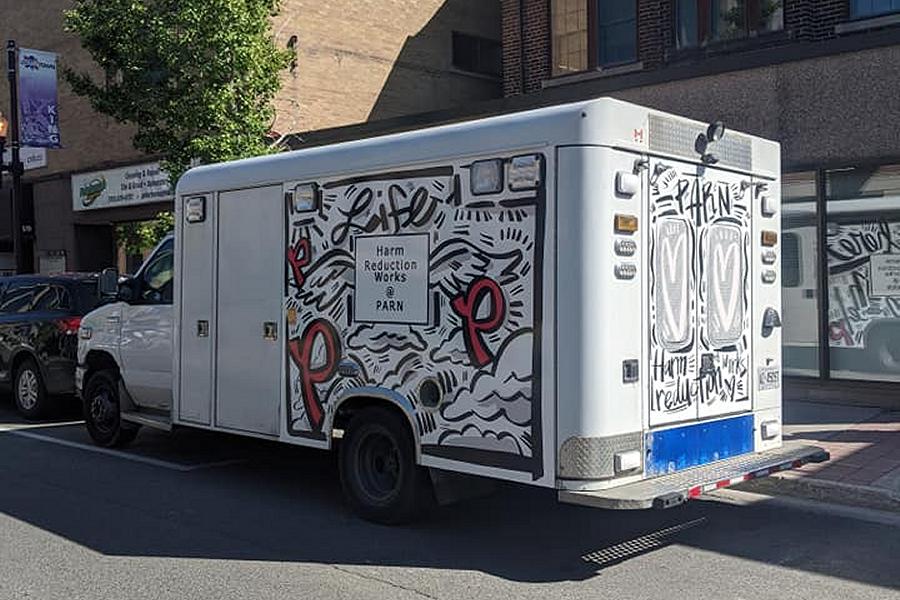
Jason Wilkins of Wilkins Art & Creative Inc. in Peterborough created the design on the PARN harm reduction outreach truck. (Photo: PARN / Facebook)
“A lot of cities haven’t accepted the fact of what needs to be done to move forward but we have,” Farquharson said.
“When I was on the road, we had nothing to help people with addictions. We gave them a 1-800 number and then moved on to the next call. Now we’ll have an outreach team (MSORT) that goes out there. We didn’t have PARN in the year 2000. We were finding needles all over the city. There are still challenges with that but it’s a fraction of what we dealt with before.
“This hasn’t been smooth — there have been a lot of challenges — but look where we are now. We’re leading and we have the possibility to reverse the (opioid overdose fatality) trend.”
Shamess notes that, should Peterborough’s CTS application be successful, renovations would need to be done to the hub site to accommodate it alongside Harm Reduction Program services and base operations for MSORT.
“Along with a CTS, we would have other treatment available, from FourCAST and Canadian Mental Health, and potentially EMS might be involved as well,” Shamess said. “A whole different staffing would come with CTS.”
Additional consultations will be held with stakeholders in the area of the proposed site in the coming weeks. For more information and updates, visit peterboroughdrugstrategy.com/cts/get-involved/.
Ellwood Hamilton Bus Lines of Lakefield was founded in 1969 by Ellwood Hamilton. (Photo: Ellwood Hamilton Bus Lines / Facebook)
Lakefield’s family-owned Ellwood Hamilton Bus Lines has been purchased by Burlington’s family-owned Attridge Transportation Inc.
Attridge Transportation made the announcement on Wednesday (September 30).
“It’s strong reputation in the region and dedicated staff attracted us to Elwood Hamilton,” write president Glenn Attridge and director of operations James Attridge in a statement. “We believe that every aspect of Ellwood Hamilton aligns with our mission.”
Advertisement - content continues below
Ellwood Hamilton Bus Lines was established in 1969 by Ellwood Hamilton, starting with a station wagon and growing to provide transportation services for more than 70 school bus routes in Peterborough and area.
The current owner, Lisa Hamilton-Howie, will be retiring the day after when Attridge Transportation takes over — which also happens to be the day her father Ellwood celebrates his 80th birthday.
“My father built a legacy and he did the unthinkable,” Hamilton-Howie writes on Facebook. “He grew and he expanded and I have continued to expand and as of today, with the recent acquired routes from First Student, we are handing over 75 routes to Glenn and James Attridge.”
A huge THANK YOU for all of the love and support I have received since yesterday’s announcement. I didn’t choose the…
Based in Burlington, Attridge Transportation had a similar trajectory. It was founded in 1976 with two taxis and two station wagons, and grew to include more than 1,400 buses, 36 coaches, and six locations.
Attridge Transportation currently provides transportation services to various school boards in the Greater Toronto Area and, effective Tuesday (October 6), will begin operating the Ellwood Hamilton routes for Student Transportation Services of Central Ontario (STSCO).
Attridge Transportation will continue to use the Ellwood Hamilton name on local buses and all Ellwood Hamilton bus drivers and staff will retain their jobs.
Advertisement - content continues below
“We have been working hard behind the scenes to make the transition as easy as possible for all stakeholders including drivers, mechanics, dispatchers, consortium staff, students, and parents,” Glenn and James Attridge write.
“We look forward to working with the great team here in Lakefield and are proud to provide continuous growth and stability in the communities we service.”
Ontario Premier Doug Ford at a media conference on October 2, 2020 at Queen's Park, along with Ontario's chief medical officer of health Dr. David Williams, Ontario Health president and CEO Matthew Anderson, health minister Christine Elliott, and Ontario's chief coroner and COVID-19 testing lead Dr. Dirk Huyer, where the government announced additional public health restrictions and new testing measures. (CPAC screenshot)
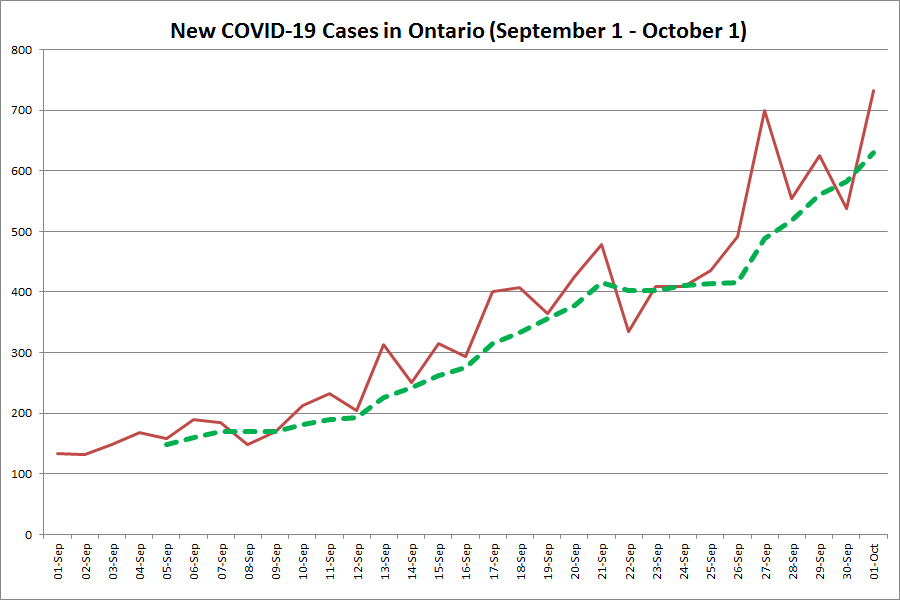
With Ontario reporting a record 732 new COVID-19 cases today, Premier Doug Ford announced new public health restrictions — including an indoor mask requirement across Ontario and the tightening of social circles to household members only — as well as additional restrictions in Toronto, Peel, and Ottawa and new testing measures to help address the backlog of of tests under investigation, which has climbed to a record high of 90,513.
“We’re in a second wave of COVID-19 and as Premier it’s my duty to protect the people,” Ford said at a media conference at Queen’s Park on Friday (October 2), along with health minister Christine Elliott, Ontario’s chief medical officer of health Dr. David Williams, Ontario Health president and CEO Matthew Anderson, and Ontario’s chief coroner and COVID-19 testing lead Dr. Dirk Huyer.
“Throughout this pandemic, we have made some tough but necessary decisions, always based on the best medical advice and scientific evidence available,” Ford added. “After consulting with the chief medical officer and the Public Health Measures table, we will be bringing in more public health restrictions to stop this virus from spreading any further.”
Effective 12:01 a.m. on Saturday (October 3), face coverings will now be required in all public indoor settings across Ontario, including at businesses, facilities, and workplaces (with some exceptions, including corrections and developmental services). The government is also tightening social circles — advising Ontarians to only allow close contact with people living in their own household and to maintain two metres of physical distance from everyone else.
“This will be especially important to consider as we look ahead to Thanksgiving next weekend,” Ford said. “We also have to extend the pause on the reopening of any other businesses and facilities for another 28 days.”
Advertisement - content continues below
The government is also implementing additional public health restrictions in Toronto, Peel, and Ottawa — the province’s COVID-19 hot spots. Indoor capacity at restaurants, bars, and other food and drink establishments (including nightclubs) will be restricted to the number of patrons who can can maintain a physical distance of at least two metres from every other patron, to a maximum of 100 patrons, with no more than six patrons per table.
Group exercise classes at gyms and other fitness settings in Toronto, Peel, and Ottawa will be restricted to 10 people with no more than 50 people in total allowed at these facilities to a maximum of 50. At meeting and event facilities, including banquet halls, only six people will be allowed per table and 50 people per facility. All the new measures for in Toronto, Peel, and Ottawa come into effect 12:01 a.m. on Saturday (October 3).
Ford also announced changes to how testing is conducted at all of Ontario’s assessment centres in an effort to reduce testing turnaround times and to help assessment centres prepare for the cold winter months where long line-ups will be even more problematic. Beginning next Tuesday (October 6), testing will be by appointment only, with walk-in testing discontinued starting Sunday (October 4), The province will also increase testing and processing capacity to 50,000 tests per day by mid-October and 68,000 tests per day by mid-November, and will introduce new testing methods once they are approved by Health Canada.
Today’s record number of 732 new cases comes as the Ontario exceeds 4 million tests completed. As has been the case for weeks, most of the new cases are in Toronto (343), Ottawa (141), and Peel (111), with significant increases in York (38) and Durham (34). There are smaller increases in Simcoe Muskoka (13), Halton (11), Niagara (11), Wellington-Dufferin-Guelph (10), Waterloo (9), Hamilton (6), and Windsor-Essex (6). The remaining 22 public health units are reporting 5 or fewer cases, with 13 reporting no cases at all.
The percentage of cases in older people continues to increase, with 58% of today’s cases among people under the age of 40. In early September, 70% of new cases were in that age group. There have been 5 new hospitalizations, with 2 new cases admitted to ICUs and 4 new cases on ventilators.
There have been 2 new deaths since yesterday, but the total number of deaths has increased to 2,927 because it now includes 74 deaths from the spring and summer that were not previously recorded.
There are 36 new cases in Ontario schools today (29 students, 2 staff, and 3 unidentified individuals). In licensed child care settings, there are 12 new cases (8 children and 4 staff).
Advertisement - content continues below
In the greater Kawarthas region, there is 1 new case to report today in Peterborough are 2 new cases in Hastings and Prince Edward counties. There are no new cases to report in Kawartha Lakes, Northumberland, and Haliburton.
None of the new cases in schools and child care settings are in the greater Kawarthas region.
There are currently 26 active cases in the greater Kawarthas region, including 13 in Peterborough, 6 in Hastings and Prince Edward counties, 4 in Kawartha Lakes, 1 in Northumberland, and 2 in Haliburton.
Since the pandemic began in the greater Kawarthas region, there have been 126 confirmed positive cases in the Peterborough area (111 resolved with 2 deaths), 182 in the City of Kawartha Lakes (159 resolved with 32 deaths), 43 in Northumberland County (41 resolved with 1 death), 17 in Haliburton County (15 resolved with no deaths), and 58 in Hastings and Prince Edward counties (47 resolved with 5 deaths). The most recent death was reported in Northumberland on September 8.
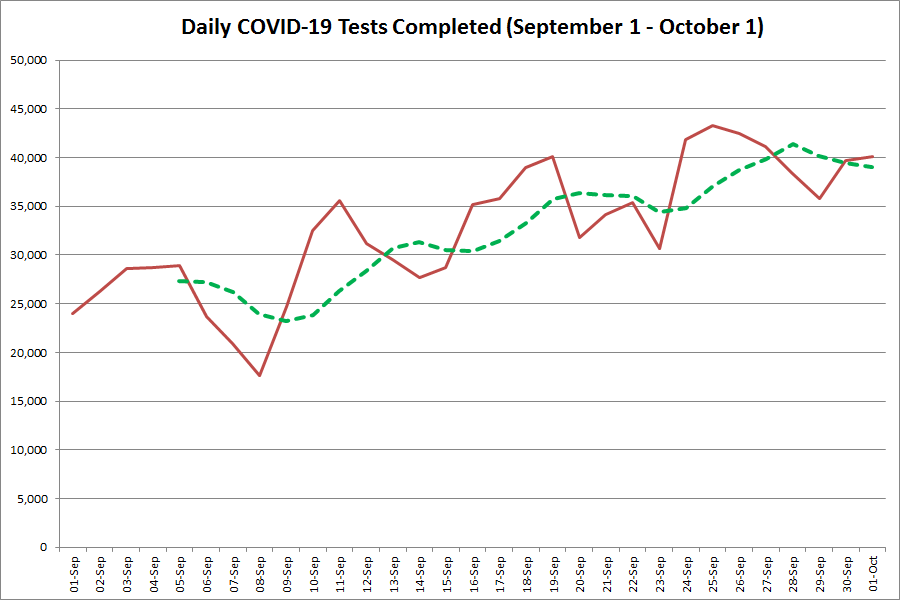
Province-wide, there have been 52,980 confirmed cases, an increase of 732 from yesterday, with 44,850 (85% of all cases) resolved, an increase of 428. There have been 2,927 deaths, an increase of 2 from yesterday plus 74 deaths for cases in the spring or summer that were not previously recorded. These additional 74 earlier deaths has also increased the number of deaths in long-term care homes to 1,909 deaths (the number of new deaths since yesterday is not reported). A total of 4,003,204 tests have been completed, an increase of 40,093 from yesterday, with 90,513 tests under investigation, an increase of 8,040 from yesterday.
This report is based on data supplied by the province’s integrated Public Health Information System (iPHIS), as well as any additional information supplied by health units. This information is at least 24 hours old, so it is not real-time data. Note that each health unit reports the information in a different way.
Peterborough Public Health’s service area is the City and County of Peterborough and the Hiawatha and Curve Lake First Nations.
The health unit provides daily reports, including on weekends.
Confirmed positive: 126 (increase of 1) Active cases: 13 (decrease of 2) Deaths: 2 (no change) Resolved: 111 (increase of 3) Total tests completed: Over 29,300 (no change) Institutional outbreaks: Fairhaven (no change)
Haliburton, Kawartha, Pine Ridge District Health Unit
The Haliburton, Kawartha, Pine Ridge District Health Unit’s service area is the City of Kawartha Lakes, Northumberland County, and Haliburton County.
The health unit provides reports from Monday to Friday, excluding statutory holidays.
Confirmed positive: 242, including 182 in Kawartha Lakes, 43 in Northumberland, 17 in Haliburton (no change) Probable cases: 0 (no change) Hospitalizations (total to date): 15 (no change) Deaths: 33 (no change) Resolved: 215, including 159 in Kawartha Lakes, 41 in Northumberland, 15 in Haliburton (increase of 1, in Northumberland) Active cases: 7, including 2 in Haliburton, 4 in Kawartha Lakes, and 1 in Northumberland (decrease of 1, in Northumberland) Institutional outbreaks: None (no change)
Hastings Prince Edward Public Health
Hastings Prince Edward Public Health’s service area is Hastings County (including Bancroft) and Prince Edward County.
The health unit provides reports from Monday to Friday, excluding statutory holidays.
Confirmed positive: 58 (increase of 2) Active cases: 6 (increase of 2) Deaths: 5 (no change) Hospitalized: 0 (no change) Hospitalized and in ICU: 0 (no change) Hospitalized and in ICU on ventilator: 0 (no change) Recovered: 47 (no change) Total tests completed: 39,169 (increase of 1,379) Institutional outbreaks: None (no change)
Advertisement - content continues below
Province of Ontario
Confirmed positive: 52,980 (increase of 732) Resolved: 44,850 (increase of 428, 85% of all cases) Hospitalized: 167 (increase of 5) Hospitalized and in ICU: 38 (increase of 2) Hospitalized and in ICU on ventilator: 21 (increase of 4) Deaths: 2,927 = 2,853 (increase of 2) plus 74 earlier deaths* Deaths of residents in long-term care homes: 1,909 (increase of 71)* Total tests completed: 4,003,204 (increase of 40,093) Tests under investigation: 90,513 (increase of 8,040)
*There were 74 deaths reported for cases that occurred in the spring or summer and are now being recorded as part of a data review and data cleaning initiative.
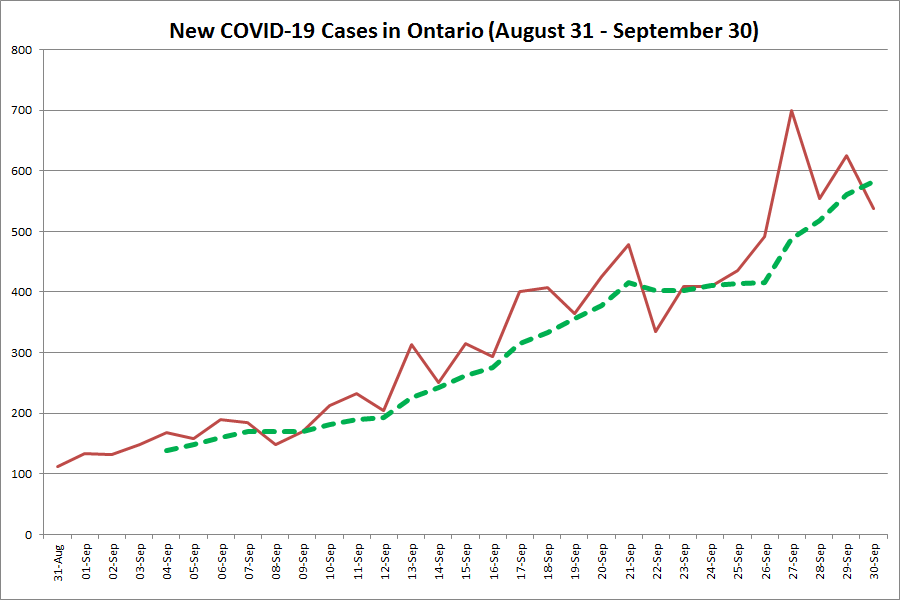
New COVID-19 cases in Ontario from September 1 – October 1, 2020. The red line is the number of new cases reported daily, and the dotted green line is a five-day moving average of new cases. (Graphic: kawarthaNOW.com)COVID-19 tests completed in Ontario from September 1 – October 1, 2020. The red line is the number of tests completed daily, and the dotted green line is a five-day moving average of tests completed. (Graphic: kawarthaNOW.com)
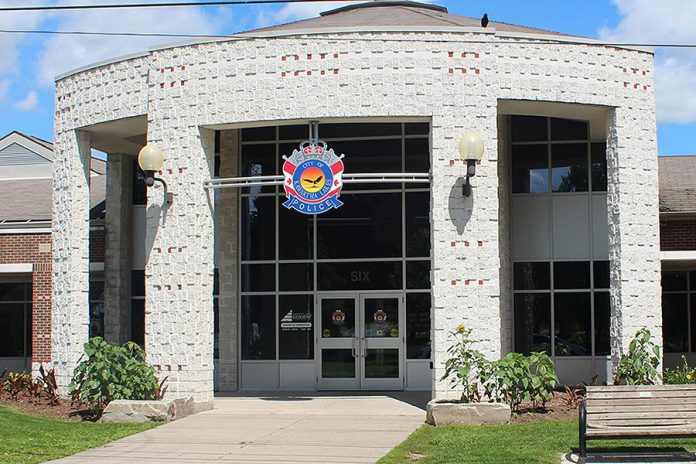
The City of Kawartha Lakes Police Service in Lindsay. (Photo: City of Kawartha Lakes)
Kawartha Lakes police issued $880 fines to four people who contravened COVID-19 safety regulations during a drive-in concert in Lindsay on Thursday night (October 1).
According to a media release issued by the Kawartha Lakes Police Service, officers responded to a complaint at 6:40 p.m. on Thursday that spectators at the concert were not abiding by COVID-19 safety regulations.
While the media release does not identify the concert, the Lindsay Drive-in was hosting the second night of “Home Again”, a fundraising concert for the Academy Theatre, on Thursday night.
Advertisement - content continues below
Officers patrolled the venue and spoke with guests and organizers to ensure all attendees were aware of the current regulations under the Reopening Ontario Act.
When police returned to the drive-in concert just after 9 p.m., they found several people who were still failing to comply with COVID-19 safety regulations by congregating outside of their vehicles and drinking.
Officers issued four people with provincial offence notices under section 10(1)(a) of the Reopening Ontario Act, which carries a set fine of $880.
The Kawartha Lakes Police Service is reminding any person, business, or organization hosting an event to ensure they are aware of all safety regulations under the Reopening Ontario Act, and to also ensure that all guests in attendance are educated about their responsibility to comply with safety protocols.
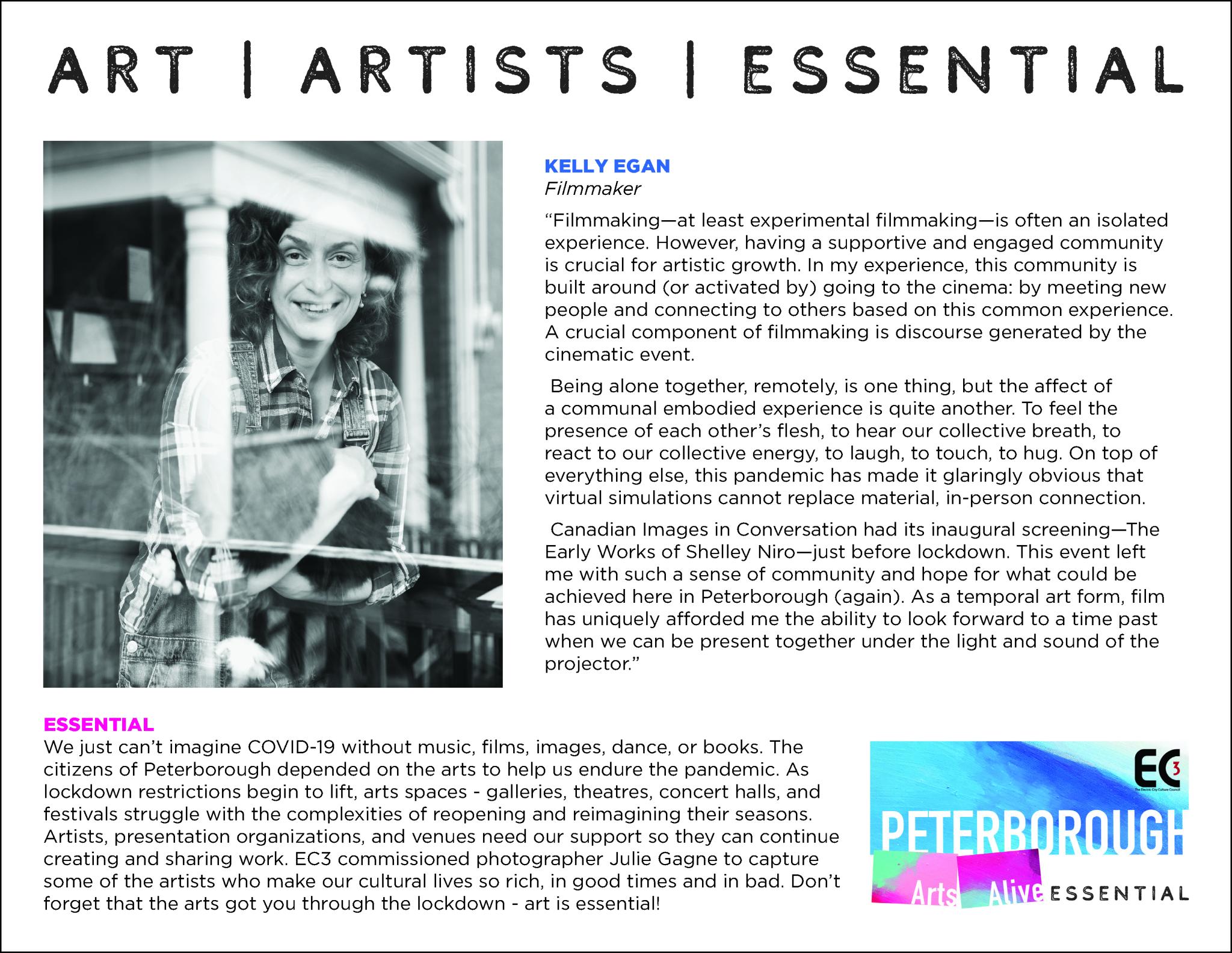
"Filmmaking — at least experimental filmmaking —is often an isolated experience. However, having a supportive and engaged community is crucial for artistic growth. In my experience, this community is built around (or activated by) going to the cinema: by meeting new people and connecting to others based on this common experience. A crucial component of filmmaking is discourse generated by the cinematic event." - Kelly Egan, Filmmaker (Photo: Julie Gagne)
On August 31st, the Electric City Culture Council (EC3) in Peterborough launched “Essential”, a photography project that raises awareness of the precarious situation of local artists and arts organizations during the COVID-19 pandemic.
Part of EC3’s Peterborough Arts Alive initiative, the Essential project is a series of 17 photos by local photographer Julie Gagne that depicts 20 local artists during the pandemic. Each of the photos feature an artist or artists in their home or workplace and is accompanied by an artist statement about their experience of the pandemic.
Twice each week until the end of October, kawarthaNOW is publishing photos from the series. Today, we feature filmmaker Kelly Egan.
Advertisement - content continues below
Filmmaker Kelly Egan
Filmmaker Kelly Egan – The Essential Project. (Photo by Julie Gagne, design by Rob Wilkes)
A message from EC3 about The Essential Project
The 2020 COVID-19 pandemic has had a profound impact on both individual artists and arts organizations in Peterborough. Performance venues and galleries have been closed, concerts cancelled, exhibitions postponed, entire seasons abandoned. Organizations and facilities are trying to grapple with the loss of revenue and an uncertain future. “Reopening” is not straightforward, to say the least.
Individual artists have lost their creative income and the opportunity to work together to create — something that is absolutely vital to them and to their audiences. Many have pivoted, and developed and presented some great virtual and digital projects. But nothing replaces live performance in front of a live audience and the catalytic energy that comes from being together to rehearse, discuss, and plan projects, to gather at an opening or artist talk.
Isolated at home, cut off from their communities and the lifeblood that is their artistic practice, local artists still found ways to keep our cultural life alive. Silenced and almost invisible, they kept working. But it hasn’t been easy.
Advertisement - content continues below
Local photographer Julie Gagne began photographing a number of Peterborough residents in their homes during the earlier stage of the pandemic and posted the photos on Facebook. The eloquent, haunting images of her “Within” portrait project included some artists, and those incredibly moving images caught the eye of EC3 executive director Su Ditta.
Julie’s photos made us think. We have all benefited from the work of artists during the pandemic: we’ve listened to music, read books, watched films, toured virtual exhibitions, tuned in to living room concerts. What has it been like for the artists? Will people remember how essential the arts were to getting through the pandemic when it comes to recovery funding and budget planning? Will arts organizations be supported in a robust recovery plan?
EC3 asked theatre artist Sarah McNeilly to curate and coordinate, and approached Julie Gagne to do a distinct series of photos that spoke to the experience of local artists and what art means to our lives, in good times and in bad. It’s essential.
This arts awareness project is both a witness to the struggles of, and a testament to the courage and contributions of this community during the COVID-19 lockdown. Our heartfelt thanks go out to Julie and everyone in the arts community who have kept us going.
On Saturday, October 3rd, Bill Coleman will be performing his piece "Le Flâneur" in Millennium Park as part of Public Energy's The Pivot Series. The performance, with music by Curtis Driedger, will move through the park northwards from the Boathouse at the Silver Bean Cafe, following the railroad tracks and pausing at each crossing. It's one of 10 short site-specific dance and theatre works at various outdoor locations in Peterborough from October 2 to 20, 2020. (Photo: Wayne Eardley)
Public Energy Performing Arts is presenting The Pivot Series from Friday, October 2nd to Tuesday, October 20th. The outdoor performance series, sponsored by the Peterborough Downtown Business Improvement Area (DBIA), features 10 short — 15 to 30 minutes each — site-specific dance and theatre works at various outdoor locations in Peterborough.
There’s an elephant in the room, and I’m going to go ahead and name it: since Premier Ford’s Monday declaration that Ontario is now in the second wave of COVID-19, many citizens are, once again, evaluating the possible risks associated with various activities.
At this point, in terms of risk, attending physically distanced outdoor performances is far safer than doing your grocery shopping, dining inside a restaurant, or going to work. It’s also guaranteed to be far more enjoyable.
Public Energy has gone to great lengths to ensure the safety of audiences and artists alike. Expect enhanced safety protocols such as screening, physical distancing, limited audience numbers, and mandatory face coverings for outdoor audiences, staff, and volunteers.
Advertisement - content continues below
“We are definitely adhering to all of the Peterborough Public Health protocols and more,” says Bill Kimball, executive director of Public Energy. “We’re just trying to safely get people back into the spirit of seeing live theatre.”
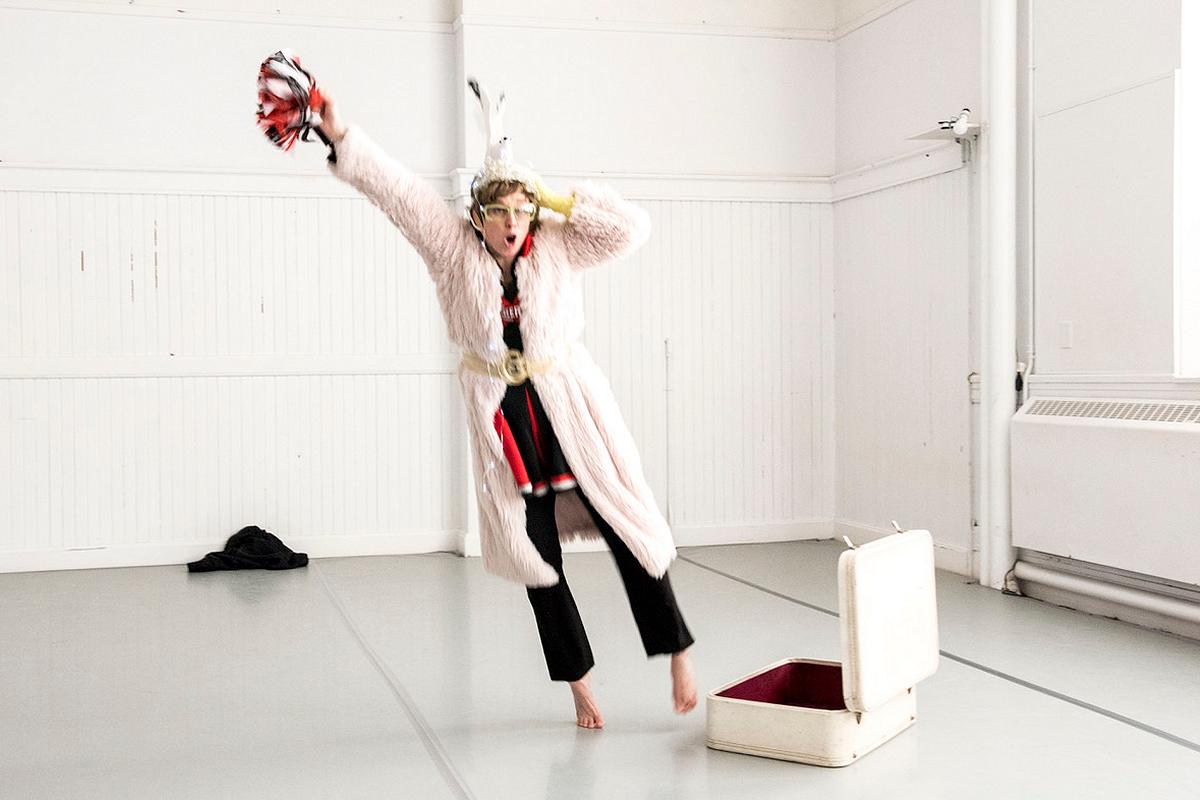
“It’s such an honour to be a part of this series,” adds Kate Story, whose original dance piece ‘Love in the Time of Covid’, created and performed with Ryan Kerr, will kick-off the performance series this Friday night.
“Public Energy has been ahead of the curve from the second Covid became the reality in our lives here in Peterborough, finding ways to keep the arts and artists visible,” Story notes.
“These artists have all been missing live audiences,” continues Kimball. “They’ve been very inwardly focused for months and are really missing that connection — even if it is with a small audience.”
Public Energy’s “The Pivot Series” features 10 short site-specific dance and theatre works at various outdoor locations in Peterborough from October 2 to 18, 2020. (Graphic: Public Energy)
And Peterborough audiences are biting at the bit for more chances to safely see live performances while they still can (if you miss the performances, Public Energy has partnered with the ReFrame Film Festival to create a short documentary about The Pivot Series for screening at the 2021 festival).
Patrons are asked to arrive 15 to 20 minutes prior to each performance. Washrooms will not be available on site and no food or drink will be provided. While there will be some seating available, you are encouraged to bring your own chair and to dress for the weather (there are no rain dates).
All tickets are pay what you can can be reserved online via Public Energy’s website at publicenergy.ca or by calling 705-745-1788.
Below is a comprehensive list and schedule of performances for The Pivot Series, with project descriptions courtesy of Public Energy.
Created and performed by Kate Story and Ryan Kerr with music by Arvo Pärt, Lou Reed, and Curtis Driedger.
When: Friday, October 2nd and Saturday, October 3rd at 7 p.m. Where: The parking lot behind The Theatre On King (171 King St., Peterborough)
Love in the Time of Covid plays with an idea that the forbidden is also erogenous, that love and trust are always hard, and that the aged body can love.
Kate Story revisits previously unfinished work, a duet set to the music of Arvo Pärt, reinterpreting this bizarre mating ritual for present times by expanding on themes of forbidden zones: mouths and hands.
Returning to his first independent choreographic work, Ryan Kerr presents audiences with a lyrical and hopeful affirmation of connection, love, and the present.
The choreography is accompanied by musician Curtis Driedger, interpreting Lou Reed’s Perfect Day.
Le Flâneur
Created and performed by Bill Coleman with music by Curtis Driedger,
When: Saturday, October 3rd at 2 p.m. Where: Millennium Park (30 King St., Peterborough, in front of the Boathouse at the Silver Bean Cafe)
Flâneur (French noun) – “to wander with no purpose”, a deliberately aimless pedestrian, unencumbered by any obligation or sense of urgency.
A costumed dancer and musician perform a series of unplanned performances that traverse the city. The spontaneous nature of the performances, and the travelling-through, avoids gathering of crowds and affects the public through unintentional encounters.
The traditional way of travelling — by foot — has long been the mode of transportation for minstrels, vagabonds … and la flâneur.
Reflecting on this method of traversal, this performance hopes to leave a trail, an experiential presence, reverberating through the people who are indirectly and unintentionally affected.
Wanderers and travellers have traditionally appeared throughout history on our streets and roads following upheaval and change. As a response to COVID-19 pandemic, to unleash our art freely in this manner seems an appropriate response
Note: This performance moves through Millennium Park northwards following the railroad tracks and pausing at each crossing. Audiences are encouraged to view the performance from any position. For those who are not mobile or who would like to sit or view from a stationary position, gather at the crossing by the Boathouse at the Silver Bean Cafe.
On Saturday, October 3rd, Bill Coleman will be performing his piece “Le Flâneur” in Millennium Park as part of Public Energy’s The Pivot Series. The performance, with music by Curtis Driedger, will move through the park northwards from the Boathouse at the Silver Bean Cafe, following the railroad tracks and pausing at each crossing. It’s one of 10 short site-specific dance and theatre works at various outdoor locations in Peterborough from October 2 to 18, 2020. (Photo: Wayne Eardley)
Essential Circus Stage Three
Created and performed by Jennifer (Opal) Elchuk, Tegan Moss, and Jeremy Pastic.
When: Thursday, October 8th at 7 p.m. Where: Peterborough Square courtyard (Charlotte St. between George and Water in Peterborough)
The illuminated clock tower at Market Hall provide an iconic backdrop for a stunning fire performance. Arriving at dusk, spectators have a chance to experience the extraordinary in a seemingly ordinary location.
Opal, Tegan, and Jeremy will dance with an exciting array of fire props. The spinning flames are accompanied by electro swing music that has an energetic excitement accessible across generations.
This playful and entertaining act invites the whole family to enjoy the magic of the circus.
Advertisement - content continues below
Bridge Over Troubled Water
By Aria Evans, created with and performed by Irma Villafuerte and Kevin Jones, Nikki Shaffeeullah and Sasha Tate-Howarth, Belinda Corpuz and Malcolm Connor, and Aria Evans, with accompaniment by Eirene Cloma.
When: Friday, October 9th at 6 p.m. Where: Inverlea Park (corner of Denistoun and Parkhill in Peterborough)
Taking place at Inverlea Park, with a bridge present in the background, three duets occur.
Working with pairs of two artists from different artistic disciplines, different cultural backgrounds, and different sexual orientations — who have been living together during the pandemic — each duet uses the metaphor of how a river flows and changes to portray how relationships also shift over time.
Inside The Sculpture
By Irèni Stamou, performed by Dreda Blow and Irèni Stamou.
When: Tuesday, October 13th at 12:30 p.m. and 5:30 p.m. Where: Peterborough Square courtyard (Charlotte St. between George and Water in Peterborough)
A daytime performance dance piece inside the sculpture “Figures Dancing” by Don Frost, located in Peterborough Square outside Market Hall. A variation of Irèni Stamou’s ongoing creation Bone Stories, this site-specific performance inside the sculpture, like the city’s soul, is relevant as a metaphor for the sign of our times. From inside the sculpture, we see social change, we acknowledge the separation of the live arts during the pandemic crisis, feel the void, and long to create, perform, connect.
Reflecting a sign of our times, exposed, vulnerable and courageous, the dance takes different rhythms, dynamics, and forms like forces of nature, spiraling in an intertwining of dancer and sculpture as part of life. Like dance and nature, the sculpture invites us into its space to move from inside itself, step on the limbs and become part of it. In this landscape, we also reimagine, reorient, pivot and witness the audience and performer, between movement, presence and stillness as a healing process.
Irèni Stamou and Dreda Blow rehearsing for their site-specific dance piece “Inside the Sculpture”, with two performances at 12:30 and 5:30 p.m. on Tuesday, October 13th in the Peterborough Square courtyard in downtown Peterborough. (Photo: Public Energy / Instagram)
Between the Dragon and the Tiger: how to maximize your energy in public
By Coman Poon and Naishi Wang.
When: Thursday, October 15th at 12:30 p.m. and 5:30 p.m. Where: Outside Bata Library at Trent University (1600 West Bank Dr., Peterborough)
A new dance/ritual collaboration between two Chinese-Canadian artists that enjoy working site-specifically.
They offer an artistic approach that embodies an exploratory and culturally hybridized process that centres on feng shui (“wind-water”) principles of establishing and sustaining environmental harmony.
In this time of conflict and separation, the artists invite all to interact and dialogue with each other, as a bridge to intercultural understanding.
Armour – CANCELLED
By Christy Stoeten, performed by Revy Barber, Madie Brown, and Sharazade Vahid and designed by Sonia Gemmiti.
Note: This performance has been cancelled due to performers in the piece needing to self-isolate. Public Energy plans to present this work in spring 2021.
When: Friday, October 16th at 7 p.m. Where: Heritage Pavilion Stage on Armour Hill (via Museum Dr. at 300 Hunter St. E. in Peterborough)
In the words of creator Christy Stoeten:
“When I was in high school, there really wasn’t much to do on a Saturday night in Peterborough. The options included the Mustang Drive-In, midnight trips to the new 24- hour Sobeys or a drive up Armour Hill. There was always something exciting about driving up the winding road to get to the top of Armour Hill, like we didn’t know what to expect when we arrived at the top …
This piece captures the essence of what it’s like to be young in Peterborough. Or at least what it sometimes felt like for us. With stories from my teenage experience and those of my collaborators, we’ve created a work that feels like a series of snapshots from another time. The piece doesn’t take place during a specific era, but transports the audience to a time and place that feels: nostalgic, bizarre and at times sentimental. Think The Twilight Zone meets Fast Times at Ridgemont High.”
Advertisement - content continues below
Point of Origin
Concept and choreography by Returning River (Jen Hum, Naishi Wang, Emily Law, Pam Wong-Shoebottom, Henry Mak) and performed by Jen Hum, Naishi Wang, and Pam Wong-Shoebottom.
When: Saturday, October 17th at 7 p.m. Where: The Boathouse at Millennium Park (130 King St., Peterborough)
In the words of Returning River:
“Point of Origin is a project we at Returning River have been developing for two years. Presently, we are working from three separate points of entry into exploring the multilayered concepts of identity, face, and voice with broad strokes gesturing to an alternative voice, societal stereotypes, the philosophies of East and West, transformation, history, and representation.
Stream ‘one’, our identity location solos, flows from personal connections with specific, physical locations in Toronto that are tied to our memories, name, ancestry, and hence our sense of self.
Stream ‘two’ is based on the examination of ‘What is it like to live with this face?’. We examine face as our main physical identifier and the friction between how we self-identify and how others identify us. ‘Face’ is also a complex and nuanced concept in East Asian culture seen as one’s social currency.
Stream ‘three’ is to be a performative transformation of the concept of bi-culturalism. Working with ideas of food, names, voice and movement, the artists embark on a journey that includes stories of receiving a second name, the effect of one’s name on self, vocalizing naming and renaming articles, and using cooking as a metaphor for the passing down of culture.”
Meeting At Thebes
By Lee Bolton, performed by Peyton Le Barr with Mithila Ballal and Jim Angel.
When: Sunday, October 18th at 6 p.m. Where: Confederation Square (499 George St. N., Peterborough)
Meeting at Thebes is an interactive storytelling journey that blends practical community action with ritual, physical theatre and contemporary text. By combining an ancient story told at a local site of profound modern and historical resonance with a performance that fully embraces the present moment, Meeting at Thebes speaks directly to relevant social issues while offering room for us as a community, amidst months of isolation and uncertainty, to come together and enact the core ingredient of healing: a collective catharsis.
Meeting at Thebes is based on Bolton’s play Jocasta, first produced in Leeds, UK in 2009. Jocasta is a feminist reimagining of Sophocles’ Greek tragedy Oedipus Rex. Sophocles wrote about kings, gods and inescapable fate against the backdrop of a plague threatening the city of Thebes. Jocasta shifted the focus from the powerful to the powerless, not only the doomed mother/wife of the title but the marginalized of the city.
The Pratfall Affect – RESCHEDULED
Written, directed, and choreographed by Wes Ryan with musical direction by Patrick Walsh and featuring Matt Gilbert and Phil Lyons.
When: Tuesday, October 20th at 12:30 p.m. and 5:30 p.m. Where: Intersection of Simcoe St. and Bethune St. in Peterborough
Presented by These are the Horizon Days, this show is an examination of economics, addiction, ice cream, and community told through harmonica and dance in six-foot intervals. Note: This performance was originally scheduled for Wednesday, October 7th.
kawarthaNOW.com is proud to be a sponsor of Public Energy’s 2020-21 season.
Ontario is reporting 538 new cases of COVID-19 today, with the backlog of tests under investigation increasing by 15,347 to a record high of 82,473.
Most of today’s 538 new cases are in Toronto (229), Peel (101), Ottawa (66), and York (43), with smaller increases in Durham (14), Simcoe Muskoka (14), Waterloo (13), Hamilton (8), Wellington-Dufferin-Guelph (7), and Niagara (6), and Brant (6). The remaining 23 public health units are reporting 5 or fewer cases, with only 10 reporting no cases at all. Of today’s cases, 60% are among people under the age of 40.
There have been 3 new deaths and 12 new hospitalizations, with an increase of 1 ICU patient.
There are 64 new cases in Ontario schools today (29 students, 14 staff, and 21 unidentified individuals). In licensed child care settings, there are 8 new cases (5 children and 3 staff).
Advertisement - content continues below
In the greater Kawarthas region, there are 4 new cases to report today in Peterborough, 2 new cases in Kawartha Lakes, and 1 new case in Haliburton. There are no new cases in Northumberland or Prince Edward and Hastings counties.
There are currently 27 active cases in the greater Kawarthas region, including 15 in Peterborough, 4 in Prince Edward and Hastings counties, 4 in Kawartha Lakes, 2 in Northumberland, and 2 in Haliburton.
None of the new cases in schools and child care settings are in the greater Kawarthas region. However, on Thursday (October 1), Peterborough Public Health reported an inconclusive test result at St. Peter Catholic Secondary School in Peterborough that it is treating as a probable case.
Since the pandemic began in the greater Kawarthas region, there have been 125 confirmed positive cases in the Peterborough area (108 resolved with 2 deaths), 182 in the City of Kawartha Lakes (159 resolved with 32 deaths), 43 in Northumberland County (40 resolved with 1 death), 17 in Haliburton County (15 resolved with no deaths), and 56 in Hastings County and Prince Edward County (47 resolved with 5 deaths). The most recent death was reported in Northumberland on September 8.
Province-wide, there have been 52,248 confirmed cases, an increase of 538 from yesterday, with 44,422 (85% of all cases) resolved, an increase of 515. There have been 2,851 deaths, an increase of 3 from yesterday, with 1,838 deaths reported in long-term care homes, an increase of 2. A total of 3,963,111 tests have been completed, an increase of 39,646 from yesterday, with 82,473 tests under investigation, an increase of 15,347 from yesterday.
This report is based on data supplied by the province’s integrated Public Health Information System (iPHIS), as well as any additional information supplied by health units. This information is at least 24 hours old, so it is not real-time data. Note that each health unit reports the information in a different way.
Peterborough Public Health’s service area is the City and County of Peterborough and the Hiawatha and Curve Lake First Nations.
Confirmed positive: 125 (increase of 4) Active cases: 15 (increase of 4) Deaths: 2 (no change) Resolved: 108 (no change) Total tests completed: Over 29,300 (increase of 150) Institutional outbreaks: Fairhaven (no change)
Haliburton, Kawartha, Pine Ridge District Health Unit
The Haliburton, Kawartha, Pine Ridge District Health Unit’s service area is the City of Kawartha Lakes, Northumberland County, and Haliburton County.
The health unit provides reports from Monday to Friday, excluding statutory holidays.
Confirmed positive: 242, including 182 in Kawartha Lakes, 43 in Northumberland, 17 in Haliburton (increase of 2, including 1 in Kawartha Lakes and 1 in Haliburton) Probable cases: 0 (no change) Hospitalizations (total to date): 15 (no change) Deaths: 33 (no change) Resolved: 214, including 159 in Kawartha Lakes, 40 in Northumberland, 15 in Haliburton (no change) Active cases: 8, including 2 in Haliburton, 4 in Kawartha Lakes, and 2 in Northumberland (increase of 2, including 1 in Kawartha Lakes and 1 in Haliburton) Institutional outbreaks: None (no change)
Hastings Prince Edward Public Health
Hastings Prince Edward Public Health’s service area is Hastings County (including Bancroft) and Prince Edward County.
The health unit provides reports from Monday to Friday, excluding statutory holidays.
Confirmed positive: 56 (no change) Active cases: 4 (no change) Deaths: 5 (no change) Hospitalized: 0 (no change) Hospitalized and in ICU: 0 (no change) Hospitalized and in ICU on ventilator: 0 (no change) Recovered: 47 (no change) Total tests completed: 37,790 (increase of 129) Institutional outbreaks: None (no change)
Advertisement - content continues below
Province of Ontario
Confirmed positive: 52,248 (increase of 538) Resolved: 44,422 (increase of 515, 85% of all cases) Hospitalized: 162 (increase of 12) Hospitalized and in ICU: 36 (increase of 1) Hospitalized and in ICU on ventilator: 17 (no change) Deaths: 2,851 (increase of 3) Deaths of residents in long-term care homes: 1,838 (increase of 2) Total tests completed: 3,963,111 (increase of 39,646) Tests under investigation: 82,473 (increase of 15,347)
New COVID-19 cases in Ontario from August 31 – September 29, 2020. The red line is the number of new cases reported daily, and the dotted green line is a five-day moving average of new cases. (Graphic: kawarthaNOW.com)COVID-19 tests completed in Ontario from August 31 – September 29, 2020. The red line is the number of tests completed daily, and the dotted green line is a five-day moving average of tests completed. (Graphic: kawarthaNOW.com)
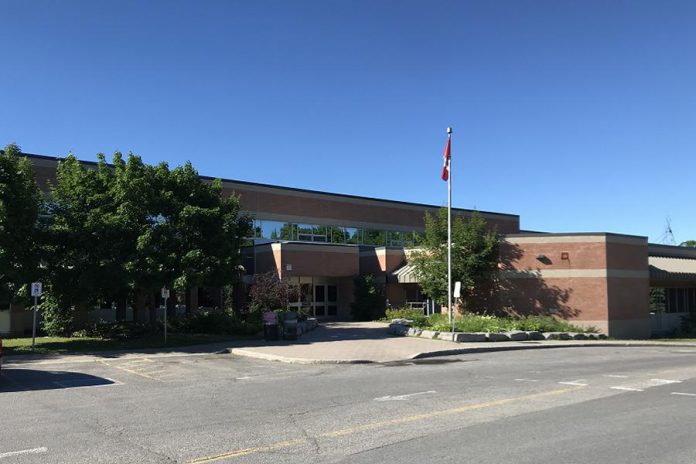
St. Peter Catholic Secondary School is located at 730 Medical Drive in Peterborough. (Photo: Peterborough Victoria Northumberland and Clarington Catholic District School Board)
St. Peter Catholic Secondary School in Peterborough issued a letter to families on Thursday (October 1) advising that someone at the school received an inconclusive test result for COVID-19.
UPDATE – Negative test result
The Peterborough Victoria Northumberland and Clarington Catholic District School Board advised on Sunday, October 4th that the individual who had an inconclusive test result last week has since tested negative for COVID-19. All students and staff who were asked to self-isolate were cleared by Peterborough Public Health to return to school on Monday, October 5th.
The school, located at 730 Medical Drive, states Peterborough Public Health notified the school on Thursday of the inconclusive test, which the health unit is treating as a probable case “out of an abundance of caution.”
The individual who received the inconclusive test — which the school has not identified as a student or staff person — will remain at home until the health unit advises they may return to school, the letter reads.
Advertisement - content continues below
“As always, the health and wellbeing of our students and staff remain our top priority,” reads the letter to families from St. Peter principal Shannon Brady. “We are working closely with the health unit to identify those who will be required to stay home and self-isolate. Those students and their families will receive a direct letter and call from the school advising them as to any next steps they must take.”
Galen Eagle, communications manager at the Peterborough Victoria Northumberland and Clarington Catholic District School Board, states in an email “about 36 students have been directed to stay at home and self-isolate until further notice.”
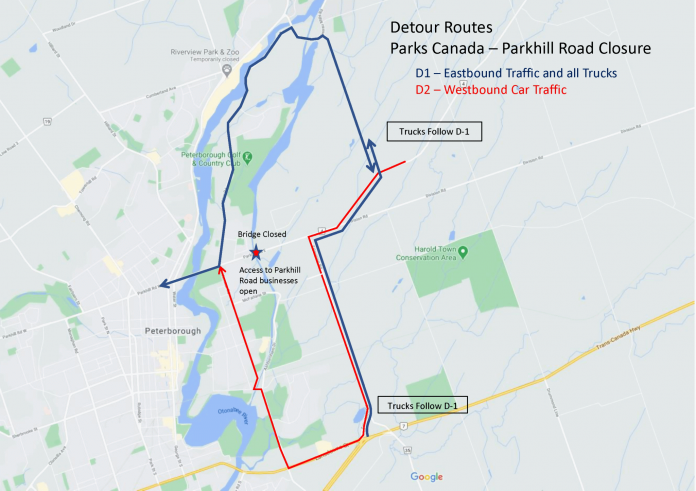
The detour routes for the closure of the Warsaw Swing Bridge in Peterborough, effective October 5, 2020 until spring 2021. (Map: City of Peterborough)
The City of Peterborough has announced detour information during the closure of the Warsaw Swing Bridge over the Trent-Severn Waterway on Parkhill Road East.
The bridge will be closed from Monday (October 5) until spring 2021. Access for local residents and businesses on Parkhill Road will remain open.
There are two signed detour routes. For eastbound traffic (including all trucks), the main detour route (D-1) follows University Road, Nassua Mills Road, and Armour Road.
A secondary detour route for westbound traffic (D-2) follows Television Road, Lansdowne Street, and Ashburnham Drive.
Advertisement - content continues below
Signs will be posted for the detour routes and residents and visitors are encouraged to follow signed detour routes.
If you were hoping to take sideroads to get from Television Road to Ashburnham Drive and vice versa, you won’t be able to — MacFarlane Avenue, Old Norwood Road, and Maniece Avenue will be closed to through traffic.
Local traffic and emergency vehicles can continue to access properties along these roads, but not through traffic.
The city states it will continue to monitor operations on the area road network and on Lansdowne Street during the detour to facilitate traffic flows.
kawarthaNOW.com offers two enews options to help readers stay in the know. Our VIP enews is delivered weekly every Wednesday morning and includes exclusive giveaways, and our news digest is delivered daily every morning. You can subscribe to one or both.
Submit your event for FREE!
Use our event submission form to post your event on our website — for free.
To submit editorial content or ideas, please contact us.