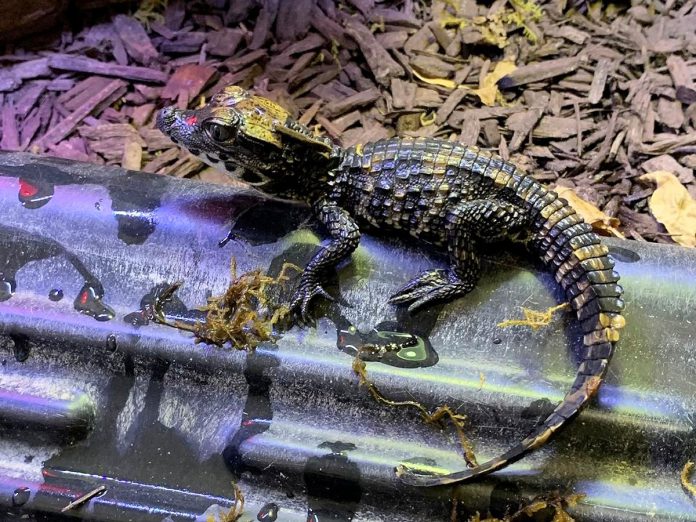
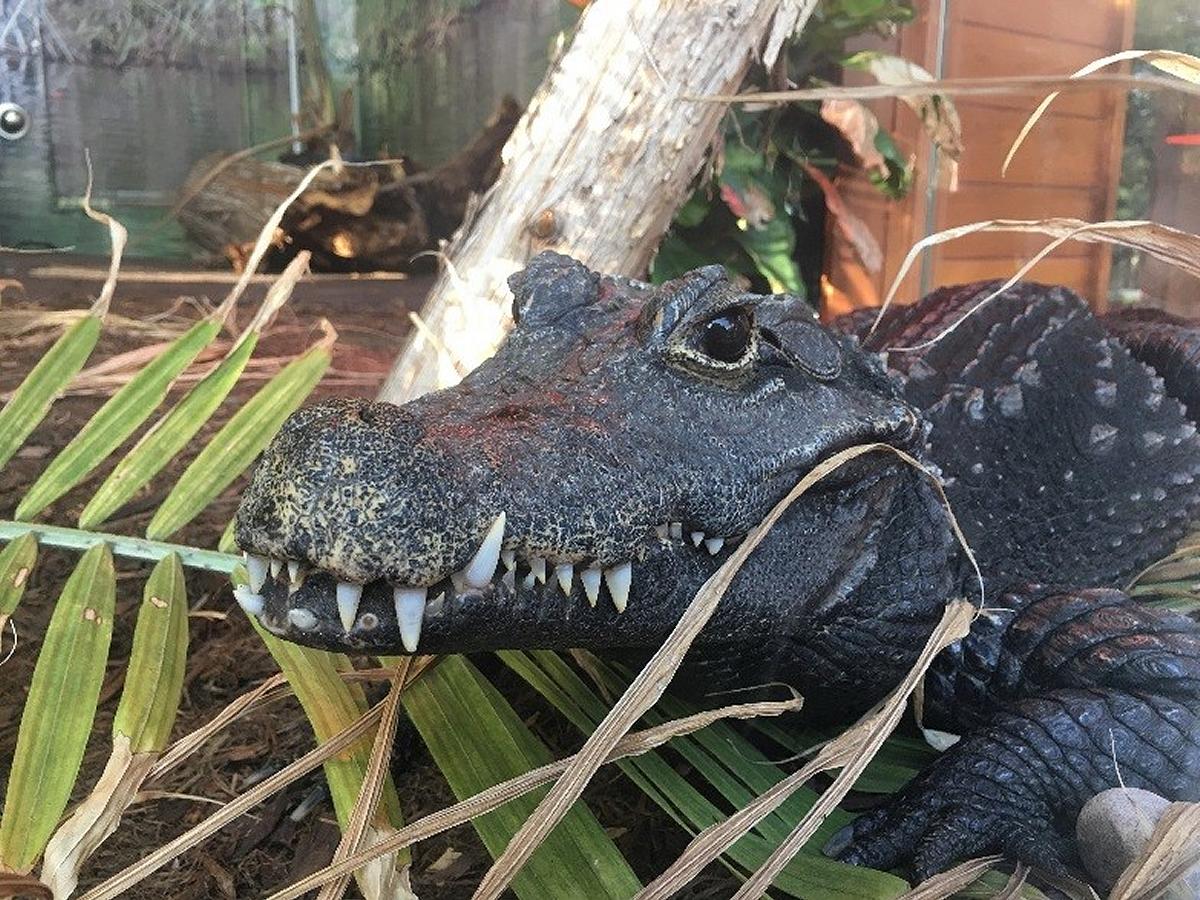
One of the two West African dwarf crocodile hatchlings at the Riverview Park & Zoo in Peterborough. (Photo: Riverview Park & Zoo)
Peterborough’s Riverview Park & Zoo has announced its latest additions: two West African dwarf crocodile hatchlings.
The smallest true crocodile species, the West African dwarf crocodile can reach 1.6 metres (5.2 feet) in length. In comparison, the largest crocodile species — the saltwater crocodile, which is also the largest reptile on the planet — can reach lengths of more than 6.5 metres (23 feet).
West African dwarf crocodile hatchlings are typically 28 centimetres (11 inches) long and grow quickly. The young crocodiles eat worms, insects, tadpoles, and small fish. As adults, they eat fish, crustaceans, crabs, insects, amphibians, birds, small mammals, snakes, and lizards.
Advertisement - content continues below
The West African dwarf crocodile is native to the tropical lowland regions of sub-Saharan and west central Africa, from the southern tip of Senegal in the north to the Democratic Republic of the Congo in the east and down to a small region of northern Angola in the south. They frequent densely vegetated swampy ponds, slow moving rivers and streams, and occasionally savannah pools.
As compensation for its small size, the West African dwarf crocodile has an aggressive temperament, with a thick body covering of heavily armoured scales protecting it from injury. The species has a life span of up to 75 years.
The Riverview Park & Zoo is Canada’s only free-admission accredited zoo. For more information about the West African dwarf crocodile along with the zoo’s 40 other species, and to support the zoo through donations, visit www.riverviewparkandzoo.ca.
West African dwarf crocodiles can reach 1.6 metres (5.2 feet) in length when fully grown. In comparison, saltwater crocodiles can reach lengths of more than 6.5 metres (23 feet). (Photo: Riverview Park & Zoo)
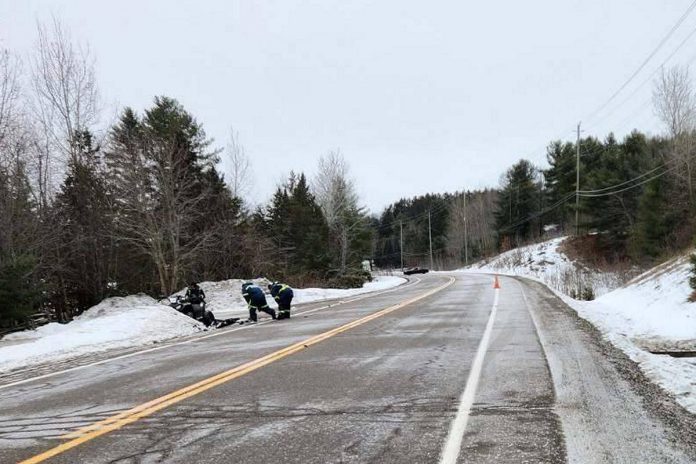
Haliburton Highlands OPP document the scene of a single ATV collision on Highway 35 near Matabanick Road in the Township of Algonquin Highlands that claimed the life of the 43-year-old driver on January 8, 2023. (Photo: Ontario Provincial Police)
A 43-year-old Haliburton County man is dead following a single ATV collision on Sunday morning (January 8).
Just before 7:30 a.m., the Haliburton Highlands OPP and emergency services responded to the collision on Highway 35 near Matabanick Road in the Township of Algonquin Highlands.
The driver of the ATV was pronounced dead at the scene.
Advertisement - content continues below
Police have identified the driver as a 43-year-old man of the Municipality of Dysart et al but have not released his name.
Highway 35 will be closed for several hours in both directions between Highway 118 and Kushog Lake Road while police investigate and document the scene.
Anyone with any information in relation to te investigation is asked to call the Haliburton Highlands OPP at 1-888-310-1122 or Crime Stoppers anonymously at 1-800-222-TIPS (8477).
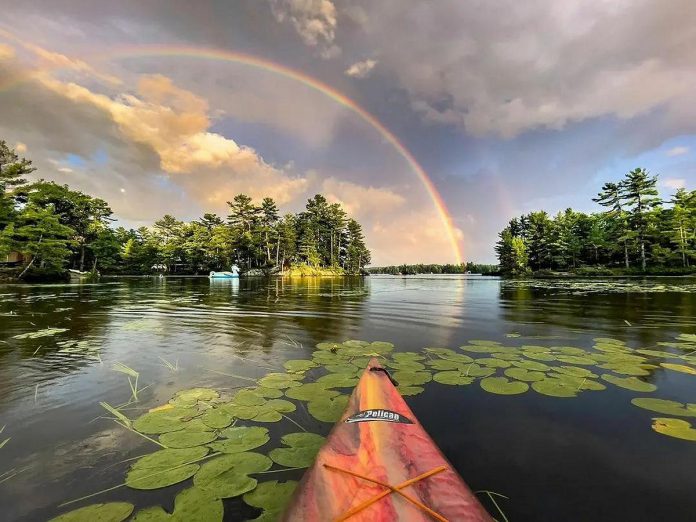
Mike Quigg's photo of a double rainbow over Kasshabog Lake in Peterborough County was one of our top photos on Instagram in 2022. (Photo: Mike Quigg @_evidence_ / Instagram)
Since 2012 — for a full 10 years — I’ve been selecting and posting a photo of the day on Instagram, and then also sharing it on our other social media channels. I’m always on the lookout for photos from across our five-county readership area that represent the beauty of the Kawarthas, regardless of the season. I find the photos by checking for our #kawarthaNOW hashtag each day on Instagram.
In the course of 10 years, I’ve come to know and appreciate many of the photographers who regularly tag us on Instagram and allow us to share their photos. Some of them have become friends. This past year, many of our “regulars” have appeared multiple times in our top nine photos of each month, having shared so many photos with us over the year.
So it’s no surprise you’ll find many of them in our top photos of the last year which, for the first time, includes a record number of 22 photographers. There were so many wonderful captures in 2022, and I’m very grateful to all the photographers who allowed us to share their work and the beauty of the Kawarthas with you. Happy New Year to them and and to all of you, our readers!
If you want to get on our top photographers list, all you need is an Instagram account and to use our hashtag #kawarthanow when posting your photo. We share photos from across our readership area, which is the five-county area surrounding Peterborough which includes Peterborough, Northumberland, City of Kawartha Lakes, Haliburton, and Hastings (we sneak in the occasional Algonquin Park picture as well, particularly if it’s by a Kawarthas photographer).
To see our daily shares of photos, follow us on Instagram @kawarthanow and check out our feed’s highlight reels for recaps of every month in 2023.
Advertisement - content continues below
#1. Rainbows and unicorns! Kayaking on Kasshabog Lake with Mike Quigg @_evidence_
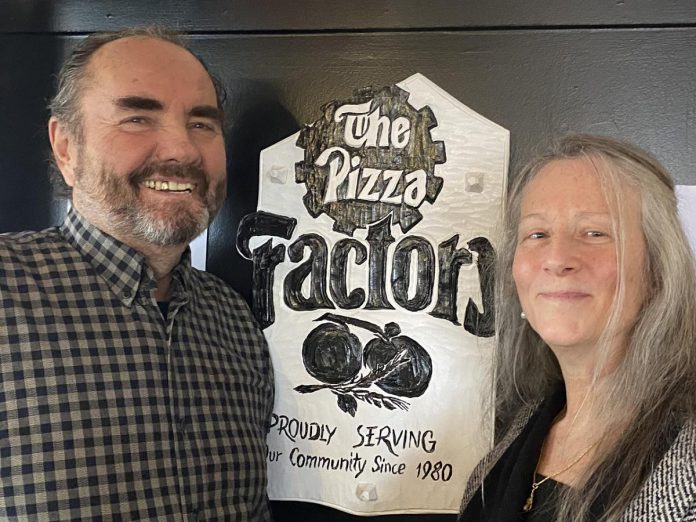
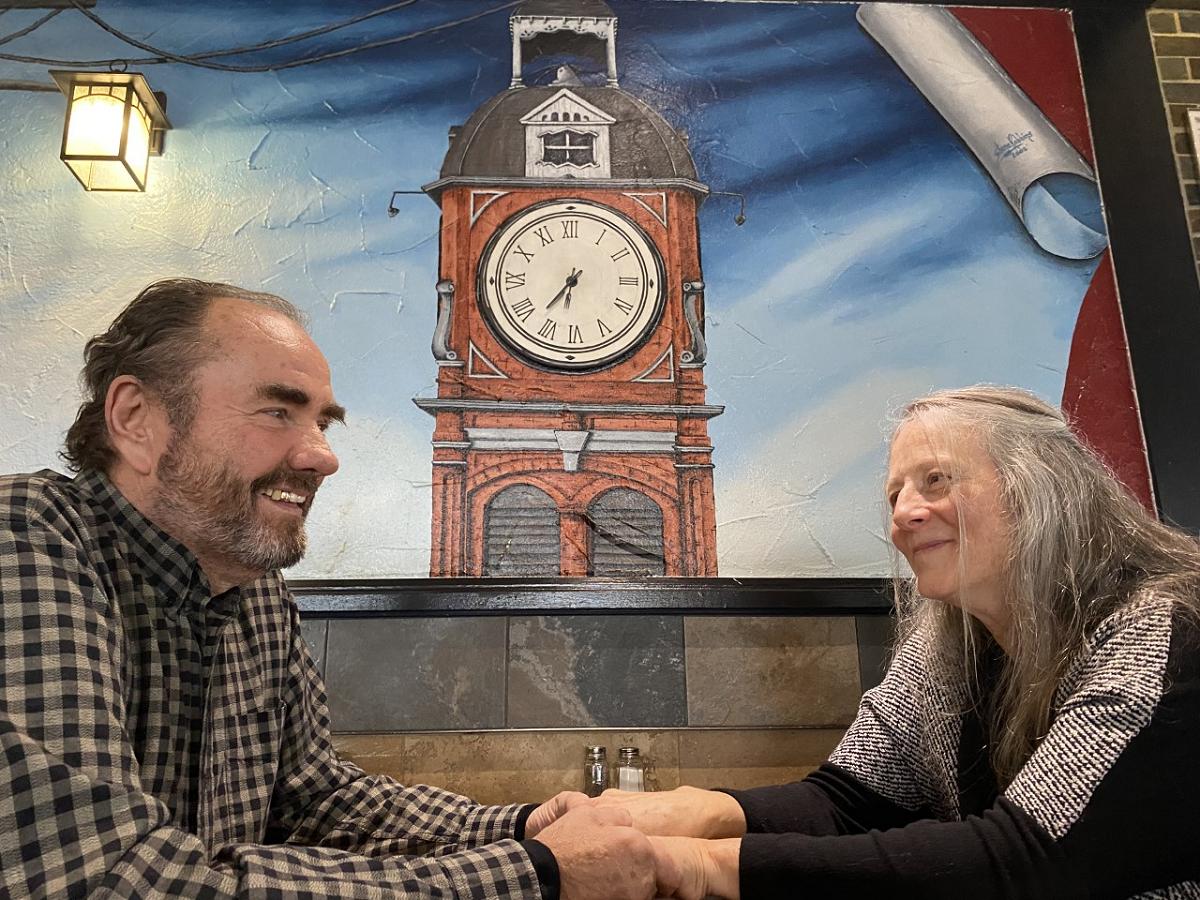
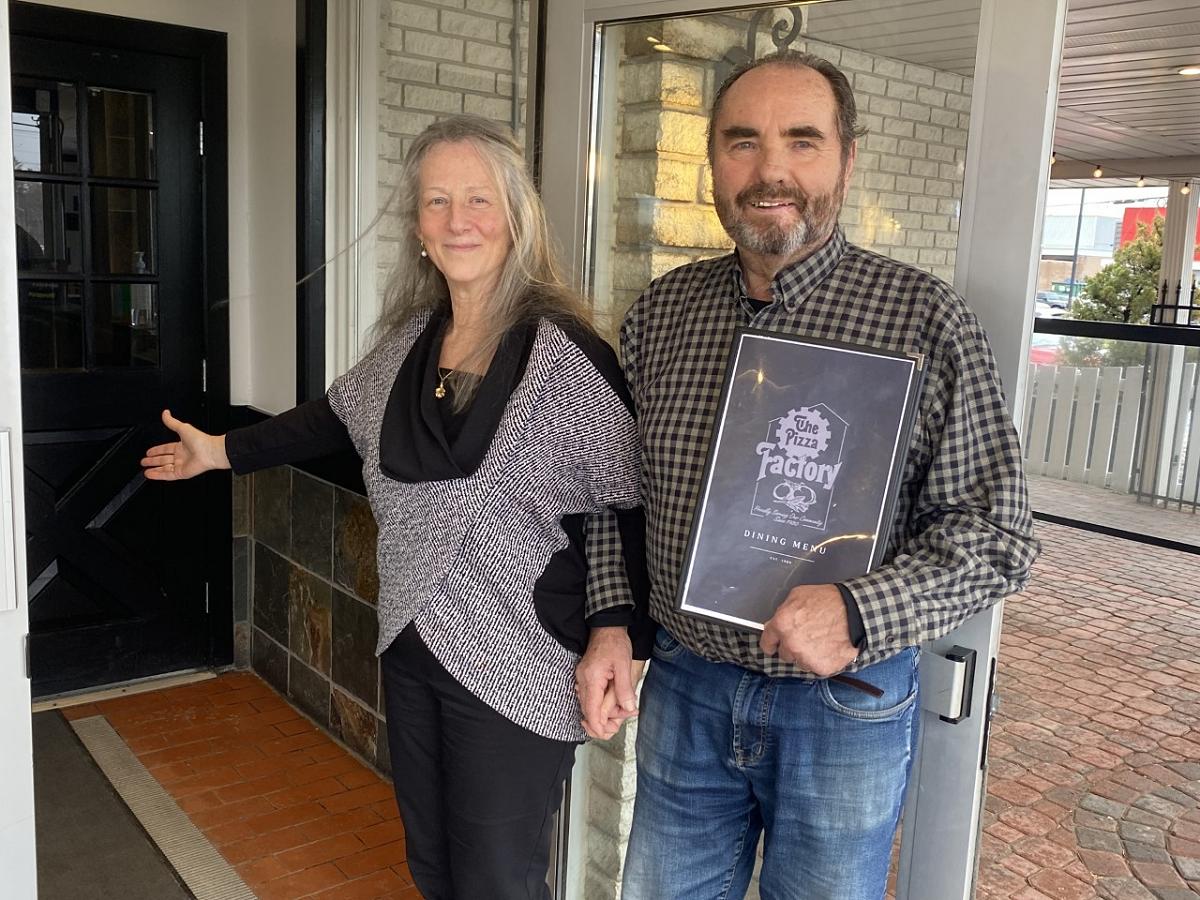
Peter and Anna Bouzinelos, owners of The Pizza Factory at 1000 Lansdowne Street West in Peterborough, are closing the iconic restaurant on January 29, 2023 after almost 43 years in business. (Photo: Paul Rellinger / kawarthaNOW)
Anyone planning to drop by The Pizza Factory this month to personally thank Peter and Anna Bouzinelos best be prepared: the soon-to-retire couple is going to turn the tables on you.
With the doors of the iconic Peterborough restaurant set to close for good on January 29th — close to 43 years after they were opened — Peter and Anna are the ones who are grateful for those who have not only dined at the Lansdowne Street West landmark but have also shared their life milestones with them.
“The Pizza Factory is a unique place … a place where a lot of beginnings have occurred, where a lot of emotions have been felt,” says Anna, noting marriage proposals, anniversary celebrations, countless birthdays, and post-funeral remembrances are as much as part of the restaurant’s DNA as the tables they were marked at.
Advertisement - content continues below
Share on Bluesky
“People have shared many of their stories with us and gone through many milestones with us. We’re very honoured to have been a part of so many lives.”
As Peter puts it, it’s “the people” that he and his wife will miss the more than anything, adding “I’m praying to be healthy and strong to see the last customer.”
That prayer, discloses Anna, is well founded as the restaurant’s imminent closing has been necessitated and hastened by stern “doctor’s orders.”
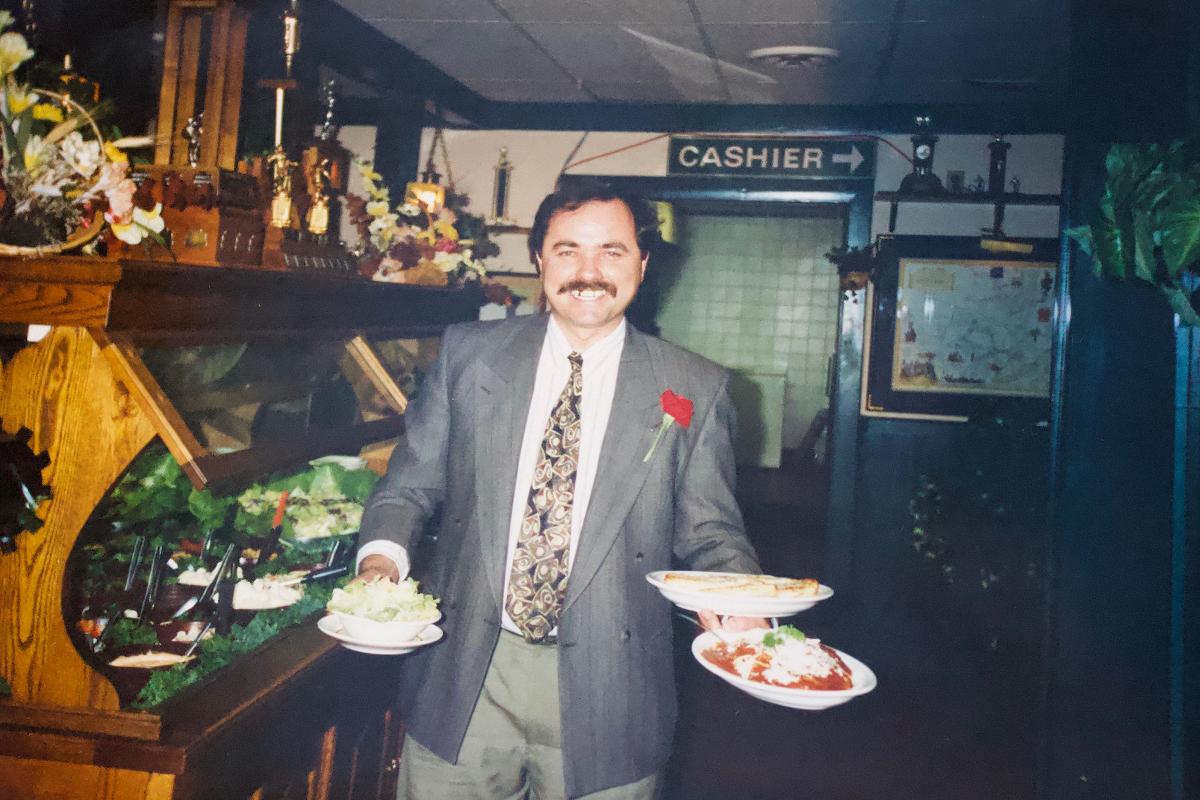
Peter Bouzinelos first opened The Pizza Factory in 1980 with Tom Malakos, a teen friend from Greece. They ran it together until 1992, when Tom purchased Trentwinds. (Photo courtesy of Peter Bouzinelos)
“My health is not the greatest,” says Peter, who suffers from rheumatoid arthritis and complications caused by the stress.
“Before COVID, my doctor told me ‘Peter, you can’t carry on the way you have with stress. You need to retire. You need to step back.’ When people walk into our door, I want to be able to say ‘Hi. Welcome. Have a seat.’ Now I can’t walk around the tables (to chat with customers). The strength in my legs is not there. I don’t feel 68 (years old) but my body says you have a lot of miles, so you better slow down.”
And so the difficult — agonizing, actually — decision to call it a day, made in conjunction with Anna and the couple’s four older children, was made. February will see the landmark cleared out with a new tenant — a restaurant chain, confirms Peter, but not one that is Italian food-oriented — taking possession on March 1st.
Advertisement - content continues below
While The Pizza Factory’s closing, on the surface, is just another on a long list of longtime hospitality business closures seen in recent years — think Trentwinds, The Carousel, Miss Diana’s, and The Rock Haven, for example — the back story behind its opening remains one that never gets old and, as such, pays homage to those who came to Canada with virtually nothing and made their way via a incomparable determination to succeed.
Peter arrived in Montreal in 1970 at age 17 from his birth home of Koutsi, Greece, disembarking from his flight with $150, an empty suitcase, and a return flight ticket he was determined not to use.
With an aunt and uncle living in Kingston, he gravitated there and took on a series of jobs, including an initial foray as a construction labourer. But more to the point, and crucially, he reconnected with Tom Malakos, a teen friend from Greece. Together, they operated a deli until, upon the invitation of Ken Pappas, they both came to Peterborough in 1975.
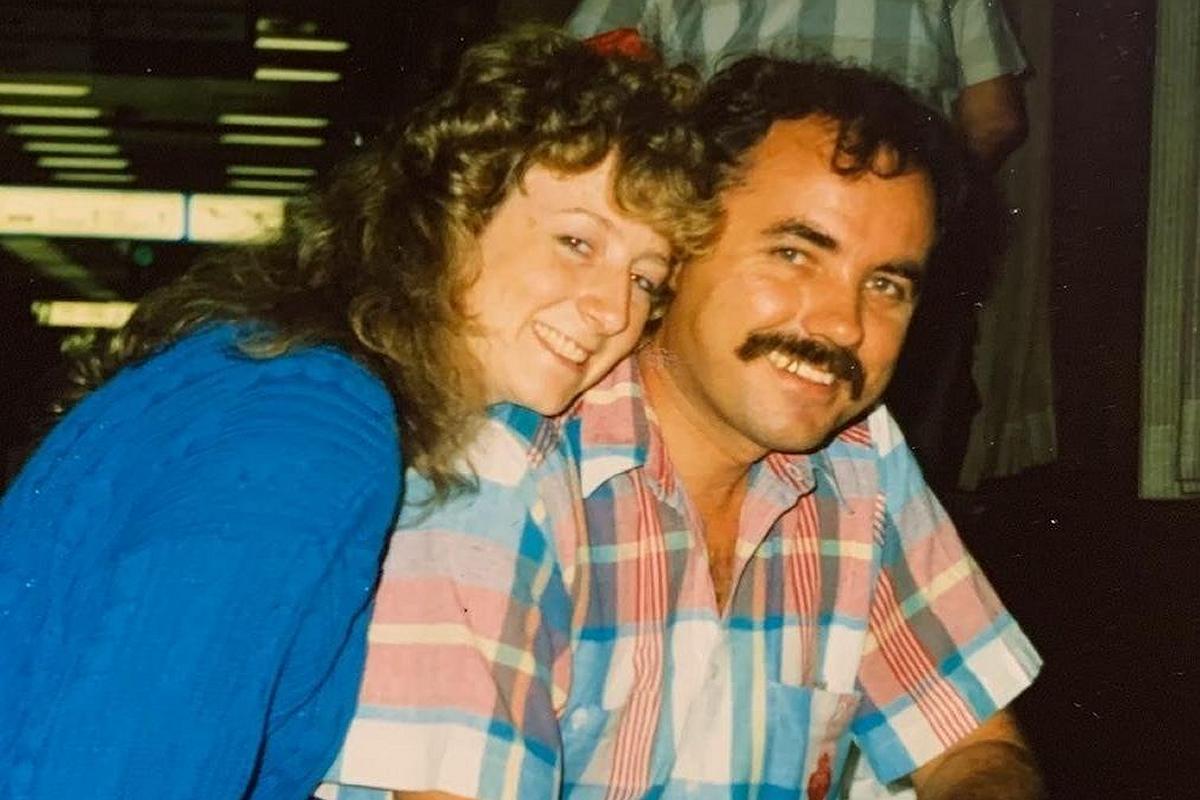
Anna and Peter Bouzinelos married in 1992 and have raised four children, two of whom are working at the restaurant. Anna herself first began working at The Pizza Factory in 1981. (Photo courtesy of Peter Bouzinelos)
“I knew construction (work) wasn’t for me,” says Peter. “I wanted to see people. I like to interact with people. Construction doesn’t do that. You just fight with two-by-fours. If you’re all alone, how are you going to learn English?”
Settled in the city, Peter and Tom took over management of the Tropicana Restaurant at the Simcoe Street bus terminal. A number of restaurant opportunities presented themselves and the pair took full advantage: Tom’s Pizza, Constantine’s, Toby’s, Mother’s, and Milo’s all came under their management.
However, it was their purchase of Captain’s Cove, a fish-and-chips eatery at Lansdowne Street West and The Parkway, that led to the April 10, 1980 opening of The Pizza Factory. They were partners there until 1992 when Tom bought Trentwinds.
Advertisement - content continues below
Share on Bluesky
Peter was on his own but not for long. In 1981, Anna had come to work for Peter, serving as well as holding down hostess and bookkeeping positions. Peter was impressed by her the moment she walked in the door — so impressed that, in 1992, he took her to Greece where they were married. In a sense, Peter literally took his work home with him.
“The light came on when she came in and said ‘I want a job,'” recalls Peter, adding “You could tell she had a very good upbringing. You could tell she’d be serious and sincere about her job.”
Peter and Anna raised four children, two of whom work with them at the restaurant running the take-out and the kitchen. Now, their two other kids are helping out “because we’re so busy,” says Anna.
“It’s all hands on deck right now. A past employee has come in and helped. So many people we know are asking ‘Do you need help? We’ll come the last day. We’ll do whatever you want.'”
“When we had the romaine shortage, we were having a really hard time going all over Peterborough trying to find romaine. Customers came in and said ‘We’ll go look for you. We know how busy you are.'”
Peter and Anna Bouzinelos have decided to retire and close The Pizza Factory as Peter suffers from rheumatoid arthritis and complications caused by stress. (Photo: Paul Rellinger / kawarthaNOW)
Over the years since opening, The Pizza Factory has faced serious challenges in terms of maintaining its slice of the pizza pie. Olive Garden came in the early 1990s and left just as quickly. Boston Pizza, which is still open, is down the road on Lansdowne Street.
While acknowledging competition has been a constant in a sector where it is awfully tough to sustain any longevity, Peter says words spoken to him long ago by Don Buys (of Buys Excavating fame) served him well then and continue to ring in his ears today.
“He knew my name but he called me Greek,” laughs Peter. “He said ‘Greek, look after your customers and don’t worry about the rest. You worry about what you’re doing here.’ That was the best advice.”
“Two things. When you see a customer at the door, number one, be thankful that customer came to your door. He or she had so many choices to go any other door. The other thing is don’t judge that person if he has a tie on or just an ordinary shirt. Don’t say ‘Sir, what are you here for?’ Treat everyone with respect and dignity.”
Advertisement - content continues below
Share on Bluesky
Now, as the days to closing check off on the calendar with increasing rapidity, both Peter and Anna are nothing but grateful for the support of customers, both of the longtime and new variety, as well as the Peterborough community as a whole.
“Peterborough people are amazing,” praises Peter. “It’s like everyone was selected to be here. I respect, I value, what Peterborough has done for me personally. It opened the door and said ‘Come on in’ with no promises of anything. I am very thankful that I settled here in Peterborough.”
At some point in February — the date is yet to be finalized — the couple will auction off restaurant tables, furniture, and other assorted items with all proceeds going to Kawartha Food Share. As well, until closing, coffee mugs, T-shirts, toques, and hats with the Pizza Factory logo on them are being sold, again benefiting Kawartha Food Share.
The Pizza Factory’s famed garlic-heavy World Famous Caesar Dressing will be returning to shelves at Foodland and Sobeys after a pandemic-forced break. (Photo courtesy of Peter Bouzinelos)
Peter also plans to keep the sign message board outside the restaurant in place. After fixing it up, he will to donate the advertising space to groups looking to post their community messages at what is arguably the city’s busiest intersection.
And for those worried about being able to access Peter’s World-Famous Caesar Dressing, fret not — they will continue to produce and distribute the dressing as well as Peter’s 100% Pure Extra Virgin Olive Oil from Peter’s Famous Foods, with plans to return it to shelves at Foodland and Sobeys after a pandemic-forced break.
As for the couple’s retirement plans, Anna is quick to answer.
“My first retirement project is to get him healthier,” she says, to which Peter says “She’s not a sergeant but she is CEO.”
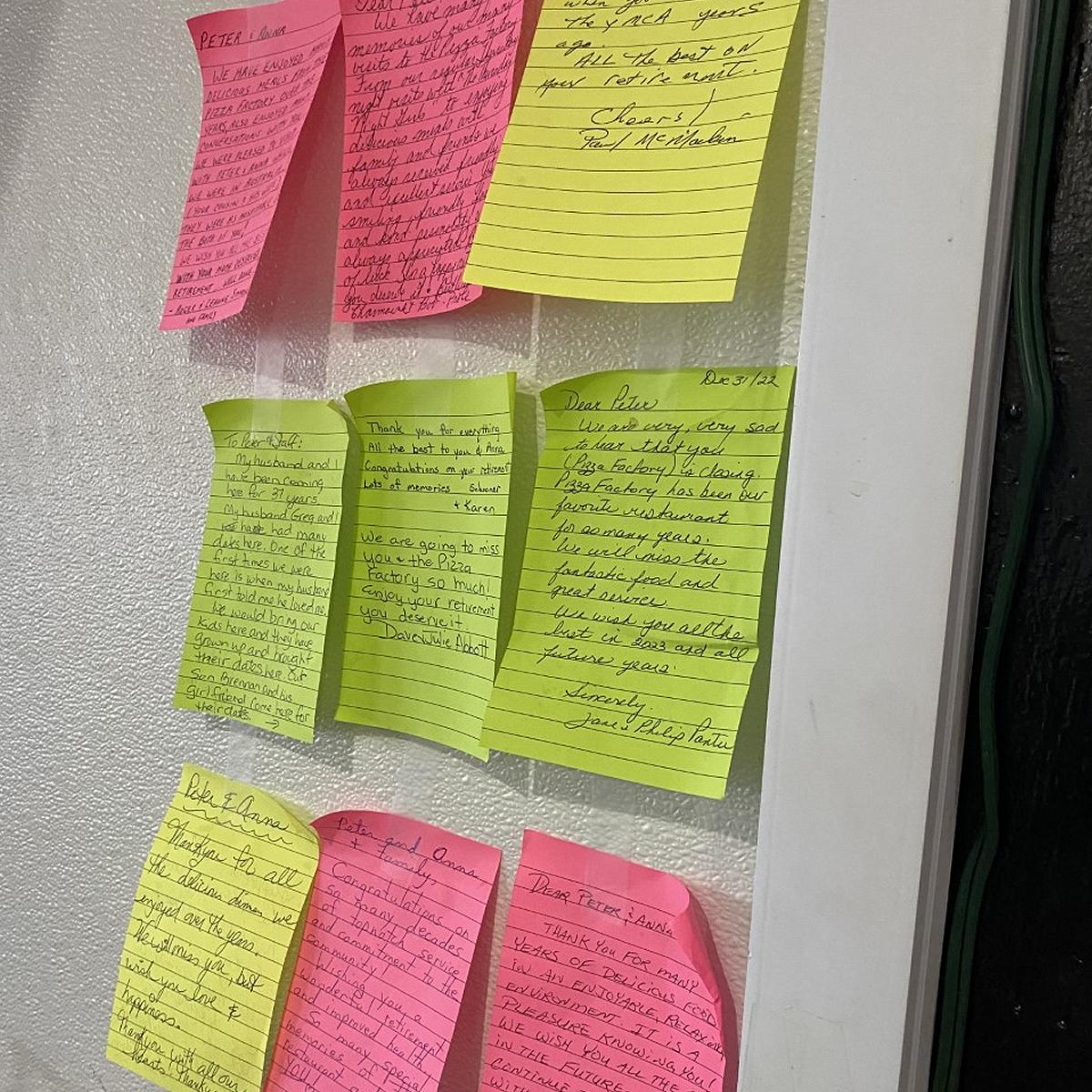
The Pizza Factory customers have been leaving notes of memories, thanks, and best wishes to Peter and Anna Bouzinelos after learning they are retiring and closing the restaurant. (Photo: Paul Rellinger / kawarthaNOW)
Share on Bluesky
Now they’ll both have plenty of time to reflect on the their blessing of having had numerous loyal employees and customers whom they remains extremely grateful.
“We have a lot of people coming in crying,” says Anna.
Fighting back tears of his own, Peter’s final words are simple but dripping with sincerity.
“I’m going to miss you all. I love you all.”
Peter and Anna Bouzinelos will continue to welcome customers to The Pizza Factory until it closes its doors for the last time on January 29, 2023. Before the restaurant closes, the couple will be auctioning off items from the restaurant and selling branded merchandise to raise funds for Kawartha Food Share. (Photo: Paul Rellinger / kawarthaNOW)
This story has been updated with some additional information about Peter’s World-Famous Caesar Dressing.
The two men suspected of stealing a grey 2022 Hyundai Elantra from a Port Hope car dealership on January 5, 2022. (Police-supplied photos)
Police are seeking two men suspected of stealing a car from a Port Hope car dealership on Thursday night (January 5).
At around 8:14 p.m. on Thursday, Port Hope police responded to a report from the dealership of a stolen vehicle.
Police were told two men driving a black Toyota 4 Runner had arrived at the dealership at around 7 p.m. They then took a grey 2022 Hyundai Elantra out for a test drive.
Advertisement - content continues below
After returning to the dealership at around 7:55 p.m., one of the men got into the Toyota 4 Runner that they had arrived in, while the other man remained in the 2022 Hyundai Elantra. Both vehicles quickly took off from the dealership.
The driver’s license provided to the dealership staff belonged to a Caledon man. Police observed video footage inside and outside of the dealership and observed one man wearing a red coat, white shirt, black bands, and a black baseball cap with the word “security” on it. The other man is described as wearing a black coat, white hooded sweatshirt, black or grey pants, and black and camo baseball cap. Both men appear to have dark hair and dark beards.
Anyone with information about the incident is asked to contact Port Hope police at 905-885-8123 or Crime Stoppers at 1-800-222-TIPS.
The two car heft suspects arrived at Port Hope car dealership in this black Toyota 4 Runne. (Police-supplied photo)
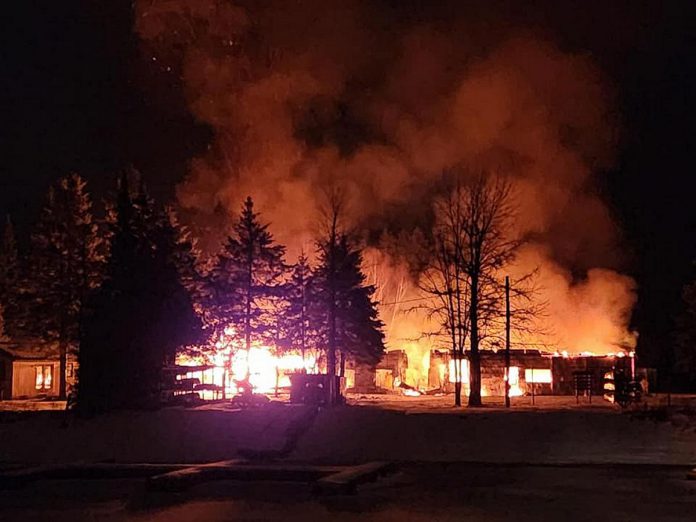
Highlands East volunteer firefighter Todd Bertram took this photo of the fire that broke out on January 5, 2022 at The Homestead Trailer Park on Eels Lake between Apsley and Bancroft. (Photo: Todd Bertram)
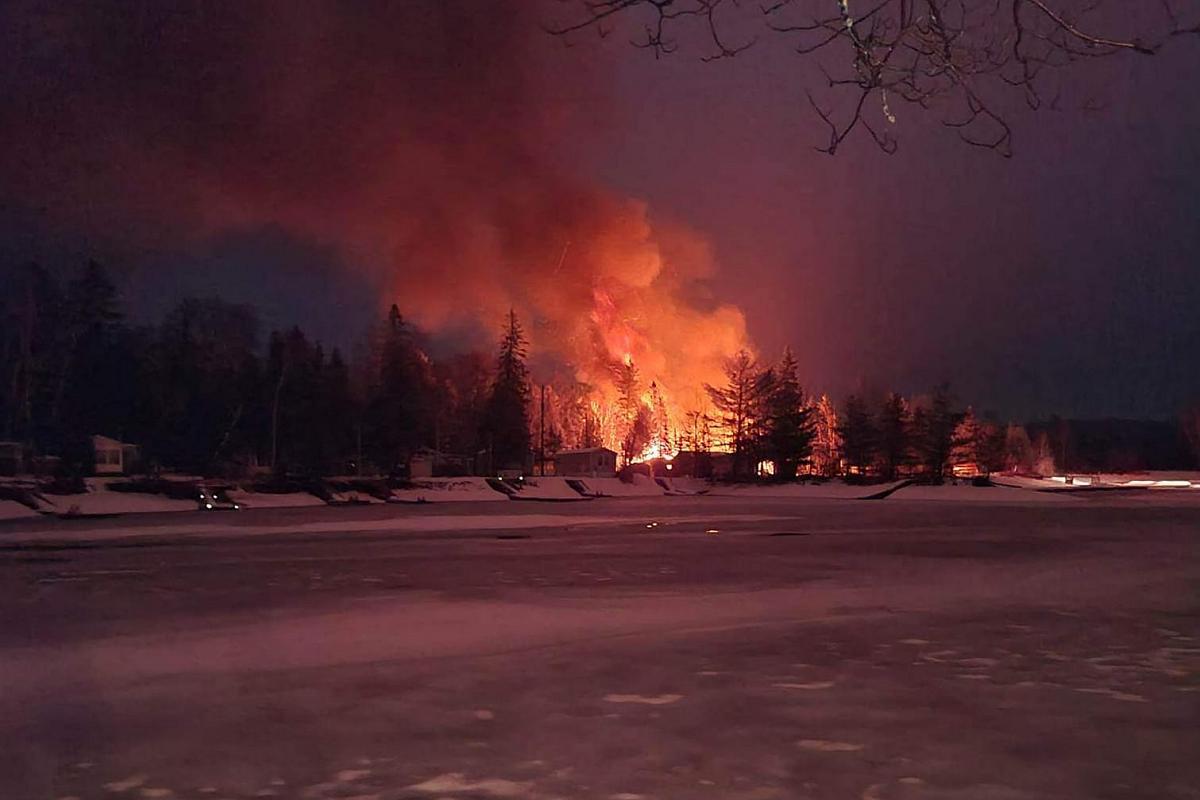
A popular seasonal camping destination in the Township of Highlands East in Haliburton County suffered major damage from a fire on Thursday evening (January 5).
The Homestead Trailer Park, located at the north end of Eels Lake between Apsley and Bancroft, offers 150 camping sites on its 45-acre property — many of which are occupied by trailers.
At around 7 p.m. on Thursday, a local called 911 to report the fire. As the trailer park is closed for the winter season, there was no-one at the property when the fire broke out.
Advertisement - content continues below
Highlands East fire chief Chris Baughman tells kawarthaNOW that between 20 and 25 volunteer firefighters responded to the fire.
As a locked gate prevented direct access to the property, firefighters used side-by-side ATVs with tracks to get to the fire and pumped water from the lake to bring the fire under control.
According to Baughman, two buildings were destroyed in the fire: the on-site store and an adjoining building used to store boats, ATVs, and more.
Barry Ferguson, who has a cottage near The Homestead Trailer Park, took this this photo of the fire that broke out on January 5, 2022. (Photo: Barry Ferguson)
Owners John and Diane Doomernik were in Florida at the time of the fire.
“We are blessed that no one was in the park, but my heart has been broken that I’ve lost my store,” Diane wrote in the park’s private Facebook group, adding that her husband would be taking a flight back to Canada as soon as possible.
Baughman, who spoke to the owners on Thursday night, says the cause of the fire has not yet been determined. Fire services will be at the property on Friday to assess possible causes.
The Homestead Trailer Park was originally established in the early 1960s and has become a popular summer camping destination, with many long-time seasonal residents having trailers at the park.
Kylee McGrath and Jenn MacDonald of Habitat for Humanity Peterborough and Kawartha Region with Rebecca Schillemat, Shanelle Jackson, and Mitch Cleary of the Peterborough and the Kawarthas Home Builders Association and Tania-Joy Bartlett and Dave Linkert of New Beginnings Contracting Services. (Photo courtesy of Peterborough and the Kawarthas Home Builders Association)
The Peterborough and the Kawarthas Home Builders Association (PKHBA) has raised over $19,000 for Habitat for Humanity Peterborough and Kawartha Region.
The funds were raised during PKHBA’s charity auction on December 8, the first in three years due to the pandemic.
With almost 40 sponsors, including presenting sponsor New Beginnings Contracting Services, and almost 100 businesses donating items for the auction, a total of $19,012 was raised — making it PKHBA’s most successful charity auction to date.
Advertisement - content continues below
Proceeds from the charity auction will help Habitat for Humanity Peterborough and Kawartha Region in its mission to build and rehabilitate decent and affordable homes, from single-family houses to multi-unit developments.
PKHBA plans to host another charity auction with Habitat for Humanity Peterborough & Kawartha Region on December 7 2023. Interested donors and sponsors can email info@pkhba.com for more information.
Established in 1956, PKHBA is a volunteer association involved in all facets of the new home construction and residential renovation industry. The association helps homeowners and builders connect with one another, and advocate for the industry at all levels of government.
Peterborough's legendary singer-songwriter, multi-instrumentalist, and comedic backwoods philosopher Washboard Hank performs at Jethro's Bar + Stage in downtown Peterborough on Friday, January 6. (Photo: Wayne Eardley)
Every Thursday, we publish live music events at pubs and restaurants in Peterborough and the greater Kawarthas region based on information that venues provide to us directly or post on their website or social media channels. Here are the listings for the week of Thursday, January 5 to Wednesday, January 11.
If you’re a pub or restaurant owner and want to be included in our weekly listings, please email our nightlifeNOW editor at nightlife@kawarthanow.com. For concerts and live music events at other venues, check out our Concerts & Live Music page.
With the exception of karaoke, we only list events with performing musicians. Venues may also host other events during the week (e.g., dancing, DJs, comedy shows).
7-10pm - Jazz Night w/ Rob Phillips and Carling Stephen
Friday, January 6
5-8pm - The Wild Cards; 9pm - Between The Static
Saturday, January 7
6-8pm - Taylor Abrahamse; 9pm - Hitcher
Sunday, January 8
4-7pm - Bluegrass Menagerie
Monday, January 9
6-9pm - Rick & Gailie's Crash & Burn
Tuesday, January 10
7-10pm - Open stage
Wednesday, January 11
6-9pm - Ben Park
Coming Soon
Friday, January 13 5-8pm - David Shewchuk; 9pm - High Waters Band
Saturday, January 14 6-8pm - Doug Horner; 9pm - Sean Conway Trio
Sunday, January 15 4-7pm - Washboard Hank & Mountain Muriel
Wednesday, January 18 6-9pm - Ben Ayotte
Canoe & Paddle
18 Bridge St., Lakefield
(705) 651-1111
Saturday, January 7
7pm - Groovehorse
Crook & Coffer
231 Hunter St. W., Peterborough
705-876-0505
Thursday, January 5
7-10pm - Groovehorse
Friday, January 6
7:30-10pm - Sing Along with Jimmy
Saturday, January 7
7:30-10:30pm - The Space Cadets (Doug Horner & Johann Burkhardt)
Tuesday, January 10
7-9pm - All Request Tuesdays w/ Rod MacDonald
Advertisement - content continues below
Dominion Hotel
113 Main St., Minden
(705) 286-6954
Coming Soon
Saturday, February 4 4:30-7:30pm - Jeff Moulton
Dr. J's BBQ & Brews
282 Aylmer St., Peterborough
(705) 874-5717
Coming Soon
Saturday, January 21 1-4pm - Peterborough Musicians Benevolent Association (PMBA) presents The Rezonator Trio (Chris Iney, JP Hovercraft, Frank Watt) w/ special guest Tony Silvestri (PWYC, with proceeds to PMBA)
Erben Eatery & Bar
189 Hunter St W,, Peterborough
705-304-1995
Thursday, January 5
8pm - Pangea Project (no cover)
Friday, January 6
9pm - Down Goes Jasper ($5)
Saturday, January 7
9pm - Sean Jamieson w/ Sean & Catherine and The Bombshell Deluxe ($10)
Wednesday, January 11
8-11pm - Open mic hosted by Samara Johnson
Coming Soon
Thursday, January 12 8pm - Joslynn Burford (no cover)
Friday, January 20 9pm - The Boo Radley Project ($10 at door)
Saturday, January 21 9pm - Live Shiny Tunes ($10 at door)
Ganaraska Hotel
30 Ontario St., Port Hope
(905) 885-9254
Friday, January 6
8pm - Dave Rocket and the Jobbers, Hellaphant, Sinister Echo, Avem ($10, SOLD OUT)
Saturday, January 7
2-6pm - Nathan Carr Band
Graz Restobar
38 Bolton St., Bobcaygeon
705-738-6343
Friday, January 6
8pm - Jam Night
Saturday, January 7
7:30pm. - Kevin Foster
Advertisement - content continues below
Jethro's Bar + Stage
137 Hunter St. W., Peterborough
Thursday, January 5
6-8pm - Little Fire; 9pm - The Union
Friday, January 6
6-8pm - Washboard Hank; 9pm - Pop Machine
VIDEO: "Love Song of the Dump" - Washboard Hank with Benj Rowland
Saturday, January 7
6-8pm - Rob Bersan & Virginia de Carle from The Salt Cellars; 8-10pm - Wild Cards; 10pm - Diamond Dave & The Smoke Eaters
Sunday, January 8
3-6pm - Open Blues Jam
Monday, January 9
8pm - Karaoke w/ Cheyenne Buck
Tuesday, January 10
6-8pm - Bolfolk's Euro Folk Jam; 8-10pm - Stand Up Comedy Open Stage
Wednesday, January 11
9pm - Open Stage w/ Matt Holtby
Coming Soon
Thursday, January 12 6-8pm - Pangea Project; 9pm - The Union
Friday, January 13 7-9pm - Peter Graham Band; 9pm - Junestone
Saturday, January 14 6-8pm - The Old Ornery Corn Bread Choir; 9pm - TBA
Kelly's Homelike Inn
205 3rd Street, Cobourg
905-372-3234
Saturday, January 7
4-8pm - The Doncasters ft Marty Hepburm
The Locker at The Falls
9 Lindsay St., Fenelon Falls
705-887-6211
Thursday, January 5
8pm - Karaoke w/ Ross Burgoyne
Mainstreet Bar & Grill
1939 Lakehurst Road, Buckhorn
(705) 657-9094
Coming Soon
Saturday, January 14 7-10pm - SJ Riley
McThirsty's Pint
166 Charlotte St., Peterborough
(705) 743-2220
Friday, January 6
9pm - Live music TBA
Saturday, January 7
9pm - Live music TBA
Tuesday, January 10
8pm - Emily Burgess
Wednesday, January 11
9pm - Live music TBA
Advertisement - content continues below
Murphy's Lockside Pub & Patio
3 May St., Fenelon Falls
(705) 887-1100
Thursday, January 5
7:30pm - Open mic
The Muse Gallery & Cafe
23 Bridge St., Bancroft
613-332-1573
Coming Soon
Friday, January 20 6-8pm - Bill Black CD Release w/ special guest Albert Saxby and ft Anne Wilde, Jodi Timgren, Dan O'Neil, and Scott Stewart ($15)
Oasis Bar & Grill
31 King St. E., Cobourg
(905) 372-6634
Friday, January 6
6-9pm - Live music TBA
Sunday, January 8
6-9pm - PHLO
The Publican House
300 Charlotte St., Peterborough
(705) 874-5743
Thursday, January 5
7-9pm - River Jensen
Friday, January 6
7-9pm - JJ Thompson
Coming Soon
Friday, January 13 7-9pm - House Brand Trio
Puck' N Pint Sports Pub
871 Chemong Rd., Peterborough
(705) 741-1078
Friday, January 6
7-11pm - Andy & Co.
Coming Soon
Saturday, January 14 7-11pm - Open mic
Red Dog Tavern
189 Hunter St. W., Peterborough
(705) 741-6400
Friday, January 6
9pm - The Nikoteens
Coming Soon
Saturday, January 14 9pm - Focused & The Band Meat Band, Dr. Keys & The Current Thing, Jordana Talsky ($8 in advance at www.eventbrite.ca/e/498862429957)
Two people were injured following a head-on collision on Highway 35 just south of Ballyduff on Wednesday afternoon (January 4).
Kawartha Lakes OPP and fire and emergency services responded to the collision, which happened at around 4:15 p.m. on Wednesday on Highway 35 north of Waite Road.
Both drivers were transported to a local hospital, from which one was then transferred to a Toronto-area trauma centre.
Advertisement - content continues below
Highway 35 remained closed for several hours while police documented the scene.
Anyone who may have witnessed the collision or has video/dash camera footage and has not yet spoken with police is asked to call City of Kawartha Lakes OPP at 1-888-310-1122.
The Hike Haliburton Festival - Winter Edition takes place throughout Haliburton Highlands on February 4 and 5, 2023. Registration is now open for free guided winter hikes, and paid adventure experiences with local outfitters can also be booked. (Photo courtesy of Hike Haliburton)
Snowshoe under the light of the full moon. Learn how to build and camp in an igloo. Experience winter geocaching. Try ice climbing.
These are only a few of the outdoor adventures you can enjoy when the Hike Haliburton Festival – Winter Edition returns in early February after a two-year absence due to the pandemic.
Designed for both new and experienced outdoor enthusiasts, the festival runs on Saturday, February 4th and Sunday, February 5th throughout Haliburton Highlands, offering free guided winter hikes as well as paid adventure experiences and self-guided options. Registration is now open at winter.hikehaliburton.com.
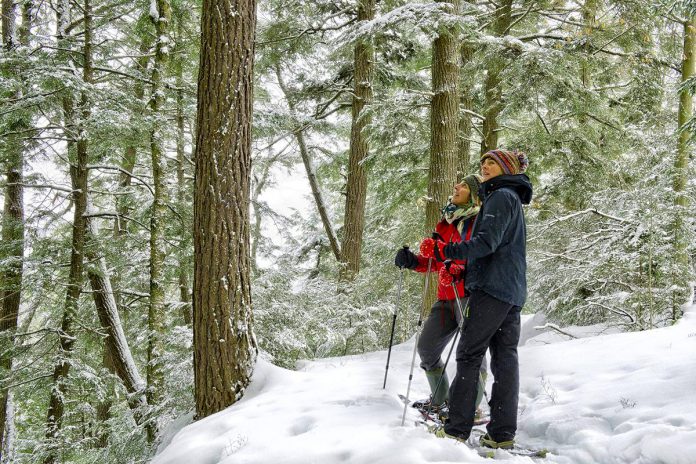
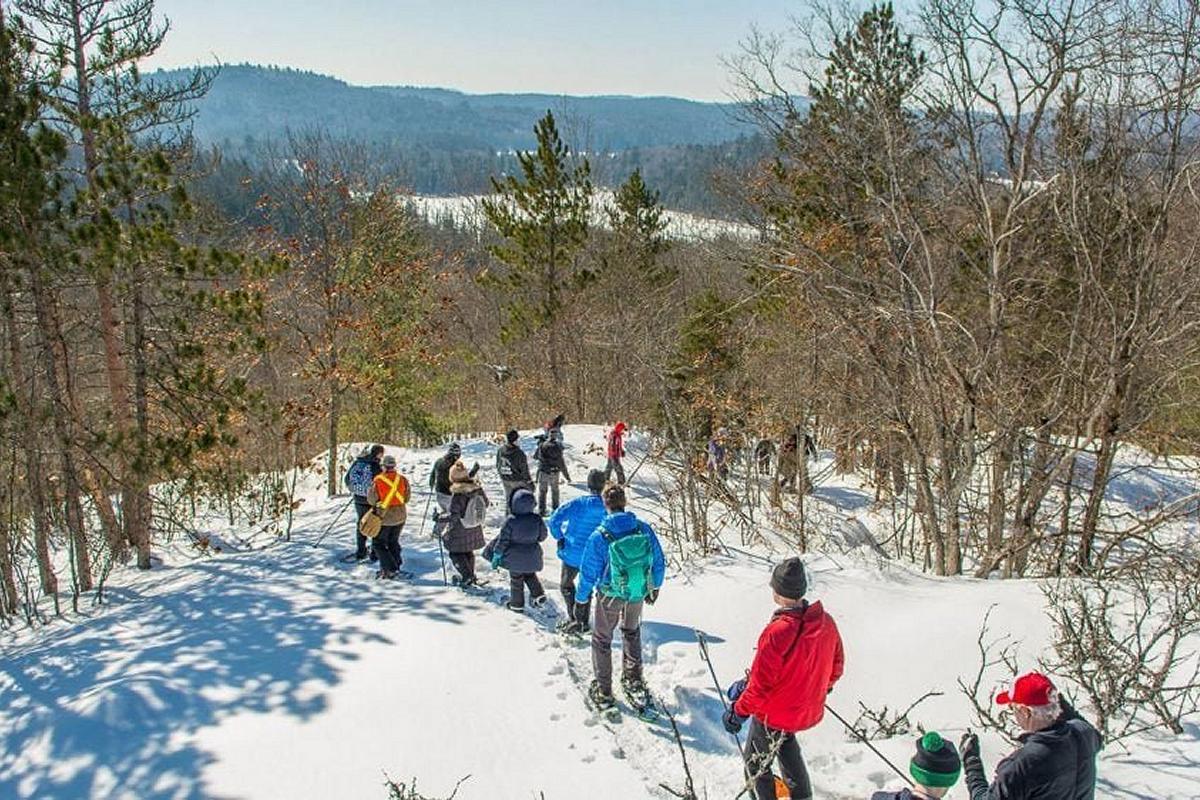
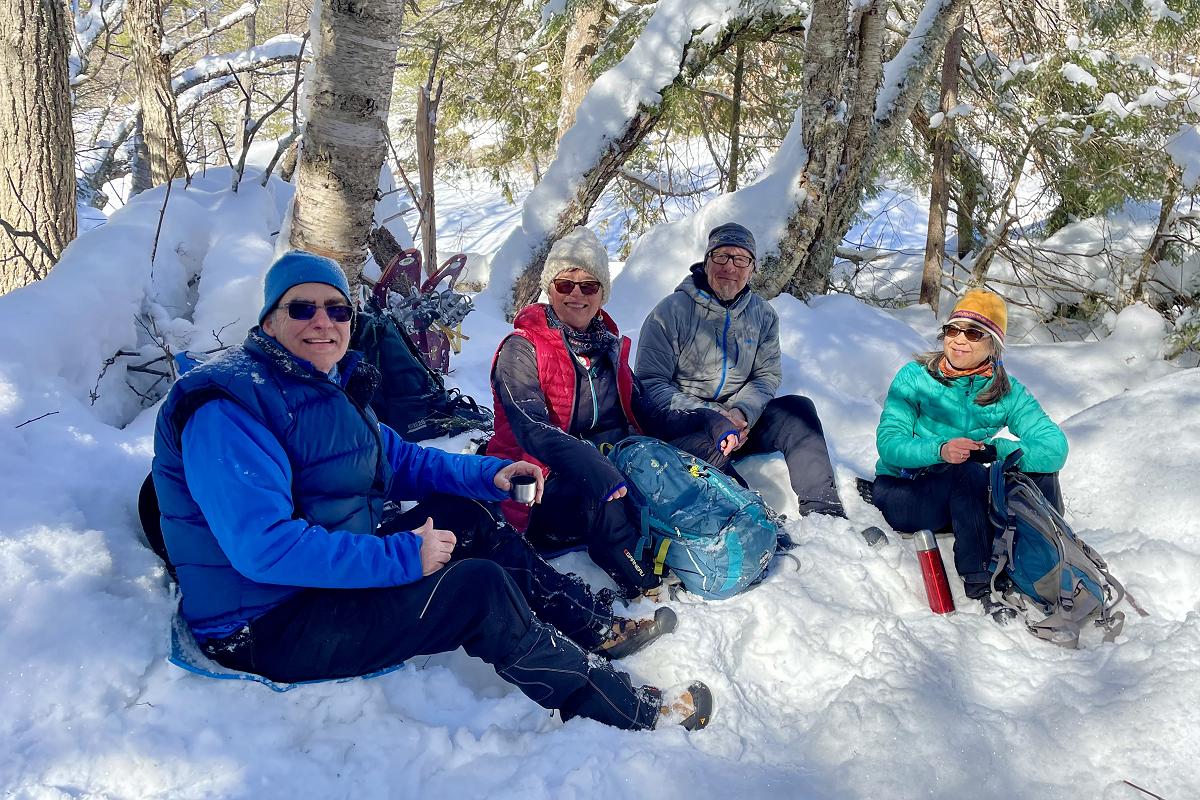
The free guided hikes during the Hike Haliburton Festival – Winter Edition on February 4 and 5, 2023 are led by experienced volunteers with knowledge of the area, enhancing the experience of participants. (Photo courtesy of Hike Haliburton)
The winter edition of Hike Haliburton evolved from the success of the annual September event that will mark its 20th year in 2023, according to festival coordinator Thom Lambert.
“It’s a dearly beloved festival amongst the participants,” Lambert says. “People come from all over the place. They get to go on hikes they can’t go on at any other time of the year. It’s primarily a snowshoeing festival although we are branching out, trying to include a wider range of activities.”
Share on Bluesky
What makes Hike Haliburton different from similar festivals in other tourism destinations is the hikes are exclusively led by volunteers who are intimiately familiar with the area.
“We have an amazing group of volunteer hike leaders, probably close to 100 of them. We ask ‘What is it that you really want to offer people?’ The real power of the festival is people get to come and spend time with someone that really loves some small corner of the county.”
The guided hikes range in duration and in difficulty, from easy to challenging, with detailed information about each hike — including location — available at winter.hikehaliburton.com.
The Hike Haliburton Festival – Winter Edition on February 4 and 5, 2023 offers participants the opportunity to go on hikes they can’t go on at any other time of the year. (Photo courtesy of Hike Haliburton)
“We’re very clear with people so they know what they’re signing up for,” Lambert says. “We rate each hike by beginner, intermediate, and advanced. We have one fairly hard-core hike on the Ganaraska Trail from one of the folks with the Ganaraska Trail Association. It’s very hilly with really rugged terrain.”
A special feature of this year’s festival is that it coincides with the February full moon, also known as the Snow Moon, with two hikes designed to take advantage of it.
“Winter nights under a full moon are magical, often bright enough to snowshoe or ski without a headlamp,” Lambert points out. “We have two hikes scheduled that allow folks to experience this magical opportunity.”
Another guided hike offers participants the chance to explore a hidden gem in Haliburton Highlands.
“One of our hike leaders is doing a hike along the Minden Wild Water Preserve that has been host to multiple world white-water events,” he adds. “It’s an absolutely stunning place in the winter with the ice formations. You can go for a walk there yourself, but Rick lives on the river. You get his perspective. He’s also a kayaker. He’s an outdoors enthusiast. You get to experience that place in a way that you’d never experience it if you hiked there on your own.”
The free guided hikes during the Hike Haliburton Festival – Winter Edition on February 4 and 5, 2023 range in difficulty from easy to challenging, offering something for both new and experienced outdoor enthusiasts, (Photo courtesy of Hike Haliburton)
Share on Bluesky
That knowledge of the hike leaders enhances the experience for participants. While it’s billed as hiking festival, Lambert explains Hike Haliburton is also a storytelling festival.
“It’s local residents and others — cottagers or people who spend a lot of time here — taking a group of folks out and telling them the story of one of their favourite places,” he explains.
Teddy Bear Picnic – Saturday, February 4 from 8:45 a.m. to 3:00 p.m. – Carolyn Humphreys leads a 4-6 km hike along the Ganaraska Trailhead and Moore Falls Trailhead. Plan to climb steeps, scramble down rocks, and perhaps walk on ice. Dress warmly in layers and you may need snowshoes. Dogs are not allowed as they may scare off wildlife.
Dahl Forest in Winter – Saturday, February 4 from 9 to 11 a.m. – Peter Dahl leads a leisurely 4 km snowshoe walk along the Dahl Forest Trails in Minden Hills, which his family donated in 2009 to the Haliburton Highlands Land Trust. Peter will share his knowledge and love for conservation and the natural features of the property. This hike is suitable for adults, teens, and children 10 years and older. Dogs are not allowed.
Winter Geocaching for Beginners – Saturday, February 4 from 2 to 4 p.m. – Joanne Vanier introduces you to the fun and family-oriented game of geocaching as you take a short 1 km hike through the hamlet of Harcourt in the Geocaching Capital of Canada. No experience or special equipment needed; you can use your own smart phone or you can use a supplied GPS unit.
Full Moon Snowshoe – Saturday, February 4 from 6:30 to 7:30 p.m. – Heather Reid leads a slow and easy 3-5 km hike under the light of the full moon through the fields and forests of Abbey Gardens, 10 minutes from the village of Haliburton. Snowshoes are available to rent if you need them. This hike is suitable for adults, teens, and children 10 years and older.
Moonlight on Snow – Saturday, February 4 from 7 to 10 p.m. – Cara Oleksuik leads a 5 km hike through the Barnum Creek Nature Preserve. The trail is winding, with some sections of moderately steep inclines, so participants should be in good physical condition. Snowshoes or icers/cleats are required, and hiking poles (ski poles) are highly recommended.
Gull River Ramble – Sunday, February 5 from 10 a.m. to 12 p.m. – Rick Whitteker will lead an easy 2.5 km snowshoe hike in the Minden White Water Preserve, beginning by walking along the Gull River with its cascading rapids and natural ice sculptures and finishing by winding through mature upland forest habitat back to the starting point.
Snowshoeing the Circuit – Sunday, February 5 from 1 to 4 p.m. – Heather Reid leads a 5 km hike along the Circuit of Five Viewpoints trail in Algonquin Highlands, where she will share her knowledge of the area, local flora and fauna, and the ins and outs of winter travel. Hiking poles (ski poles) are recommended, and you should bring water and snacks. This hike is suitable for adults, teens, and children 10 years and older. Dogs are not allowed.
Bethel Heights Farm – Sunday, February 5 from 12 to 1:30 p.m. – Katie Cox leads a 2 km snowshoe hike along packed trails (with some hills) around Bethel Heights Farm in Minden Hills. See the bees all tucked in and check out winter life for the chickens, ducks, and goats (all animals are kid friendly). Dogs are not allowed.
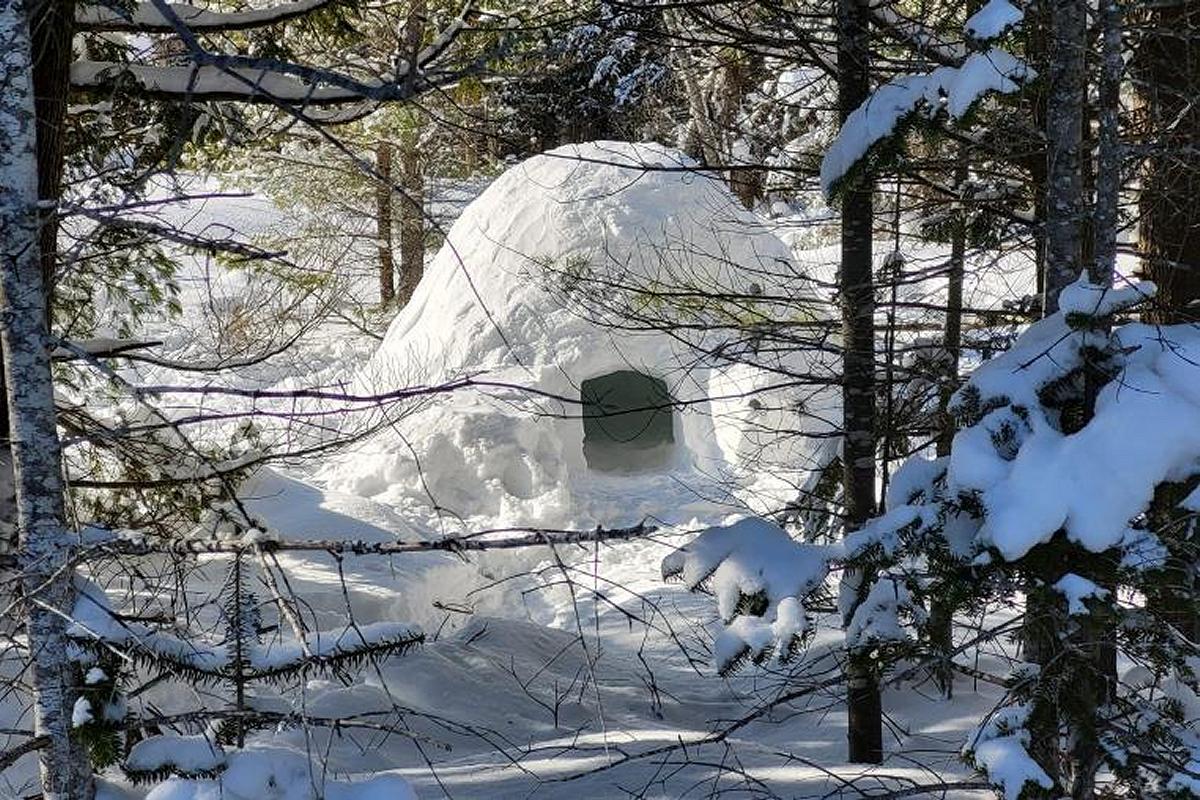
Paid adventure experiences during the Hike Haliburton Festival – Winter Edition on February 4 and 5, 2023 include “Intro to Igloo Building,” where Yours Outdoors will teach you how to construct and camp in an igloo. (Photo courtesy of Yours Outdoors)
As well as the free guided hikes, you can also book several paid adventure experiences:
Ski like a Canadian – Saturday, February 4 from 10 a.m. to 12 p.m. or 1:30 to 3:30 p.m. – If you are new to cross-country skiing, Yours Outdoors will teach you the basics in either skate or classic style and guide you along scenic trails that are suited to your level of ability. If you have skied before, Yours Outdoors will help you refine your technique and take you through some rugged and beautiful terrain.
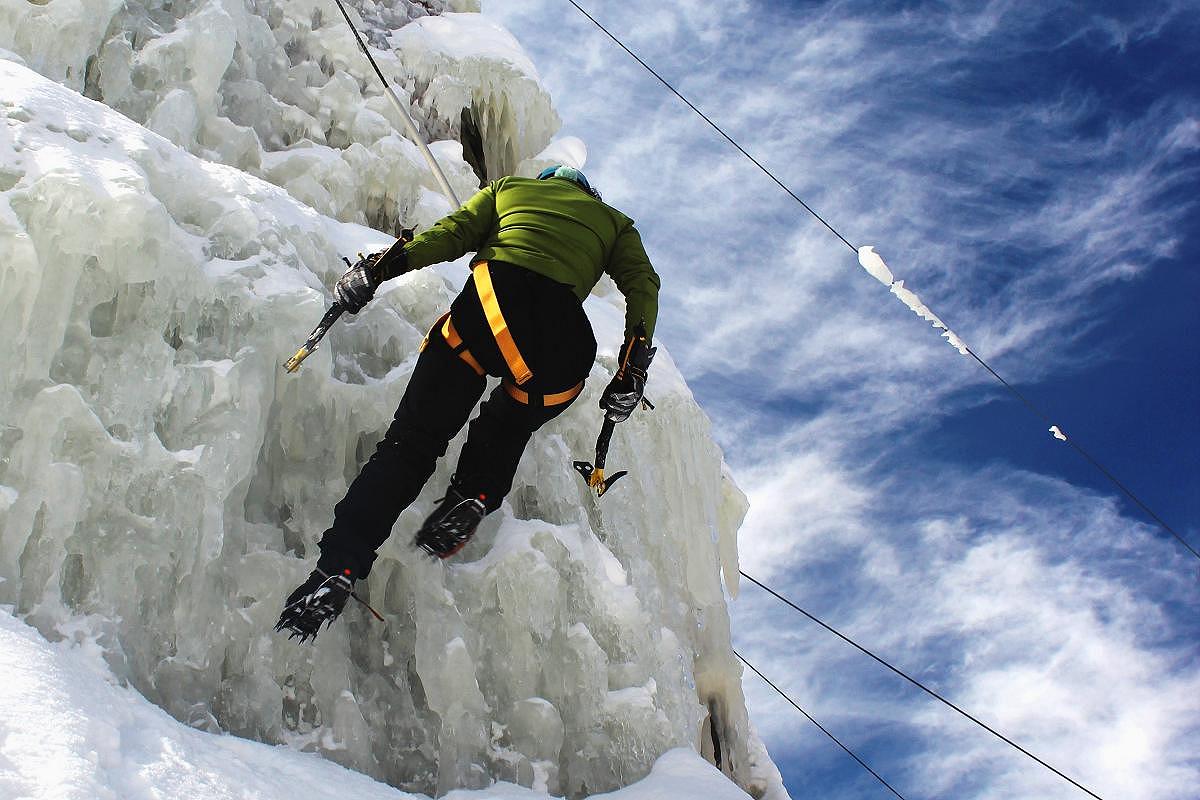
Try Ice Climbing – Saturday, February 4 or Sunday, February 5 from 9 a.m. to 12 p.m. or 1 to 4 p.m. – Yours Outdoors offers a half-day adventure geared towards providing a taste of the sport of ice climbing. You will learn the basics (including safety) and get in your first swings.
Intro to Igloo Building – Sunday, February 5 from 10 a.m. to 4 p.m. – Yours Outdoors will teach you how to construct and camp in an igloo. Topics include the differences between igloos, quinzhees, snow caves, and other snow shelters, the use of the icebox igloo tool that permits building igloos in virtually any snow conditions, hands-on practice in the building of an igloo, and much more.
Guided Snowshoe Hikes – Sunday, February 5 from 1:30 to 3:30 p.m. – Guides from Deep Roots Adventure will teach you all about snowshoe travel and make sure you have a great experience along the Glebe Park Snowshoe Trails in Haliburton. Snowshoes are supplied.
In addition to the free guided hikes and paid adventure experiences, the festival showcases Haliburton Highlands, offering resources to explore local self-guided snowshoeing trails, outfitters, Nordic skiing, downhill skiing and snowboarding, and ice skating, hockey and curling, as well as local live entertainment taking place during the festival.
The Dominion Hotel in Minden is offering a special “Eat, Sleep, Hike” package during the Hike Haliburton Festival – Winter Edition on February 4 and 5, 2023, along with live local music. (Images courtesy of Dominion Hotel)
While there is no specific food focus attached to the weekend event, Lambert notes local hotel and motels are offering special accommodations packages for the Hike Haliburton weekend.
The historic Dominion Hotel in Minden is offering an Eat, Sleep and Hike package that includes a free signature Hike Haliburton backpack containing a full picnic set — plates, wine glasses, cutlery and a blanket. The package includes two nights’ hotel stay and an appetizer on arrival. Call 705-286-6954 for more information and/or to reserve.
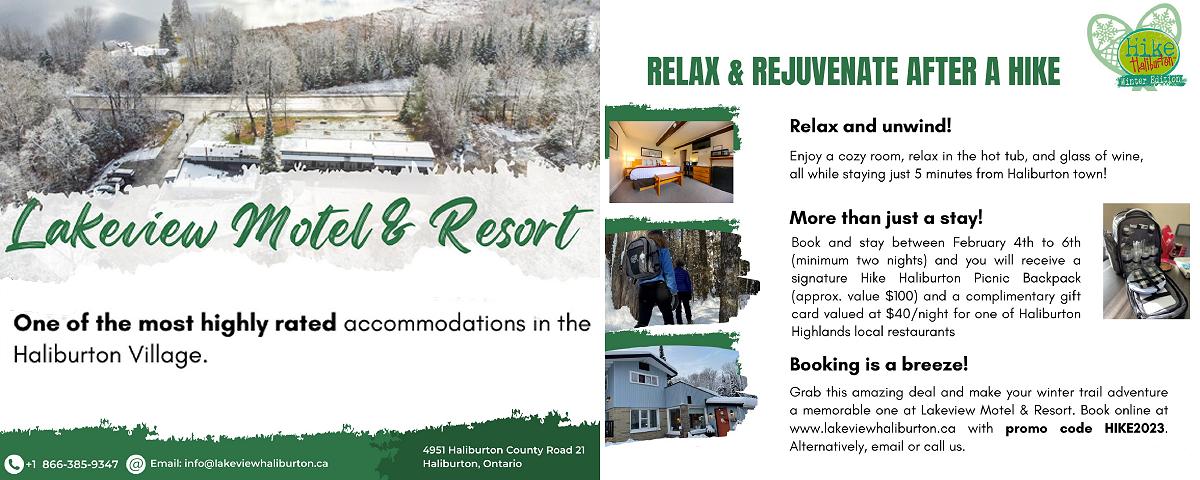
Lakeview Motel & Resort in the Village of Haliburton is offering an overnight package during the Hike Haliburton Festival – Winter Edition on February 4 and 5, 2023. (Graphic courtesy of Lakeview Motel & Resort)
Lakeview Motel & Resort in the Village of Haliburton is offering an overnight package (minimum two nights’ stay) that includes a free signature Hike Haliburton picnic backpack along with a complementary gift card for one of Haliburton Highlands’ local restaurants. To book, call 1-866-385-9347, email info@lakeviewhaliburton.ca, or visit www.lakeviewhaliburton.ca and use promo code HIKE2023.
Along with accommodations, another partner is Abbey Gardens in Algonquin Highlands, which offers a self-guided experience along a chickadee feeding trail where small children can feed chickadees birdseed right from their hands.
“If you’re a family that only has time to go out for 20 minutes, self-guided experiences such as this give you that opportunity,” says Lambert.
Paid adventure experiences during the Hike Haliburton Festival – Winter Edition on February 4 and 5, 2023 include “Try Ice Climbing,” where Yours Outdoors will provide you with a taste of the sport of ice climbing. (Photo courtesy of Yours Outdoors)
Lambert, who is a hike leader himself, says the festival provides the opportunity for people to discover the natural beauty “right in their own backyard.”
“I love taking people out and seeing their faces when they see a new place for the first time,” he notes. “Another appeal for me is the sense of discovery that happens when you go to a beautiful place on a beautiful day. Each participant experiences that in a different way and shares that with you.”
Share on Bluesky
As for those who may be reluctant to try a winter hike, Lambert offers some compelling reasons to give it a try in Haliburton Highlands.
“Winter here is a completely different season. The scenery changes. It’s beautiful in a whole other way. And there’s really nothing like the quiet in the woods in the winter.”
For more information about Hike Haliburton – Winter Edition, to register for the free guided hikes, to book paid experiences, and to explore local resources, visit winter.hikehaliburton.com.
This branded editorial was created in partnership with Hike Haliburton. If your business or organization is interested in a branded editorial, contact us.
kawarthaNOW.com offers two enews options to help readers stay in the know. Our VIP enews is delivered weekly every Wednesday morning and includes exclusive giveaways, and our news digest is delivered daily every morning. You can subscribe to one or both.
Submit your event for FREE!
Use our event submission form to post your event on our website — for free.
To submit editorial content or ideas, please contact us.