The historic Christ Church on King Street East in Omemee closed in early 2022 after serving the community for 186 years, and was later sold. The Omemee Food Bank, which operated out of the church for many years, moved to Omemee Baptist Church. (Photo: Omemee Food Bank / Facebook)
A former church in Omemee will become a new space for the community’s youngest residents as Compass Early Learning and Care prepares to open a new infant, toddler, and preschool child care program.
The non-profit charitable organization is partnering with the City of Kawartha Lakes to establish the program at 62 King Street East, the former home of the historic Christ Church, with funding support from the provincial and federal governments.
An opening date has not yet been announced, but families can now join a waitlist. A media release from Compass Early Learning and Care does not specify how many child care spaces will be available at the Omemee location.
Advertisement - content continues below
“Increasing access for families to high-quality, affordable child care is a key priority for the City of Kawartha Lakes Children’s Services,” says Alyson Traux, the municipality’s manager of human services, in the release.
“With funding support from the Province of Ontario, and the Government of Canada, the City of Kawartha Lakes is proud to partner with Compass Early Learning and Care to meet the growing child care needs of families in this rural community.”
Traux adds that the city looks forward to continuing its longstanding relationship with Compass and opening the new space.
Advertisement - content continues below
The program will offer early learning and care designed to support children’s growth, development and well-being, while giving families access to care within their own community.
Compass Early Learning and Care co-CEO Ashley Collins says the project also offers an opportunity to preserve elements of the former church as it takes on a new purpose.
“We are grateful to be partnering with the City of Kawartha Lakes to be adding additional early learning and care spaces in the Omemee community,” Collins says. “We hope to honour the building’s history by preserving as much as possible during the transformation.”
Advertisement - content continues below
Established in 1981, Compass Early Learning and Care offers programs at more than 40 locations and supports a network of licensed home child care providers. Its services include licensed care for infants, toddlers, preschoolers, kindergarten and school-aged children, as well as EarlyON and Forest and Nature programs.
According to the organization, its network of more than 700 employees and 80 home child care providers serves over 5,000 families across Peterborough, the City of Kawartha Lakes, Haliburton, Durham Region, and Northumberland.
Families interested in the new Omemee program can join the waitlist through OneHSN at onehsn.com/kawarthalakes/ux_2_0. Once registered, children will remain on the list, and Compass will contact families as program details and an opening date are confirmed.
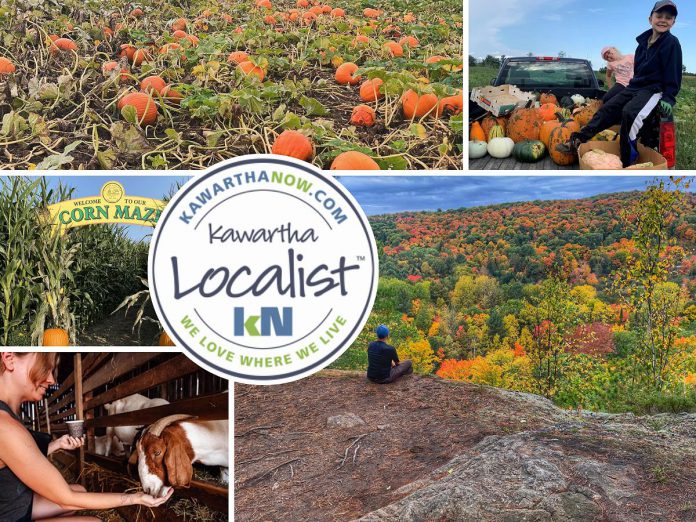
This edition of kawarthaNOW's "Kawartha Localist" editorial series features fun fall destinations across the greater Kawarthas region, including MacArthur's Pumpkin Patch in Oakwood, the Hike Haliburton festival, Applefest at Lang Pioneer Village Museum in Keene, the Apsley Autumn Studio Tour, McQuaid's County Market in Omemee, Pieter's Appleyard in Colborne, Kawartha Farmfest in Kawartha Lakes, Bragg Farms in Clarington, Pumpkinfest at Buckhorn Berry Farm, Stellmar Farm in Little Britain, the Lindsay Ex, and more. (kawarthaNOW collage)
Kawartha Localist is an editorial series from kawarthaNOW sharing trusted local recommendations, hidden gems, and favourite discoveries from people who know and love this region. It’s what we love about where we live. Kawartha Localist is sponsored by Kawartha Financial Services.
Summer might get all the glory when it comes to celebrating cottage country in Ontario, but fall is my personal favourite time of year to explore the greater Kawarthas region.
After all, this is the season of comfortable weather, fewer crowds, harvest events, and the return of quiet weekends meant for cozy mornings with a coffee or, dare I say, a pumpkin spice latte. Even better, all of this is set to a backdrop of stunning yellows, reds, oranges, and other exceptional colours of the changing foliage.
Across the greater Kawarthas region this fall, you’ll be able to enjoy all of that and so much more. From searching for that perfect pumpkin in a patch to sinking your teeth into crunchy apples, learning about life on a farm, and getting your scare on ahead of Halloween, there’s so much to look forward to exploring this season.
Here are just a few of the things to add to your agenda before the snow flies.
A message from our sponsor - content continues below
Go pumpkin bowling at MacArthur’s Pumpkin Patch in Oakwood
At MacArthur’s Pumpkin Patch, located outside Lindsay in Oakwood, there are opportunities for families of all ages to connect with the land through fall farming experiences. Take the chance to pick a pumpkin, squash, or gourd from the acres of patches, get lost in a corn maze, or enjoy lawn games like tic tac toe, a hamster wheel, cornhole, and more. (Photo: MacArthur’s Pumpkin Patch)
Now that sunflower season has wrapped up, fall is in full swing at MacArthur’s Pumpkin Patch — and there’s something there for everyone.
Located in Oakwood just outside of Lindsay, the family-operated farm is a one-stop shop for outdoor fun right up until Christmas. Owner Bruce MacArthur has been farming since 1978 and today he continues to foster a space that’s built for getting families to immerse themselves in nature and learn about the outdoors.
Every Friday, Saturday, Sunday, and holiday Monday, you can visit MacArthur’s Pumpkin Patch to stroll through patches of pumpkins, gourds, and squashes — who knew there were so many different types? With so many options, you can pick out enough for festive decor, to carve some jack-o-lanterns, and to use to make pumpkin pie.
You can spend the day exploring a corn maze with a story trail woven throughout, or look through the newly planted rows of lavender. Young children can go through a small version of the corn maze that’s decorated with facts meant to teach them all about life on the farm. If that’s still not enough fun, the farm offers a range of outdoor activities for young people, including Giant Jenga, pumpkin bowling, pumpkin tic tac toe, a teeter totter, a hamster wheel, straw bales for climbing, corn hole, and more.
Before you leave, don’t forget to check in to the farm store to browse and buy from a collection of locally made goods including maple syrup, honey, preserves, meats, cheese, eggs, bread, and more.
Located at 1146 Highway 7, MacArthur’s Pumpkin Patch is open Fridays, Saturdays, Sundays, and holiday Mondays until Christmas from 9 a.m. to 6 p.m. To learn more, visit www.macarthurspumpkinpatch.ca.
Enjoy the fall colours on a guided hike during Hike Haliburton
The annual award-winning Hike Haliburton festival gives hikers and outdoor enthusiasts an opportunity to view the fall colours while learning more about the Haliburton Highlands, from the flora and fauna to the history, topography, and beyond. Held in 2026 from September 17 to 20, the festival includes more than 35 guided hikes led by passionate, and knowledgeable volunteers, alongside opportunities for self-guided hikes and paid excursions from local outdoor providers. (Photo: Haliburton County)
Get a good look at the changing fall colours during the award-winning Hike Haliburton Festival, which runs from September 17 to 20 across the Haliburton Highlands.
This free four-day festival, which has been held annually for more than two decades, features more than 35 guided hikes, each led by knowledgeable local volunteers who are passionate about the land on which they live.
From easy family-friendly hikes to advanced trails for outdoor adventurers to hikes about the flora and fauna, local history, Indigenous teachings, or topography of the region, there really is something for everyone. You’ll see for yourself why the Haliburton Highlands is a go-to destination for both locals and visitors who enjoy nature.
The weekend is also an opportunity to do your own exploration around Haliburton County’s 2,000 kilometres of developed trails that explore the mix of Canadian Shield landscapes with more than 500 lakes. You can also book a paid excursion through a local outfitter or enjoy some of the art and culture events happening across the county.
Bite into some fresh apples during Applefest at Lang Pioneer Village Museum in Keene
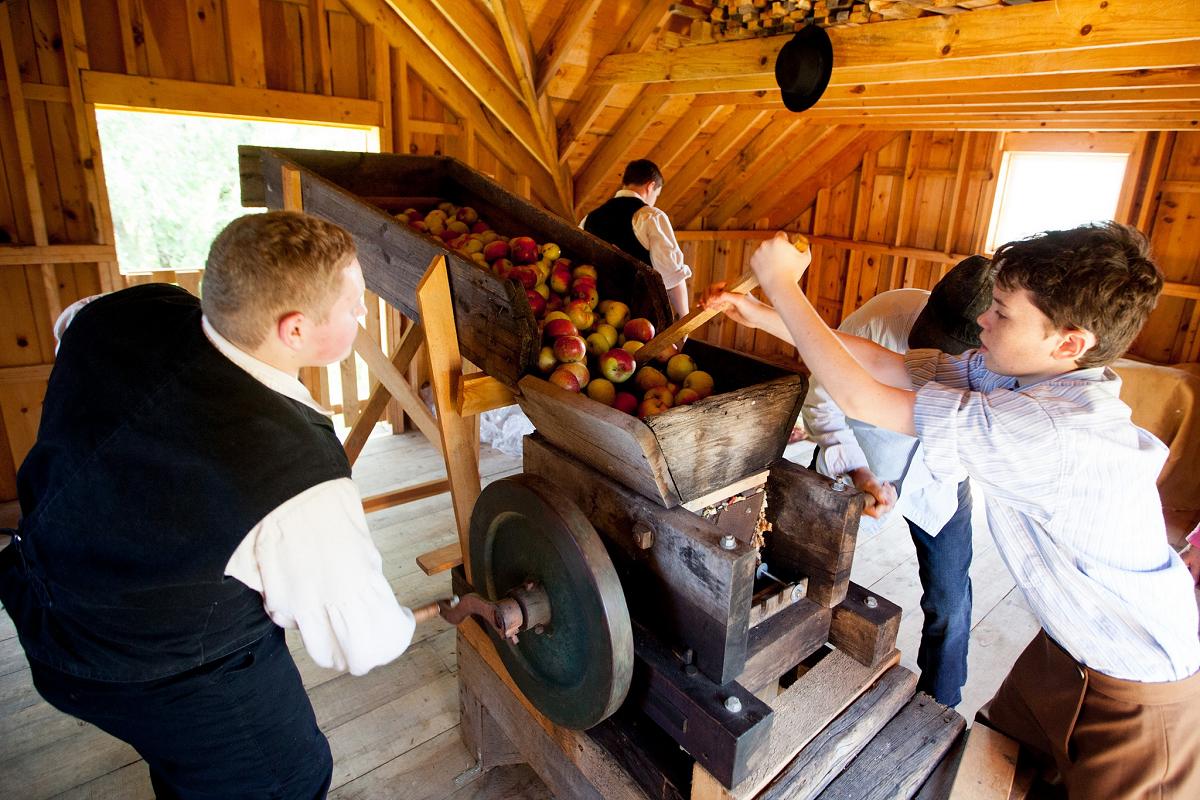
Learn how 19th-century settlers preserved the fall harvest and prepared for the winter during Applefest at Lang Pioneer Village Museum in Keene. (Photo: Lang Pioneer Village Museum)
It’s one of the sweetest times of year at Lang Pioneer Village Museum in Keene with the return of Applefest, being held on Sunday, September 27 from 10 a.m. to 4 p.m.
Step into the past at this living history museum where the Kawarthas of the 19th century comes to life with restored and replicated historic buildings and costumed interpreters demonstrating the settler story of hardship and hope.
During Applefest, you’ll learn all about the time period by seeing antique clocks and timepieces from Quinte Timekeepers as well as a display from Port Hope’s Marie Dressler Foundation Vintage Film Festival.
Spend your day sinking your teeth into fresh apples and candy apples or sip on apple cider made with the Cider Mill in full operation. There will also be freshly popped kettle corn and candy floss available, as well as a BBQ lunch.
Throughout the day, you’ll have further opportunity to learn through demonstrations in sheep shearing, natural dyeing, chair caning, and threshing, while other family-friendly events include traditional music, horse and wagon rides, a children’s area with story times and crafts, the Peterborough Agricultural Society Homecraft Show, and old-fashioned school yard games.
Admission is $17 adults, $12 students and seniors, $9 children 5 to 14, and free for children under 5, with a family pass for two adults and up to four youth for $45. Tickets can be purchased in advance or at the door.
Browse work from North Kawartha artists at the Apsley Autumn Studio Tour
Landscape artist David Smith is one of 27 artists who are participating in the Apsley Autumn Studio Tour on September 19 and 20, 2026 at nine studio locations across North Kawartha. For 33 years, the annual event has invited guests to explore the artwork created locally, getting a behind the scenes look at the artists’ processes. (Photo: David Smith)
Every September, art lovers travel from far and wide to North Kawartha in search of one-of-a-kind artwork during the annual Apsley Autumn Studio Tour, being held for its 33rd year on September 19 and 20.
During the free self-guided tour from 10 a.m. to 5 p.m. each day of the weekend, nine artist studios spread out from Coe Hill to Kawartha Highlands Provincial Park will be open and inviting visitors to browse and buy artwork from 27 local and visiting artists.
Participating artists include painters, jewellers, glass blowers, sculptors, textile artists, potters, metal workers, and more, with many of the artworks inspired by the land on which they were created. What could be better than viewing them all with a backdrop of the stunning fall colours of northern Peterborough County?
With demonstrations held throughout the weekend, the tour also gives visitors an opportunity to pull the curtain back and see how an artist works, with artists also having the opportunity to directly connect with art lovers.
You can download the Toureka App to you phone and browse a list of participating artists, view their art samples, and curate your weekend with the stops you are most excited by. The app will curate a route for you that remains accessible even if your travelling in areas with poor cell service.
Get lost in a sea-themed maze at McQuaid’s County Market in Omemee
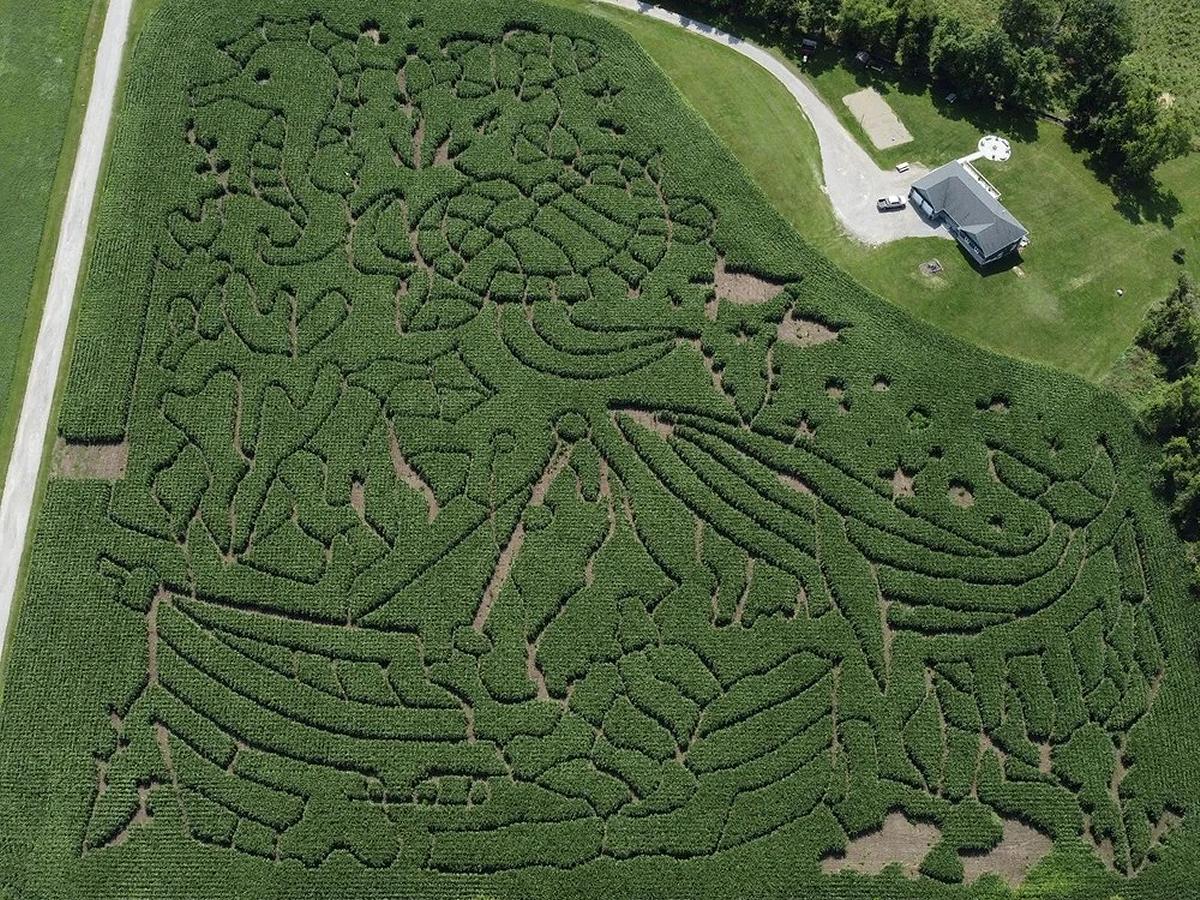
While McQuaid’s Country Market in Omemee is well known for growing dozens of varieties of large pumpkins, they also have a difficult corn maze that’s easy to get lost in. This year’s theme is “Under the Sea,” with questions relating to life under water. Those who complete their passport will be entered into a draw for the chance to win a prize pack. (Photo: McQuaid’s Country Market)
If you’re not careful, you might just need to be rescued from the corn maze at McQuaid’s Country Market in Omemee.
A third-generation beef farm, McQuaid’s Country Market invites families and visitors to enjoy a full day of outdoor fun, beginning with taking a wagon ride to the eight acres of pumpkin patch. From jack-o-lanterns to dilly of a jacks to porcelain princesses, McQuaid’s grows over 40 different varieties of pumpkins, in any size and colour you can imagine.
You can then get lost in the nine-acre corn maze that’s known to be a challenge. This year’s theme is “Under the Sea,” and there are many twists and turns where you can lose your way. However, themed clues will help you escape the maze and, if you reach all 10 passport stations, at the end of the month you’ll be entered into a draw to win a gift basket stocked with products from the market store.
After the maze, enjoy family-friendly games, take your Instagram-worthy photos, and drop into the farm store for eggs, freezer beef, and locally sourced preserves, jams, maple syrup, honey, cheese, fudge, and more. There’s also tallow face products and tallow soap made from McQuaid’s Country Market’s beef suet. If you’re hungry, your lunch for the afternoon consists of BBQ burgers and hotdogs made with beef products straight from the farm.
Stay tuned as McQuaid’s Country Market announces other special events and activities throughout the season.
Located at 346 Peace Road in Omemee, McQuaid’s Country Market is open Saturdays, Sundays, and Mondays throughout September and October, as well as Fridays in October. To learn more, visit www.mcquaidscountrymarket.com.
Go apple picking for some unique varieties at Pieter’s Appleyard in Colborne
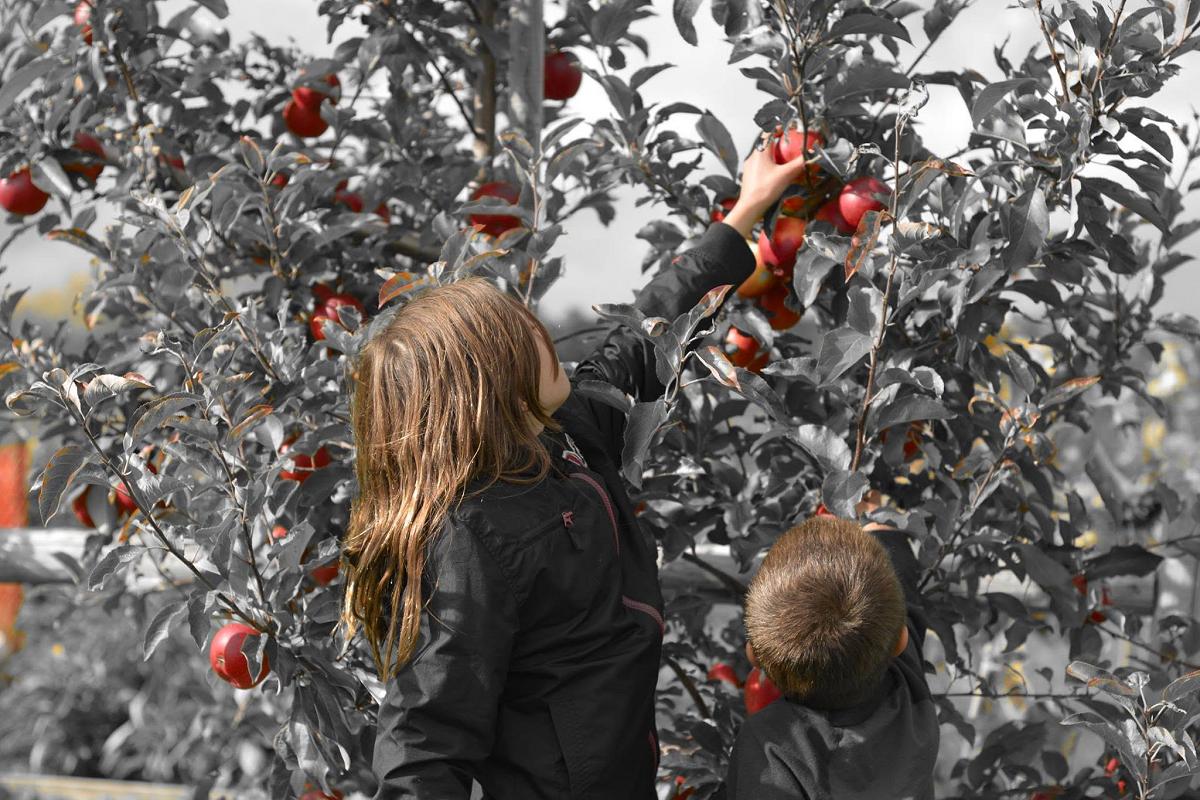
Head to Pieter’s Appleyard on the Apple Route in Colborne to pick your own fruit from a range of varieties including the common apple crisp and gala to the hard-to-find liberty and silken apples. The 100-acre farm and orchard also has hiking trails with stunning views of the fall colours and Lake Ontario. (Photo: Pieter’s Appleyard)
If eating an apple a day keeps the doctor away, picking them too must be extra good for you.
When driving on Highway 2 between Port Hope and Brighton, you’re on what’s known as the Apple Route — as evident by The Big Apple, the most recognizable landmark along the 401. Just a short drive away is Colborne where you’ll find Pieter’s Appleyard, first started by the late Pieter Wyminga, who was a founding member of the Apple Route executive in Northumberland County.
Beyond the common gala, honeycrisp, empire, and ambrosia apples, at Pieter’s Appleyard you’ll find rare heritage varieties like the early mac, liberty, and crunchy and sweet silken apples.
Prefer not to break a sweat by picking your own? You can also drop in to buy bags of pre-picked apples of your choice. While you’re on site, don’t miss out on the opportunity to explore the three kilometres of nature trails that offer unbeatable views of the fall foliage as well as of Lake Ontario.
You can spend the day at the picnic tables or shopping from the country store that’s stocked with apples, cheese curds, homemade apple cider, and other fresh goods.
Located at 13516 County Road 2 in Colborne, Pieter’s Appleyard is open from 10 a.m. to 4:30 p.m. Thursdays through Mondays until the end of October. To learn more, visit pietersappleyard.ca.
Celebrate local agriculture across the Kawartha Lakes during Kawartha Farmfest
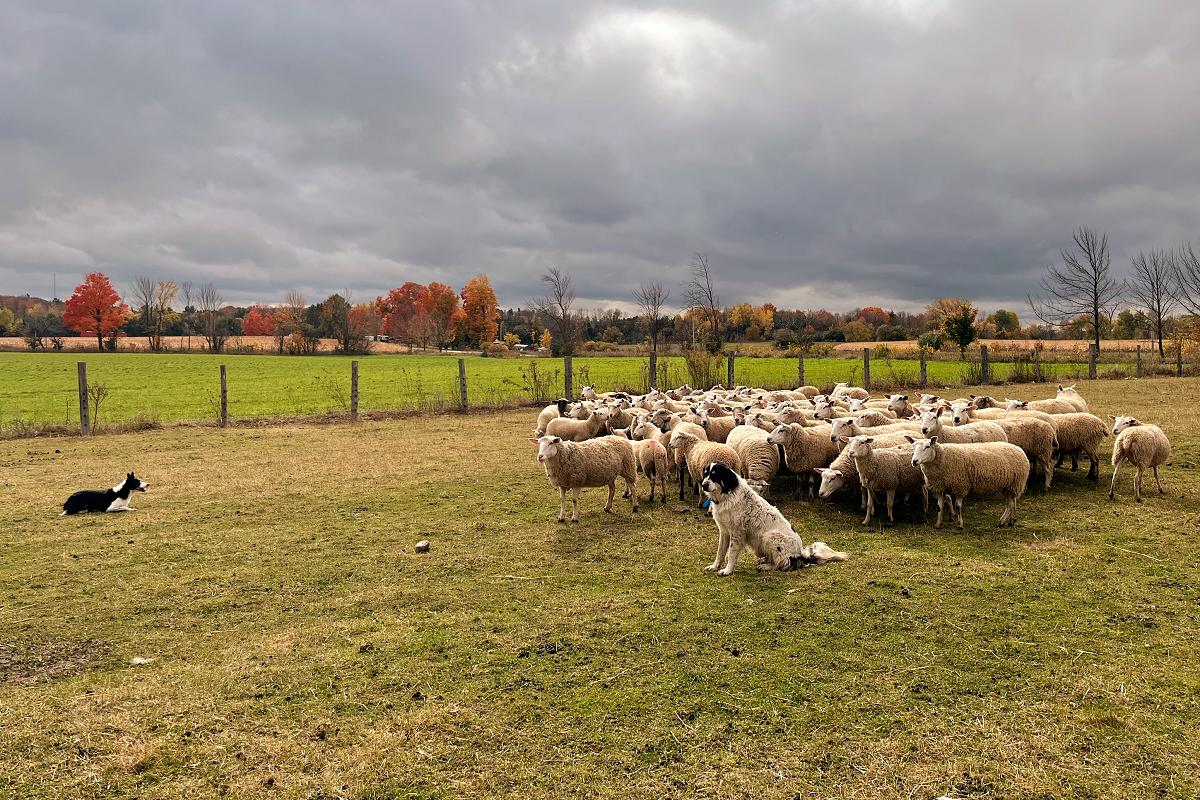
Schaiwind Farm in Woodville is one of the local farms and attractions participating in Kawartha Farmfest, hosted by the City of Kawartha Lakes on October 3, 2026. During Farmfest, you can learn about sheep farming, watch sheepdog herding, watch sheep shearing, meet the sheep and the sheepdogs that guard and heard the sheep, and more. (Photo: Schaiwind Farm)
Fall means its time for the 24th annual Kawartha Farmfest, a self-guided driving tour of farms across Kawartha Lakes that takes place on Saturday, October 3.
Organized by the City of Kawartha Lakes, you are invited to bring the whole family to visit nine family-operated local farms and other attractions from 10 a.m. to 4 p.m. You can explore the property, learn about life on the farm, and engage in some family-friendly fall activities. From delicious treats to demonstrations and activities, each farm has something different to offer.
You can start your day in the sweetest way at Maplefest at the Roost Farm in Brechin before learning all about sheep shearing, sheep dog herding, and sheep farming at Schaiwind Farm in Woodville. Or perhaps you’d like to learn about organic farming at O’Brienview Farm in Cameron, or collect eggs at Sims Farm in Fenelon Falls. From corn mazes to guided tours, giant pumpkins, and apple picking, there are many things to learn and do during Kawartha Farmfest.
Pick your own potatoes at Bragg Farms in Clarington
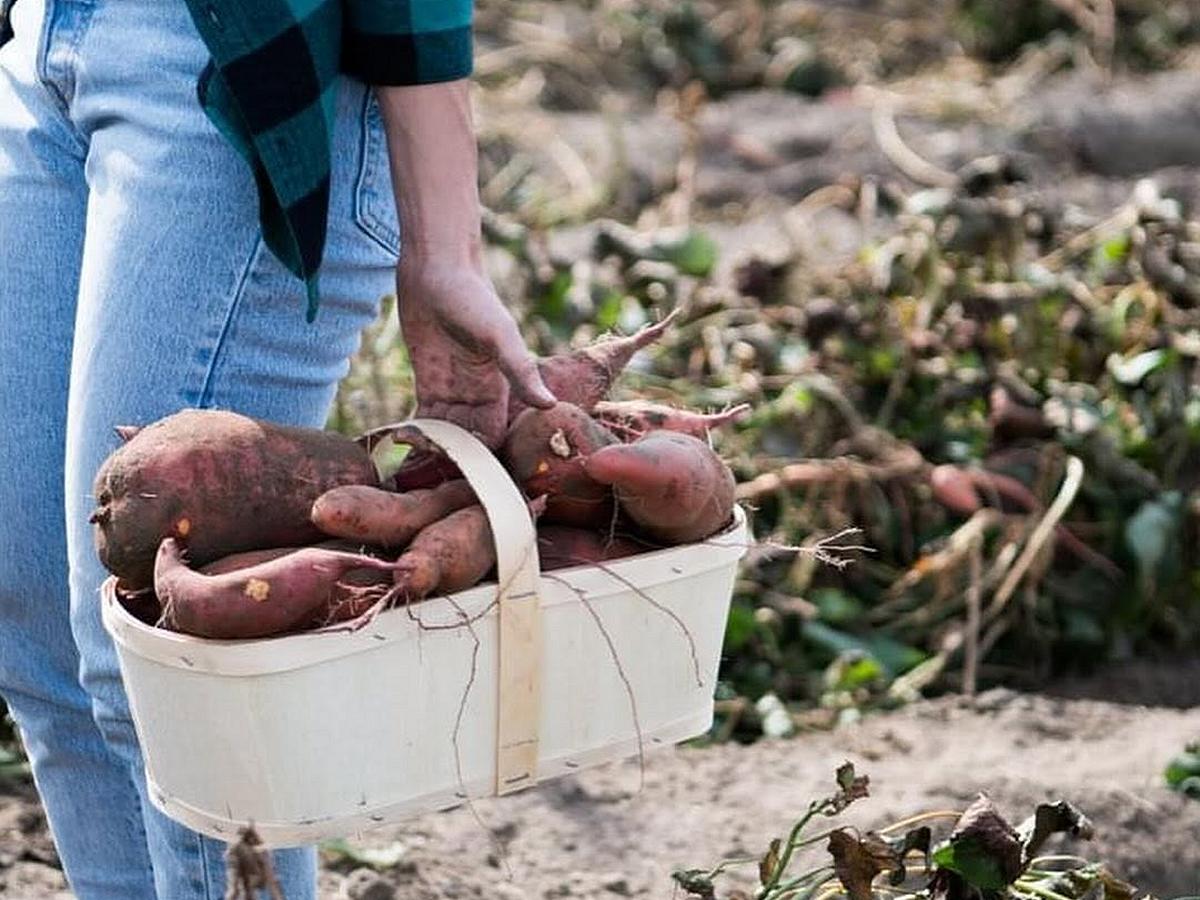
East of Northumberland County in Clarington, Bragg Farms offers a pick-your-own-potatoes experience, where you can take a tractor ride to the fields and spend the day digging up potatoes or sweet potatoes to fill a burlap sack or basket that will last the winter. At the end of your experience, you can get a taste of Bragg Farms signature and famous maple pecan sweet potato pie and sweet potato brownies. (Photo: Bragg Farms)
You’ve probably heard about picking your own pumpkins and picking your own apples in the fall, but did you know there’s also a place just west of Northumberland County where you can pick your own potatoes?
Bragg Farms is an eighth-generation family-owned farm in Clarington that has continued to evolve and introduce new ways for visitors to connect with the land. In 1991, Bragg’s Wild Birdseed was first established and, since then, the farm has grown to become a destination for sunflower experiences and pick-your-own potato experiences in the fall.
On weekends until Thanksgiving, you can drop by the family farm and get a tractor ride out to the fields to fill a burlap sack or basket with as many yellow-skin, red-skin, russet potatoes, or sweet potatoes as your heart — and stomach — desires. Your experience will begin with a farming tutorial and the proper tools and tips so you’ll have everything you need to get digging!
At the end of your experience, get a taste of Bragg Farms signature and famous maple pecan sweet potato pie and sweet potato brownies.
If you don’t wash them and you store them properly in the burlap sacks, these potatoes won’t go bad as quickly as store-bought potatoes. In fact, they might just last you all winter — according to owner Brittany Bragg, they can last until beyond the new year, right up until Easter.
The experience is only available Saturdays and Sundays from 10 a.m. to 4:30 p.m. until Sunday, October 4. Bragg Farms is located at 3048 Concession Road 3 in Clarington, east of Bowmanville. For more information, visit www.braggfarms.ca.
Watch the pumpkin cannon at Pumpkinfest held at Buckhorn Berry Farm
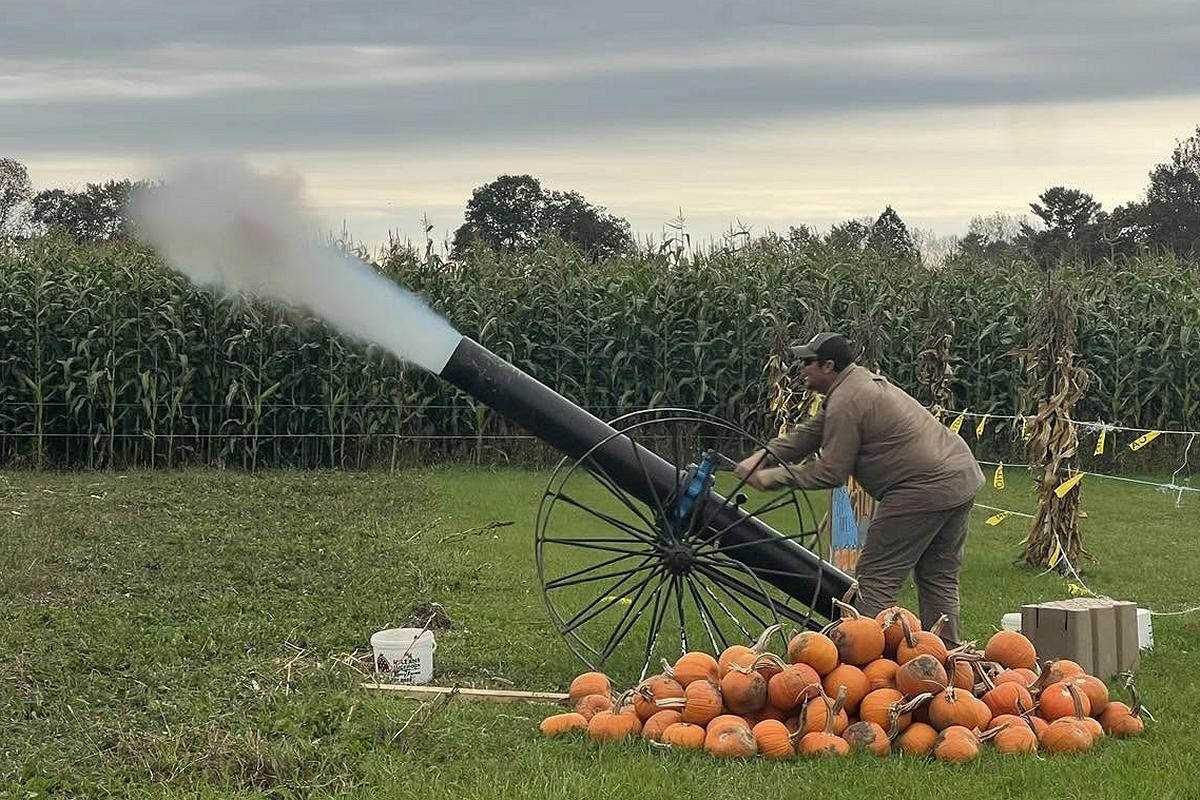
At Buckhorn Berry Farm, visitors are often amazed by the pumpkins that are regularly blasted from a canon towards targets, often exploding in the air. Other activities on the farm during Pumpkinfest include pumpkin picking, haunted forests and graveyards, corn mazes, wagon rides, bouncy castles, and more. (Photo: McLean and Buckhorn Berry Farms)
Every year, children and adults alike get a thrill from watching pumpkins blast out of a cannon during the annual Pumpkinfest at Buckhorn Berry Farm in October.
Every year, Buckhorn Berry Farm — owned and operated by the McLean family of McLean’s Berry Farm — gets turned into a haven for those who love fall. With nearly eight acres of pumpkin patches, you can find anything from long and slender pumpkins to ones that are wide and short and everything in between. After you’ve picked your favourites, head to the cannon show and watch a pumpkin explode!
During Pumpkinfest, you’ll also find a haunted and non-haunted corn maze, haunted graveyard, haunted forest, as well as mini golf, straw bales, wagon rides, bouncy castles, vendors with delicious harvest treats, and so much more. There are spooky offerings to serve different ages and fright levels.
With one shelter available for reservations, Pumpkinfest makes for an exciting and unique place to celebrate birthday parties and other special events. With daily live entertainment and a stocked farm store and food truck, you’ll have plenty of reason to stay the whole day.
Pumpkinfest runs for the first four weekends in October from 11 a.m. to 5 p.m. until the Thanksgiving long weekend on October 24 and 25 (closed Thanksgiving Monday).
See some massive pumpkins and enjoy a scary corn maze at Stellmar Farm in Little Britain
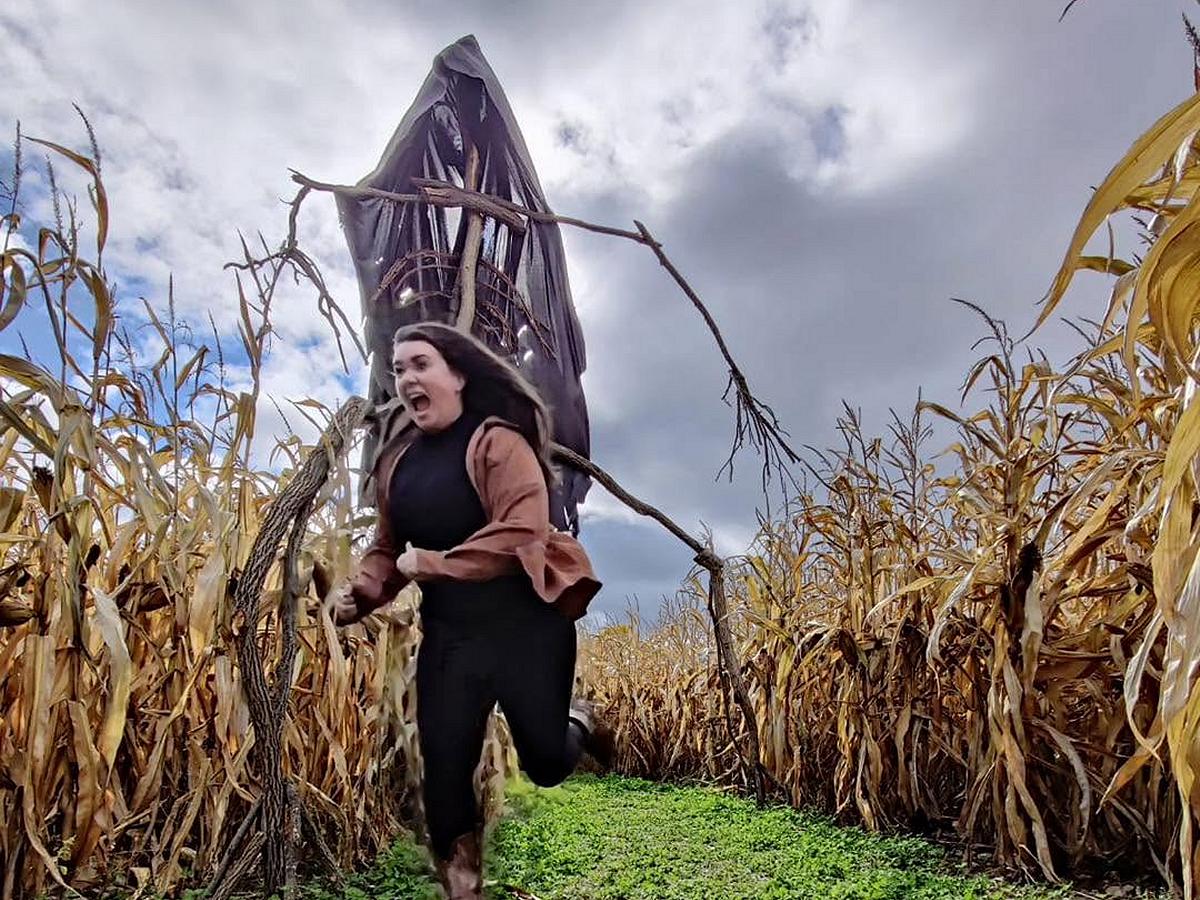
The four-acre corn maze at Stellmar Farm in Little Britain contains 35 dead ends, each marked with a scarecrow crafted by a local business. Those who complete the maze can vote on their favourite to be entered into a weekly draw for a gift package from the farm or from some of the business sponsors. On Fridays, human actors are added to the second half of the maze to make it even spookier. Stellmar Farm is also participating in Kawartha Farmfest. (Photo: Stellmar Farm)
You can find some of the largest pumpkins around at Stellmar Farm, located in Little Britain.
Owners of the farm since 1999, Joseph Stellpflug and David Martin (the farm’s name is a combination of their surnames) both grew up on farms and now share that love with those who visit their property. Stellpflug has pumpkin-growing in his blood, considering his father held three world records in his lifetime for growing giant pumpkins.
Stellpflung says that, in their time operating the farm, they’ve come close by growing pumpkins as large as 800 pounds. At Stellmar Farm, there are about five acres dedicated to pumpkin-growing and this year’s produce is looking plentiful. You can pick out an Atlantic Giant pumpkin, jack-o-lanterns up to 50 pounds, or more than 55 other varieties, as well as gourds and squash.
Stellmar Farm also has a four-acre corn maze with 35 dead ends. Each one has a scarecrow (or “monster”) put up by a local business who choose to “sponsor a monster” and you’ll have the chance to vote on your favourite. At the end of the season, the business with the most points gets bragging rights, while those who vote are entered into a weekly draw for a gift package from the farm or from some of the business sponsors.
For a bit of a spookier maze, Stellmar Farm partners with the Lindsay Brewing Company from 7 to 10:30 p.m. on Friday nights from September 25 to October 16 for Boos and Brews, where actors are added to the second-half of the maze (the first half is more child-friendly). The ticketed events also feature live music, with beer and wine and hot dogs available for purchase. Bring a lawn chair and a flashlight.
While at Stellmar Farm, you’ll find a farm store stocked with preserves or you can purchase value packs of pumpkins, gourds, hay bales, and more to help you decorate your home. The farm is also well-known for serving up a famous one-pound pumpkin bread loaves that sell out every weekend.
Stellmar Farm is open at 136 Sand Bar Road in Little Britain from noon to 5 p.m. on Fridays, and 10 a.m. to 5 p.m. on Saturdays, Sundays, and Thanksgiving Monday. To learn more, visit www.stellmarfarm.com
Take your family to a fall agricultural fair, including the Lindsay Ex
Held in 2026 from September 19 to 27, the Lindsay Exhibition is one of the largest agricultural fairs in Ontario. The annual fall fair includes fun for the whole family from truck shows and antique farm equipment demonstrations to livestock shows, horse pulls, agricultural displays, vendor booths, and a midway. (Photo: Lindsay Agricultural Society)
From livestock shows and tractor pulls to demolition derbies and midway rides, there’s so much family-friendly fun to be had at agricultural fall fairs in the Kawarthas.
The largest in the region — and the fourth-largest agricultural fair in Ontario — is the Lindsay Exhibition, held by the Lindsay Agricultural Society from September 19 to 27. On the event schedule you’ll find a truck show, a heavy horse show, antique farm equipment demonstrations, livestock shoes, horse pulls, agricultural displays, vendor booths, a midway, and many more family friendly activities. To learn more and purchase tickets, visit www.lindsayex.com/lex.
Other fall agricultural fairs in the Kawarthas region include the Port Hope Fair from September 17 to 20, the Bobcaygeon Fall Fair from October 1 to 3, the Roseneath Fair from October 2 to 4, and the Norwood Fair on the Thanksgiving long weekend from October 10 to 12.
Other fall harvest festivals include the Honey Harvest Festival in Port Hope on September 19, Brighton Applefest from September 24 to 27, Harvest Fest in downtown Cobourg on October 3, and the Keene Pumpkin Festival on October 17.
Kawartha Localist is an editorial series from kawarthaNOW celebrating the places, experiences, businesses, and communities that make our region extraordinary. Written by people who live here, work here, and have spent nearly 30 years exploring the Kawarthas and surrounding region, each edition shares trusted local recommendations, hidden gems, and favourite discoveries from across Peterborough County, the City of Peterborough, Kawartha Lakes, Northumberland County, Haliburton County, and Hastings Highlands.
Whether you’re looking for your next hiking trail, favourite patio, scenic drive, farmers’ market, or weekend adventure, Kawartha Localist is what we love about where we live.
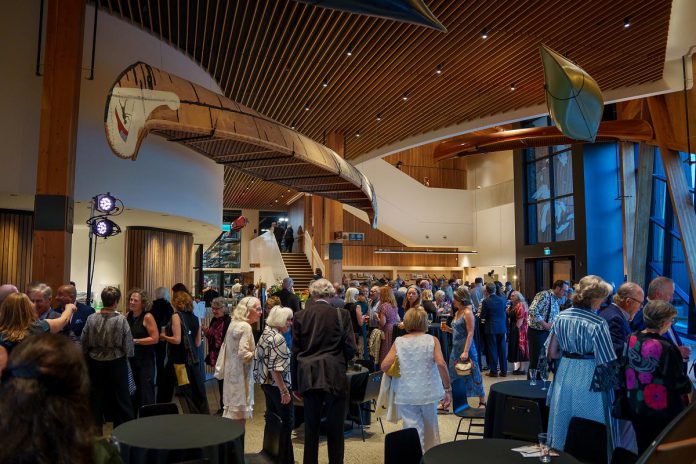
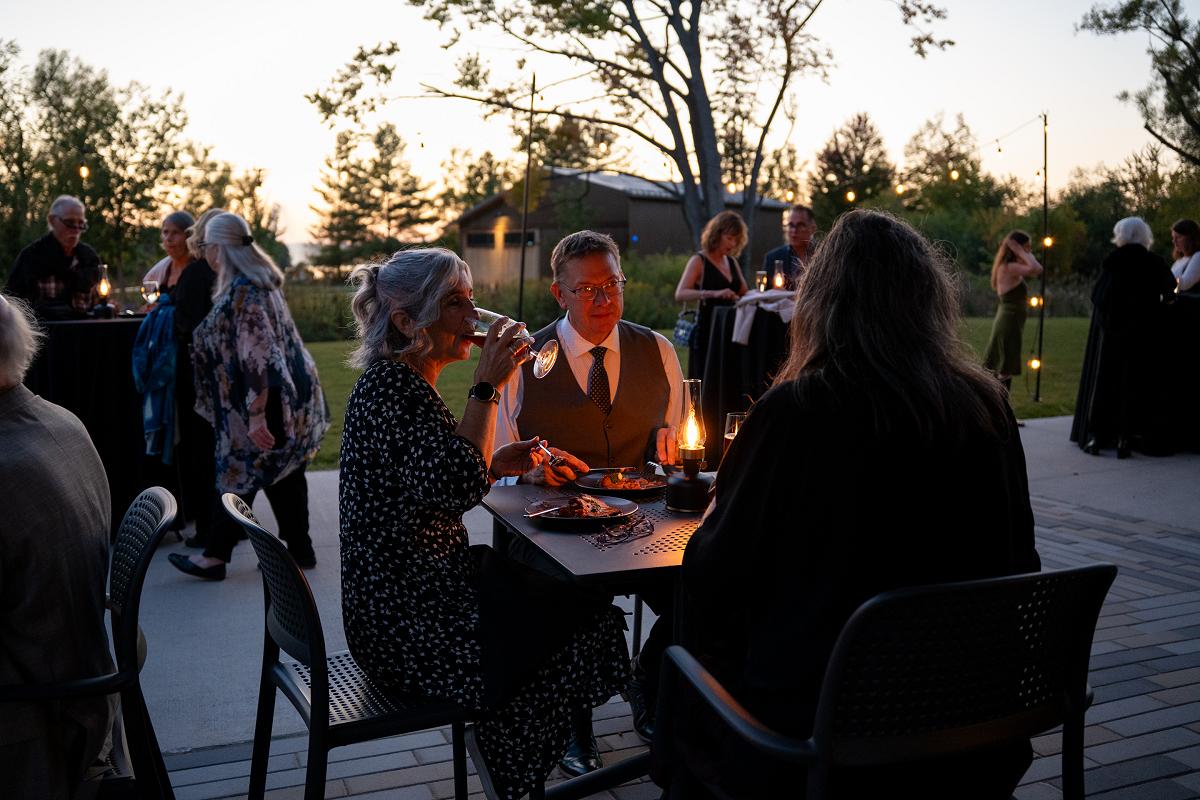
The Canadian Canoe Museum's second annual Lakeside Gala: Celebrating Excellence in the Making on October 3, 2026 features live music, local cuisine, an auction, and community connections. All proceeds from the gala support the Museum's programming and core mission priorities. (Photo courtesy of The Canadian Canoe Museum)
From the Builders in Residence Program to hands-on workshops to the stories behind the world’s largest collection of paddled watercraft, craftsmanship is at the heart of The Canadian Canoe Museum in Peterborough.
That’s why the Lakeside Gala, the Museum’s flagship fundraising event, has the tagline “Celebrating Excellence in the Making.”
Taking place on Saturday, October 3, from 5:30 to 10:30 p.m., proceeds from this public event will directly support The Canadian Canoe Museum’s exhibitions, programs, and signature initiatives like the Speaker Series and Builders in Residence Program.
“We wanted to put our own spin on a major philanthropic event and make sure it aligns with our values and ties closely with the land we’re on,” says Carolyn Hyslop, Executive Director of The Canadian Canoe Museum.
Celebrating the community that helped build a world-class museum
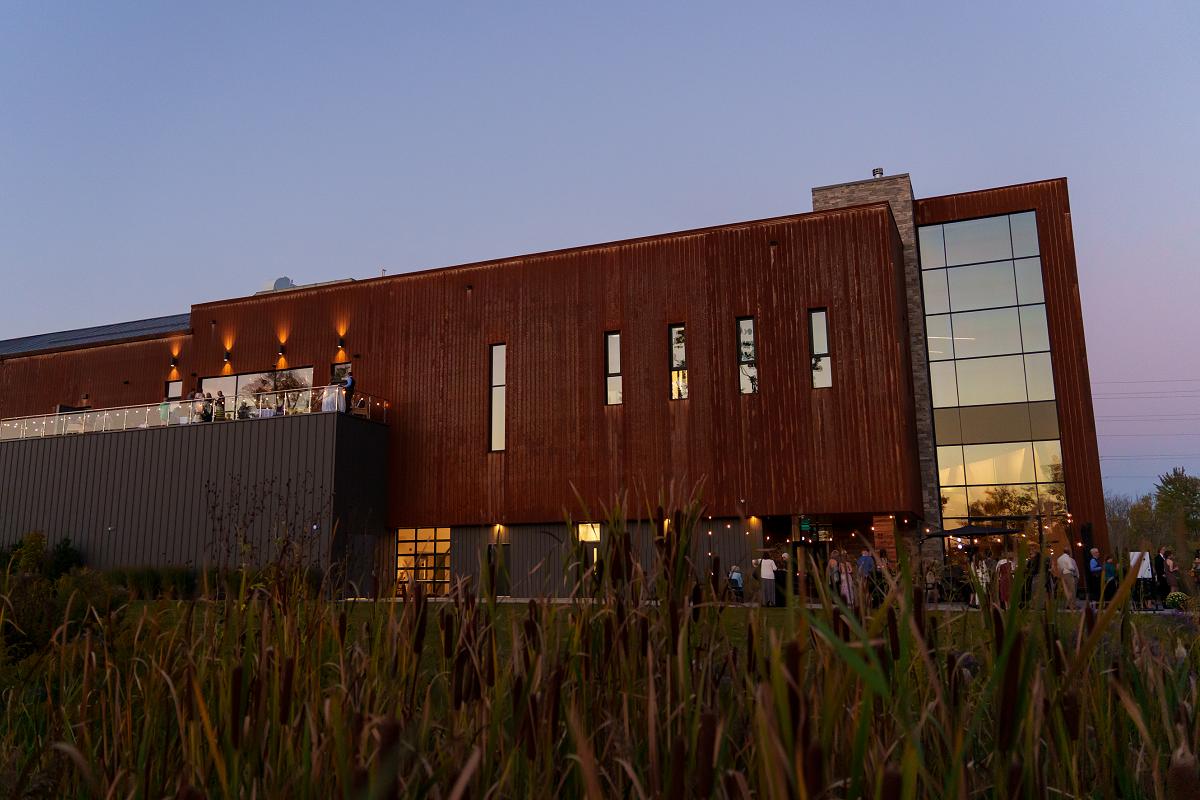
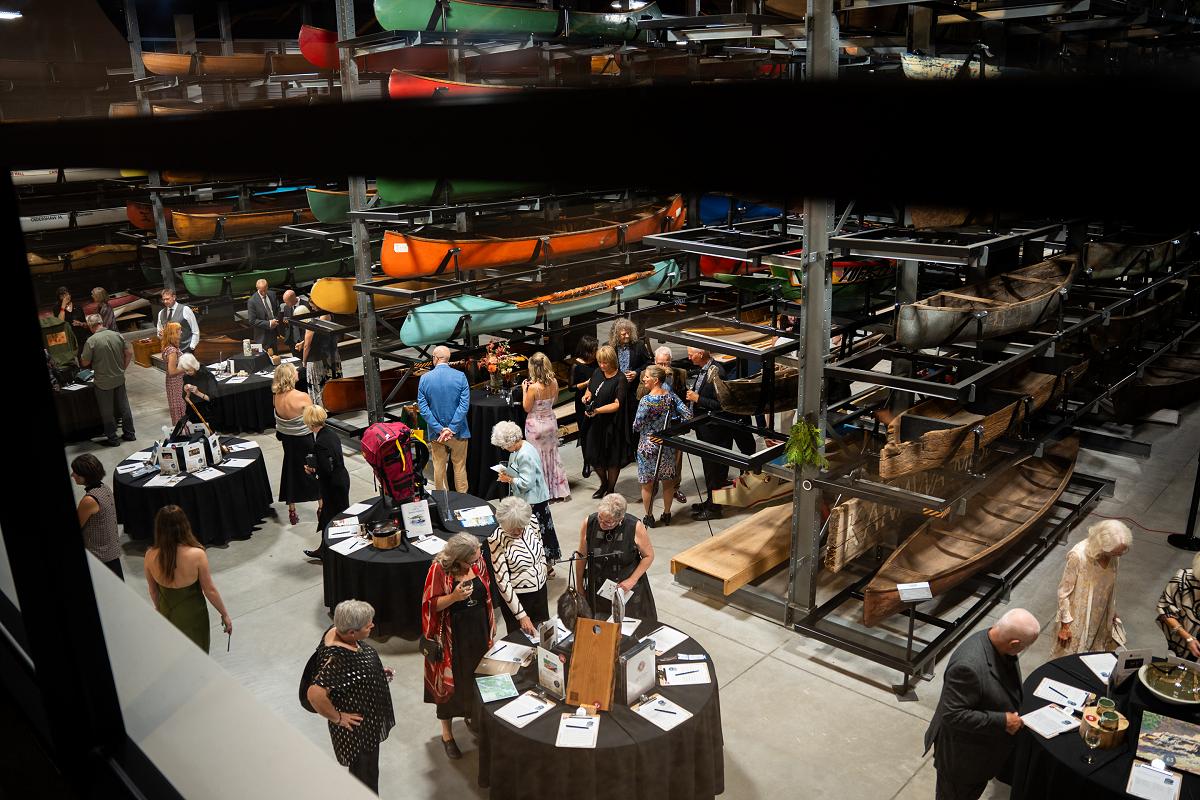
Now in its third year of operation at its new location at 2077 Ashburnham Drive on the shores of Little Lake in Peterborough, The Canadian Canoe Museum is a two-storey, 65,000-square-foot building that was purpose-built to house the world’s largest collection of canoes, kayaks, and paddled watercraft. The Lakeside Gala on October 3, 2026 is an annual celebration welcoming the community and supporters, donors, and partners that have come together to support the Museum. (Photo courtesy of The Canadian Canoe Museum)
After a decade of planning and more than two years of construction, The Canadian Canoe Museum opened at its new location at 2077 Ashburnham Drive in May 2024.
Located on a five-acre site, the Museum’s two-storey, 65,000-square-foot building was purpose-built to house the world’s largest collection of canoes, kayaks, and paddled watercraft. The Museum and Lakefront Campus also includes space to host temporary exhibits, offer on-water and outdoor education programming, and support private event rentals.
“It seemed only fitting to have an annual celebration welcoming our community and supporters, donors, and partners that have come together during the build and, now that we’re operating, continue to sustain us in bringing this vision to life,” Hyslop says.
During the Lakeside Gala, guests will have the opportunity to appreciate the Museum’s location on Little Lake and the building’s unique architecture, which earned it national recognition on the cover of the April 2025 edition of the well-respected Canadian Architect magazine.
The Lakeside Gala at The Canadian Canoe Museum on October 3, 2026 gives sponsors, donors, and supporters the opportunity to appreciate the Museum’s location on Little Lake and the building’s unique architecture. Proceeds from the public event will directly support The Canadian Canoe Museum’s exhibitions, programs, and signature initiatives like the Speakers Series and Builders in Residence Program. (Photo courtesy of The Canadian Canoe Museum)
The construction of the Museum features work from Havelock Metal Co. and Emily Creek Woodworking Inc., both of which are returning as Presenting Sponsors for the Lakeside Gala.
“We’re really lucky and honoured to have these lead sponsors who have been there from day one with the build of the Museum back again, now supporting us with our programming through the gala,” says Jeremy Ward, Curator at The Canadian Canoe Museum.
“It’s a really special experience to stand hand-in-hand with them and say we’re so proud of what we’ve made here in the community. It’s important to keep supporting and sustaining that.”
Local chefs offer Canadian-inspired flavours and community connections
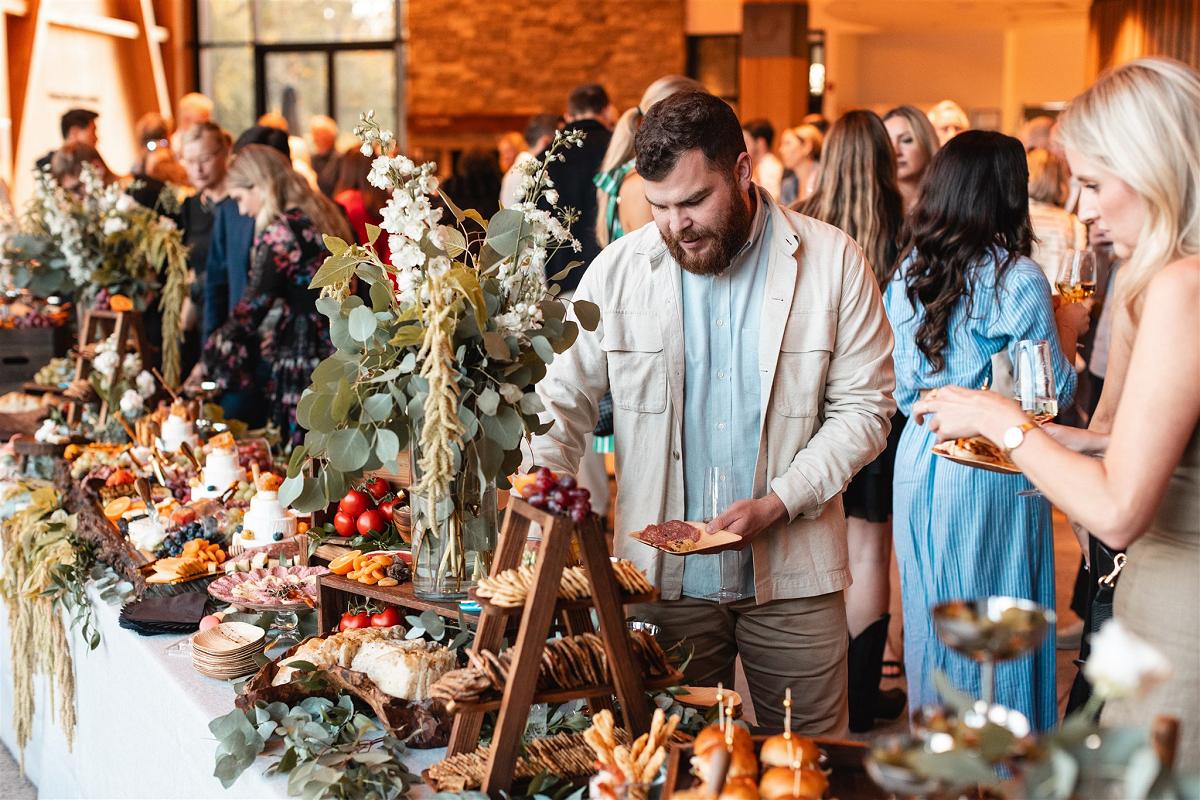
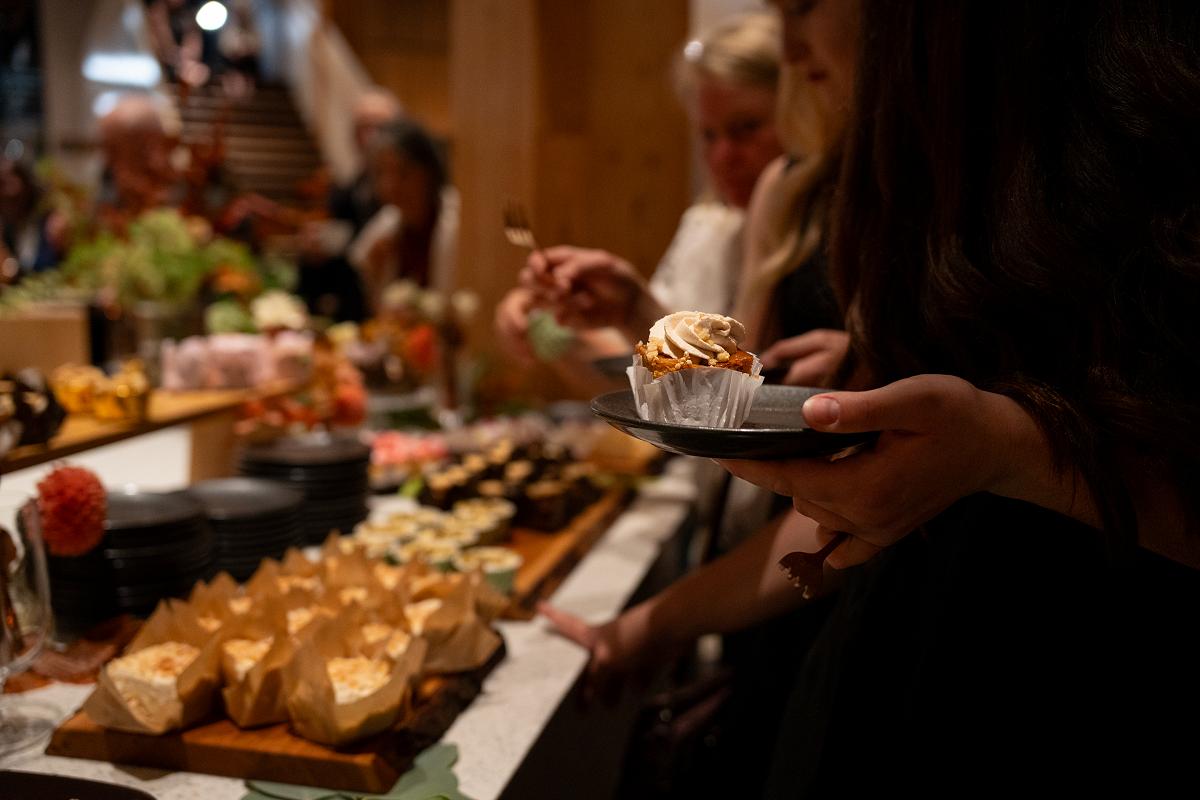
During the Lakeside Gala at The Canadian Canoe Museum on October 3, 2026, food stations will feature dishes created by local chefs from Chemong Lodge, Kitchen Farmacy, The Flying Chestnut Kitchen, Love You, Mean It (LYMI), Mija’s Bakeshop, and Little Miss Drinky Poo. (Photo: Bryan Reid)
Following opening remarks, guests at the Lakeside Gala can explore different food stations and speak with the chefs behind the culinary creations. The stations will feature local chefs from Chemong Lodge, Kitchen Farmacy, The Flying Chestnut Kitchen, Love You, Mean It (LYMI), Mija’s Bakeshop, and Little Miss Drinky Poo.
“While the Museum’s collection and the stories we share are national in scope, we wouldn’t be where we are without the support of our community,” Ward says. “That’s why it’s important to us to support local businesses, artisans, and makers, including offering meals made by chefs who use locally sourced ingredients.”
That includes Chef Adam Brown of Chemong Lodge in Bridgenorth, who participated in the inaugural Lakeside Gala last year along with his wife Sara Brown. According to Sara, the gala is an opportunity for chefs to get out of their kitchens and connect with members of the community.
While The Canadian Canoe Museum’s collection is national in scope, the support of the local community has been essential both to the build of the new Museum and its continued operation. That’s why the Lakeside Gala on October 3, 2026 will support local businesses, artisans, and makers, including by offering meals made by local chefs who use locally sourced ingredients. (Photo courtesy of The Canadian Canoe Museum)
Reflecting on last year’s gala, Sara says the food station quickly “became a gathering point.”
“People lingered and then came back with someone new in tow. That is what a great fundraiser needs from its food: not a line to move through, but a reason to stay in a room, and that is what our installations are built to do.”
For this year’s event, Sara says they’ll be bringing things that are “Canadian through and through” for their charcuterie installation, where most of the ingredients are either grown or smoked by Chemong Lodge.
Throughout the evening, there will be live music from acclaimed Canadian jazz pianist and composer Thompson Egbo-Egbo, whose music is rooted in storytelling and connection.
Artists and builders contribute one-of-a-kind creations to gala auctions
The auctions at The Canadian Canoe Museum’s Lakeside Gala on October 3, 2026 include one-of-a-kind artwork, such as this work by recent Artist in Residence Holly Ann Friesen. (Photo: Holly Ann Friesen)
The theme of “Excellence in the Making” continues through to the Lakeside Gala auctions, where guests can bid on unique items for the chance to take home something they won’t find anywhere else.
Items include a 10-day guided canoe trip on the Great Bear River in the Northwest Territories from Jackpine Paddle, a Swift Canoe package, handcrafted gear, and signed books by notable outdoor enthusiasts including Adam Shoalts and Nick Offerman.
Several artists have also donated one-of-a-kind artwork, including recent Artist in Residence Holly Ann Friesen, a painting by Christopher Griffin, a stunning piece from renowned photographer Arnold Zageris, and fine artist and avid paddler Susan Oomen, who also has a piece, October Morning, featured in the Museum’s temporary exhibit Canoe Perspectives.
One of the unique items up for bidding during the auctions at The Canadian Canoe Museum’s Lakeside Gala on October 3, 2026 is a 10-day guided canoe trip on the Great Bear River in the Northwest Territories from Jackpine Paddle. (Photo: Olivia Mater Photography)
Tla-o-qui-aht First Nation canoe carver Joe Martin — who will be The Canadian Canoe Museum’s Builder in Residence alongside his daughter Gisele Martin at the time of the gala — has donated a handmade Nuu-chah-nulth canoe paddle.
“The reason this auction can happen is that The Canadian Canoe Museum team has done such an incredible job fostering these relationships,” Hyslop notes. “These are long-term connections; a community that the museum has built. These are friends and family.”
Hyslop says the Lakeside Gala is an “incredible opportunity to immerse yourself in the Museum and its collection, while also being surrounded by contemporary makers that have donated items to support the Museum.”
“It’s this wonderful cycle of support that goes around,” she adds. “As people support us, we support them, and then we expose people to so many more artists and artisans in the area. It’s this reciprocal symbiotic relationship that happens at the gala that gets me really excited and inspired because there are so many good people that are part of it.”
Supporting year-round programming and the daily care of a nationally significant collection
Proceeds from the auctions at The Canadian Canoe Museum’s Lakeside Gala on October 3, 2026 will support the Museum’s core programming, including workshops, school trips, camps, on-water experiences, and the Builders in Residence program. The proceeds will also be used to help maintain the Museum’s collection of more than 650 nationally significant watercraft. (Photo courtesy of The Canadian Canoe Museum)
Last year’s inaugural Lakeside Gala raised $150,000 for the Museum’s core programming, including workshops, school trips, camps, on-water experiences, and the Builders in Residence program. The proceeds are also used to help maintain the Museum’s collection of more than 650 nationally significant watercraft.
“This is an ongoing daily responsibility that I think a lot of people might forget about,” Ward says. “Caring for the collection is something that happens each and every day, in big ways and small ways, and in many ways the public doesn’t see.”
“With the collection being at the core of all that we do and inspiring all of these events and programs, it’s critical for that support to be there on a consistent basis, to help us sustain and thrive as a Museum.”
VIDEO: You are invited … Lakeside Gala, October 3, 2026
In addition to supporting The Canadian Canoe Museum, the Lakeside Gala offers guests the opportunity to don elegant cocktail attire and enjoy an elevated evening of community, craftsmanship, and thoughtfully prepared food.
“It’s turned out to be a really incredible evening – one that people are excited about leading up to the event and that they talk about afterwards,” says Hyslop. “It’s a chance for us to showcase what it is that makes this Museum exceptional and one of a kind.”
Tickets for the Lakeside Gala are $250 per person and include a charitable tax receipt. To purchase tickets, visit canoemuseum.ca/lakeside-gala.
This branded editorial was created in partnership with The Canadian Canoe Museum. If your organization or business is interested in a branded editorial, contact us.
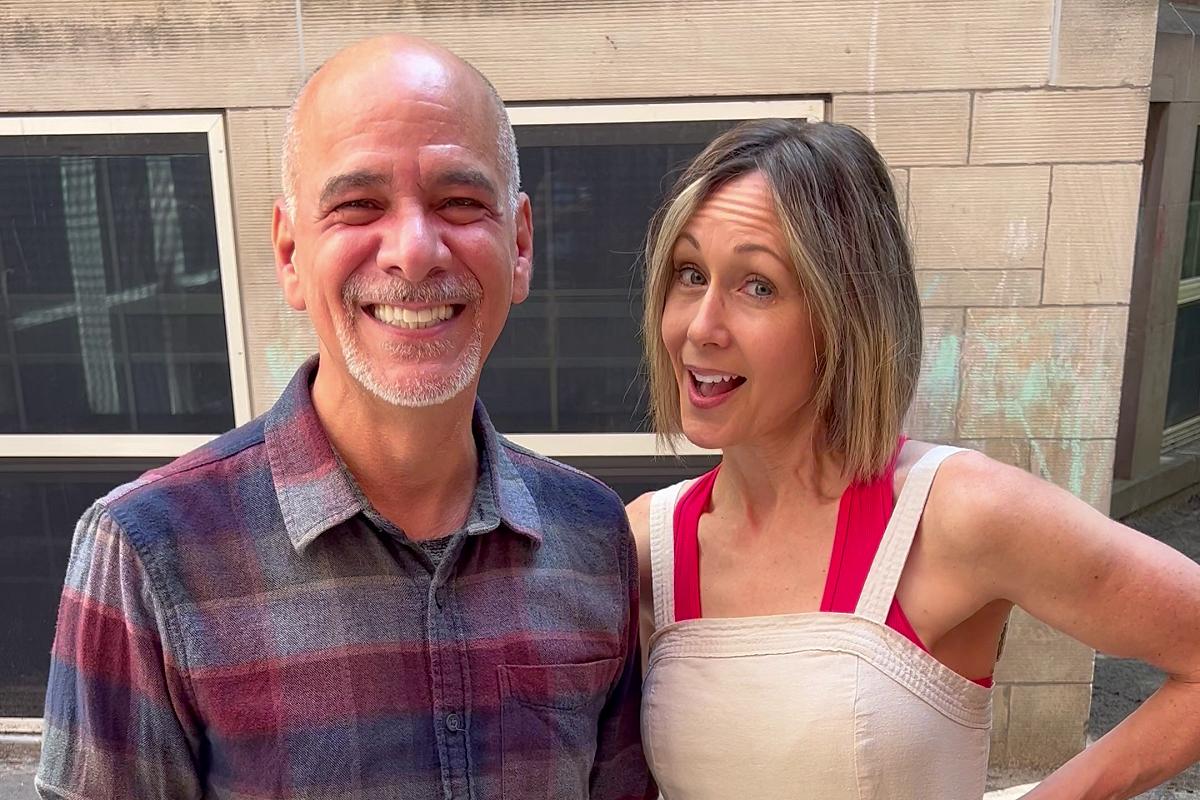
Pat Mastroianni and Stacie Mistysyn as Joey Jeremiah and Caitlin Ryan in the 1989-91 CBC television series "Degrassi High" and the 1992 television movie "School's Out." (Photo supplied by Oak Artist Management)
Anyone who grew up watching Joey Jeremiah and Caitlin Ryan navigate teen life in Degrassi High will have a chance to revisit the groundbreaking show with a trip back to high school this October.
Pat Mastroianni and Stacie Mistysyn, who played the two characters on the CBC television series, are coming to Peterborough and Lindsay for screenings of the 1992 television movie School’s Out that will be followed by live in-person question-and-answer sessions.
The tour stops at St. Peter Catholic Secondary School in Peterborough on Saturday, October 3 and I.E. Weldon Secondary School in Lindsay on Saturday, October 17. Tickets are $55 and include the film, the Q&A, and one regular popcorn and drink.
Advertisement - content continues below
Actual high schools offer a fitting setting for fans to revisit the fictional students whose experiences helped make Degrassi High a touchstone for generations of viewers.
For those who watched the original broadcasts, many of whom are now in middle age, the screenings will be a chance to reconnect with characters they followed during their own adolescence.
Younger fans who discovered the series through international syndication and cable reruns will also have an opportunity to see two of its best-known actors in person.
Pat Mastroianni and Stacie Mistysyn, who portrayed Joey Jeremiah and Caitlin Ryan in the 1989-91 CBC television series “Degrassi High” and the 1992 television movie “School’s Out.” (Photo supplied by Oak Artist Management)
Created by Linda Schuyler and Kit Hood, Degrassi High continued the stories of characters introduced in Degrassi Junior High. The series originally aired from 1989 to 1991 on CBC in Canada and PBS in the United States and tackled issues including abortion, suicide, and HIV/AIDS alongside the everyday challenges of growing up.
After the award-winning series ended, Degrassi High went on to be broadcast in 40 different countries, introducing the students of Degrassi High to new audiences.
“Degrassi was the show that dared to face the challenges facing youth without holding back,” Oak Artist Management states in a media release announcing the tour. “It became a cultural phenom that still holds a vast fanbase for its raw and realistic depiction of teen life.”
Advertisement - content continues below
Serving as the feature-length finale to Degrassi High, School’s Out premiered on CBC on January 5, 1992 and attracted 2.3 million viewers, roughly twice the series’ usual audience.
Directed by Hood and written by Yan Moore, the film follows the characters over a summer when graduation brings changing relationships and uncertain futures. At its centre is Joey and Caitlin’s relationship, complicated by Joey’s involvement with Tessa Campanelli, played by Kirsten Bourne.
The movie carried the series’ frank approach to adolescence into more mature territory, exploring sex, infidelity, and the consequences of drinking and driving — including a tragic turn involving the character Derek “Wheels” Wheeler (Neil Hope, the actor who portrayed Wheels, later suffered a tragedy of his own).
Advertisement - content continues below
Although the film closed the chapter of Degrassi High, Mastroianni and Mistysyn later reprised their roles in Degrassi: The Next Generation.
The October appearances will bring the actors together with audiences to revisit the movie and take questions in person. Both local screenings are advertised as all-ages events, with limited general seating.
Peterborough-Nogojiwanong Pride Week runs from September 18 to 27, 2026. The week culminates with the Pride Parade, pictured here in 2024, which takes place this year on September 26 and will be followed by the popular "Pride in the Park" event in Millennium Park. (Photo courtesy of Sean Bruce)
Peterborough-Nogojiwanong Pride Week returns September 18 to 27 with a call for community solidarity and a schedule of celebrations ranging from a youth prom and film screening to outdoor activities, drag performances, and the annual Pride Parade.
Now in its 24th year, the community-organized celebration has adopted “Woven Together” as its 2026 theme, emphasizing the connections between 2SLGBTQIA+ people locally and globally and the strength that comes from supporting one another.
“When any part of our community is under attack, we are all called to respond,” organizers state in a media release. “It is up to us and our allies to stand united, support each other, and not leave anyone behind.”
Advertisement - content continues below
Pride Week will officially launch with a flag raising at Peterborough City Hall at 500 George Street North on Friday, September 18 at 12:15 p.m. Deputy mayor Gary Baldwin will read the Pride Week proclamation before the progressive Pride flag is raised on the south lawn.
“Peterborough-Nogojiwanong Pride Week is an opportunity to celebrate the 2SLGBTQIA+ community,” says mayor Jeff Leal in a city media release. “This year’s theme, Woven Together, speaks to the connections we share and the importance of supporting one another.”
“Pride Week is also a reminder that discrimination, including homophobia and transphobia, continues to affect people in our community. By working together, we can make Peterborough a place where everyone is treated with respect and acceptance.”
The theme of Peterborough-Nogojiwanong Pride Week from September 18 to 27, 2026 is “Woven Together,” emphasizing the connections between 2SLGBTQIA+ people locally and globally and the strength that comes from supporting one another. (Graphic: Peterborough Pride)
The annual celebration has grown considerably since 2003, when a group of local residents organized Peterborough’s first Gay Pride parade and then-mayor Sylvia Sutherland proclaimed September 13 as Gay Pride Day. Around 300 people participated in that inaugural parade.
Twenty-three years later, organizers say plans include more than 30 community-run gatherings where 2SLGBTQIA+ people can connect, share ideas, speak their minds, support one another, and have fun in an accepting environment. Participants are welcome to wear masks to help protect themselves and others.
The annual Pride Parade takes place on Saturday, September 26, with participants gathering at City Hall at 12:30 p.m. before the parade begins at approximately 1 p.m.
The route heads south on George Street and east along King Street to Millennium Park, crossing the rainbow crosswalk at King and Water streets along the way. Pride in the Park follows at approximately 1:30 p.m. and continues until 5:30 p.m., with performances, community booths, vendors, food, and activities for families.
Road closures and parking restrictions will be in effect around City Hall and along the parade route. Drivers should allow extra time when travelling downtown on parade day.
Advertisement - content continues below
The previous evening, the Trans March will bring trans, non-binary, gender-diverse, and gender-questioning people together with friends, family, and allies at Millennium Park. Sign-making begins at 5 p.m. on Friday, September 25, followed by a rally at 5:45 p.m. and the march at 6 p.m. Pizza and community social time will follow.
Other highlights include ReFrame Film Festival’s Pride screening at the Peterborough Public Library on Friday, September 18. The program pairs the landmark 1968 drag documentary The Queen and Diane Obomsawin’s award-winning animated short I Like Girls, with local drag performer Sahira the Djinn introducing the films and participating in a post-screening Q&A. Admission is pay what you can.
On Sunday, September 20, the Art Gallery of Peterborough will host a free Pride edition of its Family Sunday program from 1 to 4 p.m. Visitors of all ages can weave rainbow flags, decorate rainbow ornaments, and contribute to a community weaving project. No registration is required to participate.
Participants in the annual Peterborough-Nogojiwanong Pride Parade on September 27, 2025. (Photo courtesy of Sean Bruce)
The celebration also extends beyond the city, with a Baxter Creek Pride Hike in Millbrook on Saturday, September 19 and the sixth annual Lakefield Pride Picnic at Cenotaph Park on Sunday, September 20.
With most activities taking place in or near downtown Peterborough, Pride organizers and the Peterborough Downtown Business Improvement Area (DBIA) are encouraging businesses to decorate and display welcoming messages. Residents are also invited to decorate their homes in support of the celebration.
“Everyone should be able to live and love as they wish with dignity and without fear,” organizers state.
Organizers credit the annual celebration to the work of volunteers and support from the city, community organizations, unions, local businesses, and the broader community.
Advertisement - content continues below
The following events are listed in Peterborough-Nogojiwanong Pride’s community calendar for September 18 to 27. Event details may change, and some activities require advance registration. For updates, visit www.peterboroughpride.ca.
Friday, September 18
Pride Week Flag Raising
When: Friday, September 18, 12:15 p.m.
Where: City Hall (500 George St. N., Peterborough)
Deputy mayor Gary Baldwin will read the proclamation of Pride Week before the progressive Pride flag is raised on the south lawn of City Hall.
Show your Pride on the Airwaves
When: Friday, September 18, 1 – 7 p.m.
Where: www.trentradio.ca, 92.7 CFFF FM, or on Cogeco channel 287
Tune in to Trent Radio for community-produced programming celebrating Pride in Peterborough. Anyone interested in producing a 30-minute program featuring music, an interview, poetry, or another format can contact Jill Staveley at jstaveley@trentradio.ca. Technical support is available.
ReFrame Film Festival Pride Screening
When: Friday, September 18, 7 – 9:30 p.m. (doors open at 6:30 p.m.)
Where: Peterborough Public Library (345 Aylmer St. N., Peterborough)
Cost: Pay what you can
A screening of the landmark 1968 drag documentary The Queen with Diane Obomsawin’s award-winning animated short I Like Girls. Local drag performer Sahira the Djinn will introduce the films and participate in reflections and a post-screening Q&A. Snacks and light refreshments will be available. For details and to reserve a seat, visit reframefilmfestival.ca/reframe-pride-screening/.
Femme Fatales – a Sapphic Pride Kick-Off
When: Friday, September 18, 10 p.m. until closing
Where: Pig’s Ear Tavern (144 Brock St., Peterborough)
Cost: Free, but tips for performers appreciated
Sapphic-themed bingo will feature performances between games by K-Stew, Sahira the Djinn, and My Fair Lady. Sapphic describes women and woman-aligned or non-binary people attracted to women. For more information, contact Kano at kaylayoki@gmail.com.
Advertisement - content continues below
Saturday, September 19
Roxxy Waters presents: A Tie Dye Toga Workshop
When: Saturday, September 19, 8 a.m. – 2 p.m.
Where: Quaker Foods City Square (215 Charlotte St., Peterborough)
Cost: $5 or pay what you can
Roxxy Waters, The Flamingo House, and Funky Buddha Collection host a tie-dye workshop during the Peterborough Regional Farmers Market. Bring a white bedsheet to make a toga or another white or lightly coloured fabric item. Sheets and other items will also be available. Participants can wear their creations to Boba + Toga on September 25.
Baxter Creek Pride Hike
When: Saturday, September 19, 9:30 – 11:30 a.m.
Where: Parking lot at the south end of Distillery Street, downtown Millbrook
Cost: Free
Join the Oak Ridges Trail Association for a six-kilometre hike along Baxter Creek on the Millbrook Valley Trails. Some hiking experience is required for uneven terrain and hills; the route is not accessible. Wear sturdy footwear and weather-appropriate clothing and bring water. A liability waiver is required. RSVP at least 24 hours ahead to Scott at scottcecchin@gmail.com and indicate whether you need a ride or can offer one.
The Gayla Queer Prom
When: Saturday, September 19, 2 – 8 p.m. (dance begins at 5 p.m.)
Where: Emmanuel United Church, formerly George Street United Church (534 George St. N., Peterborough)
Cost: Free
For ages 16 to 22, this accessible prom features drag performers, hairstylists, free formal wear, food, photography, a DJ, and community resources. A low-sensory space and noise-cancelling earplugs will be available. Wear whatever feels comfortable. A limited number of local bus passes are available by contacting corina@parn.ca.
Frottage – Tea Dance
When: Saturday, September 19, 3 – 8 p.m.
Where: The Theatre on King (171 King St., Peterborough; entrance at rear)
Cost: $15 or pay what you can; cash at the door
A dance party for men, masculine genderqueer people, and allies, featuring DJ Jeffary Fudge and a mix of disco, pop, dance, electronic music, and yacht rock remixes. Respectful guests are welcome and nobody will be turned away for lack of funds.
Queer Cars & Coffee
When: Saturday, September 19, 3 – 6 p.m.
Where: East City Bowl (325 Burnham St., Peterborough)
Cost: Free
A casual gathering for local car and motorcycle enthusiasts, with coffee and doughnuts. Daily drivers, modified vehicles, and bikes are welcome. The outdoor event takes place rain or shine, so dress for the weather.
Drag Bingo at Cork & Bean
When: Saturday, September 19, Doors open at 7 p.m.; show begins at 8 p.m.
Where: Cork & Bean (382 George St. N., Peterborough)
Cost: $20
An evening of bingo, drag performances, and audience participation for queer community members and allies aged 19 and older. Seating is limited. Reserve tickets through Eventbrite or contact kalikontour@gmail.com for information.
Sunday, September 20
Pride Worship Service at St. James United
When: Sunday, September 20, 10:30 a.m.
Where: St. James United Church (221 Romaine St., Peterborough), with an online option
Guest minister Rev. Don Uhryniw leads a service celebrating the diversity and love of 2SLGBTQ+ neighbours. The building is accessible. Watch online at www.twitch.tv/stjamesunited.
Lakefield Pride Picnic
When: Sunday, September 20, 11 a.m. – 4 p.m.
Where: Cenotaph Park (2 Queen St., Lakefield)
Cost: Free
The sixth annual family-friendly picnic features live music, performers, children’s activities, food, crafts, and community booths. The announced lineup includes singer-songwriter Taylor Abrahamse and drag performer and storyteller Betty Baker. For information, visit lakefieldpride.com.
Art Gallery Family Sunday Pride Edition
When: Sunday, September 20, 1 – 4 p.m.
Where: Art Gallery of Peterborough (250 Crescent St., Peterborough)
Cost: Free
Drop in for all-ages art activities celebrating identity, belonging, and community. Visitors can weave rainbow flags, decorate rainbow ornaments, and contribute to a community weaving project. No registration is required.
Pride Skate
When: Sunday, September 20, 6 – 7 p.m.
Where: Healthy Planet Arena (911 Monaghan Rd., Peterborough)
Cost: By donation
An inclusive public skate welcomes experienced skaters and those returning to the ice. Donations support the Queer Hockey league. Helmets are encouraged. For more information, email prideoutsideptbo@gmail.com.
Hot Flashes & Happy Endings: Queer Women, Sex & Pleasure Through Menopause
When: Sunday, September 20, 7 – 8:30 p.m.
Where: Stag Shop (1840 Lansdowne St. W., Unit 16, Peterborough)
Acceptance and Stag Shop present a workshop for queer women navigating perimenopause, menopause, and beyond, with conversation about intimacy, changing bodies, and sexual pleasure. Bring a chair as seating is limited. Register through the online form or email hello@acceptanceclinic.ca for information.
Tuesday, September 22
Drop-in Confidential Routine STBBI Testing
When: Tuesday, September 22, 9 – 11 a.m.
Where: Sexual Health Clinic (185 King St., Peterborough)
Cost: Free
Drop in for confidential routine testing for sexually transmitted and blood-borne infections with a public health nurse. The clinic is for people without symptoms and includes testing for chlamydia, gonorrhea, syphilis, HIV, and hepatitis. Anonymous and rapid testing are not available. For more information, call 1-844-575-4567 or visit Lakelands Public Health’s sexual health clinics page.
PTBO Rainbow Diner’s Club Pride Dinner
When: Tuesday, September 22, From 5:30 p.m.; trivia at 8 p.m.
Where: The Social Pub (295 George St. N., Peterborough)
Cost: Purchase meals from the menu
An evening of dinner, trivia, games, and prizes, with no fixed dinner time. Capacity is limited to 50 people. Reserve a free place through Eventbrite by 3 p.m. on Saturday, September 19. Donations to Pflag Canada Peterborough are welcome. The venue and washrooms are accessible, including an all-gender washroom.
Pride Euchre Gathering
When: Tuesday, September 22, 6:30 p.m.; no new games after 9 p.m.
Where: Dreams of Beans (141 Charlotte St., Peterborough)
Cost: Free
Euchre players and people interested in trying the game are invited to an evening of cards. Cards are provided and friends are welcome. Participants are welcome to wear masks.
Wednesday, September 23
LGBTQ+ Boardgame Meet Up
When: Wednesday, September 23, 6 – 11 p.m.
Where: 261 George St. N., Peterborough
Cost: $8
Pflag Peterborough’s Pride Week Social
When: Wednesday, September 23, 7 p.m.
Where: Sadleir House (751 George St. N., Peterborough)
Cost: Free
Meet new people or reconnect with familiar faces over free pizza and giveaways. Individuals, families, and friends are welcome. Pflag Peterborough provides peer support, education, and resources about sexual and gender diversity. For more information, visit pflagcanada.ca/chapter/pflag-peterborough/.
Learn to Play Gaelic Football
When: Wednesday, September 23, 7 p.m.
Where: Holy Cross Secondary School (1355 Lansdowne St. W., Peterborough)
Cost: Free
Peterborough GAA and Pride Outside PTBO introduce adults aged 18 and older to Gaelic football through a warm-up, basic skills, and games. No experience is needed. Wear comfortable clothing and closed-toe shoes, preferably cleats, and bring water. Participants must sign a waiver. There is no washroom access at the school.
Thursday, September 24
Drop-in Confidential Routine STBBI Testing
When: Thursday, September 24, 9 – 11 a.m.
Where: Sexual Health Clinic (185 King St., Peterborough)
Cost: Free
Drop in for confidential routine testing for sexually transmitted and blood-borne infections with a public health nurse. The clinic is for people without symptoms and includes testing for chlamydia, gonorrhea, syphilis, HIV, and hepatitis. Anonymous and rapid testing are not available. For more information, call 1-844-575-4567 or visit Lakelands Public Health’s sexual health clinics page.
Rainbow Youth Drop-in – Pride Edition
When: Thursday, September 24, 3:30 – 5:30 p.m.
Where: PARN Rainbow Room (60 Hunter St. E., second floor, Peterborough)
Cost: Free
2SLGBTQIA+ youth aged 13 to 23 can drop in for crafts, books and zines, button-making, snacks, and safer-sex supplies and information. The side entrance has an elevator; ring the doorbell on the second floor. Gender-neutral washrooms include an accessible washroom. Contact PARN at 705-749-9110 or corina@parn.ca for details.
Queers and Cars
When: Thursday, September 24, 5 – 8 p.m.
Where: Jackson Park parking lot (entrance at 630 Parkhill Rd. W. and Monaghan Road, Peterborough)
Cost: Free
A drop-in gathering for queer car enthusiasts to share their vehicles and learn from one another. All levels of automotive knowledge and all kinds of vehicles are welcome. Snacks are provided. Participants will be invited to provide vehicle and contact information on arrival. Contact Payton at payton.muro@gmail.com for details.
Queer Pilates with Nicole Malbeuf
When: Thursday, September 24, 5:30 p.m. (50-minute class)
Where: East City Studio/PTBO Pole Dancing (370B Burnham St., Peterborough)
Cost: $20 or pay what you can for a drop-in class
A contemporary Pilates class for adults aged 18 and older in a queer-friendly, gender-affirming space that also welcomes allies. No experience is required and yoga mats are provided. Wear comfortable clothing and bring water. The studio is not wheelchair accessible. Register at trellisarts.ca/instruction.
Toke & Stroke
When: Thursday, September 24, 6 p.m.
Where: Dreams of Beans (141 Charlotte St., Peterborough)
Cost: $30 or pay what you can
A painting event for adults aged 19 and older with Sahira, MiZZ MiSHAL, and Pu Ssay. Tickets include painting supplies and a pre-roll. For details and tickets, visit simpli.events/e/tokeandstroke2026.
“B” Loud! Community Art Event
When: Thursday, September 24, 6 – 8 p.m.
Where: Peterborough Community Health Centre Gathering Space (360 George St. N., Unit 64, Peterborough)
Cost: Free
An art and community gathering for people aged 14 and older who identify within the Bi+/MSPEC community, including bisexual, pansexual, and other people attracted to more than one gender. Participants can explore visibility and bi-erasure through art and enjoy a free meal. Registration is required and limited to 15 participants. Transportation assistance may be available. Register online or contact bloudptbo@gmail.com.
Pflag Peterborough Monthly Online Peer Support
When: Thursday, September 24, 7 – 9 p.m.
Where: Online; registration required
A peer-support meeting for 2SLGBTQIA+ adults, people questioning their sexual orientation or gender identity, and parents, caregivers, and family members seeking to support queer and trans loved ones. Register through the contact form at pflagcanada.ca/chapter/pflag-peterborough/ to receive joining information. Newcomers are welcome.
P(RIDE) Pride Glow Ride
When: Thursday, September 24, Gather at 7 p.m.; one-hour ride begins at 7:30 p.m.
Where: Quaker Foods City Square (215 Charlotte St., Peterborough)
A music-filled bicycle ride through downtown Peterborough and East City celebrates the local cycling community. All ages and identities, including allies, are welcome. Helmets and lights are required to participate.
Pride and Poetry – Spoken Word Performance and Open Mic
When: Thursday, September 24, Doors and sign-up at 7 p.m.; show at 7:30 p.m.
Where: Dreams of Beans (141 Charlotte St., Peterborough)
Cost: $5 – $10 sliding scale; nobody turned away for lack of funds
Peterborough Poetry Slam presents a double feature and open mic celebrating queer love and language. Featured performers are to be announced. Masks are encouraged and will be available. The venue is physically accessible. For information or accessibility questions, email peterboroughpoetryslam@gmail.com.
Drag Bingo at The Social Pub: Pride Edition
When: Thursday, September 24, 7:30 p.m.
Where: The Social Pub (295 George St. N., Peterborough)
Cost: $5
Audrina Venti hosts a Pride edition of drag bingo with local performers Miss DivaLicious and Madeleine Minogue.
Friday, September 25
Writing Queer Futures
When: Friday, September 25, 2 – 5 p.m.
Where: Artspace (378 Aylmer St. N., Peterborough)
Cost: Free
Coming Out Rainbows Arts Collective hosts a science-fiction writing workshop with nine-time Prix Aurora Award winner Derek Newman-Stille. Participants will imagine the future of queer identity and existence while exploring creativity and world-building. No writing experience is necessary. For information, email dereknewmanstille@gmail.com.
Roxxy Waters presents: Boba + Toga: A Pride Toga Dance Party and Market
When: Friday, September 25, 4 – 8 p.m.
Where: Milk + Tea (360 George St. N., Suite 57, Peterborough)
Cost: Free
DJs, dancing, and a mini vendor market bring the Roxxy Waters Pride series to a close. Wear colourful outfits or a tie-dyed toga. A tie-dye workshop will also take place behind Milk + Tea on the day of the event. Follow @iamroxxywaters on Instagram for details.
Trans March
When: Friday, September 25, 5 – 7:30 p.m.; march begins at 6 p.m.
Where: Millennium Park, grassy area beside the Silver Bean Cafe (130 King St., Peterborough)
Cost: Free
Trans, non-binary, gender-diverse, and gender-questioning people, along with friends, family, and allies, are invited to gather for sign-making at 5 p.m. and a rally at 5:45 p.m. The march begins at 6 p.m., followed by pizza and social time from approximately 6:30 to 7:30 p.m. This is an all-ages, alcohol- and drug-free event.
Morley Gray Sex & Wellness Event
When: Friday, September 25, 5 – 10 p.m.
Where: Peterborough Lions Community Centre (347 Burnham St., Peterborough)
Cost: Free
An inclusive gathering with guest speakers and opportunities to ask questions and discuss sex, sexual health, wellness, and relationships.
Woven Together With a Swim
When: Friday, September 25, 7:45 – 8:45 p.m.
Where: Peterborough Sport & Wellness Centre (775 Brealey Dr., Peterborough)
Cost: Free
An inclusive community swim presented in collaboration with PARN, Trans Peer Outreach, Peterborough Community Health Centre, and Nogojiwanong Friendship Centre. Swim, use the waterslide, and meet other community members. No RSVP is required.
Saturday, September 26
Drag Queen Story Time with Betty Baker
When: Saturday, September 26, 10:30 – 11 a.m.
Where: Peterborough Public Library, Story Corner (345 Aylmer St. N., Peterborough)
Cost: Free
Betty Baker shares stories celebrating diversity, inclusion, and respect. The program is for children aged three to eight with a caregiver; siblings are welcome. No registration is required. For details, visit the library event page.
Pride Parade
When: Saturday, September 26, Gather at 12:30 p.m.; parade begins at 1 p.m.
Where: City Hall (500 George St. N., Peterborough), ending at Millennium Park
Bring friends, chosen family, and your Pride for the approximately one-kilometre parade through downtown Peterborough. The route crosses the rainbow crosswalk at King and Water streets before reaching Millennium Park. For information and group or float registration, visit peterboroughpride.ca/parade/.
Pride in the Park
When: Saturday, September 26, Approximately 1:30 – 5:30 p.m.
Where: Millennium Park (130 King St., Peterborough)
Following the parade, enjoy music and drag performances, family-friendly DJ selections, community information booths, vendors, and food from the East Peterborough Lions Club. Activities include Betty Baker’s Drag Story Time and a family and children’s area with a quiet space. A beer and beverage area will be in the Euphoria Spa parking lot. For details, visit peterboroughpride.ca/pride-in-the-park/.
Bi+ Pride Trivia Night
When: Saturday, September 26, 6 – 9 p.m.; trivia begins at 7 p.m.
Where: The Vine (165 Sherbrooke St., Peterborough)
Cost: Free
Mix and mingle with members of the bisexual+ community over regular and Pride-themed trivia, food, drinks, and prizes from local businesses. Friends, loved ones, and trivia partners are welcome. Reserve a table through @thevine_ptbo on Instagram or in person during opening hours.
UFP Queer Coffeehouse
When: Saturday, September 26, 6 – 8 p.m.
Where: Dreams of Beans (141 Charlotte St., Peterborough)
Cost: Free; purchase food and beverages from the menu
An accessible, alcohol-free evening for 2SLGBTQIA+ seniors and allies, with live music by Joslyn Burford. For information, email uu.ptbo@gmail.com.
Pride After Dark – Official Pride Afterparty
When: Saturday, September 26, Doors open at 8:30 p.m.; programming from 9 p.m.
Where: The Venue (286 George St. N., Peterborough)
Cost: $20 early bird; $25 or pay what you can at the door
For ages 19 and older, the official afterparty features a ballroom and drag showcase by the Kiki House of Greta Constantine and Fleur Fantasie at 9:30 p.m., followed at 10 p.m. by local performers Betty Baker, Lexy Mooore, Opal Essence, Sahira the Djinn, Kurt Cumstain, Audrina Venti, Pu Saay, and Madeleine Minogue. DJ Isla leads the dance party at 11 p.m. The 9 p.m. program is to be announced. Tickets and details are at peterboroughpride.ca/pride-after-dark/.
Sunday, September 27
Nogo Pride Queer Ecology Hike
When: Sunday, September 27, 10 a.m. – noon
Where: Jackson Park (610 Parkhill Rd. W., Peterborough)
Cost: Free
A family-friendly hike combines storytelling, land-based learning, and conversation about connections with the natural world. The route covers approximately two to three kilometres over two hours, mostly on the main crushed-gravel trail. Register at queerecology.ca or contact Z at just.queerecology@gmail.com for information.
Unitarian Pride Service
When: Sunday, September 27, 10 a.m.
Where: Unitarian Fellowship of Peterborough (775 Weller St., Peterborough)
The Unitarian Fellowship hosts a service of music and reflection celebrating Pride. Everyone is welcome. For information, email uu.ptbo.minister@gmail.com.
Anglican Pride Sunday Worship
When: Sunday, September 27, 10 a.m.
Where: St. John the Evangelist Anglican Church (99 Brock St., Peterborough)
An inclusive worship service in the Anglican liturgical tradition welcomes 2SLGBTQIA+ people and allies to celebrate love and diversity. Refreshments follow in the parish hall. For information, email rector@stjohnspeterborough.ca or call 705-745-7624, extension 34.
A market featuring local queer artisans, live music, on-site tattoos, food, beverages, and family activities takes place inside The Vine and outside in the plaza. Everyone is welcome. For information, visit www.thevineptbo.com or email thevineptbo@gmail.com.
They Come Together T(ea) Party
When: Sunday, September 27, 4 – 6 p.m.
Where: 580 Cameron St., Peterborough
Cost: Free
Indigenous, Two-Spirit/Indigiqueer people, family, friends, and community members are invited to honour Two-Spirit and LGBTQ+ relations with food, crafts, music, door prizes, and drag. Children aged 13 and younger must be accompanied by a guardian. Register by September 21 by contacting Jess at 705-775-0387, extension 235, or cgdc@nogofc.ca.
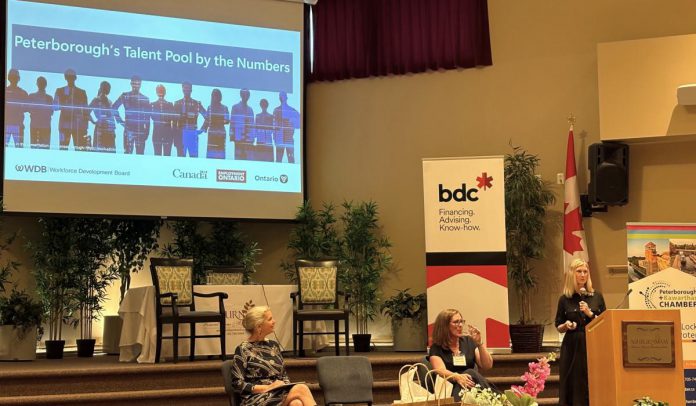
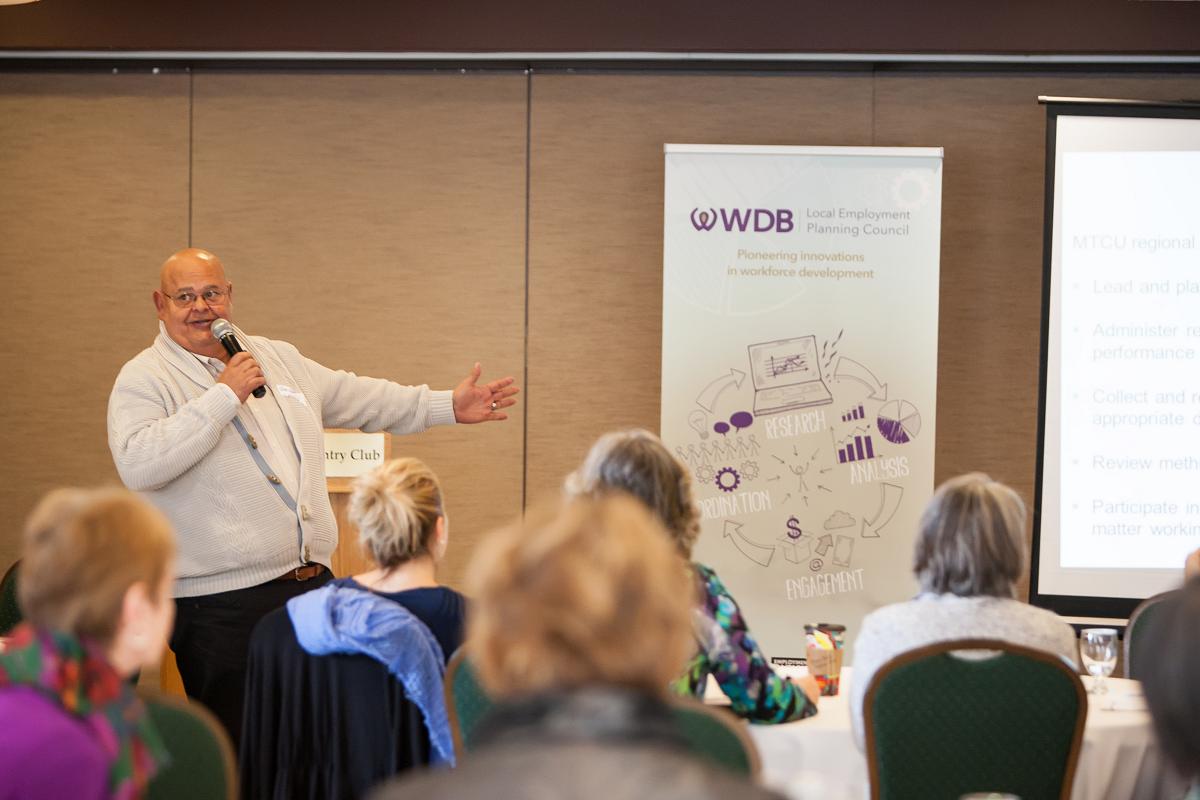
Workforce Development Board CEO Jennifer Lamantia (right) making a presentation at the Peterborough and Kawarthas Chamber of Commerce's Business Summit in June 2026. On September 30, the not-for-profit organization is celebrating 30 years of strengthening the workforce across Peterborough, the City of Kawartha Lakes, Northumberland, and Haliburton. (Photo courtesy of WDB)
On September 30th, Workforce Development Board (WDB) is celebrating 30 years of building resilient communities through partnerships, resources, and programming that strengthens the local workforce.
The milestone for the Lindsay-based not-for-profit organization celebrates three decades of growth and opportunities, along with the work of dedicated teams who support employers, job seekers, educators, economic developers, and community leaders across Northumberland, Peterborough, Kawartha Lakes, and Haliburton.
“It’s important for us to celebrate the accomplishments of WDB, but I think it’s also an opportunity to recognize the hundreds of people over those years that made those accomplishments possible,” says WDB CEO Jennifer Lamantia.
“From the people who work directly as organization staff, to the volunteer board of directors over the years, to the amazing and wonderful community partners that we have worked with, they have all contributed lots of time and expertise and leadership to the organization. It’s all of those people that we really want to recognize and thank because without them, none of that would have ever been possible.”
Three decades of local workforce planning
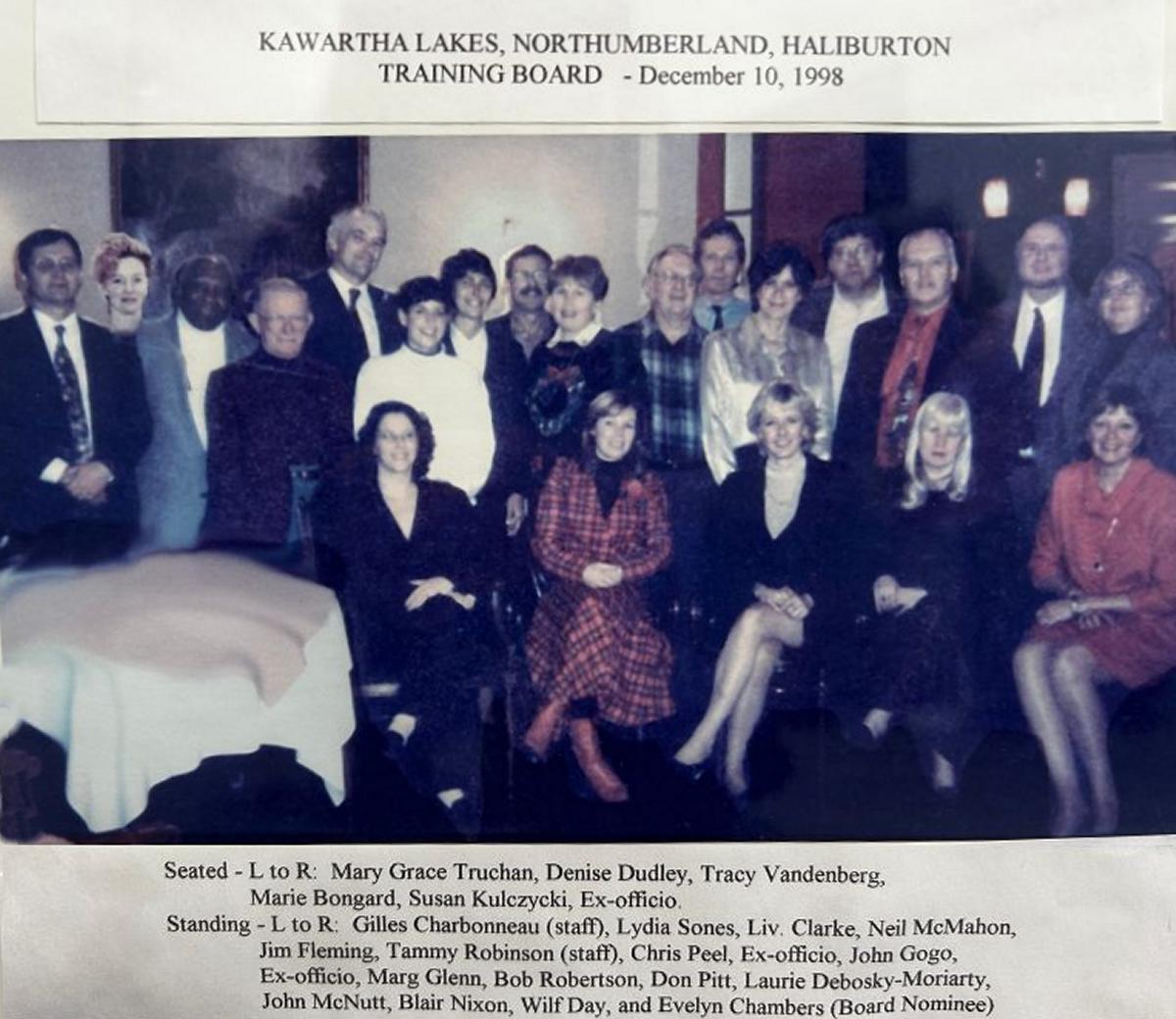
Workforce Development Board (WDB) was founded on September 30, 1996 as Kawartha Lakes, Northumberland, Haliburton Training Board. At the time, it was the first local workforce planning board in the province to receive official designation and incorporation. Today, WDB is one of 24 workforce planning boards in Ontario funded by the Ontario Ministry of Labour, Immigration, Training and Skills Development. (Photo courtesy of WDB)
Funded by the Ontario Ministry of Labour, Immigration, Training and Skills Development, WDB is one of 24 workforce planning boards in Ontario. The organization provides local labour market research, workforce planning support, employment initiatives, recruitment and retention resources, and tools that help job seekers and businesses make informed decisions.
“We work at a local level to improve the conditions of the local labour market by working with community partners,” says Lamantia. “We meet with employers, employment service providers, and economic developers to collect that information. We then share that back out with the communities we serve, so that ideally, we can help to coordinate some effective responses to some of the challenges or skills gaps that we’re hearing about.”
That’s not far from the original mission that WDB began with on September 30, 1996, when it was incorporated as Kawartha Lakes, Northumberland, Haliburton Training Board. At the time, it was the first local workforce planning board in the province to receive official designation and incorporation.
With 22 directors on its board, half of whom were women, WDB’s first staff member was Tammy Robinson. Gilles Charbonneau came soon after, hired first as a board administrator with his title later changed to executive director.
Over its first several years, the organization developed relationships with employers, educators, community agencies, municipalities, and training providers throughout the four counties. In 2002, it began operating as “Workforce Development Board” while maintaining the legal corporate name.
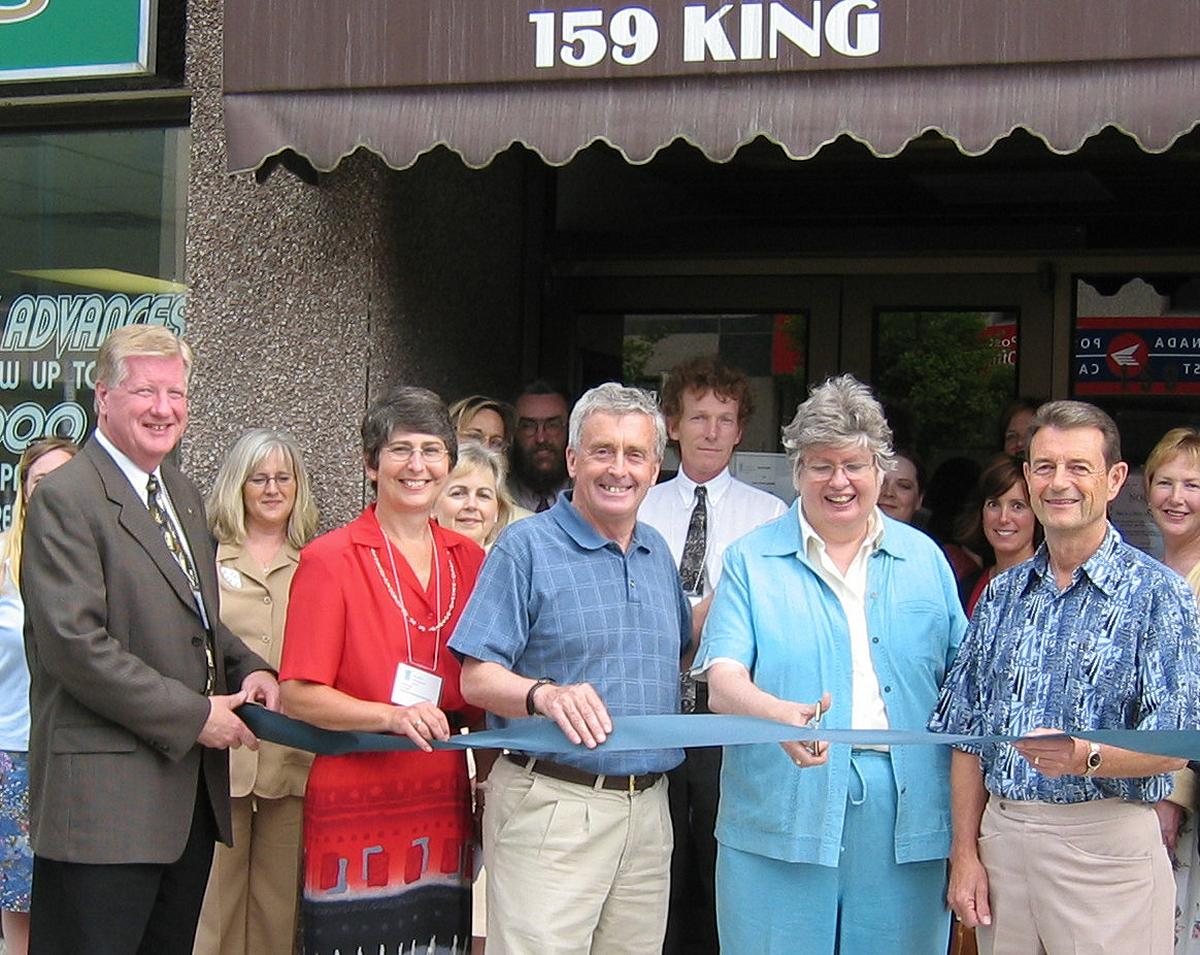
In 2003, Workforce Development Board (WDB) officially opened its office at 159 King Street in downtown Peterborough, where the not-for-profit organization remained until early 2026 when it moved to Launch Kawartha in Lindsay. Pictured is former WDB CEO Gord Evans (front left) holding the ribbon as former Peterborough mayor Sylvia Sutherland cuts it, with the late Peterborough MP Peter Adams standing to her right. (Photo courtesy of WDB)
Under the leadership of executive director Gord Evans in 2002, WDB began focusing more on apprenticeship promotion, skilled trades development, tourism workforce initiatives, and regional labour market planning activities.
The following year, WDB opened an office at 159 King Street in Peterborough, where the organization remained until this past March, when it relocated to an office space in Lindsay’s Launch Kawartha.
In 2007, WDB helped support the evolution of the Community Employment Resource Partnership (CERP), a network established in 2002, by expanding its membership to include representatives from other employment and community organizations. This is one of several ways WDB has maintained local partnerships over three decades to better advocate for the needs of the community and to share best practices.
“For 30 years, we’ve been able to continue to play an important role as a trusted partner and it’s because we have evolved with the labour market,” Lamantia says. “The partnerships are critical, and the interesting part of the work that we do is that it’s a region of four different areas and they all have their own unique characteristics and strengths that are driving their own local economies.”
Evolving to meet regional needs with new tools and resources
Pictured in 2016, Joe Celestini joined Workforce Development Board (WDB) as its CEO in 2013, remaining in the position until 2017 when he was succeeded by Jennifer Lamantia. Celestini led the not-for-profit organization when it was selected as one of the Government of Ontario’s eight pilot sites as a Local Employment Planning Council for the communities of Peterborough, Kawartha Lakes, Northumberland, and Haliburton. The selection positioned WDB as a provincial leader in employment system planning and coordination. (Photo courtesy of WDB)
Over the subsequent years, WDB started the Bear’s Lair Entrepreneurial Competition, which went on to be one of the region’s best known entrepreneurship events, and further fostered efforts to emphasize labour market intelligence and establish workforce intelligence and planning activities.
In 2013, Joe Celestini joined WDB as its new Chief Executive Officer, where he remained in the position until 2017 when he was succeeded by Jennifer Lamantia. He was leading the organization when WDB launched the instrumental Labour Market Gateway, an interactive component of the website that allows users to find information on occupational demand projections and sector demand projections.
In 2015, WDB hit a major milestone when it was selected as one of the Government of Ontario’s eight pilot sites as a Local Employment Planning Council (LEPC) for the communities of Peterborough, Kawartha Lakes, Northumberland, and Haliburton. Operating as one of two pilot sites in Eastern Ontario, this was crucial to positioning WDB as a provincial leader.
Dawn McColl, who sat on the executive board for WDB from 2012 to 2023 and is currently the assistant executive director of the Victoria County Career Services (VCCS), says being selected as one of the deliverers of the project was “phenomenal, a true testament to WDB’s potential.” The organization completed 24 projects throughout the pilot as well as a Community Labour Market Plan, a Labour Market Information Strategy Report that was a collaborative project of all eight LEPCs, and released a Local Jobs Hub Tool.
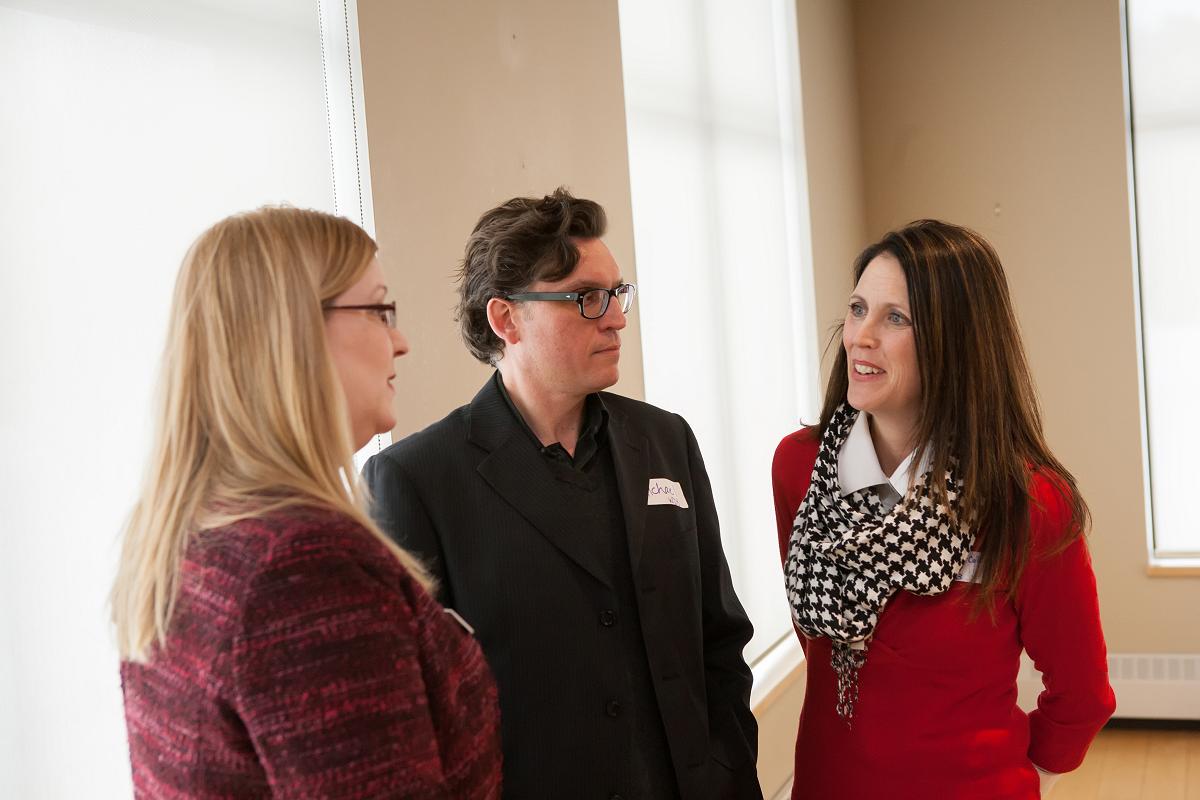
Former Workforce Development Board (WDB) board member Dawn McColl (right) in 2016 with board member Tonya Kraan and former staff member Michael Andrews during a Local Employment Planning Council (LEPC) event. McColl was involved in the organization from 2012 to 2023 and continues to work with WDB in her role as Assistant Executive Director of Victoria County Career Services (VCCS). (Photo courtesy of WDB)
“The pilot highlighted WDB’s ability not only to collect labour market data from a variety of sources, but to analyze and report current and relevant labour market information which is used by community partners, businesses, and municipalities for planning, growth, and development,” McColl says. “The project was larger and broader in scope. From that, it just spurred on further research projects and innovation and helped with planning and best practices and set the foundation to move forward.”
Throughout the pilot, WDB also launched its monthly Community Connections Newsletter — which just saw its 100th edition in August — and released the Eye on the Labour Market digital career planning resource, which continues to be updated monthly.
WDB also launched the Labour Market Information (LMI) Help Desk, which processed over 300 requests throughout the pilot and later became the model for a project led by WDB that expanded the scope of services delivered by each of the workforce planning boards in Eastern Ontario. Today, WDB’s LMI Help Desk service continues to operate as a co-branded service with support from five economic development partners and Muskoka-Kawarthas Employment Services and has tripled the number of requests processed since the launch.
When the LEPC pilot ended in 2020, WDB reverted back to the structure of a local board and a budget set at the same level as in 2014 — the level where it remains to this day.
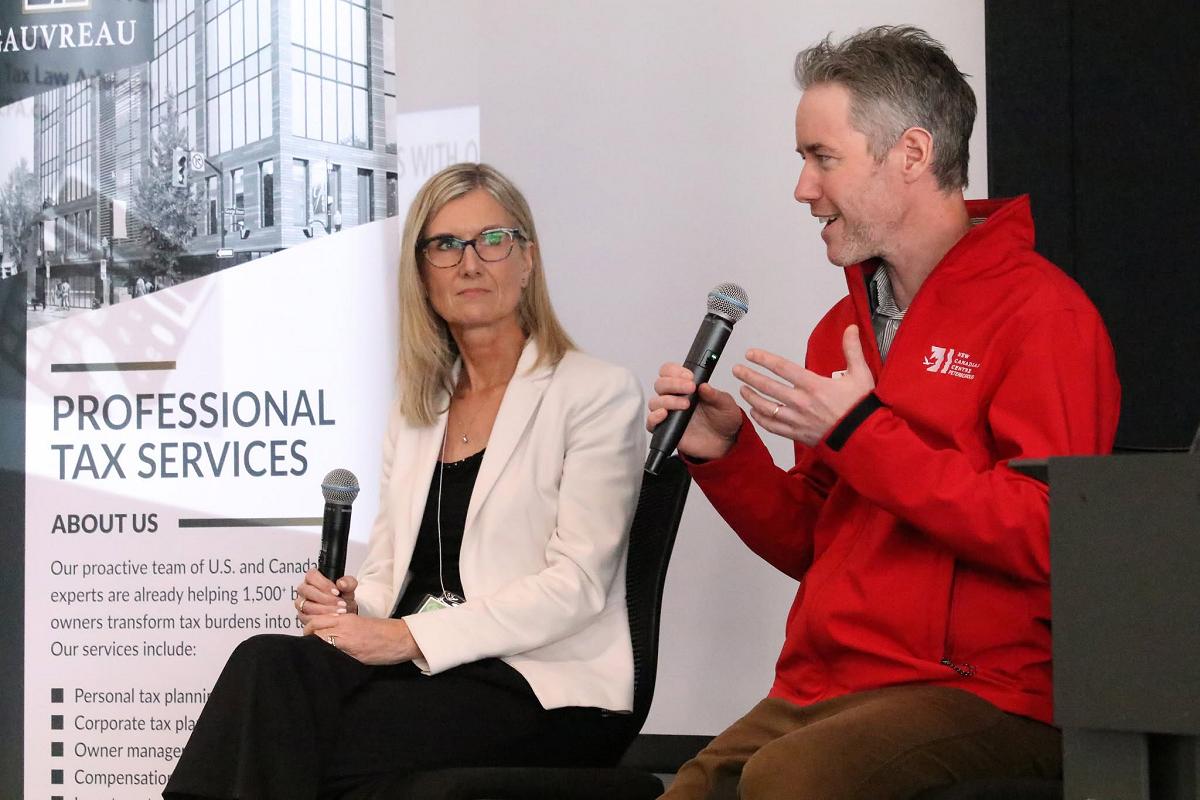
Workforce Development Board (WDB) CEO Jennifer Lamantia, pictured here with former Executive Director of New Canadians Centre Andy Cragg, on a panel during the Peterborough and Kawarthas Chamber of Commerce Business Summit in May 2023. She has been leading WDB since 2017 and says partnerships with local career and workforce organizations are critical for the work of the not-for-profit organization. (Photo: Peterborough and Kawarthas Chamber of Commerce)
Despite evolving budgetary challenges, throughout the last nine years with Lamantia at the helm, WDB has continued to adapt to meet the needs of the local community, such as establishing the Labour Force Advisory Group, which initially brought together community stakeholders to identify workforce challenges and labour market information as a COVID-19 pandemic response and now continues to meet quarterly to engage, share, and identify opportunities to address workforce needs.
WDB has also continued to introduce many job search and career planning resources like web-based career ladders and update toolkits and webinars to meet the changing landscape, including a continued focus on mental health in the workplace and responding to changes with AI in the workplace.
“WDB is recognized as experts in their field,” McColl points out. “They’re the go-to and they’ve built that over time and they’ve refined it over time, and they need to continue to be supported in that as a strong leader and community partner.”
Thirty years of impact and a future of possibility
The team of Workforce Development Board (WDB) attending a job fair in April 2026 at Haliburton Highlands Secondary School organized by the Haliburton County Home Builders Association (HCHBA) and featuring more than 30 local employers. At its table, WDB showcased the various tools and resources available on its website for students to use for job searching and future career planning, including the 10 different career ladders available and the Local Jobs Hub that aggregates job listings in the region from over 45 online job boards. (Photo courtesy of WDB)
This proactive and consistent response to the changing landscape of the local labour market is, according to McColl, one of the reasons WDB has had such a significant impact on the community over the past 30 years.
The organization’s recent move to Launch Kawartha in Lindsay after 30 years of being rooted in Peterborough begins a new journey with new opportunities for collaborations and partnerships.
Not only is Launch Kawartha centrally located within WDB’s catchment area, the innovation and entrepreneurship centre houses business partners and service providers in the local entrepreneurial and economic development ecosystem.
“WDB has continually responded in a manner that is based on communication, collaboration, and community partnerships,” McColl says. “WDB has an apt ear for labour market information, representing a broad and diverse scope of business, education, jobseekers, and other community stakeholders. WDB understands the job market and presents that information and insight to support informed decisions within this community.”
For more information about Workforce Development Board, visit www.wdb.ca.
This branded editorial was created in partnership with Workforce Development Board. If your organization or business is interested in a branded editorial, contact us.
Located in northwestern Peterborough County, the Municipality of Trent Lakes has a population of over 6,400 permanent residents and an estimated 10,000 seasonal residents. The municipality includes the hamlet of Buckhorn (pictured) in the south and a portion of the village of Kinmount in the north, as well as many smaller historic communities. (Photo: Municipality of Trent Lakes)
With the nomination period for the October 26 municipal election having closed on August 21, Peterborough County voters are looking for answers from the now-certified candidates for council.
Residents of the eight municipalities that form Peterborough County — Township of Asphodel-Norwood, Township of Cavan Monaghan, Township of Douro-Dummer, Township of Havelock-Belmont-Methuen, Township of North Kawartha, Township of Otonabee-South Monaghan, Township of Selwyn, and Municipality of Trent Lakes — will be voting for members of their lower-tier councils whose leadership makes up the membership of county council.
In this multi-part series, kawarthaNOW is publishing responses from candidates in each municipality to the question “Why are you running for council and what makes you a unique candidate?” Stories in the series, presented by municipality, will be updated as required to include additional responses received after publication.
The Municipality of Trent Lakes’ council comprises a mayor, deputy mayor, and three councillors, with one elected at large and one elected in each of Harvey Ward and Galway-Cavendish Ward.
Two positions on council were acclaimed after the closure of the nomination period, as only a single candidate was nominated in each position: incumbent mayor Terry Lambshead and incumbent Harvey Ward councillor John Braybrook as deputy mayor.
Incumbent deputy mayor Carol Armstrong is running for councillor at large, along with Janet Clarkson.
Incumbent councillor at large Peter Franzen is running in Harvey Ward, with Laurie Riley challenging him for the seat.
Incumbent Galway-Cavendish Ward councillor Joe Cadigan is seeking re-election in the ward, challenged by Caroline McGee and Ira Peters.
Mayor
Terry Lambshead (incumbent, acclaimed)
kawarthaNOW did not receive a response prior to publication. This story will be updated with any response provided.
Deputy Mayor
John Braybrook (acclaimed)
kawarthaNOW did not receive a response prior to publication. This story will be updated with any response provided.
Councillor at Large
Carol Armstrong
Experienced. Proven. Working for Trent Lakes.
For the past eight years, I’ve had the privilege of serving on Council. As your Deputy Mayor (and formerly Councillor) I have worked hard to bring a fact-based, analytical approach to protecting what makes our community special, strengthening essential services, and ensuring your tax dollars are managed responsibly.
Council made great progress last term in the areas of environmental protections, operational efficiencies, infrastructure upgrades and communications. I’m committed to continuing that work with integrity and delivering results for you.
My Priorities have been, and continue to be:
Respecting and Protecting the Environment
Instilling a culture of “Customer First” at the municipality
Reducing redundancy and timelines for building applications
Overseeing the cost-effective replacement of outdated and inefficient Public Buildings
Supporting sustainable economic growth
Supporting a vibrant social and cultural network
Expanding communications
Most important of all, being a responsible steward of YOUR money
Thank You for your continued support!
Janet Clarkson
I am running for council because I feel I can make a difference. Ex. I am very involved in the community and have been all my adult life. I have 12 years’ experience on council 8 of those years as mayor and I feel I have gained a great deal of knowledge that I am not willing to waste. I understand the diversity of this very large municipality and can identify with the unique challenges that each area experiences. I have had great success in my previous role both as an elected official and as a private citizen and I don’t intend to stop now! Ex. Keeping our public school in Buckhorn spearheading the buckhorn medical centre and recruiting dr’s and nurse practioner, buckhorn outdoor sports pad, and funding for beaver lake rd. New build for the Lakehurst hall buckhorn tourist centre. I feel we must move forward with promoting business as our tax base is far to dependant on residential assessment. The building process is to cumbersome and our heritage and environment has to be protected much more aggressively if we are to survive.
Advertisement - content continues below
Harvey Ward
Peter Franzen
I am running for council because of my deep appreciation for Trent Lakes and my passion for serving this community. Having lived in the area for over four decades — including 28 years on Galway Road and 15 years in Pirates Glen — my commitment is rooted in ensuring our municipality thrives today while remaining a vibrant, sustainable place for future generations.
What makes me a unique candidate is the rare combination of hands-on work ethic, extensive civic leadership, and proven municipal experience I bring to the table:
Practical, Hands-On Experience: Working as a stone mason for 58 years has given me a grounded, practical perspective on hard work, structural integrity, and accountability-qualities that directly translate to municipal oversight.
Decades of Dedicated Volunteerism: For over 40 years, I have actively shaped our community’s services. My involvement spans critical local needs, including serving as a volunteer firefighter, chairing the Trent Lakes Library Board and the Pirates Glen Community Association, and serving on health boards like the Kinmount and Area Medical Centre and Haliburton-Highlands Health Services.
Proven Local Leadership: I bring 16 years of direct experience as a Council Member, including 3 years as Deputy Mayor. I understand how local government operates, how to manage major municipal initiatives-such as our key infrastructure and emergency services depots-and how to deliver results while maintaining strict fiscal accountability for our ratepayers.
Ultimately, I combine a deep personal investment in our community’s future with the practical and political experience required to make sound, responsible decisions for the Municipality of Trent Lakes and Harvey Ward.
Laurie Riley
I worked for municipal government for 26 years primarily as City Council’s Assistant before moving to Trent Lakes. That experience gave me the understanding of the importance of the relationship between Council and their constituents. Local government is the most accessible level of government to the public and it should remain that way. In my opinion, customer service is the foundation of everything but especially provides a benchmark to measure accountability and transparency. “Accountability”, “Transparency” and “Integrity” should not be just tag lines to satisfy requirements in Policies. They should actually mean something and be measured to ensure the goals are achieved. I am running for Council because I believe my experience and strong commitment to customer service will ensure Trent Lakes has a good foundation to do great things. Together, we can Build it Better.
Advertisement - content continues below
Galway-Cavendish Ward
Joe Cadigan (incumbent)
Trent Lakes is a vast rural municipality with large areas of crown land. The beautiful lakes and cathedral like forests are present throughout. These areas need protection and careful management.
I want my grandchildren to be able to enjoy the peace and beauty of this place, that is my motivation for running for council. Safe stable governance is my goal.
I don’t think I’m unique in my desires. I believe most residents feel like-minded and l hope they will support me for a second term of office.
Caroline McGee
I am running for Council because I believe Galway-Cavendish deserves a strong, accessible voice at the Council table — someone who will listen to residents, ask the difficult questions and put taxpayers first.
What makes me unique is the combination of my professional experience, my understanding of community service and my personal connection to local government. My background in healthcare taught me how to make difficult decisions, manage resources responsibly and, most importantly, put people at the centre of those decisions. I have also seen firsthand, through my family’s history of municipal service, the responsibility that comes with serving your community.
I am not running simply to maintain the status quo. I believe we can do better. I want to bring a fresh perspective focused on financial accountability, operational efficiency, customer service and meaningful consultation with residents.
My approach is simple: listen, ask questions, find solutions and be accountable for the decisions we make.
I want residents to know that when they elect me, they are not just electing a councillor-they are gaining an advocate who will be present, accessible and prepared to work hard for Galway-Cavendish Ward.
Advertisement - content continues below
Ira Peters
I’m running for Council because I believe Galway-Cavendish deserves strong, practical, and accountable local representation. I want to make sure residents have a voice at Trent Lakes Council and that decisions are made with the long-term interests of our communities, families, businesses, lakes, and rural way of life in mind.
What makes me unique is the combination of my military, trades, management, and community-service experience. I’ve spent my career solving problems, managing responsibilities, working with people, and understanding the importance of accountability. My years of volunteer service with the Royal Canadian Legion have also given me a strong connection to our community and a firsthand understanding of the importance of supporting our veterans, seniors, families, and neighbours.
I’m not running to pursue a political career. I’m running to serve my community. I will bring a practical, independent voice to Council, listen to residents, ask the difficult questions, and work toward responsible spending, transparency, and solutions that benefit Galway-Cavendish today and for generations to come.
kawarthaNOW has reproduced written responses from candidates verbatim. Any errors, factual or otherwise, or any use of AI-generated content originate with the candidate.
This story was updated on October 7 with a response from councillor at large candidate Carol Armstrong.
Living Local Marketplace founder Alicia Doris in her element, surrounded by the thoughtfully curated products from local artisans and small businesses that have helped her business grow over the past five years. (Photo: Kayla LeFranc)
This edition of businessNOW is full of the kind of news I most love to share: local businesses growing, entrepreneurs raising the bar, opening new doors, celebrating milestones, and passing the torch to new owners.
At a time when tariffs, rising costs, and economic uncertainty continue to put pressure on businesses of every size, our locally owned businesses continue to demonstrate remarkable resilience. They adapt, invest, take risks, create jobs, support community causes, and find new ways to serve their customers.
The stories in this edition are a reminder that local business is not simply about a transaction. These owners and operators are our neighbours. They are the people sponsoring the teams, donating to the fundraisers, hiring local people, bringing life to our downtowns, and helping make our communities distinctive places to live.
Choosing local matters, especially now. Every time we support a local business, we are investing in the strength, character, and future of our own community.
To be included in a future businessNOW column, please send your business announcements, milestones, and story ideas directly to me at business@kawarthanow.com.
Living Local Marketplace marks five years with a new East City location on the way
In 2026, Living Local Marketplace founder Alicia Doris and Horlings Garden Centre co-owner Sam Turner turned a successful holiday pop-up into a permanent partnership, relocating Living Local Marketplace to the Selwyn garden centre. Now Alicia is opening a second location in Peterborough’s East City. (Photo: Kayla LeFranc)
Five years ago, Alicia Doris opened Living Local Marketplace’s first storefront at Chemong Road and Milroy Drive in Peterborough. What began as a subscription-box business during the pandemic quickly grew into something much bigger: a welcoming destination for thoughtfully curated goods, gift boxes, and products from local artisans and small businesses.
That growth has been built on a clear and meaningful purpose. Living Local Marketplace does more than sell locally made products; it helps makers and independent businesses reach new customers, tell their stories, and keep more dollars circulating in our community.
Earlier this year, Doris and Horlings Garden Centre co-owner Sam Turner turned a successful holiday pop-up into a permanent partnership, relocating Living Local Marketplace to the Selwyn garden centre. The larger space has allowed the business to work with even more artisans and offer customers a true local-shopping destination.
Now, as Living Local Marketplace celebrates its fifth anniversary, Doris is preparing to write another chapter. This fall, the business will open a second location at 59A Hunter Street East, in the former Take Cover Books space. The opening date will be determined soon.
The East City shop will feature Living Local’s best-selling apparel, bath and body products, gourmet goods, handmade items, and ready-made gift baskets and boxes. It will give both familiar faces and new customers another place to discover the many makers and businesses represented by Living Local.
Two locations. One Living Local.
Meanwhile, plans are also underway for an expanded holiday marketplace of more than 3,000 square feet at Horlings Garden Centre, an exciting sign of just how far this local business has come in five years.
Congratulations to Alicia, Sam at Horlings, and the entire Living Local Marketplace team on five years of growth, creativity, and helping so many local businesses shine.
Read our spring story about Living Local Marketplace’s permanent move to Horlings Garden Centre.
The Vine in downtown Peterborough reopens September 15 after almost four months
Chef Tyrone Flowers (pictured) and his wife and partner Lauren Mortlock opened The Vine in downtown Peterborough in 2023. After four months of health leave, Tyrone is back and ready to reopen the pescatarian restaurant. (Photo: The Vine)
And now for some news that local vegetarians and pescatarians will want to know about.
The Vine, Peterborough-Nogojiwanong’s first pescatarian brunch restaurant, will celebrate its grand reopening at their existing location at 165 Sherbrooke Street on Tuesday (September 15).
After four months of being closed while chef and co-owner Tyrone Flowers navigated a health challenge, The Vine is back and ready to go. The celebration will begin with an official ribbon-cutting ceremony at 10 a.m., followed by an opportunity for visitors to meet the owners and team, enjoy complimentary samples, and purchase baked goods and beverages.
Tyrone says he, his business partner and wife Lauren Mortlock, and both familiar faces and new staff will be on hand for a relaunch day featuring samples of baked goods, beverages, and baked goods for sale. It will not be a full-service day, but it will be a welcome chance for customers to see the refreshed space, meet the team, and get a first look at the menu.
Full service begins on Wednesday (September 16), with reservations required for the first few weeks as the restaurant eases back into operation. Walk-ins will be limited to drinks or quick takeout. Saturday service is expected to return in October, as the team continues to honour catering and event commitments already booked for September.
Opened in May 2023 by Tyrone and Lauren, The Vine was created as an inviting, inclusive brunch destination where people with a range of dietary needs can find something they enjoy. The restaurant emphasizes local ingredients and produce, with a plant-forward pescatarian menu that quickly found a loyal following. If you have not yet experienced Tyrone’s baked goods (with special mention for the scones) this is your sign to drop in to The Vine!
The Vine is located at 165 Sherbrooke Street in Peterborough. For reservations, email thevineptbo@gmail.com or call 705-775-8463. Their upcoming fall events listings are up to date on their website at www.thevineptbo.com.
Euphoria Wellness Spa in downtown Peterborough celebrates 20 years of beauty, wellness, and entrepreneurship
Euphoria Wellness Spa owner Simone Dobson (centre) and some members of her team celebrate the downtown Peterborough spa’s 19th anniversary in 2025 during its annual Beauty Night: Spa & Sip event. (Photo: Euphoria Wellness Spa)
Euphoria Wellness Spa in downtown Peterborough is marking 20 years in business with Euphoria Forever, a beauty and wellness celebration from 1 to 8 p.m. on Wednesday, October 7.
The milestone is also an opportunity to recognize owner and spa director Simone Dobson, whose entrepreneurial vision has helped make Euphoria a familiar name in Peterborough’s wellness and beauty community.
Over two decades, Simone has built a business known for evolving with its clients, from spa and salon services to medical esthetics, while creating a destination that has brought new life to the historic former Commercial Press building at 290 Water Street.
As part of the building’s transformation, Simone also established U4, a rooftop patio bar above Euphoria. Located atop the award-winning spa, U4 has become a distinctive downtown venue for private events and gatherings.
Simone’s business leadership and community contribution were recognized in 2021 when she was inducted into the Junior Achievement of Northern and Eastern Ontario Business Hall of Fame.
The anniversary event will include product and service savings, complimentary mini services by appointment, prizes, giveaways, refreshments, live demonstrations, and more. Learn more and reserve a complimentary service at euphoriawellnessspa.com.
Workforce Development Board celebrates 30 years of strengthening the local workforce
The team of Workforce Development Board (WDB) attending a job fair in April 2026 at Haliburton Highlands Secondary School organized by the Haliburton County Home Builders Association (HCHBA) and featuring more than 30 local employers. (Photo: WDB)
Congratulations to Workforce Development Board (WDB) on 30 years of helping shape a stronger regional workforce.
Now based in Lindsay after more than two decades in downtown Peterborough, the not-for-profit organization serves Peterborough, Kawartha Lakes, Northumberland, and Haliburton, helping employers, job seekers, educators, economic development organizations, and community partners with the information and practical tools they need to respond to local labour-market challenges.
As one of Ontario’s 24 workforce planning boards, WDB is a trusted source for local labour-market research, workforce planning, recruitment and retention resources, career-planning tools, and employment initiatives.
Its work matters because good local decisions — whether by a business looking for workers, a student considering a career, or a municipality planning for growth — depend on understanding the realities of the regional workforce.
Watch for our upcoming kawarthaNOW feature on WDB’s milestone anniversary, its evolution, and the people and partnerships behind three decades of impact. Visit their website at www.wdb.ca for resources included the Local Jobs Hub, labour market information, career ladders, and much more.
Malabar Kitchen brings the flavours of southern India to downtown Peterborough
Joyal Antony, a Fleming College graduate who came to Peterborough from India in 2024, has opened Malabar Kitchen on Hunter Street West in downtown Peterborough featuring the distinctive coastal flavours of Kerala and Malabar in southern India. (Photo: Malabar Kitchen)
A new restaurant on Hunter Street West is introducing Peterborough to the distinctive coastal flavours of Kerala and Malabar in southern India.
Malabar Kitchen soft-opened on August 21 at 221 Hunter Street West, with a menu of south Indian dishes including biryani, tandoori chicken, curries, vegetarian options, and regional specialities.
The restaurant is led by Joyal Antony, a Fleming College graduate who came to Peterborough from India in 2024 and began by cooking homemade biryani for the local community. Locals might recognize the location as the one formerly occupied by Black Honey, but the stunning renovations have truly transformed the space.
Joyal says the response to his biryani encouraged him to create a permanent location where people could enjoy the food of his homeland. To keep the flavours authentic, Malabar Kitchen uses spices associated with the region, including green cardamom, black pepper, curry leaves, and coconut milk.
The restaurant is currently open daily from 1 p.m. to 1 a.m., with a larger menu planned in the coming months. Follow Malabar Kitchen on Instagram for updates, call them at 705-745-0000, and visit them at 221 Hunter St W, Peterborough.
Advertisement - content continues below
Peterborough County and IntegrAlign Partners offer free, hands-on AI training for local businesses
During a series of workshops held in partnership with Peterborough County, IntegrAlign Partners founder Sherry Hill will help entrepreneurs understand how AI can help their businesses improve efficiency, strengthen marketing, streamline staff training, prepare presentations, improve customer service, and remain visible and competitive online. (Photo: IntegrAlign Partners)
Local business owners and their staff can learn practical ways to use artificial intelligence (AI) in their day-to-day operations through a series of free workshops being offered across Peterborough County in late September and early October.
Presented by The Local Advantage with Peterborough County and Peterborough-based consulting firm IntegrAlign Partners, the sessions will be led by IntegrAlign founder Sherry Hill.
Rather than focusing on technical jargon or prompt engineering, the workshops will explore how AI can help businesses improve efficiency, strengthen marketing, streamline staff training, prepare presentations, improve customer service, and remain visible and competitive online.
Each full-day workshop will offer five two-hour sessions tailored to construction and trades, small business operations, tourism and hospitality, health and wellness, and non-profit and community organizations. No prior AI experience is required, but participants are encouraged to bring a laptop and their questions.
Workshops will be held September 16 in Keene, September 21 in Bridgenorth, September 30 in Cavan Monaghan, and October 6 in Norwood. For session times, details, and registration, read our Know Your Locals story.
Pizza Villa in Bridgenorth celebrates 30 years of pizza, family, and community
Pizza Villa in Bridgenorth is marking its 30th anniversary with a kids’ colouring contest, with one young winner receiving a free small pizza. (Photo: Pizza Villa)
Huge congratulations to Pizza Villa in Bridgenorth, which is celebrating 30 years in business this September.
After moving from Greece to Peterborough in 1982, Kosta Bouzinelos worked at his brother Peter’s pizza restaurant, The Pizza Factory in Peterborough, before purchasing the Pizza Villa in Bridgenorth.
Now run by Kosta’s daughter Eva Bouzinelos and Farid Hashemi, the popular family restaurant has been a familiar gathering place for locals, cottagers, and visitors, serving up pizza and much more while building the kind of loyal following that only comes from consistently showing up for a community.
To mark the anniversary, Pizza Villa is inviting young customers to take part in a kids’ colouring contest throughout September. One winner will receive a free small pizza with their choice of toppings. Colouring pages and contest details are available at the restaurant.
Congratulations to the Pizza Villa team on this impressive local-business milestone, and here’s to many more years. Call them at 705-292-5050 and visit in person for their delicious offerings at 846 Ward Street in Bridgenorth. To see the menu, visit www.pizzavillapastahouse.com.
Grady’s Feet Essentials in downtown Peterborough enters a new chapter under new owners
New owners Theresa Thibadeau and Mark Walsh cut the ribbon at the entrance to Grady’s Feet Essentials at 231 King Street in downtown Peterborough as retiring owners Kelli and Tony Grady look on during a ceremony on September 1, 2026. (Photo: Grady’s Feet Essentials)
After nearly 30 years at the helm of Grady’s Feet Essentials, Kelli and Tony Grady have retired and transferred ownership of their downtown Peterborough footwear store to Theresa Thibadeau and Mark Walsh.
The transition was celebrated with a ribbon cutting on September 1 at the store at 231 King Street. Thibadeau, who previously worked for Grady’s and has returned to manage ordering, inventory, scheduling, accounting, social media, and store operations, is realizing a longtime dream of owning her own business.
Walsh brings more than 20 years of automotive-industry experience and plans to expand the store’s safety-footwear selection, while training to provide Birkenstock repair and Blundstone care services.
The Gradys’ family business dates back to 1984, when Tony’s father Ken began fitting customers with custom orthotics. Tony and Kelli took over in 1997 and built Grady’s into a trusted destination for comfortable, quality footwear and knowledgeable personal service.
Their retirement also marks a remarkable chapter of community involvement, including support for local arts organizations, Community Care Peterborough’s foot clinic, and the Rotary Accessible Playground Project. Grady’s Feet Essentials will continue operating at 231 King Street and online under Thibadeau and Walsh’s ownership.
Power Pot Mediterranean Cuisine celebrates grand opening in Port Hope
Power Pot Mediterranean Cuisine at 50 Cavan Street in Port Hope will celebrate its grand opening on September 18, 2026. (Photo: Power Pot Mediterranean Cuisine)
Power Pot Mediterranean Cuisine in Port Hope will celebrate its grand opening with a ribbon-cutting ceremony at 1 p.m. on Friday (September 18).
Located at 50 Cavan Street, the recently opened restaurant serves grilled beef and chicken kabobs, lamb shank, Zereshk polo, and more.
At the grand opening, community members are invited to meet the team, explore the menu, and welcome the new business to Port Hope.
Big Brothers Big Sisters of Peterborough needs a few more foursomes!
Big Brothers Big Sisters of Peterborough’s “Big Swings for Big Futures” charity golf tournament on September 26, 2026 at Lift Lock Golf Club in Peterborough is raising funds to support the non-profit organization’s local mentoring programs for children and youth. (Photo: Lift Lock Golf Club)
Big Brothers Big Sisters of Peterborough is inviting the community to tee off for a great local cause at its inaugural charity golf tournament on Saturday, September 26 at Lift Lock Golf Club in Peterborough.
“Big Swings for Big Futures” will bring together community leaders, local businesses, and golf enthusiasts for a fun and meaningful event dedicated to empowering underserved youth in our community.
The event features a BBQ lunch at 11:30 a.m. followed by a 1 p.m. shotgun start with 18 holes of golf (foursome scramble format), a putting contest with prizes, and more.
Proceeds will support Big Brothers Big Sisters of Peterborough’s local mentoring programs for children and youth, with every dollar raised staying in the community.
Registration is $600 for a foursome, $300 for a pair, or $150 for a single golfer. Pairs and singles will be placed in foursome. If you don’t golf, you can still support Big Brothers Big Sisters by enjoying the BBQ lunch for $30.
In this edition we’re celebrating moves and recognition.
Laurie Heigh joins Team vanRahan at Century 21 United Realty
Ben vanVeen, Laurie Heigh, and Catherine Hanrahan of Team vanRahan Century 21 United Realty Peterborough, pictured with a few of their awards. Not pictured are director of operations Sara Lytle and Bruce Shaw, who joined Team vanRahan last year as a buyer agent. (Photo: Team vanRahan)
Laurie Heigh has begun a new career in real estate, joining Team vanRahan at Century 21 United Realty in Peterborough.
While she is new to the industry, Laurie brings more than 30 years of customer-service experience and over 20 years as an entrepreneur — experience she says has taught her the value of listening, communicating clearly, following through, and building relationships based on trust.
Laurie joins a growing five-person team led by Ben vanVeen and Catherine Hanrahan. The team also includes director of operations Sara Lytle, who oversees administration, marketing, and office management, and Bruce Shaw, who joined Team vanRahan last year as a buyer agent.
For Laurie, the opportunity means bringing her own energy and commitment to clients while working alongside a team with established local knowledge, professional connections, and real estate experience.
Bethany Dainton recognized in Association for Healthcare Philanthropy’s 40 Under 40 Class of 2026
Bethany Dainton, manager of philanthropy with the Peterborough Regional Health Centre (PRHC) Foundation, has been named to the Association for Healthcare Philanthropy’s 40 Under 40 Class of 2026. (Photo: Bethany Dainton / LinkedIn)
Bethany Dainton, manager of philanthropy with the Peterborough Regional Health Centre (PRHC) Foundation, has been named to the Association for Healthcare Philanthropy’s 40 Under 40 Class of 2026.
The annual recognition celebrates 40 emerging leaders in healthcare philanthropy from across North America. Bethany has held fundraising and strategic leadership roles with both the PRHC Foundation and Bowmanville Hospital Foundation, helping connect donors with initiatives that make a meaningful difference in patient care.
In announcing the recognition, Bethany thanked her colleagues, mentors, family, friends, and the donors whose generosity continues to transform health care in their communities.
It is a well-deserved honour for a local professional whose work is helping strengthen healthcare across our region.
Noel Bennett named incoming interim president and CEO of Peterborough Regional Health Centre
Noel Bennett, who is currently executive vice-president of clinical services and chief nursing executive at Peterborough Regional Health Centre (PRHC), has been appointed as the hospital’s interim president and CEO effective September 25, 2026, succeeding outgoing president and CEO Dr. Lynn Mikula. (Photo: PRHC)
Peterborough Regional Health Centre (PRHC) has appointed Noel Bennett as its incoming interim president and CEO, effective September 25.
Noel currently serves as PRHC’s executive vice-president of clinical services and chief nursing executive. He joined the hospital as a registered nurse in 2008 and has since held increasingly senior leadership roles, including manager and director of emergency and critical care, before joining the senior leadership team in 2021.
Under Noel’s leadership, PRHC launched one of Canada’s first nursing strategies in 2025 and introduced its first Nursing Symposium and Nursing Innovation Awards.
Noel succeeds Dr. Lynn Mikula, who is leaving PRHC this fall to become president and CEO of Sinai Health in Toronto.
Jasmine Bennett named to Furniture Today’s 40 Under 40
Jasmine Bennett of Bennett’s Furniture and Mattress has been named to Furniture Today’s 40 Under 40 Class of 2026. (Photo: Bennett’s Furniture and Mattress)
Jasmine Bennett, fourth-generation owner of Bennett’s Furniture and Mattress, has been named to Furniture Today’s 40 Under 40 Class of 2026.
The annual list recognizes emerging leaders whose ideas, leadership, and work are helping shape the future of the furniture industry.
It is a fitting honour for Jasmine, who is carrying forward a family business that this year is celebrating 100 years serving customers in Campbellford, Peterborough, Kingston, and beyond.
Advertisement - content continues below
Upcoming Events – September 14 to October 2
Wednesday, September 16, 2026 – City Express by Marriott Port Hope Grand Opening
Host: City Express by Marriott Port Hope and the Port Hope & District Chamber of Commerce
Time: 2 to 3 p.m.
Location: 2211 County Road 28, Port Hope
Cost: Free
Celebrate the opening of Canada’s first City Express by Marriott hotel, with a ribbon cutting, refreshments, hotel tours, and an opportunity to meet the local team and Marriott representatives.
Wednesday, September 16, 2026 – AI Foundations for Safe, Productive Use Webinar
Host: Workforce Development Board, Simcoe Muskoka Skillforce, and Muskoka-Kawartha Employment Services
Time: 8:30 to 9:30 a.m.
Location: Online
Cost: Free
This webinar introduces practical, low-risk AI uses for everyday work, including meeting summaries, email drafting, and document briefings.
Thursday, September 17, 2026 – “Thinking of Starting your own Business?” County Tour – Trent Lakes
Host: Community Futures Peterborough with Peterborough County
Time: 8:30 a.m. to noon
Location: Municipality of Trent Lakes Municipal Office, 760 County Road 36, Bobcaygeon
Cost: Free
Learn the key steps to consider when starting a business, followed by informal networking and an opportunity to speak with Community Futures Peterborough and Peterborough County Economic Development representatives.
Thursday, September 17, 2026 – Business Plan Forecasting with Scotiabank
Host: Kawartha Lakes Small Business Centre and Launch Kawartha
Time: Noon to 1:30 p.m.
Location: Launch Kawartha, 165 Kent Street West, Suite 302, Lindsay
Cost: Free
Scotiabank experts will explain the financial forecasting process, including estimating revenues and expenses, understanding cash flow, and building practical projections for a business plan.
Tuesday, September 22, 2026 Tuesday, November 17, 2026 – ONWARD: Women & Money – Economic Security in Uncertain Times
Host: ONWARD and Maryam Monsef with Kawartha Financial Services, Peterborough and Kawarthas Chamber of Commerce, kawarthaNOW, BDC, PARO Centre for Women’s Enterprise, and Baker Tilly
Time: 10 a.m. to 2 p.m.
Location: Market Hall Performing Arts Centre, 140 Charlotte Street, Peterborough
Cost: $45.14
This four-hour event explores financial challenges affecting women, including the pay gap, the motherhood penalty, access to care, and access to capital for business startups and expansion. Note: This event has been rescheduled from the original date of September 22.
Wednesday, September 23, 2026 – “Thinking of Starting your own Business?” County Tour – Otonabee-South Monaghan
Host: Community Futures Peterborough with Peterborough County
Time: 8:30 a.m. to noon
Location: Otonabee-South Monaghan Fire Department, 21 Third Street, Keene
Cost: Free
A practical introduction to starting a business, followed by networking and access to local business-support resources.
Wednesday, September 23, 2026 – PK Conversations: Provincial Update with MPP Dave Smith
Host: Peterborough and Kawarthas Chamber of Commerce
Time: 1 to 3 p.m.
Location: Peterborough and Kawarthas Chamber of Commerce, 175 George Street North, Peterborough
Cost: Free
A Chamber discussion with Peterborough-Kawartha MPP Dave Smith on provincial issues affecting the local business community.
Thursday, September 24, 2026 – “Thinking of Starting your own Business?” County Tour – Asphodel-Norwood
Host: Community Futures Peterborough with Peterborough County
Time: 8:30 a.m. to noon
Location: Asphodel-Norwood Community Centre, 88 Alma Street, Norwood
Cost: Free
This stop on the County Tour offers aspiring entrepreneurs practical startup guidance, networking, and local business-support information.
Thursday, September 24, 2026 – Entrepreneurship 101: “Market Ready: Test Your Idea and Understand Your Market”
Host: Community Futures Peterborough and Scotiabank
Time: Noon to 1 p.m.
Location: Venture North, 270 George Street North, Peterborough
Cost: Free
Allison Adam will lead a workshop on testing a business idea and understanding the market before launch or expansion.
Monday, September 29, 2026 – “Thinking of Starting your own Business?” County Tour – Selwyn
Host: Community Futures Peterborough with Peterborough County
Time: 8:30 a.m. to noon
Location: Lakefield-Smith Community Centre and Arena, 20 Concession Street, Lakefield
Cost: Free
Community Futures Peterborough and Peterborough County Economic Development will be available to discuss startup considerations, business supports, and local opportunities.
Monday, September 29, 2026 – Branding Your Small Business
Host: Kawartha Lakes Small Business Centre
Time: 10 to 11:30 a.m.
Location: Online
Cost: Free
Creative designer Shevon Sigouin joins the Kawartha Lakes Small Business Centre for a virtual workshop on why branding matters, practical steps business owners can take themselves, and when to bring in a professional designer.
Wednesday, September 30, 2026 – Free AI Training for Business – Millbrook
Host: Peterborough County Economic Development and Integralign Partners
Time: 7:30 a.m. to 6:30 p.m.
Location: Cavan Monaghan Community Centre, 986 County Road 10, Millbrook
Cost: Free
This hands-on training day offers sector-specific AI sessions for construction and trades, small business operations, tourism and hospitality, health and wellness, and non-profit and community organizations.
Thursday, October 1, 2026 – “Thinking of Starting your own Business?” County Tour – Douro-Dummer
Host: Community Futures Peterborough with Peterborough County
Time: 8:30 a.m. to noon
Location: Township of Douro-Dummer Municipal Office, 894 South Street, Warsaw
Cost: Free
A startup-focused workshop and open-house-style networking opportunity for entrepreneurs in Douro-Dummer.
Thursday, October 1, 2026 – Entrepreneurship 101: “Launch Pad: Business Planning and Launch Strategies”
Host: Community Futures Peterborough and Scotiabank
Time: Noon to 1 p.m.
Location: Venture North, 270 George Street North, Peterborough
Cost: Free
Allison Adam will guide entrepreneurs through business planning and practical strategies for launching a new venture.
Thursday, October 1, 2026 – IC Talks: Unfiltered
Host: Innovation Cluster
Time: Doors open and networking begin at 4:30 p.m.; talks begin at 5:30 p.m.
Location: Market Hall Performing Arts Centre, 140 Charlotte Street, Peterborough
Cost: Free
Local innovators, entrepreneurs, researchers, healthcare leaders, educators, and business owners will share short talks on ideas and collaborations shaping the future of Peterborough and the Kawarthas.
Public Energy Performing Arts' 2026-27 season begins with a performance of "Blood, Water, Earth" on October 14, 2026 at Market Hall Performing Arts Centre in downtown Peterborough. The elemental multimedia dance and music work by acclaimed dancer and creator Santee Tekaronhiáhkhwa Smith and her Kaha:wi Dance Theatre combines dance, music, and visual elements, with Curve Lake First Nation musician Missy Knott opening with a musical set. (Photo: Erik Zennstrom)
Public Energy Performing Arts is launching its 33rd season with a diverse lineup of contemporary dance, theatre, and interdisciplinary performance, bringing artists from Peterborough and beyond to local stages from October through next May.
The performing arts animator and presenter has announced its 2026-27 season will feature six mainstage productions, with live music or musical guests incorporated into four of the shows.
Along with performances at Market Hall Performing Arts Centre, The Theatre on King, The Mount Community Centre, and the Peterborough Public Library, the new season will continue Public Energy initiatives supporting regional artists, including Rough Cuts, the Creation Lab, the Artist-in-Residence program, and Fuelled by Public Energy.
New this season are Public Energy supporter passes that come with perks, including first access to seat selection at Market Hall, a complimentary drink with a ticket at The Theatre on King, and guaranteed on-site parking at The Mount Community Centre. Passes are $90 for three shows or $120 for four shows (plus fees) and are available at publicenergy.ca.
Advertisement - content continues below
“Blood, Water, Earth” by Kaha:wi Dance Theatre – October 14 at Market Hall
VIDEO: “Blood, Water, Earth” trailer
The 2026-27 season begins on Wednesday, October 14 at 7:30 p.m. at Market Hall with Blood, Water, Earth, an elemental multimedia dance and music work by acclaimed dancer and creator Santee Tekaronhiáhkhwa Smith and her Kaha:wi Dance Theatre.
A member of the Order of Canada, Smith previously brought Kaha:wi Dance Theatre’s The Mush Hole to Nogojiwanong-Peterborough.
Blood, Water, Earth combines dance, music, and visual elements, including lighting design by Andy Moro, pottery by Steve T. Smith, and a score by the late Cris Derksen, with live vocal accompaniment by Binne Kwe Elijah.
The production brings together artists from Turtle Island and Aotearoa, with Kahnyen’kehàka artist Smith collaborating with Ngai Tahu projection designer Louise Potiki Bryant to centre Konkwehon:we and Mana Wahine perspectives.
Curve Lake First Nation musician Missy Knott will open the evening with a musical set.
Earlier that day, Smith will lead two workshops for students at Thomas A. Stewart Secondary School.
“Bad Poetry” by Sara Porter Productions – October 30 & 31 at The Theatre on King
On October 30 at 7:30 p.m. and October 31 at 4 p.m., Public Energy will partner with Sara Porter Productions to present Bad Poetry at The Theatre on King.
Created and performed by Toronto artist Sara Porter, Bad Poetry is described as an absurdist “choreo-literary-logistics exercise” combining a lecture-demonstration, dance performance, and queer clowning to explore how embracing one’s own bad poetry can become an act of self-acceptance.
Porter, a writer, educator, and performer whose work combines memoir and movement through a feminist and queer perspective, has presented her work at theatres and festivals across Canada as well as in Scotland, the United States, and United Kingdom.
The performance will include a poetry-creation workshop involving the audience, with musical accompaniment by Peterborough musician Benj Rowland.
“Bodies Under Siege” by Kate Story and Allison Cummings – November 19 at Market Hall
Peterborough multi-disciplinary artist and writer Kate Story’s work “Hysterical” is part of a double bill called “Bodies Under Siege” at Market Hall Performing Arts Centre in downtown Peterborough on November 19, 2026 that also features “Opponent” by Toronto dance artist Allison Cummings. The show is one of six mainstage performances presented by Public Energy Performing Arts as part of its 2026-27 season. (Photo: Andy Carroll)
Public Energy returns to Market Hall on November 19 at 7:30 p.m. with Bodies Under Siege, a double bill of new works by Peterborough multi-disciplinary artist and writer Kate Story and Toronto artist Allison Cummings.
Both works respond to experiences with cancer diagnoses from markedly different perspectives.
Story’s Hysterical uses movement and storytelling, humour, and personal reflection to explore their experience as well as broader questions around people with uteruses and their relationship with the medical establishment.
Cummings’ dance work Opponent takes a more visceral approach, drawing on the shared experiences of Cummings and locally born and raised dancer Christy Stoeten, who performs the work. It explores their experiences of diagnosis and treatment and the lasting effects breast cancer has had on their lives, bodies, and creative practices.
Cummings and Stoeten will also offer a creation workshop for community members, with details to be announced by Public Energy.
Advertisement - content continues below
“Holy Guacamole” by Brendan McLeod – February 5 at Peterborough Public Library
Public Energy’s winter programming will begin on Friday, February 5 at 6 p.m. with Holy Guacamole at the Aylmer Street branch of the Peterborough Public Library.
Created and performed by former Canadian SLAM poetry champion Brendan McLeod, the show reflects Public Energy’s commitment to presenting at least one production created specifically for young audiences each season.
Accompanying himself on banjo, guitar, and ukulele, McLeod combines poetry, rap, and song in a performance suitable for students from kindergarten to Grade 7. He will cover subjects ranging from climate change to lunch-box lettuce while introducing lessons in rhythm, wordplay, and figurative language.
Holy Guacamole will also be presented in local schools in partnership with the Kawartha Pine Ridge District School Board.
“Braids & Heritage” by Stacey Désilier and Jossua Satinée – February 20 at The Mount Community Centre
As part of Public Energy Performing Arts’ 2026-27 season, Montreal artists Stacey Désilier and Jossua Satinée will perform “Braids & Heritage” on February 20, 2026 at The Mount Community Centre in Peterborough. Featuring iconic cowboy imagery inhabited by two Black performers, the dance work combines and reimagines cultural forms including line dancing, square dancing, the cakewalk, moonwalk, and twerking. (Photo: Vladim Vilain)
On Saturday, February 20 at 7:30 p.m., Montreal artists Stacey Désilier and Jossua Satinée will bring Braids & Heritage to Austin Doran Hall at The Mount Community Centre, with live accompaniment by Steven Doman.
Featuring iconic cowboy imagery inhabited by two Black performers, the dance work combines and reimagines cultural forms including line dancing, square dancing, the cakewalk, moonwalk, and twerking.
Playing with their striking physical resemblance, Désilier and Satinée use the cowboy as a jumping-off point for a choreographed exploration drawing both on the past and Afrofuturist visions.
Following the performance, the artists will lead a line-dancing workshop based on some of the movement from the show. Audience members can watch and listen, or get up and join in.
“On Thin Ice” by Drew Hayden Taylor – February 25 at Market Hall
Drew Hayden Taylor of Curve Lake First Nation is an award-winning playwright, author, columnist, filmmaker and lecturer. In partnership with New Stages Theatre, Public Energy Performing Arts is presenting his new mystery-comedy-thriller play “On Thin Ice” on February 25, 2027 at Market Hall Performing Arts Centre in downtown Peterborough. (Photo: Sarah Cornthwaite)
The mainstage season concludes on Thursday, February 25 at 7 p.m. at Market Hall with On Thin Ice, a new mystery-comedy-thriller by Curve Lake First Nation playwright Drew Hayden Taylor.
A New Stages Theatre Brand New Stages production presented in partnership with Public Energy, the play begins on a cold winter night when a young Indigenous couple breaks into a rural cottage after their car crashes through the ice on a lake.
The cottage owners offer to help them, but appear to have more sinister intentions, setting up questions about whether the events are accidental, who is hiding what and whether anyone will survive the night.
Ensuring Public Energy’s shows are affordable to all, tickets for all mainstage performances use sliding-scale pricing to accommodate different income levels, beginning at $20. Tickets are available at publicenergy.ca.
Advertisement - content continues below
Continuing programs in support of local artists
Along with its mainstage programming, Public Energy will continue Rough Cuts, which launched last season as a low-tech, low-stakes opportunity for local artists to share excerpts of works in progress.
The third and fourth editions of Rough Cuts will take place at The Theatre on King at 7:30 p.m. on November 28 and May 1 respectively, with participating artists to be announced. The series is open to works in any performance genre, from readings and dance to circus and music.
Public Energy is also continuing its Artist-in-Residence program, formerly known as Creative Generator, which assists regional artists in the early stages of developing new work through financial support, mentorship from Public Energy staff, and access to the organization’s administrative infrastructure.
The 2026-27 Artist-in-Residence is drag artist Sahira the Djinn, who will create a documentary about collective transformation and how fragmentation and reconstruction can represent experiences of rupture and rebuilding.
Public Energy’s Creation Lab, formerly called Alternating Currents, will return in April at The Theatre on King. The program pairs local performance creators with experienced mentors and provides time, space, and an honorarium to support the development of new work.
Through its Fuelled by Public Energy program, Public Energy will also provide small financial contributions to four projects and organizations during the season: the Mnoominkewin Gathering, Patti Shaugnessy’s Kina Maamwi, the ReFrame Film Festival, and the Small Dance for a Small Space festival at The Theatre on King.
Advertisement - content continues below
Public Energy’s 2026-27 season sponsors are V Formation, Jo Pillon with Royal LePage Frank Realty, Hi Ho Silver, kawarthaNOW, Vandermeulen Plumbing, We Design Group, and the Community Foundation of Greater Peterborough.
In addition, East City Dental is sponsoring Holy Guacamole and Dr. Laura Lawson is sponsoring Blood, Water, Earth.
Public Energy also receives support from the City of Peterborough, Ontario Arts Council, Canada Council for the Arts, and and Department of Canadian Heritage.
kawarthaNOW is proud to be a long-time media sponsor of Public Energy Performing Arts.
Robert Winslow at the Winslow Farm in Millbrook in 2019. The founder of 4th Line Theatre and a playwright, actor, director, and artistic leader, Winslow died unexpectedly on September 12, 2026. (Photo: Bianca Nucaro / kawarthaNOW)
4th Line Theatre is mourning the death of founder Robert Winslow, a playwright, actor, director, and artistic leader whose vision transformed his family’s Millbrook farm into one of Canada’s most distinctive outdoor theatre companies.
kawarthaNOW learned that Winslow passed away unexpectedly in Peterborough after participating in a hockey game on Saturday morning (September 12). He was 73 years old.
4th Line Theatre managing artistic director Kim Blackwell confirmed Winslow’s death late Sunday, with Blackwell and board chair Ally Pyle issuing a media release on Monday.
Advertisement - content continues below
“Robert was the driving force behind 4th Line Theatre for decades,” Pyle said in the release. “His vision for collecting and creating local stories set the benchmark for everything the theatre has become. His loss is immeasurable.”
“Robert was still actively researching and writing plays right up until the day before his death,” Blackwell added. “He was always excited to be gathering stories and bringing the history of Millbrook and area to life. He was my mentor and artistic collaborator for 34 years. Our loss is Canadian theatre’s loss as well.”
For more than three decades, Winslow’s work at 4th Line Theatre gave local history a living, breathing presence. On the outdoor stages of Winslow Farm on Zion Line, he helped create a theatre experience unlike any other: stories rooted in this region, staged in the landscape that inspired them, and brought to life by professional and community performers working side by side.
4th Line Theatre founder Robert Winslow (left) in his play “The Cavan Blazers,” which was the first production at 4th Line Theatre in Millbrook in 1992. (Photo: Wayne Eardley / Brookside Studio)
Winslow founded 4th Line Theatre with The Only Café owner Jerome Ackhurst in 1992, two years after Winslow inherited the 100-acre farm that had been in his family since the 1880s. Raised on the property but not a farmer himself, Winslow saw an opportunity to transform its fields, barns, and rolling landscape into a place where local stories could be told on an epic scale.
4th Line Theatre opened with The Cavan Blazers, Winslow’s first full-length play which explored the conflict between Protestant and Catholic Irish settlers in 19th-century Cavan Township. It became 4th Line’s signature work, returning to the stage repeatedly over the years and establishing the model that would guide the company: deeply researched, locally connected, environmentally staged historical drama.
“It created the standard that we’ve followed ever since,” Winslow said of the play during a 2023 interview with kawarthaNOW. “If you’re going to write a play for 4th Line, you’ve got to do a certain amount of research. You maybe should try to find a local connection. All the different elements that make 4th Line unique were in that first play.”
Advertisement - content continues below
That commitment to listening, research, and community memory became central to Winslow’s work. He understood that history lived not only in archives and books, but in the recollections of people who had lived it or carried family stories forward. Community reminiscence sessions helped shape a number of 4th Line productions, drawing together local voices and ensuring that the theatre’s work was both historically grounded and emotionally present.
Over his theatre career spanning more than 45 years, Winslow worked as a playwright, actor, director, and artistic director. He began at the Peterborough Theatre Guild as a prompter in 1978, making his first on-stage appearance the following year in Arsenic and Old Lace. After developing his craft at Theatre Trent, he went to Edmonton in 1982 to work professionally in theatre.
His performing career then took him across Canada, the United States, and Britain, with credits that included the Blyth Festival and Edmonton’s Theatre Network, Northern Lights, Citadel Theatre, Catalyst, Nexus Theatre, and Fringe Festival productions.
A 28-year-old Robert Winslow (bottom) in 1981 while rehearsing “Waiting for Godot” at Magic Circus Theatre with David Ramsden, Rob Fortin, and Jas Glasone. (Photo via Susan Newman / Facebook)4th Line Theatre founder Robert Winslow (right) as Reverend Bobby Angel in 2002, when Winslow’s play “Gimme That Prime Time Religion” premiered at 4th Line Theatre under the directorial debut of Kim Blackwell. (Photo: David Hawe)
In 1988, he founded East City Productions in Peterborough, an improvisational theatre company where he began directing and writing for the stage, and was also a founding member of the artist-run The Union Theatre Collective in Peterborough.
At 4th Line Theatre, Winslow wrote or co-wrote 18 original plays presented at Winslow Farm, also directing and performing in most of them. His writing credits include Gimme That Prime Time Religion, Cavan Casanova, Two Rounds and a Square, Fair Play, The Bell of Batoche, The Orchard, The Winslows of Derryvore, The Last Green Hill, Welcome Death, and The History of Drinking in Cavan.
Among his most significant collaborations were Doctor Barnardo’s Children, Wounded Soldiers, Crow Hill: The Telephone Play, and Carmel, created with local historian Ian McLachlan. Those works, and others, explored the lives of people too often absent from conventional histories while finding universal themes in local experience.
Advertisement - content continues below
Winslow also brought remarkable openness to his work. In The History of Drinking in Cavan, he combined two centuries of local stories about alcohol with personal experience, writing, directing, and performing in a work that was at once funny, painful, and deeply human. It reflected a quality that audiences came to recognize in his work: an ability to find both humour and heartache in the stories closest to home.
Winslow’s legacy extends well beyond the plays he wrote and the roles he performed. Under the company he created, 4th Line Theatre offered opportunities to generations of young people through apprenticeships, training, scholarships, and mentorship. By the company’s 30th anniversary, around 2,000 young people had participated in 4th Line apprenticeships. The establishment of the “30 to the Future” endowment fund was intended to help sustain that work for years to come.
As well as being named a Paul Harris Fellow by the Rotary Club of Peterborough Kawartha, Winslow was honoured with the Queen’s Jubilee Medal in 2002. Four years later, he was inducted into the Peterborough and District Pathway of Fame. In 2018, he received the Outstanding Senior Artist award at the inaugural Peterborough Arts Awards, organized by the Electric City Culture Council (EC3).
4th Line Theatre founder Robert Winslow (right) speaks with kawarthaNOW’s Paul Rellinger during a media day event for Leanna Brodie’s play “Schoolhouse” on June 17, 2026 hosted by 4th Line Theatre at Winslow Farm near Millbrook. (Photo: Jordan Lyall / kawarthaNOW)
The following year, he was inducted into the Junior Achievement Peterborough, Lakeland, Muskoka Business Hall of Fame, recognizing not only of his artistic contribution but of the role 4th Line Theatre has played in the region’s cultural and economic life.
As he noted at the time, the honour affirmed that the arts are an economic engine for the area.
Winslow was also an instructor in Trent University’s Cultural Studies Department for more than two decades.
Advertisement - content continues below
After passing the reins of artistic director to Kim Blackwell in 2014, Winslow remained an active presence at 4th Line Theatre until his death. In the company’s 2026 season, he was credited as founder and appeared as an actor in Schoolhouse, continuing a lifetime of showing up for the work, the stories, and the community that surrounded them.
Winslow leaves behind a body of work that changed how this region sees its own history. Through his imagination, the barns and fields of Winslow Farm became a stage where the past could speak, local stories could matter, and audiences could see themselves reflected in the landscape around them.
Robert Winslow is survived by his wife, Janette Froncz Winslow, as well as by many cousins, nephews, a niece, and other family members.
A funeral service will be held at 1 p.m. on Thursday, September 24 at Highland Park Funeral Centre at 2510 Bensfort Road in Peterborough, followed by a reception.
Details regarding a celebration of Winslow’s life will be announced at a later date.
This story has been updated with a correction. The hockey game in which Winslow played took place Saturday morning, not Saturday evening.
This story has been updated with Winslow’s age, details about a funeral service and reception, and a photo of Winslow in 1981.
kawarthaNOW.com offers two enews options to help readers stay in the know. Our VIP enews is delivered weekly every Wednesday morning and includes exclusive giveaways, and our news digest is delivered daily every morning. You can subscribe to one or both.
Submit your event for FREE!
Use our event submission form to post your event on our website — for free.
To submit editorial content or ideas, please contact us.