A 57-year-old Peterborough woman is dead after a two-vehicle collision on Highway 7 near Fowlers Corners west of Peterborough on Wednesday morning (April 29).
At around 6:15 a.m., City of Kawartha Lakes Ontario Provincial Police (OPP) responded to a collision involving an SUV and a pickup truck hauling a trailer on Highway 7 between Frank Hill Road and Emily Park Road.
The driver and lone occupant of the SUV, a 57-year-old woman from Peterborough, was pronounced dead at the scene.
Advertisement - content continues below
No injuries were reported for either the driver or passenger of the pickup truck.
Highway 7 was closed in both directions between Frank Hill Road and Emily Park Road for several hours while emergency crews and investigators were at the scene.
Police are continuing to investigate the fatal collision. Anyone with information or video footage of the incident is asked to contact the OPP at 1-888-310-1122, or report anonymously through Crime Stoppers at 1-800-222-8477 or online at ontariocrimestoppers.ca.
Wrapping up their respective 2025-26 seasons, the Peterborough Symphony Orchestra (PSO) and the Peterborough Singers will be coming together for a rare collaboration on the Mother's Day weekend to perform "The Creation" by Austrian composer Joseph Haydn at Emmanuel United Church in Peterborough, with concerts at 7:30 p.m. on Saturday, May 9 and at 3 p.m. on Sunday, May 10. (Photos: PSO and Peterborough Singers)
On the Mother’s Day weekend, you can treat mom and all the mother figures in your life to an extra special and rare concert experience that will see two highly acclaimed local music groups performing a classical and choral masterpiece.
To wrap up both their 2025-26 seasons, the Peterborough Symphony Orchestra (PSO) and the Peterborough Singers are collaborating to present two energizing performances of the English version of Joseph Haydn’s The Creation.
The two groups will be performing in Emmanuel United Church in Peterborough on Saturday, May 9 at 7:30 p.m. and on Sunday, May 10 at 3 p.m.
Advertisement - content continues below
Share on Bluesky
“This will be the third time since I’ve been here that we have done a concert together with the Singers, if I’m not mistaken, and I’m getting up to 25 years now,” says PSO music director and conductor Michael Newnham. “This has been a great year for the PSO and I’m just glad this is the way that we’re going to be closing it off. It’s just so positive.”
The concert presents a full-circle moment for the Peterborough Singers, given that the choral group launched in 1990 as the Peterborough Symphony Singers to accompany the PSO under the direction of Syd Birrell. The Peterborough Singers became its own entity in 1993.
“Being two major arts groups of this type in town, it’s just great to get together and share our music,” says Peterborough Singers business manager Peg McCracken. “Something magical happens when we do that. The music is so exciting. It’s just lovely. The Singers are just trying to imagine what it’ll be like when it comes to life with a full orchestra.”
VIDEO: “The Heavens Are Telling the Glory of God” (Haydn) – Peterborough Singers (2025)
Often considered “The Father of the Symphony,” Haydn was inspired by George Frideric Handel’s oratorio Messiah when composing The Creation. The Austrian composer was given a German translation of a libretto about the creation of the world according to the Bible’s book of Genesis and John Milton’s epic poem “Paradise Lost”.
The oratorio was first performed in Vienna in 1798 and The Creation remains what Newnham calls “one of the great pieces of music for choir, orchestra, and soloists together that was ever written.”
“It is so full of positivity — everything about it,” Newnham says. “It is all about something being fresh and new and it reminds us about how incredible life is, how incredible things that live are, and to just stop and enjoy everything. Regardless of what’s going on in the news or in the world, The Creation needs to be heard.”
Advertisement - content continues below
Share on Bluesky
The oratorio explores three parts, beginning with “Representation of Chaos,” an orchestral prelude that portrays the disorder that preceded the Creation story. The remainder of the first and all of the second part then explore the six days of creation, with the story of Adam and Eve in the Garden of Eden before the Fall making up the third part.
Both performances on May 9 and 10 will feature soloists, including a couple of locals who will be both familiar and all new for audiences of the Peterborough Singers.
Baritone Alexander Dobson, soprano Karoline Podolak, and tenor Jacob Abrahamse will portray three archangels who perform solo and then come together to tell the story. Soprano Shannon McCracken and bass William Kraushaar will portray Adam and Eve.
Featured soloists for the Peterborough Symphony Orchestra’s “The Creation” concert at Emmanuel United Church in Peterborough with the Peterborough Singers include (left to right, top and bottom) baritone Alexander Dobson, soprano Karoline Podolak, tenor Jacob Abrahamse, soprano Shannon McCracken, and bass William Kraushaar. There will be two performances of the concert at 7:30 p.m. on Saturday, May 9 and at 3 p.m. on Sunday, May 10. (kawarthaNOW collage)
“With all the Singers and soloists, it’s a huge event and right now I think it’s a great way of making a statement in Peterborough that this is how we are getting back to basics,” says Newnham. “It’s getting back to why is music important and why we even bother coming to concerts. It’s not just about escape — it’s about being reminded about how precious things are.”
Though Birrell retired in December following 35 years leading the Peterborough Singers, Newnham explains that The Creation concert came together over many years of the two conductors working together. However, it will be Newnham who will be leading the PSO and the choir of 110 singers for both performances, while Birrell will be in the audience enjoying the music.
“It has been an absolute joy to work with them,” says Newnham of the Peterborough Singers. “There is an approach that I’m looking for from this music, to really emphasize what the words are saying. That’s so important in this, and they (the Singers) have to be audible. But at the same time, there has to be lightness to all of this. It can’t sound heavy — it always has to sound like it’s lighter than air.”
Advertisement - content continues below
Share on Bluesky
“Classical music when it’s done really well and when it’s so superbly written the way Haydn does, is just the best thing ever for a singer,” McCracken adds.
“It builds and builds, and Michael takes it at a fair speed so it keeps us all on our toes. We just love it. There’s nothing better than this kind of music for us, and Haydn is one of the top composers up there with Bach and Mozart in the choral world.”
The concert is being sponsored by the Church of St. John the Evangelist as part of its bicentennial celebration. As a thank you to them, The Peterborough Singers will be doing an evensong service on June 7 at 4 p.m., conducted by Birrell. The evening will book end last summer’s adventure when 56 Peterborough Singers sang at Durham Cathedral in England.
VIDEO: Excerpt from “The Creation” (Haydn) – London Symphony Orchestra (2022)
Both Mother’s Day weekend concerts will be preceded by a maestro talk at 6:45 p.m. and 2:15 p.m. respectively, where audiences can learn more about the music from Newnham.
“A lot of people in the city know people who are performing and it says a lot about our city, with a size of about 90,000 people, that we can put on something as high calibre as this and as meaningful,” says Newnham. “And we’re not doing it once — we’re doing it twice.”
Jennifer Moore appearing on TVO's The Agenda with Steve Paikin in March 2025 when she was the chief administrative officer for Northumberland County. (kawarthaNOW screenshot)
Jennifer Moore, formerly the chief administrative officer (CAO) for Northumberland County, will become Selwyn Township’s new CAO effective June 1.
Moore will take over the reins from Janice Lavalley, who is retiring as CAO on June 30 after more than 37 years in municipal government, according to a media release from Selwyn Township.
“Janice Lavalley’s leadership and dedication have helped shape the Township of Selwyn into the strong organization it is today,” said Mayor Sherry Senis in the release. “Her steady guidance, and commitment to excellence in municipal service will be greatly missed. Council and staff are grateful for her decades of service and wish her all the best in retirement.”
Advertisement - content continues below
Moore was CAO for Northumberland County for 10 years, until the county announced her departure as of September 30 last year following a decision made in a closed session of county council.
Prior to becoming CAO, she spent seven years as the county’s director of finance and treasurer.
“She prepared budgets that strengthened the county’s financial management, navigated complex projects, championed improvements to processes, and enhanced services for the community,” Northumberland County warden Brian Ostrander said when announcing her departure, adding she was a valued mentor to many staff, “fostering professional growth and helping to build an organizational culture of excellence that will endure.”
Advertisement - content continues below
Along with her municipal government experience, Moore holds an Honours Bachelor of Commerce degree with a minor in Economics and is a Chartered Professional Accountant (CPA).
“Council is pleased to appoint Jennifer to the role of Chief Administrative Officer,” Mayor Senis said. “With her municipal experience, including a decade as a CAO, Jennifer brings strong leadership, financial expertise, and a strong understanding of municipal governance. Having strong roots in the region, she is well positioned to lead the organization in alignment with council priorities and community expectations.”
As for Moore, she said she is ” grateful for the opportunity to join the Township of Selwyn and excited to work with council and staff in service of this community,”
“With strong roots in Peterborough County, Selwyn feels like home, and I look forward to building strong relationships and contributing to Selwyn’s continued success,” she added.
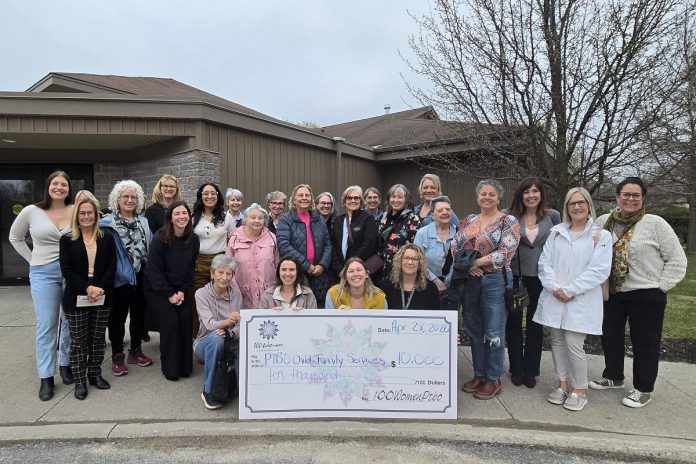
Members of 100 Women Peterborough outside Ashburnham Funeral Home & Reception Centre on April 28, 2026, where they presented a $10,000 cheque to Peterborough Child and Family Centres, representing the collective donations of the members of the group. (Photo: Jeannine Taylor / kawarthaNOW)
Peterborough Child and Family Centres (PCFC), a non-profit organization that provides information and support to expectant parents, families with young children, and child care providers in the city and county of Peterborough, has received a $10,000 donation from 100 Women Peterborough.
The collective philanthropy group held its first meeting of 2026 on Tuesday (April 28) at Ashburnham Funeral Home & Reception Centre. At each of the group’s quarterly meetings, members hears presentations from three non-profit organizations randomly drawn from a larger list of organizations nominated by the group’s members. Each member commits to donating $100, and the organization that gets the most member votes receives the collective donations.
The three organizations that presented to 100 Women Peterborough at April’s meeting were New Stages Theatre Company, New Canadians Centre, and PCFC, with the latter chosen by majority vote to receive member donations.
Advertisement - content continues below
A designated EarlyON Centre for the city and county of Peterborough, PCFC provides free, barrier-free programs for families, supporting parents from pregnancy through to when their children begin school. With no waitlists, no referrals, and no cost, their services are designed to meet families where they are offering prenatal education, play-based parent-child programs, breastfeeding support, and well-baby clinics.
The donation from 100 Women Peterborough will directly benefit pregnant mothers, babies, and young families in the region, ensuring that critical early-years support remains accessible to all who need it.
“This support is more than a donation — it’s an investment in healthier beginnings for children and stronger foundations for families,” said PCFC executive officer Nicola Lyle, who presented on behalf of the organization.
Advertisement - content continues below
After eight years leading 100 Women Peterborough, the original founders are inviting members to step forward and form a new leadership team, whether individually or as a group who would be willing to share responsibilities.
“We are fully committed to ensuring a smooth and supportive transition, and will gladly provide guidance, tools, and insights to help set the next team up for success,” reads an email to members, noting that the intention is to bring “fresh ideas, renewed enthusiasm, and new perspectives to continue growing and evolving.”
Since its formation in 2018, 100 Women Peterborough has collectively donated over $270,000 to 29 local organizations.
Advertisement - content continues below
Organizations that have received member donations include YWCA Peterborough Haliburton, Vinnies Peterborough, Hospice Peterborough, Peterborough Youth Unlimited, One Roof Warming Room, New Canadians Centre, Cameron House, Five Counties Children’s Centre, Casa De Angelae, Lakefield Animal Welfare Society, Community Care Peterborough, Kawartha Sexual Assault Centre, Community Counselling and Resource Centre, Peterborough Pregnancy Support Services, Heads Up for Inclusion, Kawartha Youth Orchestra, Peterborough GreenUP, Bridges Peterborough, YMCA Strong Communities, Homeward Bound Peterborough, Good Neighbours Care Centre and Food Bank, PARN – Your Community AIDS Resource Network, Camp Kawartha, the Teachers For Kids Foundation, Hearts 4 Joy, Camp Northern Lights, Big Brothers Big Sisters of Peterborough, Jude’s Joy, and Peterborough Child and Family Centres.
100 Women Peterborough is part of a growing collective philanthropy movement that began in the United States in November 2006, when Karen Dunigan of Michigan formed the “100 Women Who Care” group. After their first meeting, those women raised over $10,000 for the purchase of 300 new baby cribs for a local organization. The movement has grown over the past 19 years to include groups of men, women, youth, and children around the world, with hundreds of chapters in Canada alone.
For more information about 100 Women Peterborough, visit www.100womenptbo.ca.
The Gull River overflows in the Township of Minden Hills in April 2026. (Photo: Maryboro Lodge Museum)
Following the severe impacts of spring flooding on communities such as Minden Hills in Haliburton County, a local ecologist is suggesting actions individual property owners can take that could collectively help mitigate flood risk in the future.
While the primary cause of this year’s flooding was increased snowmelt due to above-seasonal temperatures and significant rain, Kate Dickson told kawarthaNOW that “A lot of power is with the individual in their immediate area.”
Dickson is a project ecologist with The Land Between, a charitable organization established in 2007 that partakes in conservation research and activities in the region across central Ontario from the Ottawa Valley in the east to Georgian Bay and southern Parry Sound in the west.
Advertisement - content continues below
Flooding exacerbated by climate change and human impact
Dickson sees the recent flooding, including in Haliburton County, as a symptom of global climate change combined with human-caused impacts on the ecosystem.
“There’s been a number of factors over a number of years that have created the conditions for this to happen,” she said.
As one of The Land Between’s six program areas, Indigenous knowledge and traditional practices also inform Dickson’s perspective on the future of flood risk prevention.
“We’re learning this for the first time, they’re not,” said Dickson of the land stewardship that Indigenous peoples across this region have practised for thousands of years.
In particular, Dickson identified shoreline denaturalization, wetland infilling, and displacement and removal of native wildlife as three main factors contributing to increased flood risk.
Advertisement - content continues below
Why natural shorelines matter
Shoreline denaturalization refers to any alterations made to the natural shoreline along bodies of water, from adding a retaining wall to removing native plants. Dickson said that denaturalization occurs for numerous reasons, but such alterations are often made in relation to cottage property developments.
One example of shoreline denaturalization that Dickson identified was removing native plants and replacing them with ornamental plants and grass lawns to better suit residential properties.
“Those plants are not as well suited to capturing water through their root systems and bringing it into the soil,” Dickson explained, adding that the water then runs off into the lake.
She noted that most people do not choose to purchase ornamental plants with the intention of causing ecological harm, but rather that they are unaware of the implications of removing native plants. As such, The Land Between provides guides and resources to educate people about native plants and how to design a native plant garden.
Dickson said that, in a “balanced” year, snowmelt is reintegrated into the ecological system through several methods including ground absorption, runoff, and evaporation. However, when there are “snaps between hot and cold” rather than gradual warming, excess runoff occurs, leading to flooding of nearby bodies of water.
Advertisement - content continues below
The role of wetlands and beavers in water management
Another contributor to flooding is wetland infilling, which is the practice of draining a wetland and adding soil and sediment to stabilize and raise the surface. In 2022, The Land Between joined environmental activists in the Haliburton region to speak out against wetland infilling in the Municipality of Dysart et al.
“Wetlands are a very important type of ecosystem that act as a sponge for nature,” said Dickson, adding that the Haliburton region is home to many provincially significant and unevaluated wetlands that provide habitat to a host of animals, including species at risk.
Dickson said that although the Haliburton region has “faced less development pressure” than southern Ontario, wetland infilling is still a concern for The Land Between.
“It has happened for the development of houses and cottages on a variety of scales,” said Dickson.
She noted that such alterations to the landscape also have downstream effects on the resident wildlife that live in these unique habitats.
Another issue is the displacement and removal of native wildlife by private landowners — especially beavers,
“People don’t always want to co-exist with beavers,” said Dickson.
Calling them “ecosystem engineers,” Dickson said beavers have an important role to play in controlling the flow of rivers and streams through the construction of dams.
Since beavers also build new habitats for other animals and create new wetlands with vegetation, removing them from the ecosystem reduces the overall biodiversity of the local environment, Dickson said.
In addition to the long-term effects, Dickson note that relocating beavers is “not necessarily effective” as typically a new beaver will take over the space.
Advertisement - content continues below
Small actions by property owners can have a big collective impact
Speaking to the role of individuals in protecting shorelines and wetlands, Dickson recognized that “it can feel really daunting” when policy decision-making occurs at a high level.
However, with much of the shoreline within Haliburton County being privately owned, she said there is a lot that individuals can do to have a positive impact.
The Land Between hosts community workshops on how to design and build a native plant shoreline garden, encouraging homeowners in the area to contribute to collective efforts by re-establishing natural shorelines across the region.
“This is something that people along the shoreline can do that has a really big impact,” said Dickson.
Despite this, Dickson said that she and other ecologists in the conservation sector often experience resistance from homeowners to the idea of establishing a native plant garden.
“The biggest pushback that I hear about natural shorelines is that they are going to be an unkempt wild zone,” she said.
For her part, Dickson wants to dispel myths about natural shorelines, including by assuring homeowners that native plant gardens can be curated to any preference and purpose.
To the community at large, Dickson’s message is simple: “Doing nothing can have a really big impact.”
To that end, she said people can help preserve the long-term health of the ecosystem simply by not removing native plants and by not impeding wildlife and their natural habitats.
Dickson pointed to how activities such as growing native plants, co-existing with wildlife, and stewarding the land have many long-term benefits beyond mitigating flood risk.
“We’re talking about these things in the context of flooding, but there are a whole lot of benefits to planting native shorelines and not infilling wetlands,” she said.
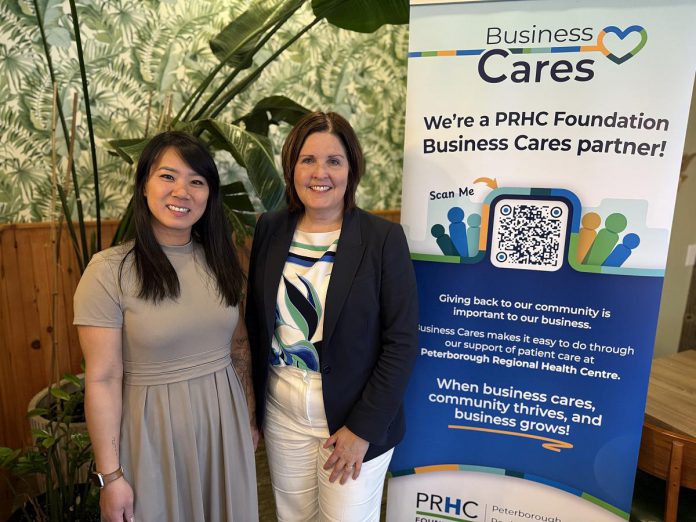
Hanoi House owner Susan Tung with Peterborough Regional Health Centre (PRHC) Foundation President and CEO Lesley Heighway during the launch of the PRHC Foundation's "Business Cares" program at Tung's Vietnamese restaurant on April 28, 2026. The new program is designed to make it simple for businesses like Tung's to show their support for the $70 million Campaign for PRHC while also strengthening their own brand in the community. (Photo courtesy of PRHC Foundation)
The Peterborough Regional Health Centre (PRHC) Foundation has announced the launch of Business Cares, an all-new flexible program that will make it easier for business owners and entrepreneurs to support world-class healthcare close to home.
The announcement took place on Tuesday (April 28) at Hanoi House, a Vietnamese restaurant in Peterborough whose owner Susan Tung is already a supporter of the PRHC Foundation.
The Business Cares program is designed to make it simple for businesses to show their support for the $70 million Campaign for PRHC while also strengthening their own brand in the community. Through the program, business owners can inspire and engage their employees and customers to support the regional hospital and also gain valuable exposure for their business.
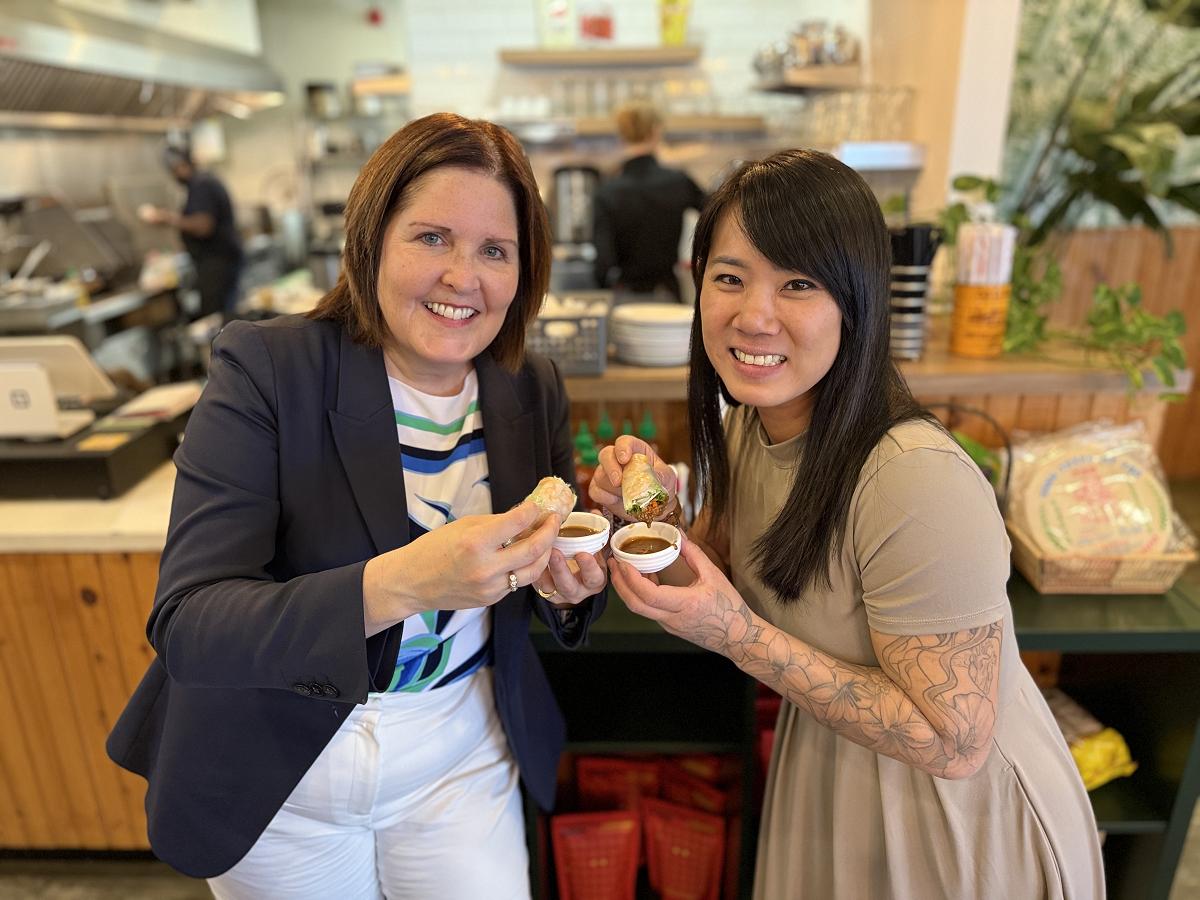
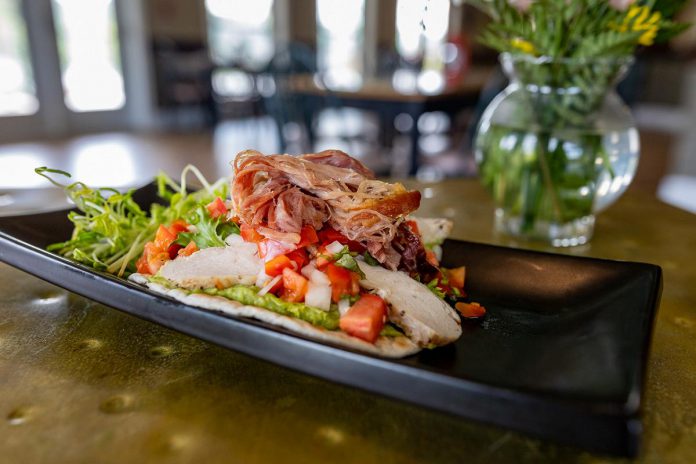
Peterborough Regional Health Centre (PRHC) Foundation President and CEO Lesley Heighway and Hanoi House owner Susan Tung enjoy a snack at Tung’s Vietnamese restaurant on April 28, 2026 during the launch of the PRHC Foundation’s new “Business Cares” program. To become a Business Cares partner, business owners choose how they want to give, whether it’s by hosting a fundraiser, running a point-of-purchase promotion, becoming a sponsor, or making a direct contribution in a way that is meaningful to them. (Photo courtesy of PRHC Foundation)
Share on Bluesky
“More than ever, as our population grows and ages and our healthcare needs become more complex, while access to care can be difficult and wait times long, we hope everyone in our community will join us in supporting all the ways PRHC is facing those challenges head-on,” says PRHC Foundation President and CEO Lesley Heighway. “Business Cares makes that uncomplicated and flexible for our business partners.”
Since the government doesn’t fund hospital equipment and technology, PRHC relies on community investment to ensure its healthcare professionals have leading-edge tools to provide world-class care. This is especially important for a regional hospital that supports a population of more than 600,000 people across Peterborough City and County, the City of Kawartha Lakes, Northumberland County, the Haliburton Highlands, and Durham Region.
“Business Cares is about creating a strong connection between community-minded businesses and the future of healthcare in our region,” says Heighway. “We know that the area’s businesses care deeply about the communities they serve. This program offers an easy, adaptable way to turn that care into impact. They’ll help PRHC Foundation fund lifesaving equipment and technology, and strengthen relationships with their teams and customers.”
It’s simple to become a Business Cares partner. Business owners can choose how they want to give, whether it’s by hosting a fundraiser, running a point-of-purchase promotion, becoming a sponsor, or making a direct contribution in a way that is meaningful to them.
Once a business supports the PRHC Foundation with $1,000 annually, they can become a Business Cares partner. As part of a community making a real difference, they will receive added recognition and benefits.
That includes the PRHC Foundation promoting the efforts of Business Cares partners on the Foundation website, through its social media channels with more than 12,000 followers, and in the hospital itself.
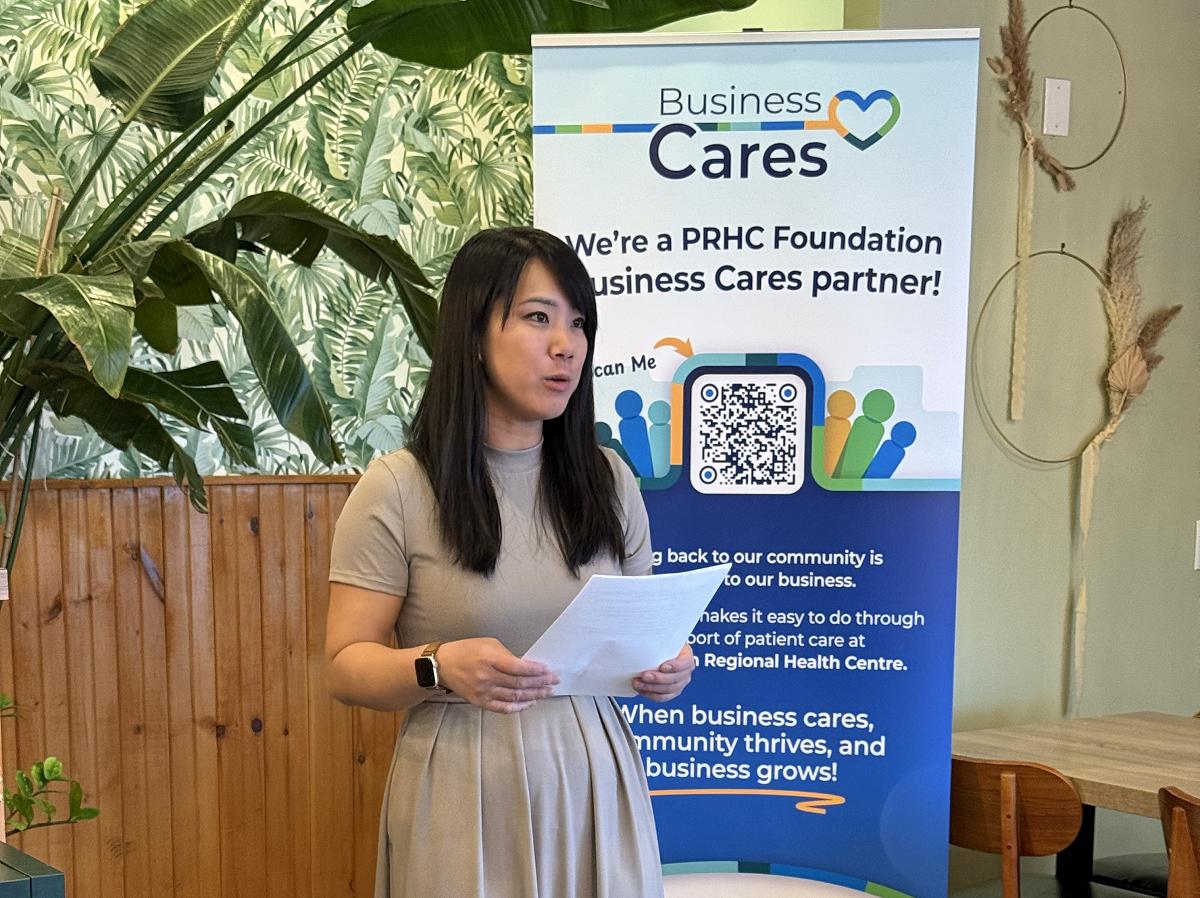
Hanoi House owner Susan Tung speaks during the launch of Peterborough Regional Health Centre (PRHC) Foundation’s new “Business Cares” program at her Vietnamese restaurant on April 28, 2026. Through the program, business owners like Tung can inspire and engage their employees and customers to support the regional hospital and also gain valuable exposure for their business. (Photo courtesy of PRHC Foundation)
Share on Bluesky
As for Tung, the Peterborough serial entrepreneur is an example of how healthcare benefits when businesses and the community work together.
Last fall, Tung held a month-long fundraiser at Hanoi House where 50 per cent of sales of the restaurant’s frozen handmade dumplings were directed to the PRHC Foundation. Hanoi House also hosted a charity dinner in support of the Foundation with a Chinese food pop-up buffet when Tung announced the opening of her latest restaurant Mei Mei.
“That was a lot of fun,” Tung says. “It was a really great way to do something different and create buzz, but also give back to the community at the same time.”
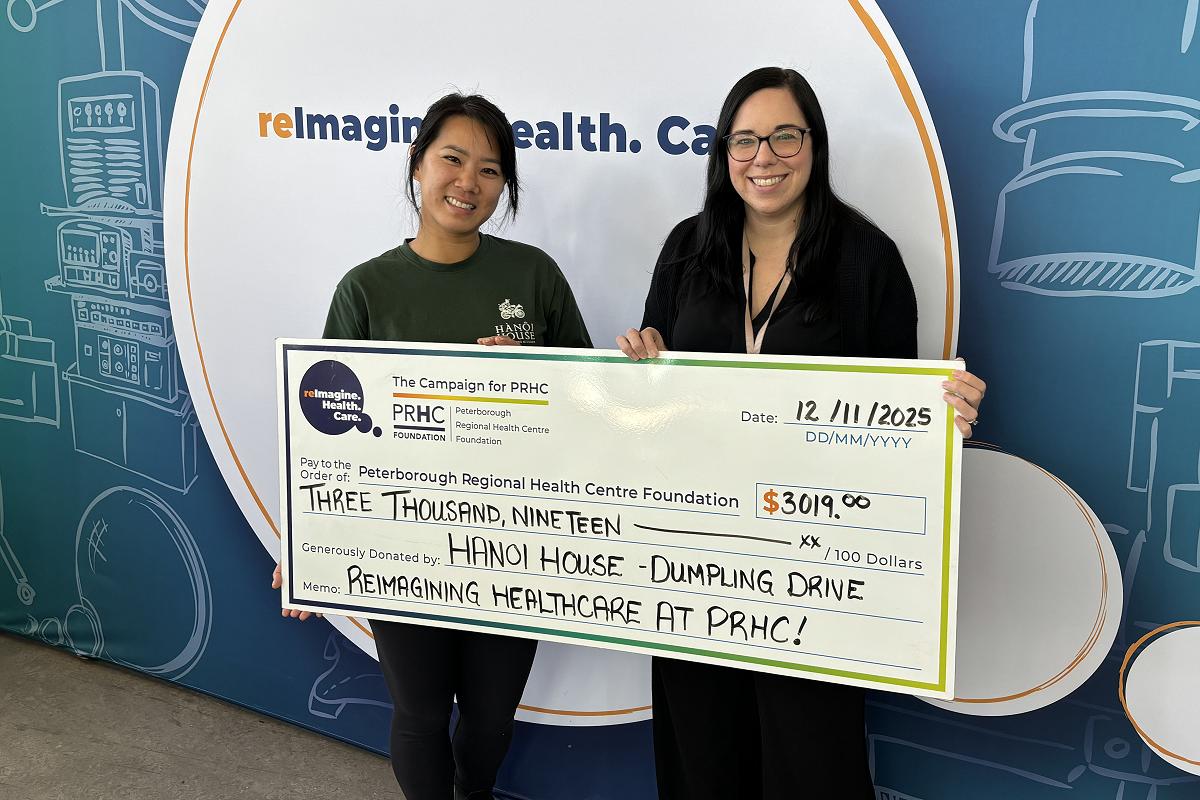
Tung’s recent efforts alone have raised $3,019 for the PRHC Foundation. As someone with children, she says she’s grateful that the PRHC Foundation uses community donations to acquire state-of-the-art technology that attracts top physicians and ensures world-class care is available close to home.
“In your day-to-day life you’re not thinking about the hospital, but when something happens, they are there for you,” Tung says. “It’s important to equip our healthcare professionals with the best resources because we are all going to need them one day.”
Hanoi House owner Susan Tung (left) presents a $3,019 cheque to Ashley Marcoux, senior charitable giving advisor at the Peterborough Regional Health Centre (PRHC) Foundation, on November 11, 2025, representing the proceeds of a month-long fundraiser where 50 per cent of sales of the Vietnamese restaurant’s frozen handmade dumplings were directed to the PRHC Foundation. Under the Foundation’s new “Business Cares” program, once a business supports the PRHC Foundation with $1,000 annually, they can become a Business Cares partner and receive added recognition and benefits from the Foundation. (Photo courtesy of PRHC Foundation)
Share on Bluesky
As a business owner, Tung believes in the power of building relationships, whether those are connections with her customers, her staff, or her community. She considers the hospital to be another crucial connection given how it impacts so much of the community and that, by supporting PRHC, she is setting an example for the customers of her restaurants.
“My business is very passionate about giving back to the community and being community-oriented, and those are the customers that I want — the ones that value that,” she says. “For me, it’s a magnet. I’m trying to draw the people that also care about the community and that want to see us all do well. Those are the customers I want to serve.”
Heighway calls Tung’s fundraising efforts and the response of Hanoi House customers “so generous and heartwarming.”
“Not only did they support their hospital, but they also raised awareness, interest, and community-spirit in others, and we’re so appreciative of that too,” Heighway says. “If we can make that even easier for them and other businesses going forward, we’re hopeful that more companies will join us.”
The annual Business Cares program will come with perks and exposures that scale with each business’s contribution level, across three tiers: Supporting Partners ($1,000 to $2,499 annually), Community Partners ($2,500 to $4,999 annually), and Leadership Partners ($5,000 or more annually).
“It doesn’t matter how much you contribute — you can be a small supporter or a large supporter, and that’s okay,” says Tung. “Just being involved is really important, and committing is really important.”
Susan Tung owns the Peterborough restaurants Hanoi House and Mei Mei. Hanoi House has been recognized as a “Business Cares” partner under the Peterborough Regional Health Centre (PRHC) Foundation’s new program launched at the Vietnamese restaurant on April 28, 2026. (Photo courtesy of Susan Tung)
Share on Bluesky
Heighway says Tung is just one example of many business owners who have given their time and dollars to support the $70 million Campaign for PRHC, proving how much a community thrives when a business shows it cares.
“A huge thank you to Susan and Hanoi House for all they do for our community,” Heighway says. “If you’ve been to the restaurant, eaten their food, interacted with the team and Susan, or seen their social media channels, it’s clear that community, connection, and kindness are key ingredients to their delicious success.”
“At the PRHC Foundation, we’ve seen their generosity firsthand and we’re very grateful for their ongoing commitment to the Foundation and PRHC. Now, they have helped us launch the new Business Cares program, which I’m sure will inspire their customers and community all over again.”
To find out more or to join the Business Cares program, visit prhcfoundation.ca or call 705-876-5000.
This branded editorial was created in partnership with the Peterborough Regional Health Centre Foundation. If your organization or business is interested in a branded editorial, contact us.
Located between Lovesick Lake and Stoney Lake in Peterborough County, Burleigh Falls Inn has been welcoming visitors to The Kawarthas for over 165 years, with its restaurant and cafe popular among resort guests and local residents alike. The resort is expanding its use of locally sourced ingredients by participating in Peterborough County's Kawartha Local Food Wholesale project, an economic development initiative that connects local producers with local buyers in Peterborough County, the City of Kawartha Lakes, and the City of Peterborough. (Photo: Kawarthas Northumberland)
Overlooking the channel between Lovesick Lake and Stoney Lake in Peterborough County, Burleigh Falls Inn has been welcoming visitors to The Kawarthas for over 165 years, with its restaurant and cafe popular among resort guests and local residents alike.
Located in North Kawartha Township on the northern boundary of Selwyn Township, Burleigh Falls Inn was originally founded as the Park Hotel in 1859 as accommodation for men working in the lumber industry, before being rebuilt in 1899 as a summer resort for fishermen.
Today, the resort operates as a year-round destination in The Kawarthas, offering a scenic location for getaways, corporate retreats, weddings, social gatherings, special events, and live music, with the restaurant and cafe serving food with fresh and locally sourced ingredients whenever possible.
That’s why Burleigh Falls Inn is participating in Peterborough County’s Kawartha Local Food Wholesale project, an economic development initiative that connects local producers with local buyers in Peterborough County, the City of Kawartha Lakes, and the City of Peterborough.
Through the project’s Green Circle Food Hub, developed in partnership with Graze & Gather, Burleigh Falls Inn is able to more easily source additional fresh produce and seasonal ingredients for its restaurant and cafe.
“Since the Kawartha Local Food Wholesale program has started, accessing both quality and quantity is much more feasible for us,” says Burleigh Falls Inn general manager Jennifer Craig. “If I need 50 pounds of local potatoes, for example, I can go into the Green Circle Food Hub and see who has them available.”
Burleigh Falls Inn is a year-round destination in The Kawarthas, offering a scenic location for getaways, corporate retreats, weddings, social gatherings, special events, and live music, with the restaurant and cafe serving food with fresh and locally sourced ingredients whenever possible. (Photo: Kasandra Bateman)
Previously, restaurant operators seeking locally grown ingredients would have to visit individual farmers’ markets and farm stands. The Green Circle Food Hub means buyers can spend less time sourcing local ingredients and more time running their business, which is a win-win for local farmers and local restaurants.
“It has potential to grow, and it’ll have a huge impact on the industry for us to be able to support local even more,” Craig says. “The County pulling together all the resources into one spot and putting us all at the same table is huge.”
Craig adds the Kawartha Local Food Wholesale project complements the Kawartha Choice FarmFresh program, another initiative delivered by Peterborough County, the City of Kawartha Lakes, and the City of Peterborough. The program provides a brand identity for local producers, a network for members to share and access resources, and an online database for food buyers to find local farmers.
Together, Craig says, these programs are just two of the ways Peterborough County has shown up to support Burleigh Falls Inn.
“They’re always good about connecting, having their pulse on what’s happening, and making sure we’re up to date, because you miss things as an operator,” she explains.
“You’re not looking at your emails every single day or looking at funding opportunities. They’re doing an amazing job of connecting, using their social media presence, making sure they’re reaching out to us to let us know about programs and activities — whether that’s from a growth initiative for us personally, for business opportunities, or just simply being there to provide support.”
Burleigh Falls Inn is located at 4791 Highway 28 in the community of Burleigh Falls, around 17 kilometres north of Lakefield. To learn more and to book a stay, visit burleighfallsinn.com.
The Local Advantage in Peterborough County is a branded editorial feature series celebrating the farmers, food producers, food retailers, and agri-tourism businesses that make The Kawarthas thrive, created in partnership with Peterborough County’s Economic Development & Tourism Division.
Agriculture is a key economic driver and a point of pride for Peterborough County, with local farms producing a wide variety of high-quality goods, from traditional crops and livestock to organic and specialty products, reflecting the strength and diversity of this vital sector. With a growing focus on sustainability, local food systems, agri-innovation, and agri-tourism, agriculture offers strong potential for growth and diversification.
The Local Advantage with Peterborough County series spotlights the Kawartha Choice FarmFresh and Kawartha Local Food Wholesale initiatives, which aim to strengthen connections from farm to table across our region.
For more information about economic development and tourism in Peterborough County, visit www.ptbocounty.ca/ecdev and The Kawarthas Tourism at thekawarthas.ca.
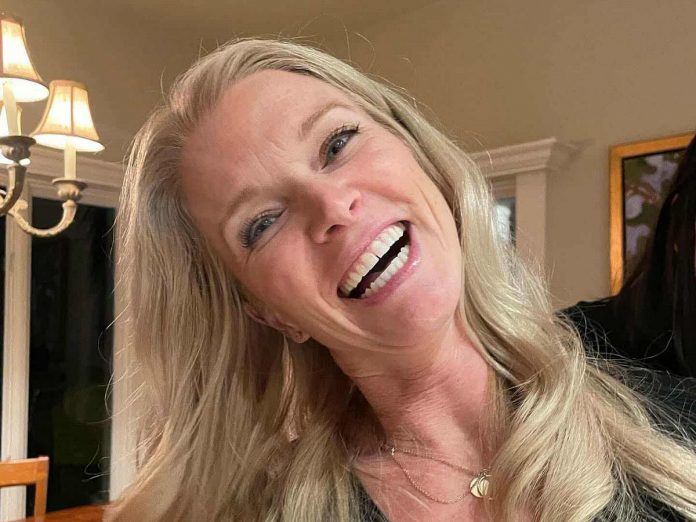
Prior to passing away on April 24, 2026 by Medical Assistance in Dying, Peterborough nurse and mother Brianne Thompson posted a farewell message on Threads that has since gone viral. After being treated for the stage 4 metastatic breast cancer she was diagnosed with in 2023, Brianne's scans were clear. In March 2026, she began experiencing symptoms leading to the discovery that the cancer had spread to her brain. Now her friends and family are hoping her story will encourage other breast cancer survivors to have brain scans even if they are not showing symptoms. (Photo courtesy of Jennifer Morrissey)
The last words a Peterborough nurse and mother posted to social media before she peacefully passed away last Friday (April 24) have gone viral for their positive message about life.
At 46 years old, Brianne “Bri” Thompson (née Pearson) was surrounded by family when she died by Medical Assistance in Dying (MAID) — a decision she made after she found out the metastatic breast cancer she had survived had spread to her brain.
The farewell message, which Brianne posted on Threads, reads: “Good bye everyone! I’ve had a great life. Wonderful Children, a great career which I enjoyed beyond words and a lovely life with my husband. Everyone be good to yourself and have an amazing life. No one knows how long they have so enjoy every minute.”
Advertisement - content continues below
That message, punctuated with a red heart emoji, was likely meant for friends and family but, in just four days, had garnered over 127,000 reactions, 7,500 comments, and 3,700 re-shares. It even attracted the attention of People magazine, which ran a story about the post on Monday.
Born in Lindsay to the family behind Pearson Insurance, Brianne worked as a registered nurse at Peterborough Regional Health Centre (PRHC) right out of school. The hospital honoured her by hanging their flags at half-mast on Monday.
It was at PRHC 20 years ago where Brianne met her best friend Jennifer Morrissey, who is described as her “partner in crime” in Brianne’s obituary. Since then, Jennifer says Brianne was a “constant” in her life and they shared their “dry, usually offside” sense of humour.
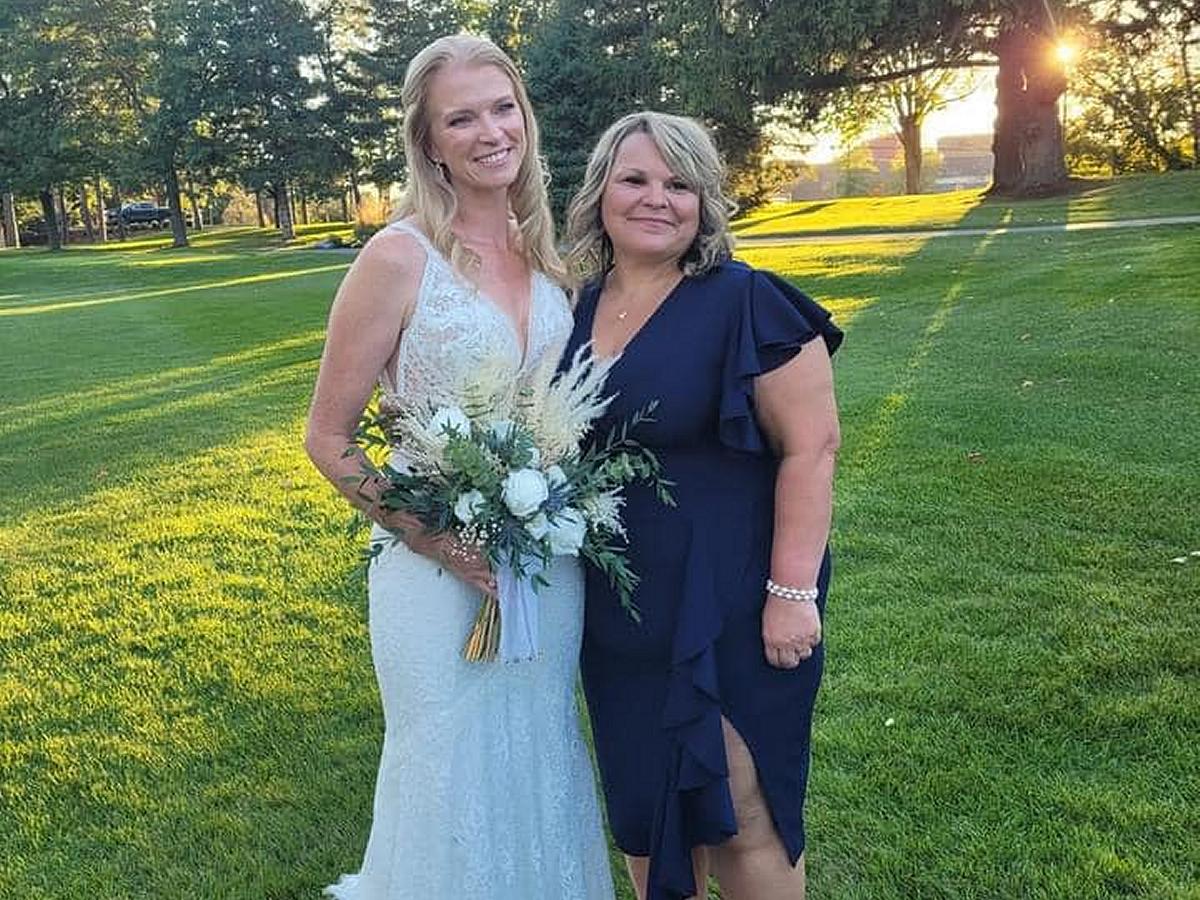
Brianne Thompson and Jennifer Morrissey at Brianne’s wedding to Alan Thompson in September 2023, just weeks after Brianne was diagnosed with stage 4 metastatic breast cancer. The pair were “partners in crime” for 20 years since they met while working as registered nurses at Peterborough Regional Health Centre. Jennifer says Brianne would have loved that her final positive post on Threads has gone viral, with many people sharing their own cancer stories and appreciation for life. (Facebook photo)
“She loved playing practical jokes on people,” Jennifer says. “She was one of the charge nurses on the unit and when the doctors would come do their rounds, they would leave with little gifts in their pockets. She would put some inappropriate things in their pockets when they were leaving, and they would find little messages later or little drawings. They would always know it was Bri.”
According to Jennifer, Brianne also performed in several plays at the FLATO Academy Theatre in Lindsay, and, as a good singer and lover of karaoke, even auditioned for Canadian Idol.
“She was always up for anything you wanted to do,” Jennifer recalls. “Whatever funny picture you wanted to take, whatever funny joke you wanted to play on someone — she was always up for it.”
Advertisement - content continues below
Perhaps Brianne’s resilience and positive spirit is best represented in how she continued on with her wedding to Alan Thompson — and the 211-mile backpacking trip on the John Muir Trail she had planned for her honeymoon — just two weeks after she was diagnosed with stage 4 metastatic breast cancer on August 30, 2023.
Also having multiple nodules in her liver, Brianne started treatment the week she returned from her honeymoon. She was given 13 rounds of chemotherapy and after the treatment came to an end in the spring of 2024, her scans were continually clear.
Brianne went back to work and continued supporting her young adult sons, 21-year-old Thomas-Jay and 19-year-old Chase, from her previous marriage to Jay Callaghan. She shared some of her cancer journey to social media and supported local cancer care at PRHC by participating in Peterborough’s Dragon Boat Festival.
Brianne Thompson at her wedding to Alan Thompson in September 2023 with her two sons Chase (left) and Thomas-Jay from her previous 18-year marriage to Jay Callaghan. Despite being diagnosed with stage 4 metastatic breast cancer just weeks before, Brianne continued with her wedding and honeymoon, which included a backpacking trip on the John Muir Trail, before returning home to undergo 13 weeks of chemotherapy treatments. (Facebook photo)
With her scans coming back clear, Brianne didn’t suspect anything else was wrong until just over a month ago, when she began feeling very unwell and fatigued despite typically being a very active person.
She kept thinking she was just dehydrated, until she experienced a moment where she couldn’t remember her dog’s name and she fainted.
Her husband Alan took her to the hospital and a scan confirmed that she had two very large tumours and several small lesions on her brain. She was taken to Kingston where, just a few days later on March 24, she had the large tumours removed.
She was told radiation wasn’t an option, so she started chemotherapy again. However, after just one round of treatment, she already began losing her memory and experienced serious side effects.
Advertisement - content continues below
“Even in the very beginning with the breast cancer, she always said to me that because she was so active and loved life so much, that if she became her disease, she didn’t want that,” Jennifer says.
“She said ‘This is my brain. I don’t want to be stupid and, if I continue on with chemo, it’s palliative. I know it’s not going to cure me.’ And so she made the difficult decision to do MAID, which is so brave.”
Jennifer notes that Brianne was “agonizingly” okay in the days leading up to her death, likely reassured she had made the right decision because MAID had brought a peaceful end for both her grandmother and her aunt.
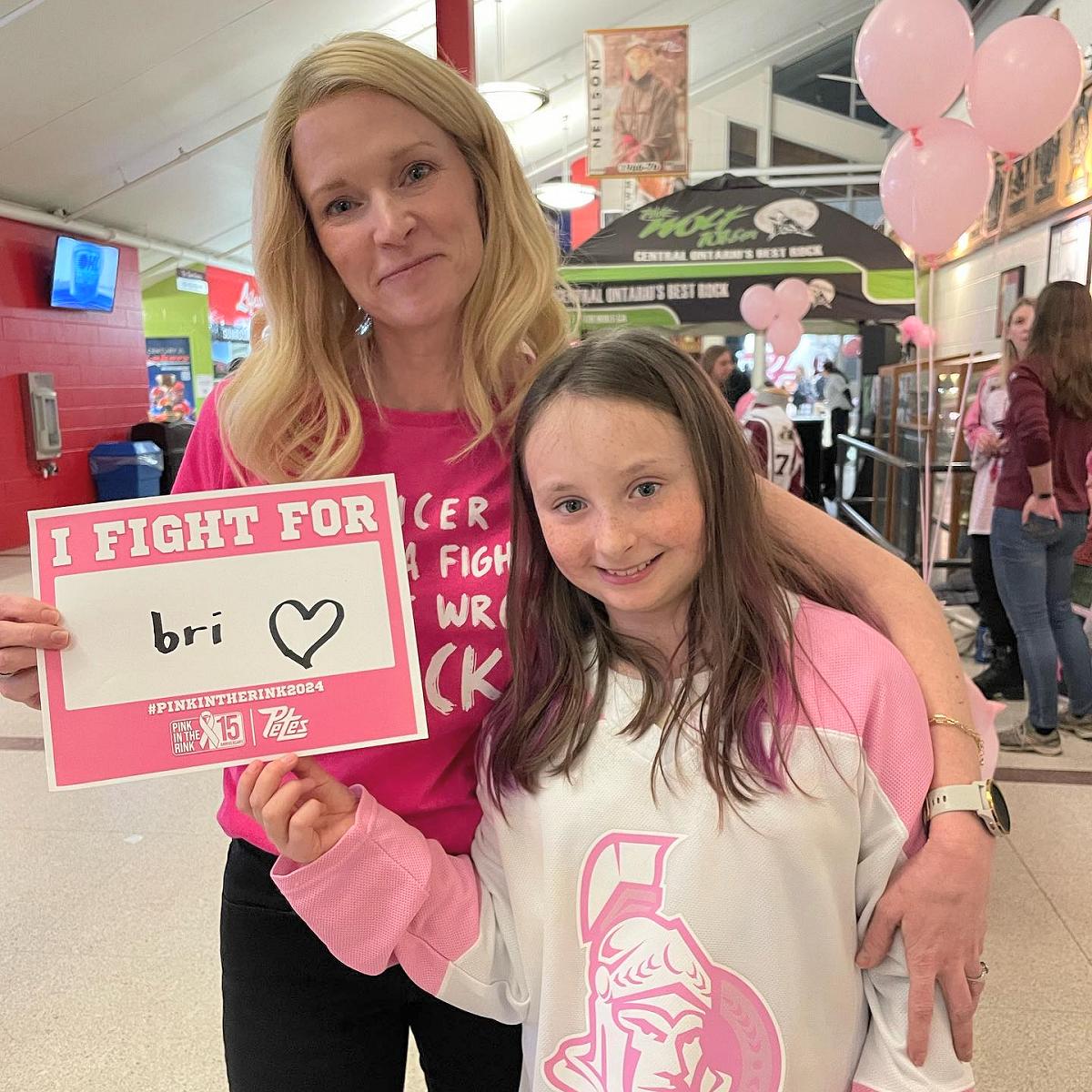
Brianne Thompson with her niece at the 2024 Peterborough Petes’ annual Pink at the Rink night in support of Survivors Abreast and local breast cancer care. Brianne was diagnosed with stage for metastatic breast cancer in August 2023, but, after 13 rounds of chemotherapy, her scans were all clear. She showed no symptoms that the cancer had spread to her brain until she began experiencing fatigue and memory loss at the end of March 2026, ultimately leading to her decision to choose Medical Assistance in Dying. (Facebook photo)
Jennifer says Brianne “went out on her own terms and that’s what she wanted.”
“Everyone else had to take a beat to catch up to her because she was so positive. She just kept saying ‘It is what it is’ and ‘I want everyone to live their lives and think of me and laugh.’ Even right to the end, she was a hostess in her own house a half hour before she died. It was insane, but that’s who she was.”
Jennifer hopes that Brianne’s story could support other breast cancer survivors who, like Brianne, don’t show any symptoms of it spreading to the brain.
Advertisement - content continues below
About 15 to 30 per cent of people with stage 4 breast cancer will experience brain metastases, though typically patients would be showing symptoms of dizziness, headaches, memory problems, and blurred vision long before Brianne experienced them.
“Even her oncologist is saying this is the type of thing that changes practice, and we would love to see practice change,” says Jennifer, noting that routine brain scans are not standard for breast cancer patients unless symptoms appear.
“For some people maybe it doesn’t go to their brain, but wouldn’t you like to know that? Wouldn’t you like to know if something, even one small thing, is going on? It’s important.”
After surviving stage 4 breast cancer, Brianne Thompson joined the Peterborough’s Dragon Boat Festival in 2024 to raise money for Peterborough Regional Health Centre (PRHC), where she spent her 25-year career working as a registered nurse. (Facebook photo)
Not only has Brianne’s final message on Threads been eliciting comments from people touched by her positivity and appreciation for life, but many commenters have shared their own experiences losing a loved one to cancer, or reflecting on their own lives.
“She was humble but she would love the attention, because if she could give that out and have someone else learn something from that or get comfort from that — that’s what she would love about it,” Jennifer says. “When I think of her, I think of positivity, so even though I’m sad when I think about what’s happened, I know she’d want this to be positive. I have to latch on to that.”
A celebration of life reception for Brianne will take place from 6 to 9 p.m. on Friday (May 1) at High Park Funeral Centre at 2510 Bensfort Road in Peterborough. In lieu of flowers, the family is requesting donations to the Canadian Cancer Society.
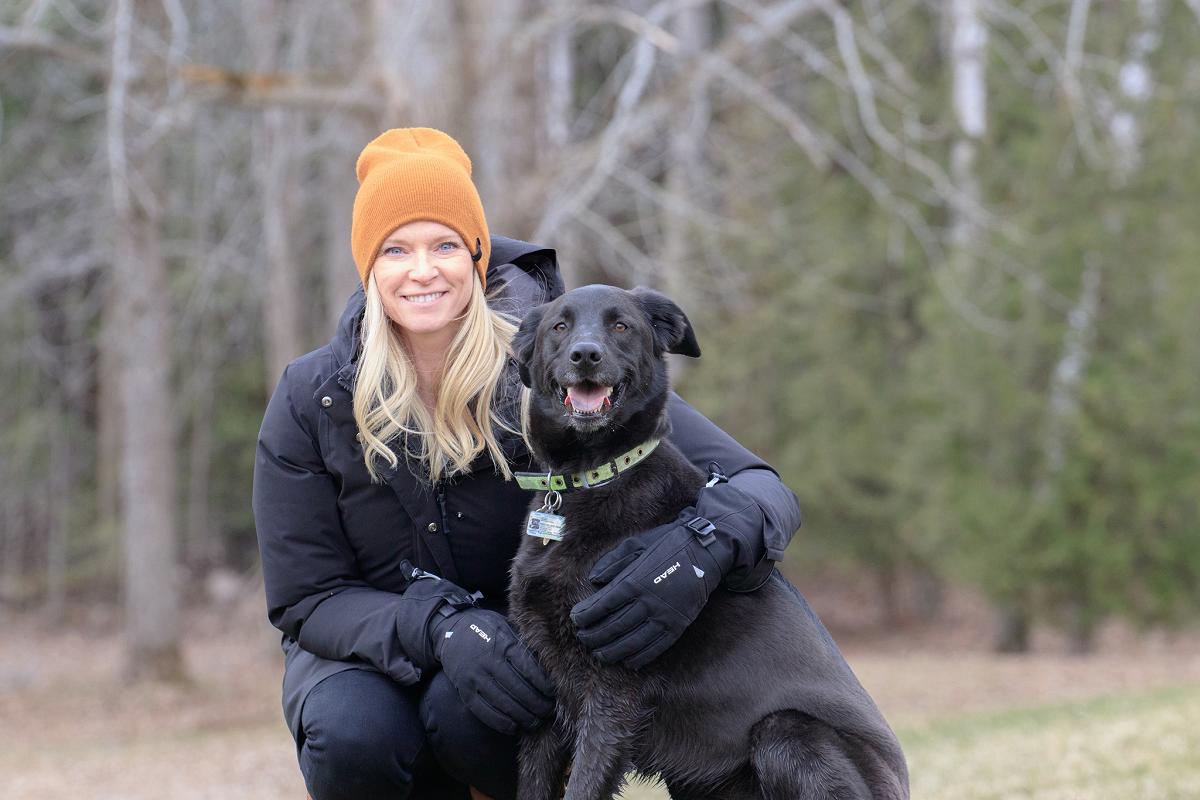
Brianne Thompson with Henry. Prior to marrying Alan Thompson in September 2023, Brianne was married to Jay Callaghan and the couple had two sons, Thomas-Jay and Chase, now 21 and 19. (Photo: Jay Callaghan)
The National Day of Awareness for Missing & Murdered Indigenous Women and Girls and 2SLGBTQI+ people (MMIWG2S+) on May 5 is also known as Red Dress Day, first commemorated in 2010 to honour and bring awareness to the thousands of women, girls, and two-spirit people who have been subjected to disproportionate violence in Canada. Red Dress Day was inspired by Métis artist Jaime Black's REDress Project installation, wherein she hung empty red dresses in representation of missing and murdered Indigenous women as "an aesthetic response to this critical national issue." (Photo: Sam Javanrouh)
The Urban Indigenous Working Group in Nogojiwanong/Peterborough is bringing the community together on Tuesday, May 5 to show local Indigenous women and girls that “there is a huge community here to protect them and love them and keep them safe.”
So says Mshkiki Gitigaan Kwe (Katelyn Brennan), an artist, activist, facilitator, and consultant who is a member of the group.
Commonly known as Red Dress Day, May 5 has been recognized as the National Day of Awareness for Missing and Murdered Indigenous Women and Girls and 2SLGBTQI+ People (MMIWG2S+) since 2010.
Advertisement - content continues below
The meaning of Red Dress Day and its cultural significance
The day of commemoration was inspired and established nationally in partnership with Métis artist Jaime Black as a continuation of her REDress Project, which displayed empty red dresses in recognition of missing or murdered women.
“The colour red is quite significant in our culture because that’s the one colour that spirit can see,” Gitigaan said.
The Urban Indigenous Working Group is a collaborative organization with representatives from the Nogojiwanong Friendship Centre, Peterborough Community Health Centre, Lovesick Lake Native Women’s Association, Lakelands Public Health, City of Peterborough, Niijkiwendidaa Anishnaabekwewag Services Circle, and members of the community.
Gitigaan told kawarthaNOW that one goal of the Urban Indigenous Working Group is to “make sure days of commemoration occur in a meaningful and culturally relevant way.”
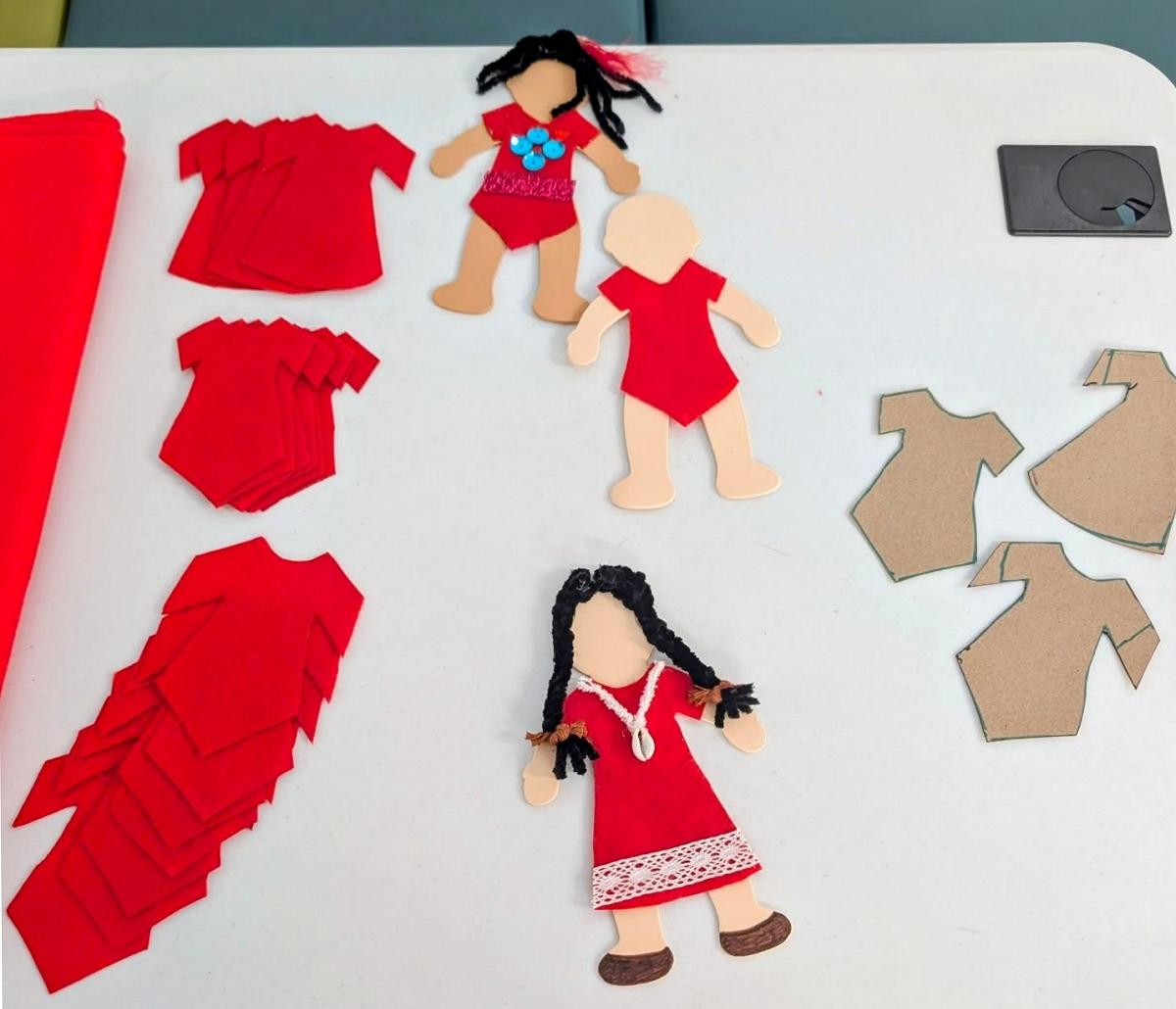
The Urban Indigenous Working Group in Nogojiwanong/Peterborough held a workshop at the Peterborough Public Library on April 27, 2026 to create faceless dolls for display on Red Dress Day. (Photo: Mshkiki Gitigaan Kwe)
This year’s Red Dress Day commemoration from 9:30 to 10:30 a.m. on May 5 will feature a prayer and drumming ceremony outside Peterborough City Hall at 500 George Street North, followed by the sharing of stories, bannock, and tea in Confederation Square across from city hall.
Ahead of the gathering, the Urban Indigenous Working Group and Lovesick Lake Native Women’s Association hosted two workshops where community members participated in crafting felt red dresses and faceless dolls to be displayed at the event.
“We might have some of our stolen sisters wandering and looking for us, so having these dresses on display helps spirit find us,” Gitigaan said.
The working group and its affiliates continue to accept donations of red dresses for display and artistic purposes at the event.
Advertisement - content continues below
Demands for government accountability and action on MMIWG2S+ crisis
Gitigaan said that since she began hosting events in 2014, she has seen reported numbers of MMIWG2S+ rise from 800 to over 5,000. For her, this demonstrates systemic failures to support and protect Indigenous women and girls.
“The issue is obviously growing and we need to address those policies and procedures in our workplaces that are discriminatory to Indigenous women,” she said.
As a professional Indigenization and decolonization consultant, Gitigaan works closely with non-Indigenous businesses and organizations to dismantle broken systems and build workplaces that accommodate and support Indigenous employees and clients.
She has worked recently as the lead consultant on projects including the Peterborough Community Health Centre and Planet Youth Nogojiwanong in collaboration with Lakelands Public Health.
For her part, there is “a lot that goes ignored” or that people become “used to” in terms of discriminatory and toxic treatment, especially in professional environments.
“Look under a magnifying glass at what is wrong and what can be done to dismantle oppressive and discriminatory systems,” Gitigaan said.
Speaking further to systemic discrimination and the large-scale nature of the MMIWG2S+ crisis, Gitigaan said that all levels of government have a responsibility in the harm caused.
She explained that this, in part, is why the May 5 gathering will take place at Peterborough City Hall and Confederation Square, saying that it is a reminder that Indigenous women are underserved and underprotected by the government.
“It sends a message to our government — it sends a message to the ones that need to hear it,” she said.
Gitigaan also spoke to the importance of all community members, regardless of Indigenous heritage, to demonstrate their desire for the government to take further action on — and take accountability for — the MMIWG2S+ crisis.
“When folks aren’t held accountable it sends a message to our young ladies that they’re not valuable or important,” she said.
Advertisement - content continues below
Non-Indigenous people encouraged to take part and to educate themselves on the issues
An important aspect of the May 5 gathering for the Urban Indigenous Working Group is the opportunity to engage the whole community, including non-Indigenous residents.
For her part, Gitigaan said the event will be a demonstration of unity and collaboration in the ongoing work to protect Indigenous women and girls.
“This isn’t an event just for Indigenous people,” she pointed out. “We hope and encourage everyone to come and join us, because this isn’t just an Indigenous women’s issue.”
The Urban Indigenous Working Group in Nogojiwanong/Peterborough is hosting a ceremony at Peterborough City Hall on May 5, 2026 to mark Red Dress Day. The ceremony will be followed by an open drum circle and bannock and tea in Confederation Square. (Graphic: Urban Indigenous Working Group)
She also noted the importance of non-Indigenous people to be self-motivated in learning, and not to expect Indigenous people to provide all of the education and guidance for action.
“A lot of reconciliation work it put on the shoulders of Indigenous people, and that isn’t really our work to be doing,” Gitigaan said.
Gitigaan said that organizations can ensure that Indigenous people are provided the opportunity to be involved in decision-making processes, and not simply tokenize their voices.
Advertisement - content continues below
Building relationships with the Indigenous community beyond Red Dress Day
The Urban Indigenous Working Group was established in 2025 and operate at a grassroots level with the support of the organizations represented by their membership.
Gitigaan noted the group does not have a budget and often relies on its members to cover expenses from their own personal funds.
As such, she spoke to the importance of community support and engagement in continuing and amplifying the work being done by the Urban Indigenous Working Group, which encourages organizations and businesses to share their reconciliation efforts with the group and to engage them to provide advice and guidance.
Going forwards, the Urban Indigenous Working Group intends to organize events and initiatives for Indigenous Peoples Day on June 21 and Orange Shirt Day on September 30, which is also the National Day for Truth and Reconciliation. In 2025, the group hosted a sunrise ceremony and a day of educational activities to mark the day.
Gitigaan told kawarthaNOW the group is also beginning work on an initiative in 2027 for the Moose Hide Campaign, which is an Indigenous-led organization working to engage Indigenous men and boys in ending domestic violence.
She said it is important to bring together “the men in our community to end domestic and gender-based violence.”
Looking forward to Red Dress Day and beyond, Gitigaan encouraged non-Indigenous members of the community not to be afraid to reach out and establish relationships with the Indigenous community.
“Building trust is huge and it takes time,” she said. “You don’t want to rush things. Go to these events, go to pow-wows, get to know the community. Make yourself known as a safe person to be with and that you’re open to learning and being educated, but also not burdening Indigenous people with educating you — because those resources are out there.”
33-year-old Brandon Malcolm, a sergeant with the Northumberland Ontario Provincial Police (OPP), died on April 27, 2026 when his motorcycle crashed on Highway 401 in Cobourg. (OPP photo)
An on-duty officer with the Northumberland Ontario Provincial Police (OPP) lost his life late Monday afternoon (April 27) after his motorcycle crashed on Highway 401 in Cobourg.
At around 5:30 p.m., officers with the Northumberland OPP responded to reports of a single-vehicle collision in the eastbound lanes of the provincial highway near Burnham Street North. An OPP officer was pronounced dead at the scene.
After withholding the officer’s name for several hours while next of kin were notified, the OPP later identified the officer as 33-year-old Sergeant Brandon Malcolm.
Advertisement - content continues below
A former member of the Canadian Armed Forces who also served as an auxiliary member with the Toronto Police Service, Malcolm joined the OPP in June 2020 and served his entire career with the Northumberland OPP detachment.
Malcolm was a skilled member of the OPP’s Golden Helmets precision motorcycle team, which represents the OPP at events such as parades, festivals, and official functions.
OPP commissioner Thomas Carrique held a media conference late Monday evening on the investigation into the collision that claimed Malcolm’s life.
“Hearts are broken in the OPP right across this province,” Carrique said, later describing Malcolm as an officer who “was dedicated to duty, committed to the passion of policing, and extremely proud to be a member of our Golden Helmets.”
Advertisement - content continues below
“I will be forever grateful to him for his service,” Carrique added. “He has been taken far too soon under such tragic circumstances. We owe him and his family a great deal of gratitude.”
While Carrique did not rule it out, he said there is no evidence at this stage of the investigation to indicate that any other vehicles were involved in the crash.
He noted there was a secondary collision in the westbound lanes of Highway 401 on Monday afternoon, after responding OPP officers rear-ended a vehicle that had stopped to render assistance to the fallen officer. That secondary collision resulted in minor injuries.
Advertisement - content continues below
Highway 401 was closed in both directions between County Road 28 and Burnham Street in Cobourg until around 4:30 a.m. on Tuesday while police conducted an initial investigation and documented the scene.
The OPP is continuing to investigate the collision in conjunction with the Office of the Chief Coroner and the Ontario Forensic Pathology Service. Assistance is being provided by the OPP Traffic Management and Enforcement Team, as well as OPP Forensic Identification Services.
Anyone with any information or dashcam/video footage in relation to this collision is asked to contact the OPP at 1-888-310-1122 or submit an anonymous report by contacting Crime Stoppers at 1-800-222-8477 (TIPS) or ontariocrimestoppers.ca.
kawarthaNOW.com offers two enews options to help readers stay in the know. Our VIP enews is delivered weekly every Wednesday morning and includes exclusive giveaways, and our news digest is delivered daily every morning. You can subscribe to one or both.
Submit your event for FREE!
Use our event submission form to post your event on our website — for free.
To submit editorial content or ideas, please contact us.