

















Home Blog Page 765

First new COVID-19 case in Hastings County since May 18, a third new case in Peterborough, and one new case in Kawartha Lakes

Here is an update on COVID-19 cases in Ontario as well as the greater Kawarthas region.

Hastings Prince Edward Public Health has confirmed its first new case of COVID-19 since May 18. A resident of Quinte West, who tested positive for the virus after returning from travel, is in self-isolation at home and all close contacts have been identified and assessed. The health unit states there is no evidence of community transmission and this case is not associated with Canadian Forces Base Trenton.

This news comes after one day after Peterborough Public Health reported 2 new cases, the first since June 20, and then an additional case on Friday (July 31).

Advertisement - content continues below


There is also one new case to report in Kawartha Lakes, with two additional cases resolved. There are no new cases in Haliburton or Northumberland, with all 25 cases in Northumberland now resolved.

After two consecutive days of new cases under 100, the Ontario government is reporting a spike in new cases with 134. Of today’s new cases, 26 are in Ottawa and 24 are in Windsor-Essex.

Since the pandemic began, there have been 97 confirmed positive cases in the Peterborough area (95 resolved with 2 deaths), 176 in the City of Kawartha Lakes (156 resolved with 32 deaths), 25 in Northumberland County (25 resolved with no deaths), 13 in Haliburton County (12 resolved with no deaths), and 43 in Hastings County and Prince Edward County (38 resolved with 5 deaths). The most recent death was reported on May 7 by Hastings Prince Edward Public Health.

Province-wide, there have been 39,209 confirmed cases, an increase of 134 from yesterday’s report, with 35,074 cases (89.5% of all cases) resolved, an increase of 168. There have been 2,775 deaths, an increase of 3, with 1,795 deaths reported in long-term care homes, an increase of 2. A total of 2,171,972 tests have been completed, an increase of 30,033 from yesterday, with 29,215 tests under investigation, an increase of 948.

This report is based on data supplied by the province’s integrated Public Health Information System (iPHIS), as well as any additional information supplied by health units. This information is at least 24 hours old, so it is not real-time data. Note that each health unit reports the information in a different way.

Advertisement - content continues below


Peterborough Public Health

Peterborough Public Health’s service area is the City and County of Peterborough and the Hiawatha and Curve Lake First Nations.

Confirmed positive: 98 (increase of 3, with 2 new cases on July 30 and 1 new case on July 31)
Active cases: 3 (increase of 3)
Deaths: 2 (no change)
Resolved: 93 (no change)
Total tests completed: Over 21,250 (increase of 200)
Institutional outbreaks: None (no change)


Haliburton, Kawartha, Pine Ridge District Health Unit

The Haliburton, Kawartha, Pine Ridge District Health Unit’s service area is the City of Kawartha Lakes, Northumberland County, and Haliburton County.

The health unit provides reports on Monday, Wednesday, and Friday, excluding statutory holidays.

Confirmed positive: 214, including 176 in Kawartha Lakes, 25 in Northumberland, 13 in Haliburton (increase of 1, in Kawartha Lakes)
Probable cases: 0 (decrease of 1)
Hospitalizations: 14 (no change)
Deaths: 32 (no change)
Resolved: 193, including 156 in Kawartha Lakes, 25 in Northumberland, 12 in Haliburton (increase of 3, 2 in Kawartha Lakes and 1 in Northumberland)
Institutional outbreaks: None (no change)


Hastings Prince Edward Public Health

Hastings Prince Edward Public Health’s service area is Hastings County (including Bancroft) and Prince Edward County.

The health unit provides reports on Monday, Wednesday, and Friday, excluding statutory holidays.

Confirmed positive: 44 (increase of 1)
Deaths: 5 (no change)
Hospitalized: 0 (no change)
Hospitalized and in ICU: 0 (no change)
Hospitalized and in ICU on ventilator: 0 (no change)
Recovered: 38 (no change)
Total tests completed: 17,575 (increase of 122)
Institutional outbreaks: None (no change)

Advertisement - content continues below


Province of Ontario

Confirmed positive: 39,209 (increase of 134)
Resolved: 35,074 (increase of 168, 89.5% of all cases are resolved)
Hospitalized: 78 (decrease of 6)
Hospitalized and in ICU: 29 (increase of 2)
Hospitalized and in ICU on ventilator: 15 (decrease of 1)
Deaths: 2,775 (increase of 3)
Deaths of residents in long-term care homes: 1,795 (increase of 2, 64.7% of all deaths)
Total tests completed 2,171,972 (increase of 30,033)
Tests under investigation: 29,215 (increase of 948)

New COVID-19 cases in Ontario from June 30 - July 30, 2020. The red line is the number of new cases reported daily, and the dotted green line is a five-day moving average of new cases. (Graphic: kawarthaNOW.com)
New COVID-19 cases in Ontario from June 30 – July 30, 2020. The red line is the number of new cases reported daily, and the dotted green line is a five-day moving average of new cases. (Graphic: kawarthaNOW.com)
COVID-19 tests completed in Ontario from June 30 - July 300, 2020. The red line is the number of tests completed daily, and the dotted green line is a five-day moving average of tests completed. (Graphic: kawarthaNOW.com)
COVID-19 tests completed in Ontario from June 30 – July 300, 2020. The red line is the number of tests completed daily, and the dotted green line is a five-day moving average of tests completed. (Graphic: kawarthaNOW.com)


For more information about COVID-19 in Ontario, visit covid-19.ontario.ca.

COVID-19 exposure notification app now available for download in Ontario

The COVID Alert exposure notification app uses software developed jointly by Apple and Google that relies on Bluetooth technology to anonymously share information if a user has been in close contact with someone infected with COVID-19.

The COVID Alert app — which lets you know if you may have been exposed to someone with the virus — is available for download for Ontario residents with Android and iOS devices beginning Friday (July 31).

The Ontario government is encouraging as many as people to download the app from Google Play or the Apple App Store. The more people who download the free app, the more effective it will be in stopping the spread of COVID-19.

The app was originally going to be available at the beginning of July, but was delayed for three weeks. It then went through a week of testing with thousands of volunteers who downloaded the beta version of the app and provided feedback to the developers.

After you download and install the COVID Alert app, you will be asked to choose a language and then taken through six steps to explain what the app is.  The app does not collect any information from your phone, either your location or your personal information. (Screenshots from Android version)
After you download and install the COVID Alert app, you will be asked to choose a language and then taken through six steps to explain what the app is. The app does not collect any information from your phone, either your location or your personal information. (Screenshots from Android version)
The six-step introduction of the  COVID Alert app also explains how the app works and what permissions it requires to work. (Screenshots from Android version)
The six-step introduction of the COVID Alert app also explains how the app works and what permissions it requires to work. (Screenshots from Android version)
The app will ask you your province of residence and will ask for permission to turn on the Bluetooth-based exposure notification technology already baked into your phone through a joint effort of Google and Apple.  Once you have enabled the exposure notifications, you are done.  You will only need to open the app again if it notifies you that you've been exposed, or if you have tested positive for COVID-19 and you want to let the app know this. (Screenshots from Android version)
The app will ask you your province of residence and will ask for permission to turn on the Bluetooth-based exposure notification technology already baked into your phone through a joint effort of Google and Apple. Once you have enabled the exposure notifications, you are done. You will only need to open the app again if it notifies you that you’ve been exposed, or if you have tested positive for COVID-19 and you want to let the app know this. (Screenshots from Android version)

Work on COVID Alert was initiated in Ontario by the Ontario Digital Service and volunteers at Shopify, and was the foundation of the work by the Government of Canada.

The app was developed in consultation with the Privacy Commissioners of Canada and Ontario to ensure the highest level of privacy for everyone using it.

COVID Alert does not collect any personal information, health information, or location data. Here’s how the app works:

Advertisement - content continues below


  • The COVID Alert app incorporates exposure notification software developed in a first-of-its-kind partnership between Apple and Google, and relies on Bluetooth wireless technology to communicate information while protecting a user’s security and privacy.
  • Once enabled, the software sends out a beacon via Bluetooth that includes a random Bluetooth identifier — basically a string of random numbers that isn’t tied to a user’s identity and that changes every 10 to 20 minutes for additional protection.
  • Other phones will be listening for these beacons and broadcasting their own as well. When each phone receives a beacon from another phone, it will record and securely store that beacon on the device.
  • At least once per day, the system will download a list of keys for beacons that have been verified as belonging to people confirmed as having tested positive for COVID-19. Each device will check the downloaded list against the beacons it has already recorded.
  • If the device finds a match, the user will be notified and advised on what steps to take next.
  • The software does not collect location data from your device, and does not share the identities of other users to each other, Google, or Apple. The user controls all data they want to share, and the decision to share it.
A series of screens explain exactly how COVID Alert works.  (Screenshots from Android version)
A series of screens explain exactly how COVID Alert works. (Screenshots from Android version)
Every day, COVID Alert will check if your phone has been near the phone of someone else who is using the app and who has been diagnosed with COVID-19. The app will let you know whether you have not been exposed in the last 14 days or whether you have been exposed and that you may be infected.  (Screenshots from Android version)
Every day, COVID Alert will check if your phone has been near the phone of someone else who is using the app and who has been diagnosed with COVID-19. The app will let you know whether you have not been exposed in the last 14 days or whether you have been exposed and that you may be infected. (Screenshots from Android version)
If you have tested positive for COVID-19 and want to help keep other Ontario residents safe, you will be asked to get a one-time key from the Ontario government website and enter it into the app. (Screenshots from Android version)

If an app user receives a message from COVID Alert that they may have been exposed to the virus, they should follow the public health advice given on the app and get tested.

To notify other people if an app user has tested positive for COVID-19, they can enter their one-time key from Ontario’s test results website ontario.ca/covidresults into the app.

A message will then be sent to other app users who have been within two metres of them for at least 15 minutes within the past 14 days, without sending any information that identifies the user, or the time and place of exposure.

If you have tested positive and choose to upload your random codes, those codes will be used by other phones to check if they have been in close proximity to yours.  The app also provides privacy information and a link to a help and support page on the federal government's website. (Screenshots from Android version)
If you have tested positive and choose to upload your random codes, those codes will be used by other phones to check if they have been in close proximity to yours. The app also provides privacy information and a link to a help and support page on the federal government’s website. (Screenshots from Android version)

All aspects of COVID Alert are completely voluntary. Ontarians can choose whether to download the app, whether to use the app after downloading it, and whether (if they test positive for COVID-19) to use the app so that other people using the app get a notification they were in close proximity to someone who tested positive for the virus.

The made-in-Ontario app has been made available for download in Ontario first. The Government of Canada is also working with the other provinces and territories to get their jurisdictions on board with the app in the coming weeks and months.

The Beach Report for July 31 to August 6, 2020

The beach at the Selwyn Beach Conservation Area. (Photo: Township of Selwyn)

Every Friday during swimming season, we post The Beach Report™ — our weekly report of the results of water quality testing at beaches in the greater Kawarthas region — and update it throughout the week as conditions change.

Because of the COVID-19 pandemic, going to the beach is a different experience this year. Public health officials recommend staying home if you feel sick, visiting a beach close to your home to avoid unnecessary travel, bringing hand sanitizer and disinfecting wipes, and maintaining at least two metres of physical distance from other beach goers.

As of Thursday, August 6th, the following beaches have been posted as unsafe for swimming:

  • Back Dam Beach in Warsaw in Peterborough County (based on August 4 sample)
  • Norwood in Peterborough County (based on August 4 sample)
  • Riverview Beach Park in Bobycaygeon (based on July 28 sample)
  • Bewdley Optimist Park in Northumberland County (based on July 20 sample)

The following beaches are closed until further notice due to COVID-19:

  • Crowe Bridge Park in Trent Hills (Northumberland County)
  • Victoria Park in Cobourg (Northumberland County)
  • Little Lake in Cramahe (Northumberland County)
  • Sandy Bay Beach in Alnwick Haldimand (Northumberland County)
  • Hiwartha in Hiawatha First Nation (Peterborough County)
Advertisement - content continues below


Below are the complete results of water quality testing at beaches in Peterborough, the City of Kawartha Lakes, Haliburton County, and Northumberland County.

In the City of Peterborough, Peterborough Public Health Inspectors sample the beaches at Rogers Cove and Beavermead every business day, and public beaches in the County of Peterborough are sampled at least once a week (except for Chandos Beach, Quarry Bay Beach, and White’s Beach which are sampled at least once in June, July, and August).

The Haliburton, Kawartha, Pine Ridge District Health Unit provides weekly testing results for beaches in the City of Kawartha Lakes, Haliburton County, and Northumberland County. Testing is based on the most recent test results from the provincial lab in Peterborough for water samples taken from these beaches.

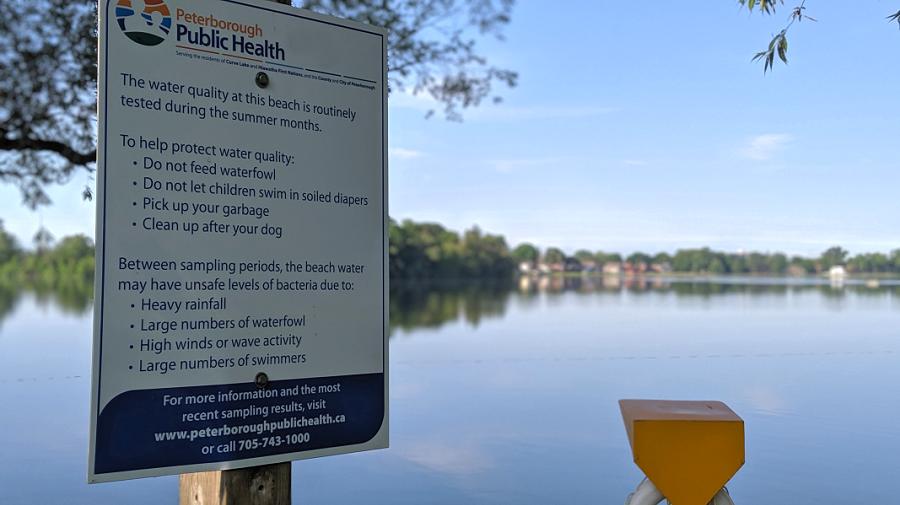
During the summer, local health units sample water at area beaches and test for bacteria such as E. coli to determine if the water quality at a beach is safe for public use. Popular beaches, like the beach at Roger's Cove in Peterborough's East City, are tested every business day while most other beaches are tested weekly. (Photo: Bruce Head / kawarthaNOW.com)
During the summer, local health units sample water at area beaches and test for bacteria such as E. coli to determine if the water quality at a beach is safe for public use. Popular beaches, like the beach at Roger’s Cove in Peterborough’s East City, are tested every business day while most other beaches are tested weekly. (Photo: Bruce Head / kawarthaNOW.com)

Important note

The following test results may not reflect current water quality conditions. Water samples can take one to three days to process and heavy rainfall, high winds or wave activity, large numbers of waterfowl near a beach, or large numbers of swimmers can rapidly change water quality.

You should always check current conditions before deciding to use a beach. You should also monitor other factors that might suggest a beach is unsafe to use, such as floating debris, oil, discoloured water, bad odours, and excessive weed growth.

While we strive to update this story with the current conditions, you should confirm the most recent test results by visiting the local health unit websites at Peterborough Public Health and Haliburton, Kawartha, Pine Ridge District Health Unit. As noted above, the beaches at Rogers Cove and Beavermead are tested every business day so the results listed below may not be current.

Advertisement - content continues below


Peterborough City/County

City of Peterborough Beaches (sampled each business day)

Roger’s Cove (131 Maria St, Peterborough) – sample date 5-Aug-2020 – SAFE

Beavermead (2011 Ashburnham Drive, Peterborough) – sample date 5-Aug-2020 – SAFE

Peterborough County Beaches (sampled weekly)

Back Dam Beach (902 Rock Rd., Warsaw, Township of Douro-Dummer) – sample date 4-Aug-2020- UNSAFE

Buckhorn (John Street, Buckhorn) – sample date 28-Jul-2020 – SAFE

Crowe’s Line Beach (240 Crowe’s Line Rd, Harvey) – sample date 28-Jul-2020 – SAFE

Curve Lake Lance Woods Park (Chemong St S, Curve Lake) – sample date 28-Jul-2020 – SAFE

Curve Lake Henry’s Gumming (Whetung St E, Curve Lake) – sample date 28-Jul-2020 – SAFE

Douro (205 Douro Second Line, Douro-Dummer) – sample date 4-Aug-2020 – SAFE

Ennismore (1053 Ennis Road, Ennismore) – sample date 4-Aug-2020 – SAFE

Hiawatha (1 Lakeshore Rd, Hiawatha) – CLOSED for the season

Jones Beach (908 Jones Beach Road, Bridgenorth) – sample date 4-Aug-2020 – SAFE

Lakefield Park (100 Hague Boulevard, Lakefield) – sample date 4-Aug-2020 – SAFE

Norwood (12 Belmont St, Norwood) – sample date 4-Aug-2020- UNSAFE

Sandy Lake (1239 Lakehurst Road, Municipality of Trent Lakes) – sample date 28-Jul-2020 – SAFE

Selwyn (2251 Birch Island Road, Selwyn) – sample date 4-Aug-2020 – SAFE

Squirrel Creek Conservation Area (2445 Wallace Point Rd, South Monaghan) – sample date 29-Jul-2020 – SAFE

Warsaw Caves (289 Caves Rd, Warsaw) – sample date 4-Aug-2020 – SAFE

Peterborough County Beaches (sampled monthly)

Belmont Lake (376 Miles of Memories Road, Belmont) – sample date 16-Jul-2020 – SAFE

Chandos Beach (Hwy 620, North Kawartha) – sample date 16-Jul-2020 – SAFE

Kasshabog Lake (431 Peninsula Road, Methuen) – sample date 16-Jul-2020 – SAFE

Quarry Bay (1986 Northey’s Bay Rd, Woodview) – sample date 16-Jul-2020 – SAFE

White’s Beach (Clearview Drive, Galway) – sample date 23-Jun-2020 – SAFE


City of Kawartha Lakes

Beach Park – Bobcaygeon – sample date July 28 – SAFE

Birch Point – Fenelon Falls – sample date July 27 – SAFE

Blanchards Road Beach – Bexley – sample date July 27 – SAFE

Bond Street – Fenelon Falls – sample date July 27 – SAFE

Burnt River Beach – Somerville – sample date July 27- SAFE

Centennial Beach – Verulam – sample date July 28 – SAFE

Centennial Park West – Eldon – sample date July 27 – SAFE

Burnt River Four Mile Lake – Somerville – sample date July 27 – SAFE

Head Lake – Laxton – sample date July 27 – SAFE

Norland Bathing Area – Laxton – sample date July 27 – SAFE

Omemee Beach – Emily/ Omemee – sample date July 29 – SAFE

Riverview Beach Park – Bobycaygeon – sample date July 28 – UNSAFE

Sturgeon Point Beach – Fenelon Falls – sample date July 6 – SAFE

Valentia Beach (Sandbar Beach) – Valentia – sample date July 28 – SAFE

Verulam Recreational Park – Verulam – sample date July 13 – SAFE

Advertisement - content continues below


Haliburton County

Bissett Beach – Minden – sample date July 7 – SAFE

Dorsett Parkette – Algonquin Highlands – sample date July 7 – SAFE

Eagle Lake – Dysart et al – sample date July 21 – SAFE

Elvin Johnson Park – Algonquin Highlands – sample date June 22 – SAFE

Forsters Beach – Minden – sample date July 7 – SAFE

Glamor Lake Park – Highland East – sample date July 14 – SAFE

Gooderham Lake – Highland East – sample date July 14 – SAFE

Haliburton Lake South – Dysart et al – sample date July 21 – SAFE

Rotary Head Lake Beach – Dysart et al – sample date July 28 – SAFE

Wilbermere Lake – Highland East – sample date July 14 – SAFE

Horseshoe Lake – Minden – sample date July 7 – SAFE

Rotary Park Lagoon – Minden – sample date July 28 – SAFE

Rotary Park Main – Minden – sample date July 28 – SAFE

Paudash Lake – Highland East – sample date July 14 – SAFE

West Gilford Pine Lake – Dysart et al – sample date July 21 – SAFE

Sand Point – Dysart et al – sample date July 21 – SAFE

Sandy Cove – Dysart et al – sample date July 21 – SAFE

Kashagauigamog Lake (Silver Lake) – Dysart et al – sample date July 14 – SAFE

Twelve Mile Beach – Minden – sample date July 7 – SAFE


Northumberland County

Bewdley Optimist Park – Hamilton – sample date July 20 – UNSAFE

Crowe Bridge Park – Trent Hills – sample date July 29 – CLOSED due to COVID-19

Harwood Waterfront & Dock – Hamilton – sample date July 27 – SAFE

Hastings Waterfront North – Trent Hills – sample date July 29 – SAFE – sample date July 29 – SAFE

Hastings Waterfront South – Trent Hills – sample date July 27 – SAFE

Little Lake – Cramahe – sample date June 22 – CLOSED due to COVID-19

Caldwell Street Beach – Port Hope – sample date July 29 – SAFE

East Beach – Port Hope – sample date July 29 – SAFE

West Beach – Port Hope – sample date July 29 – SAFE

Sandy Bay Beach – Alnwick Haldimand – sample date June 22 – CLOSED due to COVID-19

Victoria Park – Cobourg – CLOSED for summer 2020 due to COVID-19

Wicklow Beach – Alnwick Haldimand – sample date July 27 – SAFE

Province orders bars and restaurants to collect customer names and contact information

The Ontario government has amended its orders under the Reopening Ontario (A Flexible Response to COVID-19) Act to require bars and restaurants, effective on July 31st, to collect the names and contact information of patrons. The amendment also specifies the exceptions to the existing rule that patrons must remain seated at all times when eating or drinking.

“Protecting the health and well-being of all Ontarians has always been our top priority,” states health minister Christine Elliott in a media release issued on Friday (July 31). “These additional measures will help reduce close contact between individuals in these settings, and support case and contact tracing, thereby limiting the spread of COVID-19.”

Under the new rules, the operator of a bar and restaurant must record the name and contact information of every customer who enters an indoor or outdoor dining area — except for those who are entering just to place, pick up, or pay for a takeout order.

Advertisement - content continues below


Operators also have to keep the information for at least one month, and they can only disclose it to public health officials upon request for case or contact tracing.

The same requirement to collect and maintain customer information also now applies to tour and guide services.

The government has also clarified the existing rule that requires customers to remain seated while eating or drinking at a bar or restaurant.

The rule has now been modified to list the following exceptions: when entering the establishment to be seated or when leaving the establishment, when placing or picking up an order, when paying for an order, when going to or returning from a washroom, or when lining up to do any of these things.

Customers can also leave a seated area when necessary for health and safety reasons.

Ontario Premier Doug Ford pays a visit to Kawartha Dairy in Bobcaygeon

Premier Doug Ford enjoys a taste of Kawartha Dairy's famous ice cream during a visit to the family-owned dairy in Bobcaygeon on July 30, 2020. Early on during the pandemic, the Bobcaygeon community was devastated after 28 residents of Pinecrest Nursing Home passed away from COVID-19. (Photo: Samantha Moss / kawarthaNOW.com)

Ontario Premier Doug Ford paid a visit to Kawartha Dairy in Bobcaygeon on Thursday (July 30), following a media conference at a Whitby school earlier in the afternoon where he announced the reopening of Ontario elementary and secondary schools this fall.

Accompanied by Haliburton-Kawartha Lakes-Brock MPP Laurie Scott, Ford toured the family-owned dairy’s facility and also enjoyed some ice cream.

Bobcaygeon was one of the first communities in Ontario to be devastated by the COVID-19 pandemic.

Advertisement - content continues below


Premier Doug Ford with employees of Kawartha Dairy during a visit to the Bobcaygeon-based dairy on July 30, 2020.  (Photo: Samantha Moss / kawarthaNOW.com)
Premier Doug Ford with employees of Kawartha Dairy during a visit to the Bobcaygeon-based dairy on July 30, 2020. (Photo: Samantha Moss / kawarthaNOW.com)

A total of 28 residents of the 65-bed Pinecrest Nursing Home passed away during March and early April in due to COVID-19. The home was declared free of COVID-19 on May 14.

In April, Kawartha Dairy donated $10,000 to the Bobcaygeon and Area COVID-19 Relief Fund, which was established to help patients, families, and health care workers affected by the pandemic.

Earlier in the afternoon, Ford also toured Charlotte Products at 2060 Fisher Drive in Peterborough, accompanied by Peterborough-Kawartha MPP Dave Smith and Peterborough County Warden J. Murray Jones.

Premier Doug Ford and Haliburton-Kawartha Lakes-Brock MPP Laurie Scott sample ice cream at Kawartha Dairy in Bobcaygeon on July 30, 2020. Earlier in the day, Ford announced that Ontario students would be returning to elementary and secondary schools in September. (Photo: Samantha Moss / kawarthaNOW.com)

Charlotte Products, a family-owned Peterborough company that produces cleaning products, has ramped up production during the COVID-19 pandemic of cleaners, sanitizers, and disinfectants.

Ford packed bottles of disinfectant into boxes, and also learned about the company’s products as well as its award-winning Optisolve Pathfinder technology, which provides real-time visual identification of organic contamination on any surface.

Ford’s Peterborough visit was overshadowed by the local health unit’s announcement the same afternoon of two new COVID-19 cases in the Peterborough area — the first new cases to be reported in the community in 40 days.

Premier Doug Ford packing bottles of disinfectant into boxes into boxes during a tour of Charlotte Products in Peterborough, which ramped up production of its cleaning products during the pandemic. Ford then travelled to Bobcaygeon for a tour of Kawartha Dairy. (Photo: Government of Ontario)

Two new cases of COVID-19 in Peterborough after 40 days with no cases

Medical officer of health Dr. Rosana Salvaterra emphasizing the importance of physical distancing during a media briefing at Peterborough Public Health on March 23, 2020. (Photo: Peterborough Public Health)

Peterborough Public Health announced on Thursday (July 30) that two new cases of COVID-19 have been identified in the Peterborough area — the first new cases reported since June 20.

Both of the infected people are in their 20s and currently live in the City of Peterborough. The health unit says the two cases are linked, with the first case having been exposed to a positive case outside the area.

“Confirming more new cases isn’t unexpected and serves as a strong reminder that even when weeks pass without a positive case, we all must remain vigilant in following public health measures, especially as people travel more and the economy reopens,” says Peterborough medical officer of health Dr. Rosana Salvaterra.

Advertisement - content continues below


Both infected individuals are self-isolating and all close contacts have been identified and are being followed up by public health nurses.

Peterborough Public Health has conducted a risk assessment and has determined there is no further risk to the public from these two cases, as long as the two infected people continue to self-isolate.

Dr. Salvaterra is urging local residents to continue adhering to public health measures, including physical distancing of two metres, frequent hand washing, minimizing travel, staying home when sick, and self-monitoring for symptoms.

As previously announced, a mandatory face covering directive comes into effect in the Peterborough area on Saturday, August 1st to help prevent the spread of COVID-19.

Ontario kids to go back to school this fall ‘in a way that looks and feels as much as it used to’

Ontario students are going to be back in classrooms in September.

Premier Doug Ford made the announcement at a media conference at Father Leo J. Austin Catholic Secondary School in Whitby on Thursday (July 30), along with deputy premier and health minister Christine Elliott, education minister Stephen Lecce, associate chief medical officer of health Dr. Barbara Yaffe, along other politicians.

Publicly funded schools in Ontario were closed on March 14th due to the COVID-19 pandemic, three days before Ontario declared a state of emergency and closed all non-essential workplaces.

“We’re going to get our kids back to school in a way that looks and feels as much as it used to,” Ford said. “Five days a week, five hours of instruction a day, with lunch and breaks in-between. Parents, we want you to know, that on September 8th, you can drop your child off at school, knowing that every possible measure is being taken to keep our children safe.”

Advertisement - content continues below


Ford said that the government’s plan has been informed by guidance from public health experts and emerging health data.

Public health measures that will be put into place include:

  • Mandatory masks for staff and cloth masks for students from grade 4 to 12, with exceptions for those with medical conditions. For the youngest students, masks will be optional.
  • Cohorting of students in both elementary and secondary schools to limit contact with other students and staff.
  • Expanding testing in schools.
  • Frequent cleaning of school buses.
  • Additional health and safety training for all educators, including vocational and supply teachers.
  • Personal personal equipment (PPE) for all educators and staff.

Ford also announced $309 million in funding would be made available immediately to hire 500 new public health nurses to be embedded in schools and 900 custodians to enhance cleaning, and to purchase required PPE and cleaning supplies to keep students and staff safe.

Ford said every school will have to follow provincial guidance in the event of a breakout.

On July 30, 2020, Premier Doug Ford announced that Ontario schools will reopen on September 8, 2020, with health and safety measures in place to protect students and staff. (CPAC screenshot)

Education minister Stephen Lecce said all publicly funded elementary schools will reopen province-wide in September five days a week.

Lecce also said that most secondary schools will reopen under a adapted model that limits the size and the interaction of “cohorts” — groups of 15 students who will alternate between attending class in-person and online. Secondary schools with “lower risk profiles” will be able to reopen with a full return to in-person classroom instruction five days a week, Lecce said.

“We will continue to respect the choice and authority of parents,” Lecce added. “The choice of whether to enrol their children for in-school instruction, the choice of determining when and if they feel comfortable with their child’s re-entry to school during the year, and the expectation and delivery of live online teacher-led synchronous learning for their child when they’re not in school.”

Teachers will also be able to decide whether or not they wish to go back to class.

Lecce said that medical and pediatric experts have advised the government the pandemic has had “profound mental health impacts” on the province’s children.

“Now, more than ever, reopening schools is crucial to the social and emotional development of Ontario’s students,” Lecce said. “It’s also crucial to allowing parents to return to work and to support Ontario’s economic recovery.”

Advertisement - content continues below


The government will be implementing enhancing screening and contact tracing, Lecce said, including a targeted surveillance testing program for secondary students that will be supported by the embedded public health nurses.

For special education, the government is asking school boards to ensure that students with exceptionalities are in class five days a week, and will be investing an additional $10 million to support hiring more educational assistants and equipment.

The government is also adding another $10 million in mental health supports for students, on top of $10 million already announced in June.

Lecce also said any students who displays any symptoms of COVID-19, even if they are mild, will not be allowed to be in class.

A one-metre physical distancing rule will be in place for both elementary and secondary schools, in conjunction with the mandatory mask policy.

Students in the earliest grades are not required to wear a face mask because evidence shows that children in that age range may not be able to wear a mask properly, Lecce said, rendering them ineffective.

Associate chief medical officer of health Dr. Barbara Yaffe said that mandatory masking for students in Grade 4 and up is being required in the school setting because two metres of physical distancing can’t be maintained. She said that the embedded public health nurses will need to train staff and children on how to properly wear and remove a mask.

Dr. Yaffe said it’s up to parents whether they want younger children to wear a mask.

As for mandatory testing for all teachers, Dr. Yaffe said that it is not be an effective use of resources. She pointed out that testing is only one component of a COVID-19 management strategy.

“If you test somebody today, you only know if they are infected today,” she explains. “In fact, if you’re testing in a population that doesn’t have much COVID, you’ll get false positives almost half the time. That is, the person actually doesn’t have COVID, they have something else, they may have nothing. It will just complicate the picture.”

“On the other hand, if we have evidence of a case, even a suspect case, in a school, all the contacts of that case — be it a child or a teacher — would be tested, regardless of whether they’re symptomatic or not. That’s something we’ve learned with COVID, it’s very important to do that. That is when we might be identifying people are asymptomatic and infected, that need to stay home and wait until they’re cleared by public health.”

“Doing testing on all the teachers would be a huge amount of resources taken away from the need for quick access to testing when somebody may be symptomatic. We also need to do screening for symptoms, and everyone needs to be educated about the symptoms to look for, and not go to work if you’re sick and not go to school if you’re sick.”

Advertisement - content continues below


The Ontario government also announced a plan to allow licensed child care centres across Ontario to open at full capacity starting on Tuesday, September 1st.

EarlyON Child and Family Centres will also be permitted to reopen with in-person programming along with before- and after-school programs for school-aged children which will be permitted to operate with standard ratios and maximum group size requirements. All of these programs will be subject to health and safety protocols to keep children safe.

Requiring all child care staff to wear masks at all times, effective September 1st. Enhanced health and safety procedures will remain in place, and in some instances will be strengthened, including:

  • Requiring all child care staff to wear masks at all times, effective September 1.
  • Ensuring frequent cleaning of child care centres.
  • Screening of children and staff before entering a child care facility.
  • Maintaining attendance records for rigorous contact tracing and coordination with local public health authorities.
  • Ensuring frequent hand washing and proper hand hygiene for children and staff.
  • Establishing clear and rigid case management protocols in the event a staff member or child becomes ill, or tests positive for COVID-19.


This story has been updated with additional details from the media conference.

From the Otonabee River to your tap: the science of water treatment in Peterborough

The water we drink undergoes many filtration and purification processes at the water treatment plant in Peterborough before it is pumped to our taps. It is tested 20,000 times per year or once every 30 minutes to ensure it is safe for us to consume. (Photo: Benjamin Hargreaves / GreenUP)

This is the final article in our three-part series on water conservation during droughts.

The first two discussed ways we can help limit our water use inside the house and outside the house during dry spells.

Another vitally important aspect in our preservation and conservation of this resource is the treatment process — the topic of our final instalment.

With daytime temperatures recently soaring into the mid-30s, one of the recommendations for staying healthy in this heat is to drink lots of water, even before you are thirsty. Since the human body is composed of 50 to 60 per cent water, staying hydrated is important to keep one’s brain, blood, and skin functioning properly.

Advertisement - content continues below


Here in the City of Peterborough, the water treatment plant provides us with reliable, safe, high-quality drinking water that flows right from our taps. To better understand where our drinking water comes from and how it is treated and tested, I connected with John Armour, the water quality specialist at Peterborough Utilities.

“Our drinking water comes from the Otonabee River, part of the Otonabee region watershed system,” Armour says

A watershed is an area of land where all of the water flows into the same waterbody. For example, Jackson Creek is part of the Otonabee region watershed because it eventually flows into the Otonabee River, just south of downtown.

“The Otonabee River flows south from Katchewanooka Lake in Lakefield,” Armour explains. “The Otonabee is part of a watershed that is influenced by lakes including Clear, Stony, Chemong, and Buckhorn Lake.”

Jackson Creek feeds into the Otonabee River, making it a part of the expansive Otonabee region watershed. (Photo: Benjamin Hargreaves / GreenUP)

In other words, water from the Otonabee River originates in these lakes. It then flows down into Katchewanooka in Lakefield and south into Peterborough, where the water treatment [lant is permitted to remove up to 104 million litres per day from the river for treatment.

“Due to educational programs such as the Children’s Water Festival, lawn watering restrictions, and public awareness, the water removed from the Otonabee watershed has been significantly reduced over the past two decades,” Armour notes.

Approximately 26.7 million litres of water were processed per day at the water treatment plant in 2019, for an annual total of 9.7 billion litres of water consumed. This was a five per cent decrease from 2018, when the water treatment plant processed 10.2 billion litres of water.

Advertisement - content continues below


For comparison, an Olympic-size swimming pool contains 2.5 million litres of water, so 9.7 billion litres of water in 2019 amounts to nearly 4,000 Olympic-size swimming pools’ worth of water. This means that the average City of Peterborough resident consumes nearly 118,000 litres of water per year, or 322 litres per day.

We can help limit this usage by allowing our lawns to go dormant by not watering them, using a rain barrel to capture precious rainwater, and only watering vegetation in the early morning or late evening to reduce evaporation.

Doing these things is important to help limit the stress on the treatment plant’s filtration process during dry spells. When the Otonabee River water enters the water treatment plant, there is a screen to prevent fish or other large items from entering the facility. Afterwards, Armour explains, “solids in the water are settled out using coagulation, flocculation, and sedimentation.”

A young girl looks out over the picturesque Otonabee River just upstream from Peterborough's water treatment plant. After drawing water from the Otonabee River, the City of Peterborough processes and tests it to ensure the water is safe for drinking straight from your tap.  (Photo: Leif Einarson / GreenUP)
A young girl looks out over the picturesque Otonabee River just upstream from Peterborough’s water treatment plant. After drawing water from the Otonabee River, the City of Peterborough processes and tests it to ensure the water is safe for drinking straight from your tap. (Photo: Leif Einarson / GreenUP)

Coagulation is the process of adding a chemical (alum) to clump particles (for example, clay particles) together. Flocculation is the process of removing these clumped particles. Sedimentation allows other debris, like pebbles, to settle out of the water.

Combined, these three processes remove the solids that are dispersed throughout the raw river water.

“These solids are removed from the water as the first part of the process of removing pathogens, including the Cryptosporidium parasite,” says Armour. Cryptosporidium in humans causes diarrhea and is highly contagious. Removing it as part of the drinking water treatment process is important to human health.

Advertisement - content continues below


The next stage of treatment involves filtering the water through carbon and sand to remove algae, dirt, and small animals like snails or beetles.

The water is then disinfected to remove any remaining parasites in the water. One parasite that is removed from the water is the bacterium Escherichia coli, commonly referred to as E. coli. E. coli lives naturally in the intestines of animals, including humans, but when ingested it can cause us to become sick. Removing E. coli as part of the water treatment process helps to ensure that our drinking water is safe to consume.

“The final stage of treatment has fluoride added as mandated by the medical officer of health,” explains Armour.

Fluoride in our water helps to protect our teeth from cavities, which is why it is required according to public health directives. One third of the fluoride in our drinking water comes naturally from the Otonabee River, according to Peterborough Public Health.

In the summer of 2019, students from local schools enjoy the annual Children's Water Festival. Educational events like the festival have helped to increase public awareness about the importance of water conservation and, along with lawn watering restrictions, have contributed to significantly reduced amounts of water being removed from the Otonabee region watershed. (Photo: Benjamin Hargreaves / GreenUP)
In the summer of 2019, students from local schools enjoy the annual Children’s Water Festival. Educational events like the festival have helped to increase public awareness about the importance of water conservation and, along with lawn watering restrictions, have contributed to significantly reduced amounts of water being removed from the Otonabee region watershed. (Photo: Benjamin Hargreaves / GreenUP)

To ensure the continued safety of our drinking water, the water treatment plant tests our water 20,000 times per year — this amounts to once every 30 minutes.

“Our drinking water is tested as mandated by Ontario Regulations 169/03 under the 2002 Safe Drinking Water Act,” says Armour. “Our water is tested on a daily, weekly, monthly, and annual basis depending on the water quality parameter. We have monitoring systems that are continually operating and providing data to our knowledgeable treatment operators who are onsite 24 hours a day, 365 days a year.”

With all of this in mind, I have a new appreciation for the Otonabee River as the source of our drinking water, and for all of the staff who work hard to treat and test our drinking water to ensure its safety and reliability.

To John Armour and his colleagues, I raise a glass of icy cold, clear, tap water!

We hope you have enjoyed our three-part series on water conservation in times of drought. Share all of your water saving actions with us on social media @ptbogreenup. If you are letting your lawn go dormant, have a front yard rain barrel, and/or are using drought-tolerant plants, you are eligible to have your garden recognized through the GreenUP Water Wise program. Check out greenup.on.ca/waterwise for more information.

Peterborough City Hall reopens to the public on August 4

Peterborough City Hall is located at 500 George Street in downtown Peterborough. (Photo: Bruce Head / kawarthaNOW)

Both Peterborough City Hall and the Provincial Offences Office will reopen to the public on Tuesday, August 4th, with public safety measures in place to reduce the spread of COVID-19.

The safety measures at City Hall include plexiglass barriers installed at customer service desks as well as public health protocols such as physical distancing and increased cleaning.

The city is asking visitors to wear a non-medical face covering while inside City Hall and to use hand sanitizer when entering and exiting the building. There will be information on self-screening, including asking visitors not to enter the building if they feel unwell or have been in contact with someone who has or is suspected of having COVID-19.

Advertisement - content continues below


Visitors are also asked to come by themselves and not bring other people inside (except for support persons). To reduce the potential spread of the virus, electronic payment is preferred.

City Hall hours will be 8:30 a.m. to 4:30 p.m. Monday through Friday, except on statutory holidays when it will be closed.

The city is also encouraging people to continue to access city services online at www.peterborough.ca or by phone at 705-742-7777.

On Thursday (July 30), the city will be launching a new appointment scheduling tool at www.peterborough.ca/appointments so residents can book in-person services. This will help to spread out the number of residents and visitors accessing the same services at the same time.

Appointments are required for matters related to active transportation, building services, marriage licences and other Clerk’s Office services including commissioning, geomatics/mapping, housing services, human resources, mayor and members of council, planning and development services, and waste management (garbage and reycling). City staff will try to safely accommodate people who don’t know of the appointment requirement and arrive without an appointment.

Advertisement - content continues below


The tax office will be open for in-person services for tax payments or inquiries and parking ticket payments on a drop-in basis, or by telephone 705-742-7777 ext. 1865 or by email at tax@peterborough.ca. Online payment of parking tickets is available at www.peterborough.ca/parking.

Entrance to City Hall will be through the main front foyer that is on the west side of the building facing George Street for all business — except for infrastructure and planning services, which includes building, planning, housing, geomatics and infrastructure — which will be entered though the north wing entrance off George Street. Visitors that require a barrier-free entrance are invited to use the main entrance. All other entrances will remain closed at this time.

The Provincial Offences Office at 99 Simcoe Street will also reopen to the public on Tuesday, August 4th with modified in-person service hours from 9 a.m. to 11 a.m. and from 2 p.m. to 4 p.m., Monday through Friday, except on statutory holidays when the office will be closed.

Only one person at a time will be allowed in lobby for in-person matters, with all others required to wait outside while maintaining two metres of physical distance. Hand sanitizer to be used before approaching the front counter, and the preferred method of in-person payment for all fines is credit or debit card.

Residents are encouraged to continue to pay fines and make inquiries using online and phone services available Monday to Friday 8:30 a.m. to 4:30 p.m. by phone at 705-742-7777 ext. 2099 and by email at poacourt@peterborough.ca. Fines can be paid online at www.peterborough.ca/poa.

The courts will remain closed for all types of trial matters and walk-in guilty pleas until at least the middle of September.

‘Never stop and never give up’ say owners of La Mesita Restaurante in downtown Peterborough

Kelly and Martin Carbajal opened La Mesita Restaurante in downtown Peterborough in November 2017, shortly after the couple married. When their restaurant was shut down to due the pandemic, the Carbajals gave back to the community by securing sought-after items such as flour, yeast, and toilet paper from their suppliers and delivering them to family, friends, and customers. Now they're partnering with next-door neighbour The Garnet on a joint patio that benefits both businesses. (Photo: Martin Carbajal / Facebook)

When Martin and Kelly Carbajal opened La Mesita Restaurante in downtown Peterborough in November 2017, they knew full well that they were up against it.

As a recipe for long-term business success, the family-owned and operated restaurant sector has always been, and remains, a dubious proposition. Nearly all lists of businesses most likely to falter rate restaurants at or very near the top.

As Martin succinctly puts it, “Failure is the F word in the restaurant business.”

Advertisement - content continues below


Undaunted, the Carbajals went all in, preparing and serving authentic Mexican cuisine at their brick ‘n’ mortar location at 229 Hunter Street West after several years serving customers at farmers’ markets in both Lakefield and Peterborough.

“We weren’t super busy to start but we had a steady influx of customers,” recalls Martin, a Mexican native who came to Canada in 2006, bringing with him culinary skills he has honed since age 12.

“It was more like word of mouth for us. When people came, they loved it. They got hooked and they came often. We opened in winter. For a restaurant to open in winter and still be here almost three years later, that doesn’t normally happen. We’ve had fabulous support from our regular followers at the market as well as the community.”

La Mesita’s first full year of operation was an undisputed success. Not only did the restaurant’s clientele and catering business grow but big time recognition came in the form of the Immigrant Entrepreneur of the Year Award in 2018 from the Greater Peterborough Chamber of Commerce.

“A great surprise,” Martin reflects. “The business community is very tight and it normally takes longer for people to be considered part of it.”

2019 saw La Mesita’s upward curve continue and 2020 promised much of the same. Then came early March and the first rumblings of something called COVID-19. As tough times ahead became more of a certainty, the Carbajals were forced to have a “difficult conversation” heard at countless businesses throughout the region and beyond.

Martin Carbajal came to Canada in 2006 from Mexico City, where he had been cooking since he was 12 years old. Prior to opening La Mesita Restaurante, he ran La Mesita Catering, offering salsas and spreads, burritos, and Mexican food at the Peterborough and Lakefield farmers' markets. While the catering side of the business is still dormant because of the pandemic, the restaurant is serving customers on a larger patio thanks to a joint arrangement with their next-door neighbour, The Garnet. (Photo: La Mesita Catering)
Martin Carbajal came to Canada in 2006 from Mexico City, where he had been cooking since he was 12 years old. Prior to opening La Mesita Restaurante, he ran La Mesita Catering, offering salsas and spreads, burritos, and Mexican food at the Peterborough and Lakefield farmers’ markets. While the catering side of the business is still dormant because of the pandemic, the restaurant is serving customers on a larger patio thanks to a joint arrangement with their next-door neighbour, The Garnet. (Photo: La Mesita Catering)

“We chose not to close because we couldn’t — we didn’t have a choice,” says Martin. “We said if we lose the restaurant, we know we can do it again. We had done it once. We know we have the support. But we didn’t know what to expect. Nobody did.”

“We had to lay off our staff,” he adds. “I was the only one working in here. We reduced our hours. We did take-out and delivery and had curbside pickup but sales dropped drastically. On one day alone we had 12 cancellations. Weddings and other events (they were catering) disappeared in a single day.”

But remembering well the many kindnesses and support provided them some two and a half years earlier, the Carbajals looked to give back in a big way and did exactly that. They secured then-hard-to-find items such as flour, yeast, and toilet paper from their suppliers and delivered them to family, friends, and customers.

“The emails we received from people thanking us for doing that were emotional, humbling, and overwhelming,” says Martin.

“We just felt we needed to take care of a community that has taken care of us. It was a way for them to help us and for us to help them. It’s not about us. It’s about everybody around us. We have to take care of each other.”

Advertisement - content continues below


As it turned out, that giving spirit provided a huge boost to La Mesita in the form of a mutually beneficial partnership with The Garnet, their pub neighbour on Hunter Street West.

“In order for them to open their patio (in accordance with the province’s recovery plan) they needed to have food, so we opened a joint patio with them. We supply the food and we have a patio twice the size of what it would have been. It’s a really good relationship that has helped them get open again.”

The La Mesita-Garnet patio can seat 30 people when at capacity. Meanwhile, stage three of the recovery plan allows La Mesita to seat another four people inside. In addition, the Carbajals have now brought back the two employees they had to lay off and even hired an additional two.

VIDEO: La Mesita Restaurante and The Garnet open a joint patio

Exciting things are happening on the patio! Come check out Dillon at The Garnet for a cold one and get your tacos with us! It’s the best deal ever!

Posted by La Mesita Restaurante on Friday, July 24, 2020

Noting “life has thrown so many different things” at him, Martin acknowledges staying afloat as a business during the pandemic has been, and remains, a formidable challenge. The fact that he has family members in COVID-ravaged Mexico has added greatly to his and Kelly’s worry.

“Every day is a gift and we should never take the next day for granted,” says Martin, adding “We would love to think that things are moving forward and getting better but we don’t know so we don’t assume.”

“We’re very happy the government is doing all these grants and loans. Some people took them, which is great, but we have been able to reopen with no debt. We fought as hard as we could to keep ourselves in that spot. We didn’t apply for any kind of grants or loans. We didn’t know, from one day to the next, whether we would be open. We sure as heck didn’t want a huge loan hanging over our head.”

In accordance with COVID-19 protocols and Peterborough Public Health advice, customers’ temperatures are checked before they enter La Mesita and hand sanitizer is present.

“I’m very grateful that they (local public health officials) have done what they needed to do,” notes Martin, who still marvels over the “adventures” he has had since the days he helped out at the family taco stand in Mexico City.

Martin Carbajal pictured in a video in front of his restaurant at 229 Hunter Street West in downtown Peterborough in 2018, when he was nominated for the Immigrant Entrepreneur of the Year Award at the Peterborough Chamber of Commerce's Business Excellence Awards. He went on to win the award. (Screenshot: Peterborough Chamber of Commerce)
Martin Carbajal pictured in a video in front of his restaurant at 229 Hunter Street West in downtown Peterborough in 2018, when he was nominated for the Immigrant Entrepreneur of the Year Award at the Peterborough Chamber of Commerce’s Business Excellence Awards. He went on to win the award. (Screenshot: Peterborough Chamber of Commerce)

“Life has thrown at me so many different things at me, so many opportunities,” he says, that list including work aboard a cruise ship and, of course, co-owning his own restaurant which opened just a few months after he and Kelly married.

“Never stop and never give up,” says Martin of the lessons life has taught him — lessons that he has called upon heavily during the unprecedented challenge offered by the pandemic.

“And never accept the status quo. Always strive for more.”

And in the true ‘We’re all in this together’ spirit that is COVID’s greatest foe, Martin has a message that can’t be read or heard enough … and it starts with two words all-too-often absent from our collective vocabulary during times of upheaval.

“Thank you for coming out and supporting us and helping us keep our doors open.”

For more information about La Mesita, visit la-mesita-mexican-restaurant.business.site and follow them on Facebook.

Become a #kawarthaNOW fan

36,227FollowersLike
26,004FollowersFollow
17,354FollowersFollow
4,915FollowersFollow
4,313FollowersFollow
3,289FollowersFollow

Sign up for kawarthNOW's Enews

Sign up for our VIP Enews

kawarthaNOW.com offers two enews options to help readers stay in the know. Our VIP enews is delivered weekly every Wednesday morning and includes exclusive giveaways, and our news digest is delivered daily every morning. You can subscribe to one or both.


Submit your event for FREE!

Use our event submission form to post your event on our website — for free. To submit editorial content or ideas, please contact us.