









Home Blog Page 7

Red Dress Day gathering in Nogojiwanong/Peterborough on May 5 to honour ‘stolen sisters’ and call for change

The National Day of Awareness for Missing & Murdered Indigenous Women and Girls and 2SLGBTQI+ people (MMIWG2S+) on May 5 is also known as Red Dress Day, first commemorated in 2010 to honour and bring awareness to the thousands of women, girls, and two-spirit people who have been subjected to disproportionate violence in Canada. Red Dress Day was inspired by Métis artist Jaime Black's REDress Project installation, wherein she hung empty red dresses in representation of missing and murdered Indigenous women as "an aesthetic response to this critical national issue." (Photo: Sam Javanrouh)

The Urban Indigenous Working Group in Nogojiwanong/Peterborough is bringing the community together on Tuesday, May 5 to show local Indigenous women and girls that “there is a huge community here to protect them and love them and keep them safe.”

So says Mshkiki Gitigaan Kwe (Katelyn Brennan), an artist, activist, facilitator, and consultant who is a member of the group.

Commonly known as Red Dress Day, May 5 has been recognized as the National Day of Awareness for Missing and Murdered Indigenous Women and Girls and 2SLGBTQI+ People (MMIWG2S+) since 2010.

Advertisement - content continues below


The meaning of Red Dress Day and its cultural significance

The day of commemoration was inspired and established nationally in partnership with Métis artist Jaime Black as a continuation of her REDress Project, which displayed empty red dresses in recognition of missing or murdered women.

“The colour red is quite significant in our culture because that’s the one colour that spirit can see,” Gitigaan said.

The Urban Indigenous Working Group is a collaborative organization with representatives from the Nogojiwanong Friendship Centre, Peterborough Community Health Centre, Lovesick Lake Native Women’s Association, Lakelands Public Health, City of Peterborough, Niijkiwendidaa Anishnaabekwewag Services Circle, and members of the community.

Gitigaan told kawarthaNOW that one goal of the Urban Indigenous Working Group is to “make sure days of commemoration occur in a meaningful and culturally relevant way.”

The Urban Indigenous Working Group in Nogojiwanong/Peterborough held a workshop at the Peterborough Public Library on April 27, 2026 to create faceless dolls for display on Red Dress Day. (Photo: Mshkiki Gitigaan Kwe)

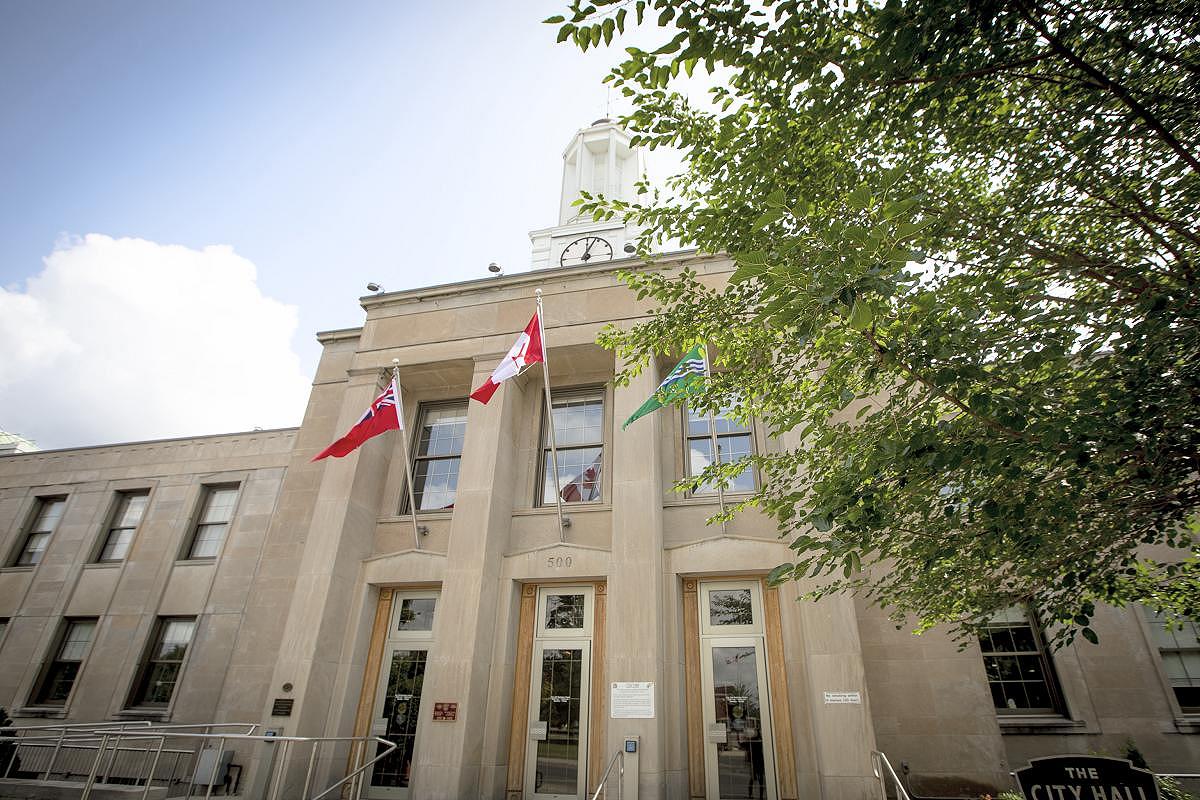
This year’s Red Dress Day commemoration from 9:30 to 10:30 a.m. on May 5 will feature a prayer and drumming ceremony outside Peterborough City Hall at 500 George Street North, followed by the sharing of stories, bannock, and tea in Confederation Square across from city hall.

Ahead of the gathering, the Urban Indigenous Working Group and Lovesick Lake Native Women’s Association hosted two workshops where community members participated in crafting felt red dresses and faceless dolls to be displayed at the event.

“We might have some of our stolen sisters wandering and looking for us, so having these dresses on display helps spirit find us,” Gitigaan said.

The working group and its affiliates continue to accept donations of red dresses for display and artistic purposes at the event.

Advertisement - content continues below


Demands for government accountability and action on MMIWG2S+ crisis

Gitigaan said that since she began hosting events in 2014, she has seen reported numbers of MMIWG2S+ rise from 800 to over 5,000. For her, this demonstrates systemic failures to support and protect Indigenous women and girls.

“The issue is obviously growing and we need to address those policies and procedures in our workplaces that are discriminatory to Indigenous women,” she said.

As a professional Indigenization and decolonization consultant, Gitigaan works closely with non-Indigenous businesses and organizations to dismantle broken systems and build workplaces that accommodate and support Indigenous employees and clients.

She has worked recently as the lead consultant on projects including the Peterborough Community Health Centre and Planet Youth Nogojiwanong in collaboration with Lakelands Public Health.

For her part, there is “a lot that goes ignored” or that people become “used to” in terms of discriminatory and toxic treatment, especially in professional environments.

“Look under a magnifying glass at what is wrong and what can be done to dismantle oppressive and discriminatory systems,” Gitigaan said.

Speaking further to systemic discrimination and the large-scale nature of the MMIWG2S+ crisis, Gitigaan said that all levels of government have a responsibility in the harm caused.

She explained that this, in part, is why the May 5 gathering will take place at Peterborough City Hall and Confederation Square, saying that it is a reminder that Indigenous women are underserved and underprotected by the government.

“It sends a message to our government — it sends a message to the ones that need to hear it,” she said.

Gitigaan also spoke to the importance of all community members, regardless of Indigenous heritage, to demonstrate their desire for the government to take further action on — and take accountability for — the MMIWG2S+ crisis.

“When folks aren’t held accountable it sends a message to our young ladies that they’re not valuable or important,” she said.

Advertisement - content continues below


Non-Indigenous people encouraged to take part and to educate themselves on the issues

An important aspect of the May 5 gathering for the Urban Indigenous Working Group is the opportunity to engage the whole community, including non-Indigenous residents.

For her part, Gitigaan said the event will be a demonstration of unity and collaboration in the ongoing work to protect Indigenous women and girls.

“This isn’t an event just for Indigenous people,” she pointed out. “We hope and encourage everyone to come and join us, because this isn’t just an Indigenous women’s issue.”

The Urban Indigenous Working Group in Nogojiwanong/Peterborough is hosting a ceremony at Peterborough City Hall on May 5, 2026 to mark Red Dress Day. The ceremony will be followed by an open drum circle and bannock and tea in Confederation Square. (Graphic: Urban Indigenous Working Group)

She also noted the importance of non-Indigenous people to be self-motivated in learning, and not to expect Indigenous people to provide all of the education and guidance for action.

“A lot of reconciliation work it put on the shoulders of Indigenous people, and that isn’t really our work to be doing,” Gitigaan said.

Gitigaan said that organizations can ensure that Indigenous people are provided the opportunity to be involved in decision-making processes, and not simply tokenize their voices.

Advertisement - content continues below


Building relationships with the Indigenous community beyond Red Dress Day

The Urban Indigenous Working Group was established in 2025 and operate at a grassroots level with the support of the organizations represented by their membership.

Gitigaan noted the group does not have a budget and often relies on its members to cover expenses from their own personal funds.

As such, she spoke to the importance of community support and engagement in continuing and amplifying the work being done by the Urban Indigenous Working Group, which encourages organizations and businesses to share their reconciliation efforts with the group and to engage them to provide advice and guidance.

Going forwards, the Urban Indigenous Working Group intends to organize events and initiatives for Indigenous Peoples Day on June 21 and Orange Shirt Day on September 30, which is also the National Day for Truth and Reconciliation. In 2025, the group hosted a sunrise ceremony and a day of educational activities to mark the day.

Gitigaan told kawarthaNOW the group is also beginning work on an initiative in 2027 for the Moose Hide Campaign, which is an Indigenous-led organization working to engage Indigenous men and boys in ending domestic violence.

She said it is important to bring together “the men in our community to end domestic and gender-based violence.”

Looking forward to Red Dress Day and beyond, Gitigaan encouraged non-Indigenous members of the community not to be afraid to reach out and establish relationships with the Indigenous community.

“Building trust is huge and it takes time,” she said. “You don’t want to rush things. Go to these events, go to pow-wows, get to know the community. Make yourself known as a safe person to be with and that you’re open to learning and being educated, but also not burdening Indigenous people with educating you — because those resources are out there.”

‘Hearts are broken’: OPP mourns death of Northumberland officer in Highway 401 crash in Cobourg

33-year-old Brandon Malcolm, a sergeant with the Northumberland Ontario Provincial Police (OPP), died on April 27, 2026 when his motorcycle crashed on Highway 401 in Cobourg. (OPP photo)

An on-duty officer with the Northumberland Ontario Provincial Police (OPP) lost his life late Monday afternoon (April 27) after his motorcycle crashed on Highway 401 in Cobourg.

At around 5:30 p.m., officers with the Northumberland OPP responded to reports of a single-vehicle collision in the eastbound lanes of the provincial highway near Burnham Street North. An OPP officer was pronounced dead at the scene.

After withholding the officer’s name for several hours while next of kin were notified, the OPP later identified the officer as 33-year-old Sergeant Brandon Malcolm.

Advertisement - content continues below


A former member of the Canadian Armed Forces who also served as an auxiliary member with the Toronto Police Service, Malcolm joined the OPP in June 2020 and served his entire career with the Northumberland OPP detachment.

Malcolm was a skilled member of the OPP’s Golden Helmets precision motorcycle team, which represents the OPP at events such as parades, festivals, and official functions.

OPP commissioner Thomas Carrique held a media conference late Monday evening on the investigation into the collision that claimed Malcolm’s life.

“Hearts are broken in the OPP right across this province,” Carrique said, later describing Malcolm as an officer who “was dedicated to duty, committed to the passion of policing, and extremely proud to be a member of our Golden Helmets.”

Advertisement - content continues below


“I will be forever grateful to him for his service,” Carrique added. “He has been taken far too soon under such tragic circumstances. We owe him and his family a great deal of gratitude.”

While Carrique did not rule it out, he said there is no evidence at this stage of the investigation to indicate that any other vehicles were involved in the crash.

He noted there was a secondary collision in the westbound lanes of Highway 401 on Monday afternoon, after responding OPP officers rear-ended a vehicle that had stopped to render assistance to the fallen officer. That secondary collision resulted in minor injuries.

Advertisement - content continues below


Highway 401 was closed in both directions between County Road 28 and Burnham Street in Cobourg until around 4:30 a.m. on Tuesday while police conducted an initial investigation and documented the scene.

The OPP is continuing to investigate the collision in conjunction with the Office of the Chief Coroner and the Ontario Forensic Pathology Service. Assistance is being provided by the OPP Traffic Management and Enforcement Team, as well as OPP Forensic Identification Services.

Anyone with any information or dashcam/video footage in relation to this collision is asked to contact the OPP at 1-888-310-1122 or submit an anonymous report by contacting Crime Stoppers at 1-800-222-8477 (TIPS) or ontariocrimestoppers.ca.

Alto to announce a ‘more precise corridor’ for proposed high-speed rail corridor by fall

An Alto representative points to the proposed corridor in eastern and central Ontario during an open house in Peterborough on February 26, 2026 for the 1,000-kilometre high-speed rail network between between Toronto and Québec City. (Photo: Jordan Lyall / kawarthaNOW)

With the initial public consultation on Canada’s proposed high-speed rail network now completed, the Crown corporation responsible for the project will be releasing a report on the consultation in June followed by the announcement of a “more precise corridor” by the fall.

In a media release issued on Monday (April 27), Alto reported it has “successfully completed one of the most extensive public consultation initiatives ever conducted in Canada,” with president and CEO Martin Imbleau stating that Alto “made a deliberate choice to engage early.”

“We used the past hundred days to listen to communities to better understand their realities,” Imbleau added. “We value the significant number of people who took the time to share their views and suggestions with us, as well as their criticisms and concerns.”

Advertisement - content continues below


Those criticisms and concerns include the impact of building a 1,000-kilometre high-speed rail network between Toronto and Québec City through agricultural and environmentally sensitive lands, the federal expropriation of private property, the closure of rural roads severing communities, the selection of the seven station locations (which include Toronto, Peterborough, Ottawa, Montréal, Laval, Trois-Rivières, and Québec City), and more.

Over the past three months, Alto said it has hosted 26 in-person open houses, 10 virtual sessions, and 32 stakeholder roundtables, and spoken to more than 10,000 Canadians in rural and urban communities across Ontario and Quebec.

In addition, Alto’s online consultation portal recorded a total of 324,026 unique visits, with 24,142 questionnaires completed and 19,903 comments added to the interactive map, “highlighting concrete local realities that will need to be taken into account as the project moves forward.”

Advertisement - content continues below


“All of this feedback will help us find the right balance to design a project that reduces impacts on communities while delivering lasting benefits across the entire corridor,” Imbleau said.

During the consultation process, Alto presented a potential 10-kilometre wide corridor for the high-speed rail line between Ottawa and Toronto where the 60-metre wide route for train would be located, with both a northern and southern option.

Both options resulted in pushback from many rural communities in eastern and central Ontario, with some municipal councils passing resolutions opposing the high-speed rail network in its current form and suggesting the rail network should instead run along the Highway 401 corridor.

Advertisement - content continues below


While Alto notes that exit surveys from the open houses “show that 70 per cent of attendees were satisfied with the information they received about the project,” some people have also expressed concerns the consultation process was insufficient.

Alto says it will publish a report in June “detailing key findings and insights from the first phase of public consultation,” and will be announcing a “more precise corridor” by the fall.

Although the initial consultation phase is completed, Alto adds that “broader community engagement work with Indigenous communities, provinces, municipalities, and special interest groups is ongoing.”

Annual Carl Oake Rotary Swim reaches $1.5 million fundraising milestone after 40 years

At its meeting on April 27, 2026, the Rotary Club of Peterborough presents a $12,000 cheque to Easter Seals Ontario, representing a portion of the $51,286.35 raised at the 40th annual Carl Oake Rotary Swim held on February 27. Pictured from left to right are Rotarian Ken Seim, Century 21 United owner Vanessa Oake Hogan, Baker Tilly managing partner Jeff Taylor, Easter Seals Ontario development officer Andrea Peterson, and Rotary Club of Peterborough president Tony Grady. (Photo courtesy of Rotary Club of Peterborough)

The year’s annual Carl Oake Rotary Swim fundraiser has marked a major milestone, having raised $1.5 million over the past 40 years for Easter Seals and projects supported by the Rotary Club of Peterborough.

At its meeting on Monday (April 27) at the McDonnell Activity Centre in Peterborough, the Rotary Club of Peterborough announced that this year’s event raised $51,286.35, bringing the 40-year total to $1.5 million.

The club presented a cheque for $12,000 to Andrea Peterson of Easter Seals Ontario and a cheque for $3,000 to Shannon Hunter of the YMCA for the YMCA Strong Kids Campaign. The remaining funds will support the work of the Rotary Club of Peterborough in the community and the work of Rotary around the world.

Advertisement - content continues below


Sponsored by Baker Tilly and Holiday Ford Lincoln, the 40th annual swim was held on February 27 at the YWCA of Central Ontario’s Balsillie Family branch in Peterborough. The theme of the event was “1986” in recognition of the year the event was founded by Carl Oake, who passed away in January 2025 at the age of 79.

When the local businessman and Rotarian founded the swimathon, he swam 120 pool laps solo until the event was expanded in the early 1990s to include teams. He continued to participate each year until 2016, when hernia surgery sidelined him, but he returned to the pool in 2017 for his final swim. Prior to that, he announced his three daughters would be taking over the reins of the event.

During Monday’s meeting, Rotary also awarded prizes to two teams who participated in this year’s event. Team World Barbie, the top fundraising swim team, received tickets to see the Century 21 Peterborough Lakers and The Crocodile Dundees, the team with the best costumes, won a game-worn Peterborough Petes helmet and game-worn Century 21 Lakers gear.

Peterborough Foundation awards $28,655 in grants to seven charities

With funding support from the CIBC Foundation and a $3,000 grant from the Peterborough Foundation, Watersheds Canada is launching a Nature Discovery Backpack lending library in 2026 at the Asphodel-Norwood Public Library, with four Ontario curriculum-linked backpacks available for students and families to borrow. The environmental organization is one of seven charities that recently received a total of $28,655 in grants from the volunteer-run Peterborough Foundation. (Photo: Watersheds Canada)

Having most recently donated almost $29,000 to seven local charities, the Peterborough Foundation is accepting applications until Friday (May 1) for its next round of grants.

Applicants can be not-for-profit charitable organizations of any size, with a charitable number carrying out operations within the city and county of Peterborough. Grants are for capital purchases only, not operating costs or deficits.

The Peterborough Foundation has supported hundreds of local charities over the past seven decades. Incorporated in 1953 from the estate of Mr. and Mrs. Louis Magie, the foundation has distributed more than $2 million from an original capital base of just under $1 million.

Advertisement - content continues below


The work of managing and distributing the foundation’s funds is done by volunteers. The foundation’s board of directors meets twice each year, in June and December, to consider grant applications.

Following its December meeting, the foundation’s board of directors decided to distribute $28,655 in grants to the following seven charitable organizations:

  • Achieve Charity: $2,000 for accessibility equipment
  • Community Counselling & Resource Centre: $9,327 for computers and IT upgrades
  • Heads up for Inclusion: $3,000 for strategic planning
  • Kawartha-Haliburton Children’s Aid Society: $1,900 for Santa Claus fund sleigh signage
  • Peterborough Action for Tiny Homes (PATH): $4,482 for a washer and dryer
  • Peterborough Symphony Orchestra: $4,946 for computer hardware and software upgrades
  • Watersheds Canada: $3,000 for backpacks and learning materials
Advertisement - content continues below


To learn more about about the Peterborough Foundation and to apply for a grant, visit www.peterboroughfoundation.org.

“It’s very user-friendly to apply for a grant from the Peterborough Foundation,” says board chair Shirl Delarue in a media release. “We like to keep it simple for organizations, especially smaller grassroots charities. They simply have to visit our website and fill out an application.”

The board will meet in June to review the applications, and will then follow up with the submitting organizations before deciding which organizations will be granted money and how much.

Three recently recruited family doctors to operate new medical practice in Lindsay for unattached patients

Lindsay Medical Centre is located at 86 Angeline Street South in Lindsay. (Photo: Google Maps)

Three recently recruited family doctors will begin operating a new full-time, walk-in medical practice in Lindsay on Friday (May 1).

The Kawartha Lakes Health Care Initiative (KLHCI) has announced that Dr. Usman Khurshid, Dr. Kanayo Odunze, and Dr. Uche Nkemdeme will be operating a new clinic in Unit 202B at the Lindsay Medical Centre at 86 Angeline Street South.

According to a media release from KLHCI, the new practice will serve Kawartha Lakes residents who do not have a primary care provider.

Advertisement - content continues below


“KLHCI’s board of directors and recruitment and retention coordinator are very pleased to be able to support this new clinic and the family physicians, especially as it will reduce the number of residents attending the Ross Memorial Hospital’s emergency department for primary care issues,” says KLHCI chair Stacey Gudmundsson in the release.

Dr. Khurshid and Dr. Odunze will begin providing walk-in primary care services when the practice opens on May 1, while Dr. Nkemdeme will be joining the clinic on a full-time basis at the beginning of June.

Dr. Khurshid completed his primary care training at the Allama Iqbal Medical College in Pakistan in 2011, and has been practising in Ontario since 2013. He began discussions with KLHCI recruitment and retention coordinator Cindy Snider in late 2024.

Advertisement - content continues below


Dr. Odunze completed his primary care training at the Imo State University College of Medicine in Nigeria in 2015, and has been practising in Ontario since 2024. Dr. Nkemdeme also completed his primary care training at the Imo State University College of Medicine in Nigeria in 2014, and became licensed to practise in Ontario this year.

Dr. Khurshid and Dr. Odunze will be accepting patients in the City of Kawartha Lakes who do not have a family doctor. Dr. Nkemdeme will be accepting patients registered through Health Care Connect and will also be assisting with the walk-in clinic.

The clinic will be open from 9 a.m. to 1 p.m. Tuesdays and Wednesdays, 4 to 8 p.m. on Thursdays, and 9 a.m. to 4 p.m. on Fridays. To reach the clinic, call 705-320-7705.

For more information about KLHCI, visit www.kawarthalakesdoctors.org.

Dr. Uche Nkemdeme will be joining Dr. Usman Khurshid and Dr. Kanayo Odunze at the new full-time, walk-in medical practice in the Lindsay Medical Centre in June 2026. The clinic opens on Friday, May 1. (Photo courtesy of Kawartha Lakes Health Care Initiative)

‘Game-changing’ provincial funding aims to connect thousands more Kawartha Lakes residents to primary healthcare

Members of the City of Kawartha Lakes Family Health Team, including executive director Mike Perry (third from left), with Haliburton-Kawartha Lakes-Brock MPP Laurie Scott (third from right) during an announcement on April 20, 2026 of $1,834,000 in funding under the Ontario government's Primary Care Action Plan. (Photo: City of Kawartha Lakes Family Health Team)

Over 5,400 more Kawartha Lakes residents will be connected to a family doctor or nurse practitioner as a result of $1.8 million in provincial funding for the City of Kawartha Lakes Family Health Team (CKLFHT).

Last Monday (April 20), Haliburton-Kawartha Lakes-Brock MPP Laurie Scott announced that CKLFHT will receive $1,834,000 in funding under the Ontario government’s Primary Care Action Plan.

“This funding is historic and our goal is to make it game-changing,” CKLFHT executive director Mike Perry told kawarthaNOW following the announcement.

Advertisement - content continues below


$1.8 million in funding will connect 5,434 more people to primary care

The Ontario government established the Primary Care Action Plan in January 2025, with the aim to connect every person in Ontario to a primary care provider by 2029. Originally announced with $1.8 billion in funding, the 2026 budget expanded funding for the plan to $3.4 billion.

CKLFHT is one of the 124 family health teams in Ontario receiving funding through the plan’s latest call for proposals, which was launched last September.

Perry told kawarthaNOW that the $1.8 million in provincial funding will be used by CKLFHT primarily to hire two new family doctors and to increase the nursing and administrative cohort to increase patient capacity.

According to a media release from MPP Scott, the funding will connect 5,434 more people to primary care. CKLFHT will select new patients from the province’s Health Care Connect waitlist prioritizing currently unattached patients.

The proposal that brought over $1.8 million in funding to the City of Kawartha Lakes was a collaborative effort led by CKLFHT in partnership with the North Kawartha Family Health Team and Community Care City of Kawartha Lakes.

Family Health Teams (FHTs) were established in Ontario in 2005 and are funded through an annual provincial allotment based on patient and regional demographics. Teams consist of a range of professionals such as physicians, nurses, dieticians, and pharmacists.

“Family doctors can’t be experts in everything,” said Perry of the importance of a multi-disciplinary approach to healthcare.

Advertisement - content continues below


Primary care access reduces strain on wider healthcare system

CKLFHT has 17 doctors that work across six townships in collaboration with a large team of nurses, administrators, and other service providers. Perry said that working directly with social workers, pharmacists, and other health specialists streamlines the referral process and ensures continuity of care.

Perry spoke about the importance of primary care in reducing strain and pressure on the wider healthcare system, saying that when patients have routine access to preventative care they are less likely to need emergency services.

“The more patients we can take on, the more we can divert from emergency care,” he said.

Perry explained the role of CKLFHT as “being the point of first contact for healthcare system” and providing timely and appropriate direction for patients to reduce use of emergency services.

Patients experience many benefits from having a consistent primary care provider such as early and preventative treatment, access to specialist referrals, and general continuity of care.

In addition to its team of primary care providers, CKLFHT also operates a once-weekly walk-in clinic for unattached OHIP-eligible patients through a clinic at 55 Angeline Street North in Lindsay, treating mild ailments and providing services such as issuing prescription refills, as well as an after-hours clinic for urgent medical care.

For Perry, one goal of CKLFHT is to provide local residents with options for healthcare that are suited to their needs and not a consequence of their situation.

“You do what you have to do, so we want to present as many options as we can,” he said.

Similar sentiments were expressed in Monday’s media release by Ryan Alexander, chief executive officer of Community Care City of Kawartha Lakes, who said that this funding “strengthens the role of primary care as a cornerstone of an effective and sustainable healthcare system.”

Advertisement - content continues below


Provincial funding to improve primary care access in rural communities

The jurisdiction served by CKLFHT is widespread, including numerous small rural communities that do not have local practices or significant shortages. Perry said that it is important for everyone to be able to access healthcare in their home community.

“When we have to travel to care, we are more likely to put it off or cancel,” he said.

CKLFHT has clinic spaces in Fenelon Falls, Bobcaygeon, Omemee, Woodville, Little Britain, and Lindsay. This enables their team to work with primary care providers across the disparate City of Kawartha Lakes region.

Perry said CKLFHT also provides specialist clinics, such as mental health counselling and foot care, at each location on a rotating basis.

For Perry, this provincial funding is an important step in ensuring equitable access to healthcare for all Ontarians by ensuring that professional teams and resources are available locally to everyone, regardless of their location.

“One of our priorities is healthcare where we live,” he said.

Furthermore, as this funding comes from a joint proposal, by its nature, it prioritizes collaboration among local resources to provide cohesive care with local referrals and collaborations.

Perry cited the Kawartha North Family Health Team, Community Care City of Kawartha Lakes, Ross Memorial Hospital, and the Alzheimer Society Peterborough, Kawartha Lakes, Northumberland & Haliburton as “valued partners” in the CKLFHT’s work.

Advertisement - content continues below


Challenges remain with recruiting healthcare professionals

While Perry said CKLFHT is thankful to the Ontario government for the new funding, he noted the province still has more work to do to support access to primary care, especially in rural communities such as those in the City of Kawartha Lakes.

Perry said a significant factor in the physician shortage in rural regions of the province is the challenge of recruiting new talent to these communities, adding “We still have to find and recruit professionals.”

Perry further said that registered nurses and other non-doctor professionals at family health teams may earn up to 30 per cent less than their peers in non-primary care sectors, such as hospital-based professionals, leading to difficulty in recruiting and retaining staff across the primary care sector.

He added the Ontario government should invest additional funding to “bridge the compensation gap.”

As for Kawartha Lakes residents who do not have a regular primary care provider, Perry encourages them to register for Health Care Connect online or by calling 811, or to contact CKLFHT locally at 705-328-9853.

Public Energy adds family-friendly theatre performance about friendship and growing up to close 2025-26 season

Public Energy Performing Arts is presenting "Finding Home: A Salmon Journey Upstream," a theatre show geared to young audiences aged 5 to 12 produced by Animacy Theatre Collective and Theatre Direct Canada, at the Peterborough Theatre Guild on May 9, 2026. Created and performed by Alexandra Simpson and Morgan Brie Johnson and featuring puppetry, clown, dance, and live music, the show follows two Lake Ontario salmon who make the challenging journey up the Humber River. (Photo: Kathryn Hanson)

Public Energy Performing Arts is committed to making art more accessible and inclusive, and that comes with the belief you are never too young to enjoy quality theatre. That’s why they are making a last-minute splash by adding a public performance of an award-winning play made for young audiences to close out the 2025-26 season.

A Theatre Direct Canada production created by Animacy Theatre Collective, Finding Home: A Salmon Journey Upstream will be presented for one afternoon only on Saturday, May 9 at 4 p.m at the Peterborough Theatre Guild.

The presentation will mark the first time Public Energy Performing Arts has ever held a show at the Peterborough Theatre Guild. Including fees, tickets are priced at $18 for adults and $8 for children and can be purchased at publicenergy.ca.

Advertisement - content continues below


Created and performed by Alexandra Simpson and Morgan Brie Johnson, the play is described as a “funny, heartwarming play about friendship, growing up, and the annual salmon run featuring puppetry, clown, dance, and live music.”

The production is stopping in Peterborough while on a tour across southwestern Ontario throughout the spring.

Originally the play was only scheduled for two private performances at Queen Mary Public School for Queen Mary students and for Prince of Wales Public School students, but an additional public performance was made possible with support from the Community Foundation of Greater Peterborough — giving Public Energy a rare opportunity to present a play oriented towards families and young audiences.

Interdisciplinary artists Alexandra Simpson and Morgan Brie Johnson are the co-founders of Animacy Theatre Collective, a Toronto-based collective focused on creating experimental and interdisciplinary works. They created and perform in the Dora award-winning "Finding Home: A Salmon Journey Upstream" theatre for young audience, co-produced and presented by Direct Theatre Canada. (Photo via Animacy Theatre Collective website)
Interdisciplinary artists Alexandra Simpson and Morgan Brie Johnson are the co-founders of Animacy Theatre Collective, a Toronto-based collective focused on creating experimental and interdisciplinary works. They created and perform in the Dora award-winning “Finding Home: A Salmon Journey Upstream” theatre for young audience, co-produced and presented by Direct Theatre Canada. (Photo via Animacy Theatre Collective website)

Geared to children ages 5 to 12, Finding Home: A Salmon Journey Upstream tells the story of Beagle and Soho (Simpson and Johnson), two Lake Ontario salmon who are best friends and do everything together.

One day, Beagle starts to change and gets the urge to set off on an adventure up the Humber River. Sojo doesn’t have the same urge but, as Beagle’s best friend, she knows she must join her.

Together, Beagle and Sojo swim against the current and face obstacles like fishermen, pollution, and sharp rocks and rapids. Along the way, they learn about friendship, what it means to reach maturity, how beautiful it can be to complete your life cycle, what home means, and why salmon are the “rockstars” of the fish world.

Advertisement - content continues below


Simpson and Johnson are interdisciplinary artists and co-founders of the Animacy Theatre Collective, a Toronto-based collective focused on the creation of experimental and interdisciplinary works, often using humour and physical storytelling to focus on feminist narratives. The show is co-produced by Theatre Direct Canada, a premiere theatre for young audiences.

Finding Home: A Salmon Journey Upstream won a Dora Mavor Moore Award in theatre for young audiences for Outstanding New Play, and was nominated for four others: Outstanding Direction, Outstanding Achievement in Design, Outstanding Production, and Outstanding Performance by an Ensemble.

It was originally staged as an outdoor show in 2021, though was later adapted for indoor presentation during a residency at Toronto’s Harbourfront Centre in 2024. The fun and educational show now tours schools to provide accessible art to young people.

Geared to audiences aged 5 to 12 and their families, "Finding Home: A Salmon Journey Upstream" stars Alexandra Simpson and Morgan Brie Johnson as Beagle and Soho, two salmon who embark on a journey from Lake Ontario up the Humber River after Beagle develops an urge to do so and Soho, as her best friend, joins her. Together, the pair face many challenges as they swim upstream. (Photo: Kathryn Hanson)
Geared to audiences aged 5 to 12 and their families, “Finding Home: A Salmon Journey Upstream” stars Alexandra Simpson and Morgan Brie Johnson as Beagle and Soho, two salmon who embark on a journey from Lake Ontario up the Humber River after Beagle develops an urge to do so and Soho, as her best friend, joins her. Together, the pair face many challenges as they swim upstream. (Photo: Kathryn Hanson)

“Theatre made for young people respects their intelligence and curiosity, reflecting their perspectives, humour, and struggles while also introducing them to new cultures, ideas, and ways of seeing,” reads a media release from Public Energy Performing Arts.

“In a world increasingly dominated by screens and passive consumption, live theatre gives young audiences an experience of being present, engaged, and emotionally invested, helping them build empathy, imagination, and critical thinking at a pivotal stage in their development. These are qualities that serve them not just as future art-goers, but as people.”

Filled with child-friendly humour, Finding Home: A Salmon Journey Upstream is suitable for the whole family, though it does contain themes of death and dying.


kawarthaNOW is proud to be a long-time media sponsor of Public Energy Performing Arts.

‘All I’ve hoped for’: Rashid Sheikh Hassan reunited with his Syrian family after 12 long years

Rashid Sheikh Hassan (fourth from left, with Canadian flag) hugging his mother with his two sisters (wrapped in Canadian flags), his brother (third from right, squatting), and his father (far right) at Toronto's Pearson International Airport on April 24, 2026, pictured with some of the members of the Azadi Peterborough group that sponsored the Hassan family to come to Canada and join their son in Peterborough, including (left to right) Lisa Lowe, Don Park, Matt Park, Brenda Wierdsma-Ibey, Clayton Ibey, Simal Iftikhar, Kristy Hiltz, Karina Bates, and Dave McNab. (Photo courtesy of Dave McNab)

Airport terminals bring forth a range of emotions, from impatience and frustration to anxiety and anticipation. And then there’s the joy of being reunited with loved ones.

For Peterborough resident Rashid Sheikh Hassan, it was all joy on Friday (April 24) at Toronto’s Pearson International Airport as he hugged and kissed his Syrian family after being separated from them for 12 long years.

Rashid’s parents and his brother and two sisters arrived in Canada via a flight from Turkey, long delayed from an originally scheduled arrival date of March 17 due to the war in Iran.

Sponsor Kristy Hiltz with her arm around Rashid Sheikh Hassan's mother while Rashid's brother (middle) hugs sponsor Simal Iftikhar and Rashid (right) hugs one of his sisters, as sponsor Matt Park (back left) looks on and Rashid's father (back middle) holds a Canadian flag, after the Hassan family arrived at Toronto's Pearson International Airport on April 24, 2026 to be reunited with Rashid in Peterborough. (Photo courtesy of Dave McNab)
Sponsor Kristy Hiltz with her arm around Rashid Sheikh Hassan’s mother while Rashid’s brother (middle) hugs sponsor Simal Iftikhar and Rashid (right) hugs one of his sisters, as sponsor Matt Park (back left) looks on and Rashid’s father (back middle) holds a Canadian flag, after the Hassan family arrived at Toronto’s Pearson International Airport on April 24, 2026 to be reunited with Rashid in Peterborough. (Photo courtesy of Dave McNab)

What mattered to Rashid, above all else, was his family was finally safe, now far removed from the war-ravaged Middle East that Rashid, then an 18-year-old Syrian refugee, fled close to four years ago for a better life here in Peterborough.

“The first thing I did was hug my mom and my dad, and smell them, and kiss them on the head,” recounts Rashid of the unabashed joy that inevitably results when one reconnects with family after so many years of being apart — including the first eight years when he didn’t even know if his family was still alive.

“Just to hear ‘I love you’ from them, and to say ‘I love you’ to them, that was all I’ve hoped for. I hugged them the whole time and cried. It was a good moment for me.”

Advertisement - content continues below


Shaped by war and separation as a youth

Close by, as he has been since Rashid’s arrival at the same airport on June 23, 2022, was Peterborough resident Dave McNab who, with his wife Kristy Hiltz and others, sponsored Rashid’s emigration to Canada and, specifically, to Peterborough.

“It’s been an absolute roller-coaster ride,” says McNab of the long and challenging journey that saw Rashid brought to Peterborough and acclimatized to his new home and now, with his family, safe and far removed from the violence and strife that has devastated his homeland.

“We saw the trauma. We saw the grief when we were all convinced that they (Rashid’s family) were no longer alive. We mourned along with Rashid. It was heartbreaking to see.”

“But then to discover in February 2023 that they were alive, the joy we felt was like nothing I can remember, aside from seeing my own kids born.”

It was after that discovery that Rashid, with the help of his original sponsors and other Peterborough residents, worked to sponsor his family to come to Canada, which included raising $45,000 to cover the travel costs and the costs of family support for one year.

“Watching the stages to get them (Rashid’s family) here unfold so slowly, we’ve shared Rashid’s frustration, and the anxiety and worry that it might not happen. Then we shared that joy again when each stage was achieved. Then to get the flights confirmed — that was the best day in last few years for everybody.”

Rashid, an 18-year-old Syrian refugee separated from his family who had been living in Turkey under fear of deportation, holds a Canadian flag after he arrived at Toronto's Pearson International Airport on June 23, 2022, where he was welcomed to his new home by his sponsors (left to right) Michael VanDerHerberg, Dave McNab, Matt Park, and Kristy Hiltz. (Photo courtesy of Dave McNab)
Rashid, an 18-year-old Syrian refugee separated from his family who had been living in Turkey under fear of deportation, holds a Canadian flag after he arrived at Toronto’s Pearson International Airport on June 23, 2022, where he was welcomed to his new home by his sponsors (left to right) Michael VanDerHerberg, Dave McNab, Matt Park, and Kristy Hiltz. (Photo courtesy of Dave McNab)

The journey that McNab references started long before Rashid’s arrival in Canada almost four years ago.

In 2014, when Rashid was only 11 years old, his family home in Syria was bombed. Along with his parents and three younger siblings, Rashid made it out of the house safely but subsequently became separated from his family in the chaos that followed. He travelled 100 kilometres across a war zone to find his grandparents, hoping the rest of his family would follow. They never did.

Five years later, at the age of 16, Rashid fled Syria to Turkey out of fear for his life, leaving behind his grandparents and the hope of ever finding his family, as he would have no way to communicate with them after he left.

It took him a week to successfully enter Turkey, but he could not receive refugee status because it was no longer being granted. He lived in Turkey for almost two years, supporting himself with meagre wages in a country where he was not entitled to education or health care.

As a Kurd with no legal status in Turkey, Rashid was at constant threat of being captured and deported back to Syria.

Advertisement - content continues below


From a chance online connection to a new life in Canada

Retired OPP constable Dave McNab (right) conducts an online English lesson with Rashid in July 2021. He connected with the Syrian refugee two months earlier, after the teenager had posted a desperate plea in a Facebook group about coming to Canada and was subjected to abuse, including racism. (Photo courtesy of Dave McNab)

Hoping to come to Canada, Rashid went on Facebook and searched for a Canadian Facebook group. He found one and posted a desperate plea for guidance on how he could come to Canada to start a new and safer life. However, with little knowledge of English, he had inadvertently posted his request in a group intended for people posting photos of birds, where his post was met with hostile, anti-immigrant, and racist comments.

Matt Park, one of the members of that Facebook group, defended Rashid and brought his post to the attention of McNab, a retired Peterborough County OPP officer, who began communicating directly with Rashid online. Over several months, McNab helped Rashid improve his English and, along with Hiltz, Park, and Michael VanDenHerberg, raised funds to sponsor Rashid to come to Canada.

From day one after his arrival in Canada on June 23, 2022, Rashid’s overriding concern was for his family, who he feared were dead. When Rashid launched a campaign to raise funds for the Canadian International Medical Relief Organization (CIMRO) after the devastating earthquakes in February 2023 in Turkey and northern Syria, Hastings resident and former Peterborough paramedic Mark Cameron, who is the president of CIMRO, was able to connect with two people working in the village where Rashid’s grandparents live.

On February 22, 2023, Rashid saw his parents and siblings for the first time in almost nine years after becoming separated from them after their family home was bombed in Syria in 2014. (Photos courtesy of Dave McNab)

During a brief call with his grandmother, Rashid was told his parents and his two sisters and brother were indeed alive. Shortly after receiving that good news, Rashid saw and spoke to his family for the first time in eight years via a video call.

That set the wheels in motion to reunite Rashid with his family.

His original sponsors formed a group called Azadi Peterborough (azadi is the Kurdish word for “freedom”), with additional members including Blue Beret and veteran Lee-Anne Quinn, Clayton Ibey and Brenda Wierdsma-Ibey (owner of The Avant-Garden Shop), retired paramedic Jim Vinn, Lainey Bates (one of Rashid’s high school teachers), pottery instructor Karina Bates, grocer Paul Halasz, and Trent University graduate student Simal Iftikhar. The group was supported by the Unitarian Fellowship of Peterborough.

While that effort was underway, Rashid spoke to his family with increasing frequency. And all the time, he fretted and worried for their safety — something that ramped up even further this year with the war against Iran launched by the United States and Israel and its adverse effects on neighbouring countries.

During those conversations, Rashid has brought them up to speed on life in Canada, and particularly in Peterborough.

“I told them everything, but there is some private life I wouldn’t share with them,” says Rashid, adding “I tell them about the rules, the life and everything here. They were excited more than anything else to come. They just wanted to see me.”

Advertisement - content continues below


Building a new life for his Syrian family with the support of his Canadian family

Far from being lost on Rashid is the love and unconditional support shown him daily by “my second family … my Canadian family.”

“I love Mr. David and Mrs. Kristy as a mom and as a dad. I respect them and will do anything for them, 100 per cent. The only thing that makes a difference is the language and culture, but we are family.”

When Rashid arrived in Canada, McNab says he was “very conscious of the fact that I could never replace his father.”

“As much as I tried to fill in some gaps, I knew that it just isn’t the same — we don’t have the childhood memories and the things you share with your parents — but it has been wonderful to get to know Rashid.”

“I’ve said to people ‘He’s like a son to me.’ He’s a close as you can get to someone you raised from a child. We love him like he is one of ours. To hear that from Rashid (that he considers us his second family) is heartwarming.”

Then 19-year-old Syrian refugee Rashid with Dave McNab in 2023, who Rashid refers to as “Mr. David.” McNab was instrumental in reaching out to Rashid while he was living in Turkey, helping Rashid learn English, and in sponsoring him to come to Canada from Turkey, where he was living under fear of deportation after fleeing Syria in 2019. (Photo: Paul Rellinger / kawarthaNOW)

Now that his parents and siblings — twins (a boy and a girl) aged 17 and a 21-year-old sister — have arrived in Canada to begin their own journey of adapting to a new home and life, Rashid is now the teacher rather than the student.

“I’m 100 per cent ready for any challenges,” Rashid vows. “I’m willing to teach my family about the culture, society, and everything.”

“When I got here, I was really curious. I wanted to be part of this community. I wanted to learn the language and join the society. I’m still learning English. I’m still chasing my dreams and the challenges. I still have to learn a lot.”

Now working as a tailor at a Peterborough business, Rashid has put his post-secondary education on hold but does plan to resume his studies at some point.

“Rashid has had a year of (post-secondary) schooling,” says McNab. “The door is open if wants to go back and finish. He has been balancing work and family stuff. I hope maybe his father and I can push him to go back. We’ll team up on him.”

Advertisement - content continues below


‘Rashid has never relied on government support of any kind. The goal is his family will never need that either.’

Bringing Rashid’s family to Canada came with expenses, notes McNab.

“The day that Rashid first made contact with his parents, he said he wanted to sponsor them. Rashid worked and lived very modestly, and was able to save $10,000. He was banking that money for his education but when he said ‘I want to sponsor my family,’ he put his money toward the $45,000 needed.”

As for the family’s Peterborough accommodations, McNab says there is a house available for the short term but if something happens that makes that unavailable, “they can stay at our house.”

“Then there are all the things a Canadian needs: a health card, a social insurance number, a driver’s licence. Rashid is going to be the leader on all that. The sponsorship of Rashid and his family has been a community effort. The number of people involved is literally in the hundreds.”

Since arriving in Peterborough in 2022 at the age of 18, Rashid has worked while also attending school. Living very modestly, he managed to save $10,000 that he contributed to the $45,000 needed to sponsor his family to join him. (Photo courtesy of Dave McNab)

“There’s an awful lot of discussion about taxpayers’ dollars being used for immigration — this is a sponsorship that’s all privately funded,” McNab points out.

“Rashid has never relied on government support of any kind. The goal is his family will never need that either. If all goes according to plan, Rashid’s family will support the Canadian economy and won’t draw from it.”

His family now safe and at his side, Rashid pledges to never forget the love and support shown to him and, now, to his parents and siblings.

“I thank everybody from the bottom of my heart,” he says.

As much as Rashid has learned from McNab and his other Canadian friends, McNab has also learned something from the experience: gratitude.

“We are so lucky because we live in a country that’s free of war — there are no bombs falling here,” McNab says. “We have complaints about not having everything we want, but Rashid has helped me appreciate we are lucky we have peace … that we have freedom. There is indeed a lot to be grateful for here.”

‘Arthur is proof that big happiness really does come in the tiniest packages’

Five Counties Children's Centre occupational therapist Jess hands an ornament to two-year-old Arthur during a recent treatment session. With the help of Five Counties staff, Arthur has taken a significant course correction after a rare form of childhood cancer left him paralyzed from the waist down, including with a mini stand-up wheelchair known as a mobile stander. (Photo courtesy of Five Counties Children's Centre)

“Go Arthur go!”

The words of encouragement from his therapists, Jess and Kyrie, aren’t really needed as two-year-old Arthur rolls down the halls of Five Counties Children’s Centre in his mobile stander (mini stand-up wheelchair). He is focused on a mission to find the dinosaurs that have been carefully hidden along the centre’s hallways by Jess and Kyrie.

Arthur giggles. He’s already spotted a dinosaur and slickly manoeuvres his stand-up wheelchair with one, two, three swift pushes of the wheel to get to his destination. Laughing, Arthur takes the dinosaur, deposits it in the pail hanging from his mobile stander, and swiftly wheels on in search of the next. He’s as much at home at his weekly treatment session at Five Counties in Peterborough as he would being an archaeologist in Jurassic Park.

Advertisement - content continues below


Looking on with a big grin is Arthur’s guardian, Delaney, who knows all too well that smiles and laughter were in very short supply two years ago.

“I felt scared, sad, mad, and like the world has stopped,” Delaney notes, reflecting on those tense days in May 2024 when Arthur (then three months of age) was diagnosed with neuroblastoma, a rare form of childhood cancer.

Arthur would spend almost 100 days at a children’s hospital in Toronto being treated for his neuroblastoma. The tumour discovered in his chest had wrapped around his spine, compressing his nerves, and leaving him paralyzed from the waist down.

Arthur's guardian Delaney (left) and Five Counties Children Centre physiotherapist Kyrie watch the bubbles floating down the hall during one of the two-year-old boy's therapy sessions at the children's treatment centre in Peterborough. (Photo courtesy of Five Counties Children's Centre)
Arthur’s guardian Delaney (left) and Five Counties Children Centre physiotherapist Kyrie watch the bubbles floating down the hall during one of the two-year-old boy’s therapy sessions at the children’s treatment centre in Peterborough. (Photo courtesy of Five Counties Children’s Centre)

Because the tumour was taking all his nutrition and because he spent so long in a hospital bed, Arthur was unable to move, learn, or do things a typical six month old would when he left hospital in the fall of 2024.

Arthur was referred to Five Counties for rehab and recovery from the cancer that had stolen his mobility. Delaney remembers the one thing that never flagged was Arthur’s spirit of adventure and love for life.

“He comes with a larger-than-life personality and absolutely no off switch,” Delaney says of her young charge. “Arthur wakes up ready to love the day, charm the room, and remind everyone that life is way too fun to take seriously.”

Advertisement - content continues below


That positive mindset, along with the occupational therapy and physiotherapy he has received at Five Counties, has led to a significant course correction for this little boy.

Five Counties clinicians like Jess and Kyrie have helped Arthur to work on his core strength, along with milestones like rolling over and sitting up by himself. These goals may sound small on paper, but for Arthur they’re the building blocks of mobility and the daily foundation for play, learning, and family life.

Jess and Kyrie have also helped Arthur get accustomed (and more agile) in his mobile stander.

VIDEO: “Meet Arthur: A Little Boy with Big Spirit”

“Five Counties has changed Arthur’s life,” Delaney says. “He would not have the mobility he has today without the centre. Five Counties staff supported us through an incredibly difficult time. The treatment plan developed for him through the centre has helped Arthur overcome big challenges and gain confidence.”

There are still many challenges ahead for the family. For Delaney, a big one is accessibility outside the house; so is finding things designed for Arthur’s size. But while small in stature, Arthur is big in determination.

As Delaney notes: “Arthur is proof that big happiness really does come in the tiniest packages.”

The Five Counties team is pleased to be there for the ride — every smile, every push of the mobile stander, and every dinosaur figure discovered along the way.

Become a #kawarthaNOW fan

34,626FollowersLike
25,754FollowersFollow
17,442FollowersFollow
4,882FollowersFollow
4,123FollowersFollow
3,212FollowersFollow

Sign up for kawarthNOW's Enews

Sign up for our VIP Enews

kawarthaNOW.com offers two enews options to help readers stay in the know. Our VIP enews is delivered weekly every Wednesday morning and includes exclusive giveaways, and our news digest is delivered daily every morning. You can subscribe to one or both.


Submit your event for FREE!

Use our event submission form to post your event on our website — for free. To submit editorial content or ideas, please contact us.